ASSET TUTORING REVISION 2020 HUMAN ORIGINS 2 HUMAN




- Slides: 20
ASSET TUTORING REVISION 2020 HUMAN ORIGINS 2: HUMAN ANCESTORS, OUT OF AFRICA HYPOTHESIS For each section please read the exam guidelines first before going on to the content. Learn all the content in this presentation
Exam guidelines
Exam guidelines
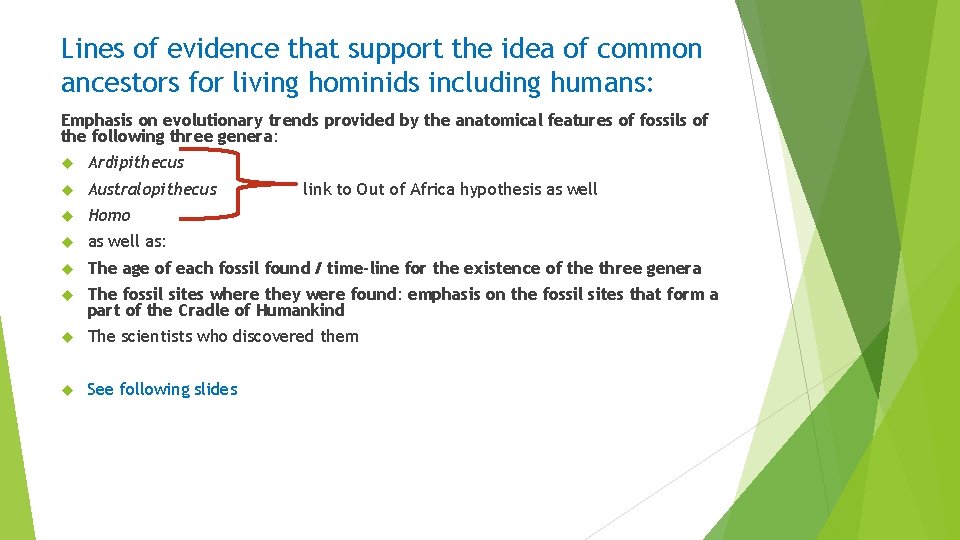
Lines of evidence that support the idea of common ancestors for living hominids including humans: Emphasis on evolutionary trends provided by the anatomical features of fossils of the following three genera: Ardipithecus Australopithecus Homo as well as: The age of each fossil found / time-line for the existence of the three genera The fossil sites where they were found: emphasis on the fossil sites that form a part of the Cradle of Humankind The scientists who discovered them See following slides link to Out of Africa hypothesis as well
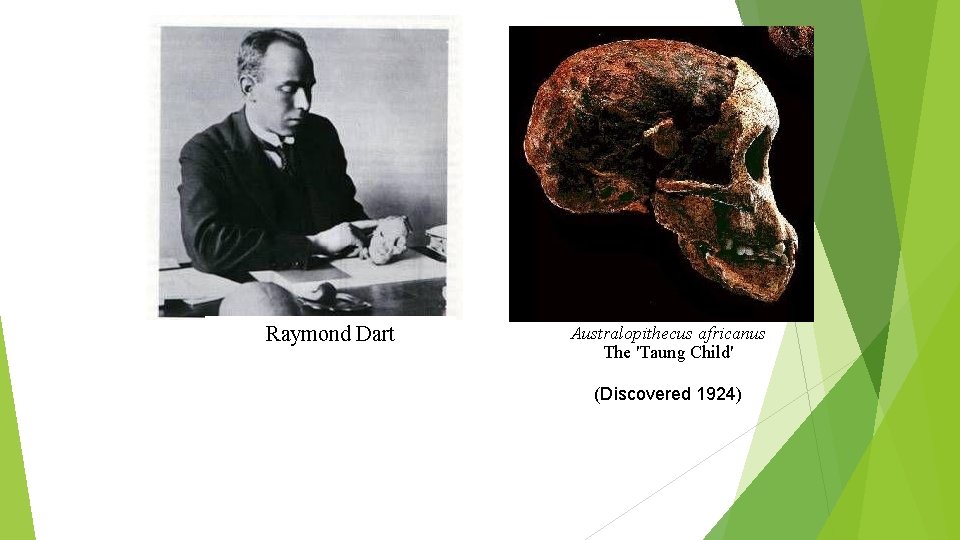
Raymond Dart Australopithecus africanus The 'Taung Child' (Discovered 1924)
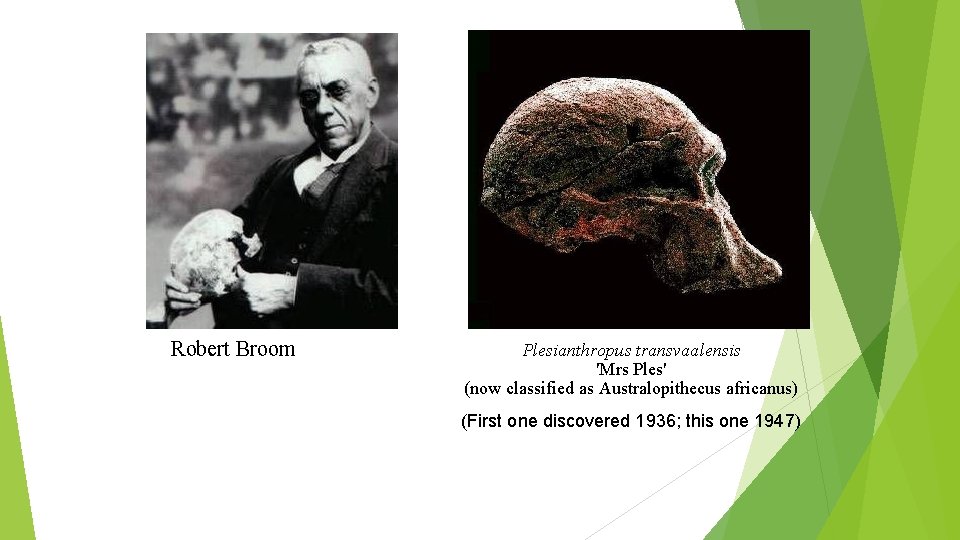
Robert Broom Plesianthropus transvaalensis 'Mrs Ples' (now classified as Australopithecus africanus) (First one discovered 1936; this one 1947)
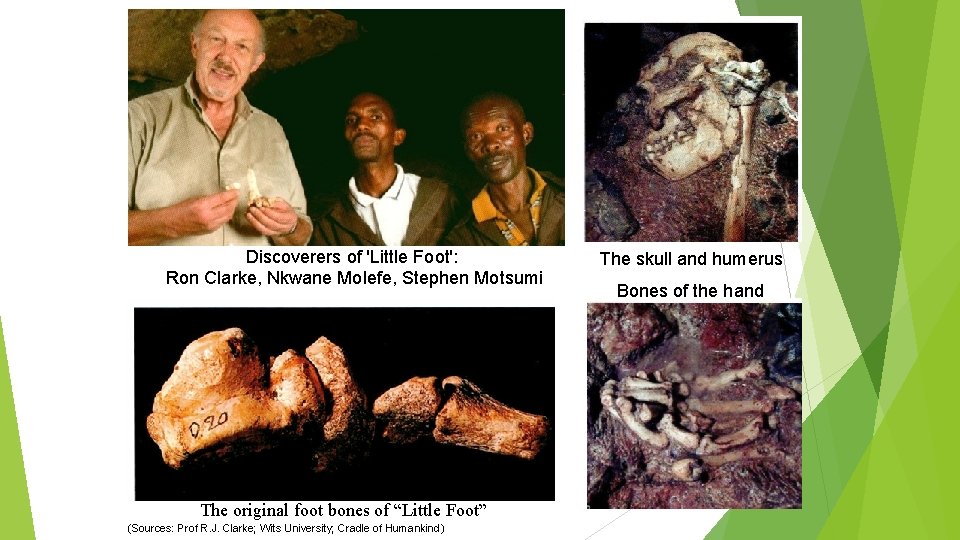
Discoverers of 'Little Foot': Ron Clarke, Nkwane Molefe, Stephen Motsumi The original foot bones of “Little Foot” (Sources: Prof R. J. Clarke; Wits University; Cradle of Humankind) The skull and humerus Bones of the hand
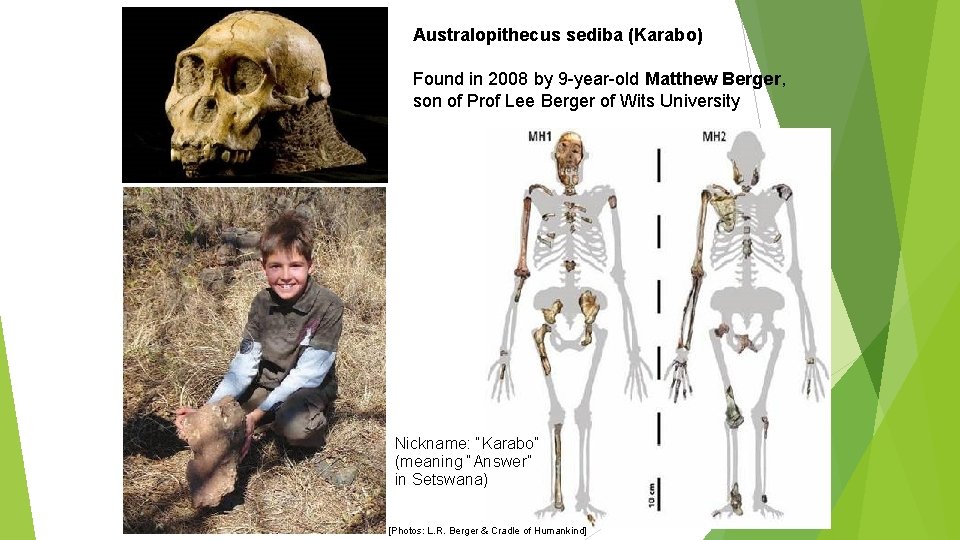
Australopithecus sediba (Karabo) Found in 2008 by 9 -year-old Matthew Berger, son of Prof Lee Berger of Wits University Nickname: “Karabo” (meaning “Answer” in Setswana) [Photos: L. R. Berger & Cradle of Humankind]
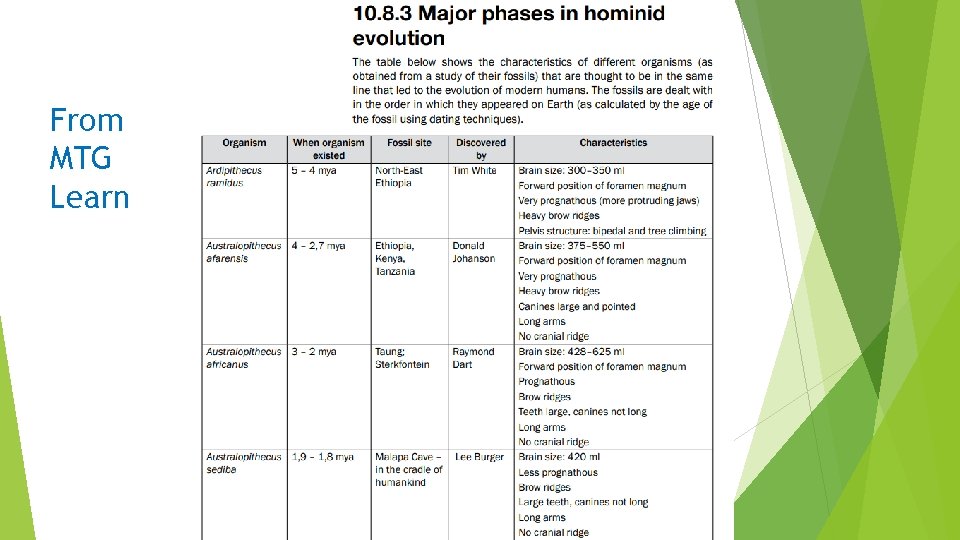
From MTG Learn
From MTG learn Tool making and using
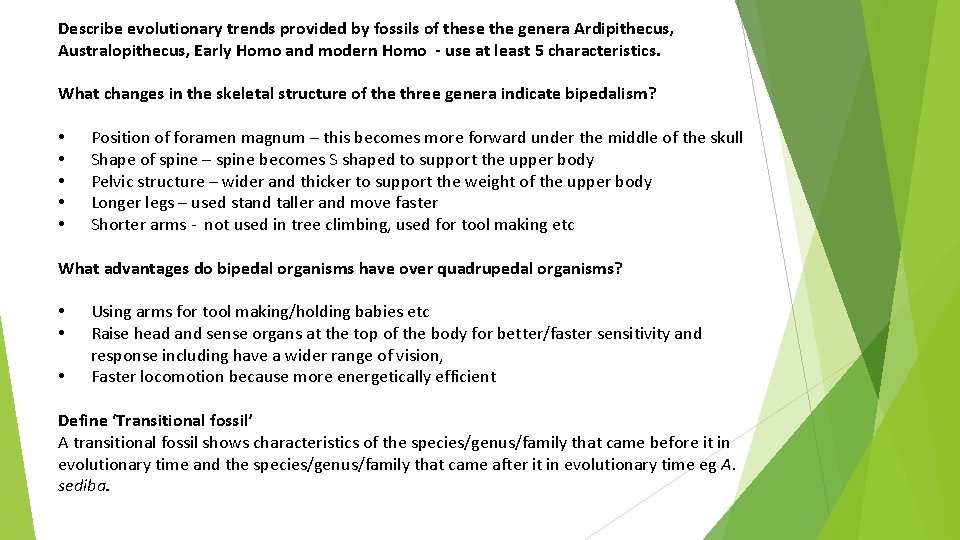
Describe evolutionary trends provided by fossils of these the genera Ardipithecus, Australopithecus, Early Homo and modern Homo - use at least 5 characteristics. What changes in the skeletal structure of the three genera indicate bipedalism? • • • Position of foramen magnum – this becomes more forward under the middle of the skull Shape of spine – spine becomes S shaped to support the upper body Pelvic structure – wider and thicker to support the weight of the upper body Longer legs – used stand taller and move faster Shorter arms - not used in tree climbing, used for tool making etc What advantages do bipedal organisms have over quadrupedal organisms? • • • Using arms for tool making/holding babies etc Raise head and sense organs at the top of the body for better/faster sensitivity and response including have a wider range of vision, Faster locomotion because more energetically efficient Define ‘Transitional fossil’ A transitional fossil shows characteristics of the species/genus/family that came before it in evolutionary time and the species/genus/family that came after it in evolutionary time eg A. sediba.
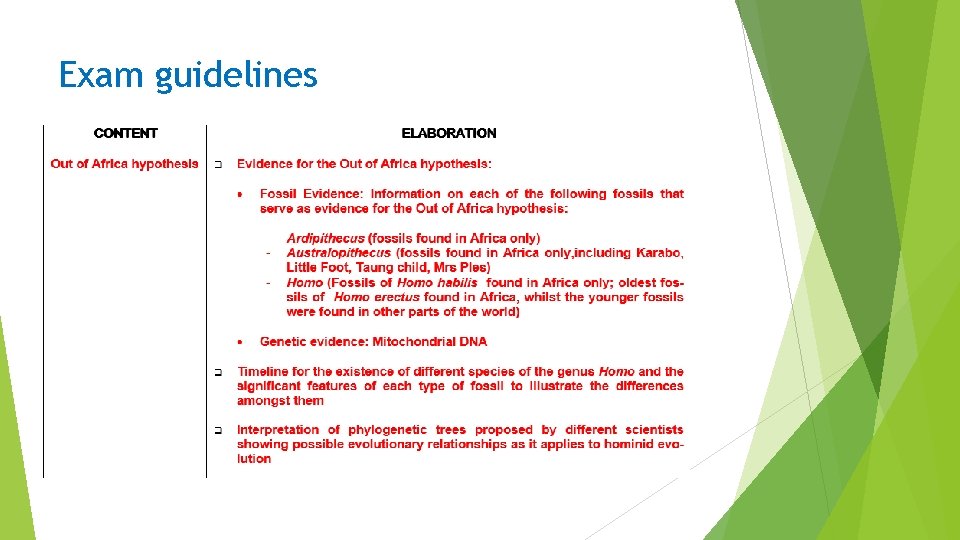
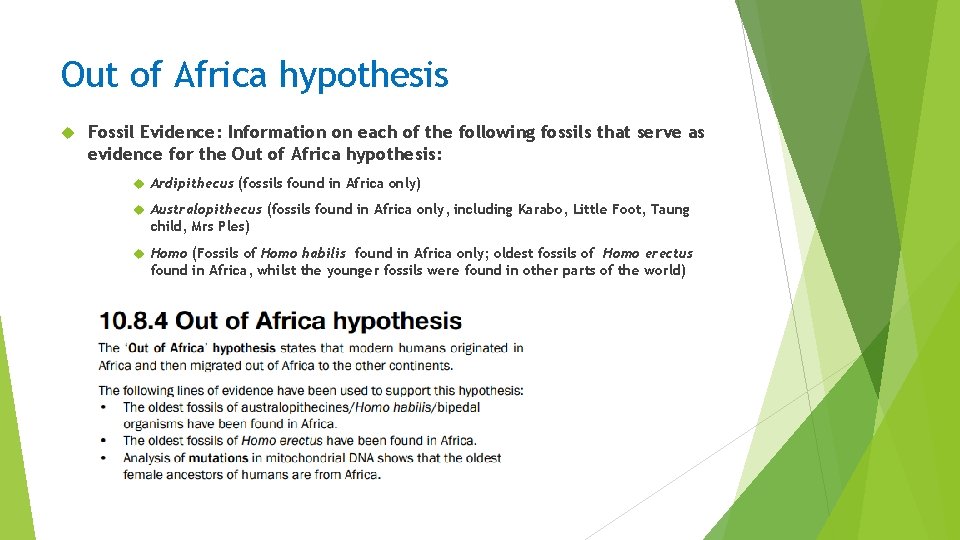
Out of Africa hypothesis Fossil Evidence: Information on each of the following fossils that serve as evidence for the Out of Africa hypothesis: Ardipithecus (fossils found in Africa only) Australopithecus (fossils found in Africa only, including Karabo, Little Foot, Taung child, Mrs Ples) Homo (Fossils of Homo habilis found in Africa only; oldest fossils of Homo erectus found in Africa, whilst the younger fossils were found in other parts of the world)
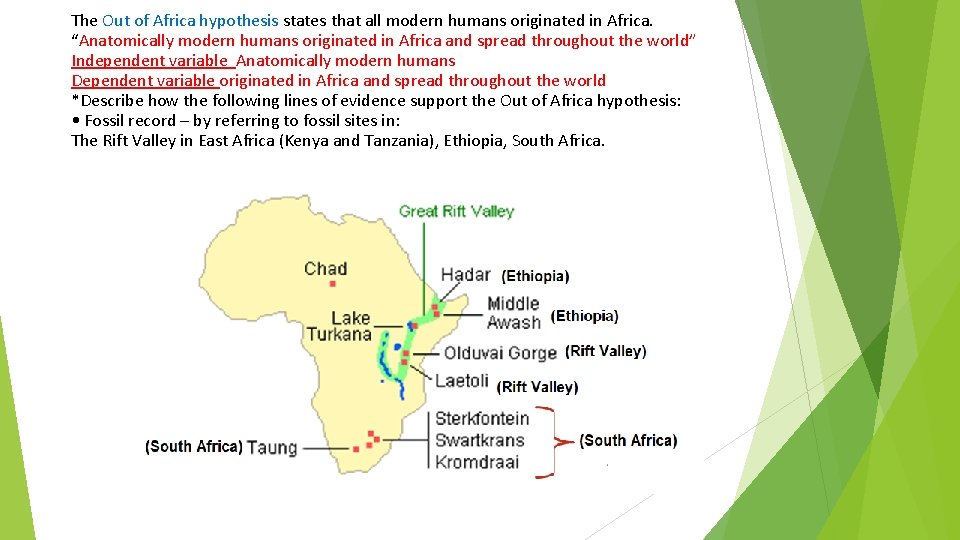
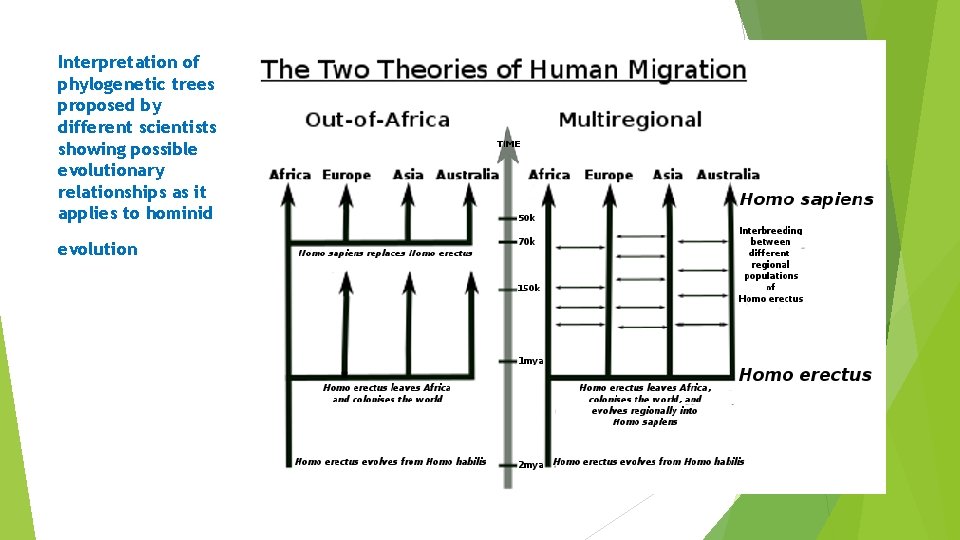
The Out of Africa hypothesis states that all modern humans originated in Africa. “Anatomically modern humans originated in Africa and spread throughout the world” Independent variable Anatomically modern humans Dependent variable originated in Africa and spread throughout the world *Describe how the following lines of evidence support the Out of Africa hypothesis: • Fossil record – by referring to fossil sites in: The Rift Valley in East Africa (Kenya and Tanzania), Ethiopia, South Africa.
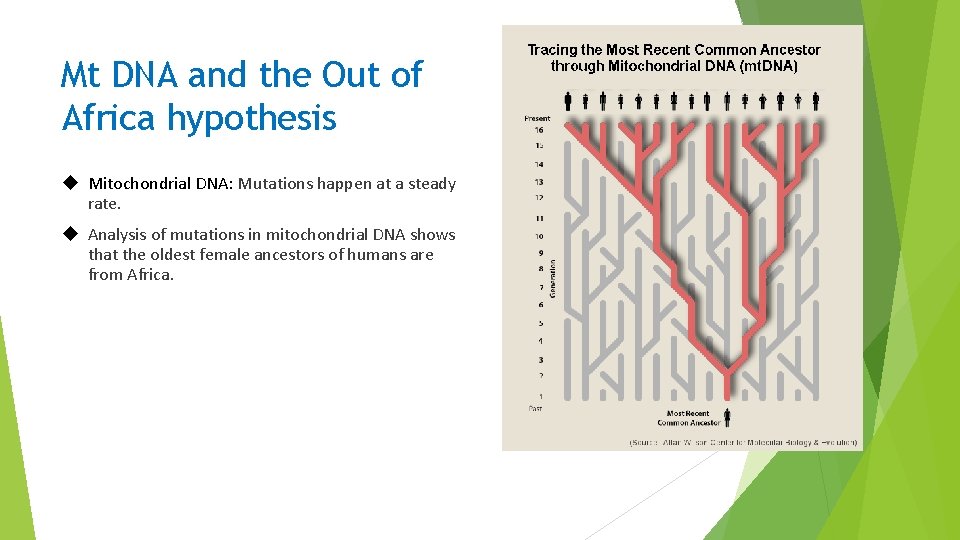
Mt DNA and the Out of Africa hypothesis Mitochondrial DNA: Mutations happen at a steady rate. Analysis of mutations in mitochondrial DNA shows that the oldest female ancestors of humans are from Africa.
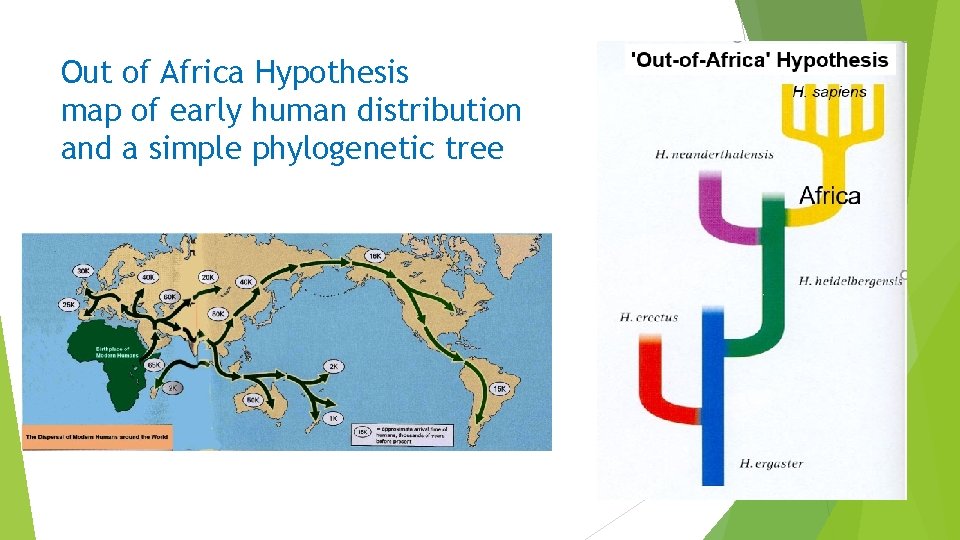
Out of Africa Hypothesis map of early human distribution and a simple phylogenetic tree
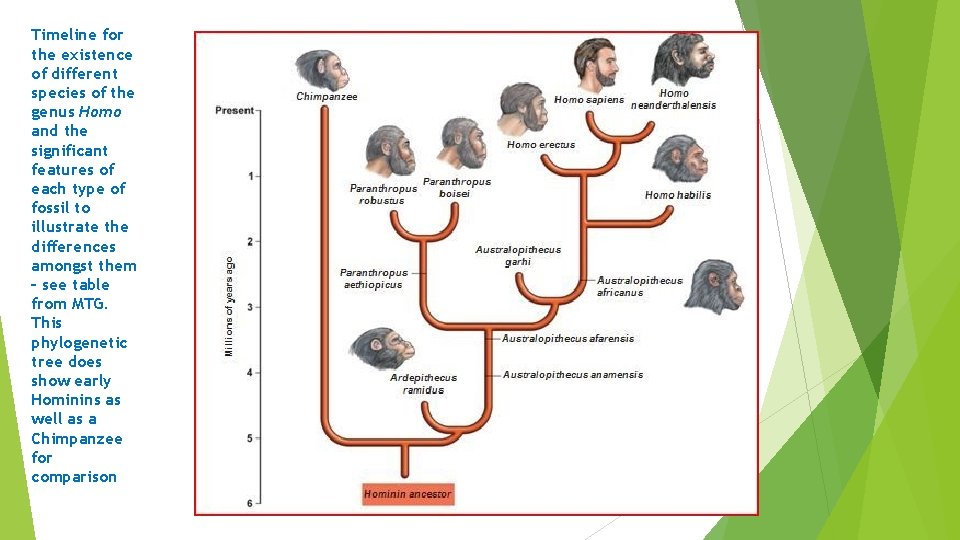
Timeline for the existence of different species of the genus Homo and the significant features of each type of fossil to illustrate the differences amongst them – see table from MTG. This phylogenetic tree does show early Hominins as well as a Chimpanzee for comparison
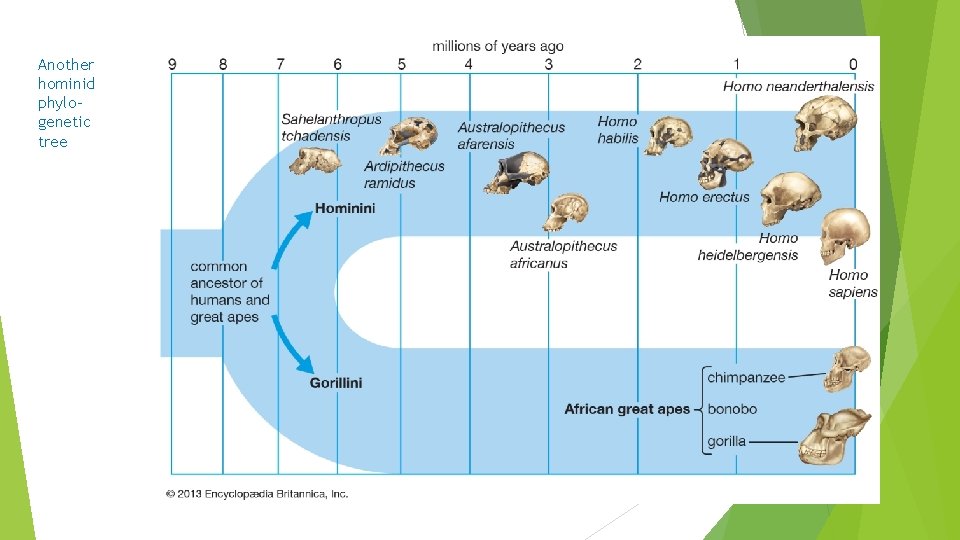
Another hominid phylogenetic tree
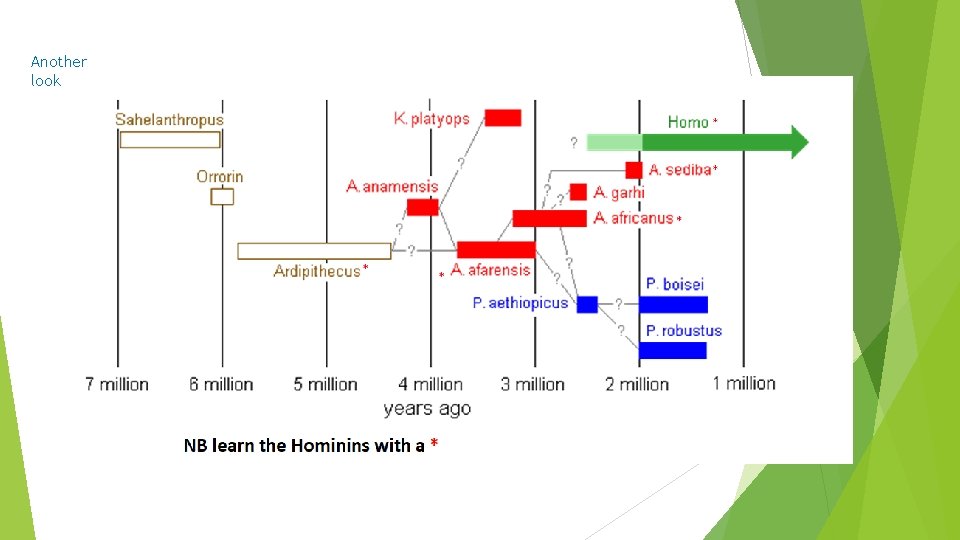
Another look
Interpretation of phylogenetic trees proposed by different scientists showing possible evolutionary relationships as it applies to hominid evolution
Go to Human Origins Q & A