
Tutoring in SPS Semester 2 Tutor Induction 2018

- Slides: 14
Tutoring in SPS Semester 2, Tutor Induction, 2018 -19 Lawrence Dritsas, Marie Craft and Claire Moggie
Today’s Outline • Introductions • Context and key messages • Lawrence Dritsas, Acting Director of Undergraduate School, SSPS • Practicalities; e. g. , getting paid • Marie Craft, UG School Administrative Office • Claire Moggie, UG Policy and Procedures Secretary
Tutoring in SPS some key messages Dr Lawrence Dritsas, Acting Director of the Undergraduate School of Social & Political Science sps. depdugt@ed. ac. uk
Tutoring in SPS • Tutors hold a crucial position in teaching within SPS • What do tutors do? • Lead tutorials • Depending on the course you may be designing activities • Mark assessments and provide feedback • Collect feedback from students (mid-course feedback) • Supporting Students • Course Administration
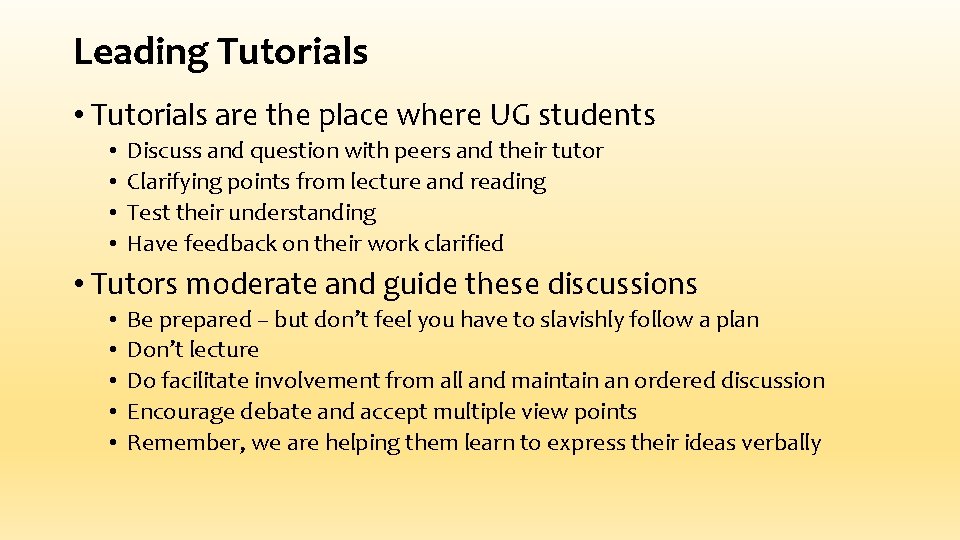
Leading Tutorials • Tutorials are the place where UG students • • Discuss and question with peers and their tutor Clarifying points from lecture and reading Test their understanding Have feedback on their work clarified • Tutors moderate and guide these discussions • • • Be prepared – but don’t feel you have to slavishly follow a plan Don’t lecture Do facilitate involvement from all and maintain an ordered discussion Encourage debate and accept multiple view points Remember, we are helping them learn to express their ideas verbally
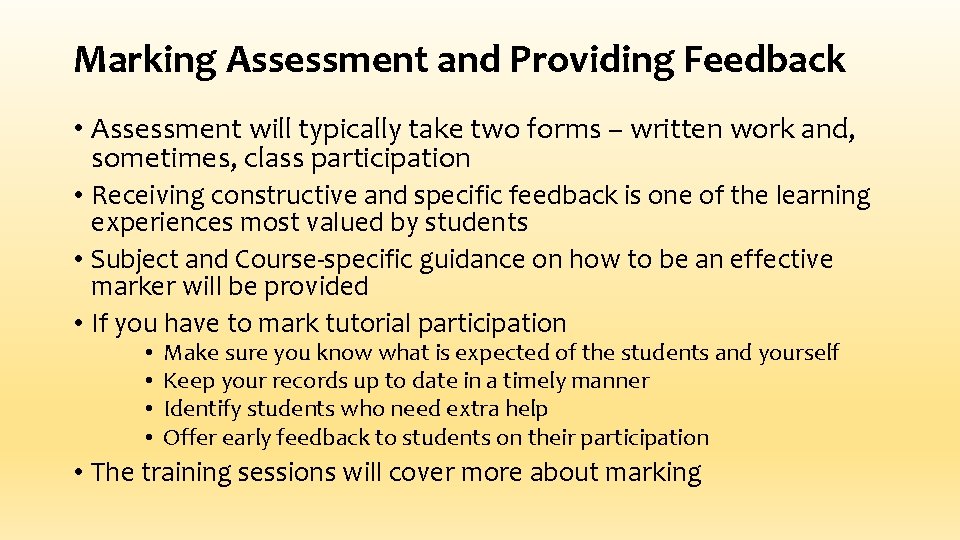
Marking Assessment and Providing Feedback • Assessment will typically take two forms – written work and, sometimes, class participation • Receiving constructive and specific feedback is one of the learning experiences most valued by students • Subject and Course-specific guidance on how to be an effective marker will be provided • If you have to mark tutorial participation • • Make sure you know what is expected of the students and yourself Keep your records up to date in a timely manner Identify students who need extra help Offer early feedback to students on their participation • The training sessions will cover more about marking
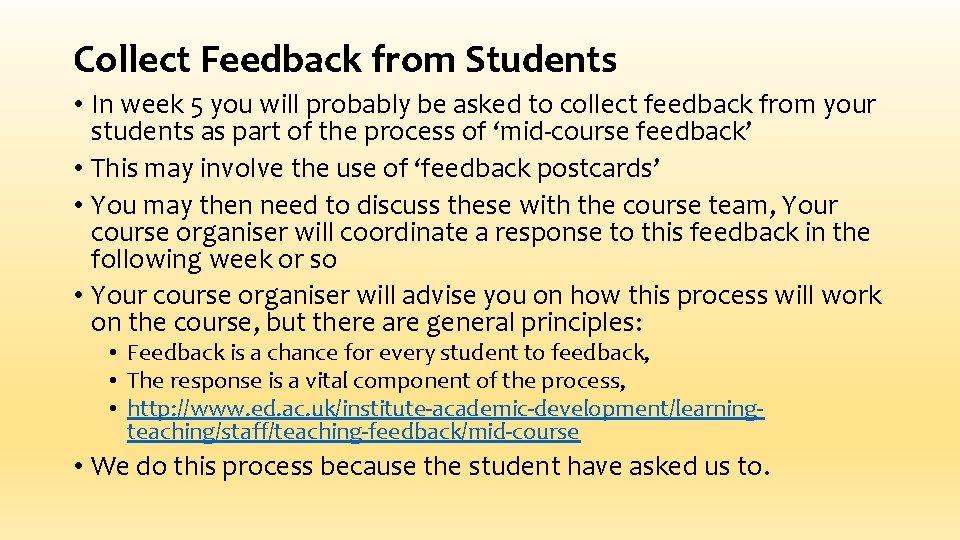
Collect Feedback from Students • In week 5 you will probably be asked to collect feedback from your students as part of the process of ‘mid-course feedback’ • This may involve the use of ‘feedback postcards’ • You may then need to discuss these with the course team, Your course organiser will coordinate a response to this feedback in the following week or so • Your course organiser will advise you on how this process will work on the course, but there are general principles: • Feedback is a chance for every student to feedback, • The response is a vital component of the process, • http: //www. ed. ac. uk/institute-academic-development/learningteaching/staff/teaching-feedback/mid-course • We do this process because the student have asked us to.
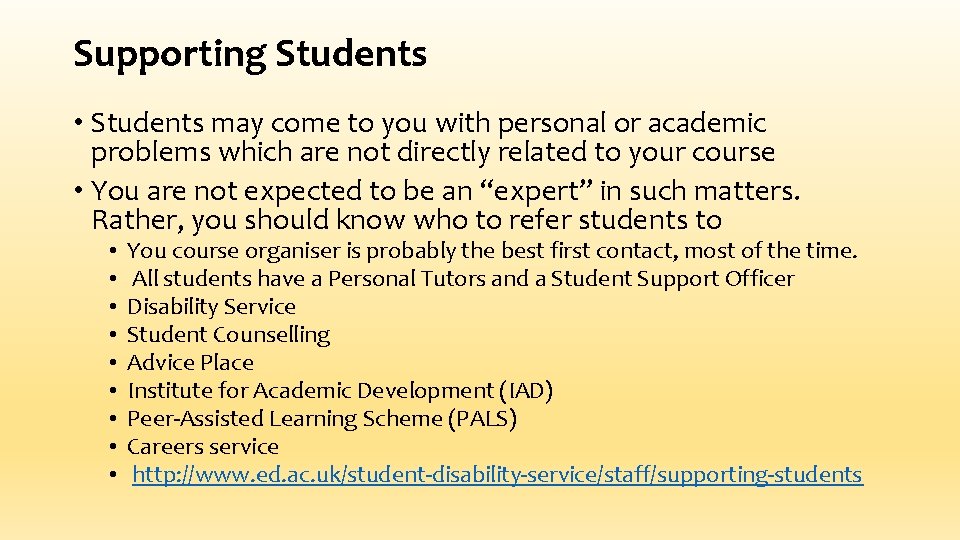
Supporting Students • Students may come to you with personal or academic problems which are not directly related to your course • You are not expected to be an “expert” in such matters. Rather, you should know who to refer students to • • • You course organiser is probably the best first contact, most of the time. All students have a Personal Tutors and a Student Support Officer Disability Service Student Counselling Advice Place Institute for Academic Development (IAD) Peer-Assisted Learning Scheme (PALS) Careers service http: //www. ed. ac. uk/student-disability-service/staff/supporting-students
Learning Adjustments • Many of your students will have a profile of adjustments to allow them to fully participate. Most of these will not apply to you. Those that may apply will include helping them with speaking in public, physical access, anxiety, etc. • • • A very small number of students may warrant an alternative assessment to tutorial participation (if this is assessed) Your course organiser will identify for you any students with such adjustments relevant to your role as tutor/marker. Ask them if they do not. Seek advice if you need it! NB: All students are permitted to audio record tutorial sessions for personal use, but teaching staff have the right to insist that recording stops if sensitive or confidential information is discussed. http: //www. ed. ac. uk/student-disability-service/staff/supportingstudents/guidance-supporting-students-specific-conditions
Meetings with course organisers and training • You can be paid for three hours per semester, typically 1. At/before start of course 2. mid-course (often when marking is discussed) 3. Debriefing at end of teaching weeks • Your other annual paid training events are • this induction (1) • school-level training (1 hour) • subject-specific training (up to 3 hours per academic year per subject)
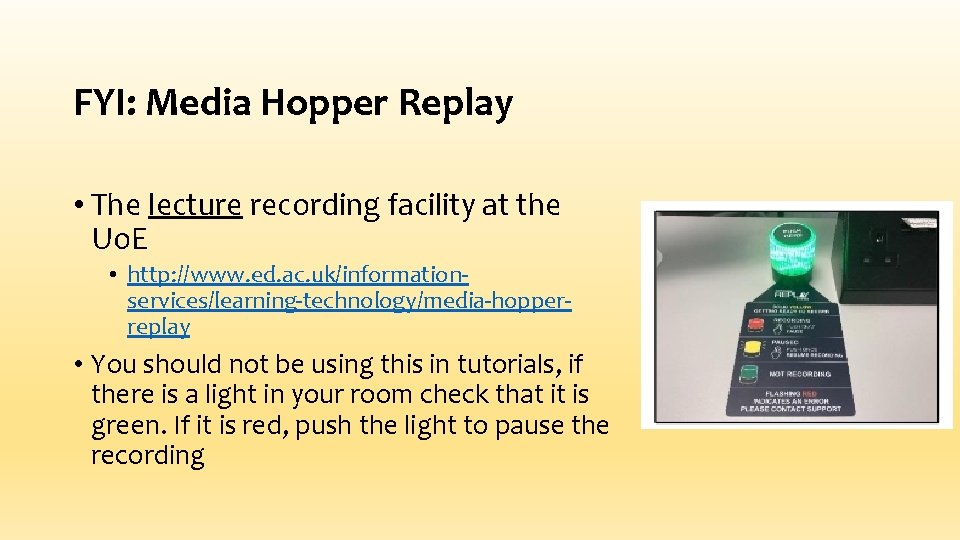
FYI: Media Hopper Replay • The lecture recording facility at the Uo. E • http: //www. ed. ac. uk/informationservices/learning-technology/media-hopperreplay • You should not be using this in tutorials, if there is a light in your room check that it is green. If it is red, push the light to pause the recording
The Edinburgh Teaching Award (Ed. TA): Something to think about … • The Edinburgh Teaching Award (Ed. TA) is a recognised route you can follow to work toward the different categories of Fellowship awarded by the Higher Education Academy. • https: //www. heacademy. ac. uk/individuals/fellowship • Becoming a Fellow of the HEA provides national recognition of your commitment to professionalism in teaching and learning in higher education. Further information available at: https: //www. ed. ac. uk/institute-academicdevelopment/learning-teaching/cpd/teachingaward, or email Daniel. Kenealy@ed. ac. uk • The School is planning to develop an ‘in house’ track for the Ed. TA, commencing in early 2019. More details on this soon
Support for Tutors • It’s OK not to know everything – don’t struggle – and don’t be afraid to ask. • Talk to each other • Communicate with your Senior Tutor/Course Organiser • Take advantage of training opportunities • The IAD handbook • IAD course for tutors and demonstrators • All IAD resources available at: • https: //edin. ac/2 Egtxxt
Course administration