ANPS Anatomy Physiology Endocrinology II Hypothalamus GHRH CRH



- Slides: 26
ANPS Anatomy & Physiology Endocrinology II
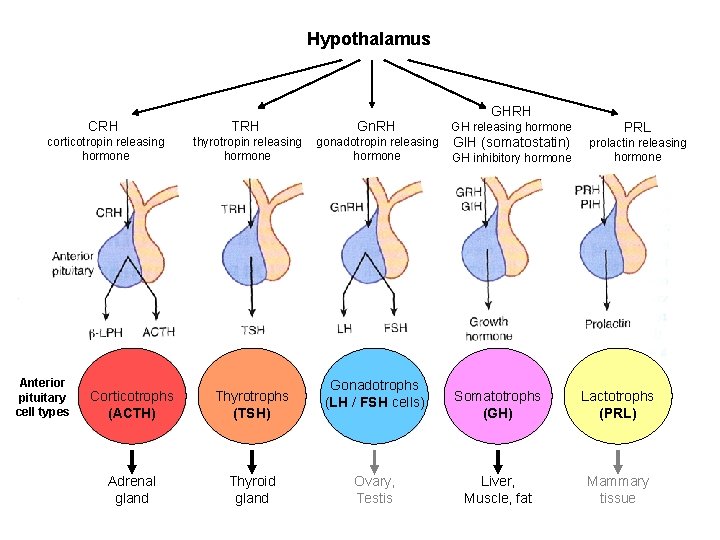
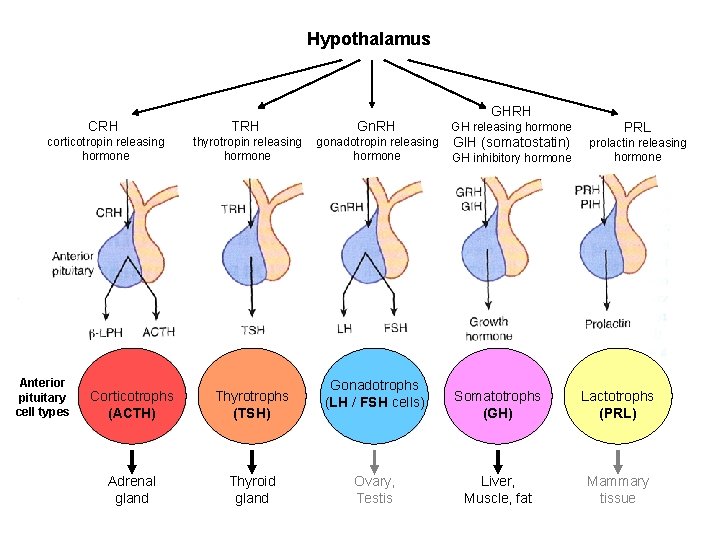
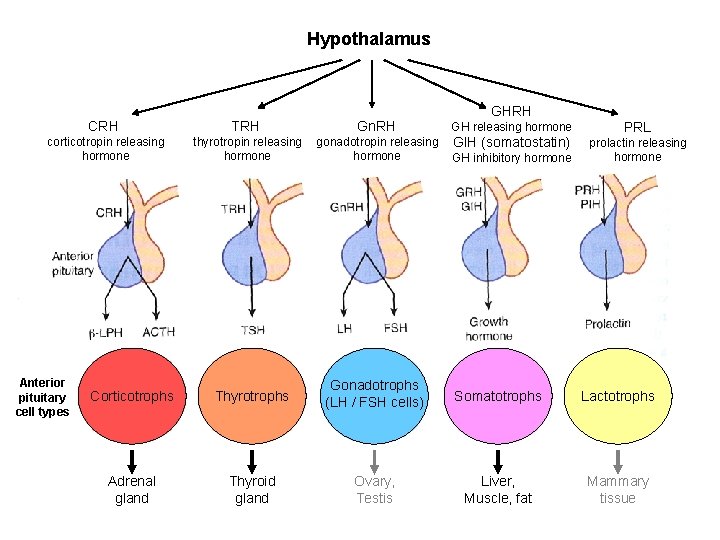
Hypothalamus GHRH CRH TRH Gn. RH GH releasing hormone corticotropin releasing hormone thyrotropin releasing hormone gonadotropin releasing hormone GIH (somatostatin) Anterior pituitary cell types Corticotrophs (ACTH) Thyrotrophs (TSH) Adrenal gland Thyroid gland Gonadotrophs (LH / FSH cells) Ovary, Testis GH inhibitory hormone PRL prolactin releasing hormone Somatotrophs (GH) Lactotrophs (PRL) Liver, Muscle, fat Mammary tissue
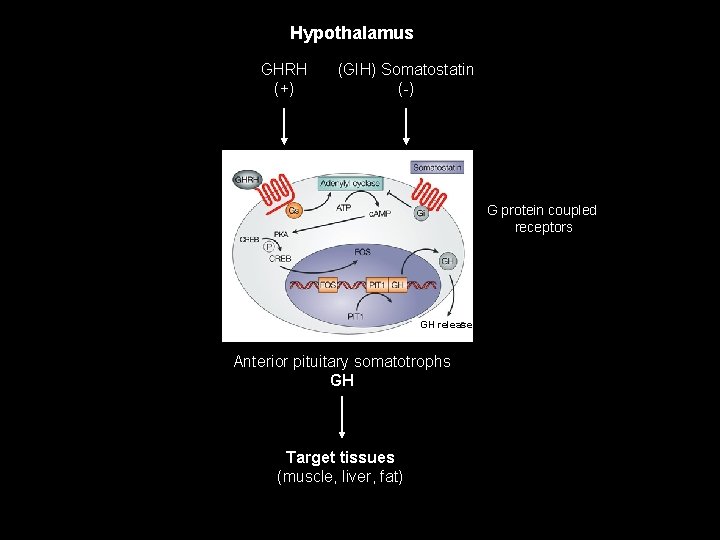
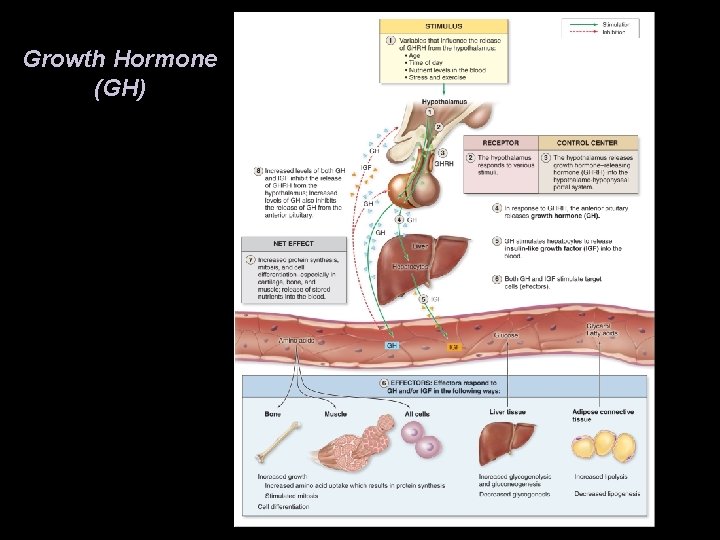
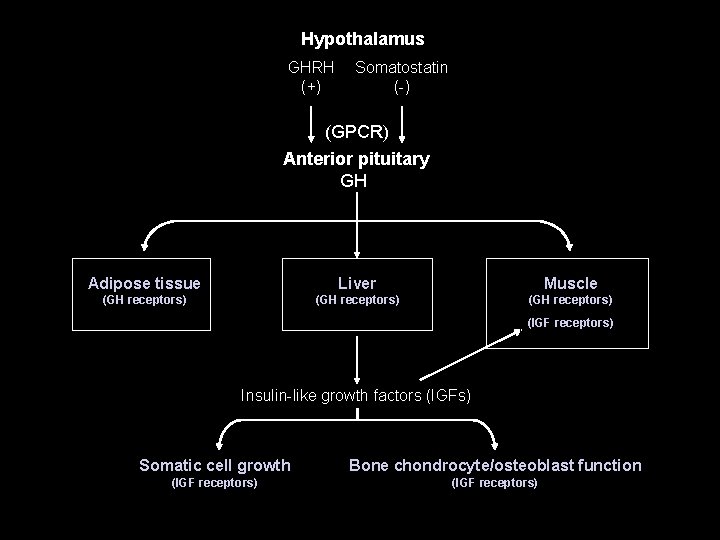
Growth Hormone (GH): primary hormone in human growth Hypothalamus GHRH GH releasing hormone GIH (somatostatin) GH inhibitory hormone • • GHRH • • Somatotrophs (GH) Muscle, Liver, Fat (adipose), Bone (indirect) • • secreted throughout life but declines with age produced by anterior pituitary somatotroph cells targets muscle, liver and adipose (fat) tissues GH has direct and indirect effects • indirect effects mediated by liver insulin-like growth factors (IGFs) actions on organs/bones stimulated by hypothalamic GHRH release into portal system inhibited by somatostatin (GIH) and feedback mechanisms stimulates linear growth increases organ growth, proliferation/survival effects increases muscle mass generates fuel – – – stimulates lipolysis (decreases fat depots) increases liver glucose production decreases tissue glucose storage
Hypothalamus GHRH (+) (GIH) Somatostatin (-) G protein coupled receptors GH release Anterior pituitary somatotrophs GH Target tissues (muscle, liver, fat)
Growth Hormone (GH)
Hypothalamus GHRH (+) Somatostatin (-) (GPCR) Anterior pituitary GH Adipose tissue Liver Muscle (GH receptors) (IGF receptors) Insulin-like growth factors (IGFs) Somatic cell growth Bone chondrocyte/osteoblast function (IGF receptors)
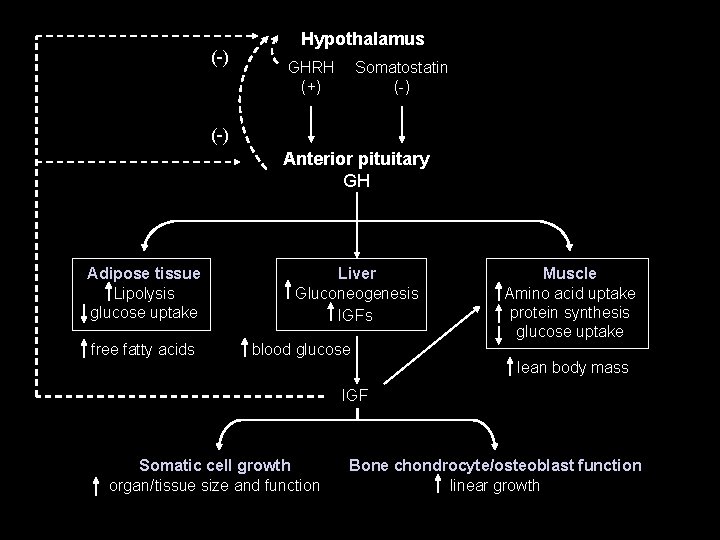
(-) Hypothalamus GHRH (+) Somatostatin (-) Anterior pituitary GH Adipose tissue Lipolysis glucose uptake free fatty acids Liver Gluconeogenesis IGFs blood glucose Muscle Amino acid uptake protein synthesis glucose uptake lean body mass IGFs Somatic cell growth organ/tissue size and function Bone chondrocyte/osteoblast function linear growth
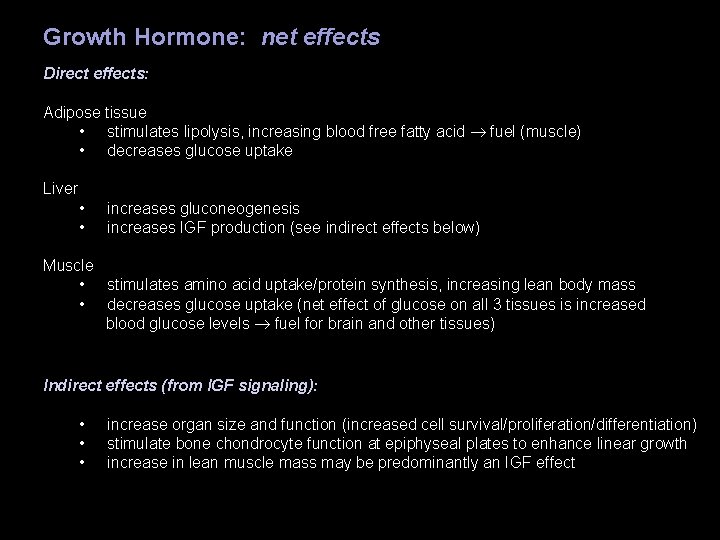
Growth Hormone: net effects Direct effects: Adipose tissue • stimulates lipolysis, increasing blood free fatty acid fuel (muscle) • decreases glucose uptake Liver • • increases gluconeogenesis increases IGF production (see indirect effects below) Muscle • stimulates amino acid uptake/protein synthesis, increasing lean body mass • decreases glucose uptake (net effect of glucose on all 3 tissues is increased blood glucose levels fuel for brain and other tissues) Indirect effects (from IGF signaling): • • • increase organ size and function (increased cell survival/proliferation/differentiation) stimulate bone chondrocyte function at epiphyseal plates to enhance linear growth increase in lean muscle mass may be predominantly an IGF effect
Gigantism v acromegaly
Hypothalamus GHRH CRH TRH Gn. RH GH releasing hormone corticotropin releasing hormone thyrotropin releasing hormone gonadotropin releasing hormone GIH (somatostatin) Anterior pituitary cell types Corticotrophs (ACTH) Thyrotrophs (TSH) Adrenal gland Thyroid gland Gonadotrophs (LH / FSH cells) Ovary, Testis GH inhibitory hormone PRL prolactin releasing hormone Somatotrophs (GH) Lactotrophs (PRL) Liver, Muscle, fat Mammary tissue
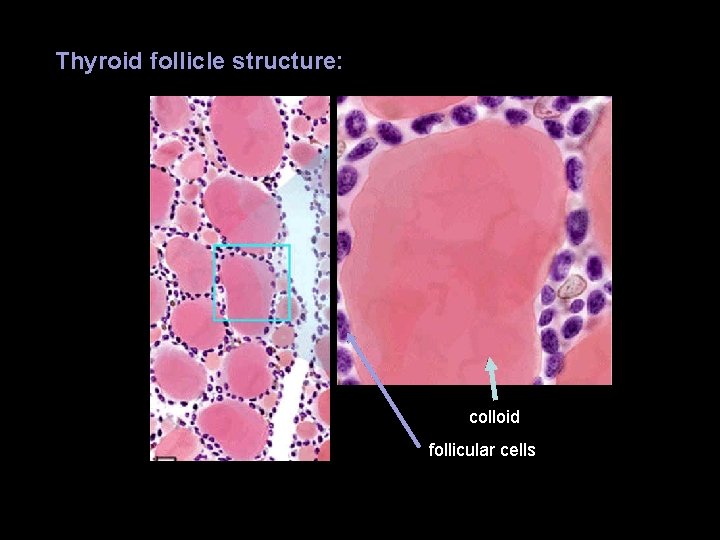
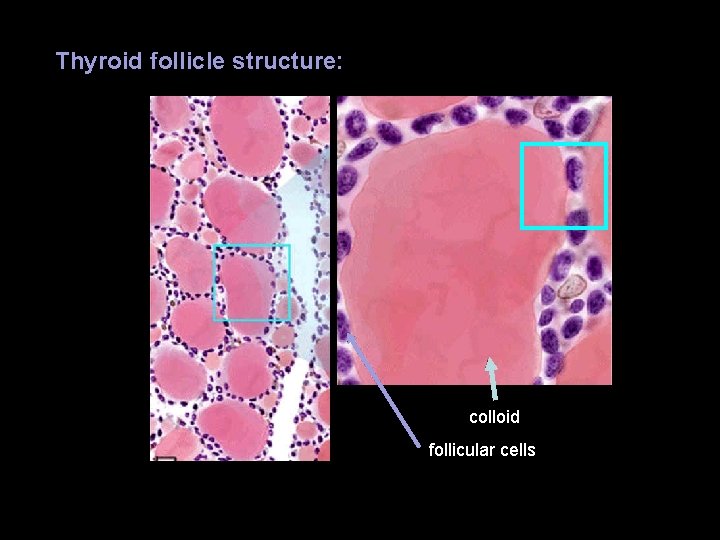
Thyroid follicle structure: colloid follicular cells
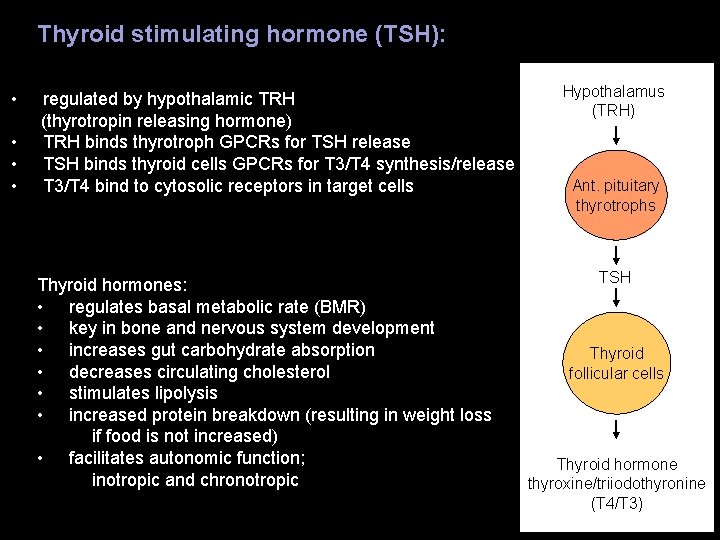
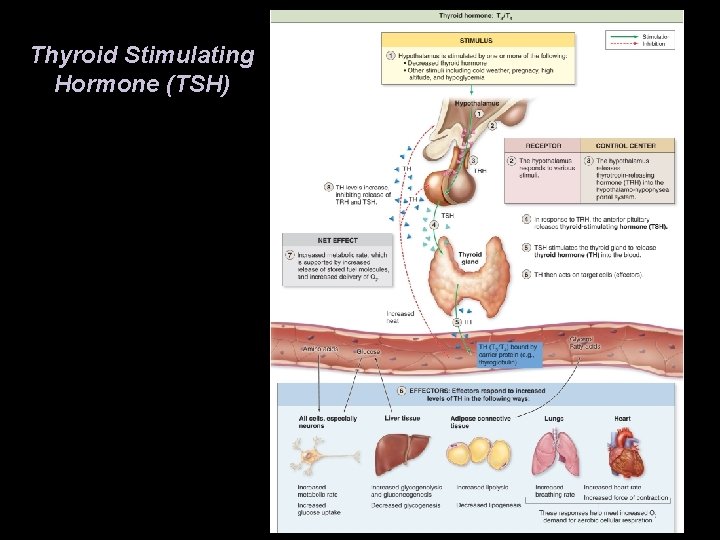
Thyroid stimulating hormone (TSH): • • regulated by hypothalamic TRH (thyrotropin releasing hormone) TRH binds thyrotroph GPCRs for TSH release TSH binds thyroid cells GPCRs for T 3/T 4 synthesis/release T 3/T 4 bind to cytosolic receptors in target cells Thyroid hormones: • regulates basal metabolic rate (BMR) • key in bone and nervous system development • increases gut carbohydrate absorption • decreases circulating cholesterol • stimulates lipolysis • increased protein breakdown (resulting in weight loss if food is not increased) • facilitates autonomic function; inotropic and chronotropic Hypothalamus (TRH) Ant. pituitary thyrotrophs TSH Thyroid follicular cells Thyroid hormone thyroxine/triiodothyronine (T 4/T 3)
Thyroid follicle structure: colloid follicular cells
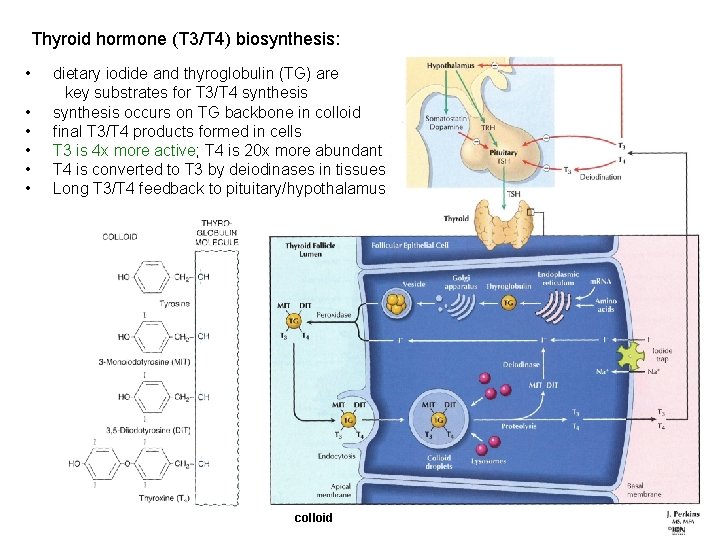
Thyroid hormone (T 3/T 4) biosynthesis: • • • dietary iodide and thyroglobulin (TG) are key substrates for T 3/T 4 synthesis occurs on TG backbone in colloid final T 3/T 4 products formed in cells T 3 is 4 x more active; T 4 is 20 x more abundant T 4 is converted to T 3 by deiodinases in tissues Long T 3/T 4 feedback to pituitary/hypothalamus colloid
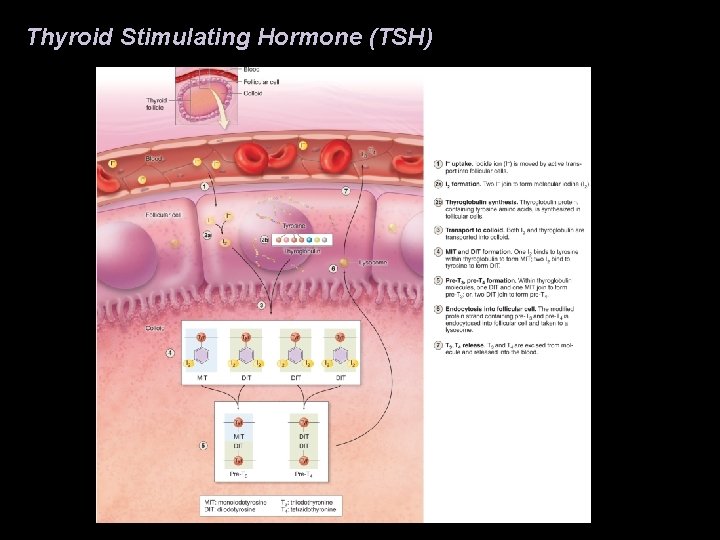
Thyroid Stimulating Hormone (TSH)
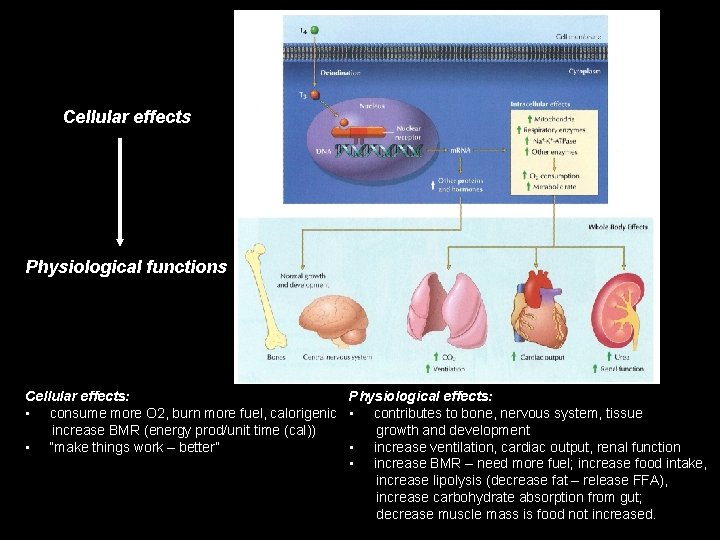
Cellular effects Physiological functions Cellular effects: Physiological effects: • consume more O 2, burn more fuel, calorigenic • contributes to bone, nervous system, tissue increase BMR (energy prod/unit time (cal)) growth and development • “make things work – better” • increase ventilation, cardiac output, renal function • increase BMR – need more fuel; increase food intake, increase lipolysis (decrease fat – release FFA), increase carbohydrate absorption from gut; decrease muscle mass is food not increased.
Thyroid Stimulating Hormone (TSH)
Hyperthyroidism (too much thyroid hormone): • • • people are “hyper”, BMR 10 – 100% above normal nervousness, fine tremor at fingers weightloss, hyperphagia increase pulse pressure, heat intolerant, sweating Grave’s disease – autoimmune antibodies activate TSH receptors resulting in increased T 3/T 4 production (low circulating TSH) treatment – radioactive iodine, propythiouracil (PTU), surgery Hypothyroidism (too little thyroid hormone): • • BMR falls to 40% of normal “can’t think”, poor memory lethargic, listless skin dry, poor cold tolerance Hashimoto’s disease – autoimmune antibodies destroy thyroid gland (high levels of circulating TSH in blood) hypothyroid children develop poorly (dwarfed) and can show mental retardation (cretinism – rare) treatment – thyroid hormone supplements
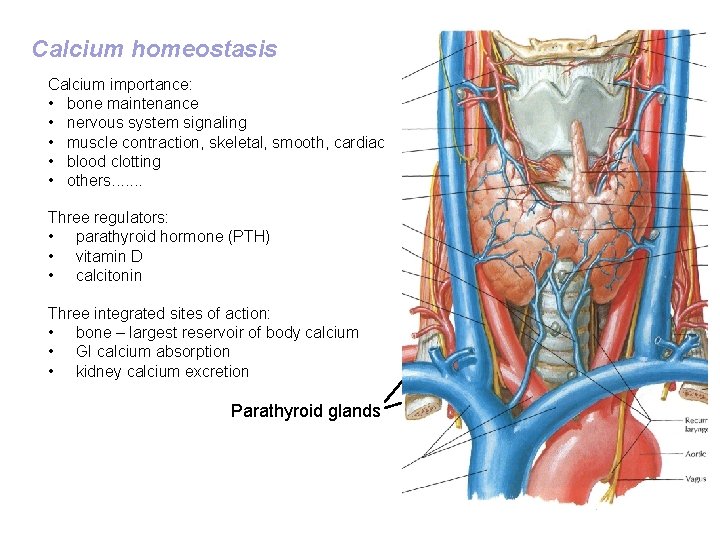
Calcium homeostasis Calcium importance: • bone maintenance • nervous system signaling • muscle contraction, skeletal, smooth, cardiac • blood clotting • others. . . . Three regulators: • parathyroid hormone (PTH) • vitamin D • calcitonin Three integrated sites of action: • bone – largest reservoir of body calcium • GI calcium absorption • kidney calcium excretion Parathyroid glands
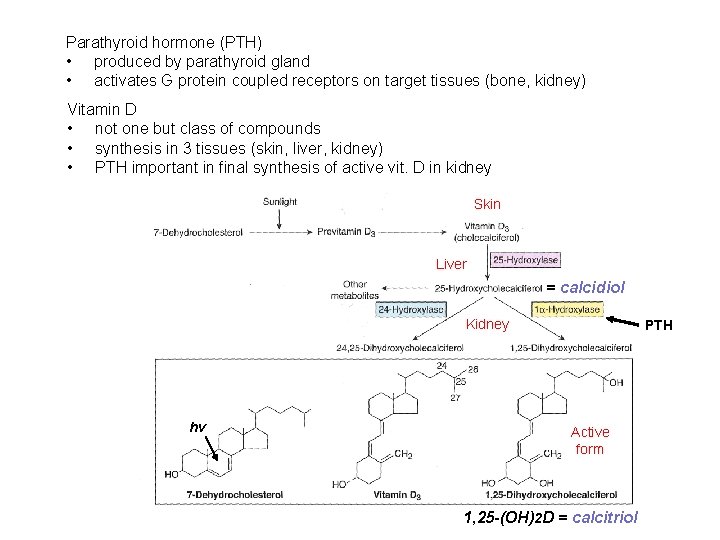
Parathyroid hormone (PTH) • produced by parathyroid gland • activates G protein coupled receptors on target tissues (bone, kidney) Vitamin D • not one but class of compounds • synthesis in 3 tissues (skin, liver, kidney) • PTH important in final synthesis of active vit. D in kidney Skin Liver = calcidiol Kidney hv PTH Active form 1, 25 -(OH)2 D = calcitriol
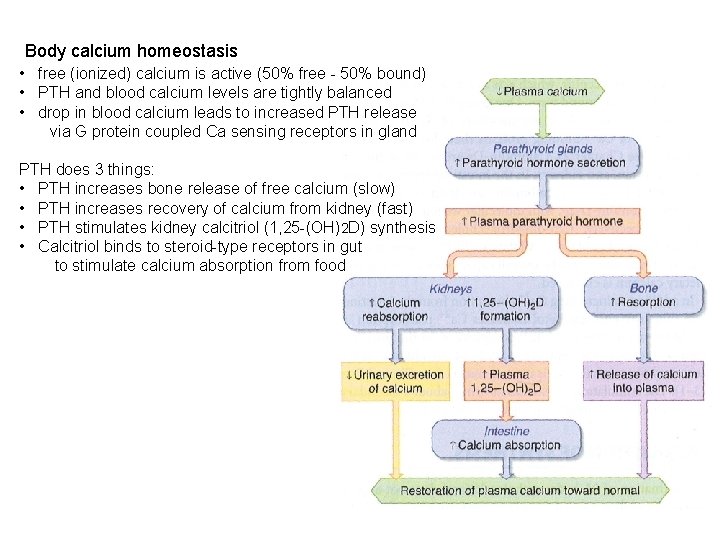
Body calcium homeostasis • free (ionized) calcium is active (50% free - 50% bound) • PTH and blood calcium levels are tightly balanced • drop in blood calcium leads to increased PTH release via G protein coupled Ca sensing receptors in gland PTH does 3 things: • PTH increases bone release of free calcium (slow) • PTH increases recovery of calcium from kidney (fast) • PTH stimulates kidney calcitriol (1, 25 -(OH)2 D) synthesis • Calcitriol binds to steroid-type receptors in gut to stimulate calcium absorption from food
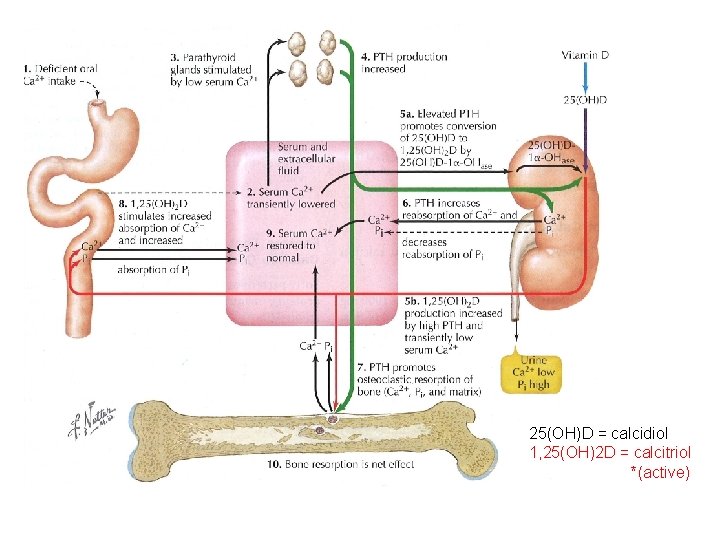
25(OH)D = calcidiol 1, 25(OH)2 D = calcitriol *(active)
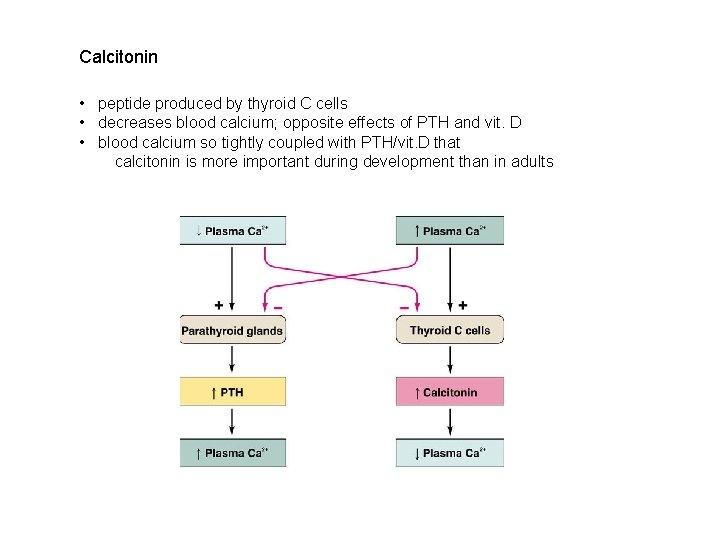
Calcitonin • peptide produced by thyroid C cells • decreases blood calcium; opposite effects of PTH and vit. D • blood calcium so tightly coupled with PTH/vit. D that calcitonin is more important during development than in adults
Hypothalamus GHRH CRH TRH Gn. RH GH releasing hormone corticotropin releasing hormone thyrotropin releasing hormone gonadotropin releasing hormone GIH (somatostatin) Anterior pituitary cell types GH inhibitory hormone PRL prolactin releasing hormone Corticotrophs Thyrotrophs Gonadotrophs (LH / FSH cells) Somatotrophs Lactotrophs Adrenal gland Thyroid gland Ovary, Testis Liver, Muscle, fat Mammary tissue