Announcements Monday April 23 genomic equivalence cloning and
- Slides: 20
Announcements • Monday, April 23: genomic equivalence, cloning, and stem cells: pp. 727 -730 • Wednesday, April 25: cell biology of cancer, pp. 762 -770, 775 -789 • Friday, April 27, 9 AM: optional review session • Monday, April 30, 8 AM: final exam – 139 points; 90 points from days 34 -43; 49 points cumulative (days 1 -43).
Outline/Learning objectives A. B. Cloning Embryonic Stem cells After reading the text, attending lecture, and reviewing lecture notes, you should be able to: • Describe the potential fates of stem cells in general. • Distinguish reproductive cloning from therapeutic cloning. • Describe how embryonic stem cells are obtained, how they are assayed for potency, and how they can be used.
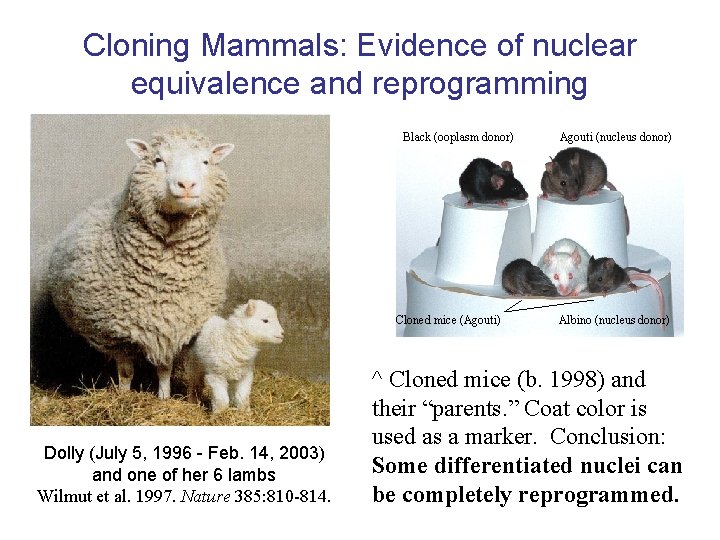
Cloning Mammals: Evidence of nuclear equivalence and reprogramming Black (ooplasm donor) Cloned mice (Agouti) Dolly (July 5, 1996 - Feb. 14, 2003) and one of her 6 lambs Wilmut et al. 1997. Nature 385: 810 -814. Agouti (nucleus donor) Albino (nucleus donor) ^ Cloned mice (b. 1998) and their “parents. ” Coat color is used as a marker. Conclusion: Some differentiated nuclei can be completely reprogrammed.
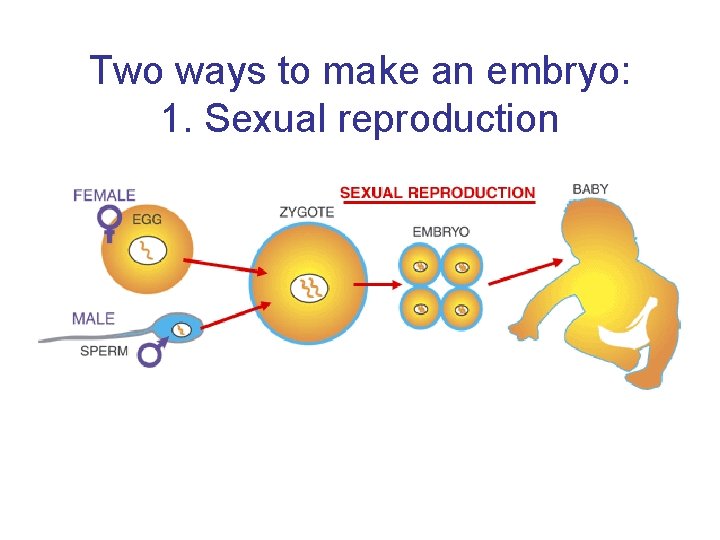
Two ways to make an embryo: 1. Sexual reproduction Source: Human Cloning and Genetic Modification: The Basic Science You Need to Know, Association of Reproductive Health Professionals, www. arhp. org
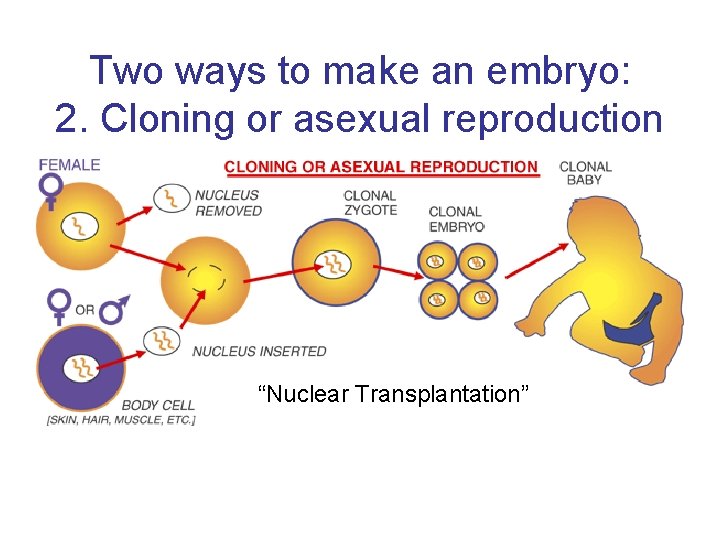
Two ways to make an embryo: 2. Cloning or asexual reproduction “Nuclear Transplantation” Source: www. arhp. org
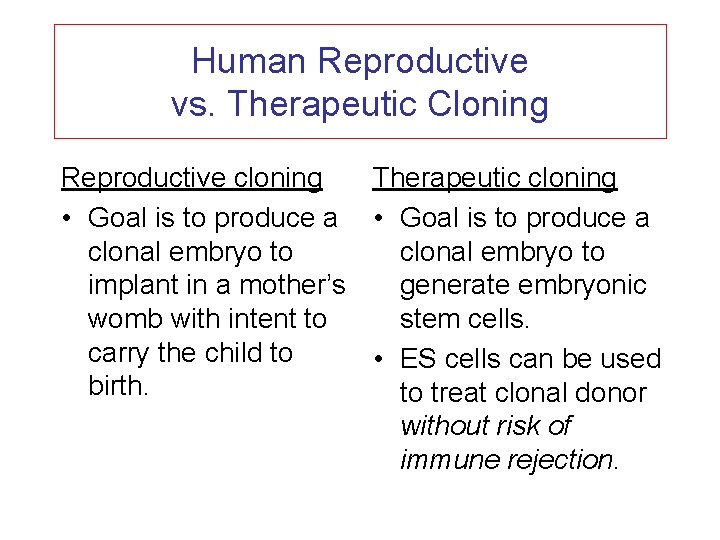
Human Reproductive vs. Therapeutic Cloning Reproductive cloning Therapeutic cloning • Goal is to produce a clonal embryo to implant in a mother’s generate embryonic womb with intent to stem cells. carry the child to • ES cells can be used birth. to treat clonal donor without risk of immune rejection.
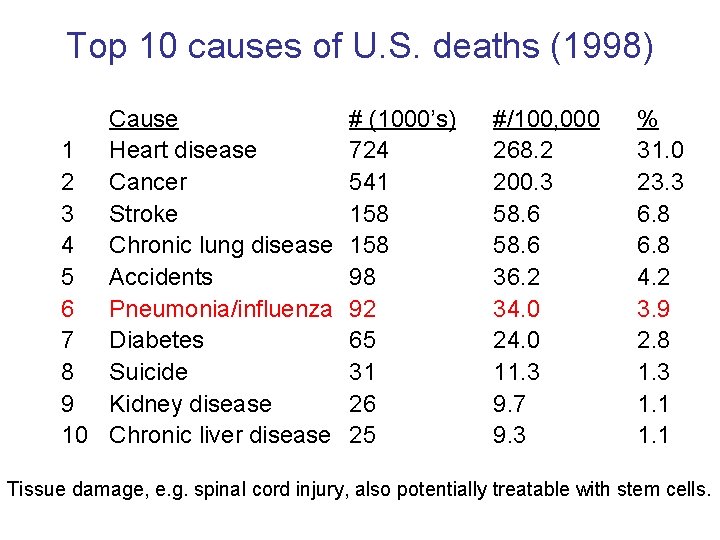
Top 10 causes of U. S. deaths (1998) Cause 1 Heart disease 2 Cancer 3 Stroke 4 Chronic lung disease 5 Accidents 6 Pneumonia/influenza 7 Diabetes 8 Suicide 9 Kidney disease 10 Chronic liver disease # (1000’s) 724 541 158 98 92 65 31 26 25 #/100, 000 268. 2 200. 3 58. 6 36. 2 34. 0 24. 0 11. 3 9. 7 9. 3 % 31. 0 23. 3 6. 8 4. 2 3. 9 2. 8 1. 3 1. 1 Tissue damage, e. g. spinal cord injury, also potentially treatable with stem cells.
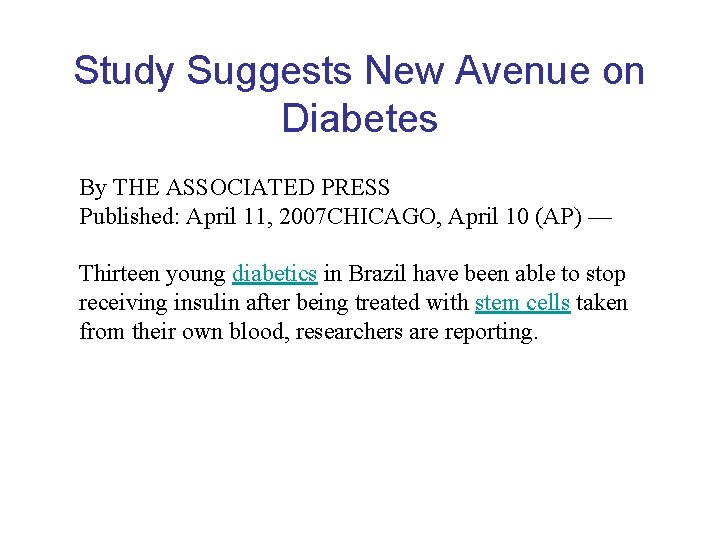
Study Suggests New Avenue on Diabetes By THE ASSOCIATED PRESS Published: April 11, 2007 CHICAGO, April 10 (AP) — Thirteen young diabetics in Brazil have been able to stop receiving insulin after being treated with stem cells taken from their own blood, researchers are reporting.
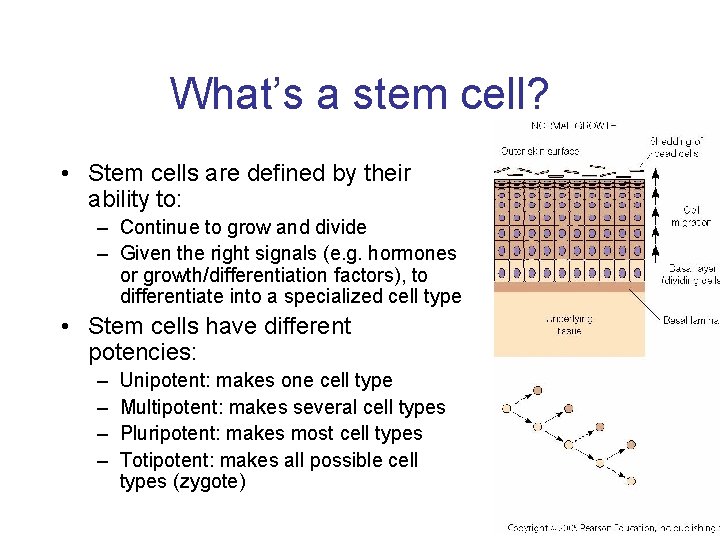
What’s a stem cell? • Stem cells are defined by their ability to: – Continue to grow and divide – Given the right signals (e. g. hormones or growth/differentiation factors), to differentiate into a specialized cell type • Stem cells have different potencies: – – Unipotent: makes one cell type Multipotent: makes several cell types Pluripotent: makes most cell types Totipotent: makes all possible cell types (zygote)
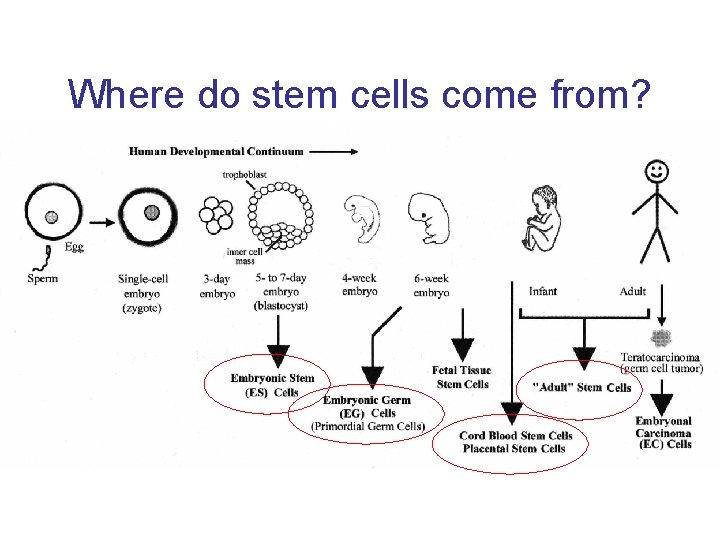
Where do stem cells come from?
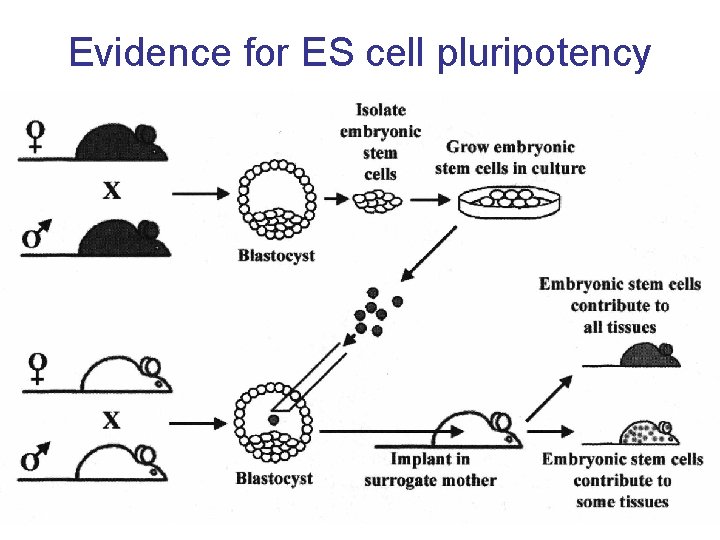
Evidence for ES cell pluripotency
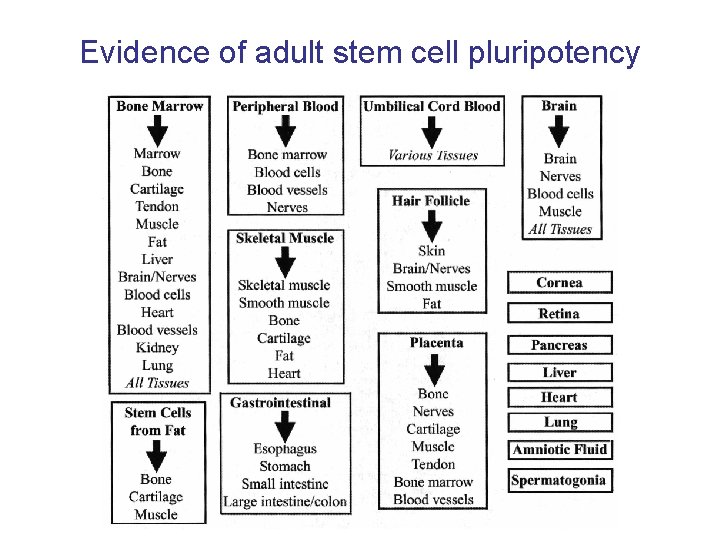
Evidence of adult stem cell pluripotency
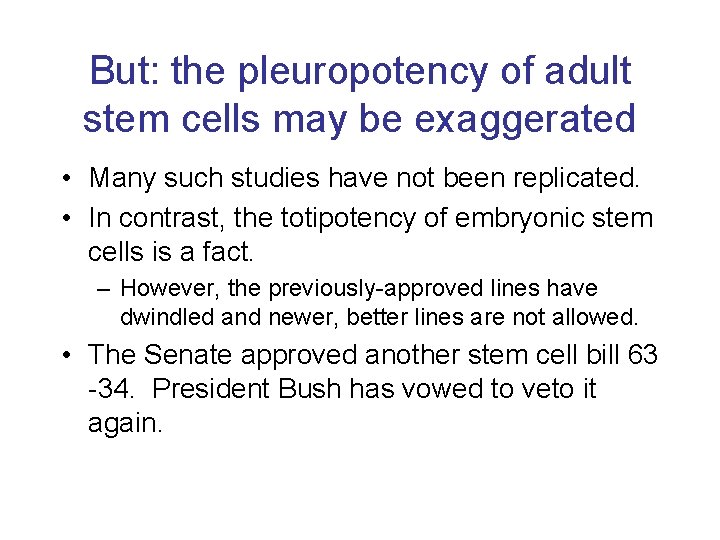
But: the pleuropotency of adult stem cells may be exaggerated • Many such studies have not been replicated. • In contrast, the totipotency of embryonic stem cells is a fact. – However, the previously-approved lines have dwindled and newer, better lines are not allowed. • The Senate approved another stem cell bill 63 -34. President Bush has vowed to veto it again.
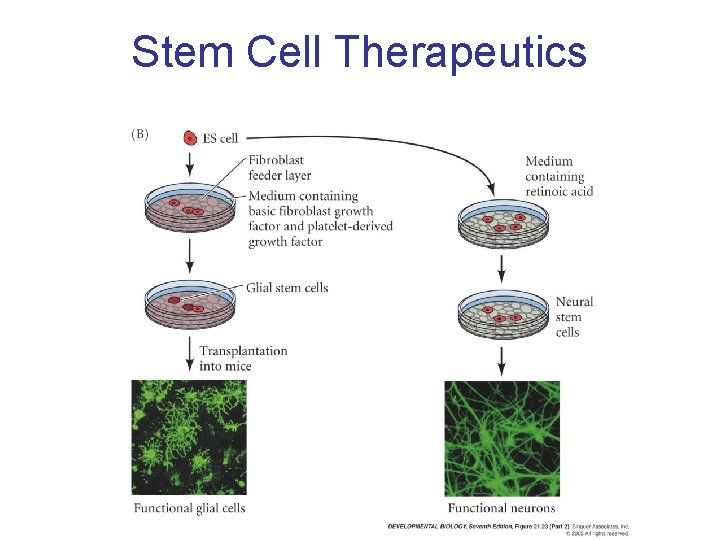
Stem Cell Therapeutics
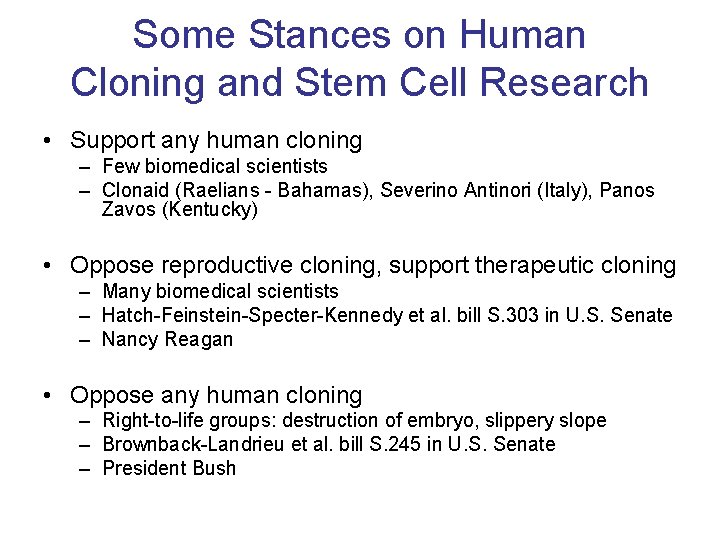
Some Stances on Human Cloning and Stem Cell Research • Support any human cloning – Few biomedical scientists – Clonaid (Raelians - Bahamas), Severino Antinori (Italy), Panos Zavos (Kentucky) • Oppose reproductive cloning, support therapeutic cloning – Many biomedical scientists – Hatch-Feinstein-Specter-Kennedy et al. bill S. 303 in U. S. Senate – Nancy Reagan • Oppose any human cloning – Right-to-life groups: destruction of embryo, slippery slope – Brownback-Landrieu et al. bill S. 245 in U. S. Senate – President Bush
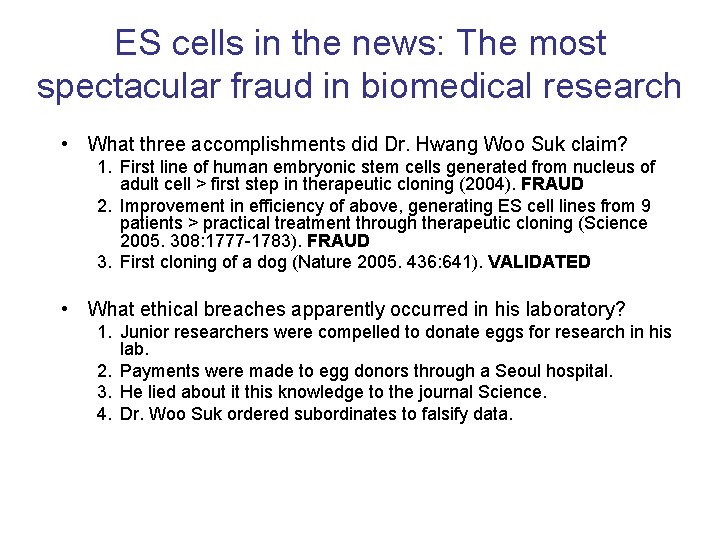
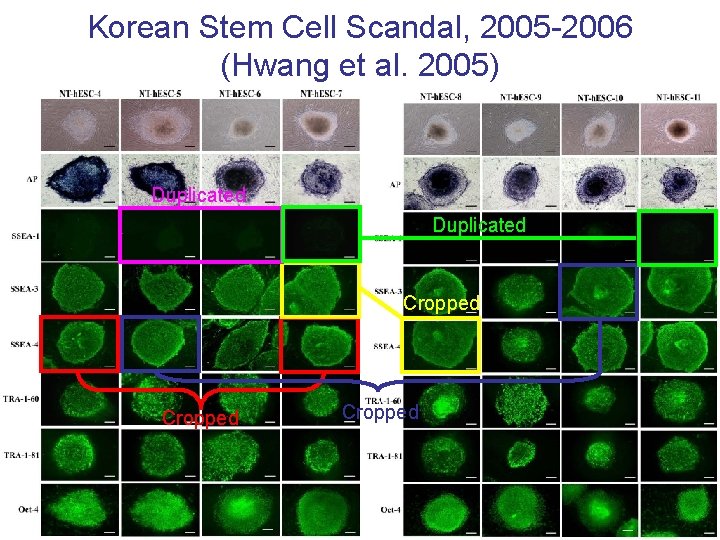
ES cells in the news: The most spectacular fraud in biomedical research • What three accomplishments did Dr. Hwang Woo Suk claim? 1. First line of human embryonic stem cells generated from nucleus of adult cell > first step in therapeutic cloning (2004). FRAUD 2. Improvement in efficiency of above, generating ES cell lines from 9 patients > practical treatment through therapeutic cloning (Science 2005. 308: 1777 -1783). FRAUD 3. First cloning of a dog (Nature 2005. 436: 641). VALIDATED • What ethical breaches apparently occurred in his laboratory? 1. Junior researchers were compelled to donate eggs for research in his lab. 2. Payments were made to egg donors through a Seoul hospital. 3. He lied about it this knowledge to the journal Science. 4. Dr. Woo Suk ordered subordinates to falsify data.
Korean Stem Cell Scandal, 2005 -2006 (Hwang et al. 2005) Duplicated Cropped
Cancer cells defined by 1. Ability to proliferate uncontrollably • • • Causes tumor formation Angiogenesis feeds the tumor Cancer cells increase secretion of angiogenesis activators and decrease angiogenesis inhibitors 2. Ability to spread through the body. • • Invasion: cancer cells migrate into surrounding tissues, blood vessels Metastasis: cancer cells spread through circulatory system to establish secondary tumors.
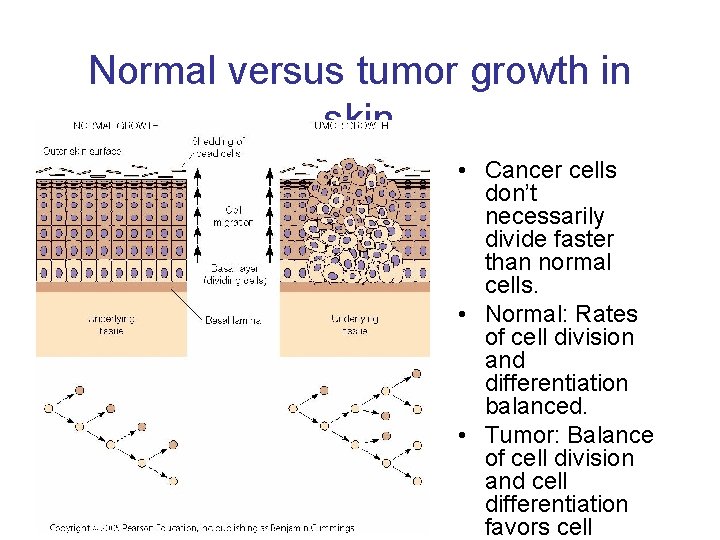
Normal versus tumor growth in skin • Cancer cells don’t necessarily divide faster than normal cells. • Normal: Rates of cell division and differentiation balanced. • Tumor: Balance of cell division and cell differentiation favors cell
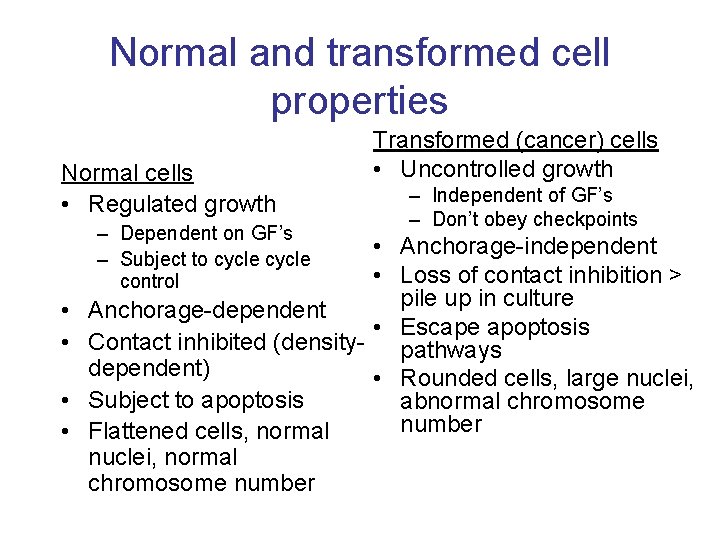
Normal and transformed cell properties Normal cells • Regulated growth – Dependent on GF’s – Subject to cycle control • • Transformed (cancer) cells • Uncontrolled growth – Independent of GF’s – Don’t obey checkpoints • Anchorage-independent • Loss of contact inhibition > pile up in culture Anchorage-dependent • Escape apoptosis Contact inhibited (density- pathways dependent) • Rounded cells, large nuclei, Subject to apoptosis abnormal chromosome number Flattened cells, normal nuclei, normal chromosome number