An Overview of Wireless Security 802 11 Security
- Slides: 16
An Overview of Wireless Security
• 802. 11 Security • WAP Security
IEEE 802. 11 • A set of standards for WLAN computer communication in 5 GHz and 2. 4 GHz. • Most popular members: 802. 11 b, 802. 11 g. • Originally weak in security, even now.
802. 11 Security • Two subsystems: - A data encapsulation technique called WEP(Wired Equivalent Privacy) - An authentication algorithm called Shared Key Authentication • Severe security weakness in WEP. • WPA, WPA 2, 802. 11 i
WEP • Stream cipher RC 4 for confidentiality -Standard 64 -bit WEP: 40 -bit pre-shared key 24 -bit initialization vector(IV) • CRC-32 checksum for integrity
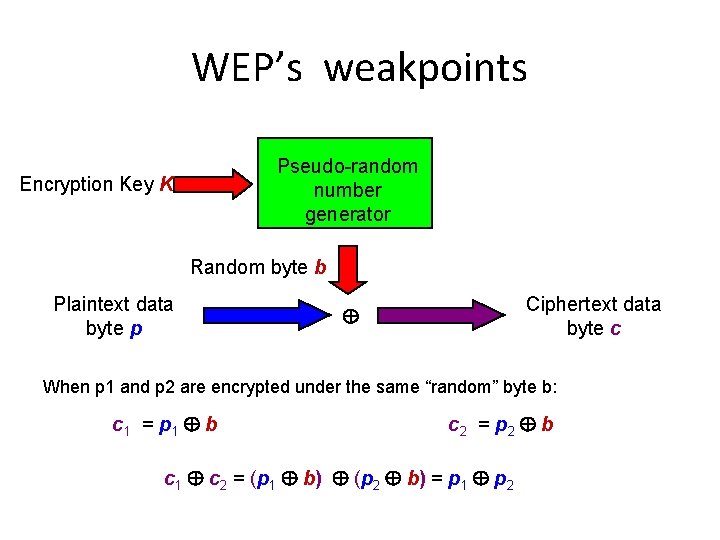
WEP’s weakpoints Pseudo-random number generator Encryption Key K Random byte b Plaintext data byte p Ciphertext data byte c When p 1 and p 2 are encrypted under the same “random” byte b: c 1 = p 1 b c 2 = p 2 b c 1 c 2 = (p 1 b) (p 2 b) = p 1 p 2
WPA, WPA 2 • WPA -Partly implements of IEEE 802. 11 i -RC 4 stream cipher with a 128 -bit key and 48 -bit IV. -Temporal Key Integrity Protocol(TKIP) -Michael Algorithm • WPA 2 -Mandatory implements of 802. 11 i -CCMP: AES-based algorithm
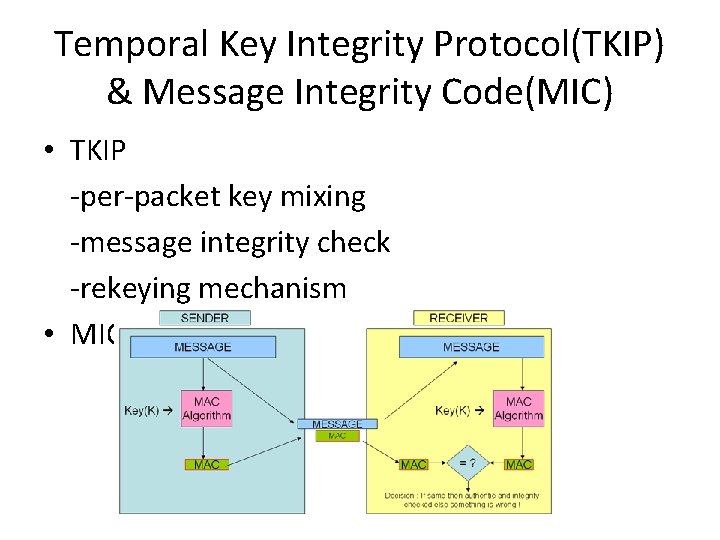
Temporal Key Integrity Protocol(TKIP) & Message Integrity Code(MIC) • TKIP -per-packet key mixing -message integrity check -rekeying mechanism • MIC also named as MAC
CCMP: AES • Counter Mode with Cipher Block Chaining Message Authentication Code Protocol • key management and message integrity is handled by a single component built around AES • Advanced Encryption Standard -block cipher -Sub. Bytes, Shift. Rows, Mix. Columns, Add. Round. Key
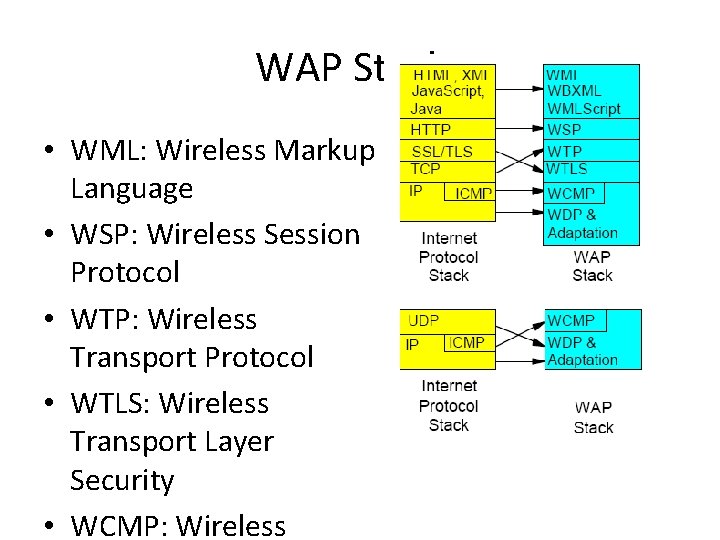
WAP protocols • Wireless Application Protocol • Principal applications: for mobile phone and PDA, -Devices with low processing power and small memory capacities. -Wireless networks with low bandwidth. • From transport layer to application layer • Competitor: i-mode
WAP Stacks • WML: Wireless Markup Language • WSP: Wireless Session Protocol • WTP: Wireless Transport Protocol • WTLS: Wireless Transport Layer Security • WCMP: Wireless
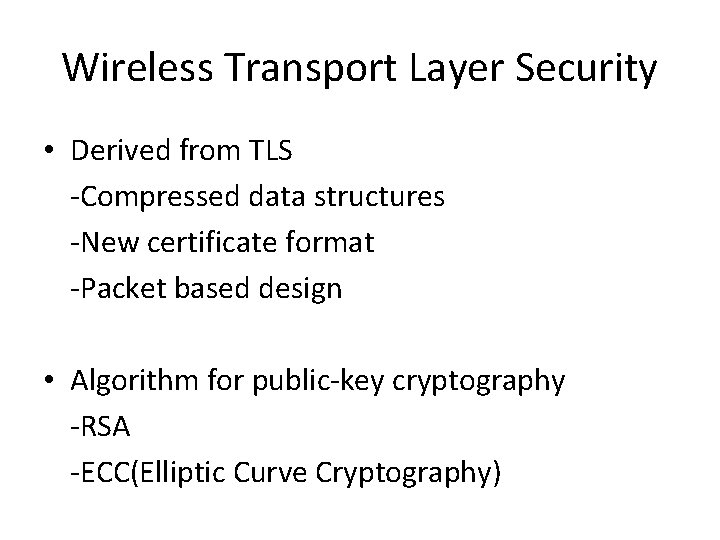
Wireless Transport Layer Security • Derived from TLS -Compressed data structures -New certificate format -Packet based design • Algorithm for public-key cryptography -RSA -ECC(Elliptic Curve Cryptography)
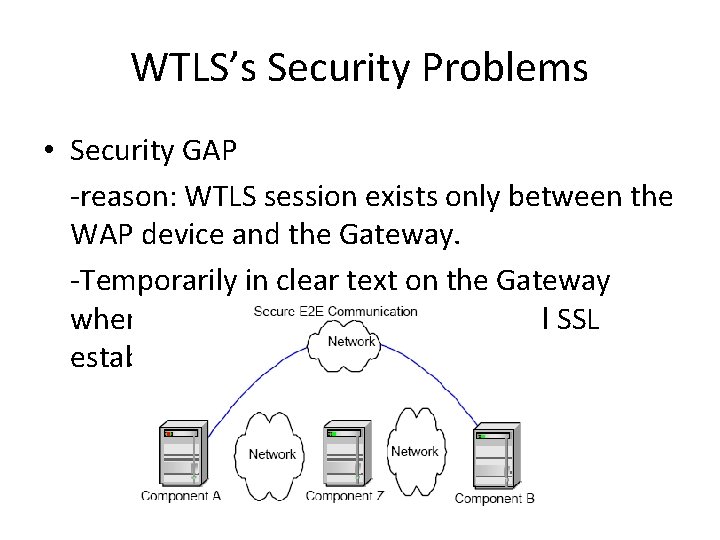
WTLS’s Security Problems • Security GAP -reason: WTLS session exists only between the WAP device and the Gateway. -Temporarily in clear text on the Gateway when translating WML to HTML until SSL established.
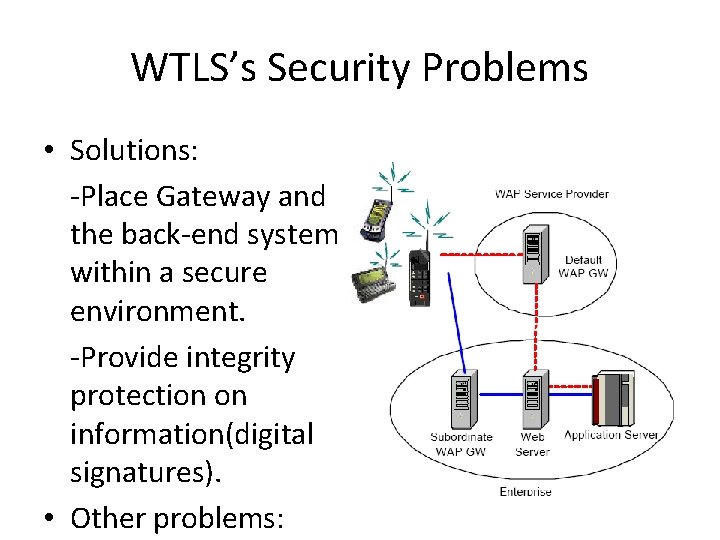
WTLS’s Security Problems • Solutions: -Place Gateway and the back-end system within a secure environment. -Provide integrity protection on information(digital signatures). • Other problems:
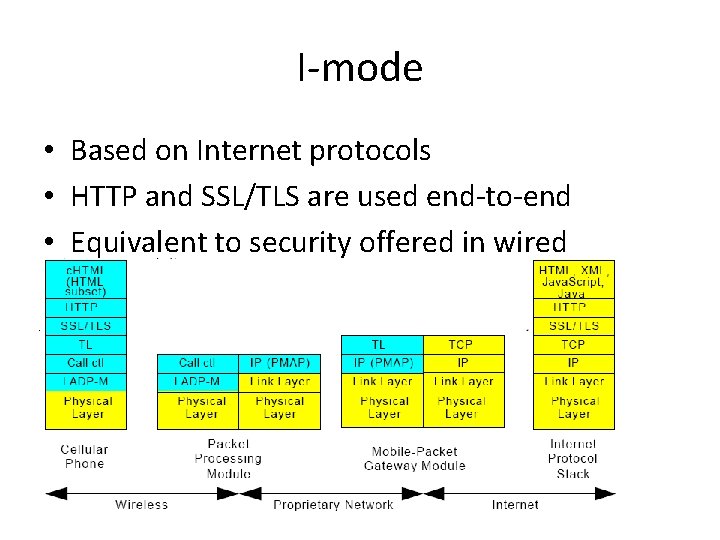
I-mode • Based on Internet protocols • HTTP and SSL/TLS are used end-to-end • Equivalent to security offered in wired networks
Future Topics in Wireless Networks • The next generation networks • Ad-hoc networks • Sensor networks