Amanda Deaves PHTY 222 Neuromuscular studies II Ataxia
- Slides: 15
Amanda Deaves PHTY 222 Neuromuscular studies II Ataxia Greek word – ‘without order’
Learning outcomes �To define ataxia and types of ataxia �To revise role of the cerebellum �To review the components of ataxic gait �To understand common ataxia tests �To understand the common treatment principles for ataxia �To review recent research regarding the treatment of ataxia
Ataxia �Disturbances in co-ordination �Movements clumsy �Gait unsteady with a wide base and reeling quality ‘drunken gait’ �Irregular jerky movements of trunk in sitting �Intention tremor
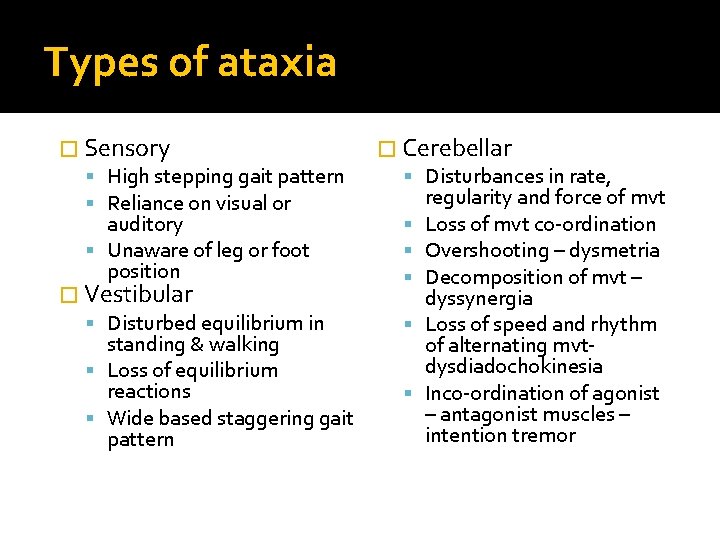
Types of ataxia � Sensory High stepping gait pattern Reliance on visual or auditory Unaware of leg or foot position � Vestibular Disturbed equilibrium in standing & walking Loss of equilibrium reactions Wide based staggering gait pattern � Cerebellar Disturbances in rate, regularity and force of mvt Loss of mvt co-ordination Overshooting – dysmetria Decomposition of mvt – dyssynergia Loss of speed and rhythm of alternating mvtdysdiadochokinesia Inco-ordination of agonist – antagonist muscles – intention tremor
Common causes �MS �Traumatic head injury �Friedreich’s ataxia �Spinocerebellar ataxia �Posterior fossa tumours �Neuropathy �Alcohol
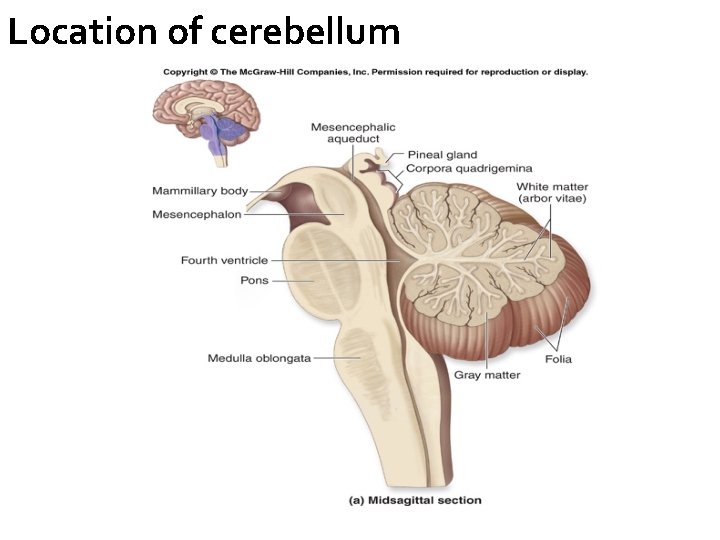
Location of cerebellum
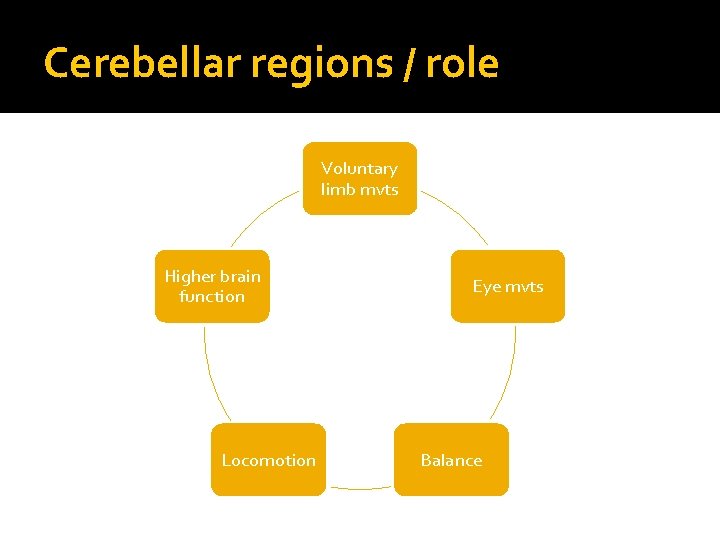
Cerebellar regions / role Voluntary limb mvts Higher brain function Locomotion Eye mvts Balance
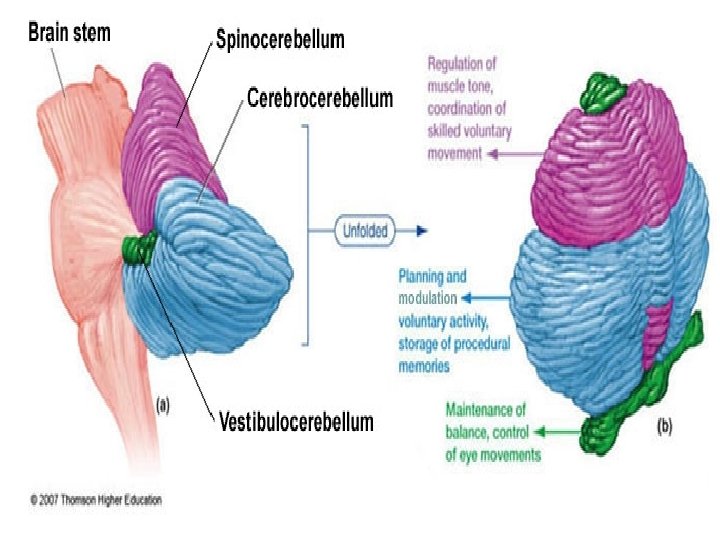
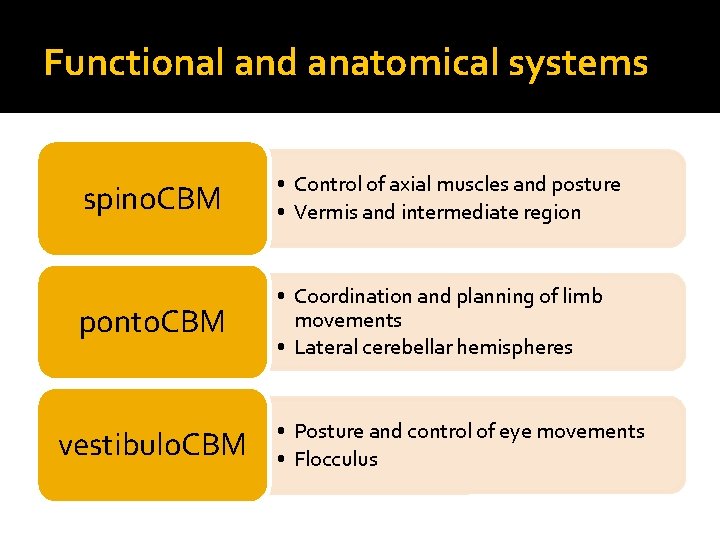
Functional and anatomical systems spino. CBM • Control of axial muscles and posture • Vermis and intermediate region ponto. CBM • Coordination and planning of limb movements • Lateral cerebellar hemispheres vestibulo. CBM • Posture and control of eye movements • Flocculus
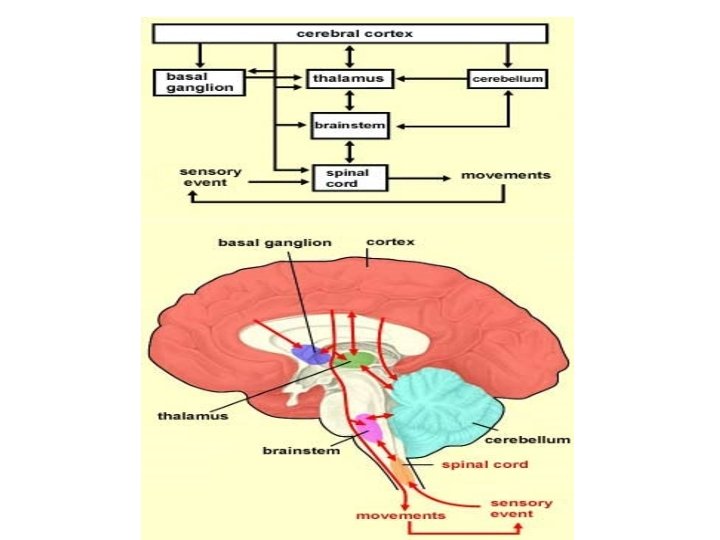
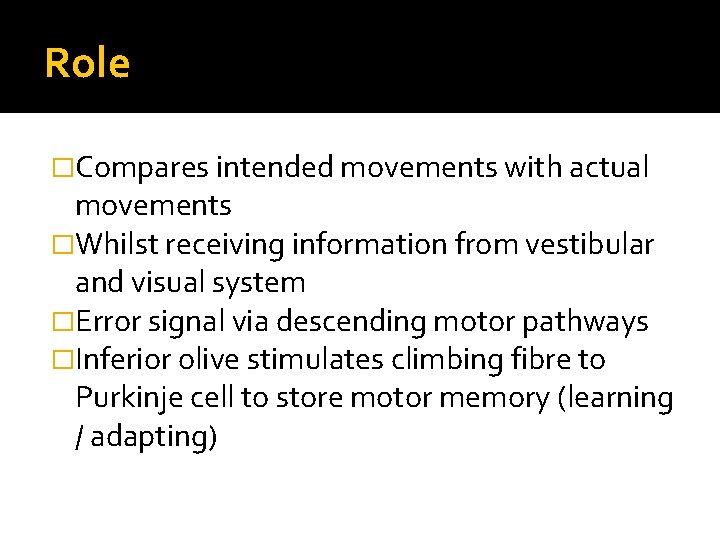
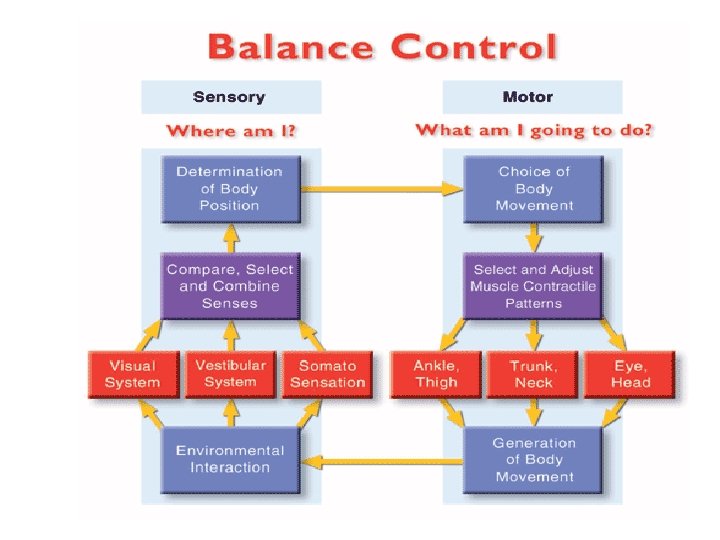
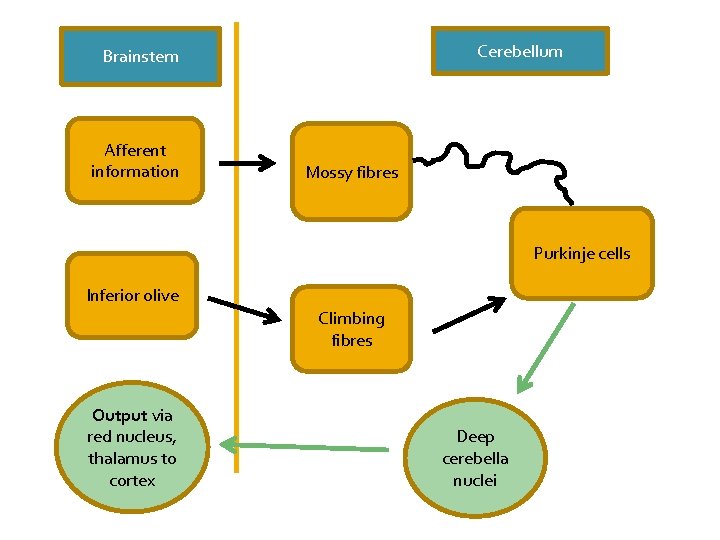
Role �Compares intended movements with actual movements �Whilst receiving information from vestibular and visual system �Error signal via descending motor pathways �Inferior olive stimulates climbing fibre to Purkinje cell to store motor memory (learning / adapting)
Cerebellum Brainstem Afferent information Mossy fibres Purkinje cells Inferior olive Climbing fibres Output via red nucleus, thalamus to cortex Deep cerebella nuclei
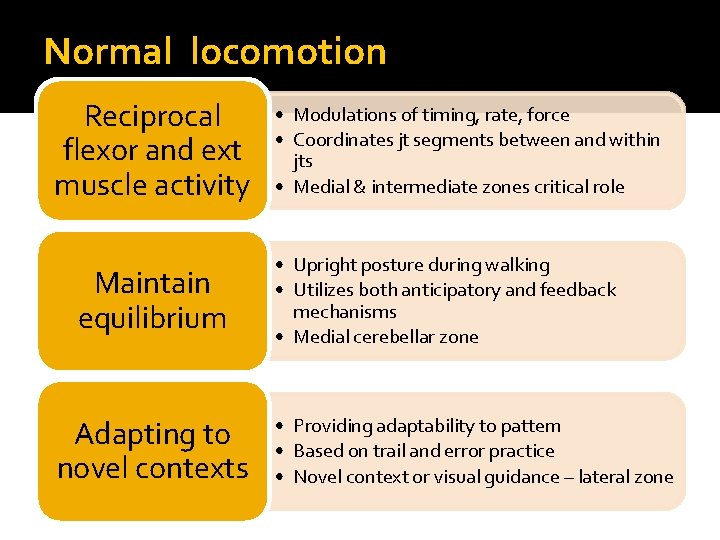
Normal locomotion Reciprocal flexor and ext muscle activity Maintain equilibrium Adapting to novel contexts • Modulations of timing, rate, force • Coordinates jt segments between and within jts • Medial & intermediate zones critical role • Upright posture during walking • Utilizes both anticipatory and feedback mechanisms • Medial cerebellar zone • Providing adaptability to pattern • Based on trail and error practice • Novel context or visual guidance – lateral zone
End of Part One