ALTERED HLAI EXPRESSION IN CANCER PROGRESSION Nguyen Hoang

- Slides: 17
ALTERED HLA-I EXPRESSION IN CANCER PROGRESSION Nguyen Hoang Kieu Anh, BSc. Center for Molecular Biomedicine, University of Pharmacy and Medicine at HCMc Neuroscience and Immunotherapy lab
OUTLINE • HLA I in cancer • Cancer progression in the context of HLA-I defects • Cancer immunotherapy involving HLA-I
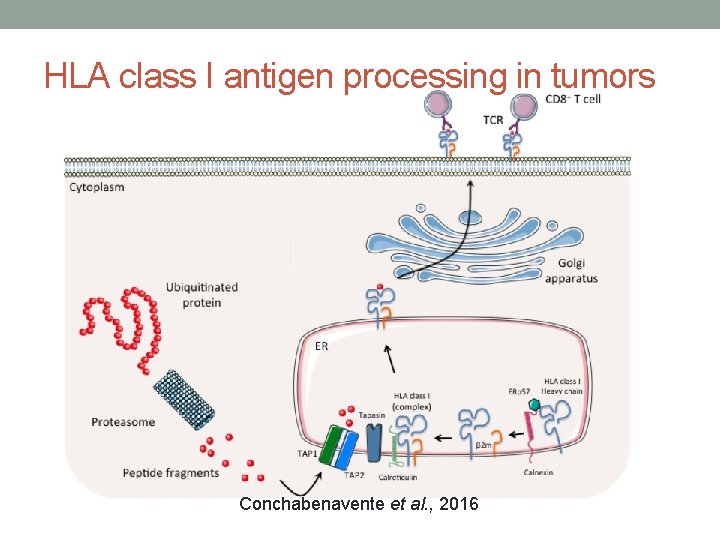
HLA class I antigen processing in tumors Conchabenavente et al. , 2016
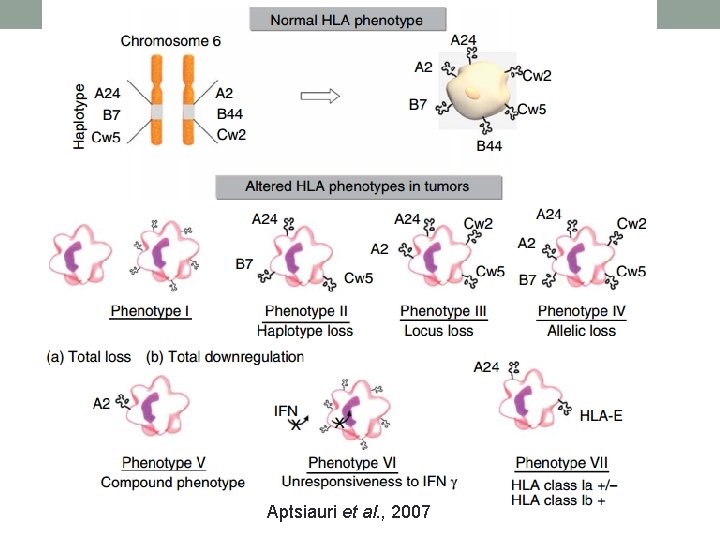
Types of defects • Loss mechanism: • Structural mutation -> protein expression/function loss • Donwnregulation mechanism: • Regulatory mechanism abnormalities -> HLA-I expression altered
Aptsiauri et al. , 2007
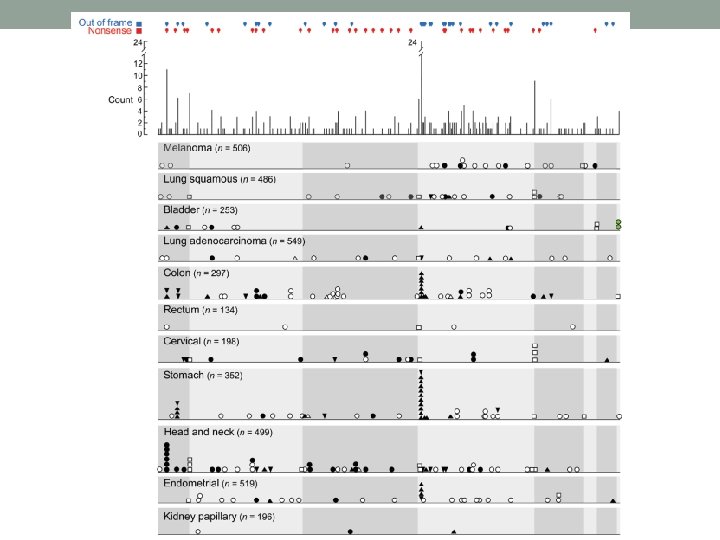
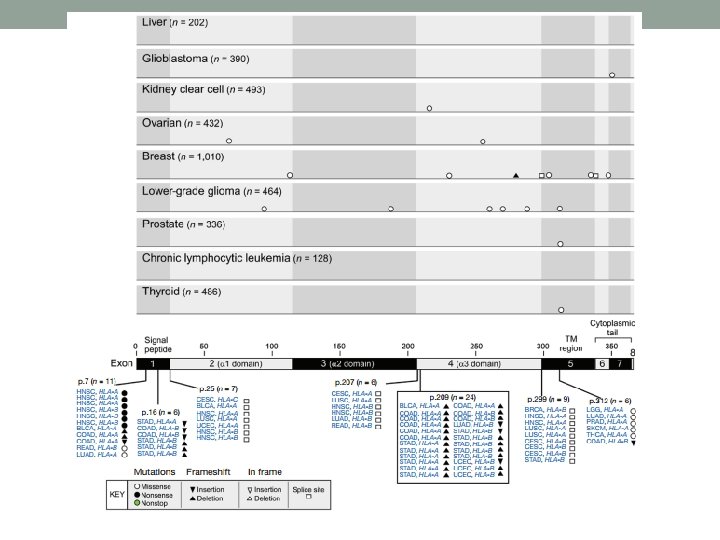
HLA-I defects in various cancers • Immunohistochemistry • Shukla et al. , 2016 • Polysolver algorithm – whole exome sequencing – HLA somatic mutation
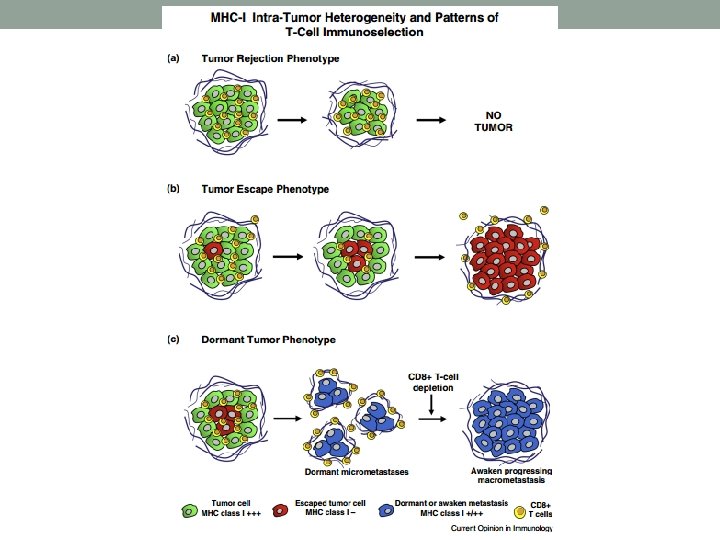
HLA-I in cancer progression • T cell immunoselection • Tumour immunosurveillance – tumour escape
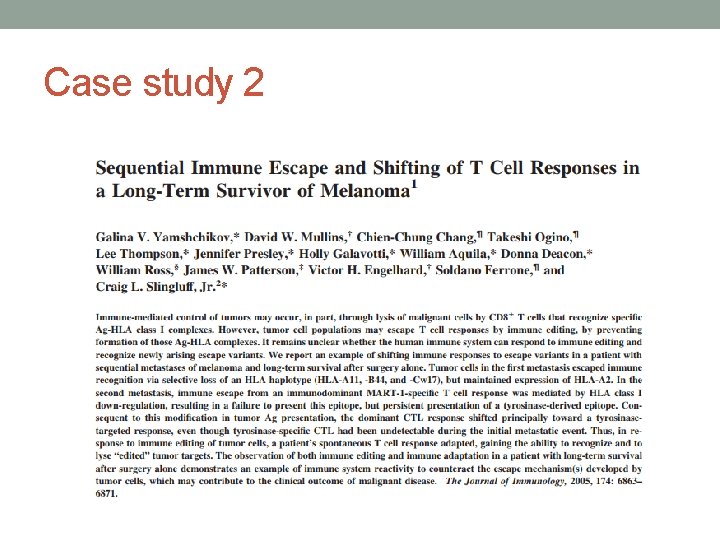
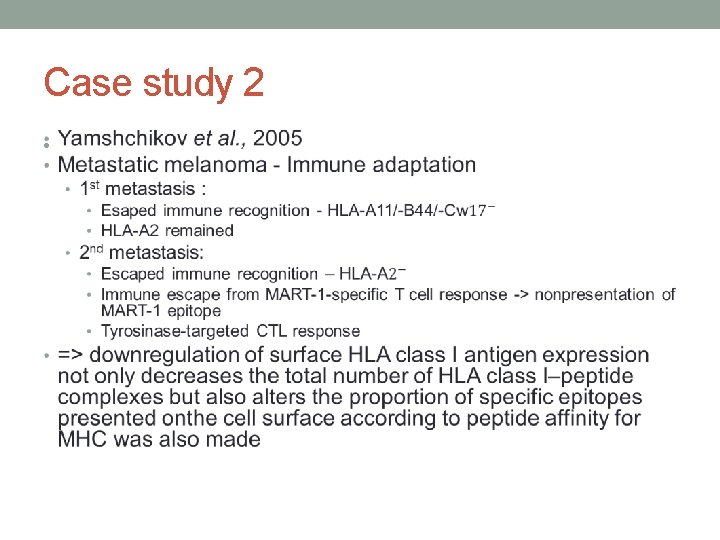
HLA-I in cancer progression • Case studies: • Cabrera et al. , 2007 • Yamshchikov et al. , 2005
Case study 1
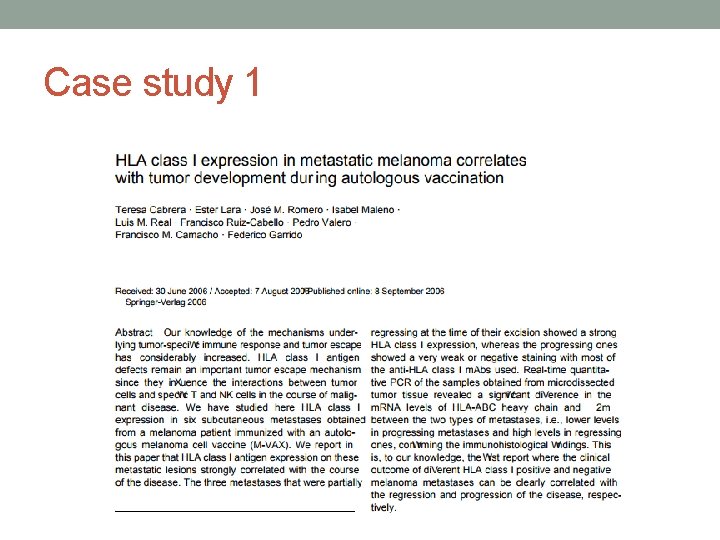
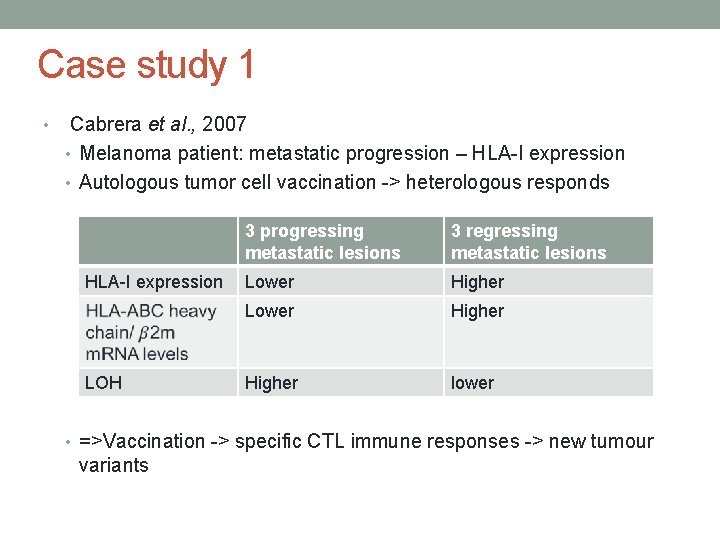
Case study 1 • Cabrera et al. , 2007 • Melanoma patient: metastatic progression – HLA-I expression • Autologous tumor cell vaccination -> heterologous responds HLA-I expression LOH 3 progressing metastatic lesions 3 regressing metastatic lesions Lower Higher lower • =>Vaccination -> specific CTL immune responses -> new tumour variants
Case study 2
Case study 2 •
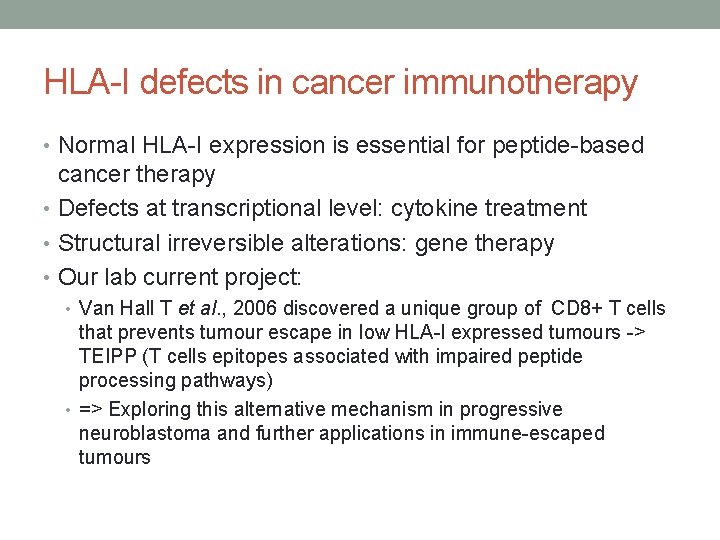
HLA-I defects in cancer immunotherapy • Normal HLA-I expression is essential for peptide-based cancer therapy • Defects at transcriptional level: cytokine treatment • Structural irreversible alterations: gene therapy • Our lab current project: • Van Hall T et al. , 2006 discovered a unique group of CD 8+ T cells that prevents tumour escape in low HLA-I expressed tumours -> TEIPP (T cells epitopes associated with impaired peptide processing pathways) • => Exploring this alternative mechanism in progressive neuroblastoma and further applications in immune-escaped tumours
Thank you for your attention!