
Chapter 6 States of Consciousness Quiz 1 What




- Slides: 65
Chapter 6 States of Consciousness
Quiz 1. What are altered states of consciousness? 2. How do they affect our lives on a daily basis?
Some Early Definitions • Consciousness: All the sensations, perceptions, memories, and feelings you are aware of at any instant – Waking consciousness: Normal, clear alert awareness • Altered state of consciousness (ASC): Changes that occur in quality and pattern of mental activity; different from waking consciousness
Sleep • Innate, biological rhythm • Sleep deprivation: Sleep loss; being deprived of needed amounts of sleep • Hypersomnia: Excessive daytime sleepiness • Microsleep: Brief shift in brain activity to pattern normally recorded during sleep
More on Sleep • Sleep-deprivation psychosis: Confusion, disorientation, delusions, and hallucinations that occur because of sleep loss • Sleep patterns: Daily rhythms of sleep and waking
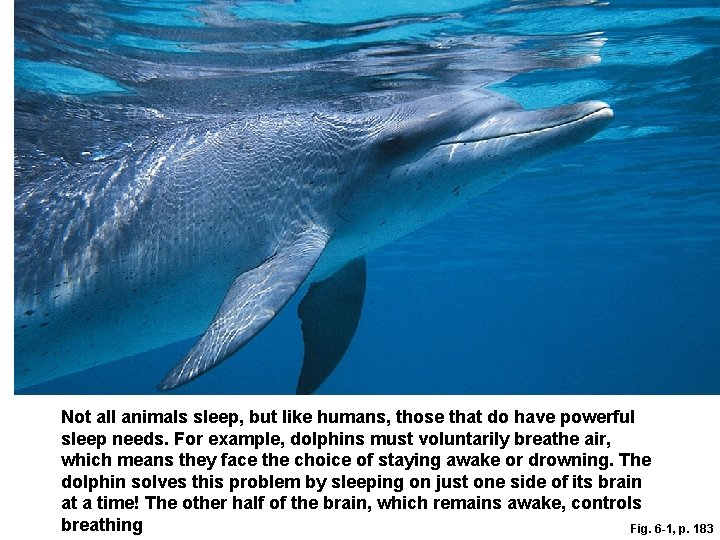
Not all animals sleep, but like humans, those that do have powerful sleep needs. For example, dolphins must voluntarily breathe air, which means they face the choice of staying awake or drowning. The dolphin solves this problem by sleeping on just one side of its brain at a time! The other half of the brain, which remains awake, controls breathing Fig. 6 -1, p. 183
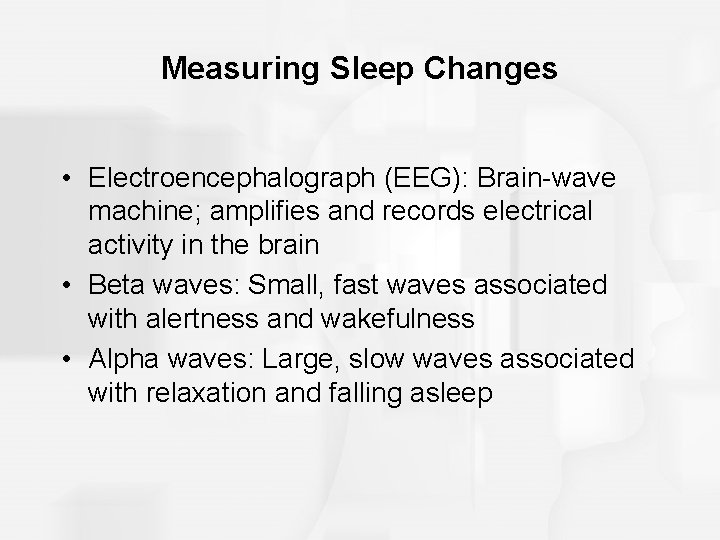
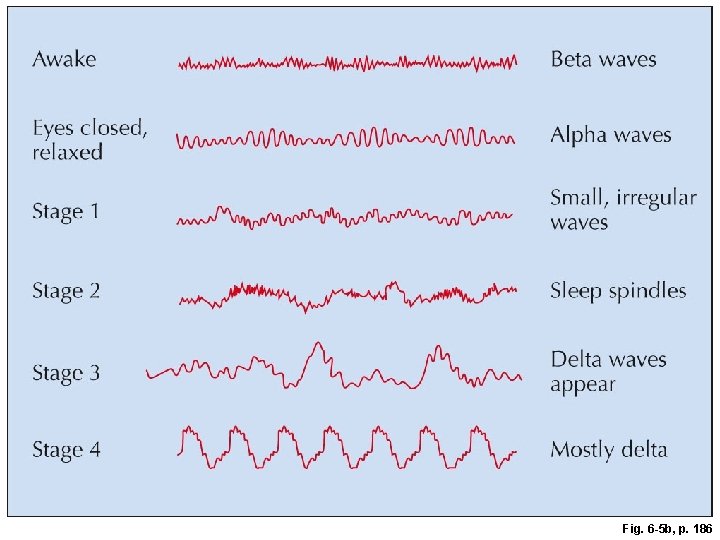
Measuring Sleep Changes • Electroencephalograph (EEG): Brain-wave machine; amplifies and records electrical activity in the brain • Beta waves: Small, fast waves associated with alertness and wakefulness • Alpha waves: Large, slow waves associated with relaxation and falling asleep
Fig. 6 -5 b, p. 186
Stages of Sleep
Stages of Sleep Stage 1 Small, irregular waves produced in light sleep (people may or may not say they were asleep) – Hypnic jerk: Reflex muscle twitch Stage 2: Deeper sleep; sleep spindles (short bursts of distinctive brain-wave activity) appear Stage 3 Deeper sleep; delta waves appear; very large and slow Stage 4 Deepest level of normal sleep; almost purely delta waves
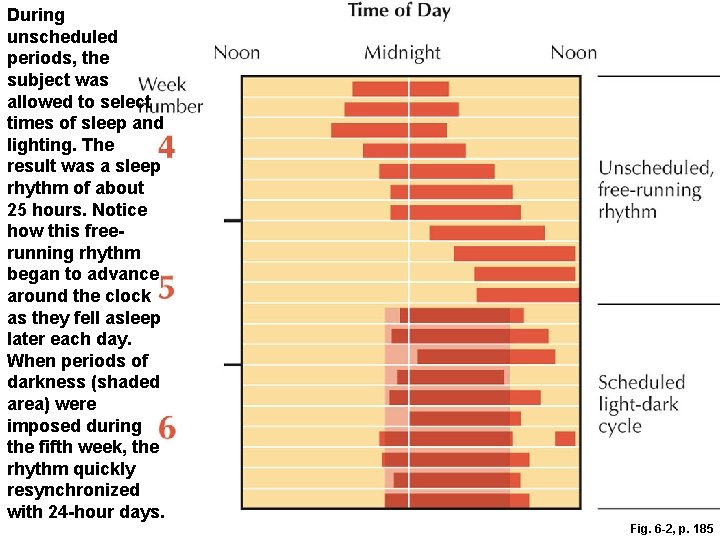
During unscheduled periods, the subject was allowed to select times of sleep and lighting. The result was a sleep rhythm of about 25 hours. Notice how this freerunning rhythm began to advance around the clock as they fell asleep later each day. When periods of darkness (shaded area) were imposed during the fifth week, the rhythm quickly resynchronized with 24 -hour days. Fig. 6 -2, p. 185
Rapid Eye Movement (REM) Sleep • Associated with dreaming; sleep is very light • Return to Stage 1 sleep EEG patterns • Body is very still during REM sleep
Non-REM (NREM) Sleep • Occurs during stages 1, 2, 3, and 4; no rapid eye movement occurs • 90 percent of non-REM sleep is dream-free • Seems to help us recover from daily fatigue
Sleep Disturbances • Insomnia: Difficulty in getting to sleep, frequent nighttime awakenings, or waking too early – Sleeping pills exacerbate insomnia; cause decrease in REM and Stage 4 sleep and may cause dependency • Drug-dependency insomnia: Sleeplessness that follows withdrawal from sleeping pills • Lack of muscle paralysis during REM sleep is called REM behavioral disorder • Night Terrors
Temporary Insomnia • Brief period of sleeplessness caused by worry, stress, and excitement – Avoid fighting it and read a book, for example, until you’re struggling to stay awake – What contributes to this in your lives?
Chronic Insomnia • Exists if sleeping troubles last for more than three weeks – Adopt regular schedule; go to bed at the same time each night, for example
Tryptophan • Amino acid (chemical) that increases serotonin levels and therefore leads to sleepiness • What common thanksgiving food includes this?
Sleep Disturbances • Sleepwalking (somnambulism): Occurs in NREM sleep during Stages 3 and 4 • Sleeptalking: Speaking while asleep; occurs in NREM sleep
Some Other Sleep Disturbances • Nightmares: Bad dreams that occur during REM sleep – May occur once or twice a month; brief and easily (unfortunately) remembered • Imagery rehearsal: Mentally rehearse the changed dream before you go to sleep again; may help to eliminate nightmares
Night Terrors • Night terrors: Total panic occurs; hallucinations may occur during Stage 4 NREM sleep – Most common in childhood; may occur in adults – Not remembered
Sleep Apnea • Repeated interruption during sleep • Produces loud snoring with short silences and gasps for breath • Apnea can be treated by – Surgery – Weight loss – Breathing mask
Sudden Infant Death Syndrome (SIDS; Crib Death) • Sudden, unexplained death of healthy infant (infants should sleep on back to try to prevent it) – May be related to sleep apnea – May have weak arousal reflex – May be related to secondhand smoke – Remember “back to sleep”
Narcolepsy • Sudden, irresistible sleep attacks – May suffer from catalepsy: Sudden, temporary muscle paralysis leading to complete body collapse – Fall directly into REM sleep
REM Rebound • Occurrence of extra REM sleep following REM sleep deprivation • Alcoholism • Also, why after sleep deprivation, you can “catch up” with less sleep than you missed
Dreams • Psychodynamic (Freudian) theory: Emphasizes internal conflicts, motives, and unconscious forces • Wish fulfillment: Freudian belief that many dreams are expressions of unconscious desires – Much evidence to refute this • Dream symbols: Images in dreams that have a deeper symbolic meaning • Manifest: Obvious, visible meaning of dream • Latent: Hidden symbolic meaning of dream
Why do we dream? • Activation-Synthesis Hypothesis Random activity in lower brain centers results in the manufacture of relatively bizarre dreams by higher brain centers • Neurocognitive Dream Theory Dreams reflect everyday working thoughts and emotions
Dream Interpretation • Freud: Four dream processes (mental filters) that hide true purposes of dreams • Condensation Combining several people, objects, or events into a single dream image • Displacement Directing emotions or actions toward safe or unimportant dream images • Symbolization Nonliteral expression of dream content • Secondary Elaboration Making a dream more logical and complete while remembering it
Dream Interpretation: A Different View • Perls: Most dreams are a special message about what is missing in our lives, what we avoid doing, or feelings that we need to reown • Lucid Dreaming Person feels fully awake within the dream and feels capable of normal thought and action
Other States on Consciousness • Overall, conscious means awake and alert without any substances in our system, altered states of consciousness ACS includes: • Sleeping • Hypnosis • Meditation • Drugs
Hypnosis • Altered state of consciousness characterized by intensely narrowed attention and increased openness to suggestion – Mesmer: Believed he could cure diseases by passing magnets over body; true “animal magnetism” (“mesmerize” means to hypnotize) – Mesmer was, in effect, a fraud and a quack – Must cooperate to become hypnotized
Hypnotic Susceptibility • How easily a person can be hypnotized • Basic suggestion effect: Tendency of hypnotized people to carry out suggested actions as though they were involuntary • Hidden observer: Detached part of hypnotized person’s awareness that silently observes events
Hypnosis Can… • • Help people relax Reduce pain Get people to make better progress in therapy Hypnosis cannot… Produce acts of superhuman strength Produce age regression Force you to do things against your will
Relax… • Altered states such as hypnosis and meditation require the subject to relax. Relaxation is not always easy to achieve, and most people need to work at it to do it successfully. Biofeedback techniques can help people learn to relax and gain control of their bodies. Students can discover how easy it is to relax, even in the classroom, by a simple exercise.
“Tricks of the Trade” • Waking suggestibility: People on stage do not want to spoil the act, so they will follow any instruction • Selection of responsive subjects: Any “volunteer” who does not get hypnotized in the group on stage and does not follow instructions is “thrown off”
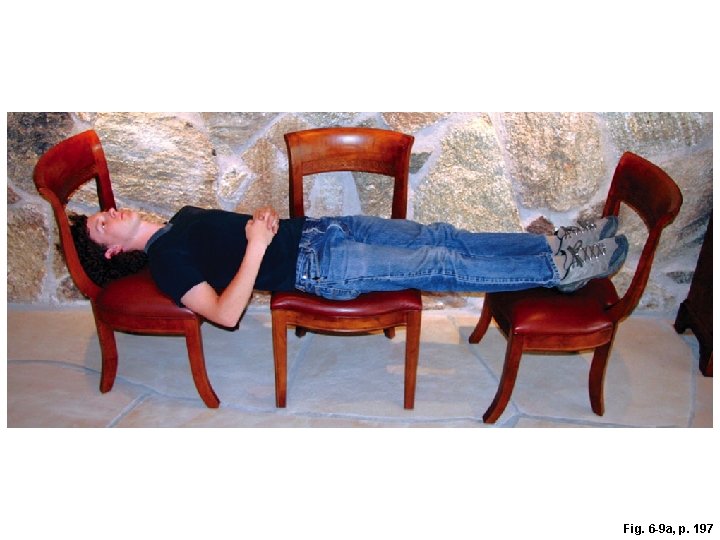
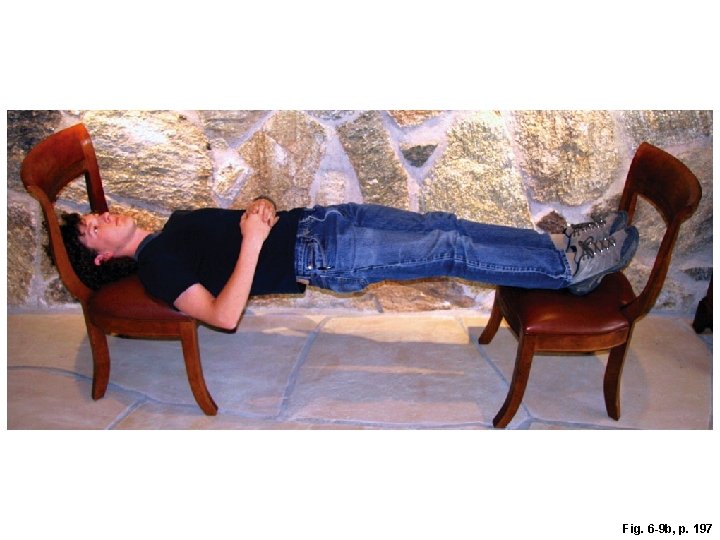
More “Tricks of the Trade” • Hypnotists as director: Once they are in a trance, the “volunteers” are suddenly the show’s stars, and they will act like it. The hypnotists only need to direct them • The hypnosis label disinhibits: On stage, once you are “in a hypnotic trance, ” your responsibility for actions is removed; you can do whatever you want!
More “Tricks of the Trade” • Stage hypnotists use tricks: Stage hypnosis is 50% deception and 50% taking advantage of the situation • Conclusion: Stage hypnotists entertain; they rarely hypnotize
Fig. 6 -9 a, p. 197
Fig. 6 -9 b, p. 197
Meditation • Mental exercise for producing relaxation or heightened awareness – Concentrative meditation: You attend to a single focal point, object, or thought – Mindfulness meditation: Based on widening attention to become aware of everything experienced at any given moment
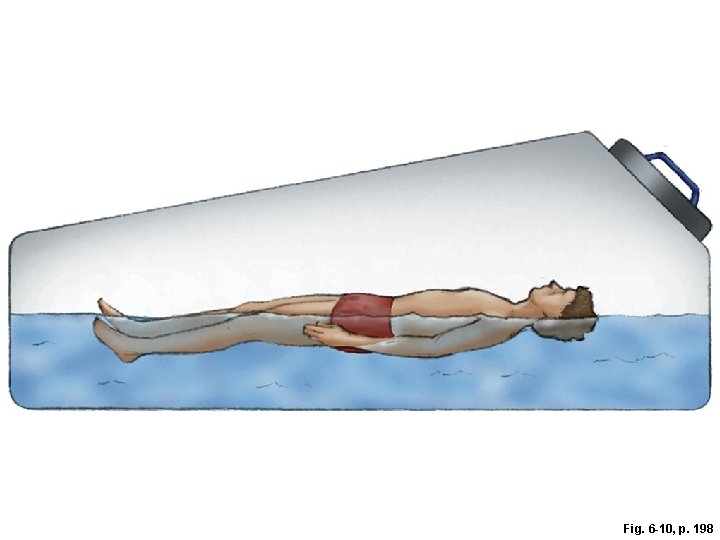
Sensory Deprivation (SD) • Any major reduction in amount or variety of sensory stimulation • Benefits – Sensory enhancement – Relaxation – Changing habits • Benefits called REST: Restricted Environmental Stimulation Therapy
Fig. 6 -10, p. 198
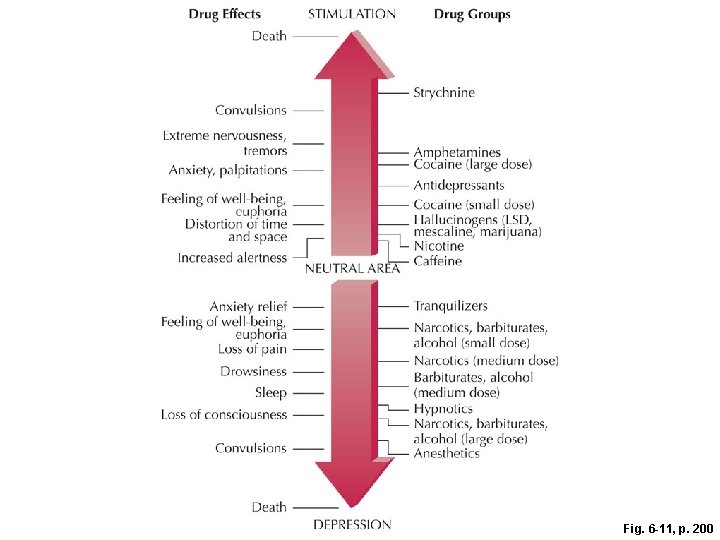
Drugs and Altered States of Consciousness • Psychoactive drug: Substance capable of altering attention, judgment, memory, time sense, self-control, emotion, or perception • Stimulant: Substance that increases activity in body and nervous system • Depressant: Substance that decreases activity in body and nervous system
Fig. 6 -11, p. 200
Physical Dependence • Addiction based on drug tolerance and withdrawal symptoms – Drug tolerance: Reduction in body’s response to a drug – Withdrawal symptoms: Physical illness and discomfort following withdrawal of a drug
Psychological Dependence • Drug dependence based primarily on psychological or emotional needs – Drug is necessary to maintain comfort and well-being – Crave drug and its rewarding qualities
Stimulants • Amphetamines: Synthetic stimulants that excite nervous system – Dexedrine and methamphetamine are two types of stimulants • Amphetamine psychosis: Loss of contact with reality because of amphetamine use; user tends to have paranoid delusions
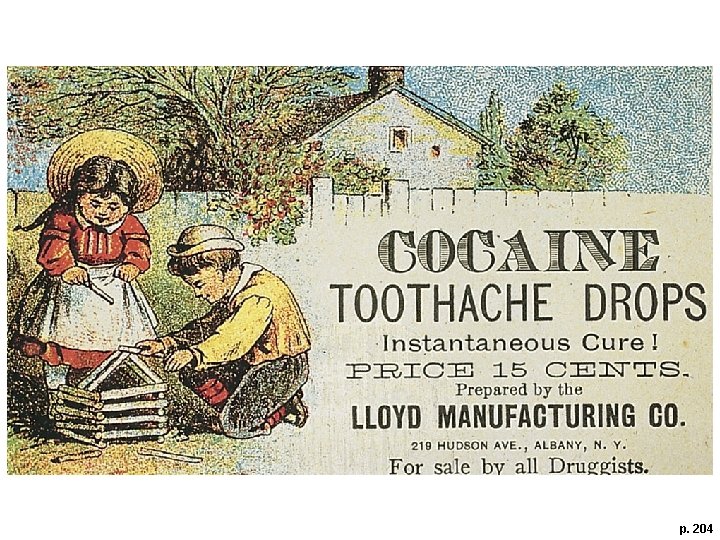
Cocaine • Central nervous system stimulant derived from leaves of coca plant – From 1886 -1906, Coca-Cola did indeed have cocaine in it! – Highly addictive drug – Anhedonia (inability to feel pleasure): Common after cocaine withdrawal
p. 204
MDMA (Ecstasy) • Chemically similar to amphetamine; created by small variations in the drug’s structure – May cause severe liver damage and fatal heat exhaustion – Repeated use damages serotonergic brain cells
Caffeine • Most frequently used psychoactive drug in North America; present in colas, chocolate, coffee, tea • Causes tremors, sweating, talkativeness, tinnitus; suppresses fatigue or sleepiness, increases alertness
Caffeinism • Physiological dependence on caffeine • Symptoms: Insomnia, irritability, loss of appetite, chills, racing heart, elevated body temperature • May be hazardous to pregnant women if used excessively; may cause birth defects
Nicotine • Natural stimulant found mainly in tobacco • In large doses may cause stomach pain, vomiting, diarrhea, confusion, tremors • Addictive • Smoking is one cause of lung cancer • Sum: Don’t smoke; smoking kills (so does chewing tobacco)
GHB (Gamma-Hydroxybutyrate) • Central nervous system (CNS) depressant that relaxes and sedates; combination of degreasing solvent and drain cleaner – Sedative effects may result in nausea, loss of muscle control, and either sleep or a loss of consciousness – Inhibits gag reflex, so some choke to death on their own vomit
Tranquilizers • Lower anxiety and reduce tension – Valium, Xanax, Halcion, and Librium are four types – Rohypnol: Related to Valium; lowers inhibitions and produces relaxation or intoxication. Larger doses can induce short -term amnesia and sleep • Date rape drug, because it’s odorless and tasteless (“roofies”)
Drug Interaction • Combined effect of two drugs that exceeds addition of one drug’s effects to the other
Alcohol • Ethyl alcohol: Intoxicating element in fermented and distilled liquors – NOT a stimulant but does lower inhibitions – Depressant • Alcohol myopia: Shortsighted thinking and perception that occurs during alcohol intoxication
Binge Drinking • Consuming five or more drinks in a short time, or four or more for women – Serious sign of alcohol abuse – May lead up to 10 percent loss of brain power, especially memory
p. 209
Treatment for Alcohol Abuse and Dependence • Detoxification: Withdrawal of the person from alcohol; occurs in a medical setting and is tightly controlled; often necessary before long-term treatment begins
Alcoholics Anonymous (AA) • Alcoholics Anonymous (AA): Worldwide selfhelp organization composed of recovering alcoholics; emphasizes admitting powerlessness over alcohol usage and wanting to recover – Spiritual component – Free; around for over 70 years! – Common complaints about AA: An AA Alternative Rational Recovery, and Secular Organizations for Sobriety (SOS): Non-spiritual AA Alternative
Some Hallucinogens • A substance that alters or distorts sensory impressions • Lysergic Acid Diethylamide (LSD): Hallucinogen that can produce hallucinations and other psychotic-like symptoms • Mescaline (peyote) and psilocybin (magic mushrooms) are two other types of hallucinogens
PCP (Angel Dust) • Initially can have hallucinogenic effects; also an anesthetic and has stimulant and depressant effects
Marijuana (Pot) • Cannabis sativa (marijuana; pot): Leaves and flowers of the hemp plant – Active Chemical: THC – Effects: Relaxation, time distortion, perceptual distortions – Psychologically and physiologically addictive
Some Health Risks of Using Marijuana • May increase risk of prostate and cervical cancer • May suppress immune system, perhaps increasing risk of disease • THC may cause a higher rate of miscarriages • Activity levels in the cerebellum are lower than normal in pot users • Pot may damage some of the brain’s memory centers
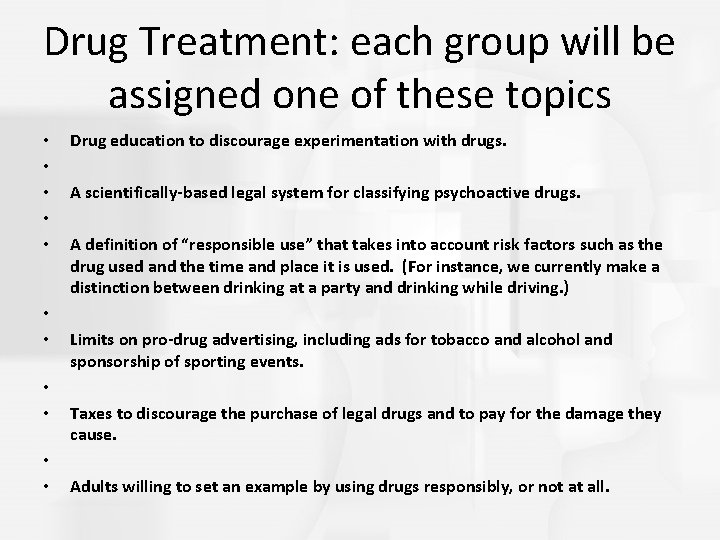
Drug Treatment: each group will be assigned one of these topics • • • Drug education to discourage experimentation with drugs. A scientifically-based legal system for classifying psychoactive drugs. A definition of “responsible use” that takes into account risk factors such as the drug used and the time and place it is used. (For instance, we currently make a distinction between drinking at a party and drinking while driving. ) Limits on pro-drug advertising, including ads for tobacco and alcohol and sponsorship of sporting events. Taxes to discourage the purchase of legal drugs and to pay for the damage they cause. Adults willing to set an example by using drugs responsibly, or not at all.