All things Year 6 Corpus Christi Catholic Primary


- Slides: 32
All things Year 6 Corpus Christi Catholic Primary School
Meet the Team Miss Pollard Mrs Scullion Miss Moran Miss Halton
Cardinal Wiseman Secondary School Welcome Helen Quinn (CSEL – Romero Academy)
Secondary School Dates September/October open evenings for secondary schools 31 st October 2018 – closing date for Secondary School applications – applications can be done online www. Coventry. gov. uk/schooladmissions Parents that have applied online will be notified via email on/by the 1 st March 2019 or they will receive a second class letter sent on the 1 st March 2019 Parents changing address: deadline is 31 st December 2018 to adjust any application if needed
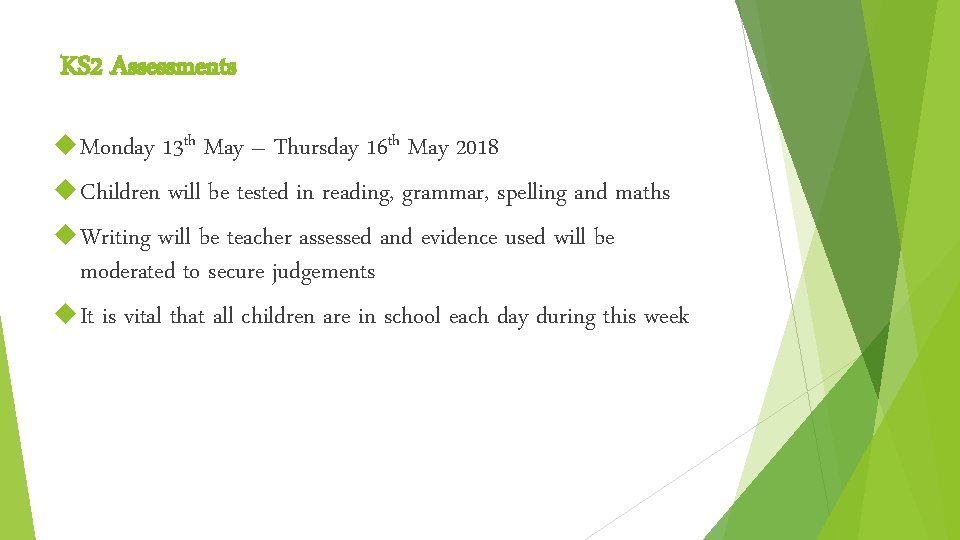
KS 2 Assessments Monday 13 th May – Thursday 16 th May 2018 Children will be tested in reading, grammar, spelling and maths Writing will be teacher assessed and evidence used will be moderated to secure judgements It is vital that all children are in school each day during this week
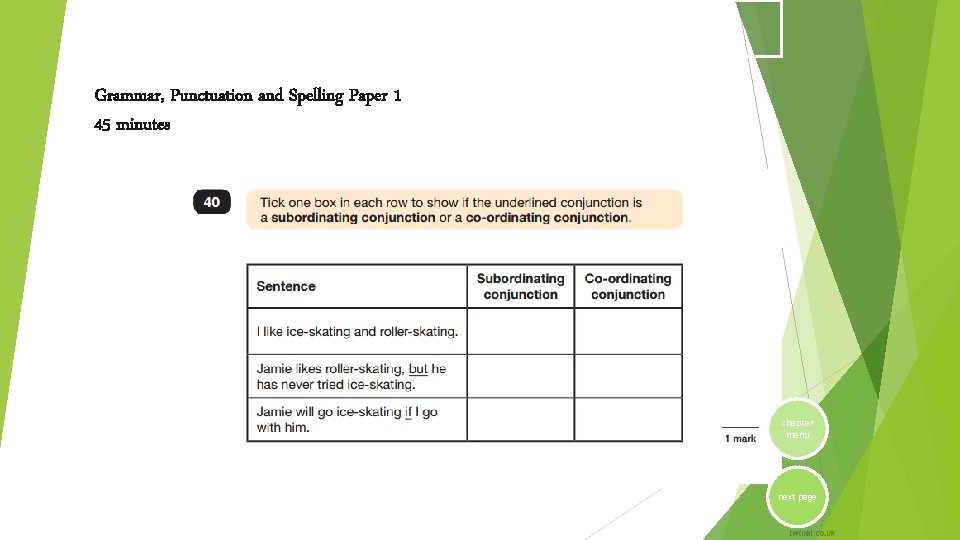
Sample Questions Grammar, Punctuation and Spelling Paper 1 45 minutes chapter menu next page
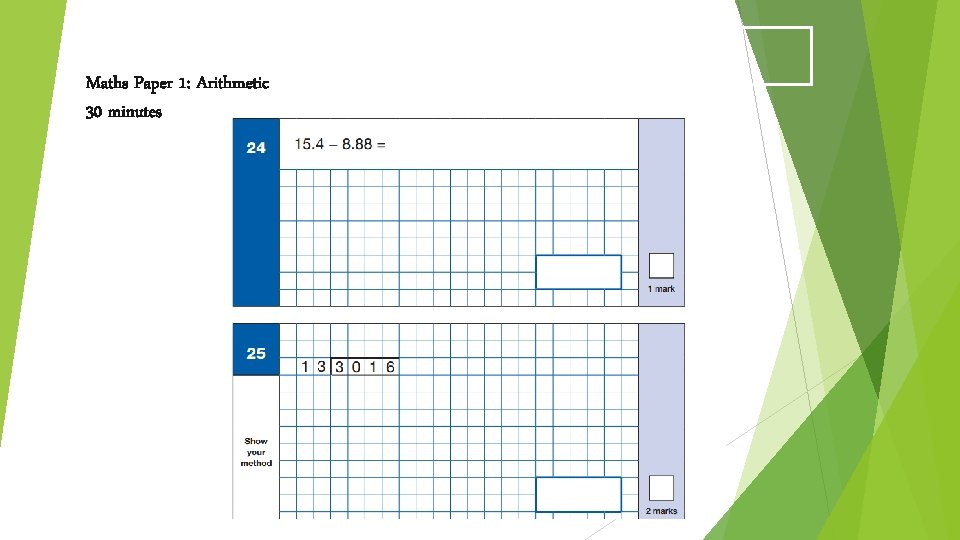
Sample Questions Maths Paper 1: Arithmetic 30 minutes
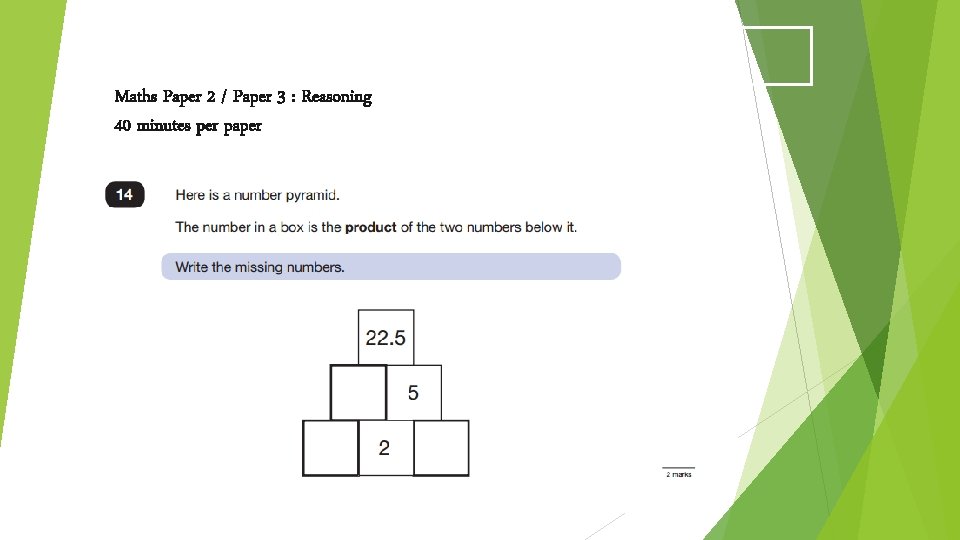
Sample Questions Maths Paper 2 / Paper 3 : Reasoning 40 minutes per paper
How to Help Your Child • First and foremost, support and reassure your child that there is nothing to worry about and they should always just try their best. Praise and encourage! • Ensure your child has the best possible attendance at school. • Support your child with any homework tasks/revision material. • Reading, spelling and arithmetic (e. g. times tables) are always good to practise. • Talk to your child about what they have learnt at school and what book(s) they are reading (the character, the plot, their opinion). • Make sure your child has a good sleep and healthy breakfast every morning!
How to Help Your Child with Reading • Listening to your child read can take many forms. • First and foremost, focus developing an enjoyment and love of reading. • Enjoy stories together – reading stories to your child at KS 2 is equally as important as listening to your child read. • Read a little at a time but often, rather than rarely but for long periods of time! • Talk about the story before, during and afterwards – discuss the plot, the characters, their feelings and actions, how it makes you feel, predict what will happen and encourage your child to have their own opinions. • Look up definitions of words together – you could use a dictionary, the internet or an app on a phone or tablet. • All reading is valuable – it doesn’t have to be just stories. Reading can involve anything from fiction and non-fiction, poetry, newspapers, magazines, football programmes, TV guides. • Visit the local library - it’s free!
How to Help Your Child with Writing • Practise and learn weekly spelling lists – make it fun! • Encourage opportunities for writing such as letters to family or friends, shopping lists, notes or reminders, stories or poems. • Write together – be a good role model for writing. • Encourage use of a dictionary to check spelling and a thesaurus to find synonyms and expand vocabulary. • Allow your child to use a computer for word processing, which will allow for editing and correcting of errors without lots of crossing out. • Remember that good readers become good writers! Identify good writing features when reading (e. g. vocabulary, sentence structure, punctuation). • Show your appreciation: praise and encourage, even for small successes!
How to Help Your Child with Maths • Play times tables games • Play mental maths games including counting in different amounts, forwards and backwards. • Encourage opportunities for telling the time. • Encourage opportunities for counting coins and money; finding amounts or calculating change when shopping. • Look for numbers on street signs, car registrations and anywhere else! • Look for examples of 2 D and 3 D shapes around the home. • Identify, weigh or measure quantities and amounts in the kitchen or in recipes. • Play games involving numbers or logic, such as dominoes, card games, darts, draughts or chess.
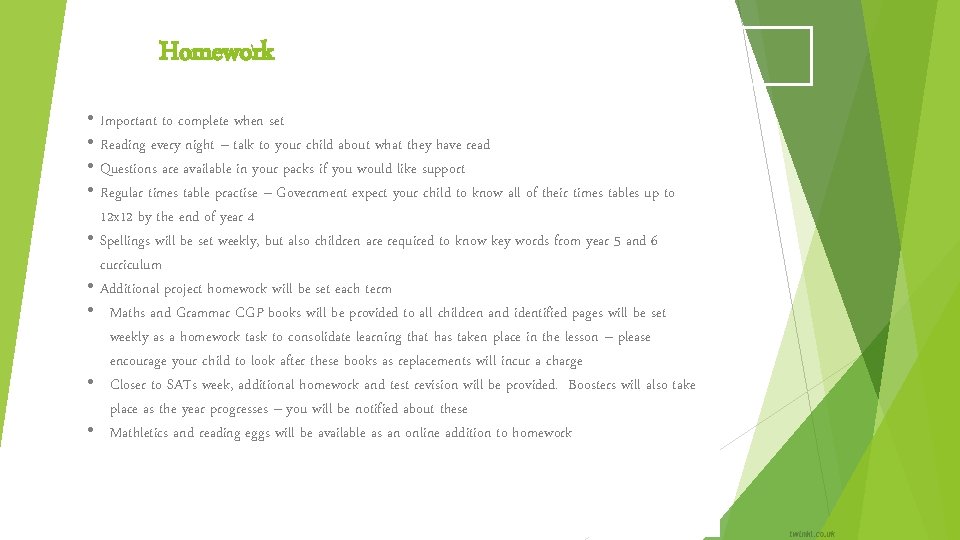
Homework • Important to complete when set • Reading every night – talk to your child about what they have read • Questions are available in your packs if you would like support • Regular times table practise – Government expect your child to know all of their times tables up to 12 x 12 by the end of year 4 • Spellings will be set weekly, but also children are required to know key words from year 5 and 6 curriculum • Additional project homework will be set each term • Maths and Grammar CGP books will be provided to all children and identified pages will be set weekly as a homework task to consolidate learning that has taken place in the lesson – please encourage your child to look after these books as replacements will incur a charge • Closer to SATs week, additional homework and test revision will be provided. Boosters will also take place as the year progresses – you will be notified about these • Mathletics and reading eggs will be available as an online addition to homework
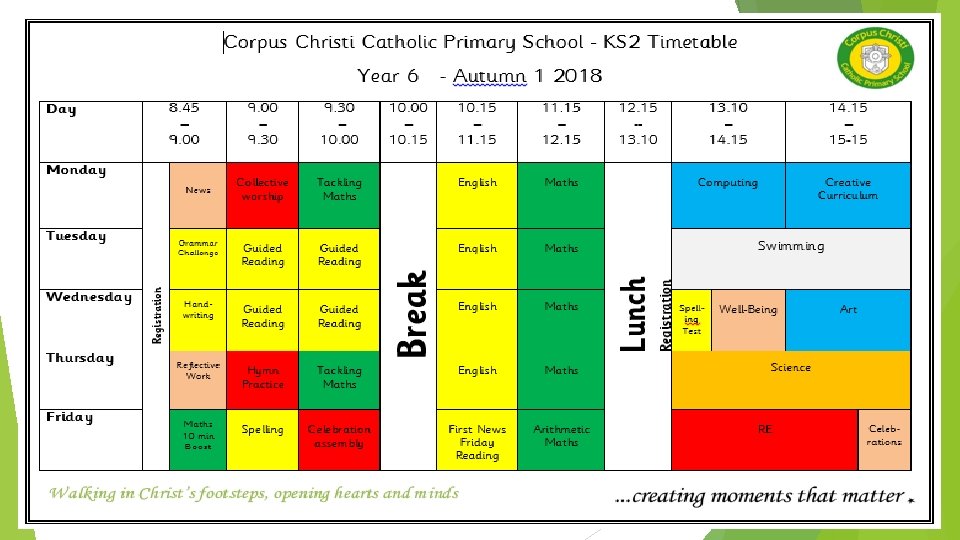
Timetable
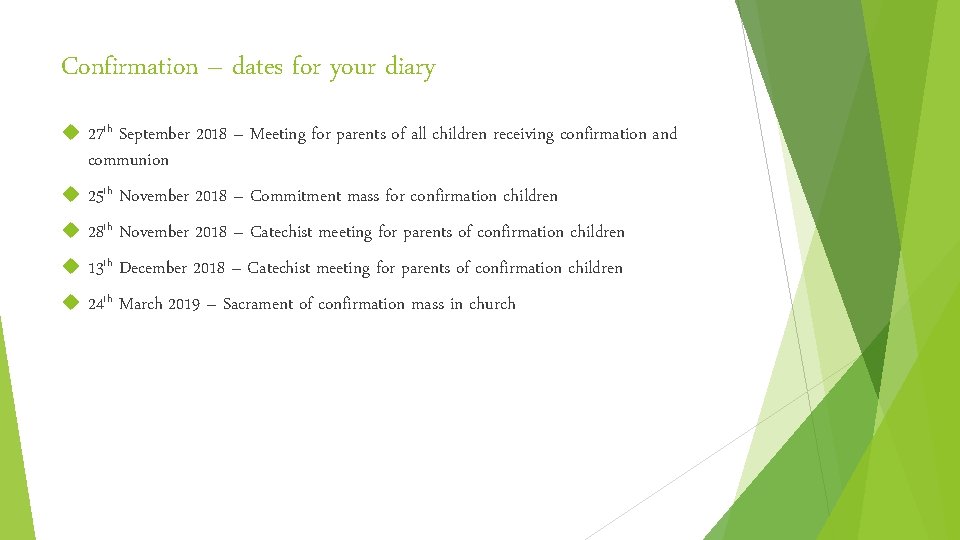
Confirmation – dates for your diary 27 th September 2018 – Meeting for parents of all children receiving confirmation and communion 25 th November 2018 – Commitment mass for confirmation children 28 th November 2018 – Catechist meeting for parents of confirmation children 13 th December 2018 – Catechist meeting for parents of confirmation children 24 th March 2019 – Sacrament of confirmation mass in church
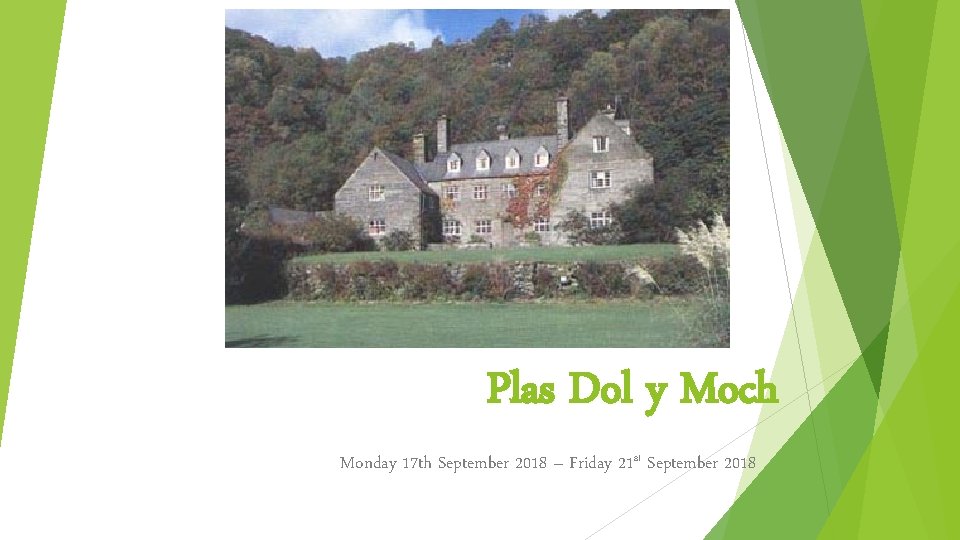
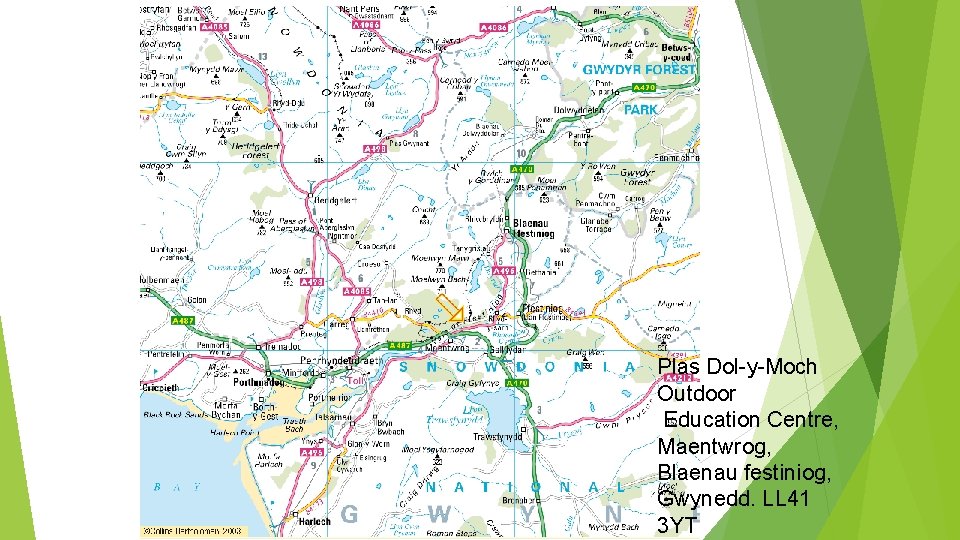
Plas Dol y Moch Monday 17 th September 2018 – Friday 21 st September 2018
Plas Dol-y-Moch Outdoor Education Centre, Maentwrog, Blaenau festiniog, Gwynedd. LL 41 3 YT
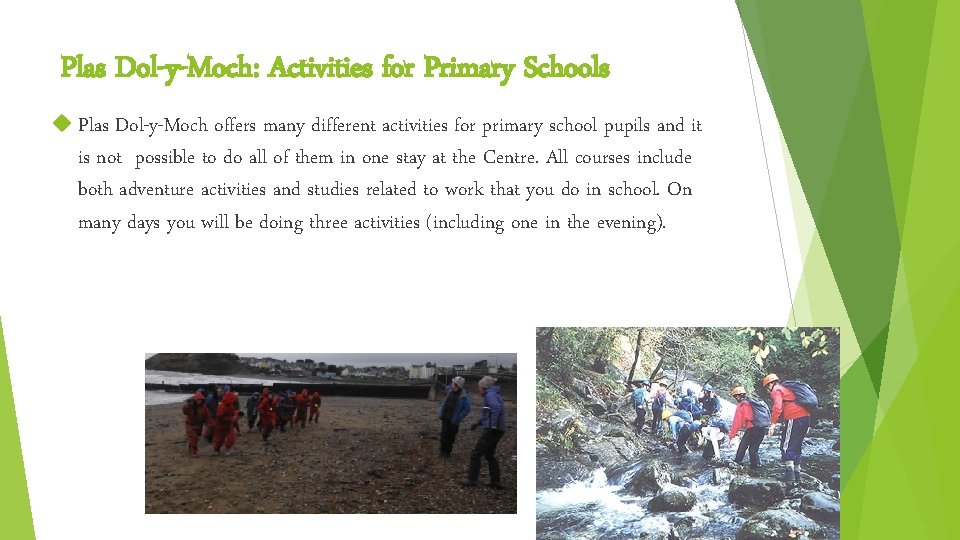
Plas Dol-y-Moch: Activities for Primary Schools Plas Dol-y-Moch offers many different activities for primary school pupils and it is not possible to do all of them in one stay at the Centre. All courses include both adventure activities and studies related to work that you do in school. On many days you will be doing three activities (including one in the evening).
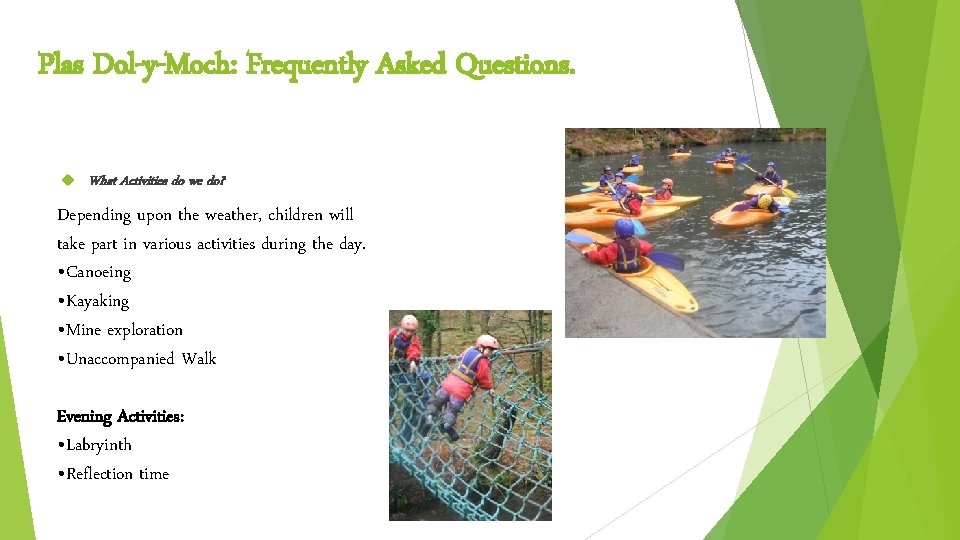
Plas Dol-y-Moch: Frequently Asked Questions. What Activities do we do? Depending upon the weather, children will take part in various activities during the day. • Canoeing • Kayaking • Mine exploration • Unaccompanied Walk Evening Activities: • Labryinth • Reflection time
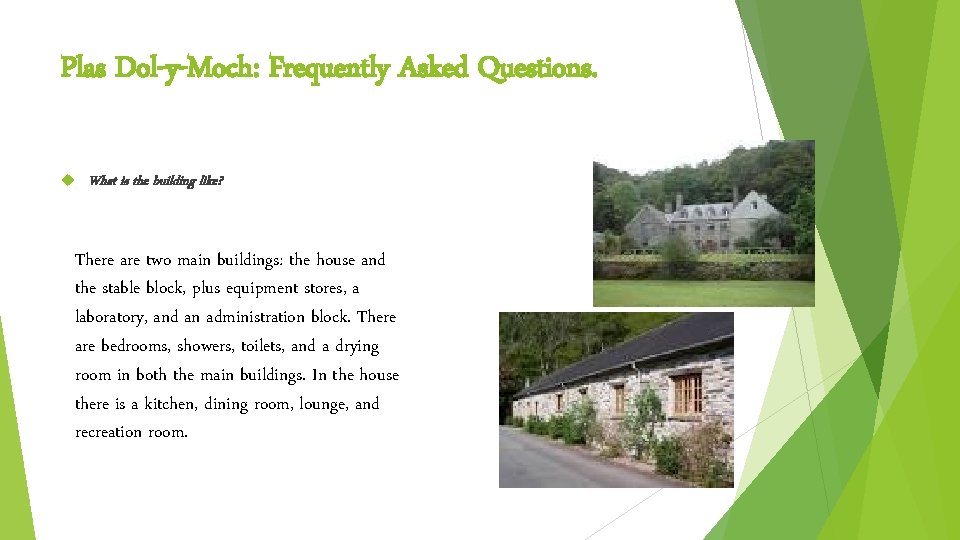
Plas Dol-y-Moch: Frequently Asked Questions. What is the building like? There are two main buildings: the house and the stable block, plus equipment stores, a laboratory, and an administration block. There are bedrooms, showers, toilets, and a drying room in both the main buildings. In the house there is a kitchen, dining room, lounge, and recreation room.
What do we need to bring? THESE ITEMS WILL BE PROVIDED BY THE CENTRE Boots Rucksacks Waterproofs Specialist Equipment (for climbing, canoeing, etc. ) Wellingtons
What do we need to bring? ESSENTIAL ITEMS FOR TRAVELLING, EVENING AND GENERAL USE Coat 1 set casual clothes Socks - bring plenty Underclothes (bring plenty!) Nightwear 2 Towels (1 large) Plastic carrier bag for dirty washing. Personal Washing Gear (including soap, toothpaste, shampoo) Shoes / Trainers 1 extra pair of trainers/pumps for kayaking that will get wet (maybe on the first day) Please bring a soft holdall or a small suitcase, as we do not have room for large suitcases, especially rigid or “hard cases”.
What do we need to bring? ESSENTIAL ITEMS The nature of the activities may be hard wearing on students’ clothes so they are advised to bring old items from the following list. 2 pairs of Trainers (including 1 old pair) Warm Hat Minimum - 3 pairs trousers/tracksuit bottoms Gloves Minimum - 3 long sleeved fleeces T Shirts (plenty) Minimum - 3 pairs of thick socks Torch and Battery No jeans on activities.
What do we need to bring? Medication If your child is on any medication, this MUST be given to staff by an adult on the day of departure. It must be signed for by parent and staff member and be in the original packaging clearly labelled with the child’s name and dosage instructions. If your child requires travel sickness tablets, the same as the above applies. If your child is unwell whilst we are away, please let staff know if they are unable to be given children’s paracetamol (Calpol).
What are the bedrooms like? They vary in size, the smallest ones have two beds, and the biggest has 8. Some rooms have bunk beds others have single beds. Adults accompanying groups have separate bedrooms but they sleep in the same general areas as the group members.
What time do you have to get up at? Out of bed at 7. 15 a. m. Here are some other important times: breakfast 8. 00 a. m. , meeting for all staff and students 9. 00 a. m. , activities from 9. 15 a. m. to about 4. 00 p. m. , evening meal 5. 30 p. m. Evening activities are from 6. 30 p. m. to 9. 00 p. m. , these will usually include some indoor work and an outdoor activity. Lights out is approximately at 10. 00 pm.
Do you get any free time and what can you do then? Yes, usually from about 4. 00 p. m. to 5. 30 p. m. and from 9. 00 p. m. until bedtime. You have to stay on the Centre site. There are two lawns that can be used for games (the Centre has equipment for football, volleyball, rounders, and cricket). There is pool table and table tennis table. You can of course just relax and socialise with others on the course. Do you have to do jobs around the Centre? Yes. You have to help keep your own bedrooms tidy and help out by doing a job each day such as setting tables for breakfast or sweeping a room. What happens if you have a special diet? All meals are provided. Generally there is not a choice (like a menu in a restaurant) however we do cater for vegetarians and for those who have particular dietary requirements for religious, ethical, or medical reasons. Are there any rules? Yes. Good behaviour is expected especially where safety or consideration for others is involved. Do most people on courses enjoy life around the Centre? Yes. They like the friendly atmosphere and they like sharing and living with others.
What do we need to bring? Money Children are permitted to bring money with them for both tuck and souvenirs. We do ask that they bring no more than £ 3 for tuck and £ 5 for souvenirs. This money must be placed in separate envelopes, which are clearly labelled with both your child’s name and the amount of money contained inside. These envelopes will be held by your child’s class teacher for the duration of the visit.
NO PHONES – the reason why No time to use them Time to enjoy other activities rather than technology Time to socialise face to face Safeguarding Dreadful – the centre do not allow them signal Independence
Staff that will be attending Dol Y Moch this year will be: Miss Pollard Miss Halton Miss O’Sullivan Mr Leddy
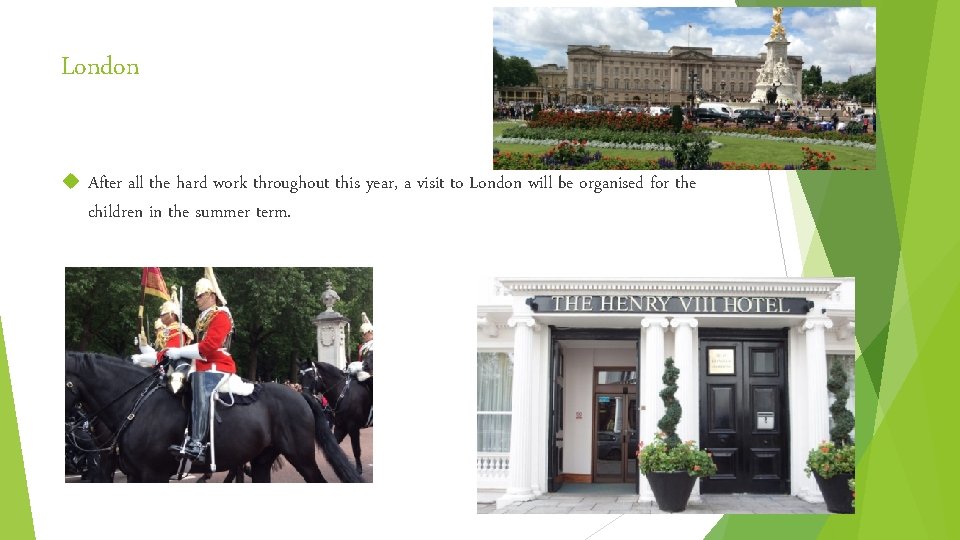
London After all the hard work throughout this year, a visit to London will be organised for the children in the summer term.
Thank you! We are available to answer any questions should you need further clarification. Enjoy your evening!