Adapted From Ms Susan M Pojer Horace Greeley
- Slides: 48
Adapted From: Ms. Susan M. Pojer Horace Greeley HS Chappaqua, NY
On the Eve of the Revolution ? Britain Americans Advantages ? ? Disadvantages ? ?
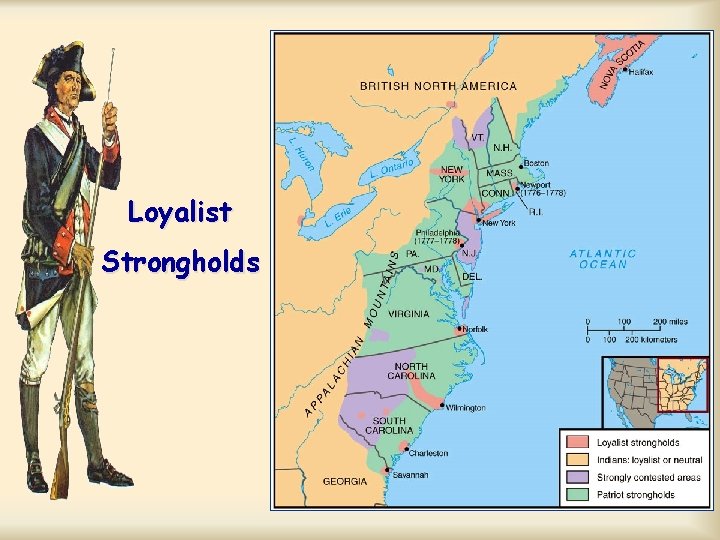
Loyalist Strongholds
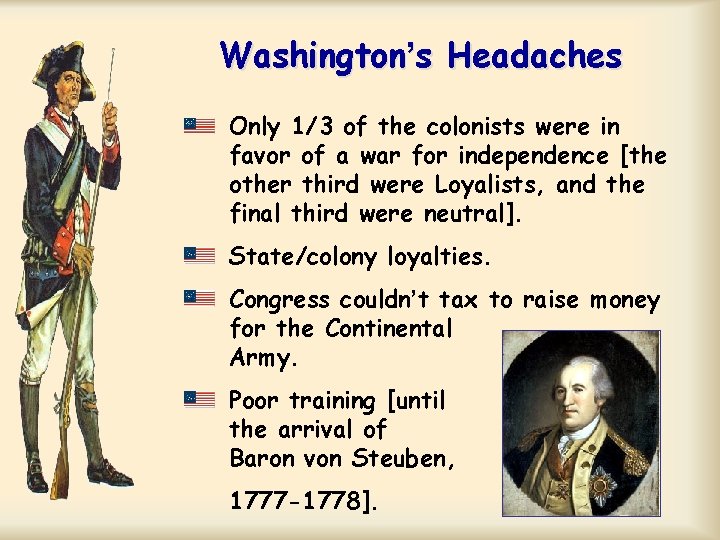
Washington’s Headaches Only 1/3 of the colonists were in favor of a war for independence [the other third were Loyalists, and the final third were neutral]. State/colony loyalties. Congress couldn’t tax to raise money for the Continental Army. Poor training [until the arrival of Baron von Steuben, 1777 -1778].
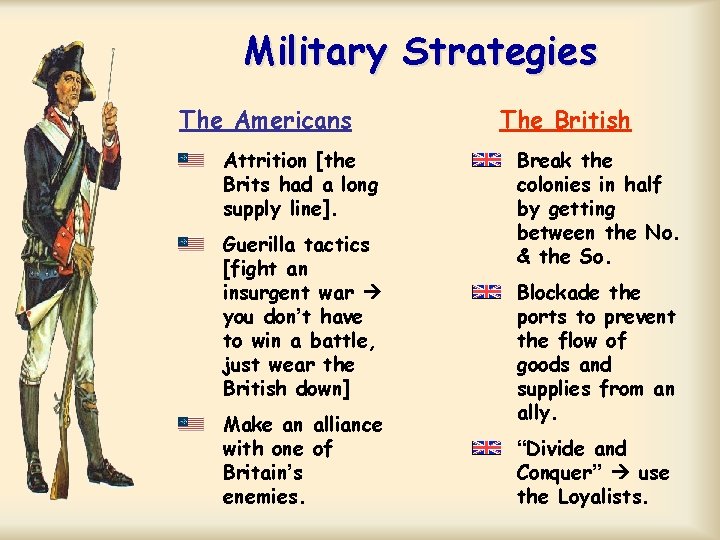
Military Strategies The Americans Attrition [the Brits had a long supply line]. Guerilla tactics [fight an insurgent war you don’t have to win a battle, just wear the British down] Make an alliance with one of Britain’s enemies. The British Break the colonies in half by getting between the No. & the So. Blockade the ports to prevent the flow of goods and supplies from an ally. “Divide and Conquer” use the Loyalists.
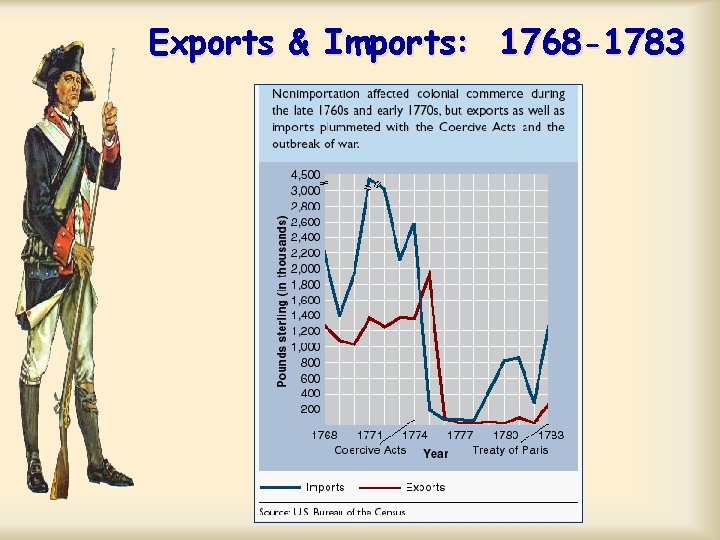
Exports & Imports: 1768 -1783
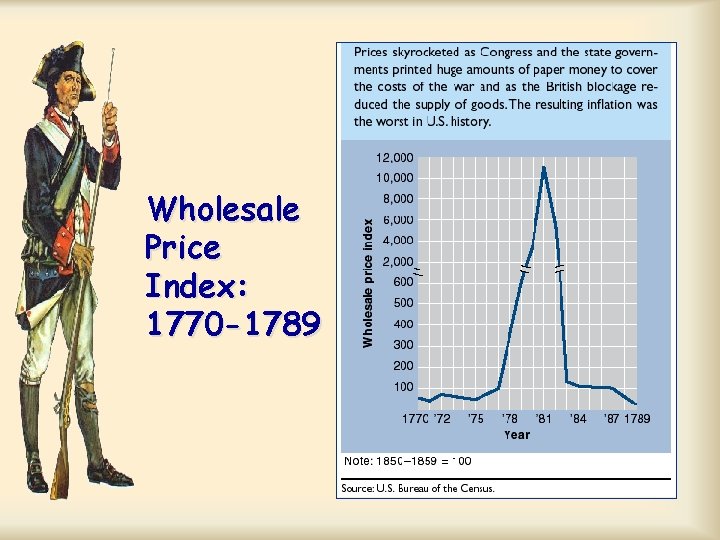
Wholesale Price Index: 1770 -1789
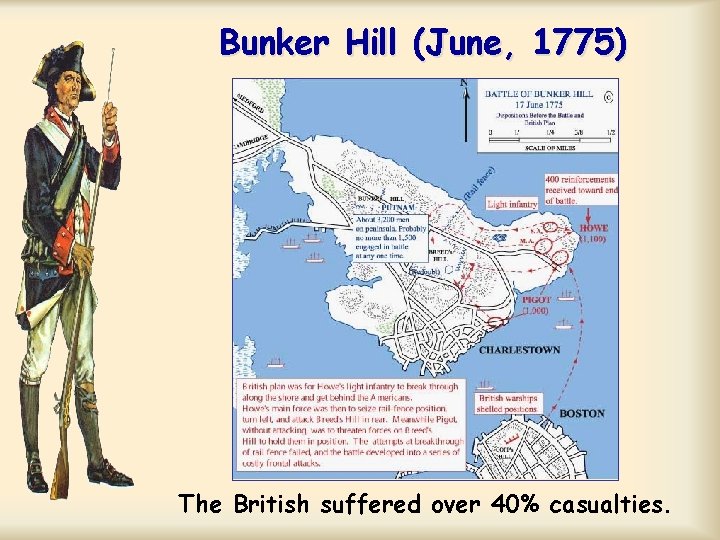
Bunker Hill (June, 1775) The British suffered over 40% casualties.
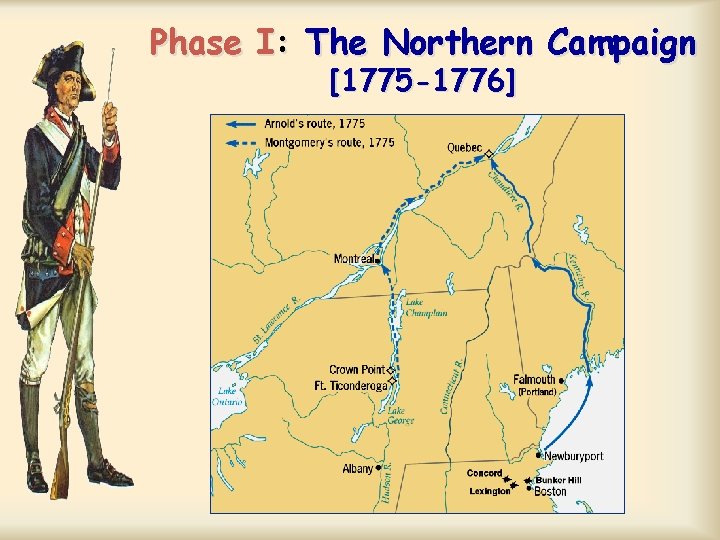
Phase I: The Northern Campaign [1775 -1776]
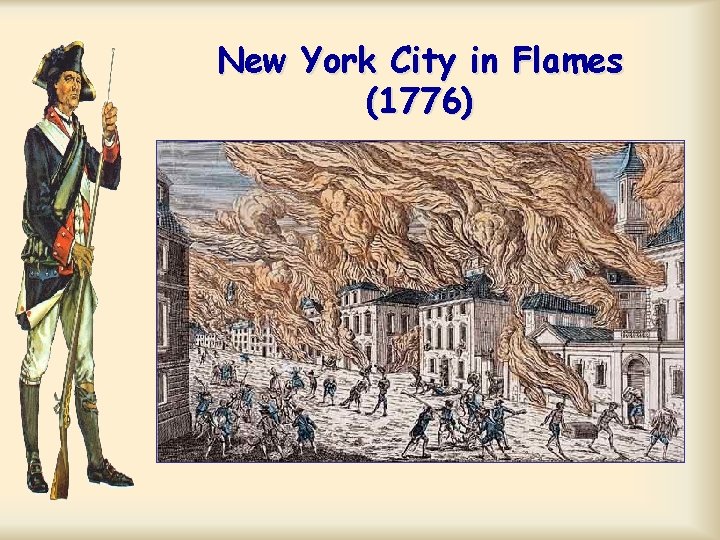
New York City in Flames (1776)
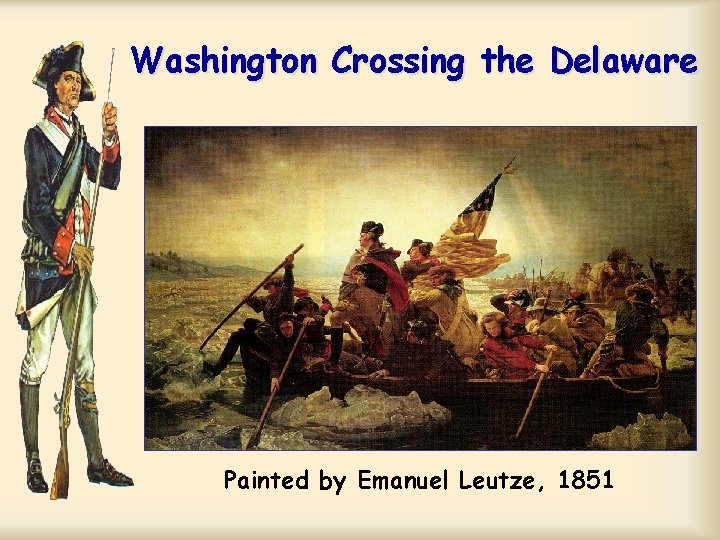
Washington Crossing the Delaware Painted by Emanuel Leutze, 1851
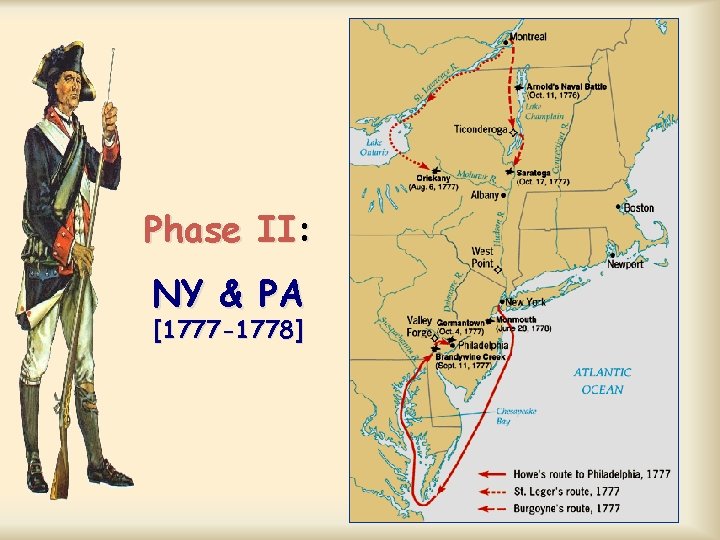
Phase II: NY & PA [1777 -1778]
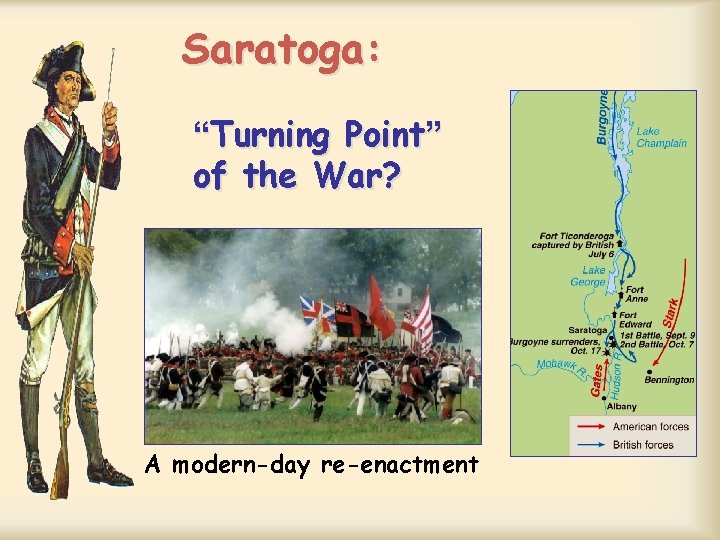
Saratoga: “Turning Point” of the War? A modern-day re-enactment
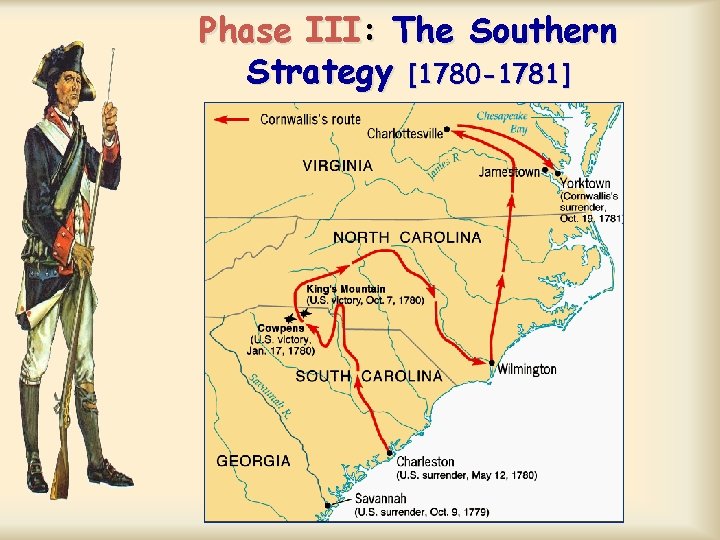
Phase III: The Southern Strategy [1780 -1781]
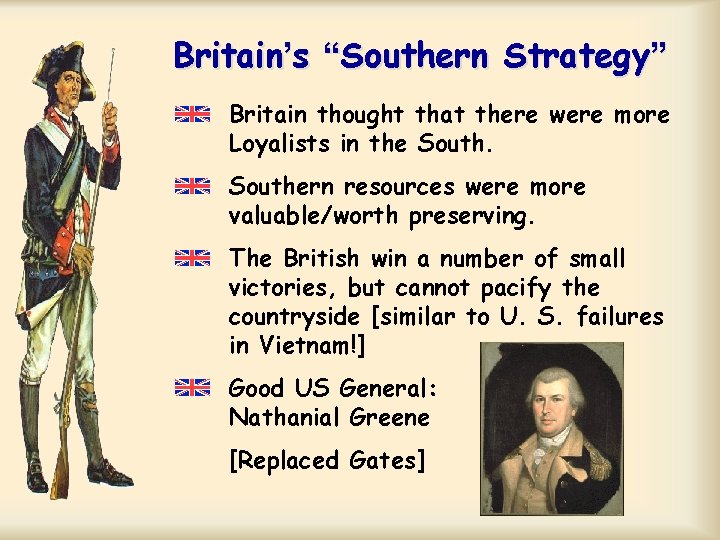
Britain’s “Southern Strategy” Britain thought that there were more Loyalists in the Southern resources were more valuable/worth preserving. The British win a number of small victories, but cannot pacify the countryside [similar to U. S. failures in Vietnam!] Good US General: Nathanial Greene [Replaced Gates]
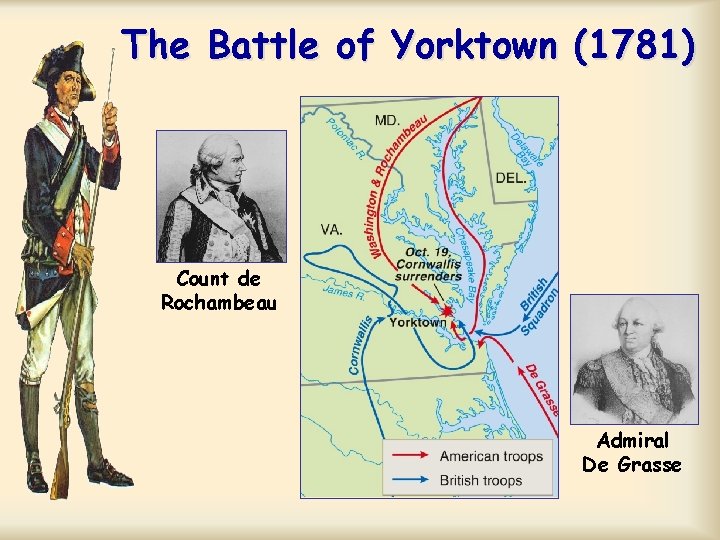
The Battle of Yorktown (1781) Count de Rochambeau Admiral De Grasse
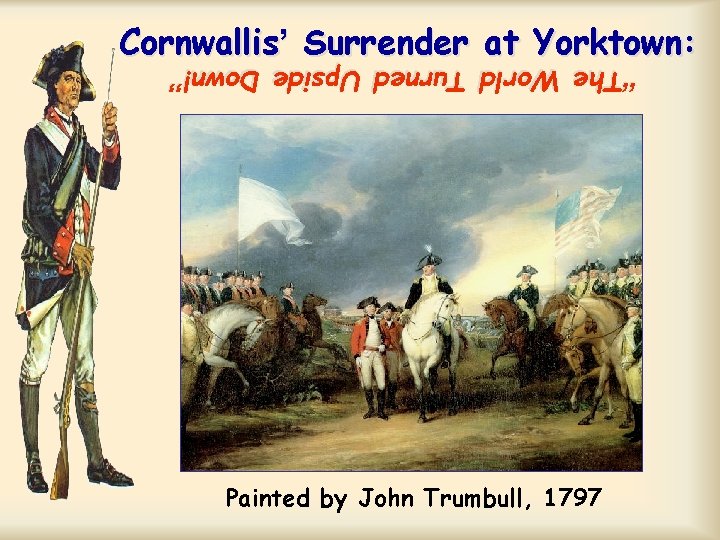
Cornwallis’ Surrender at Yorktown: “The World Turned Upside Down!” Painted by John Trumbull, 1797
Egalitarianism • Only for white males, however • Most of 18 th century, gaps between colonists widened, but elites needed to gain support of commoners (dress, behavior, respect etc) • Respect to privates in the military - esteem gained both ways • Undermining of wealth as an indicator of ability or worth - however, distribution of wealth unchanged. • Development of “natural aristocracy. ”
African Americans • 500, 000 African Americans, only 25, 000 free • 25, 000 fought with British; 5, 000 fought with Continentals - why the disparity? • Need for troops eroded ban on black enlistment; a practical, non-egalitarian act • Opposition to slavery growing due to language of independence
Slaves and African-Americans • Phase-out of slavery in VT, PA, MA, RI, CT between 1777 -1784 • NY (1799), NJ (1804), NH - no slaves remained in state by 1810 • Overall weakening of institution of slavery, if not abolition • Still second-class citizens if free
Phillis Wheatley ‘Twas mercy brought me from my pagan land, Taught my benighted soul to understand That there’s a God, that there’s a Savior too: Once I redemption neither sought nor knew. Some view our sable race with scornful eye. “Their color is a diabolic dye. ” Remember, Christians, Negroes, black as Cain, May be refined, and join the angelic train. “On Being Brought from Africa to America” - 1773 Who was she?
Phillis Wheatley (1753 -1784) • A notable female, African-American poet, she marks the commencement of both poetic traditions in America. • Notable poem: “On the death of Rev. Mr. George Whitefield” • Also wrote poems to a) General Washington (“To His Excellency General Washington” 1775 -75) and b) Lord Dartmouth (To the Right Honorable William, Earl of Dartmouth, his Majesty’s Principal Secretary of State for North America, &c” 1773
Celestial choir! Enthroned in realms of light, Columbia’s scenes of glorious toils I write. … Thee, first in place and honors - we demand The grace and glory of they martial band. Famed for thy valor, for thy virtues more, Hear every tongue thy guardian aid implore! … Fixed are the eyes of nations on the scales, For in their hopes Columbia’s arm prevails. Anon Britannia’s droops the pensive head, While round increase the rising hills of dead. -1775 -76
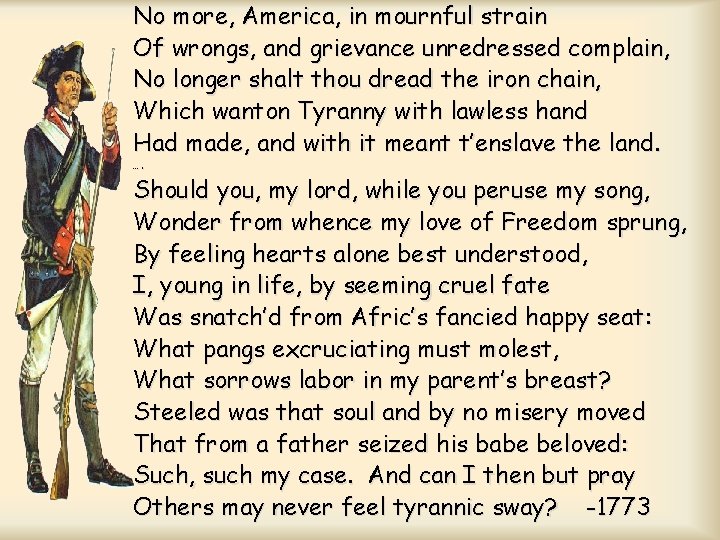
No more, America, in mournful strain Of wrongs, and grievance unredressed complain, No longer shalt thou dread the iron chain, Which wanton Tyranny with lawless hand Had made, and with it meant t’enslave the land. …. Should you, my lord, while you peruse my song, Wonder from whence my love of Freedom sprung, By feeling hearts alone best understood, I, young in life, by seeming cruel fate Was snatch’d from Afric’s fancied happy seat: What pangs excruciating must molest, What sorrows labor in my parent’s breast? Steeled was that soul and by no misery moved That from a father seized his babe beloved: Such, such my case. And can I then but pray Others may never feel tyrannic sway? -1773
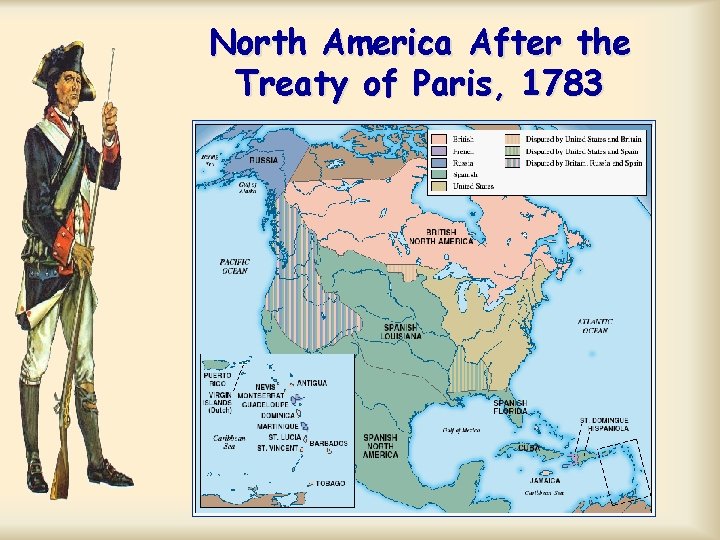
North America After the Treaty of Paris, 1783
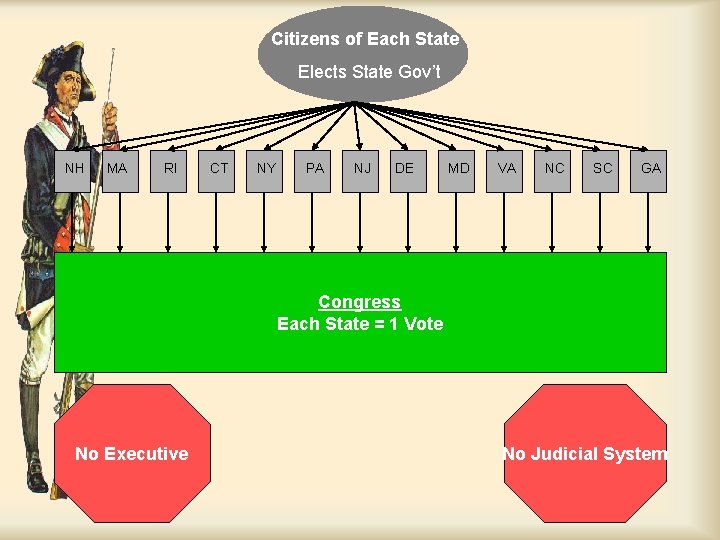
- Each colony became a state - Each state mostly sovereign, allegiance held mostly to state, not nation - Each state made its own money - Foreign affairs? - Congress had no real power over each state except as mediator in disputes and assistant - For directing warfare - Weak central government no judiciary branch no executive branch one legislature with little power
Citizens of Each State Elects State Gov’t NH MA RI CT NY PA NJ DE MD VA NC SC GA Congress Each State = 1 Vote No Executive No Judicial System
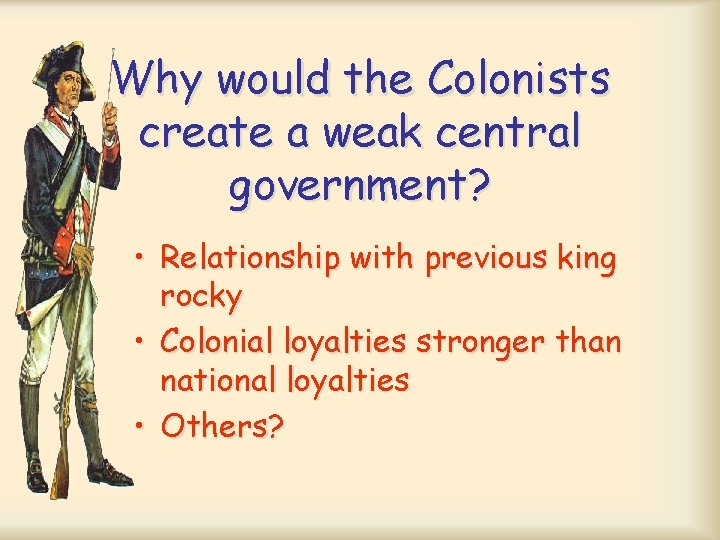
Why would the Colonists create a weak central government? • Relationship with previous king rocky • Colonial loyalties stronger than national loyalties • Others?
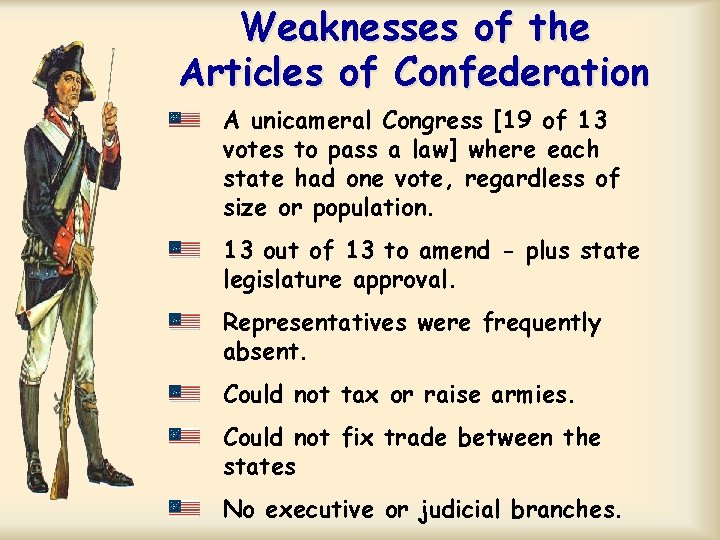
Weaknesses of the Articles of Confederation A unicameral Congress [19 of 13 votes to pass a law] where each state had one vote, regardless of size or population. 13 out of 13 to amend - plus state legislature approval. Representatives were frequently absent. Could not tax or raise armies. Could not fix trade between the states No executive or judicial branches.
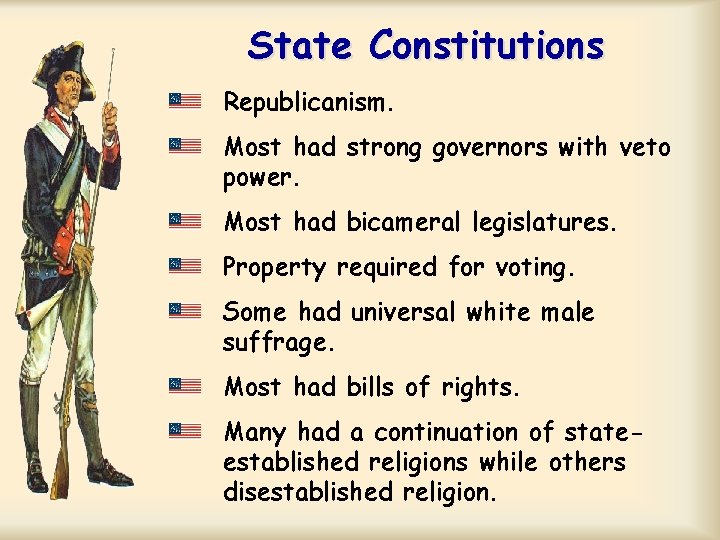
State Constitutions Republicanism. Most had strong governors with veto power. Most had bicameral legislatures. Property required for voting. Some had universal white male suffrage. Most had bills of rights. Many had a continuation of stateestablished religions while others disestablished religion.
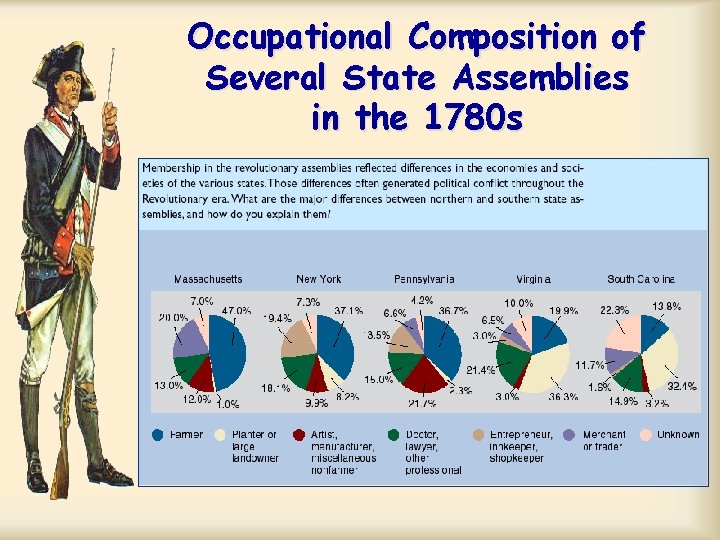
Occupational Composition of Several State Assemblies in the 1780 s
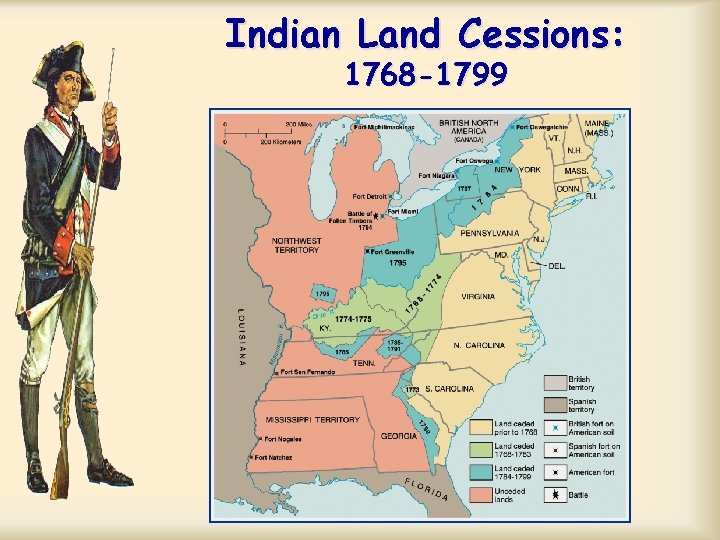
Indian Land Cessions: 1768 -1799
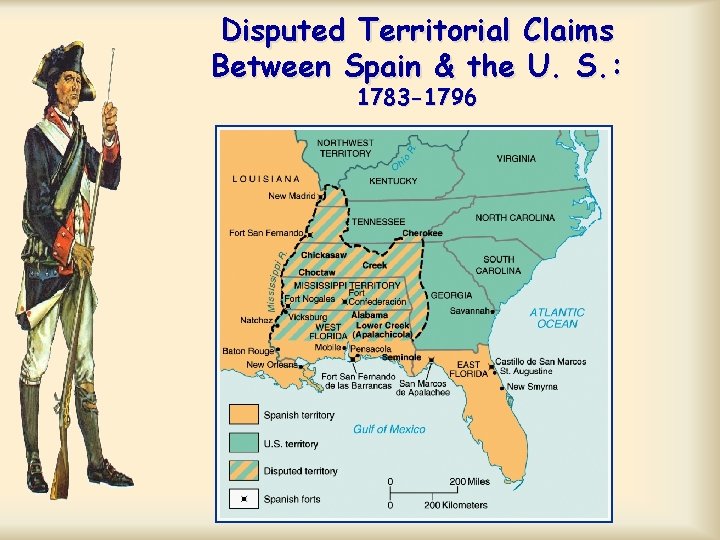
Disputed Territorial Claims Between Spain & the U. S. : 1783 -1796
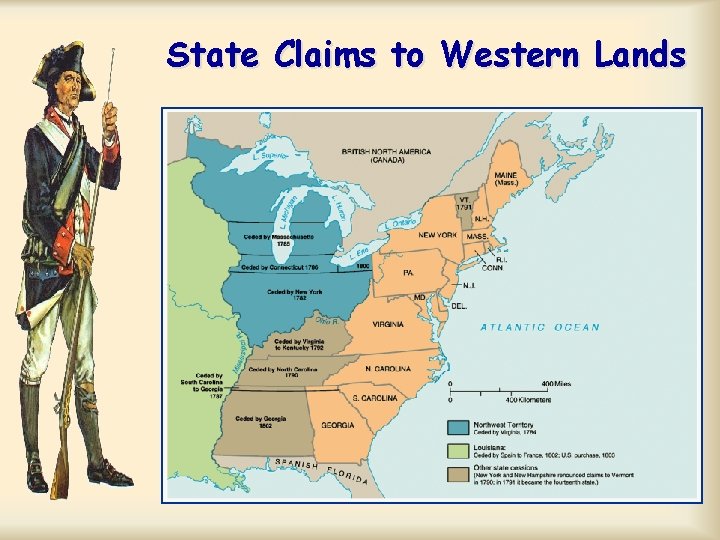
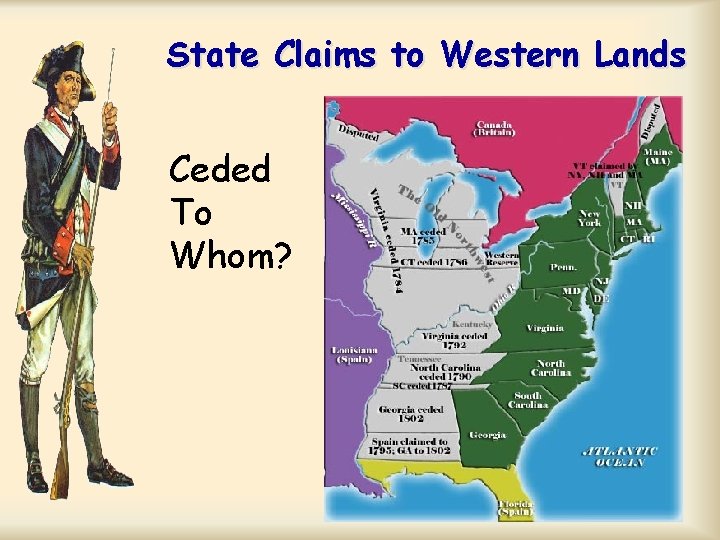
State Claims to Western Lands
State Claims to Western Lands Ceded To Whom?
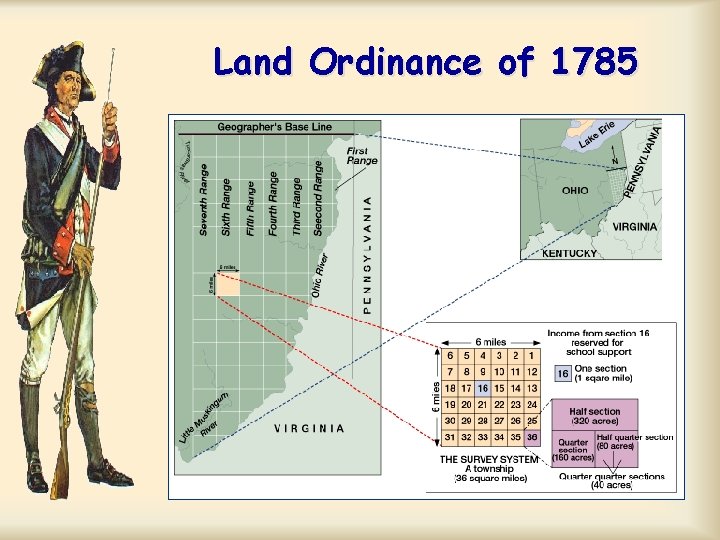
Land Ordinance of 1785
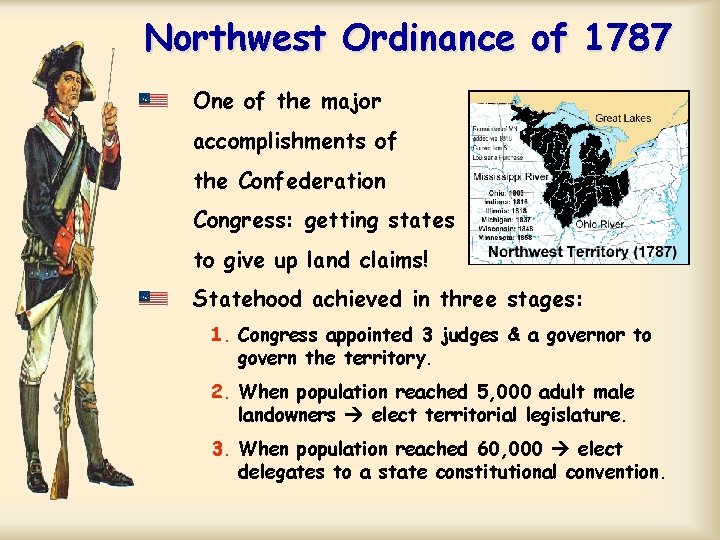
Northwest Ordinance of 1787 One of the major accomplishments of the Confederation Congress: getting states to give up land claims! Statehood achieved in three stages: 1. Congress appointed 3 judges & a governor to govern the territory. 2. When population reached 5, 000 adult male landowners elect territorial legislature. 3. When population reached 60, 000 elect delegates to a state constitutional convention.
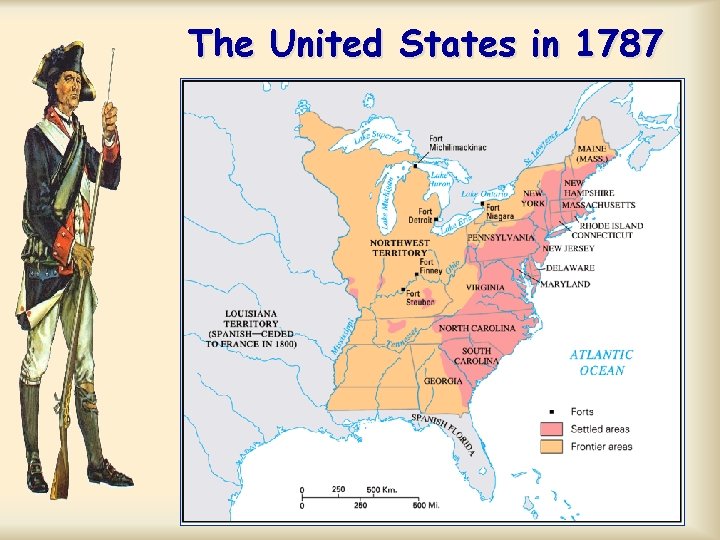
The United States in 1787
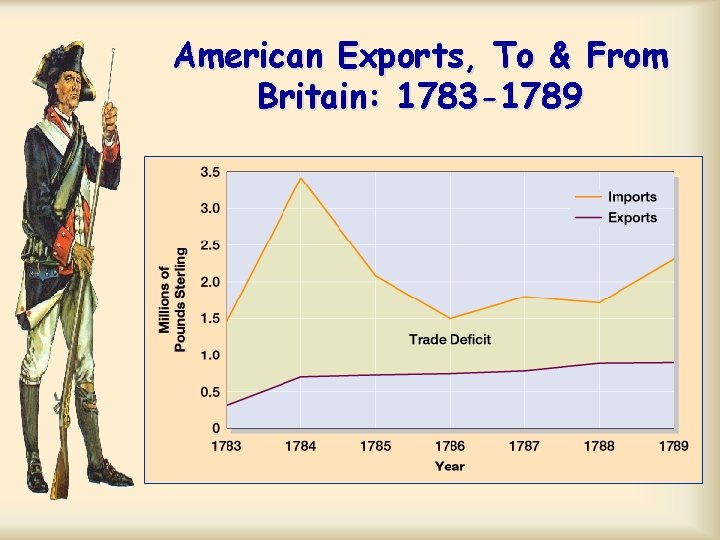
American Exports, To & From Britain: 1783 -1789
Annapolis Convention (1786) 12 representatives from 5 states [NY, NJ, PA, DE, VA] GOAL address barriers that limited trade and commerce between the states. Not enough states were represented to make any real progress. Sent a report to the Congress to call a meeting of all the states to meet in Philadelphia in 1787 to examine areas broader than just trade and commerce.
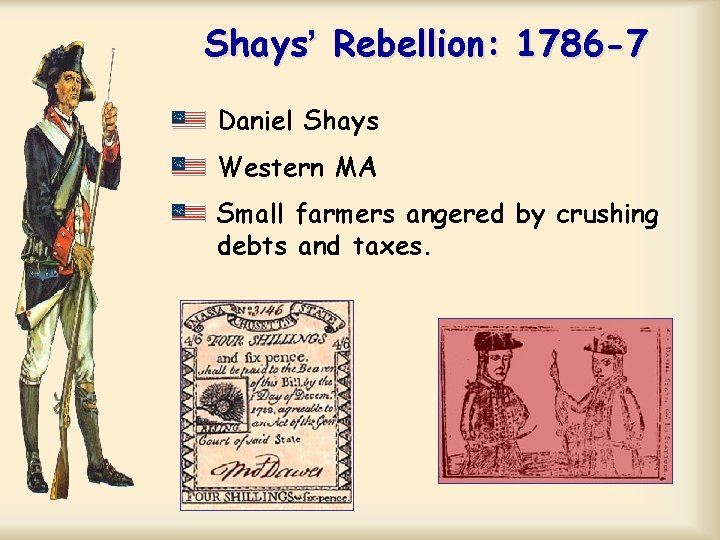
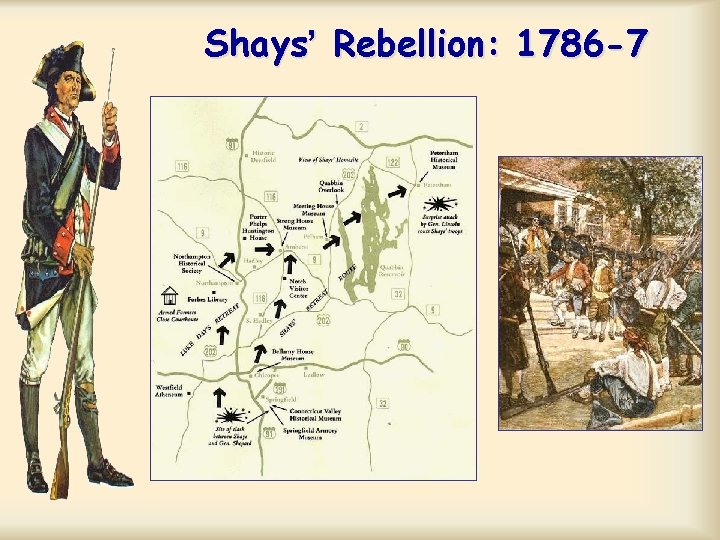
Shays’ Rebellion: 1786 -7 Daniel Shays Western MA Small farmers angered by crushing debts and taxes.
Shay’s Rebellion, continued • Colonists in Mass. angry over high taxes. • Farmer named Shays leads an armed rebellion. • Congress cannot raise funds for an army • Mass. finally raises an army and defeats Shay. • Convinces many people the Articles need serious revision.
Shays’ Rebellion: 1786 -7
Shays’ Rebellion: 1786 -7 There could be no stronger evidence of the want of energy in our governments than these disorders. -- George Washington
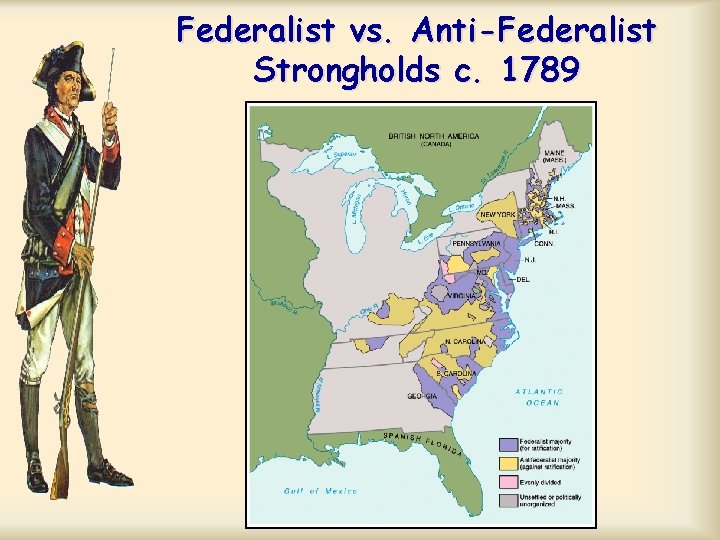
Federalist vs. Anti-Federalist Strongholds c. 1789