Edited from Ms Susan M Pojer Horace Greeley
- Slides: 24
Edited from…. Ms. Susan M. Pojer Horace Greeley HS Chappaqua, NY
On the Eve of the Revolution ? Britain Americans Advantages ? ? Disadvantages ? ?
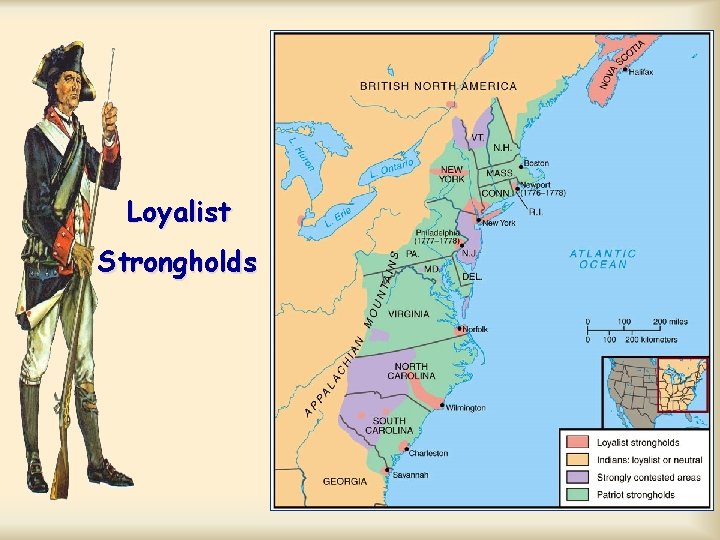
Loyalist Strongholds
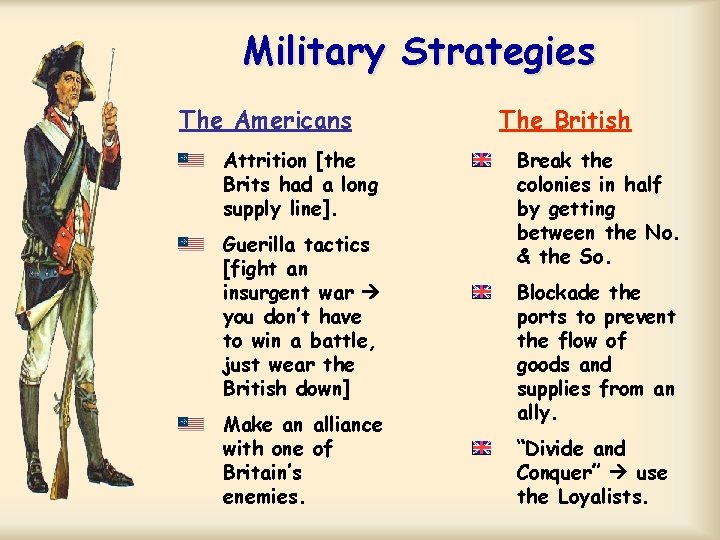
Military Strategies The Americans Attrition [the Brits had a long supply line]. Guerilla tactics [fight an insurgent war you don’t have to win a battle, just wear the British down] Make an alliance with one of Britain’s enemies. The British Break the colonies in half by getting between the No. & the So. Blockade the ports to prevent the flow of goods and supplies from an ally. “Divide and Conquer” use the Loyalists.
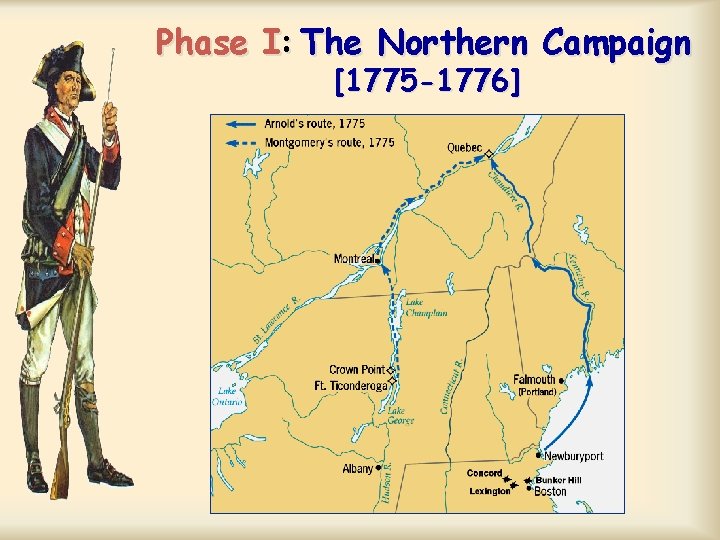
Phase I: The Northern Campaign [1775 -1776]
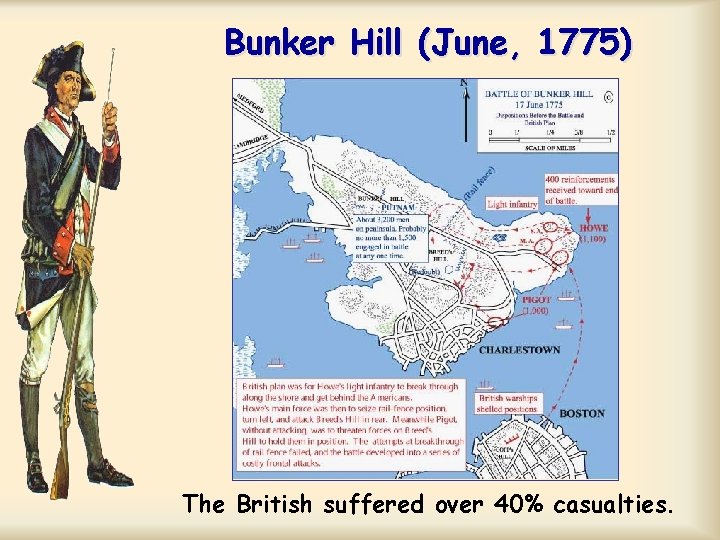
Bunker Hill (June, 1775) The British suffered over 40% casualties.
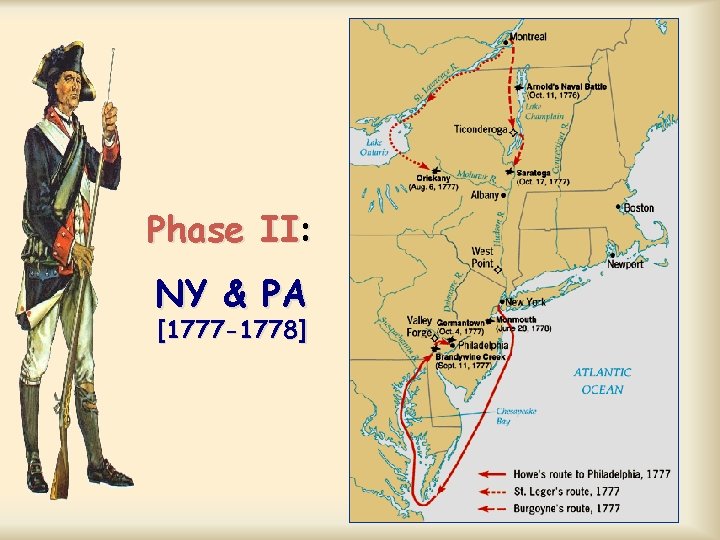
Phase II: NY & PA [1777 -1778]
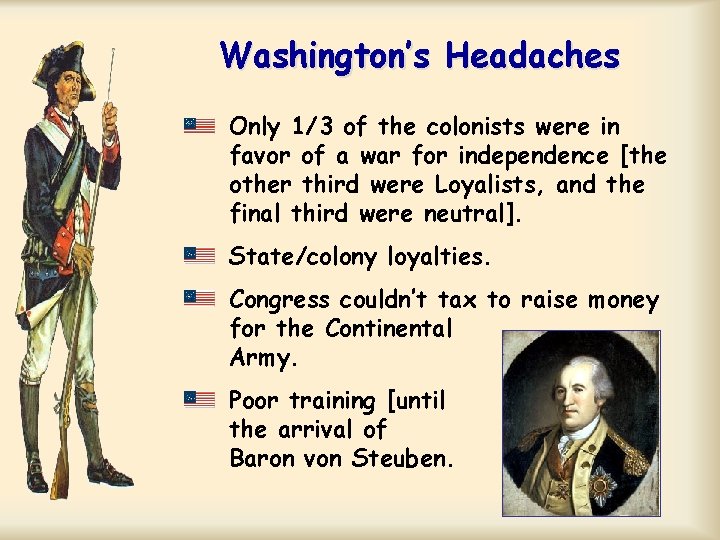
Washington’s Headaches Only 1/3 of the colonists were in favor of a war for independence [the other third were Loyalists, and the final third were neutral]. State/colony loyalties. Congress couldn’t tax to raise money for the Continental Army. Poor training [until the arrival of Baron von Steuben.
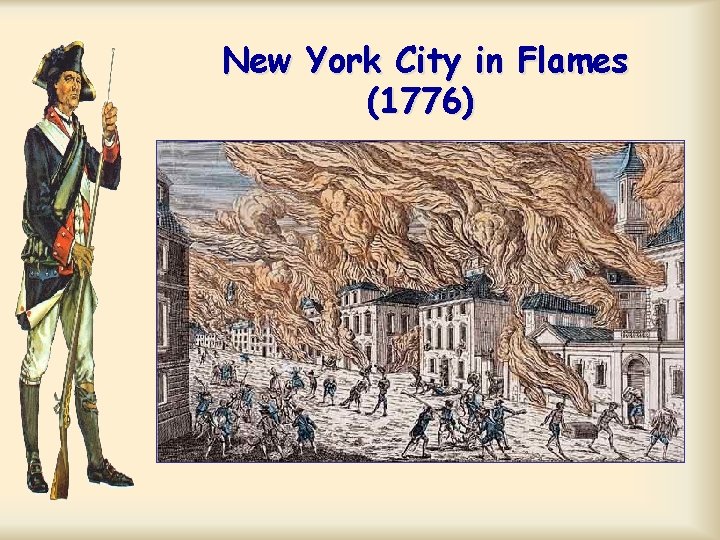
New York City in Flames (1776)
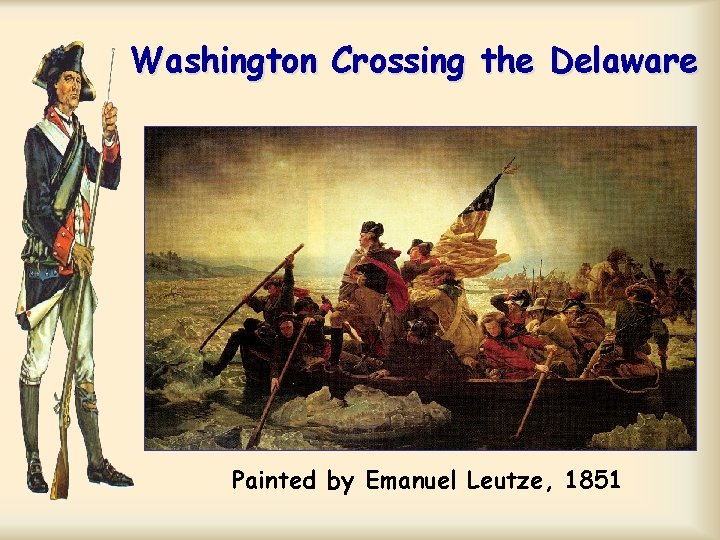
Washington Crossing the Delaware Painted by Emanuel Leutze, 1851
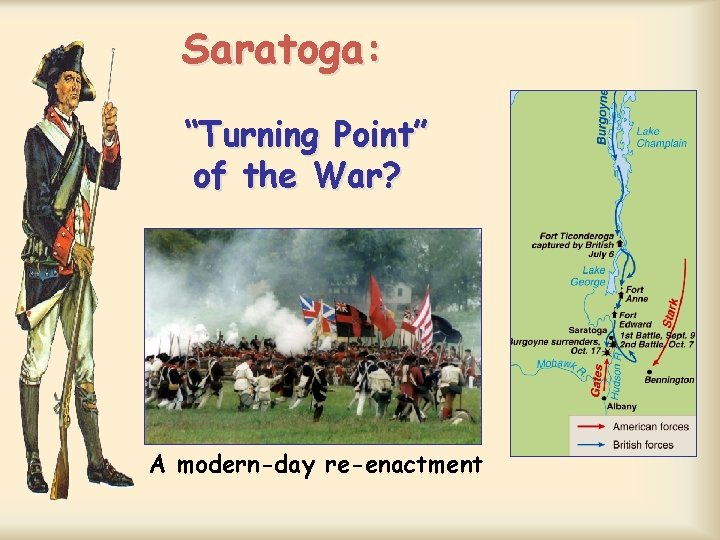
Saratoga: “Turning Point” of the War? A modern-day re-enactment
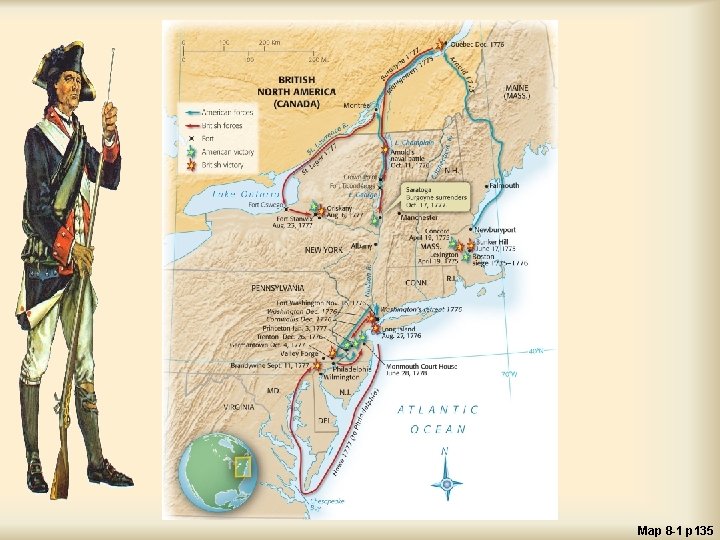
Map 8 -1 p 135
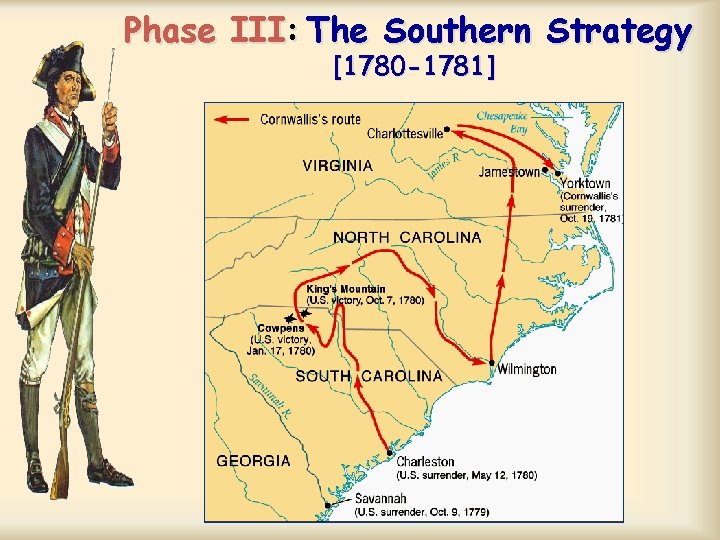
Phase III: The Southern Strategy [1780 -1781]
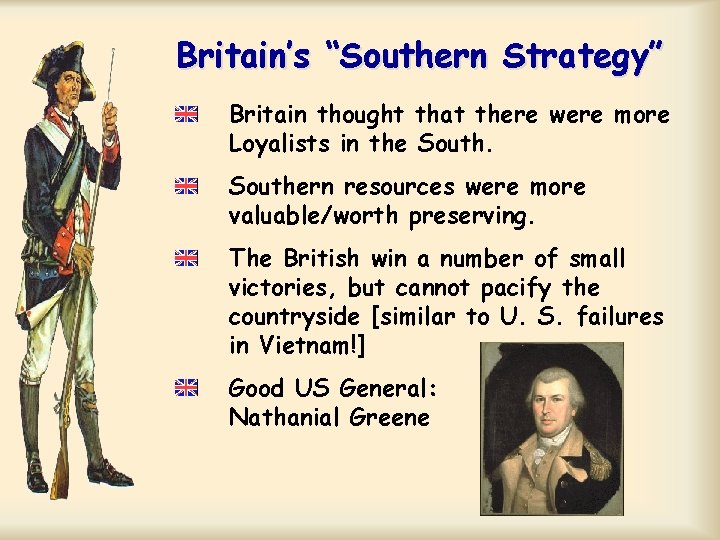
Britain’s “Southern Strategy” Britain thought that there were more Loyalists in the Southern resources were more valuable/worth preserving. The British win a number of small victories, but cannot pacify the countryside [similar to U. S. failures in Vietnam!] Good US General: Nathanial Greene
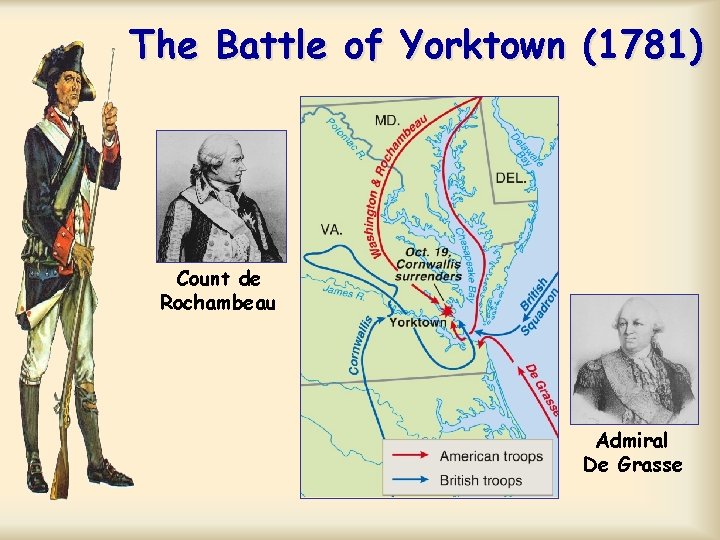
The Battle of Yorktown (1781) Count de Rochambeau Admiral De Grasse
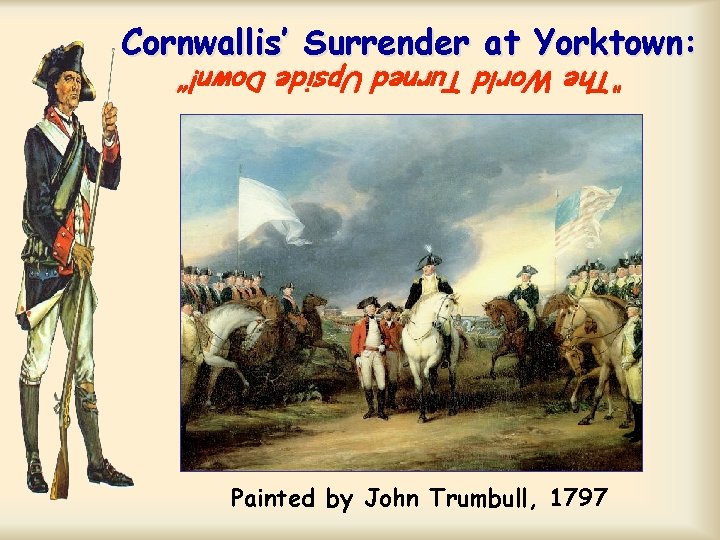
Cornwallis’ Surrender at Yorktown: “The World Turned Upside Down!” Painted by John Trumbull, 1797
XVI. Peace at Paris For Britain: • Many Britons were weary of war • They suffered loses in India and the West Indies • A Whig ministry , favorable to the Americans, replaced the Tory regime of Lord North.
XVI. Peace at Paris • For France: • Desired an independent United States, over a strong British Empire but… • Wanted the New Republic of America to be weak and controlled east of the Allegheny Mountains • Wanted the US to help compensate for the heavy price France paid to win America’s independence
XVI. Peace at Paris • American peace negotiators: – Benjamin Franklin, John Adams, and John Jay: • They had specific instructions to make no separate peace (to negotiate with their French allies at all stages) • However, the American representatives “chafed” under this directive, because they knew that it had been written by a subservient Congress, with the French Foreign Office indirectly guiding the pen.
XVI. Peace at Paris – John Jay was unwilling to play the French game. • • • He secretly made overtures to London speedily came to terms with the Americans A preliminary treaty of peace was signed in 1782 the final peace, the next year. – The Treaty of Paris of 1783: • Britain formally recognized the independence of the United States • Granted generous boundaries: – From the Mississippi (west) to Great Lakes (north) Spanish Florida (south).
XVI. Peace at Paris (cont. ) – American concessions: • Loyalists were not to be further persecuted • Congress was to recommend to the state legislatures that confiscated Loyalists’ property be restored • Debts long owed to British creditors had to be paid • However, the debt promises were not carried out. – British concessions: • Had to accept defeat in North America • Shut down the wage enable her to rebuild.
The Western Frontier • In 1784 the pro-British Iroquois were forced to sign the Treaty of Fort Stanwix: – First treaty between the United States and an Indian nation – Under its teams the Indians ceded most of their land.
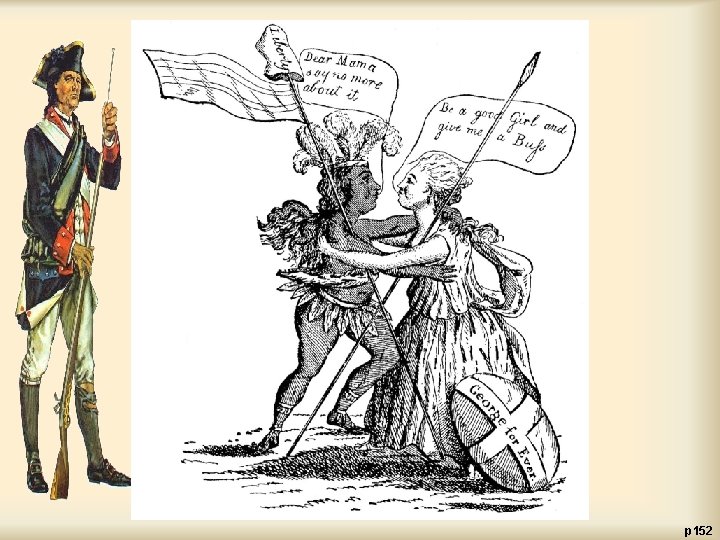
p 152