5 th European Working Conditions Survey Greet Vermeylen

- Slides: 31
5 th European Working Conditions Survey Greet Vermeylen research manager Surveys and Trend Unit Conference: how to make the working environment more human friendly? Slovenia, Congress Centre Brdo pri Kranju 6 October 2011
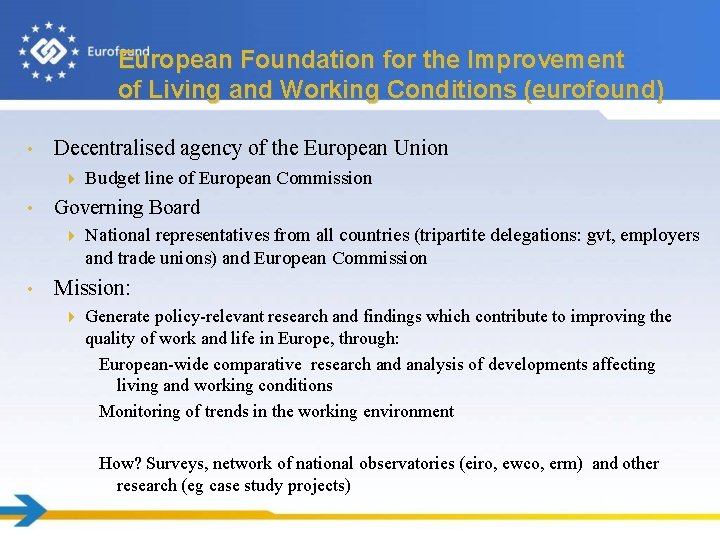
European Foundation for the Improvement of Living and Working Conditions (eurofound) • Decentralised agency of the European Union 4 • Governing Board 4 • Budget line of European Commission National representatives from all countries (tripartite delegations: gvt, employers and trade unions) and European Commission Mission: 4 Generate policy-relevant research and findings which contribute to improving the quality of work and life in Europe, through: European-wide comparative research and analysis of developments affecting living and working conditions Monitoring of trends in the working environment How? Surveys, network of national observatories (eiro, ewco, erm) and other research (eg case study projects)
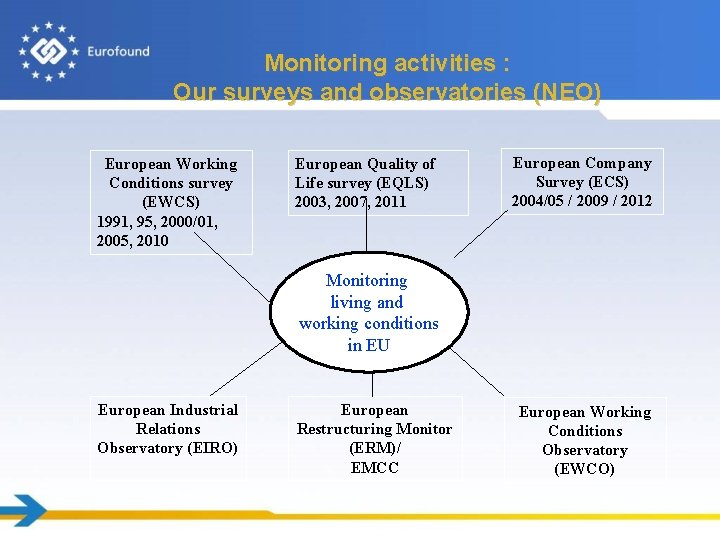
Monitoring activities : Our surveys and observatories (NEO) European Working Conditions survey (EWCS) 1991, 95, 2000/01, 2005, 2010 European Quality of Life survey (EQLS) 2003, 2007, 2011 European Company Survey (ECS) 2004/05 / 2009 / 2012 Monitoring living and working conditions in EU European Industrial Relations Observatory (EIRO) European Restructuring Monitor (ERM)/ EMCC European Working Conditions Observatory (EWCO)
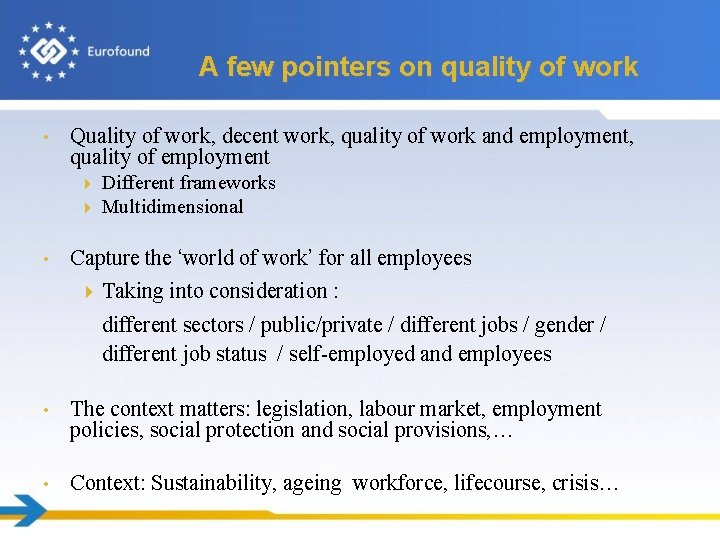
A few pointers on quality of work • Quality of work, decent work, quality of work and employment, quality of employment 4 4 • Different frameworks Multidimensional Capture the ‘world of work’ for all employees 4 Taking into consideration : different sectors / public/private / different jobs / gender / different job status / self-employed and employees • The context matters: legislation, labour market, employment policies, social protection and social provisions, … • Context: Sustainability, ageing workforce, lifecourse, crisis…
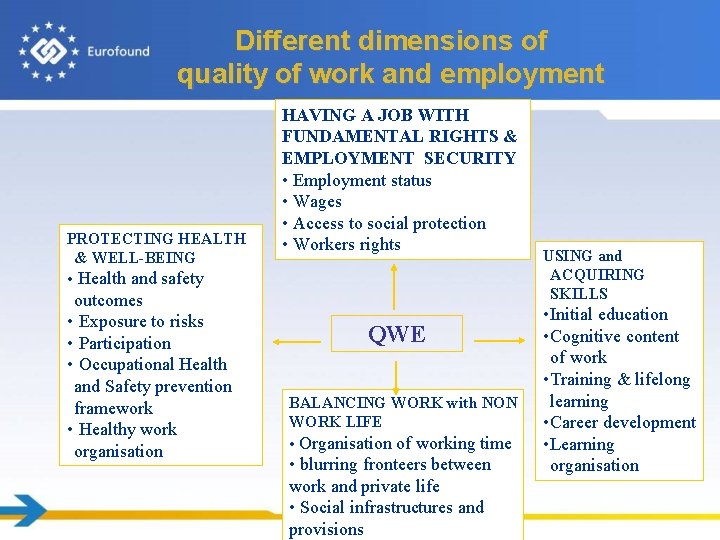
Different dimensions of quality of work and employment PROTECTING HEALTH & WELL-BEING • Health and safety outcomes • Exposure to risks • Participation • Occupational Health and Safety prevention framework • Healthy work organisation HAVING A JOB WITH FUNDAMENTAL RIGHTS & EMPLOYMENT SECURITY • Employment status • Wages • Access to social protection • Workers rights QWE BALANCING WORK with NON WORK LIFE • Organisation of working time • blurring fronteers between work and private life • Social infrastructures and provisions USING and ACQUIRING SKILLS • Initial education • Cognitive content of work • Training & lifelong learning • Career development • Learning organisation
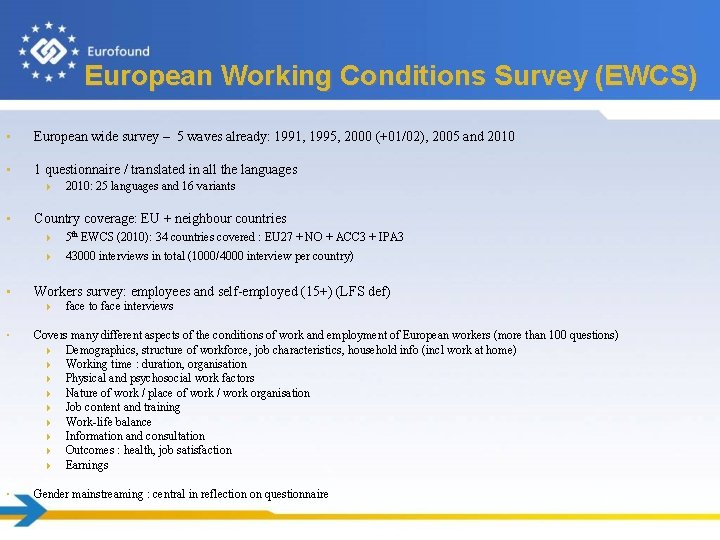
European Working Conditions Survey (EWCS) • European wide survey – 5 waves already: 1991, 1995, 2000 (+01/02), 2005 and 2010 • 1 questionnaire / translated in all the languages 4 • • 2010: 25 languages and 16 variants Country coverage: EU + neighbour countries 4 5 th EWCS (2010): 34 countries covered : EU 27 + NO + ACC 3 + IPA 3 4 43000 interviews in total (1000/4000 interview per country) Workers survey: employees and self-employed (15+) (LFS def) 4 face to face interviews • Covers many different aspects of the conditions of work and employment of European workers (more than 100 questions) 4 Demographics, structure of workforce, job characteristics, household info (incl work at home) 4 Working time : duration, organisation 4 Physical and psychosocial work factors 4 Nature of work / place of work / work organisation 4 Job content and training 4 Work-life balance 4 Information and consultation 4 Outcomes : health, job satisfaction 4 Earnings • Gender mainstreaming : central in reflection on questionnaire
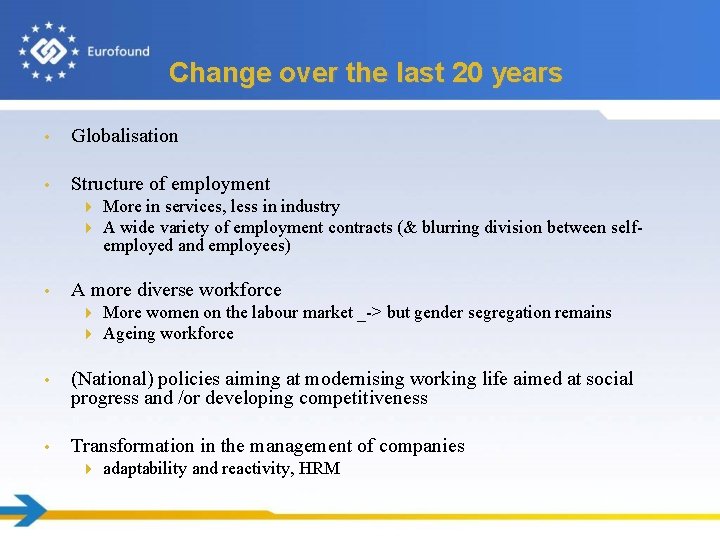
Change over the last 20 years • Globalisation • Structure of employment 4 4 • More in services, less in industry A wide variety of employment contracts (& blurring division between selfemployed and employees) A more diverse workforce 4 4 More women on the labour market _-> but gender segregation remains Ageing workforce • (National) policies aiming at modernising working life aimed at social progress and /or developing competitiveness • Transformation in the management of companies 4 adaptability and reactivity, HRM
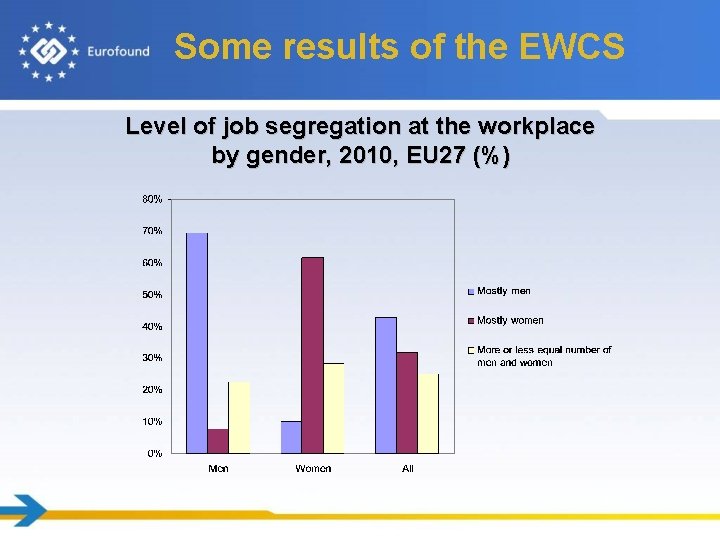
Some results of the EWCS Level of job segregation at the workplace by gender, 2010, EU 27 (%)
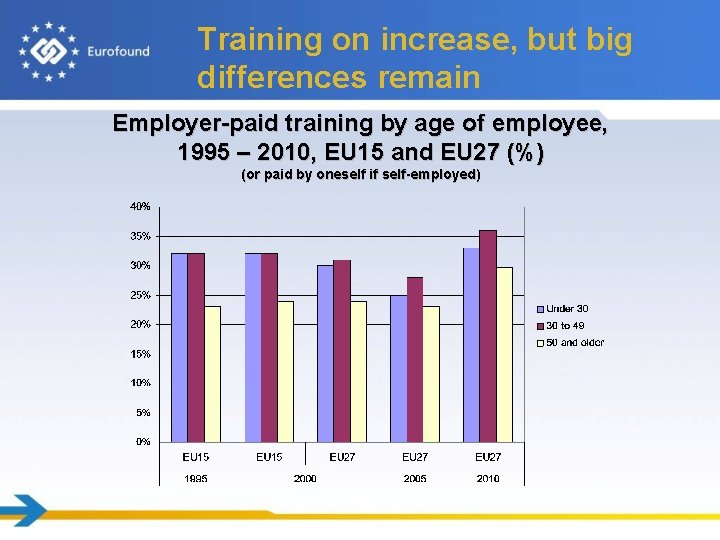
Training on increase, but big differences remain Employer-paid training by age of employee, 1995 – 2010, EU 15 and EU 27 (%) (or paid by oneself if self-employed)
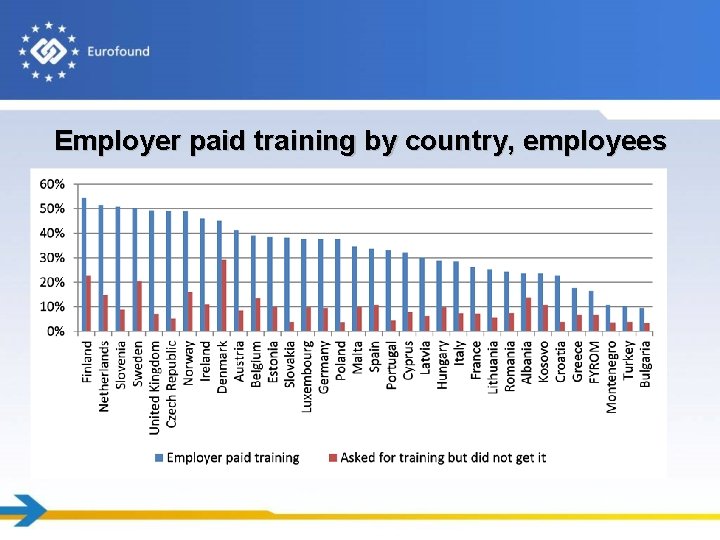
Employer paid training by country, employees
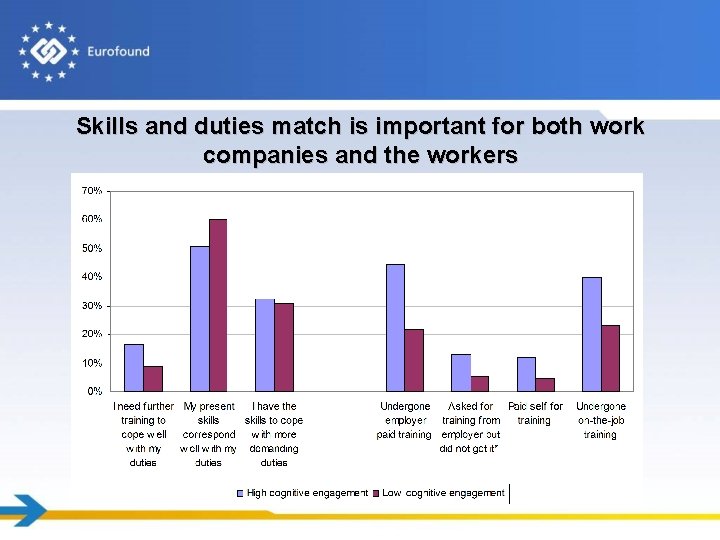
Skills and duties match is important for both work companies and the workers
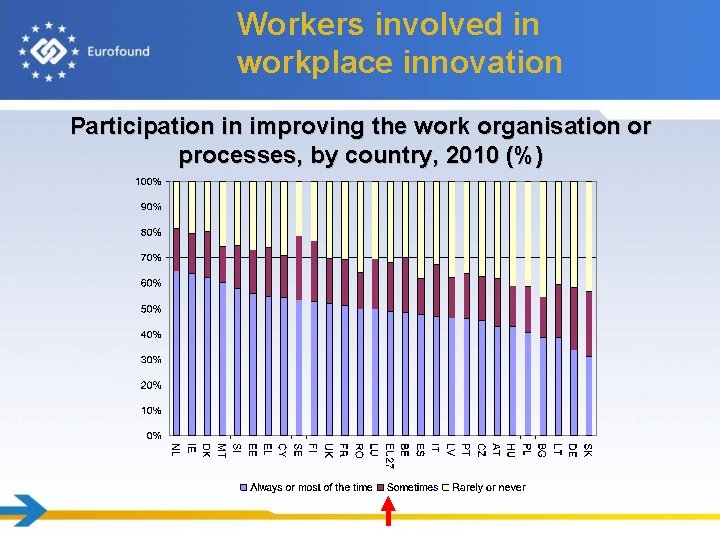
Workers involved in workplace innovation Participation in improving the work organisation or processes, by country, 2010 (%)
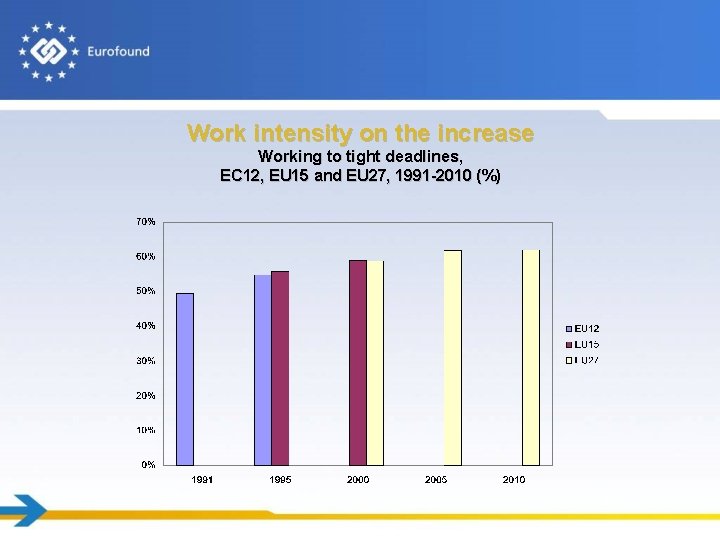
Work intensity on the increase Working to tight deadlines, EC 12, EU 15 and EU 27, 1991 -2010 (%)
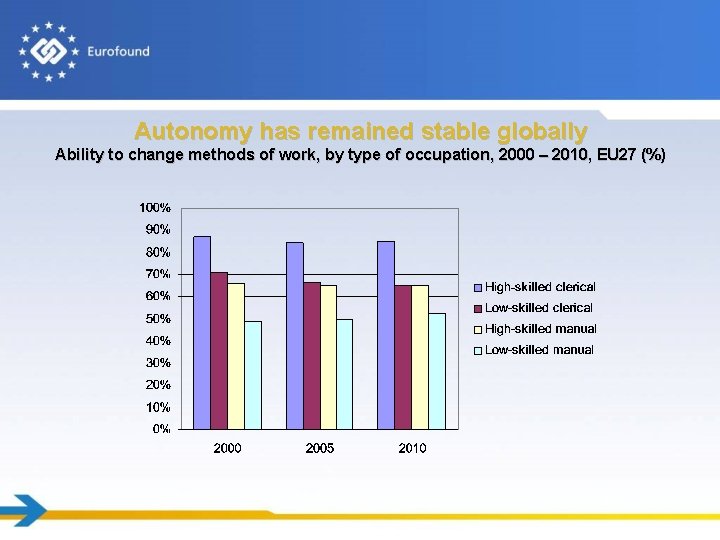
Autonomy has remained stable globally Ability to change methods of work, by type of occupation, 2000 – 2010, EU 27 (%)
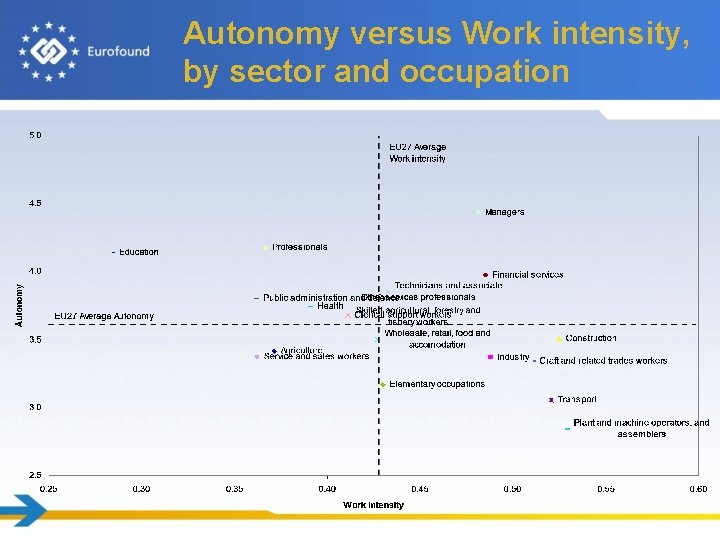
Autonomy versus Work intensity, by sector and occupation
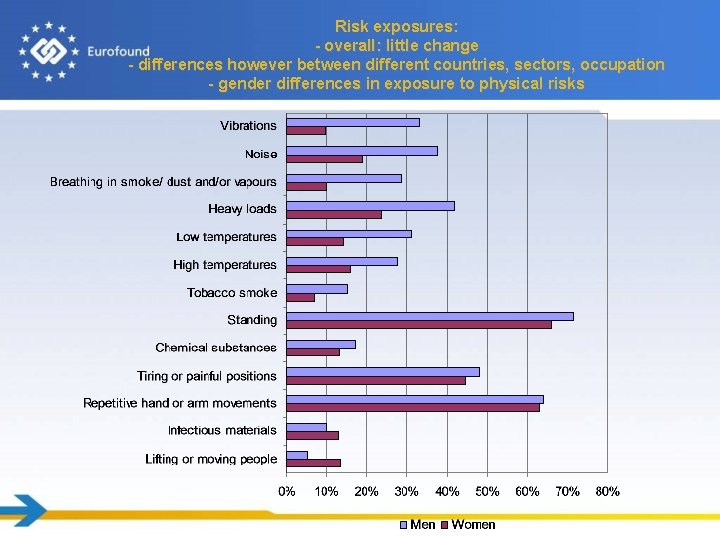
Risk exposures: - overall: little change - differences however between different countries, sectors, occupation - gender differences in exposure to physical risks
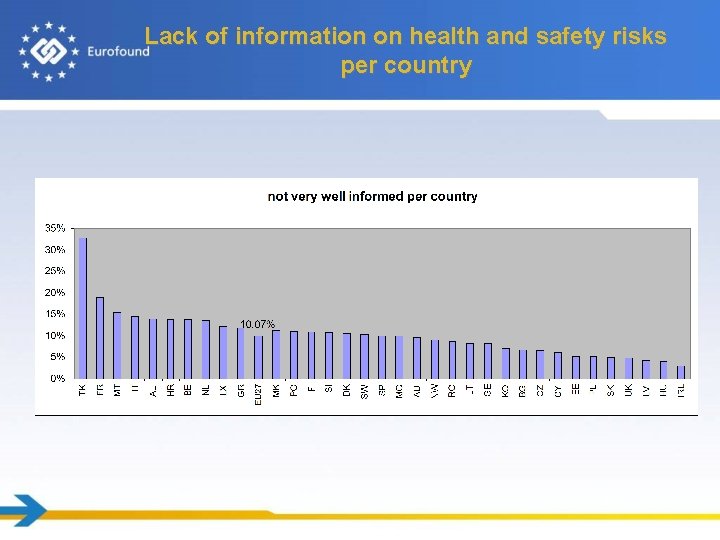
Lack of information on health and safety risks per country
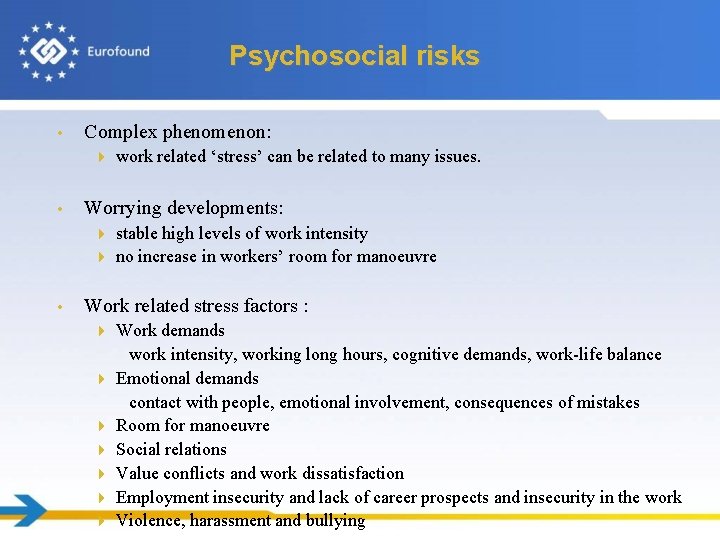
Psychosocial risks • Complex phenomenon: 4 • work related ‘stress’ can be related to many issues. Worrying developments: stable high levels of work intensity 4 no increase in workers’ room for manoeuvre 4 • Work related stress factors : 4 4 4 4 Work demands work intensity, working long hours, cognitive demands, work-life balance Emotional demands contact with people, emotional involvement, consequences of mistakes Room for manoeuvre Social relations Value conflicts and work dissatisfaction Employment insecurity and lack of career prospects and insecurity in the work Violence, harassment and bullying
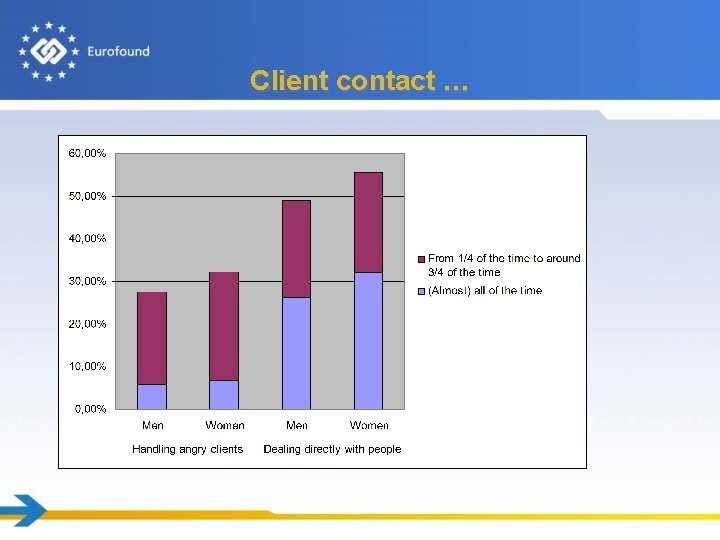
Client contact …
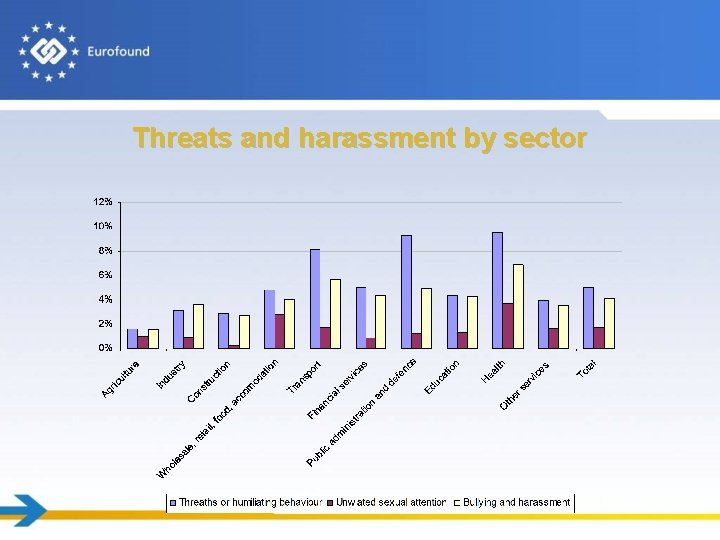
Threats and harassment by sector
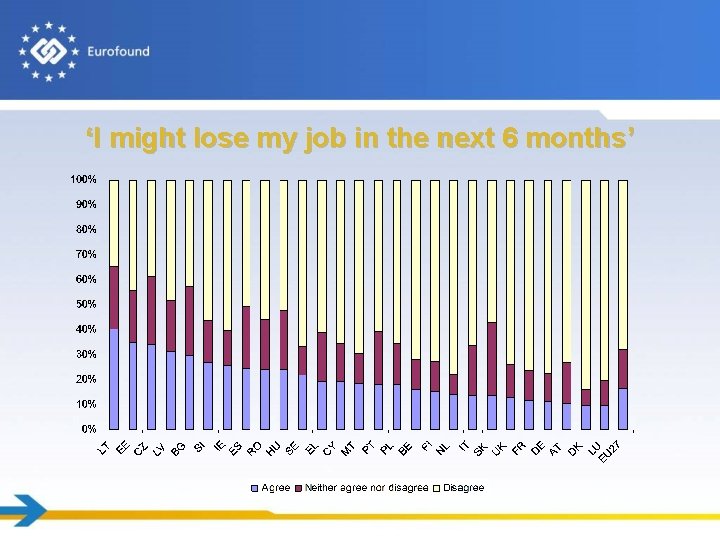
‘I might lose my job in the next 6 months’
Self reported symptoms • About ½ workers suffer from backache • Upper limbs pains for 41% of men and 45% of women • Fatigue for about 33% of workers • Sleep disorders for 21% women and 16% of men
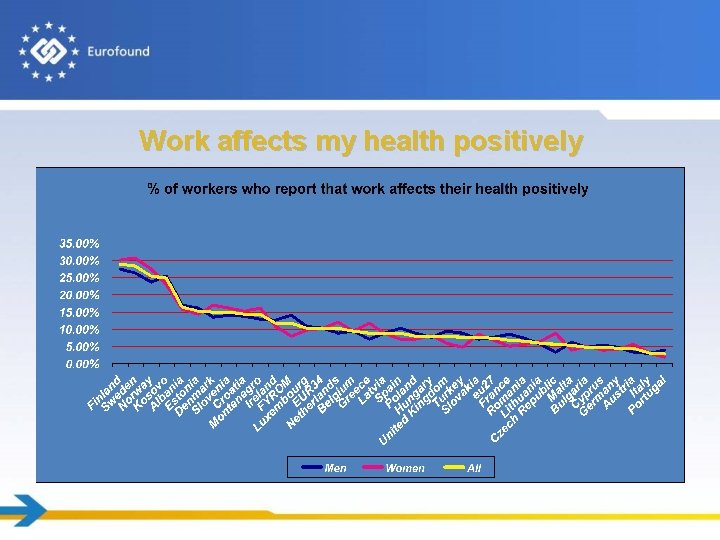
Work affects my health positively
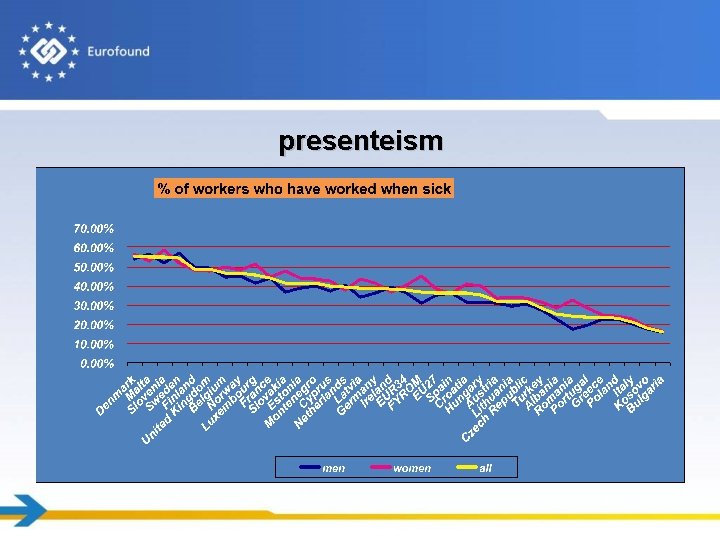
presenteism
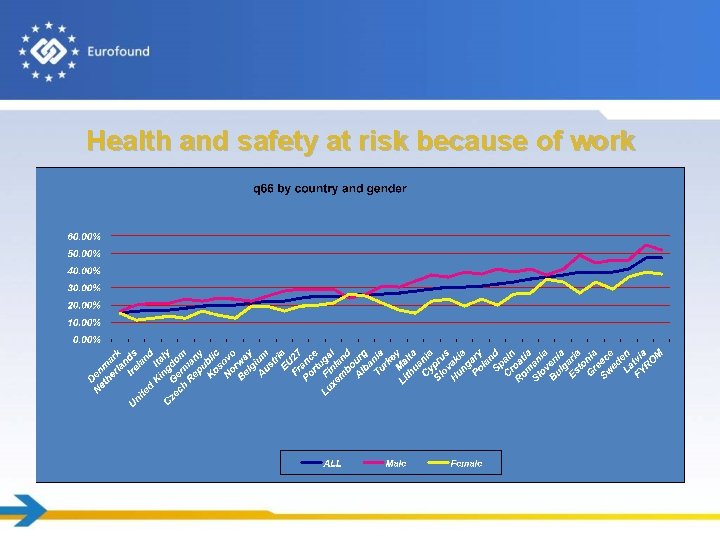
Health and safety at risk because of work
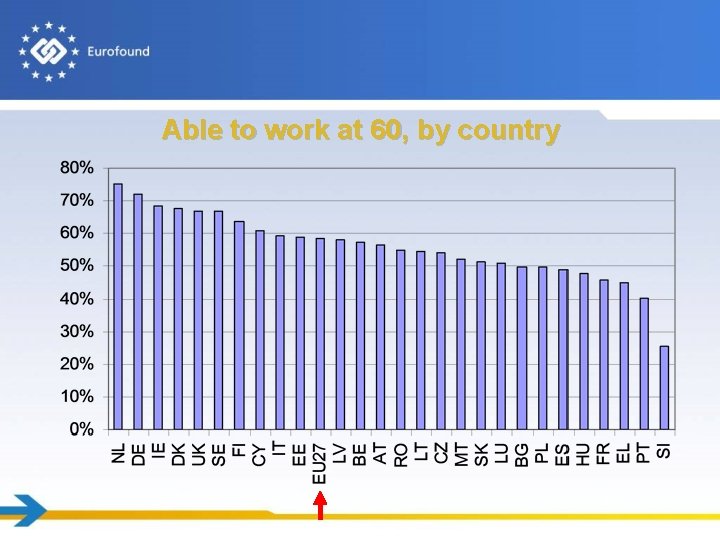
Able to work at 60, by country
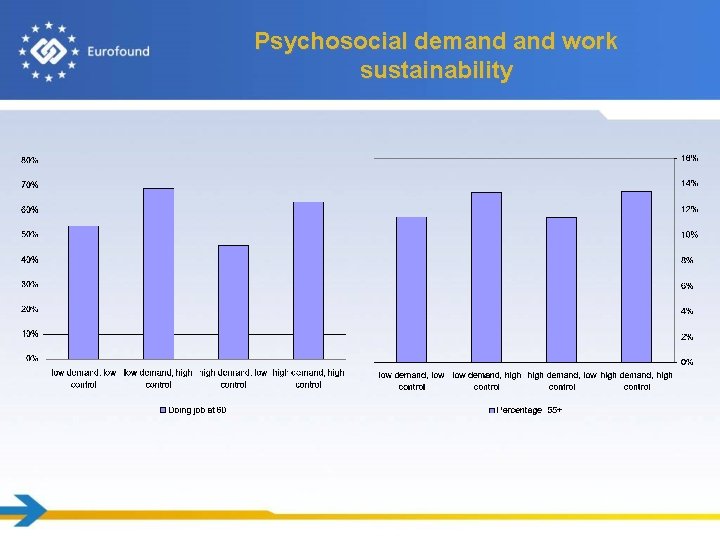
Psychosocial demand work sustainability
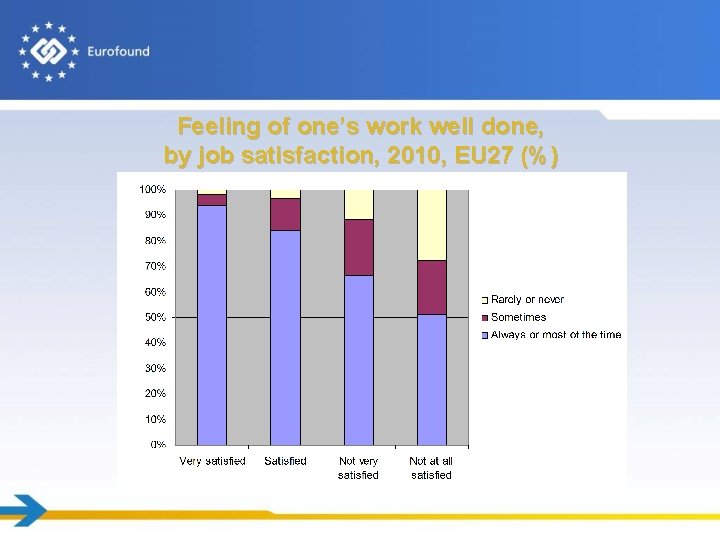
Feeling of one’s work well done, by job satisfaction, 2010, EU 27 (%)
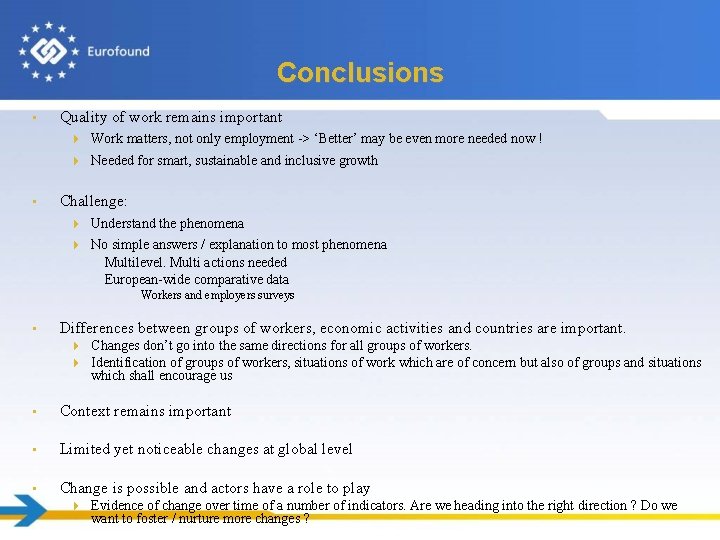
Conclusions • Quality of work remains important 4 Work matters, not only employment -> ‘Better’ may be even more needed now ! 4 Needed for smart, sustainable and inclusive growth • Challenge: 4 Understand the phenomena 4 No simple answers / explanation to most phenomena Multilevel. Multi actions needed European-wide comparative data Workers and employers surveys • Differences between groups of workers, economic activities and countries are important. 4 Changes don’t go into the same directions for all groups of workers. 4 Identification of groups of workers, situations of work which are of concern but also of groups and situations which shall encourage us • Context remains important • Limited yet noticeable changes at global level • Change is possible and actors have a role to play 4 Evidence of change over time of a number of indicators. Are we heading into the right direction ? Do we want to foster / nurture more changes ?
Thank you More info: www. eurofound. europa. eu Survey Map Tool, overview report, secondary analyses Data will be available through Essex Data Archive gve@eurofound. europa. eu
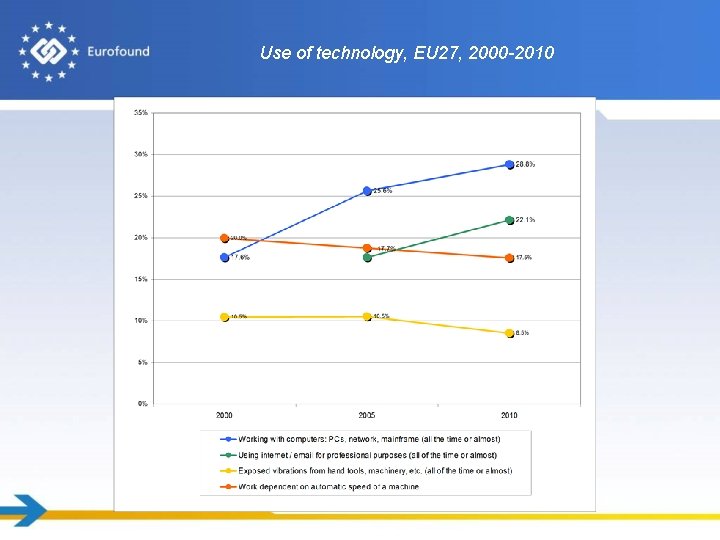
Use of technology, EU 27, 2000 -2010