4 4 Reformers in the White House America


- Slides: 28
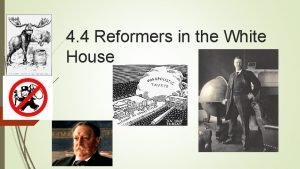
4. 4 Reformers in the White House
America Comes of Age (1890 -1920) Lesson 4 Reformers in the White House Learning Objectives • Analyze how Theodore Roosevelt influenced the changing relationship between the federal government and private business. Explain the impact of Roosevelt's actions towards managing the environment. Compare and contrast Roosevelt's policies with Taft's and Wilson's policies. Describe Wilson's efforts to regulate the economy. Assess the legacy of the Progressive Era. • • Key Terms • • • • • Theodore Roosevelt Square Deal Hepburn Act Meat Inspection Act Pure Food and Drug Act John Muir Gifford Pinchot National Reclamation Act New Nationalism Progressive Party Woodrow Wilson New Freedom Sixteenth Amendment monetary policy Federal Reserve Act Federal Trade Commission (FTC) Clayton Antitrust Act
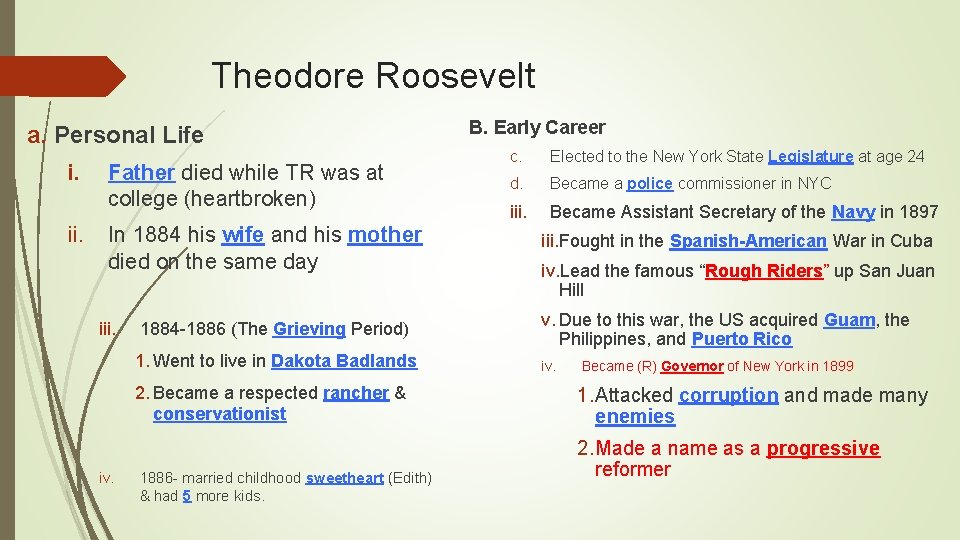
Theodore Roosevelt a. Personal Life i. ii. Father died while TR was at college (heartbroken) In 1884 his wife and his mother died on the same day iii. 1884 -1886 (The Grieving Period) 1. Went to live in Dakota Badlands 2. Became a respected rancher & conservationist iv. 1886 - married childhood sweetheart (Edith) & had 5 more kids. B. Early Career c. Elected to the New York State Legislature at age 24 d. Became a police commissioner in NYC iii. Became Assistant Secretary of the Navy in 1897 iii. Fought in the Spanish-American War in Cuba iv. Lead the famous “Rough Riders” up San Juan Hill v. Due to this war, the US acquired Guam, the Philippines, and Puerto Rico iv. Became (R) Governor of New York in 1899 1. Attacked corruption and made many enemies 2. Made a name as a progressive reformer
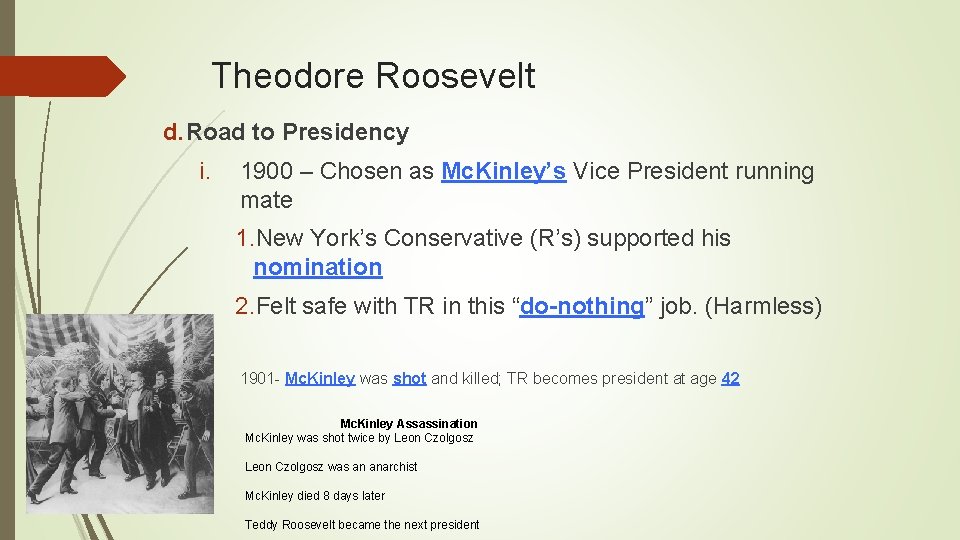
Theodore Roosevelt d. Road to Presidency i. 1900 – Chosen as Mc. Kinley’s Vice President running mate 1. New York’s Conservative (R’s) supported his nomination 2. Felt safe with TR in this “do-nothing” job. (Harmless) ii. 1901 - Mc. Kinley was shot and killed; TR becomes president at age 42 Mc. Kinley Assassination Mc. Kinley was shot twice by Leon Czolgosz was an anarchist Mc. Kinley died 8 days later Teddy Roosevelt became the next president
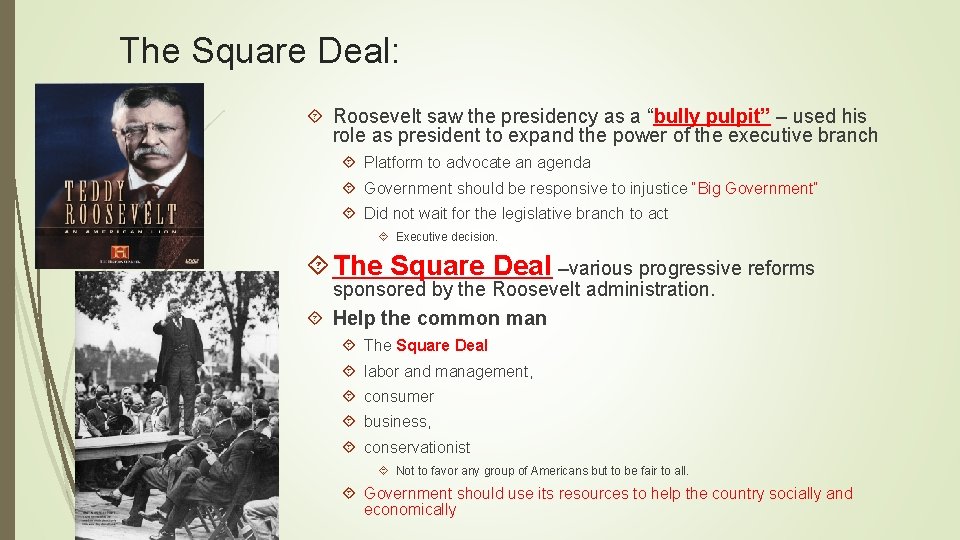
The Square Deal: Roosevelt saw the presidency as a “bully pulpit” – used his role as president to expand the power of the executive branch Platform to advocate an agenda Government should be responsive to injustice “Big Government” Did not wait for the legislative branch to act Executive decision. The Square Deal –various progressive reforms sponsored by the Roosevelt administration. Help the common man The Square Deal labor and management, consumer business, conservationist Not to favor any group of Americans but to be fair to all. Government should use its resources to help the country socially and economically
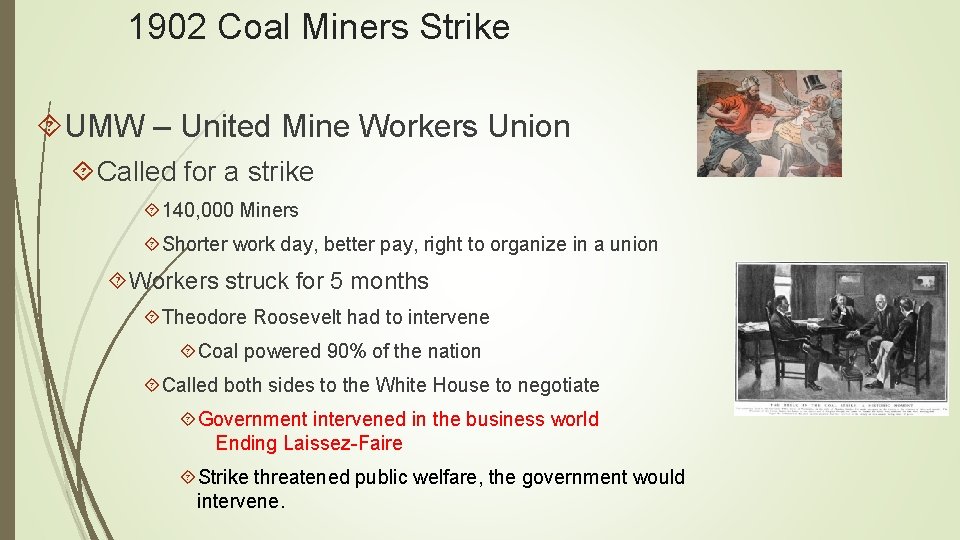
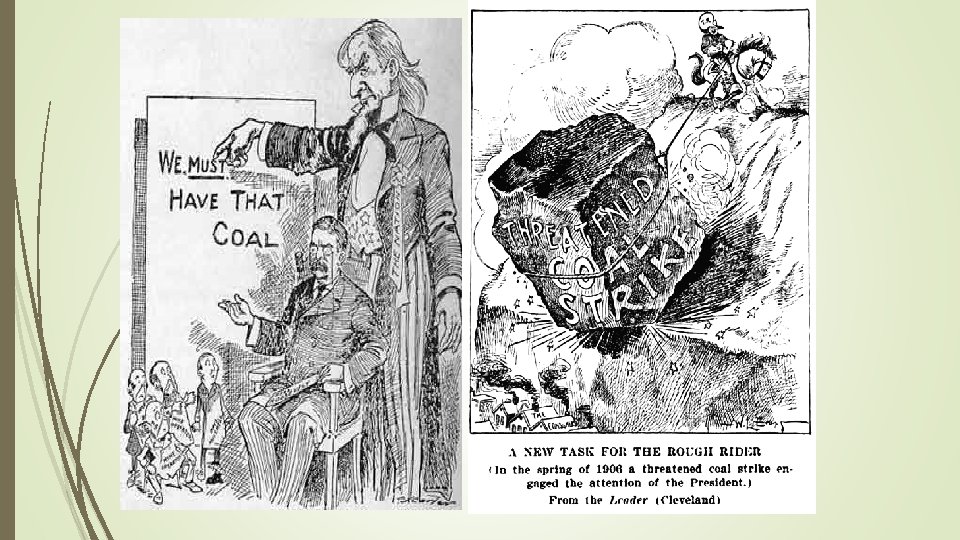
1902 Coal Miners Strike UMW – United Mine Workers Union Called for a strike 140, 000 Miners Shorter work day, better pay, right to organize in a union Workers struck for 5 months Theodore Roosevelt had to intervene Coal powered 90% of the nation Called both sides to the White House to negotiate Government intervened in the business world Ending Laissez-Faire Strike threatened public welfare, the government would intervene.
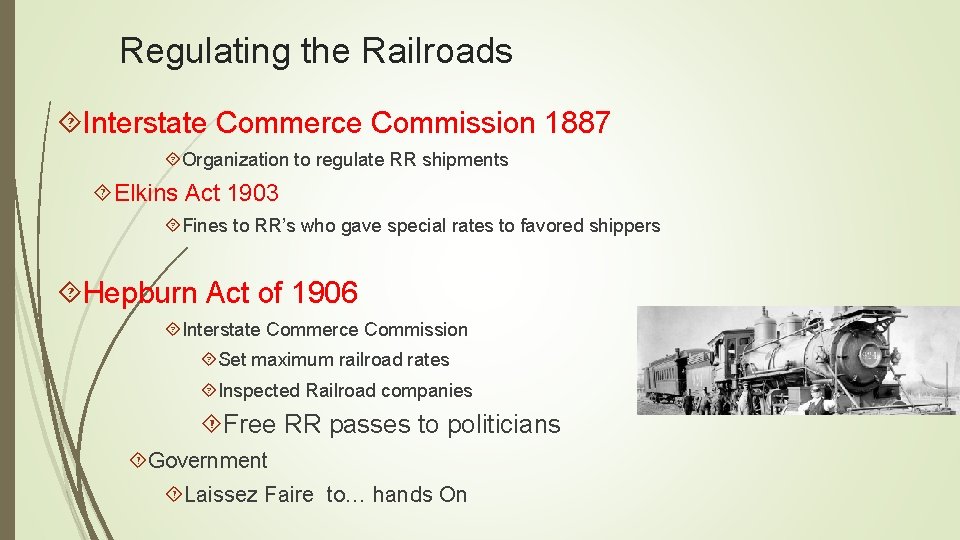
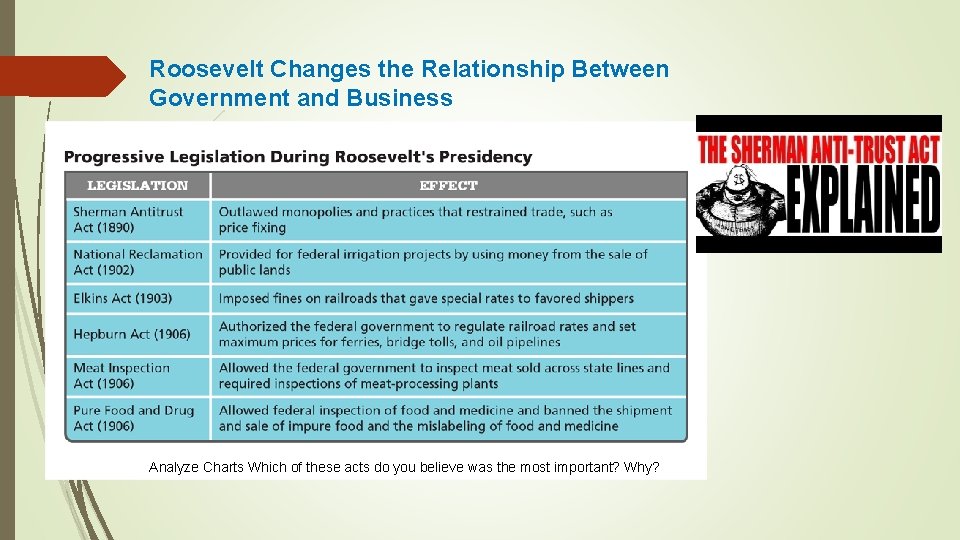
Regulating the Railroads Interstate Commerce Commission 1887 Organization to regulate RR shipments Elkins Act 1903 Fines to RR’s who gave special rates to favored shippers Hepburn Act of 1906 Interstate Commerce Commission Set maximum railroad rates Inspected Railroad companies Free RR passes to politicians Government Laissez Faire to… hands On
Roosevelt Changes the Relationship Between Government and Business Analyze Charts Which of these acts do you believe was the most important? Why?
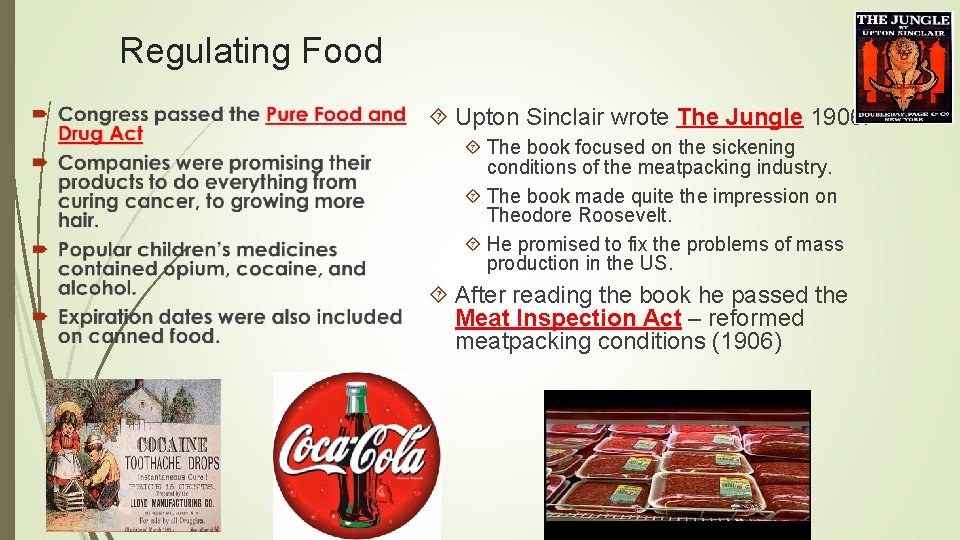
Regulating Food Upton Sinclair wrote The Jungle 1906. The book focused on the sickening conditions of the meatpacking industry. The book made quite the impression on Theodore Roosevelt. He promised to fix the problems of mass production in the US. After reading the book he passed the Meat Inspection Act – reformed meatpacking conditions (1906)
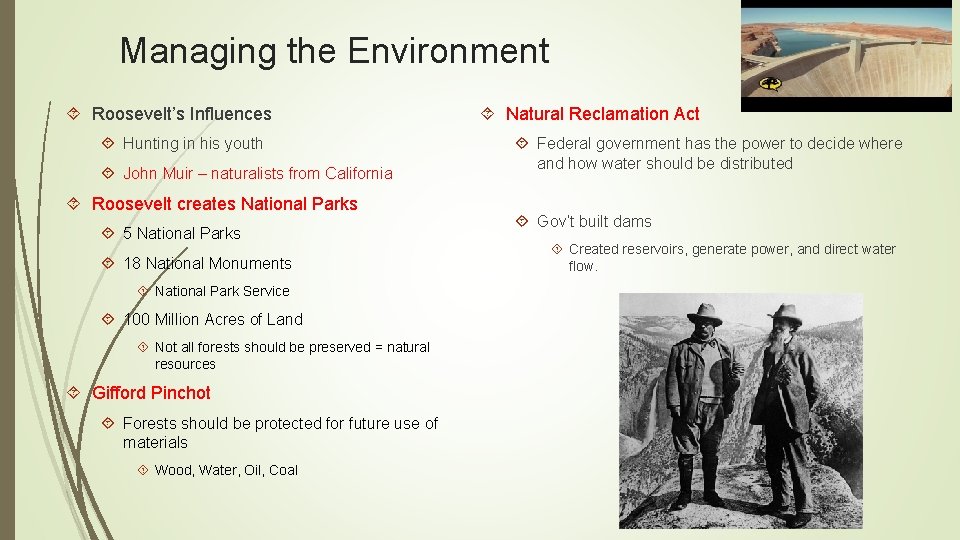
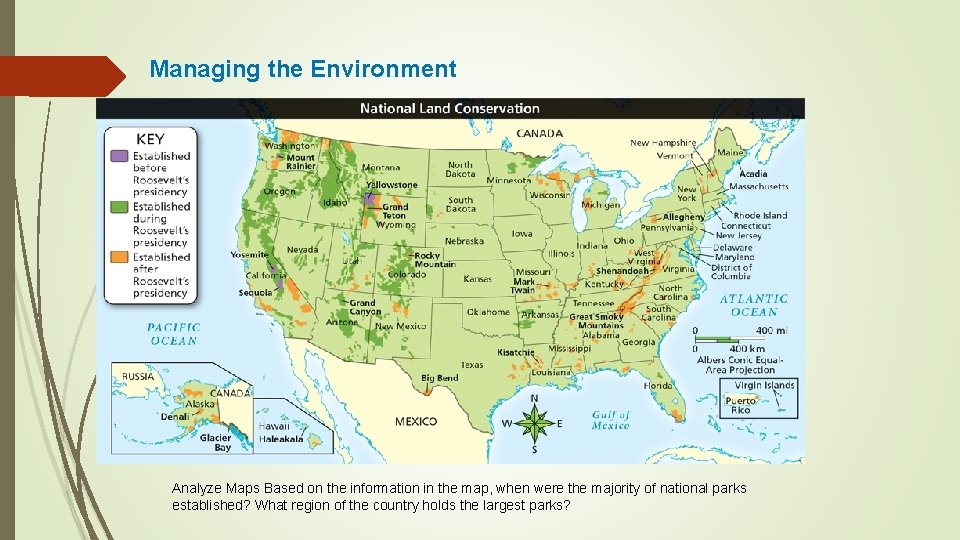
Managing the Environment Roosevelt’s Influences Hunting in his youth John Muir – naturalists from California Roosevelt creates National Parks 5 National Parks 18 National Monuments National Park Service 100 Million Acres of Land Not all forests should be preserved = natural resources Gifford Pinchot Forests should be protected for future use of materials Wood, Water, Oil, Coal Natural Reclamation Act Federal government has the power to decide where and how water should be distributed Gov’t built dams Created reservoirs, generate power, and direct water flow.
Managing the Environment Analyze Maps Based on the information in the map, when were the majority of national parks established? What region of the country holds the largest parks?
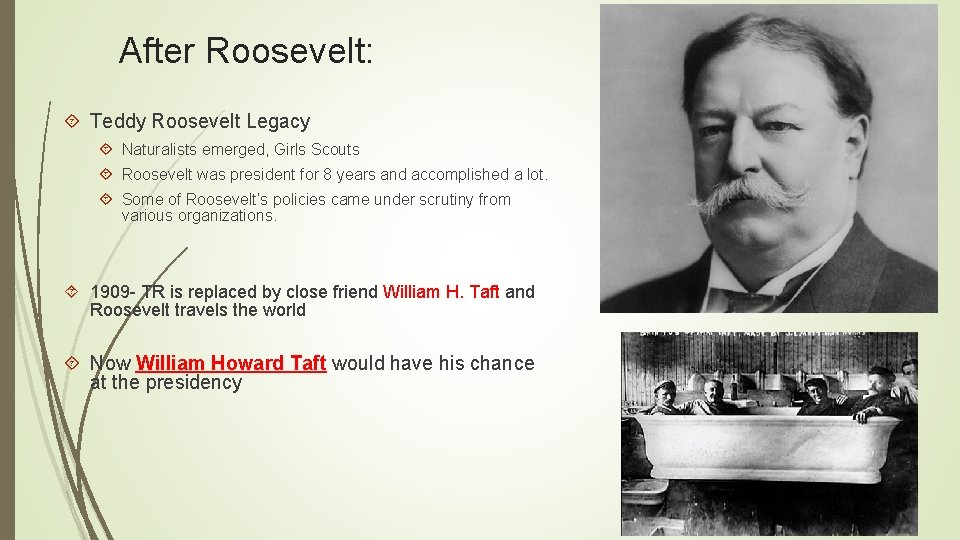
After Roosevelt: Teddy Roosevelt Legacy Naturalists emerged, Girls Scouts Roosevelt was president for 8 years and accomplished a lot. Some of Roosevelt’s policies came under scrutiny from various organizations. 1909 - TR is replaced by close friend William H. Taft and Roosevelt travels the world Now William Howard Taft would have his chance at the presidency
William Howard Taft 1909 TR decided not to run again Hand selected and endorsed Taft would support many progressive reforms d. Successes as President (R) 1909 -1913 i. Added more land to public parks & forests (not as much as TR) ii. Broke up more than 90 monopolies, including Standard Oil in 1911 iii. Set up the Dept. of Labor & Bureau of Mines to protect workers iv. Established the 8 hour day for government workers 16 th +17 th Amendments 16 th = income tax 17 th = direct election of Senators But Taft did not run the country the way Roosevelt thought he would Became much more conservative
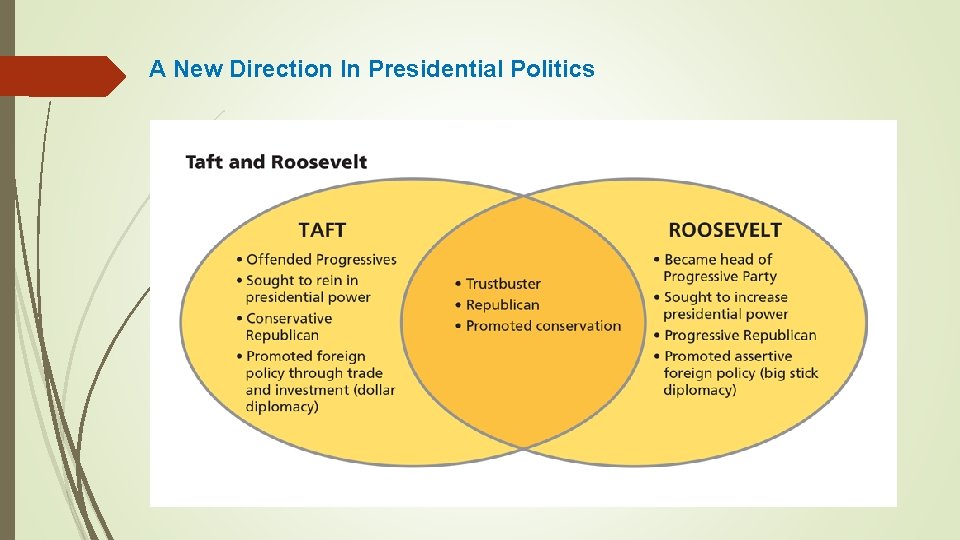
A New Direction In Presidential Politics
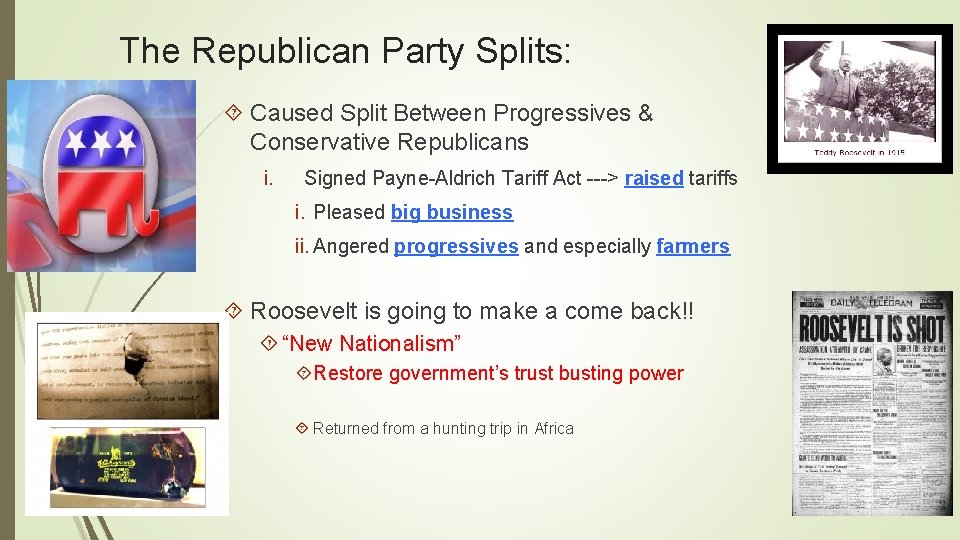
The Republican Party Splits: Caused Split Between Progressives & Conservative Republicans i. Signed Payne-Aldrich Tariff Act ---> raised tariffs i. Pleased big business ii. Angered progressives and especially farmers Roosevelt is going to make a come back!! “New Nationalism” Restore government’s trust busting power Returned from a hunting trip in Africa
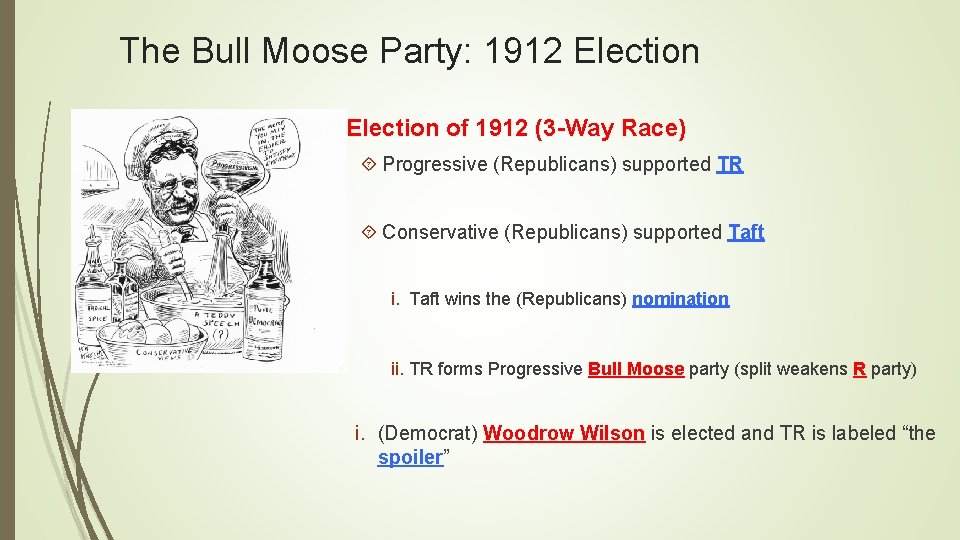
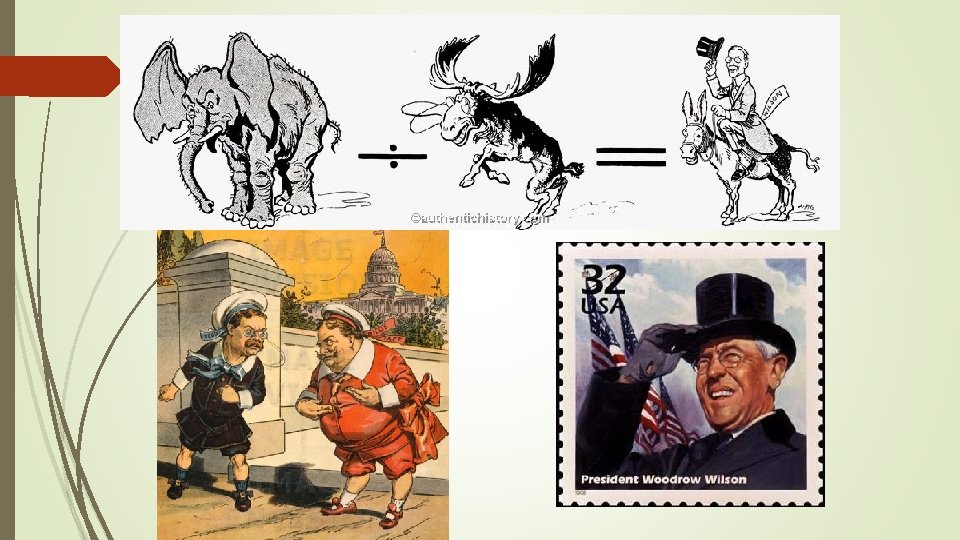
The Bull Moose Party: 1912 Election of 1912 (3 -Way Race) Progressive (Republicans) supported TR Conservative (Republicans) supported Taft i. Taft wins the (Republicans) nomination ii. TR forms Progressive Bull Moose party (split weakens R party) i. (Democrat) Woodrow Wilson is elected and TR is labeled “the spoiler”
What did the Bull Moose Party support? The Bull Moose Party supported: 1. Women’s suffrage 2. Worker’s compensation 3. An 8 -hr. work day 4. A minimum wage for women 5. A federal law against child labor 6. A federal trade commission to regulate business.
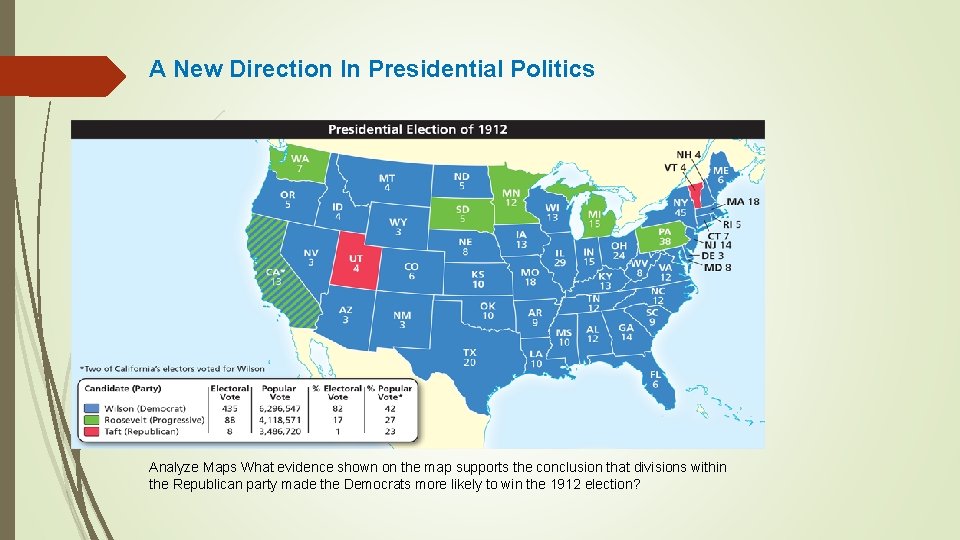
A New Direction In Presidential Politics Analyze Maps What evidence shown on the map supports the conclusion that divisions within the Republican party made the Democrats more likely to win the 1912 election?
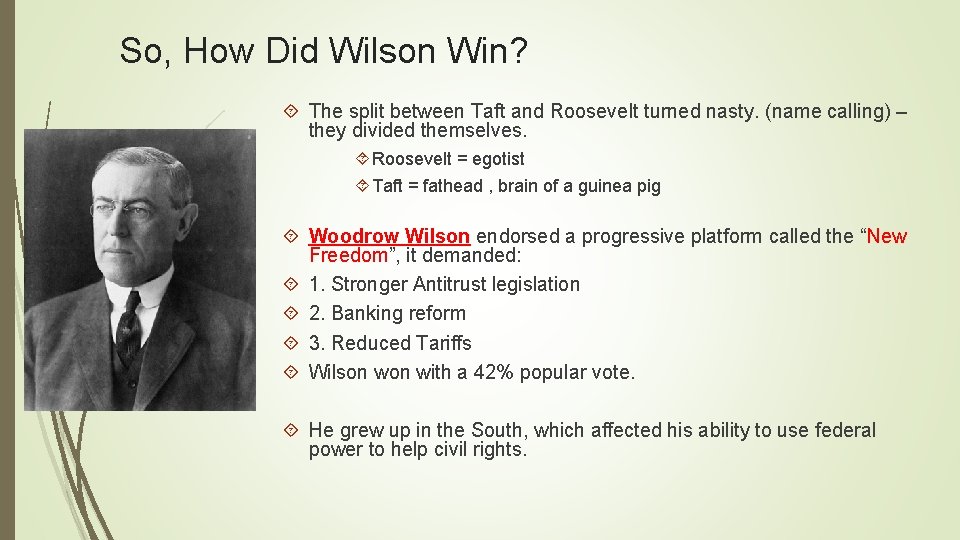
So, How Did Wilson Win? The split between Taft and Roosevelt turned nasty. (name calling) – they divided themselves. Roosevelt = egotist Taft = fathead , brain of a guinea pig Woodrow Wilson endorsed a progressive platform called the “New Freedom”, it demanded: 1. Stronger Antitrust legislation 2. Banking reform 3. Reduced Tariffs Wilson with a 42% popular vote. He grew up in the South, which affected his ability to use federal power to help civil rights.
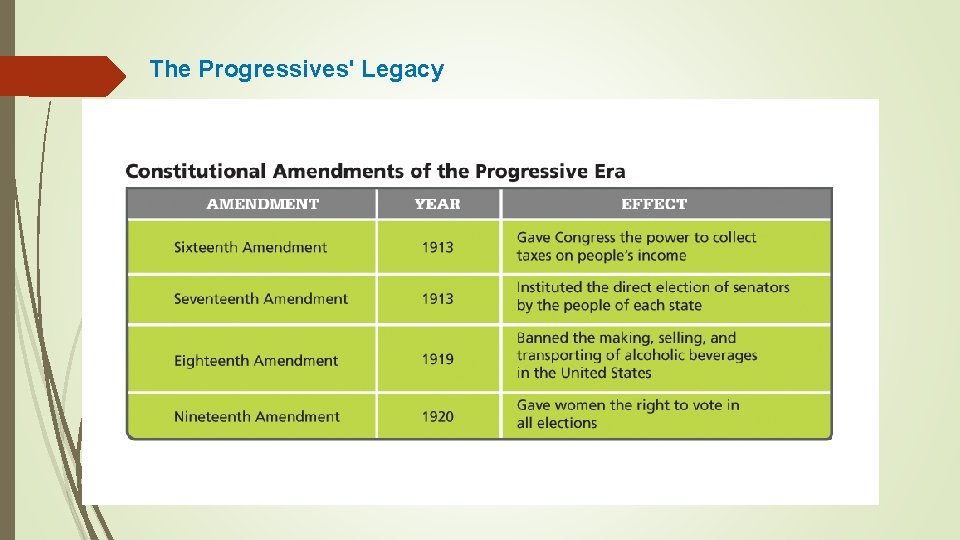
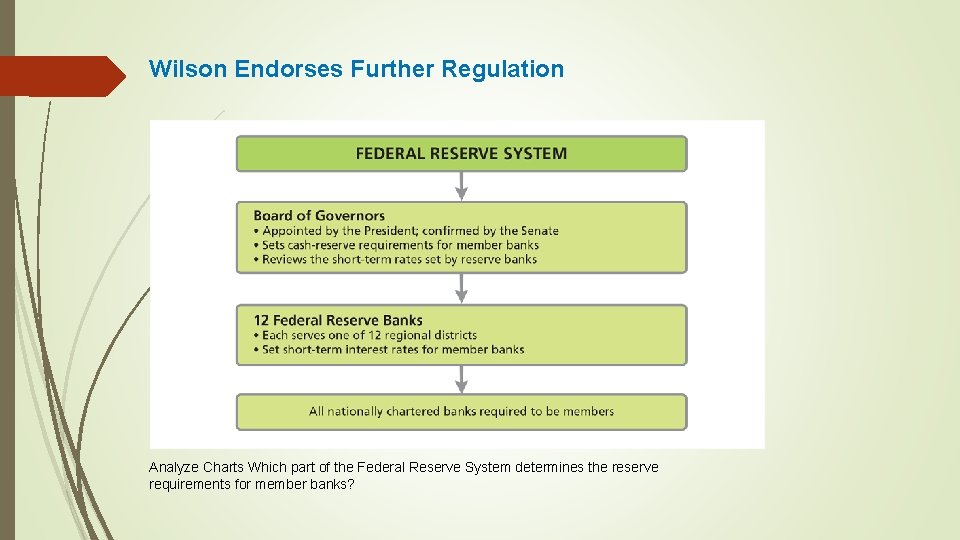
Woodrow Wilson Successes came under New Freedom 1. Underwood Simmons Act (1913) lowered import tariffs 2. Created the Federal Reserve System to stabilize banking Oversee banks & protect the economy Set interest rates 3. Keating-Owen Act 1. Ended use of child labor 4. All 4 Progressive Era Amendments (16 th, 17 th, 18 th, 19 th) went into effect while he was president
The Progressives' Legacy
Wilson’s Antitrust Regulations Clayton Antitrust Legal approach to strengthen the Sherman Antitrust Act of 1890. Spelled out a series of illegal practices Federal Trade commission Administrative approach to attack businesses “Watchdog” agency Selling at a lass to undercut competitors Power to investigate possible violations of regulatory statutes to prohibited corporations from acquiring stock of another if doings so would create a monopoly require periodic reports from corporations Labor unions and farm organizations could legally form Cannot charge strikers unless they caused damage End number of unfair business practices FTC investigated over 400 companies
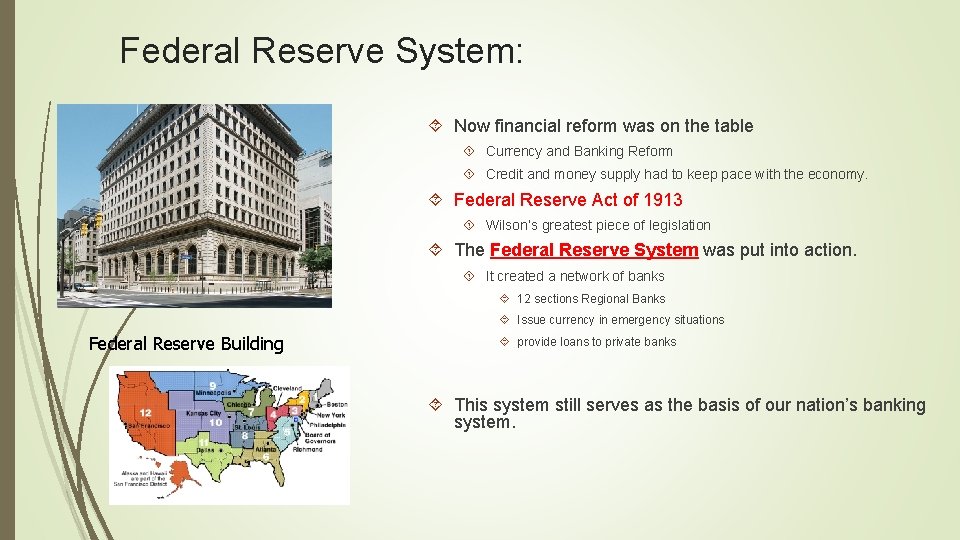
Federal Reserve System: Now financial reform was on the table Currency and Banking Reform Credit and money supply had to keep pace with the economy. Federal Reserve Act of 1913 Wilson’s greatest piece of legislation The Federal Reserve System was put into action. It created a network of banks 12 sections Regional Banks Issue currency in emergency situations Federal Reserve Building provide loans to private banks This system still serves as the basis of our nation’s banking system.
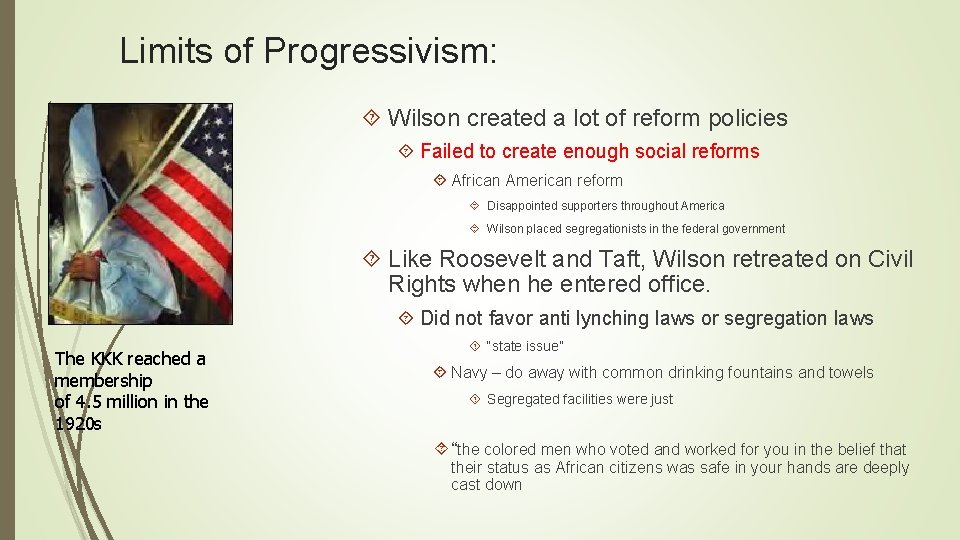
Limits of Progressivism: Wilson created a lot of reform policies Failed to create enough social reforms African American reform Disappointed supporters throughout America Wilson placed segregationists in the federal government Like Roosevelt and Taft, Wilson retreated on Civil Rights when he entered office. Did not favor anti lynching laws or segregation laws The KKK reached a membership of 4. 5 million in the 1920 s “state issue” Navy – do away with common drinking fountains and towels Segregated facilities were just “the colored men who voted and worked for you in the belief that their status as African citizens was safe in your hands are deeply cast down
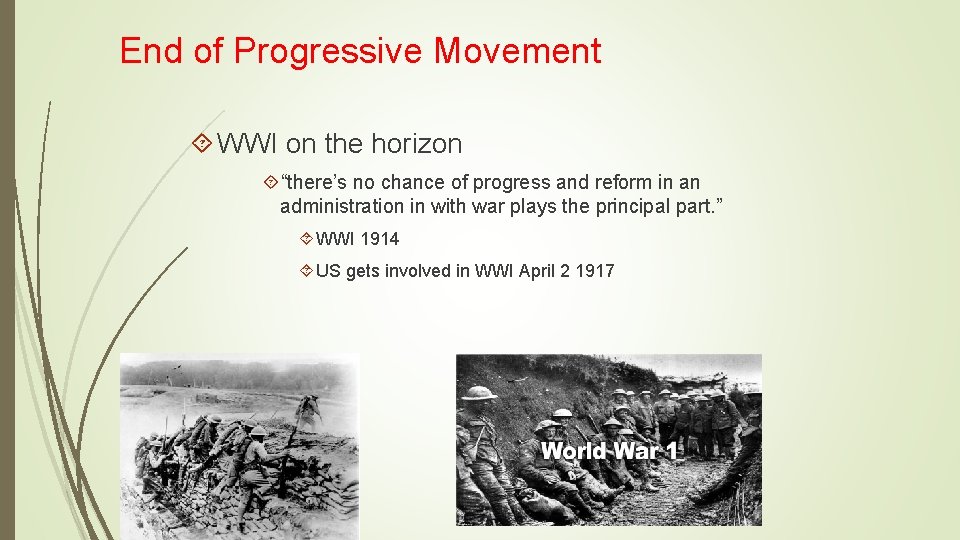
End of Progressive Movement WWI on the horizon “there’s no chance of progress and reform in an administration in with war plays the principal part. ” WWI 1914 US gets involved in WWI April 2 1917
Wilson Endorses Further Regulation Analyze Charts Which part of the Federal Reserve System determines the reserve requirements for member banks?