
The Progressive Era What is Progressivism Democrats Republicans
The Progressive Era
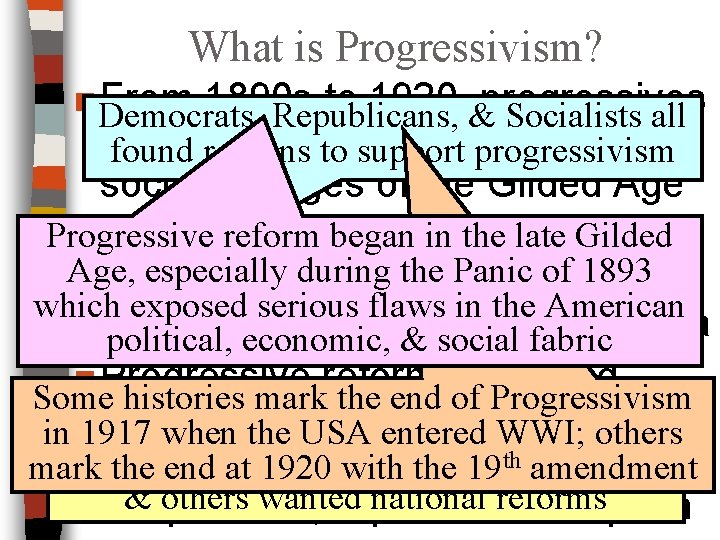
What is Progressivism? ■Democrats, Republicans, & Socialists all From 1890 s to 1920, progressives addressed the rapid economic & found reasons to support progressivism social changes of the Gilded Age Progressive reform began in the late Gilded ■ Progressive reform had wide Age, especially during the Panic of 1893 appeal but was not a unified which exposed serious flaws in the American movement with a common agenda political, economic, & social fabric ■ Progressive reforms included Some histories mark the end of Progressivism prostitution, poverty, child labor, Some reformers targeted local community in 1917 when the USA entered WWI; others th amendment problems, others aimed for state changes, factory safety, women’s rights, mark the end at 1920 with the 19 & others wanted national reforms temperance, & political corruption
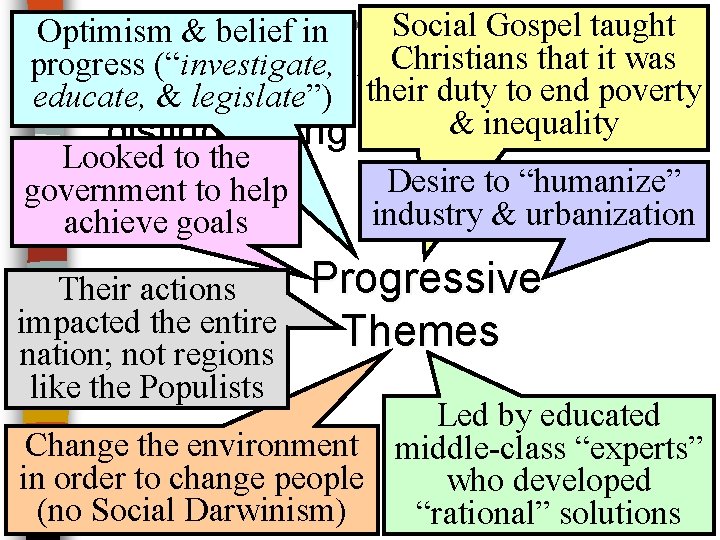
Social Gospel taught Optimism & belief in What is Progressivism? Christians that it was progress (“investigate, ■ But, Progressive reform had their duty to end poverty educate, & legislate”) legislate & inequality distinguishing characteristics: Looked to the Desire to “humanize” government to help industry & urbanization achieve goals Their actions Progressive impacted the entire Themes nation; not regions like the Populists Led by educated Change the environment middle-class “experts” in order to change people who developed (no Social Darwinism) “rational” solutions
Reforming America’s Cities
Reforming America’s Cities ■ Progressive reform 1 st began in cities in the 1890 s to address factory, tenement, labor problems: –Early reformers realized that private charity was not enough to cure all social ills –The Social Gospel movement was a new religious philosophy that focused on improving society & saving individual souls
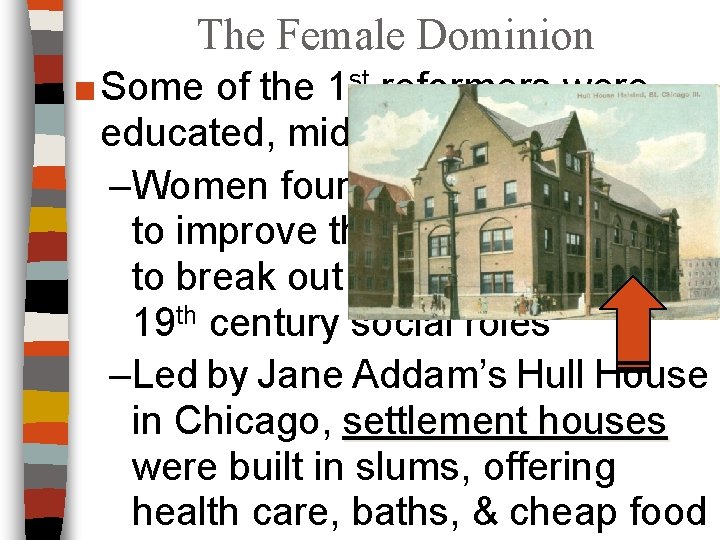
The Female Dominion ■ Some of the 1 st reformers were educated, middle-class women: –Women found reform was a way to improve their communities & to break out of their traditional, 19 th century social roles –Led by Jane Addam’s Hull House in Chicago, settlement houses were built in slums, offering health care, baths, & cheap food
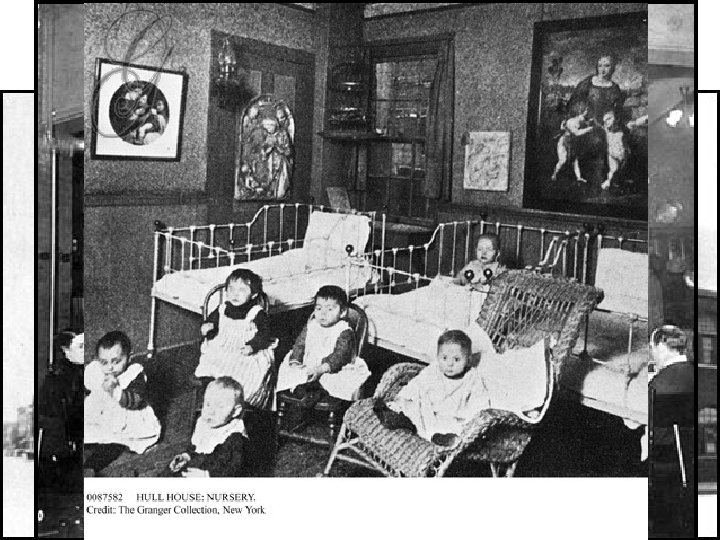
Hull House in Chicago
The Female Dominion ■ Women were key leaders in: –Charity Org Society—collected Charity Org Society data on poverty & slums; led to the NY Tenement Commission –Nat’l Conference of Social Work used professional social workers & called for minimum wages, maximum hours, widow pensions ■ In the 1930 s, the gov’t passed the National Child Labor Laws
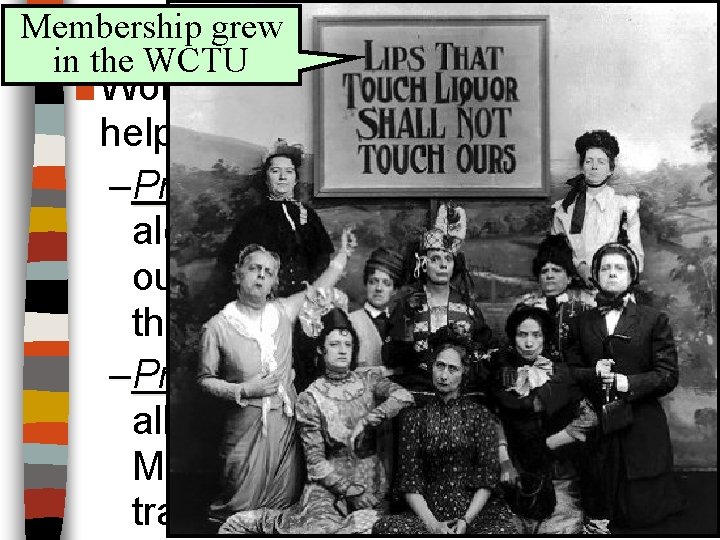
Membership grew The Female Dominion in the WCTU ■ Women’s groups, like the WCTU, helped gain key reforms: –Prohibition—Shocking reports of Prohibition alcohol abuse led 19 states to outlaw booze & the passage of the 18 th Amendment (1920) –Prostitution—By 1915, almost Prostitution all states banned brothels & the Mann Act banned the interstate transport of “immoral” women
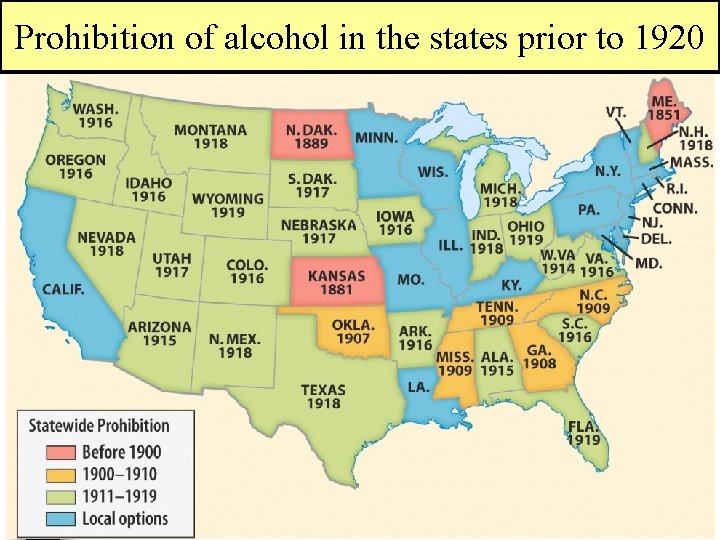
Prohibition of alcohol in the states prior to 1920
Attacking Political Machines ■ Mugwumps were reformers who Mugwumps strove to end corruption among political machines in cities: –The Gilded Age saw the height of urban machines whose politicians controlled lawmaking, police departments, & courts –The “Good Gov’t” Movement found ways to shift power from bosses to mayors & city councils
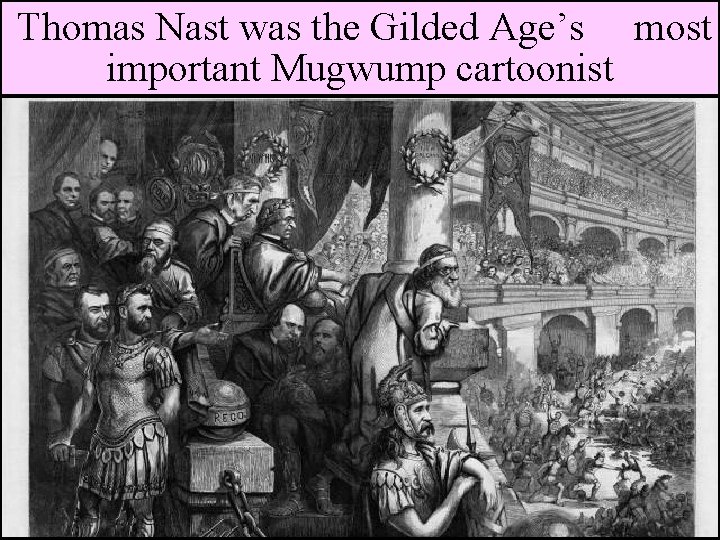
Thomas Nast was the Gilded Age’s most important Mugwump cartoonist
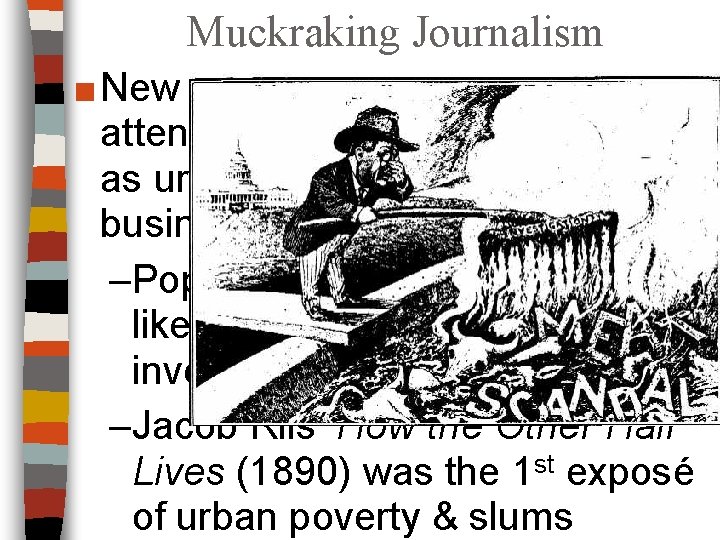
Muckraking Journalism ■ New “muckraking” journalism drew attention to social problems, such as urban poverty, corruption, & big business practices: –Popular monthly magazines, like Mc. Clure’s & Collier’s, used investigative journalism & photos –Jacob Riis’ How the Other Half Lives (1890) was the 1 st exposé of urban poverty & slums
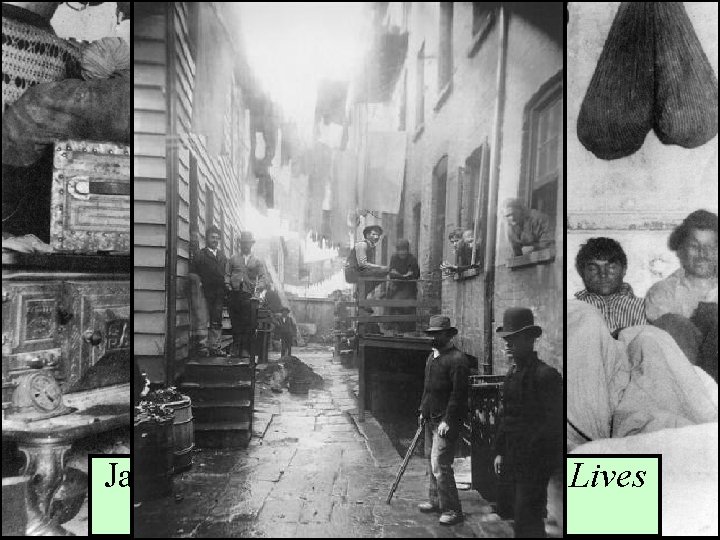
Jacob Riis’ How the Other Half Lives included photographs!
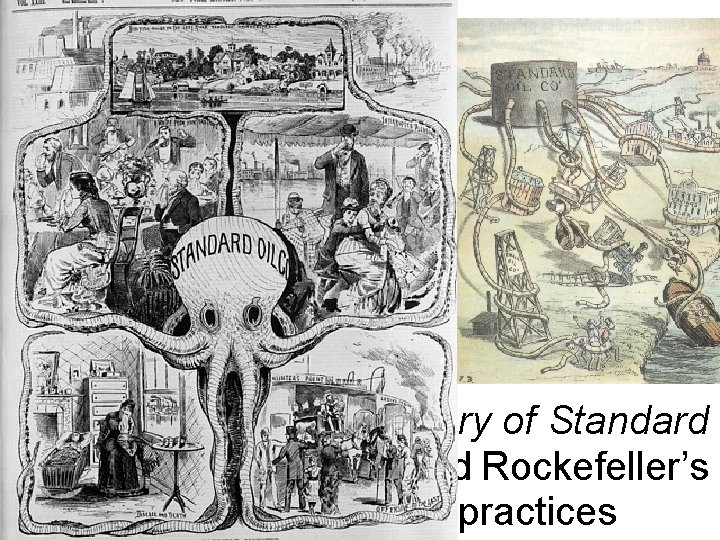
Muckraking Journalism ■ Other groundbreaking exposés: –Henry George’s Progress & Poverty (1879) showed the growing gap between rich & poor –Lincoln Steffan’s Shame of the Cities (1902) exposed corrupt political machine bosses –Ida Tarbell’s History of Standard Oil (1904) revealed Rockefeller’s ruthless business practices
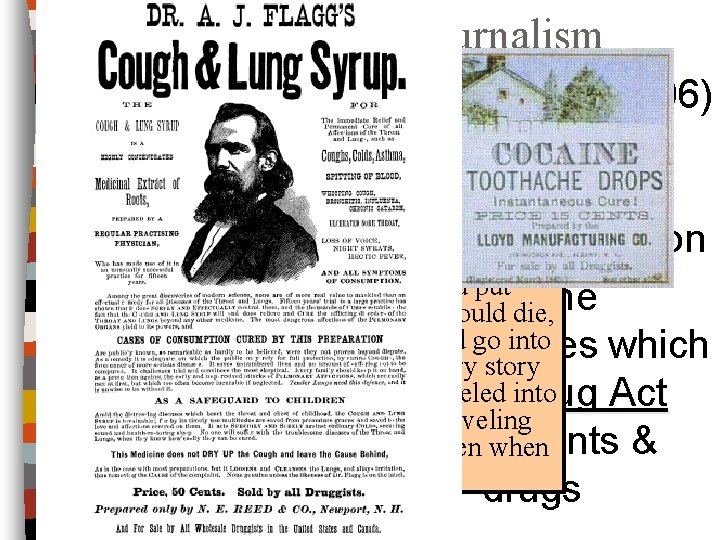
Muckraking Journalism ■ Upton Sinclair’s The Jungle (1906) led to federal investigation of the “It was too dark in these storage places to meatpacking industry, gov’t see well, but a man could run his hand over these piles of meat and sweep off handfuls of inspections, & improved sanitation the dried dung of rats. These rats were nuisances, and the packers would put ■ Sam H. Adams exposed the poisoned bread out for them; they would die, and then rats, bread, and meat would go into dangers of patent medicines which the hoppers together. This is no fairy story and no joke; the meat would be shoveled into led to the Pure Food & Drug Act carts, and the man who did the shoveling requiring listing of ingredients & would not trouble to lift out a rat even when he saw one “ banned “adulterated” drugs
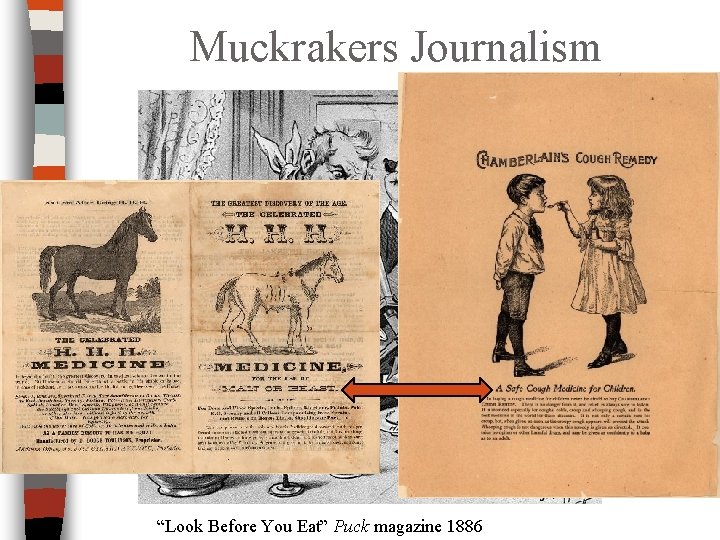
Muckrakers Journalism “Look Before You Eat” Puck magazine 1886
Standardizing Education ■ Psychologist William James promoted the idea that one’s environment dictates behavior ■ School leaders applied these ideas to reform public education: –Schools became a primary vehicle to assimilate immigrants –John Dewey promoted “creative intelligence, ” not memorization or strict teaching
Working-Class Reform
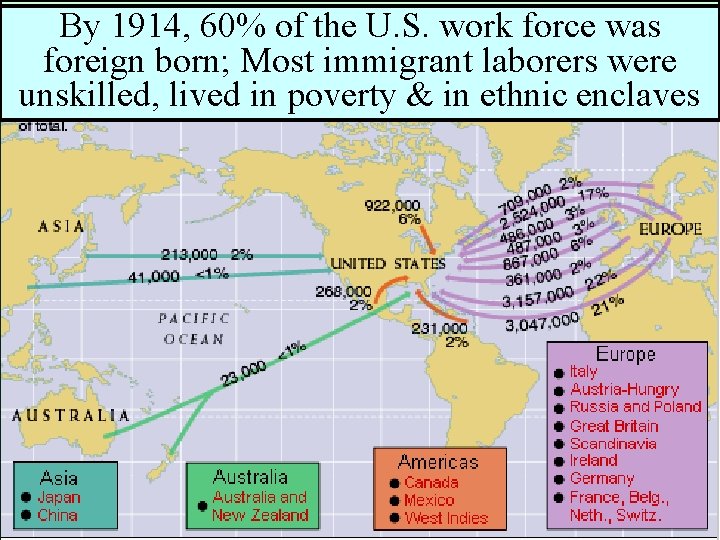
From 1901 to 1920, 14. 5 million “new” By 1914, 60% of the U. S. work force was Immigration to the USA, 1901 -1920 European, Mexican, & Asian immigrants foreign born; Most immigrant laborers were traveled to America to join the U. S. labor force unskilled, lived in poverty & in ethnic enclaves
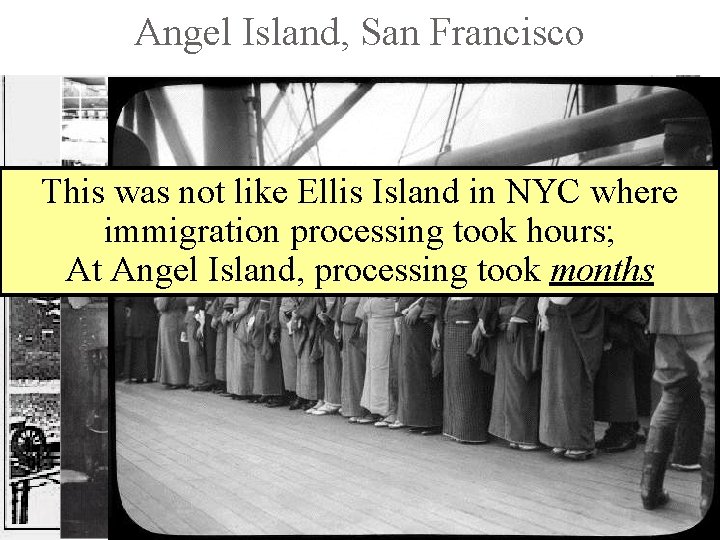
Angel Island, San Francisco This was not like Ellis Island in NYC where immigration processing took hours; At Angel Island, processing took months
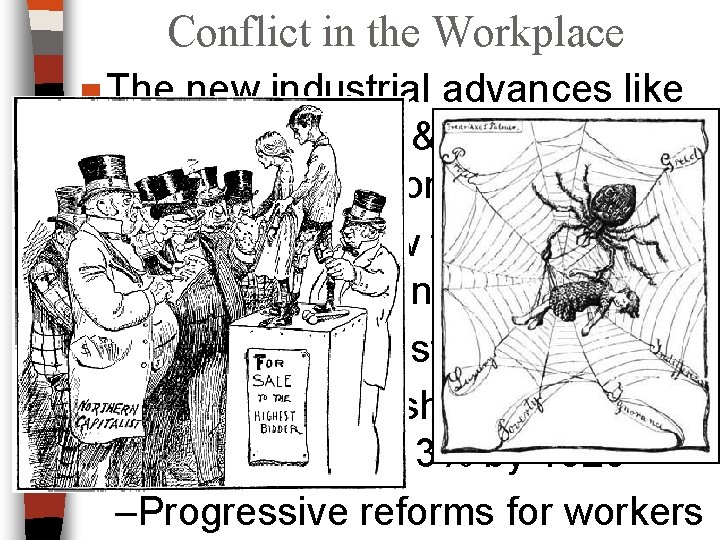
Conflict in the Workplace ■ The new industrial advances like mass production & management sped up production but led to: –Long hours, low wages, dangerous settings for workers –Labor unrest & strikes –Union membership jumped from 4% in 1900 to 13% by 1920 –Progressive reforms for workers
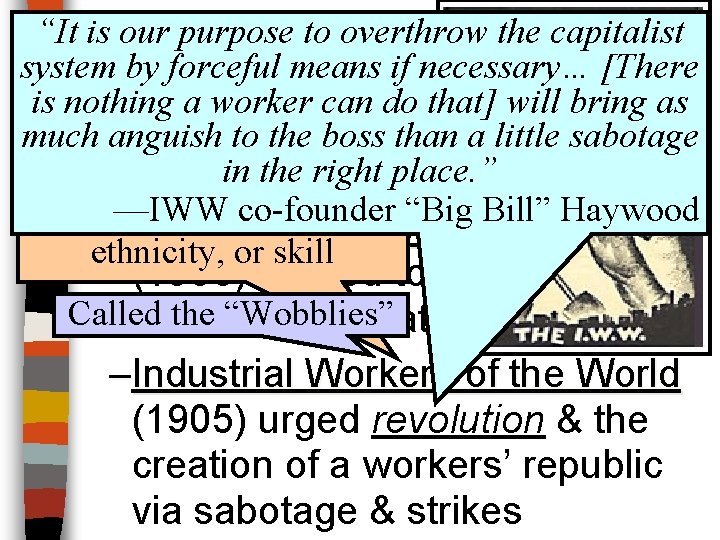
Organizing Labor “It. The WTUL strike against Hart, Schaffer, is our purpose to overthrow the capitalist system by forceful means if necessary… [There st collective & Marx Co led to the 1 ■ Gompers’ American Federation of is nothing a worker can do that] will bring as bargaining victory in U. S. labor history much Labor was the largest U. S. union anguish to the boss than a little sabotage in the right place. ” but it was exclusive; led to: Open to all workers —IWW co-founder “Big Bill” Haywood regardless of race, sex, –Women’s Trade Union League ethnicity, or skill (1903) formed to help working Called the “Wobblies” women & educate the public –Industrial Workers of the World (1905) urged revolution & the creation of a workers’ republic via sabotage & strikes
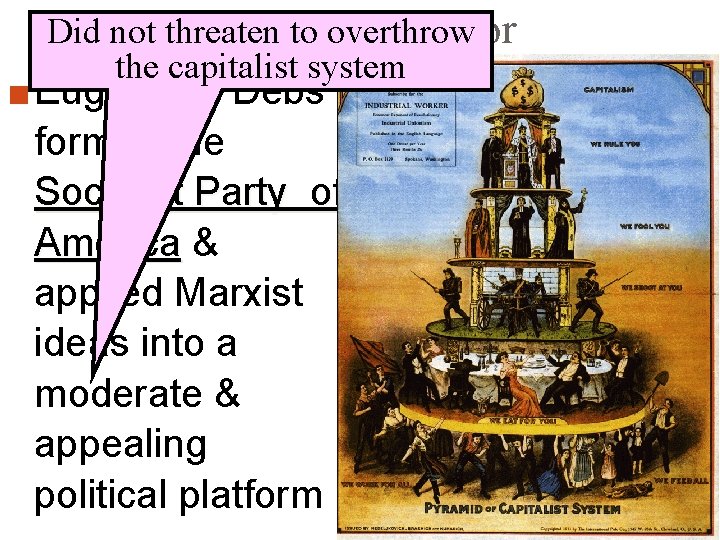
Organizing Labor Did not threaten to overthrow the capitalist system ■ Eugene V. Debs formed the Socialist Party of America & America applied Marxist ideas into a moderate & appealing political platform
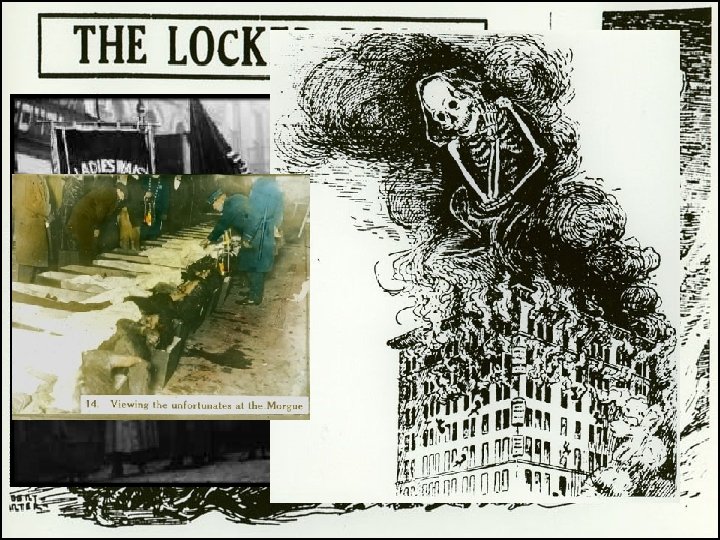
The need for Progressive reform for factory workers was made evident in the 1911 Triangle Shirtwaist fire
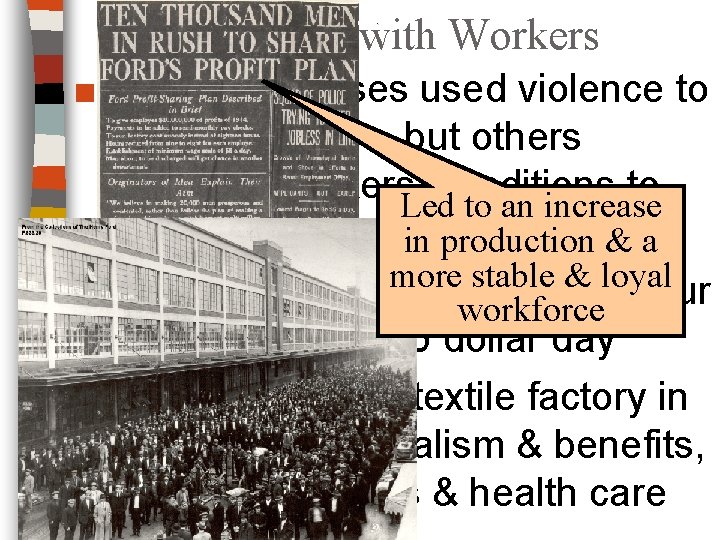
Working with Workers ■ Many businesses used violence to break up strikes, but others improved workers’ conditions to Led to an increase keep a loyal, happy workforce: in production & a more stable & loyal –Henry Ford introduced an 8 -hour workforce workday & the “ 5 dollar day” –The Amoskeag textile factory in NH used paternalism & benefits, like playgrounds & health care
The African-American & Women’s Movement
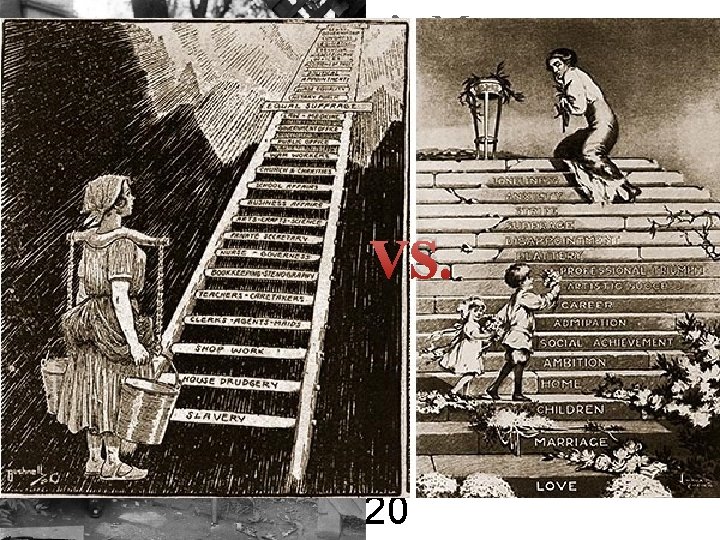
The Women’s Movement ■ Successful progressive reforms led by women strengthened calls for women’s rights & suffrage: –The National Association of VS. Colored Women advocated for “Women’s vote will help the rights of black women cure ills of society” –The National American Woman Suffrage Association was key in getting the 19 th Amendment passed in 1920
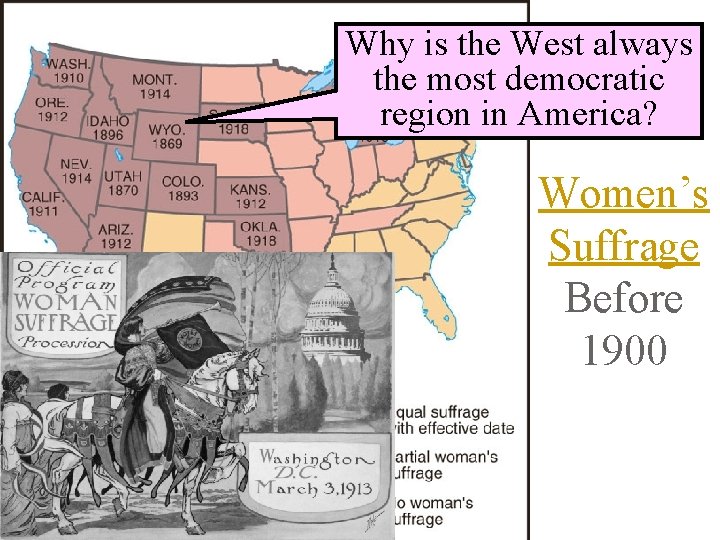
Why is the West always the most democratic region in America? Women’s Suffrage Before 1900
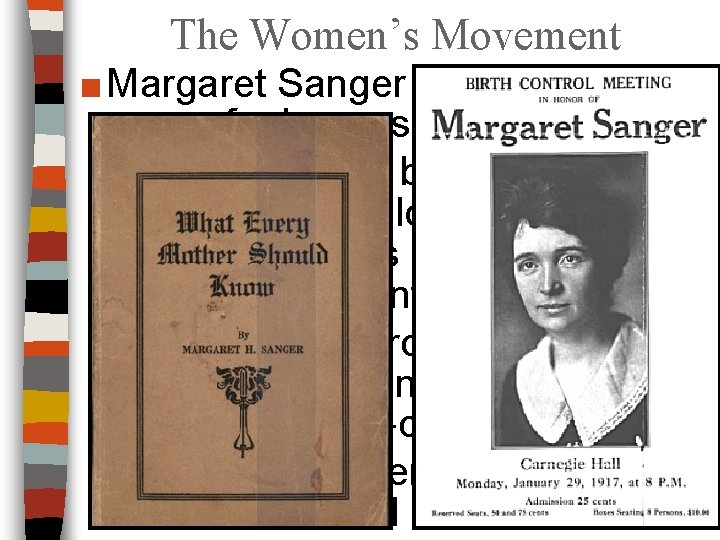
The Women’s Movement ■ Margaret Sanger championed the cause for increased birth control: –Sanger hoped birth control education would reduce the social stresses caused by too many immigrant children –Her journals provided contraceptive information for poor & middle-class women –In 1916, Sanger opened the 1 st birth control clinic in the U. S.
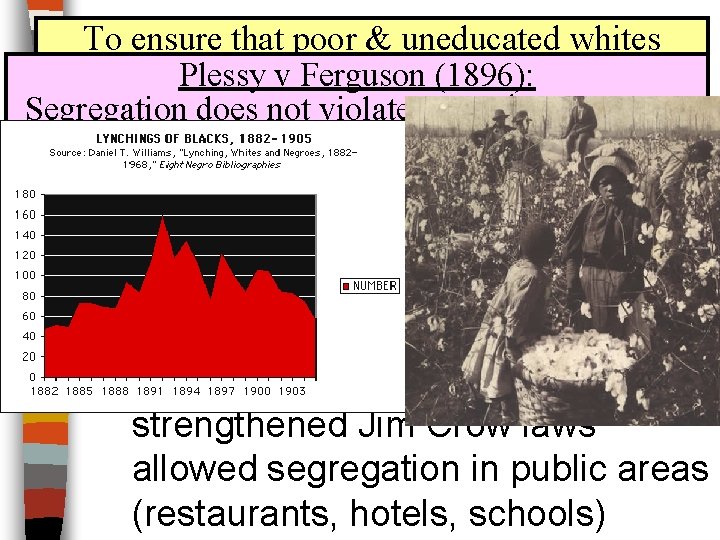
To ensure that poor & uneducated whites African-American Reforms Plessy v Ferguson (1896): could vote, states created grandfather clauses ■ By 1900, African-Americans were in th amendment Segregation does not violate the 14 which allowed white men to vote if a relative desperate need of progressive reform & can be used a public policy as long as separate voted prior to the Civil War facilities are equal (“separate but equal”) – 80% of African-Americans lived in rural areas, most as sharecroppers – Poll taxes, literacy tests, property qualifications limited black suffrage – The Plessy v Ferguson (1896) case Plessy v Ferguson strengthened Jim Crow laws allowed segregation in public areas (restaurants, hotels, schools)
African-American Reforms ■ Progressive reform did occur in Southern state government, but: –Reform focused on regulating RR & industries in order to benefit white farmers –Social reform did not occur; keeping African Americans from voting was seen as necessary ■ Due to this inequity, black civil rights leaders demanded reform
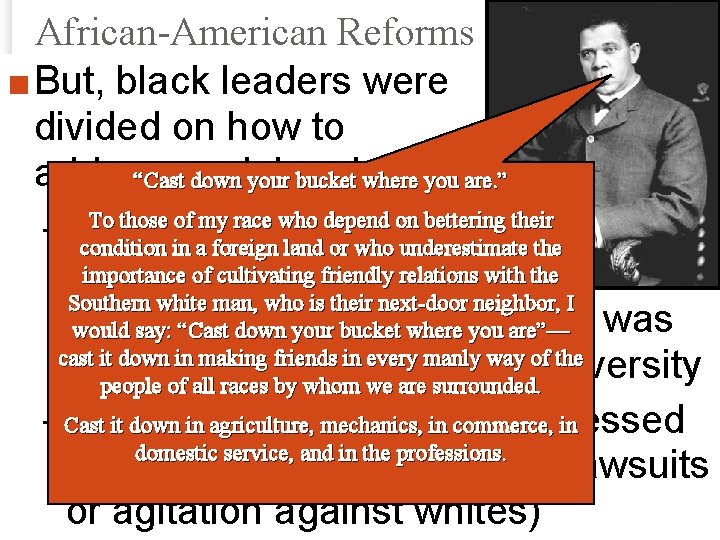
African-American Reforms ■ But, black leaders were divided on how to address racial problems “Cast down your bucket where you are. ” To those of my race who depend on bettering their –Booker T Washington condition in a foreign land or who underestimate the importance of cultivating friendly relations with the was Harvard educated, Southern white man, who is their next-door neighbor, I studied black urban culture, & was would say: “Cast down your bucket where you are”— cast it down in making friends in every manly way of the 1 stpeople of all races by whom we are surrounded. president of Tuskegee University –Cast it down in agriculture, mechanics, in commerce, in His “Atlanta Compromise” stressed domestic service, and in the professions. black self-improvement (not lawsuits or agitation against whites)
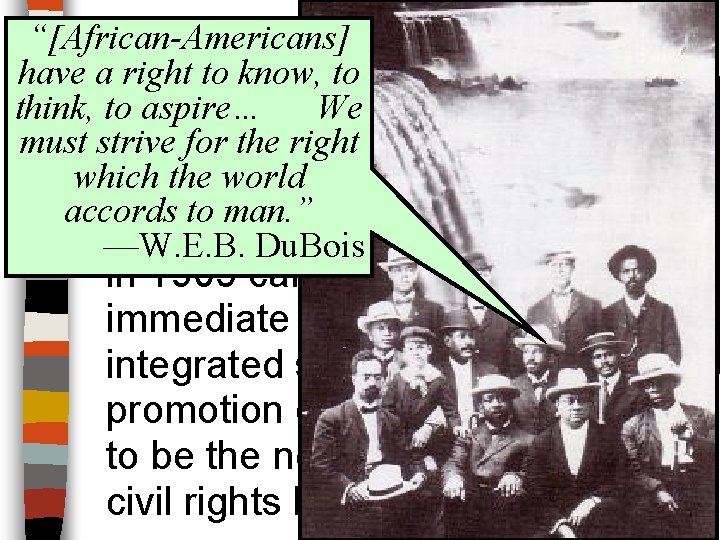
African-American Reforms “[African-Americans] have■a. W. E. B. Du. Bois was right to know, to W. E. B. Du. Bois think, to aspire… We more aggressive must strive for the right which the world ■ Dubois led the accords to man. ” Niagara Movement Niagara Movement —W. E. B. Du. Bois in 1905 calling for immediate civil rights, integrated schools, & promotion of the “Talented 10 th” to be the next generation of black civil rights leaders
The Niagara Movement & NAACP ■ In 1909, National Assoc for the Advancement of Colored People (NAACP) was formed by William Walling & others; Du. Bois was put in charge of The Crisis publication ■ The NAACP had some victories: –Guinn v U. S. (1915) ended Guinn v U. S. Oklahoma’s grandfather clause –Buchanan v Worley (1917) Buchanan v Worley ended KY housing segregation
Strange Fruit Southern trees bear a strange fruit Blood on the leaves and blood on the root Black boy swinging in the Southern breeze Strange fruit hanging from the poplar trees Pastoral scene of the gallant South The bulging eyes and the twisted mouth Scent of magnolia sweet and fresh And the sudden smell of burning flesh Here is a fruit for crows to pluck For the rain to gather, for the wind to suck For the sun to rot, for the tree to drop Here is a strange and bitter crop What does the author mean by the term “Strange Fruit? ” Identify THREE examples of imagery and it’s symbolic meaning, used by the author to paint a picture for the audience. (ex. “rain to gather” = abandoned protection for African Americans in the South) Why do you think the author this topic?
Conclusions: The Impact of Urban Progressive Reform
Conclusions ■ Social progressivism led to successful reforms in American cities by attacking corruption & advocating for the less fortunate ■ Urban reformers drew national attention to: –The plight of women & african- americans(with mixed results) –The need for reform at the state & national levels
- Slides: 38