WISENET Wireless Sensor Network Project Team 123 seminarsonly
- Slides: 24
WISENET Wireless Sensor Network Project Team: • 123 seminarsonly. braveho st. com Advisors: Sreedhar Ram
Overview • • Introduction Design Goals Design Methodology Subsystems Project Success Future Extensions / Projects Applications Conclusion
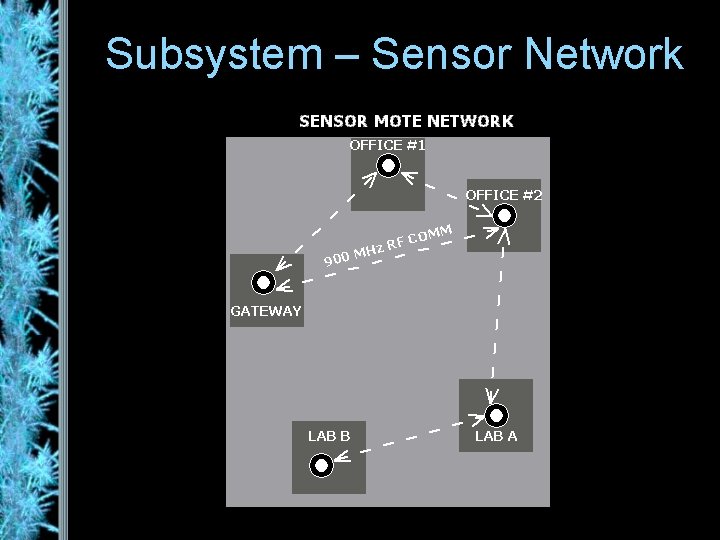
Introduction • Wireless Sensor Networks – One of MIT's 10 emerging technologies – Low-power systems – New applications: sensing, controls, automation • WISENET: Wireless Sensor Network – Office environment monitoring • Temperature, humidity, light – Quantitively evaluate heating & A/C systems – Funding & support provided by Honeywell, Int'l.
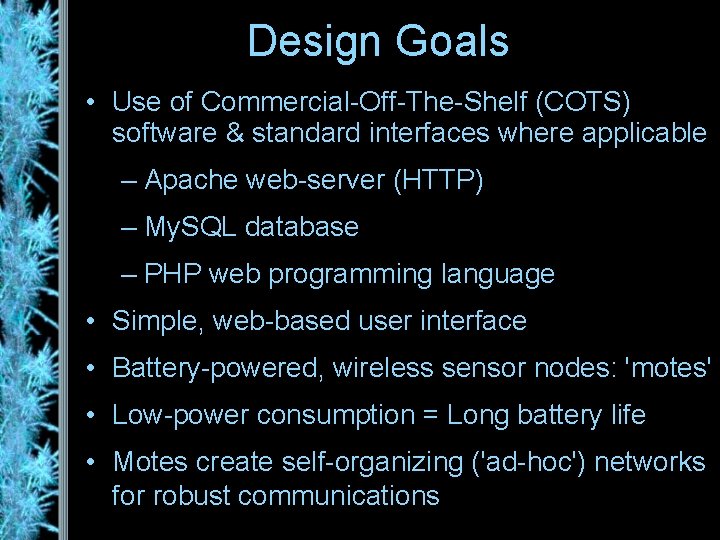
Design Goals • Use of Commercial-Off-The-Shelf (COTS) software & standard interfaces where applicable – Apache web-server (HTTP) – My. SQL database – PHP web programming language • Simple, web-based user interface • Battery-powered, wireless sensor nodes: 'motes' • Low-power consumption = Long battery life • Motes create self-organizing ('ad-hoc') networks for robust communications
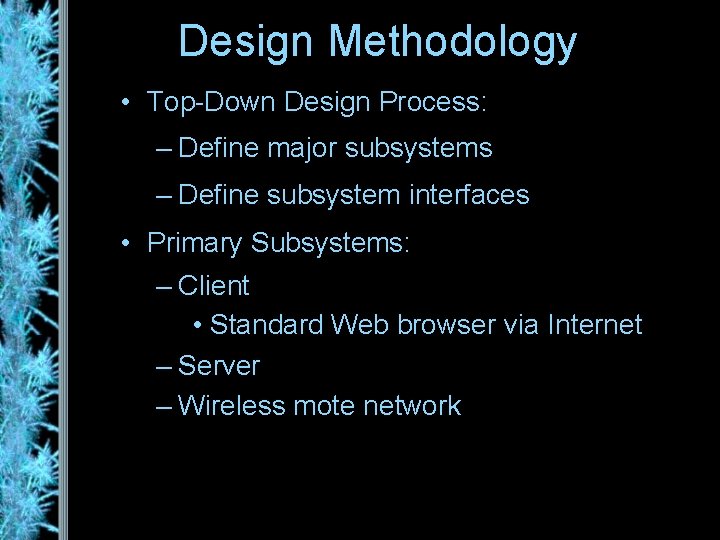
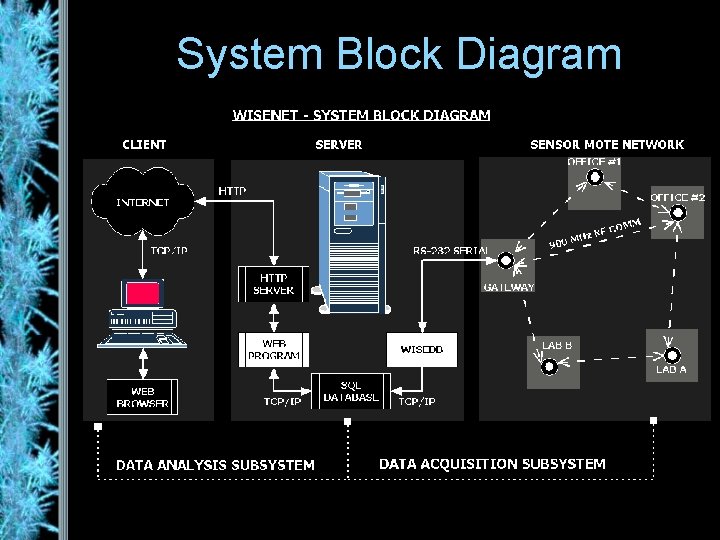
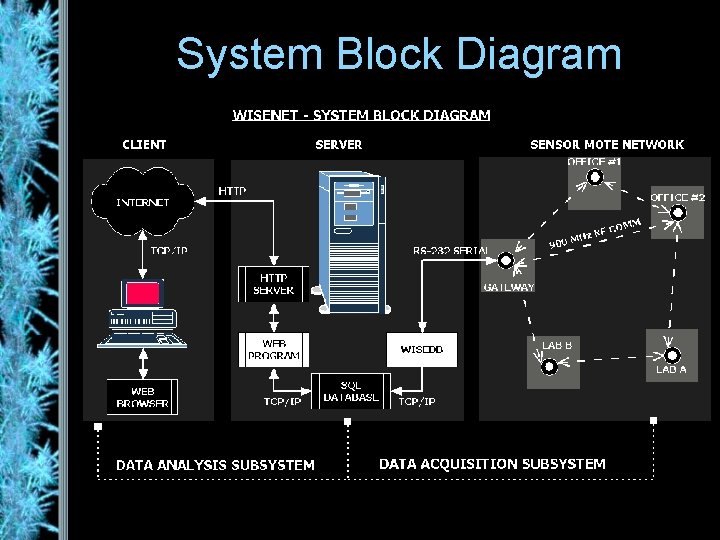
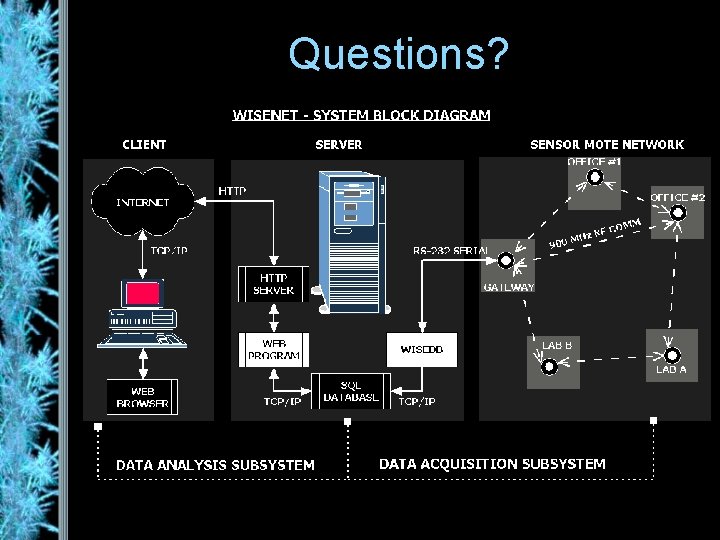
Design Methodology • Top-Down Design Process: – Define major subsystems – Define subsystem interfaces • Primary Subsystems: – Client • Standard Web browser via Internet – Server – Wireless mote network
System Block Diagram
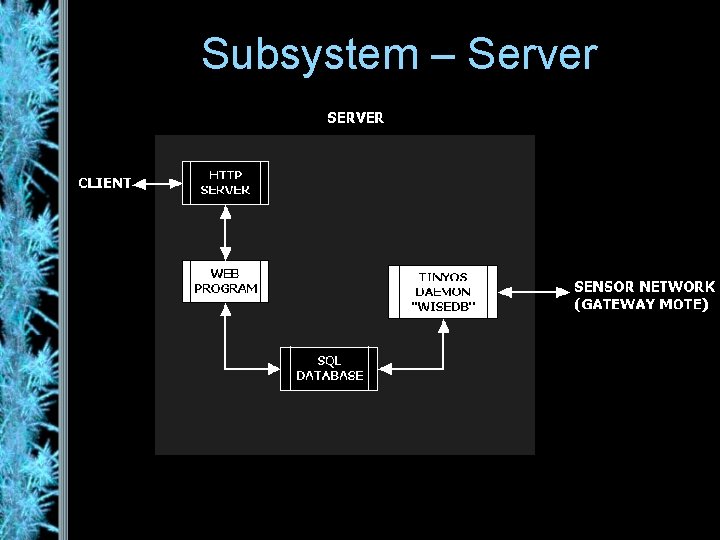
Subsystem – Server
Wise. DB • Written in C++ – Utilizes open-source APIs • Application Programming Interfaces (API) • My. SQL++ database API • Serial API • Relays information from mote network to database • Sends commands to mote network
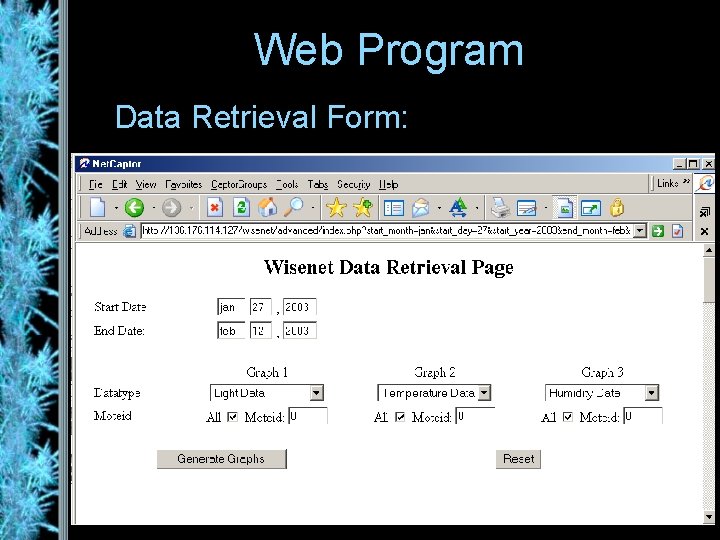
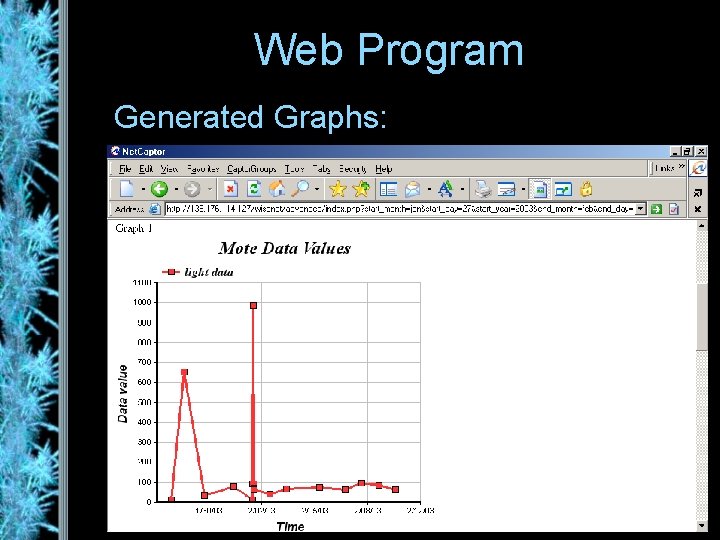
Web Program – Written in PHP 4 – Utilizes Charting Software: Chart. Director v 3. 0 – Generates 3 Graphs (default) – Passes Parameters via HTTP GET • Use bookmarks for specific queries – Retrieves Data for Specific Mote or All Motes
Web Program Data Retrieval Form:
Web Program Generated Graphs:
System Block Diagram
Subsystem – Sensor Network
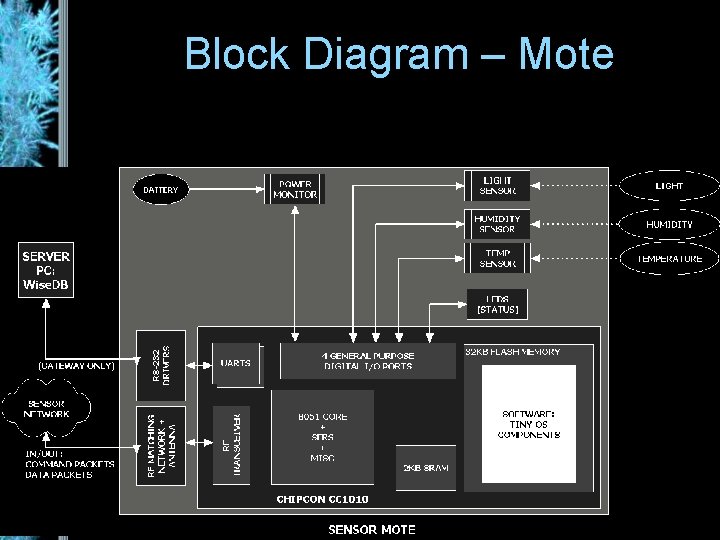
Block Diagram – Mote
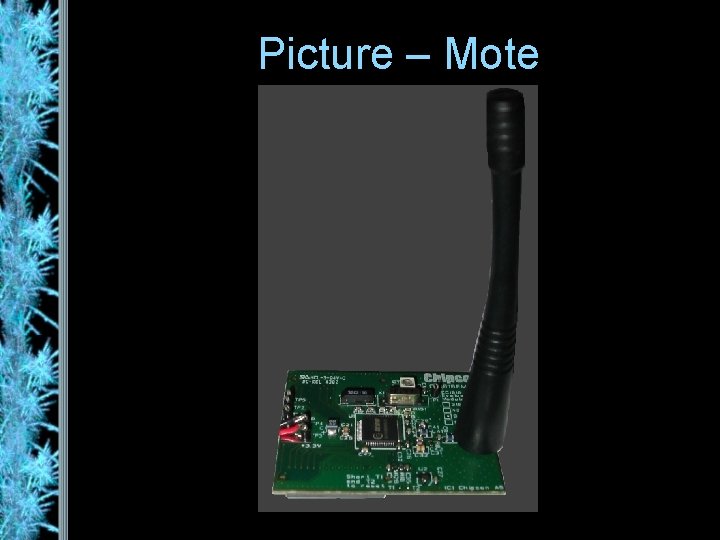
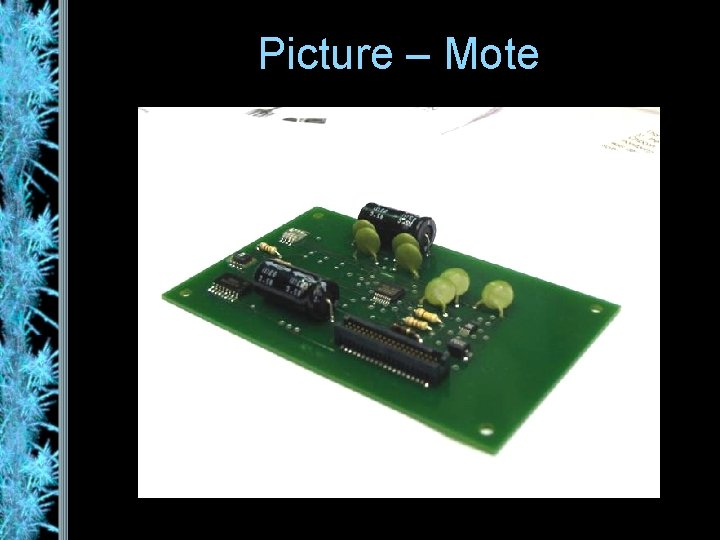
Picture – Mote
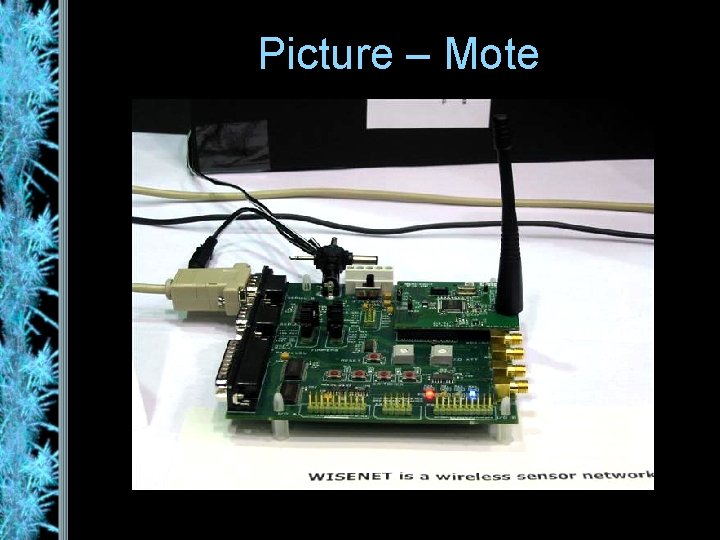
Picture – Mote
Picture – Mote
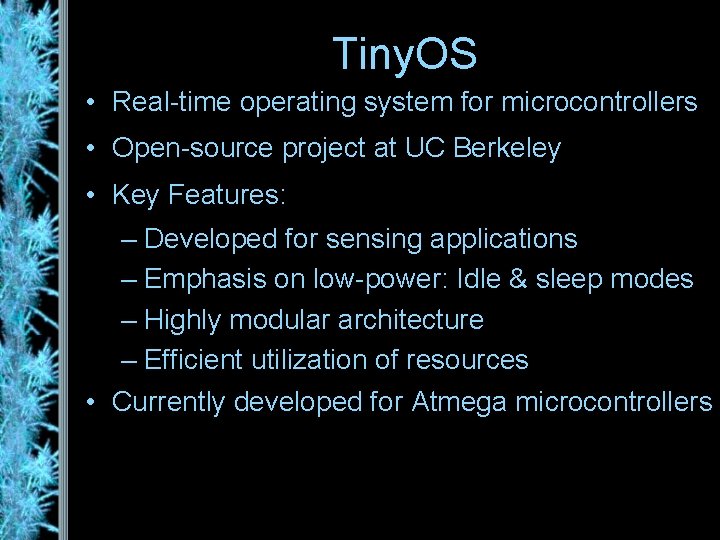
Tiny. OS • Real-time operating system for microcontrollers • Open-source project at UC Berkeley • Key Features: – Developed for sensing applications – Emphasis on low-power: Idle & sleep modes – Highly modular architecture – Efficient utilization of resources • Currently developed for Atmega microcontrollers
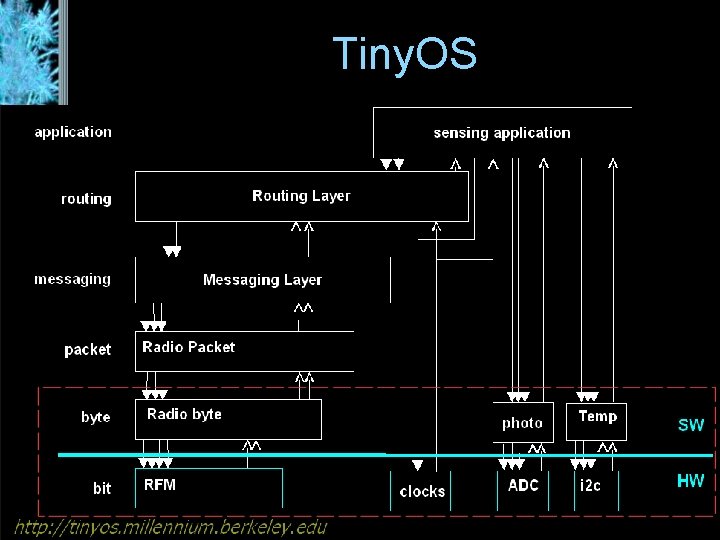
Tiny. OS
Project Success – Wisenet is partially operational • 2 Motes w/ prototype sensor boards • Tiny. OS modified for CC 1010 • Server running Wise. DB + web interface • Sensor boards are not currently powered by batteries. – Problems with DC-DC converter – Unable to test multi-hop routing due to lack of motes
Future Projects / Extensions – Expand network to develop & test multi-hop routing – Develop a single-board mote • Create a expandable, plug-in sensor interface – Research alternative energy sources • Solar cell, rechargeable batteries – Continue development of Tiny. OS • Improve tools • Optimize performance / reduce power usage – Improve web interface • Data analysis
Potential Applications – Lab / Office Monitoring – Natural Habitat Monitoring – Automation / Process Control • Where wired sensors are impractical – Security Systems • Intrusion detection & occupancy sensors – Extreme Weather Surveillance • Think “Twister” – Potential Biomedical Applications • Critical fall alert for the elderly – Military Reconnaissance • Monitor battlefields, sensitive locations
Conclusion – WISENET: Wireless Sensor Network – Emerging technology that will change the world – Many real-world applications – Low-power – Open-source software – Modular mote application design (Tiny. OS) – Flexible server implementation – Simple user interface via the web WISENET is a step to the future of wireless sensing technology.
Questions?