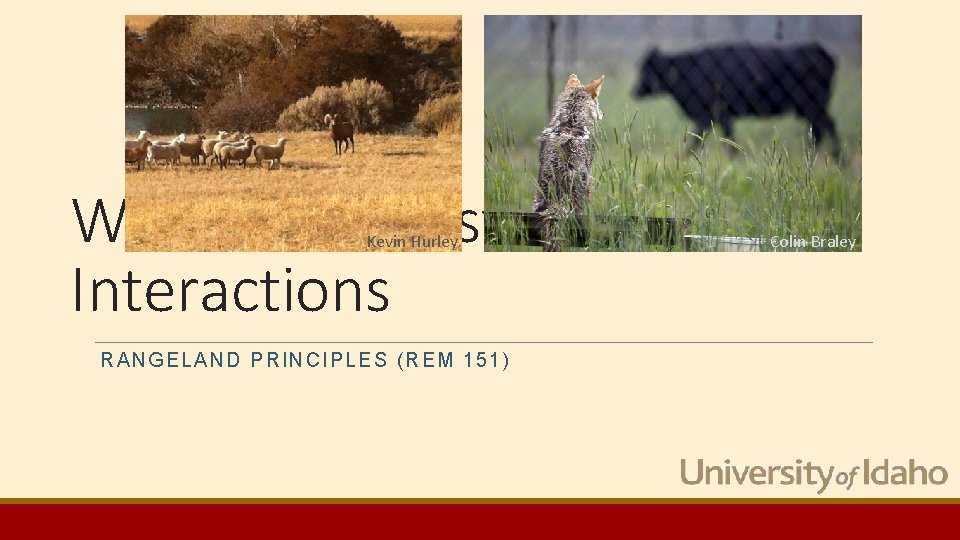
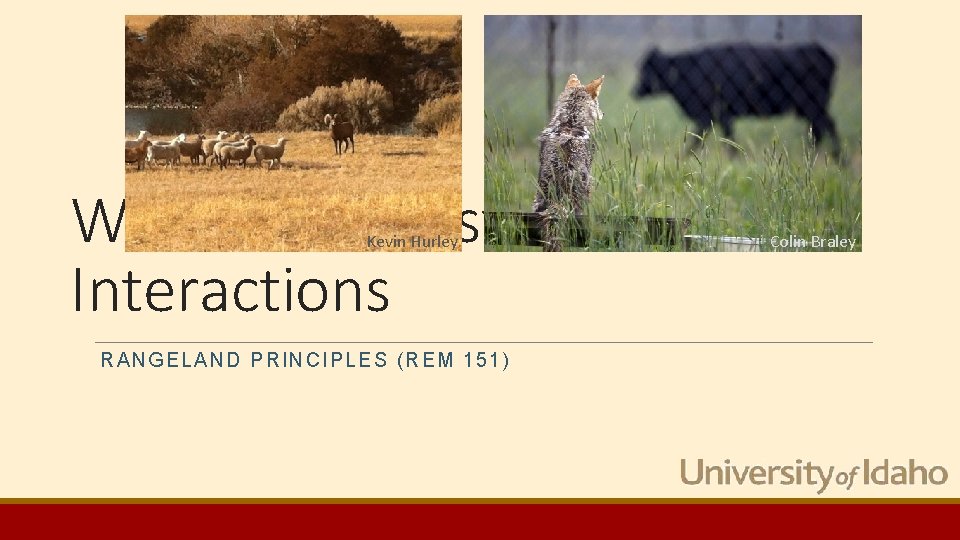
Wildlife Livestock Interactions Kevin Hurley RANGE LAND PRIN

- Slides: 16
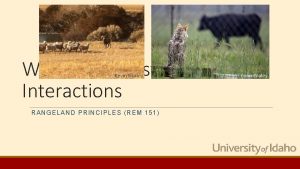
Wildlife & Livestock Interactions Kevin Hurley RANGE LAND PRIN CIPLES ( RE M 151) Colin Braley
Livestock & Wildlife --- There’s a Plan https: //www. youtube. com/watch? time_continue=8&v=j-Q-Tn. CLLcg
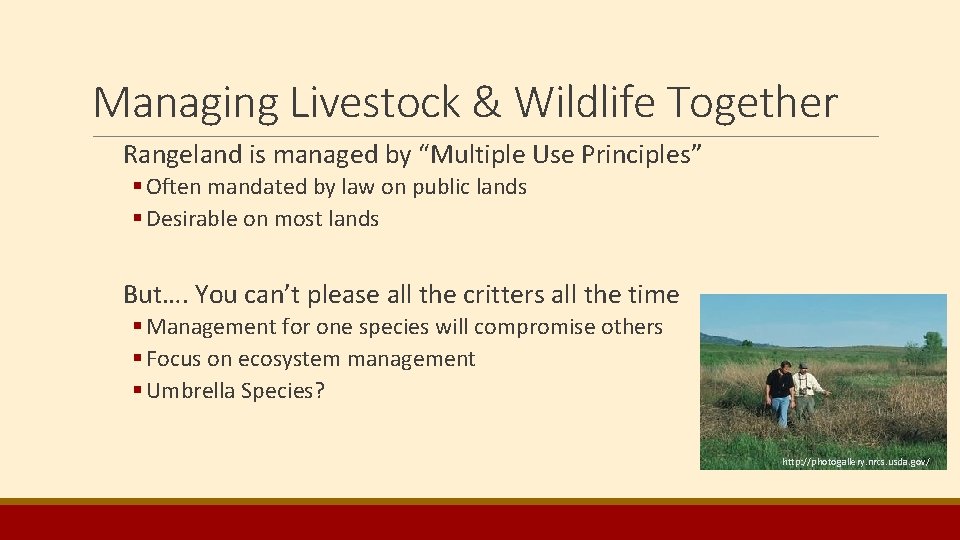
Managing Livestock & Wildlife Together Rangeland is managed by “Multiple Use Principles” § Often mandated by law on public lands § Desirable on most lands But…. You can’t please all the critters all the time § Management for one species will compromise others § Focus on ecosystem management § Umbrella Species? http: //photogallery. nrcs. usda. gov/
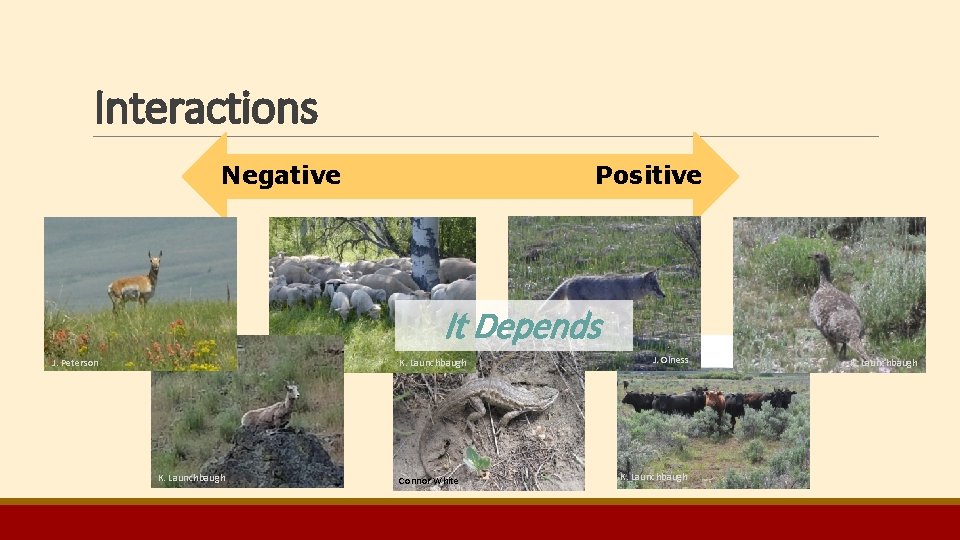
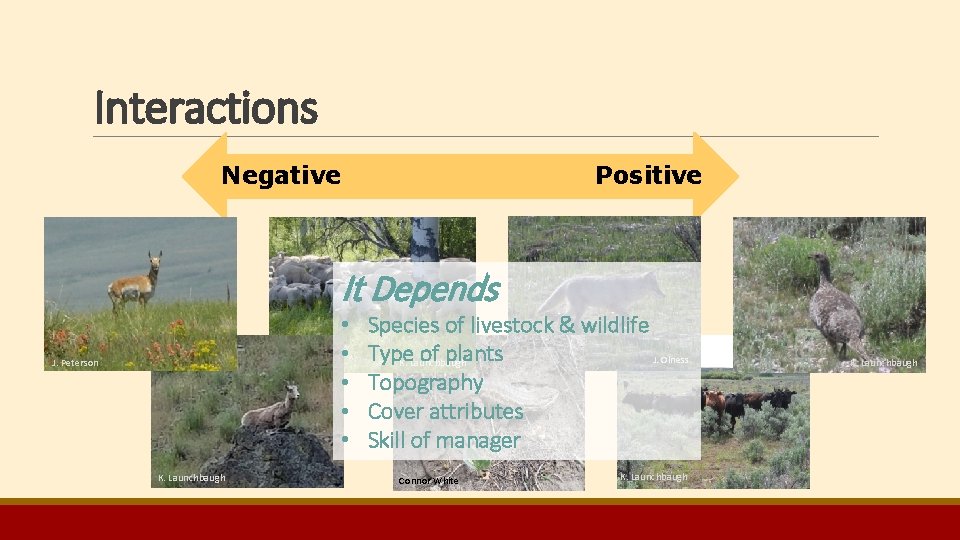
Interactions Negative Positive It Depends J. Peterson K. Launchbaugh Connor White J. Olness K. Launchbaugh
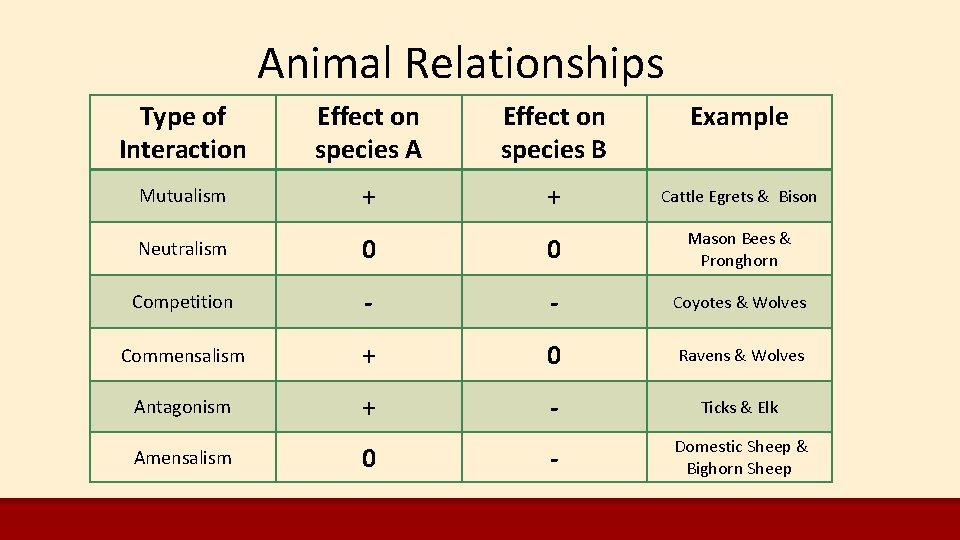
Animal Relationships Type of Interaction Effect on species A Effect on species B Example Mutualism + + Cattle Egrets & Bison Neutralism 0 0 Mason Bees & Pronghorn Competition - - Coyotes & Wolves Commensalism + 0 Ravens & Wolves Antagonism + - Ticks & Elk Amensalism 0 - Domestic Sheep & Bighorn Sheep
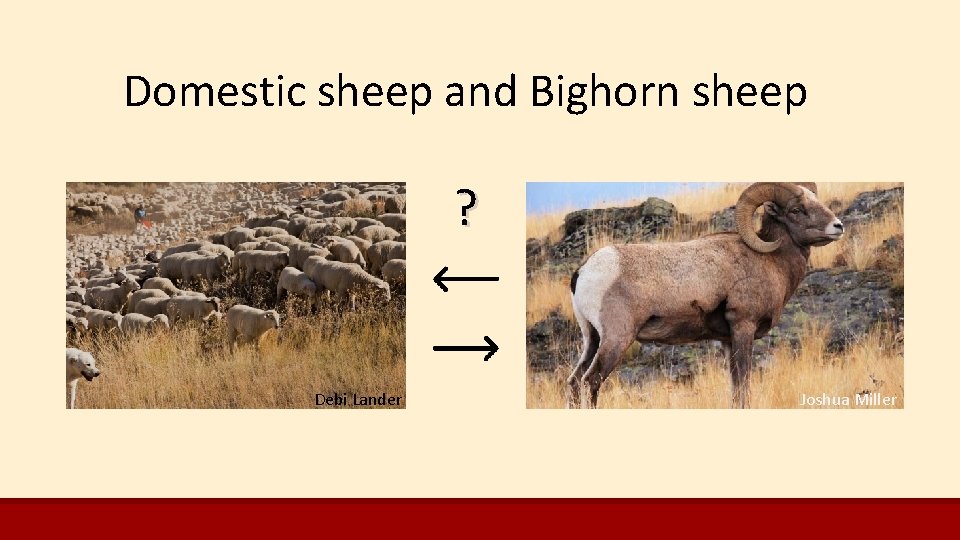
Domestic sheep and Bighorn sheep ? Debi Lander Joshua Miller
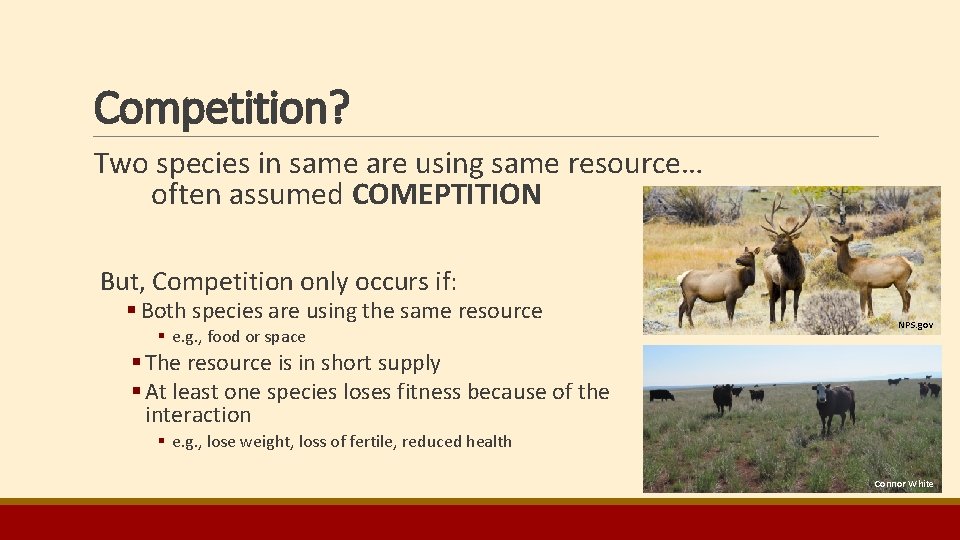
Competition? Two species in same are using same resource… often assumed COMEPTITION But, Competition only occurs if: § Both species are using the same resource § e. g. , food or space NPS. gov § The resource is in short supply § At least one species loses fitness because of the interaction § e. g. , lose weight, loss of fertile, reduced health Connor White
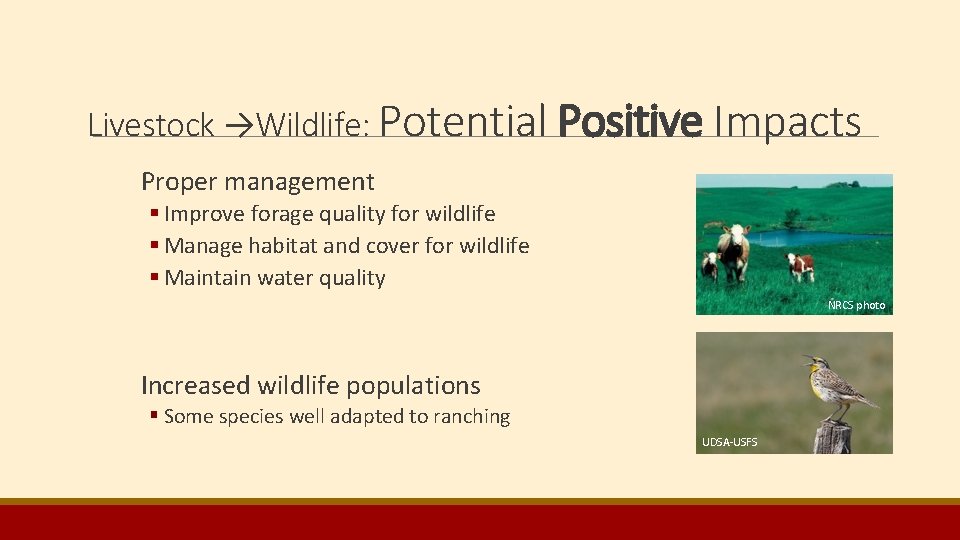
Livestock →Wildlife: Potential Positive Impacts Proper management § Improve forage quality for wildlife § Manage habitat and cover for wildlife § Maintain water quality NRCS photo Increased wildlife populations § Some species well adapted to ranching UDSA-USFS
Land of Contrasts: Ranching’s Commitment to Wildlife http: //www. youtube. com/watch? v=-4 ww. Cqrsj 8 c
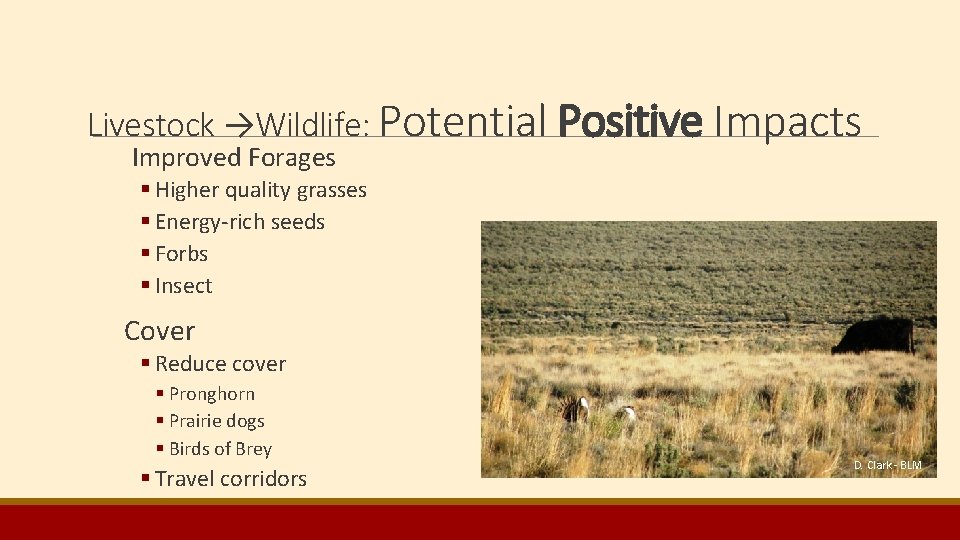
Livestock →Wildlife: Potential Positive Impacts Improved Forages § Higher quality grasses § Energy-rich seeds § Forbs § Insect Cover § Reduce cover § Pronghorn § Prairie dogs § Birds of Brey § Travel corridors D. Clark - BLM
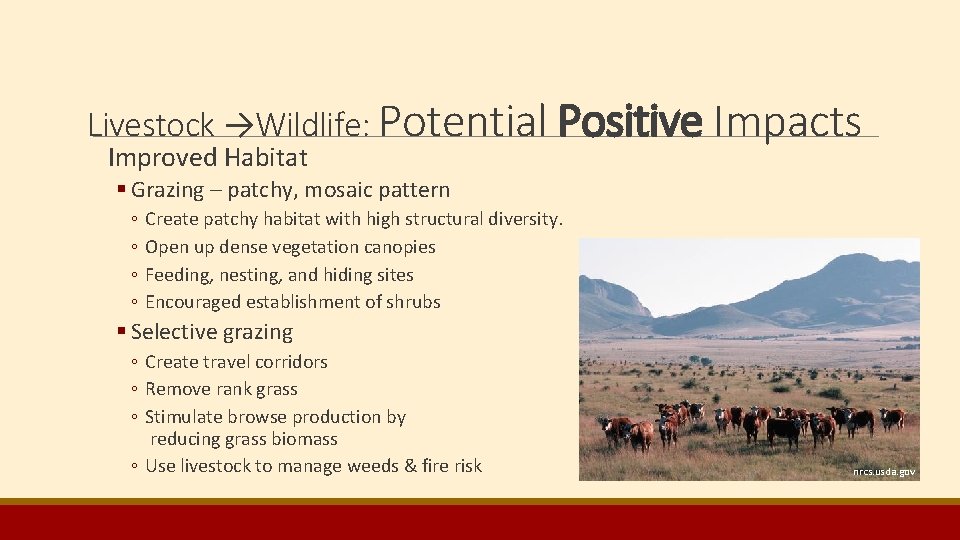
Livestock →Wildlife: Potential Positive Impacts Improved Habitat § Grazing – patchy, mosaic pattern ◦ ◦ Create patchy habitat with high structural diversity. Open up dense vegetation canopies Feeding, nesting, and hiding sites Encouraged establishment of shrubs § Selective grazing ◦ Create travel corridors ◦ Remove rank grass ◦ Stimulate browse production by reducing grass biomass ◦ Use livestock to manage weeds & fire risk NRCS photo nrcs. usda. gov
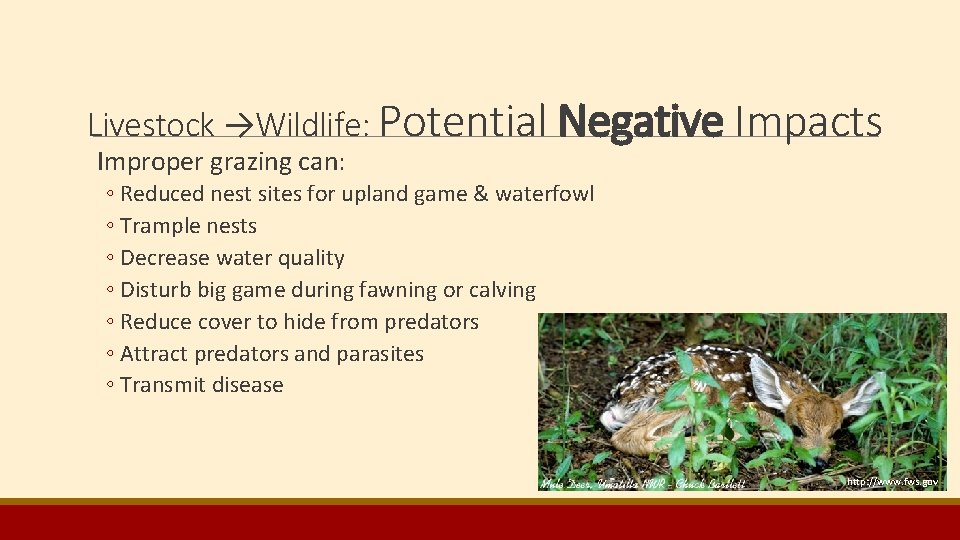
Livestock →Wildlife: Potential Negative Impacts Improper grazing can: ◦ Reduced nest sites for upland game & waterfowl ◦ Trample nests ◦ Decrease water quality ◦ Disturb big game during fawning or calving ◦ Reduce cover to hide from predators ◦ Attract predators and parasites ◦ Transmit disease http: //www. fws. gov
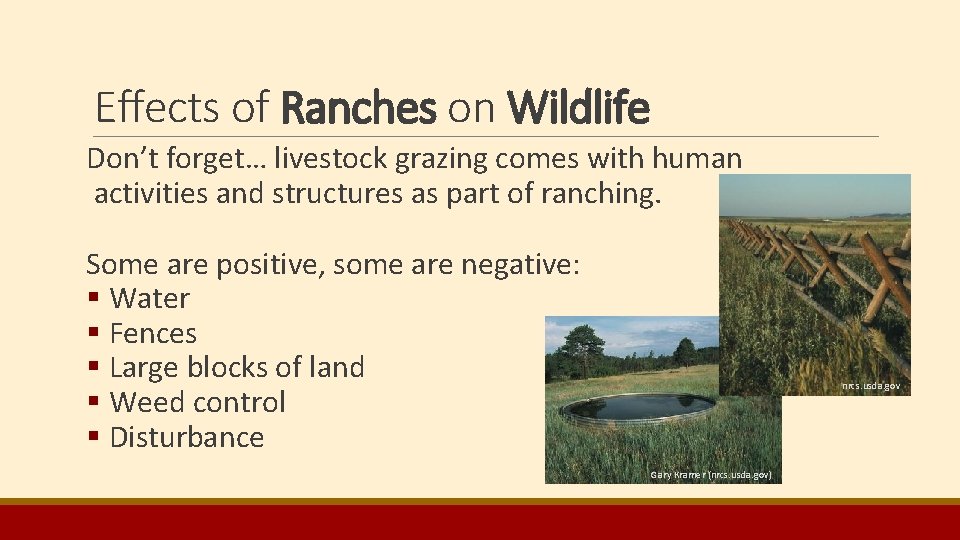
Effects of Ranches on Wildlife Don’t forget… livestock grazing comes with human activities and structures as part of ranching. Some are positive, some are negative: § Water § Fences § Large blocks of land § Weed control § Disturbance nrcs. usda. gov Gary Kramer (nrcs. usda. gov)
SS Cattle Company in Idaho http: //www. youtube. com/watch? v=j. XUd 43 Qd. MR 4
Interactions Negative Positive It Depends • • • J. Peterson K. Launchbaugh Species of livestock & wildlife Type of plants J. Olness K. Launchbaugh Topography Cover attributes Skill of manager Connor White K. Launchbaugh
Wildlife & Livestock Interactions Kevin Hurley RANGE LAND PRIN CIPLES ( RE M 151) Colin Braley