
Values of Rangelands Objectives o o Define multiple
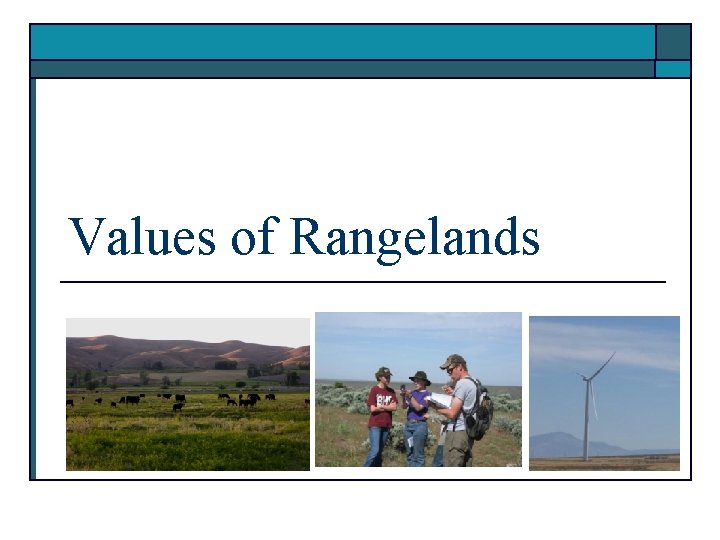
Values of Rangelands
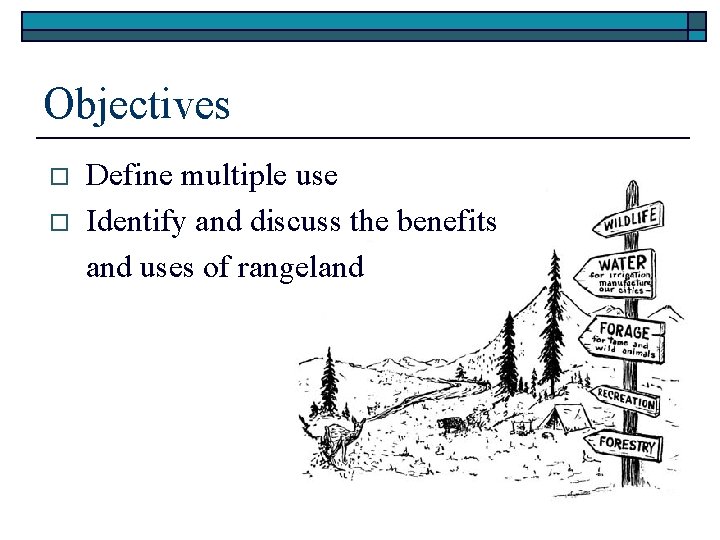
Objectives o o Define multiple use Identify and discuss the benefits and uses of rangeland
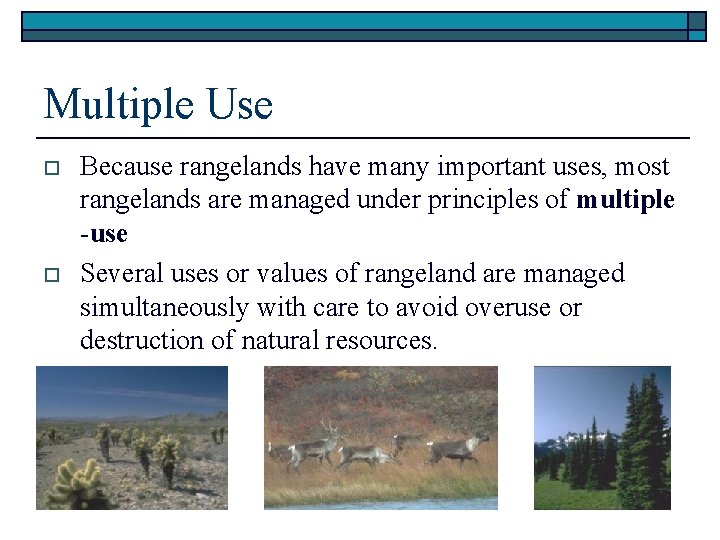
Multiple Use o o Because rangelands have many important uses, most rangelands are managed under principles of multiple -use Several uses or values of rangeland are managed simultaneously with care to avoid overuse or destruction of natural resources.
Why are rangelands important? Many goods and services List 5 goods or services rangelands provide o o o
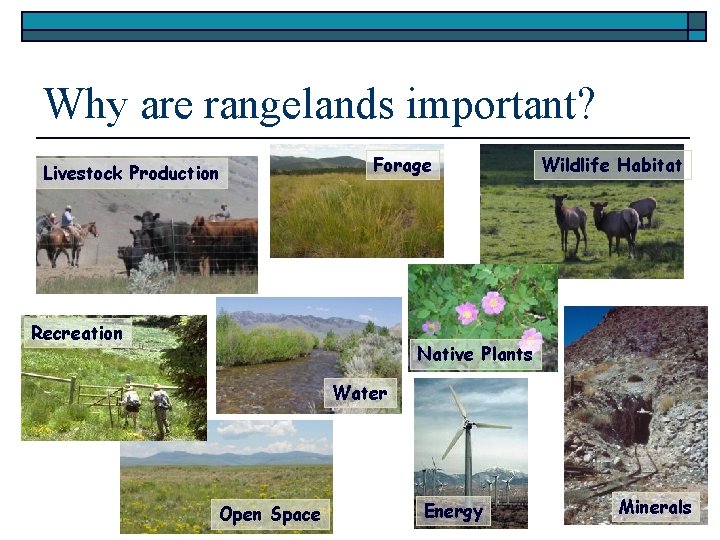
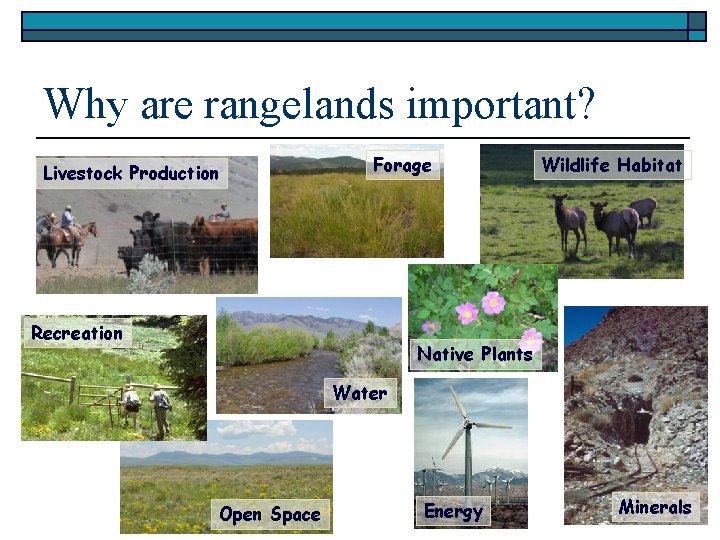
Why are rangelands important? Livestock Production Forage Recreation Wildlife Habitat Native Plants Water Open Space Energy Minerals
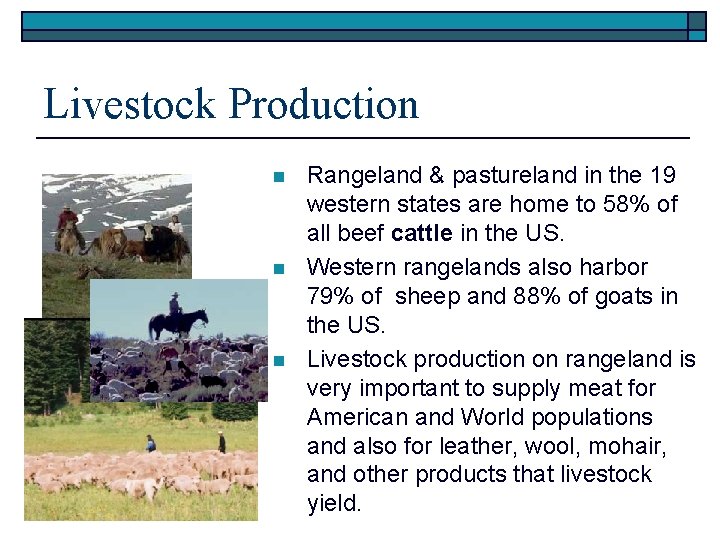
Livestock Production n Rangeland & pastureland in the 19 western states are home to 58% of all beef cattle in the US. Western rangelands also harbor 79% of sheep and 88% of goats in the US. Livestock production on rangeland is very important to supply meat for American and World populations and also for leather, wool, mohair, and other products that livestock yield.
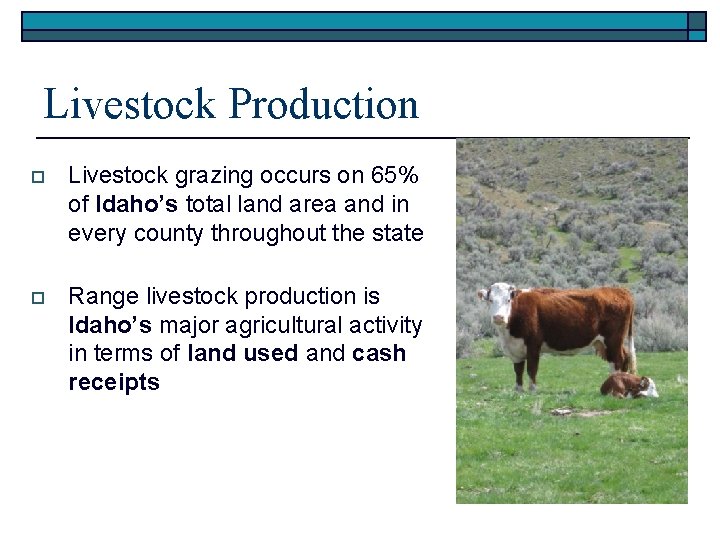
Livestock Production o Livestock grazing occurs on 65% of Idaho’s total land area and in every county throughout the state o Range livestock production is Idaho’s major agricultural activity in terms of land used and cash receipts
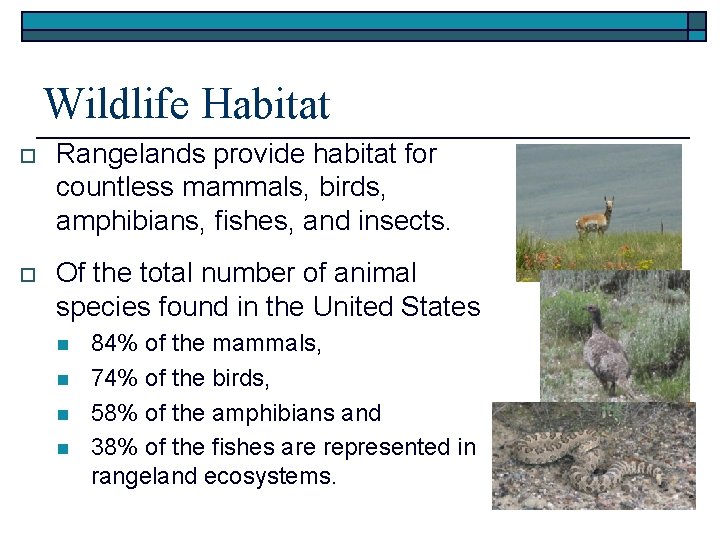
Wildlife Habitat o Rangelands provide habitat for countless mammals, birds, amphibians, fishes, and insects. o Of the total number of animal species found in the United States n n 84% of the mammals, 74% of the birds, 58% of the amphibians and 38% of the fishes are represented in rangeland ecosystems.
Rangeland Wildlife Include: o Ruminants such as deer, elk, and moose that have specialized digestive systems to digest the cellulose in the cell walls of rangeland plants o Rodents and Rabbits also have digestive systems that allow them to get energy out of cellulose o Concentrate-selectors are animals such as birds & bears that find an adequate diet on rangeland by carefully selecting berries, seeds, or roots low in cellulose. o Insects - Can be generalist foragers or have very specific diet selection.
Water o o The Western United States has a much drier climate than the Eastern U. S. . water is doubly precious to the 30% of the U. S. population that lives in the West Most of the water in the streams and river of Idaho fell initially on rangeland or forests. Therefore, proper management of rangeland requires careful attention to the amount & quality of water that flows off rangeland
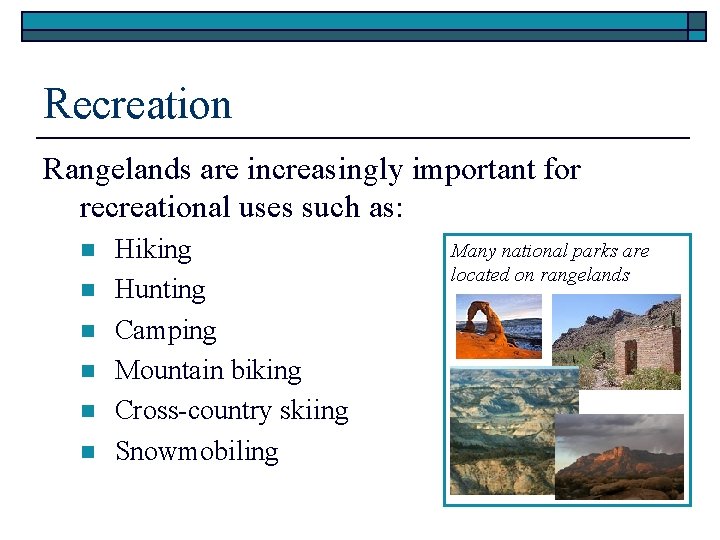
Recreation Rangelands are increasingly important for recreational uses such as: n n n Hiking Hunting Camping Mountain biking Cross-country skiing Snowmobiling Many national parks are located on rangelands

Renewable Energy o Sources are becoming increasingly important to society n n Wind Solar Geothermal Biomass and bioenergy USDI-BLM Photo
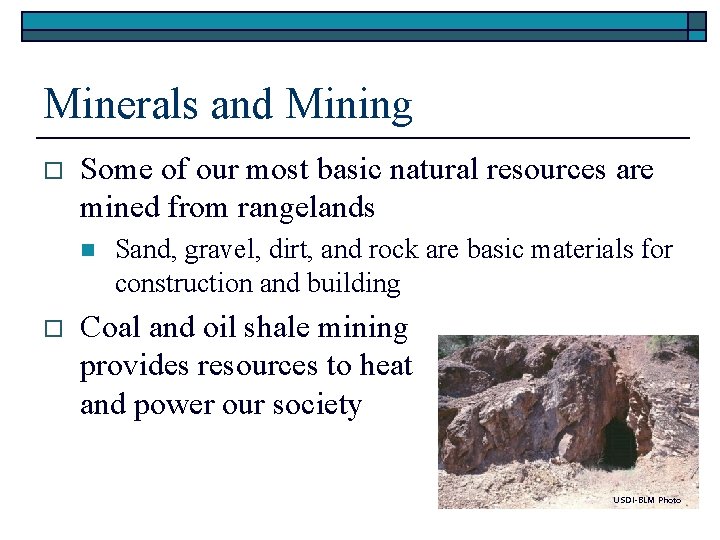
Minerals and Mining o Some of our most basic natural resources are mined from rangelands n o Sand, gravel, dirt, and rock are basic materials for construction and building Coal and oil shale mining provides resources to heat and power our society USDI-BLM Photo
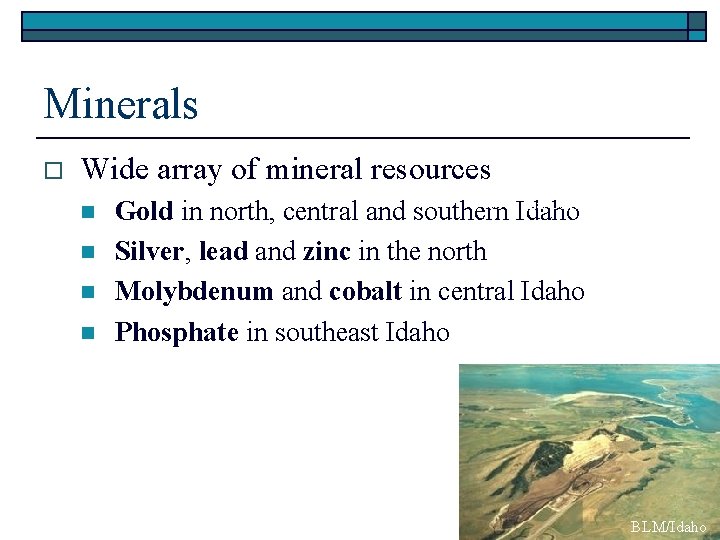
Minerals o Wide array of mineral resources n n UI Special Collections Gold in north, central and southern Idaho Silver, lead and zinc in the north Molybdenum and cobalt in central Idaho Phosphate in southeast Idaho BLM/Idaho
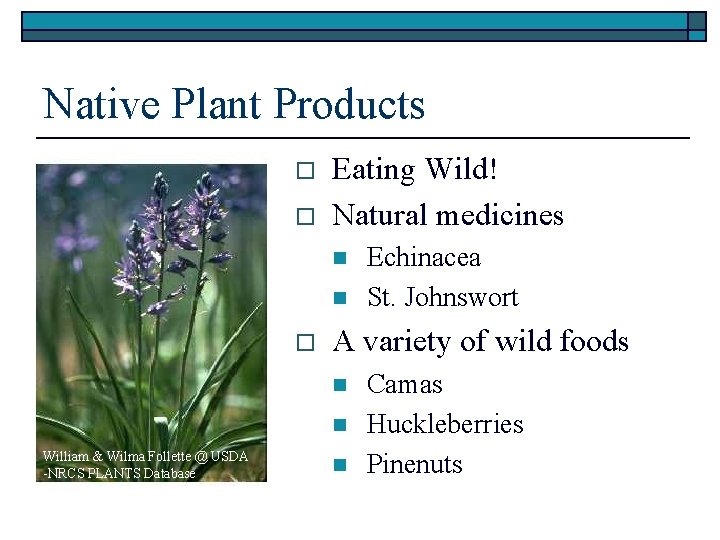
Native Plant Products o o Eating Wild! Natural medicines n n o A variety of wild foods n n William & Wilma Follette @ USDA -NRCS PLANTS Database Echinacea St. Johnswort n Camas Huckleberries Pinenuts
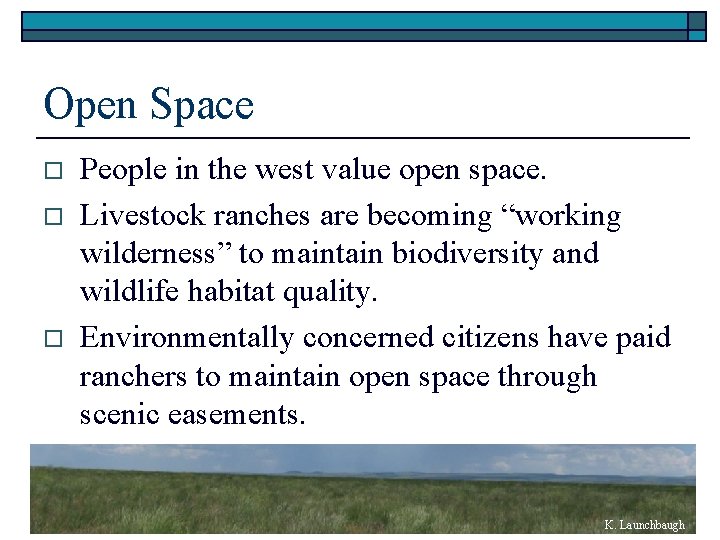
Open Space o o o People in the west value open space. Livestock ranches are becoming “working wilderness” to maintain biodiversity and wildlife habitat quality. Environmentally concerned citizens have paid ranchers to maintain open space through scenic easements. K. Launchbaugh
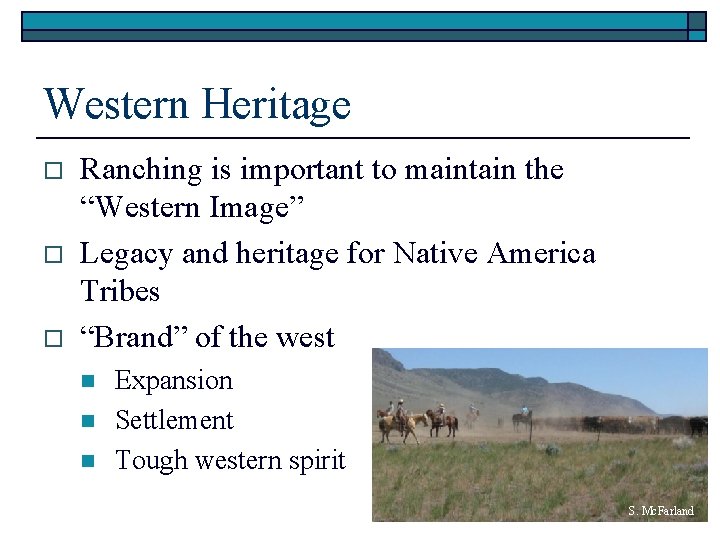
Western Heritage o o o Ranching is important to maintain the “Western Image” Legacy and heritage for Native America Tribes “Brand” of the west n n n Expansion Settlement Tough western spirit S. Mc. Farland
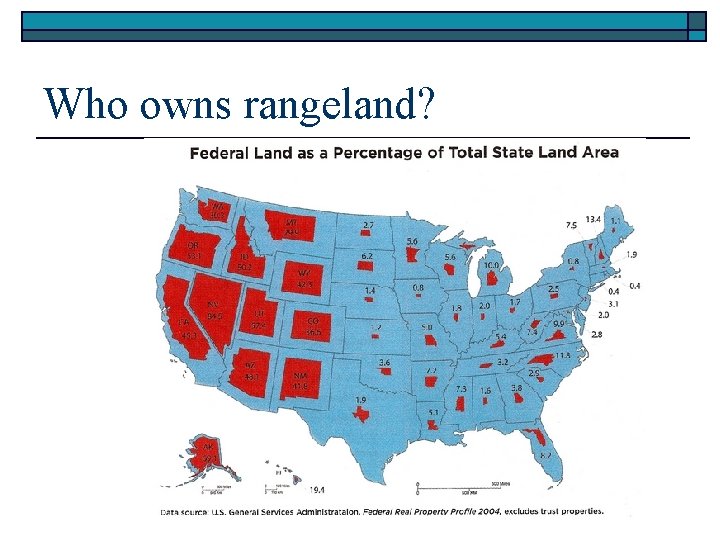
Who owns rangeland?
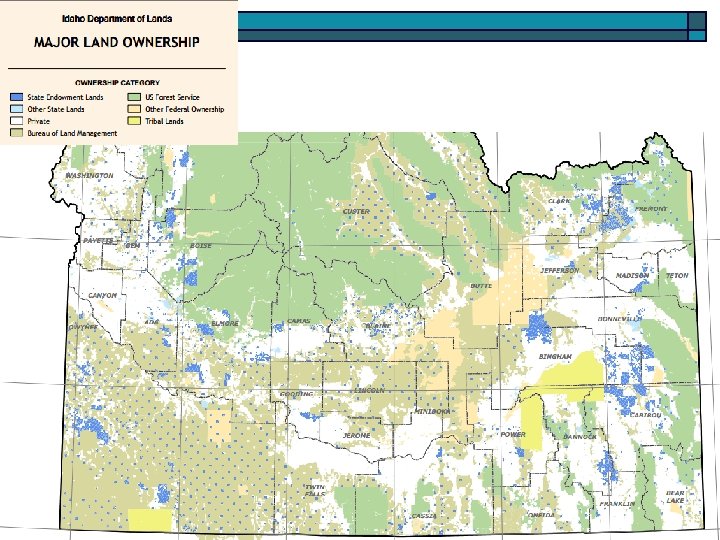
Who owns rangeland? o o “Public Land” is owned and managed by federal and state governments for the good of the public. Most significant land management agencies are the Bureau of Land Management, the U. S. Forest Service, and the Idaho Department of Lands.
Who owns rangeland? o Grazing on private lands is wholly integrated with public grazing lands. n Livestock grazing occurs on: o o n 95% of BLM land 58% of U. S. Forest Service lands 88% of all beef cows in Idaho graze at least part of each year on BLM or USFS lands.
Why are rangelands important? Livestock Production Forage Recreation Wildlife Habitat Native Plants Water Open Space Energy Minerals
- Slides: 22