
What is a fraction What is a fraction
- Slides: 16
What is a fraction?
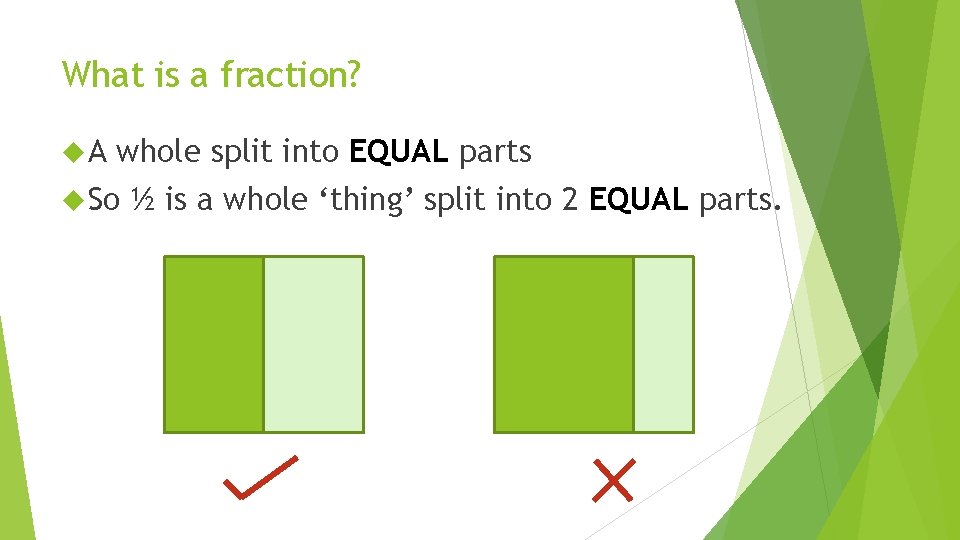
What is a fraction? A whole split into EQUAL parts So ½ is a whole ‘thing’ split into 2 EQUAL parts.
Step 1: what is a fraction? Practically experiencing the idea of a fraction. First splitting things into piece Then EQUAL pieces. Then accurately drawing halves, (maybe quarters) on simple pictures (circles, squares, rectangle, equilateral triangles)
REASONING and ENQUIRY as the starting point of a lesson How many different ways can you fold your shape in half?
Step 2: learning that a shape can be split into fractions in more than 1 way How many different ways can you fold your shape in half? Practically experiencing the idea of a fraction on more complex shapes. Finding as many different fractions to ensure they understand the concept fully
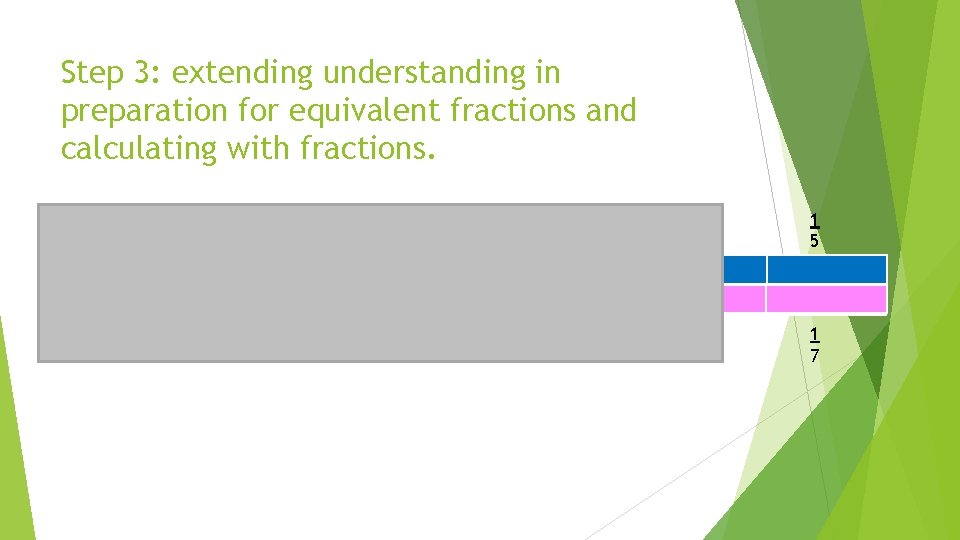
Step 3: extending understanding in preparation for equivalent fractions and calculating with fractions. 1 5 1 7
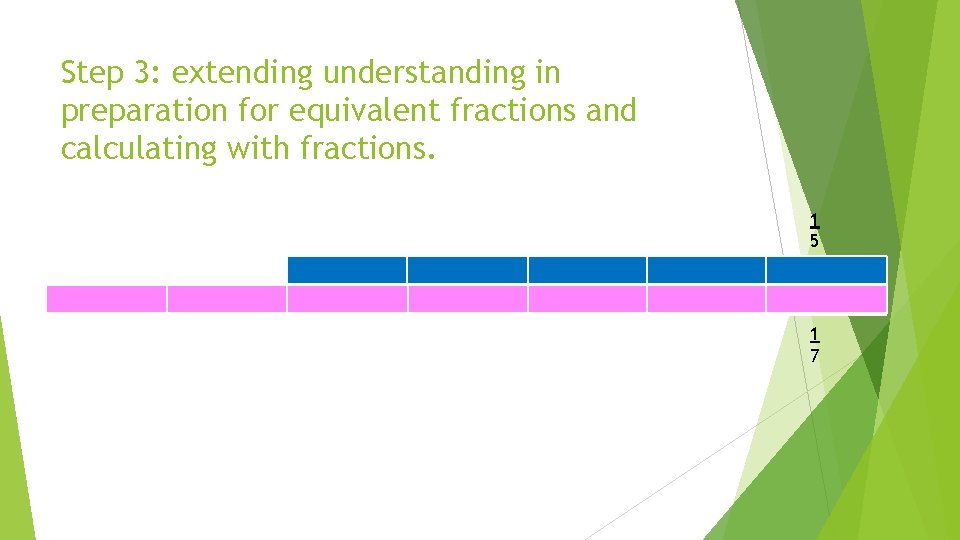
Step 3: extending understanding in preparation for equivalent fractions and calculating with fractions. 1 5 1 7
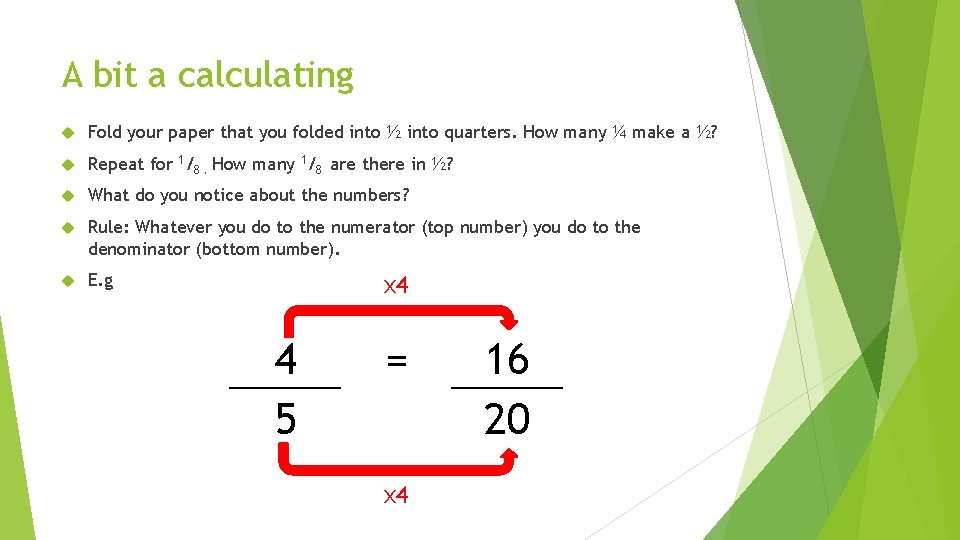
A bit a calculating Fold your paper that you folded into ½ into quarters. How many ¼ make a ½? Repeat for 1/8. How many 1/8 are there in ½? What do you notice about the numbers? Rule: Whatever you do to the numerator (top number) you do to the denominator (bottom number). E. g x 4 4 5 = x 4 16 20
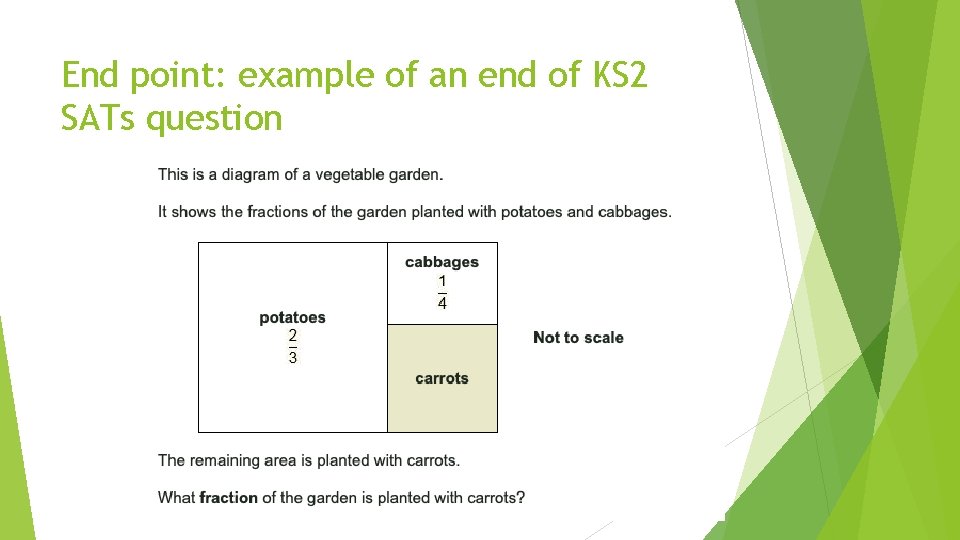
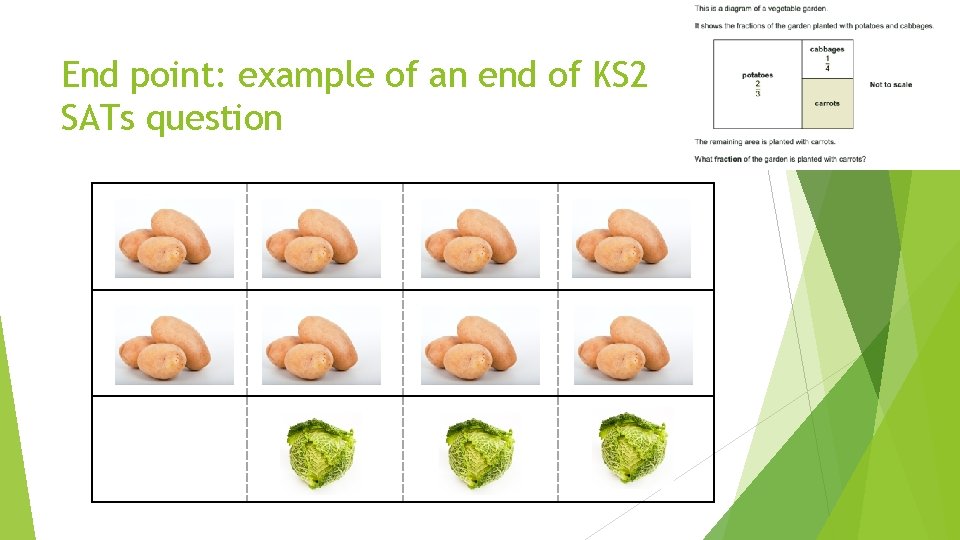
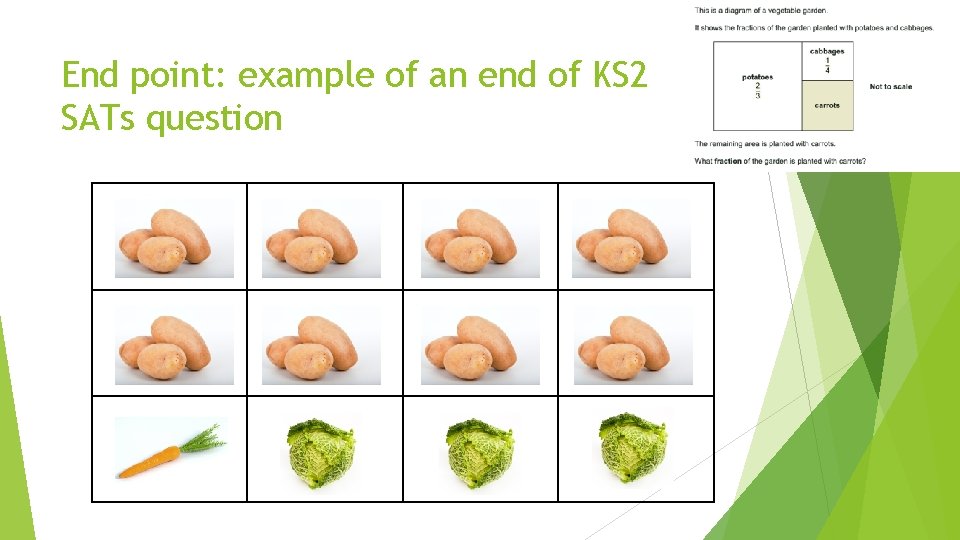
End point: example of an end of KS 2 SATs question
End point: example of an end of KS 2 SATs question
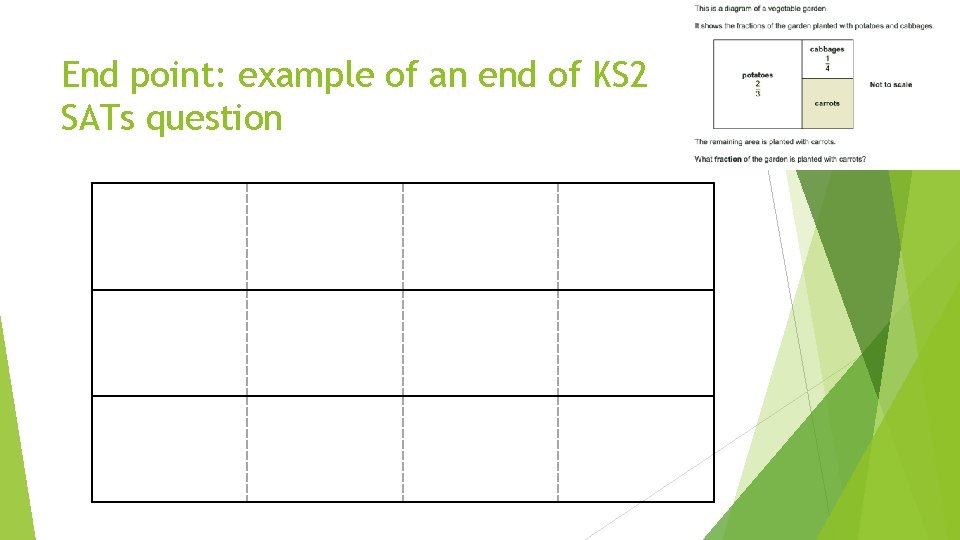
End point: example of an end of KS 2 SATs question
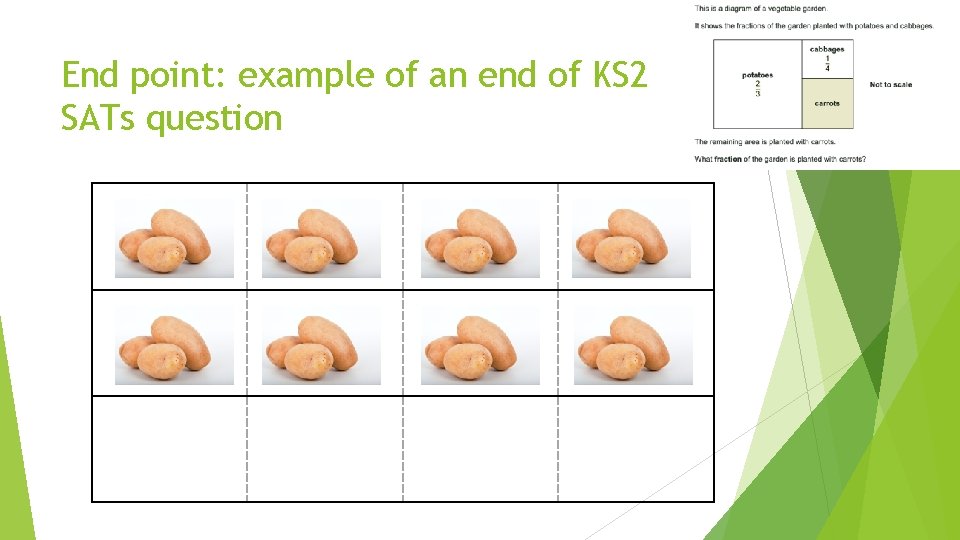
End point: example of an end of KS 2 SATs question
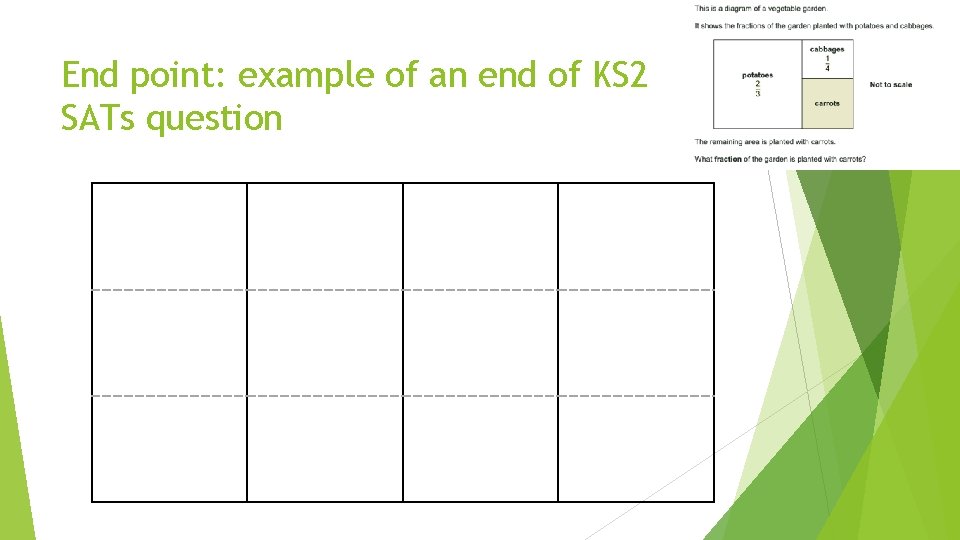
End point: example of an end of KS 2 SATs question
End point: example of an end of KS 2 SATs question
Any Questions
What IMPACT we will see? Happier, more confident children who can talk knowledgeably about their learning and the world around them.