
How useful are fraction bars for understanding fraction
How useful are fraction bars for understanding fraction equivalence and addition? A difficulty factors assessment with 5 th, 6 th, and 7 th graders Eliane Stampfer Wiese, Kenneth R. Koedinger Human-Computer Interaction Institute Carnegie Mellon University stampfer@cs. cmu. edu
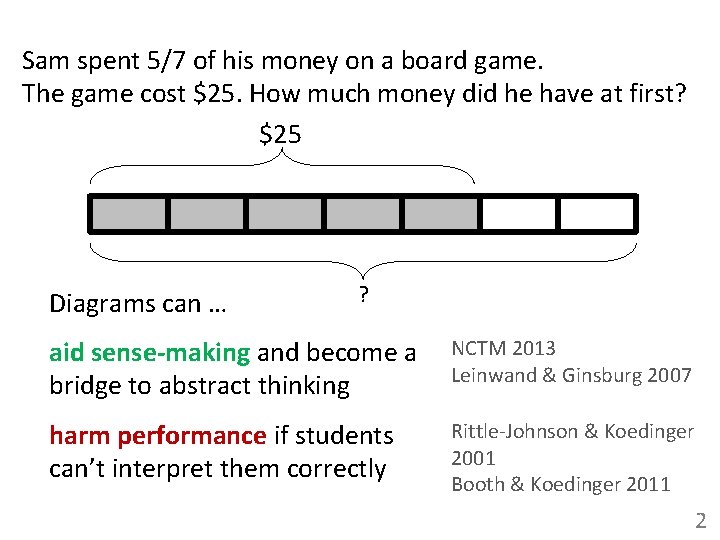
Sam spent 5/7 of his money on a board game. The game cost $25. How much money did he have at first? $25 Diagrams can … ? aid sense-making and become a bridge to abstract thinking NCTM 2013 Leinwand & Ginsburg 2007 harm performance if students can’t interpret them correctly Rittle-Johnson & Koedinger 2001 Booth & Koedinger 2011 2
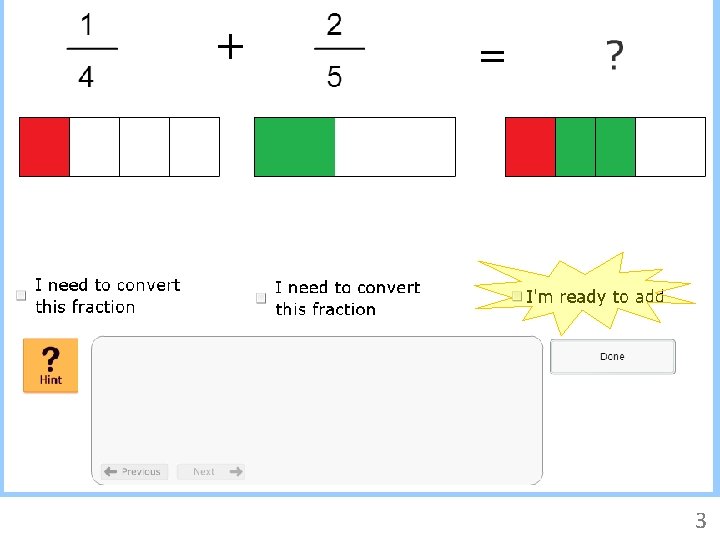
3
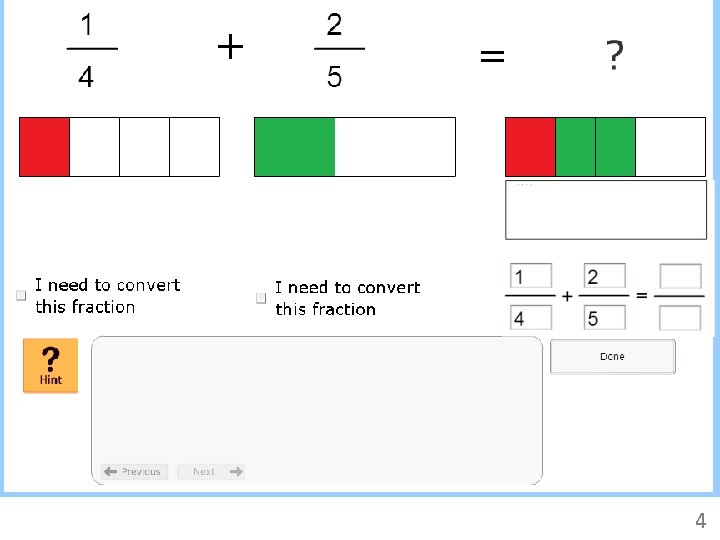
4
5
6
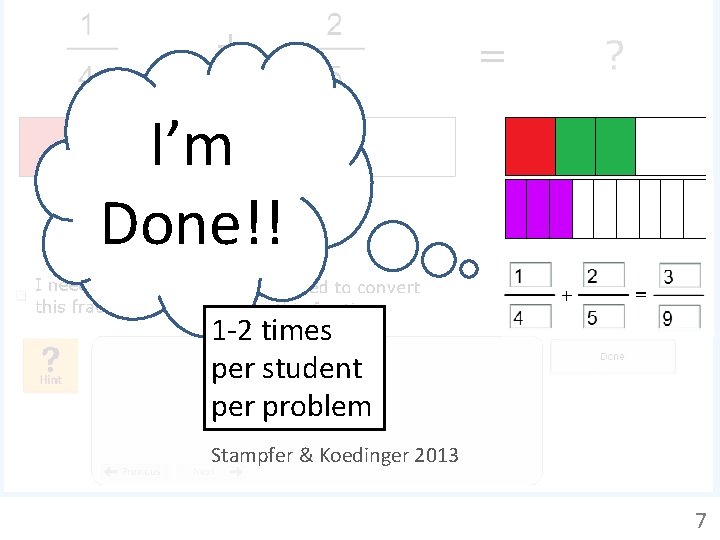
I’m Done!! 1 -2 times per student per problem Stampfer & Koedinger 2013 7
How does fraction bar utility develop between 5 th and 7 th grade? 8
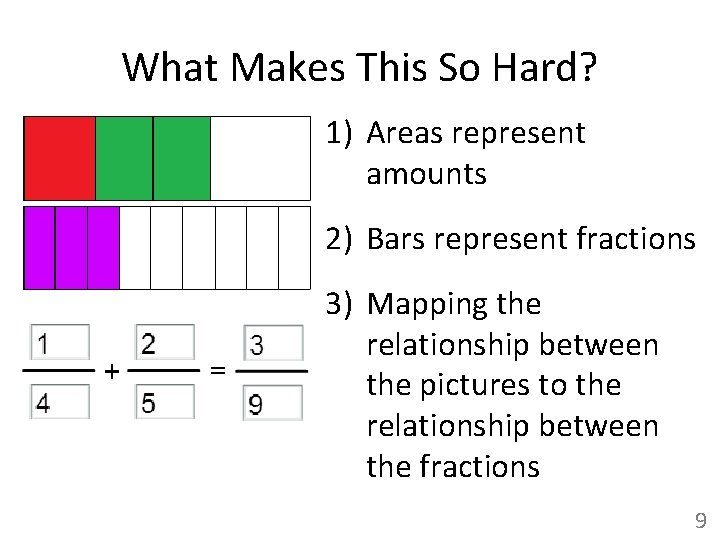
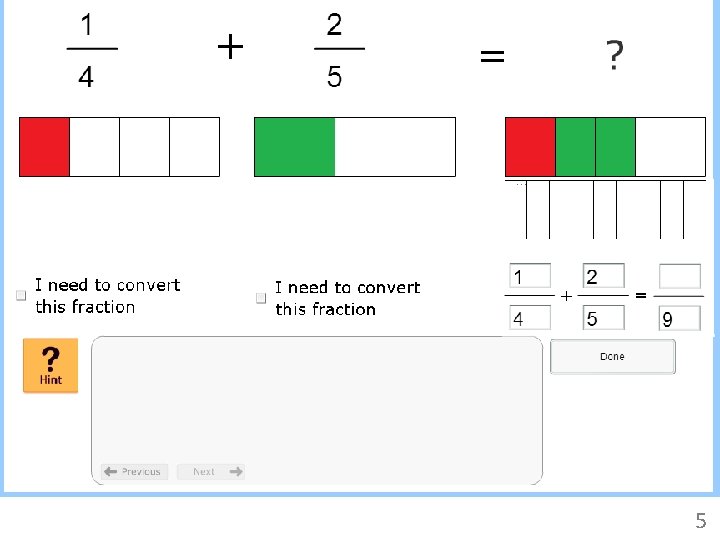
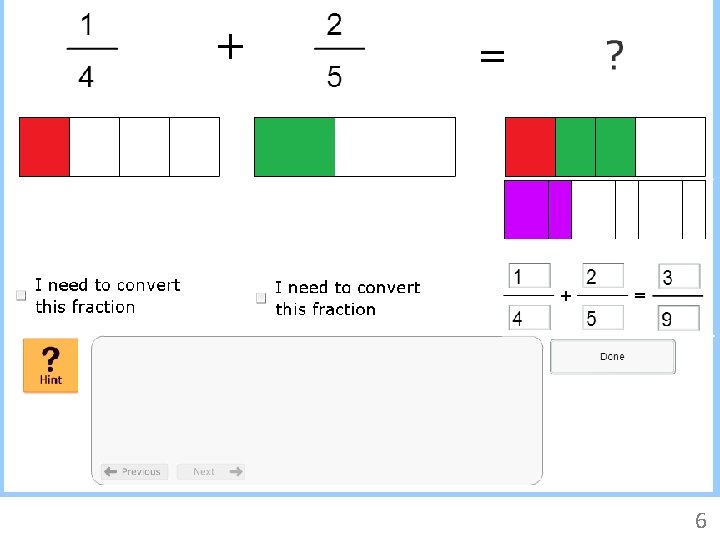
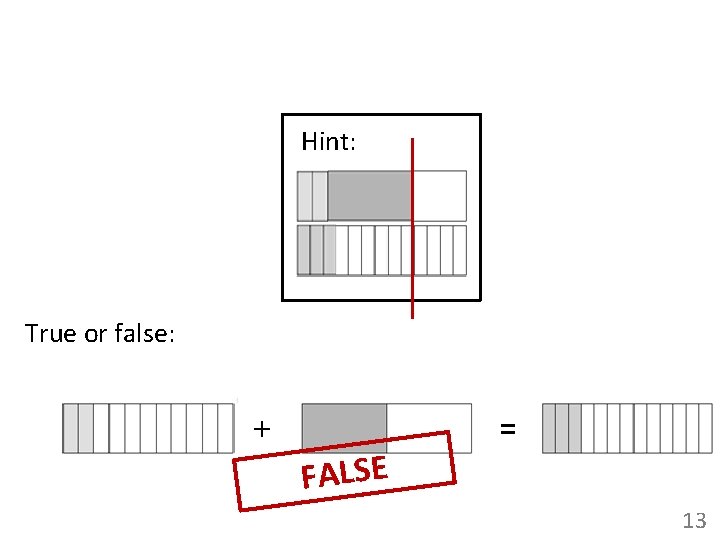
What Makes This So Hard? 1) Areas represent amounts 2) Bars represent fractions 3) Mapping the relationship between the pictures to the relationship between the fractions 9
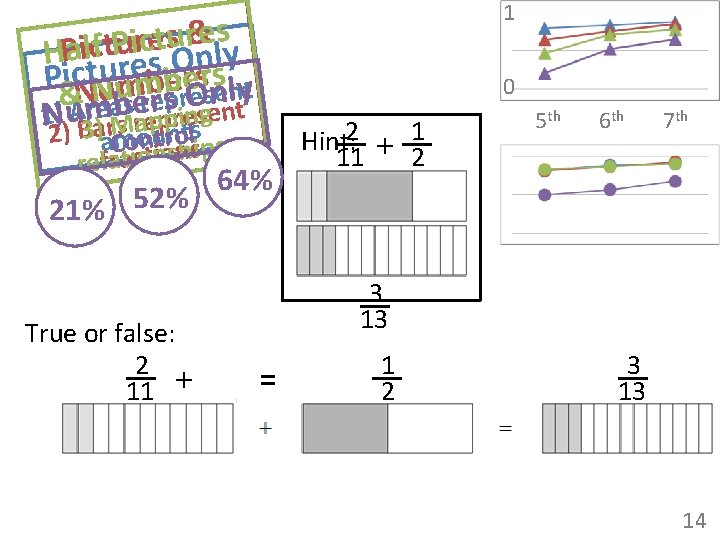
Difficulty Factor Assessment • Paper & pencil quiz • One question format per skill • Tasks: addition and equivalence • Within-subject design • 5 th – 7 th graders at local public school (~150 students in each grade) 10
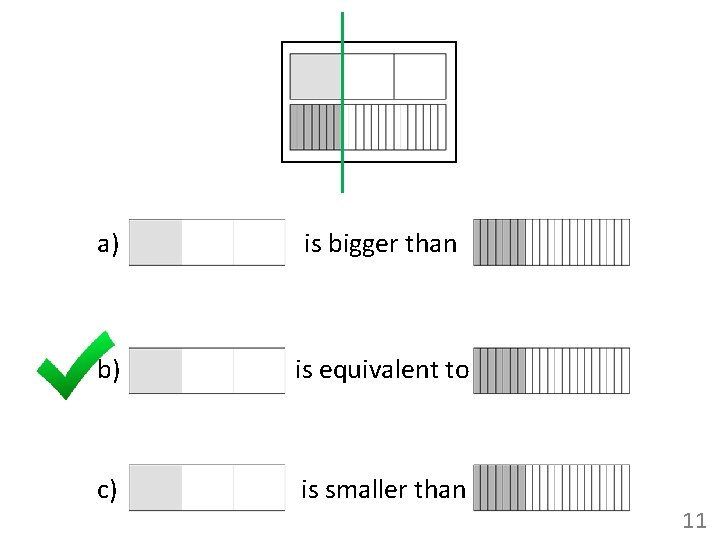
a) is bigger than b) is equivalent to c) is smaller than 11
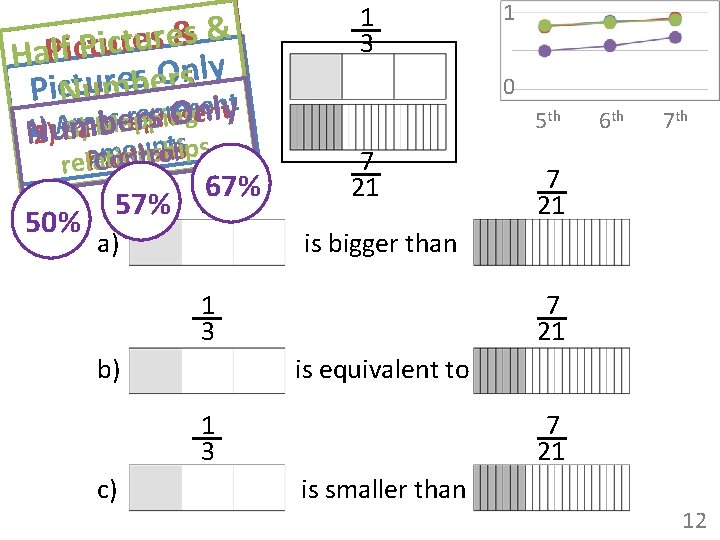
& s & e r s u e t r c u i Ha. Plfic. Pt y l n O s s r e r Pic. Ntumbe esentyt r l n p n e e g s r O n e i s r s p a p r p e e r bs era s a) r. M 1 N 2))u. AB 3 m mousnnhtlsips relfaar. Catoicontntioro 81% 82% 50% 88% 86% 57% 167% 93% 90% 3 a) 1 3 0 5 th 7 21 6 th 7 21 is bigger than 1 3 b) 7 21 is equivalent to 1 3 c) 1 7 21 is smaller than 12
Hint: True or false: + FALSE = 13
1 s e & r u s t e c r i u P HPailcfut res Only ic. Nt. Nuummbbeersrsnsenlyt P& e t r O p s e r r e s a b e r Am. M en g s 1 N) u n e i r p p p e a r s r ntls 2) B 3 a) 0 a. Cmoontunitorsonhsips reflaratico 82% 75% 70% 79% 52% 46% 64% 21% True or false: 2 11 + 87% 84% 77% 64% Hint: 2 11 + 1 2 5 th 6 th 7 th 3 13 = 1 2 3 13 14
Percent Correct by Grade & Scaffold Students did 2 problems of each type ~150 students in each grade Equivalence 5 th 6 th Addition Pictures & Numbers 7 th Half Pictures & Numbers 5 th 6 th 7 th Numbers 15
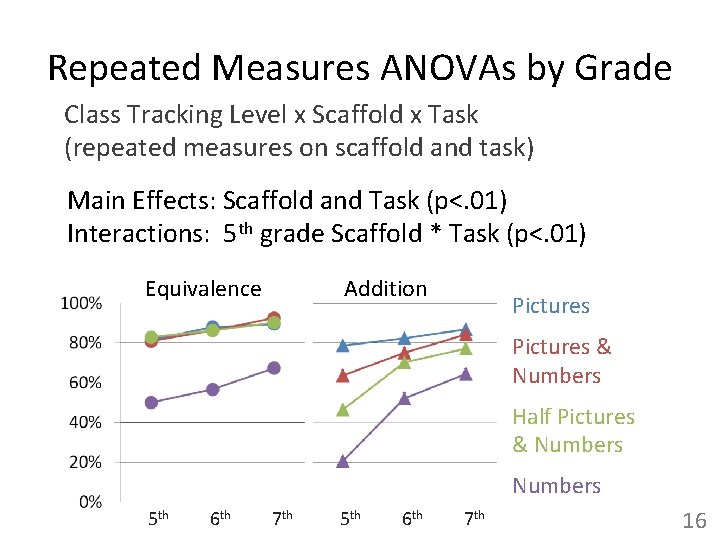
Repeated Measures ANOVAs by Grade Class Tracking Level x Scaffold x Task (repeated measures on scaffold and task) Main Effects: Scaffold and Task (p<. 01) Interactions: 5 th grade Scaffold * Task (p<. 01) Equivalence Addition Pictures & Numbers Half Pictures & Numbers 5 th 6 th 7 th 16
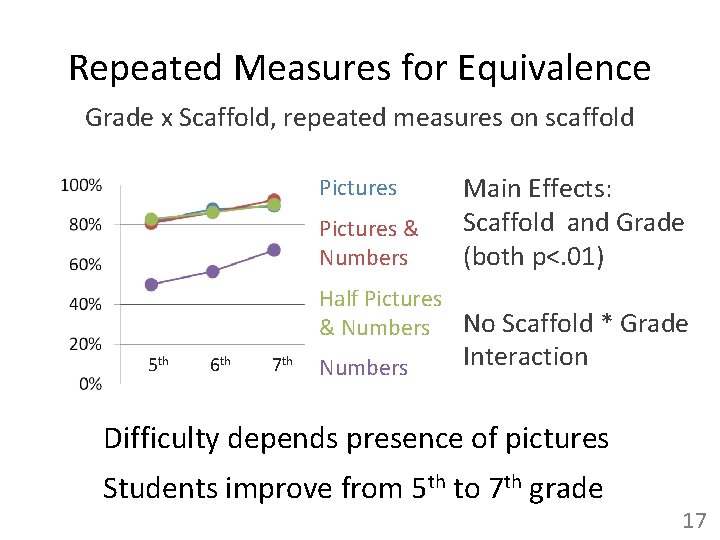
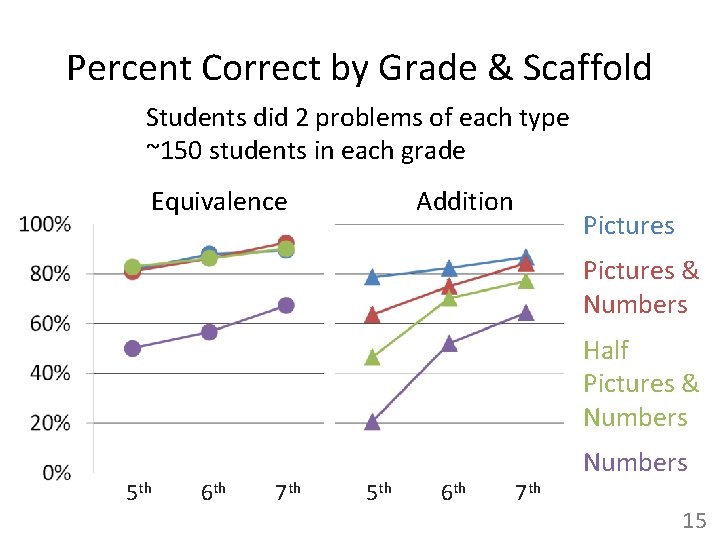
Repeated Measures for Equivalence Grade x Scaffold, repeated measures on scaffold Pictures & Numbers Main Effects: Scaffold and Grade (both p<. 01) Half Pictures & Numbers No Scaffold * Grade 5 th 6 th 7 th Numbers Interaction Difficulty depends presence of pictures Students improve from 5 th to 7 th grade 17
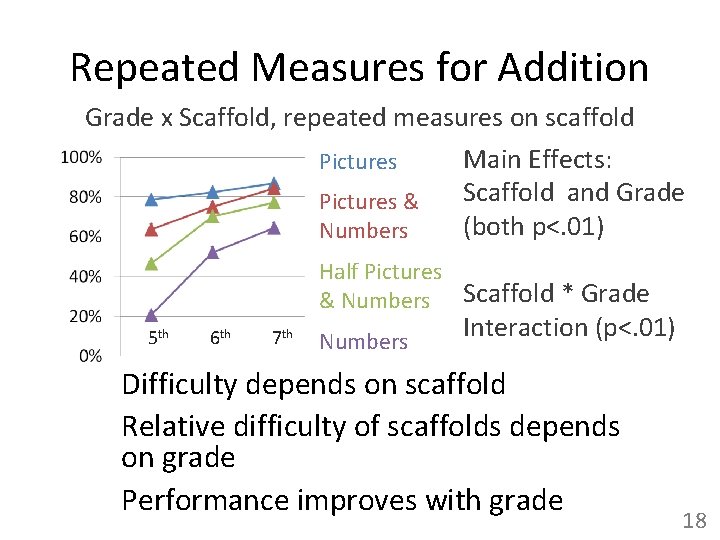
Repeated Measures for Addition Grade x Scaffold, repeated measures on scaffold Pictures & Numbers Main Effects: Scaffold and Grade (both p<. 01) Half Pictures & Numbers Scaffold * Grade 5 th 6 th 7 th Numbers Interaction (p<. 01) Difficulty depends on scaffold Relative difficulty of scaffolds depends on grade Performance improves with grade 18
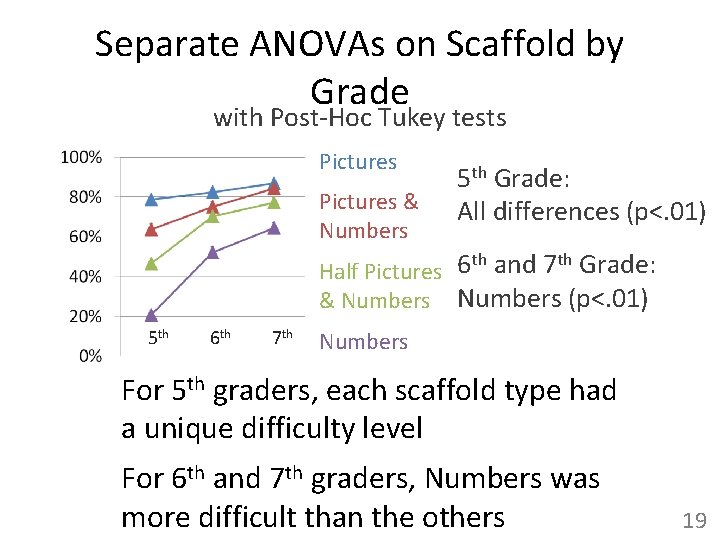
Separate ANOVAs on Scaffold by Grade with Post-Hoc Tukey tests Pictures & Numbers 5 th Grade: All differences (p<. 01) th th Half Pictures 6 and 7 Grade: & Numbers (p<. 01) 5 th 6 th 7 th Numbers For 5 th graders, each scaffold type had a unique difficulty level For 6 th and 7 th graders, Numbers was more difficult than the others 19
Limitations: Population & Design • One school • False addition questions all used same foil (adding numerators and denominators) • Does not untangle diagram interpretation from skills with fractions – both improve with grade 20
Fraction Bar Utility Depends on Task and Develops Through Middle School • Equivalence: within each grade, performance is equally high with diagrams and lower without them • Addition: 5 th graders have different levels of difficulty with each scaffold. • With 6 th and 7 th graders, differences among the scaffolds with pictures decrease, but do not disappear 21
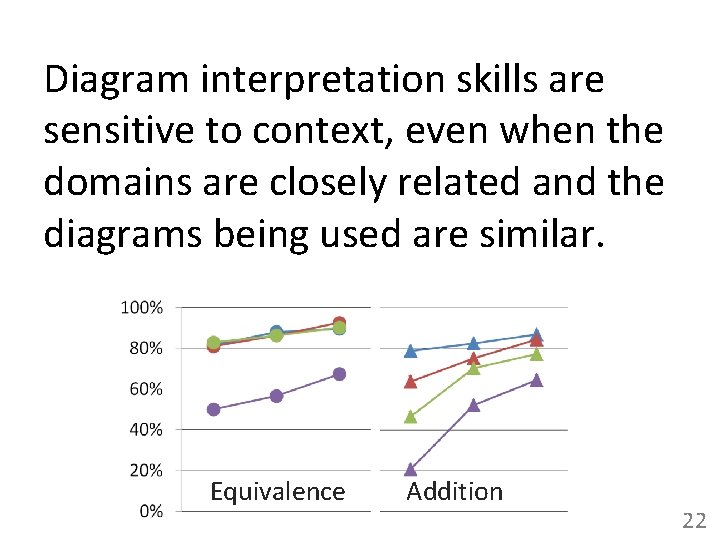
Diagram interpretation skills are sensitive to context, even when the domains are closely related and the diagrams being used are similar. Equivalence Addition 22

This Work Was Supported By: A Graduate Training Grant The Pittsburgh Science of awarded to Carnegie Learning Center through Mellon University by the NSF award SBE-0836012 Department of Education (R 305 B 090023) 23
Thank you! How useful are fraction bars for understanding fraction equivalence and addition? Eliane Stampfer Wiese, Ken Koedinger Carnegie Mellon University stampfer@cs. cmu. edu
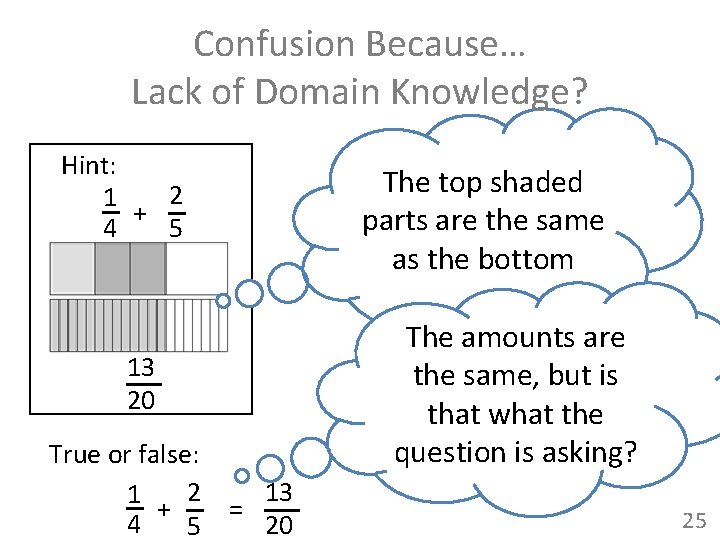
Confusion Because… Lack of Domain Knowledge? Hint: 2 1 + 4 5 13 20 True or false: 2 13 1 + = 4 20 5 The top shaded parts are the same as the bottom The amounts are the same, but is that what the question is asking? 25
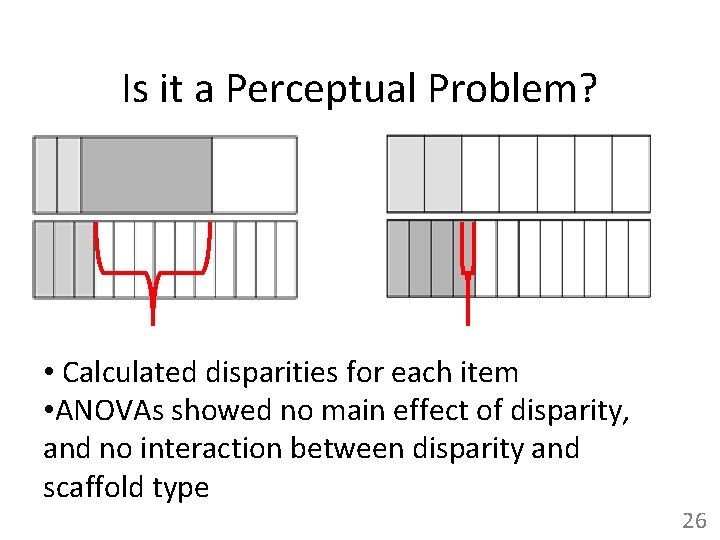
Is it a Perceptual Problem? • Calculated disparities for each item • ANOVAs showed no main effect of disparity, and no interaction between disparity and scaffold type 26
- Slides: 26