WarmUp What type of connective tissue is shown
- Slides: 22
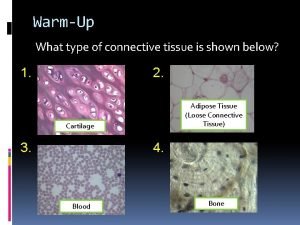
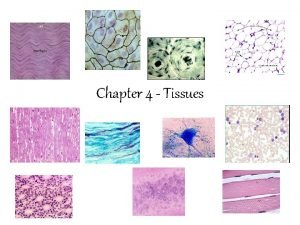
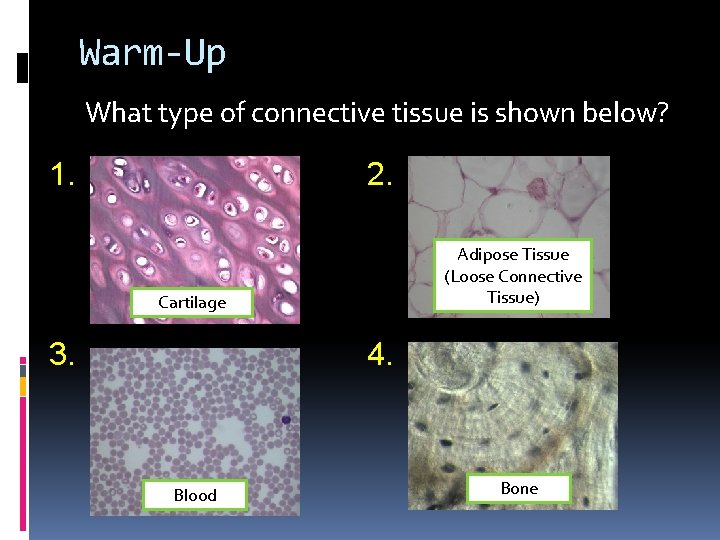
Warm-Up What type of connective tissue is shown below? 1. 2. Adipose Tissue (Loose Connective Tissue) Cartilage 3. 4. Blood Bone
Chapter 4 TISSUE: THE LIVING FABRIC
Part II: Connective Tissue
Connective Tissue Most abundant and widely distributed tissue Main classes: 1. Connective tissue proper (loose & dense) 2. Cartilage 3. Bone 4. Blood Functions: 1. Binding and support 2. Protection 3. Insulation 4. Transport substances
CONNECTIVE TISSUE General Features Not very cellular compared to the other types of tissue Does not occur on body surfaces Has a nerve supply, except cartilage Variations in blood supply Avascular (no blood) – cartilage Poorly vascular – tendons, ligaments Most others are vascular
Two basic elements: cells and an extracellular matrix Cells -blasts : form the extracellular matrix -cytes : maintain the extracellular matrix -clasts : break down the extracellular matrix
Extracellular matrix Produced by cells, secreted to exterior Ground substance: “glue” - fills space between cells & fibers water + adhesion proteins + polysaccharides Fibers: provide support Collagen - strength Elastic – stretch Reticular – fine network, “skeleton” of organs
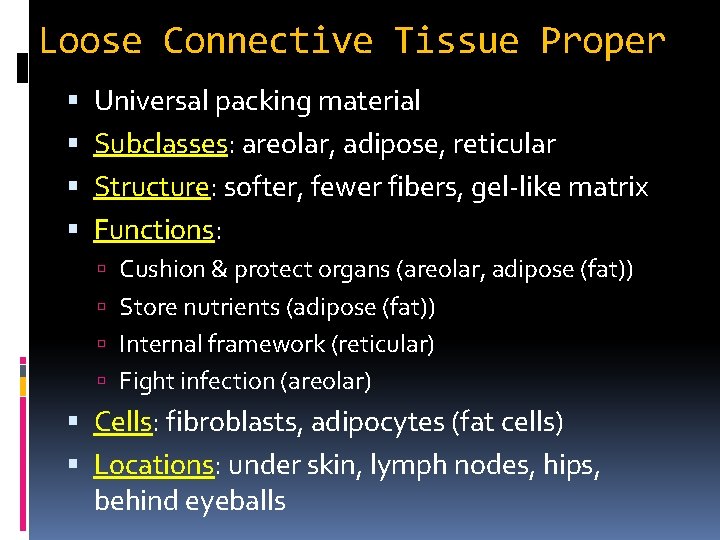
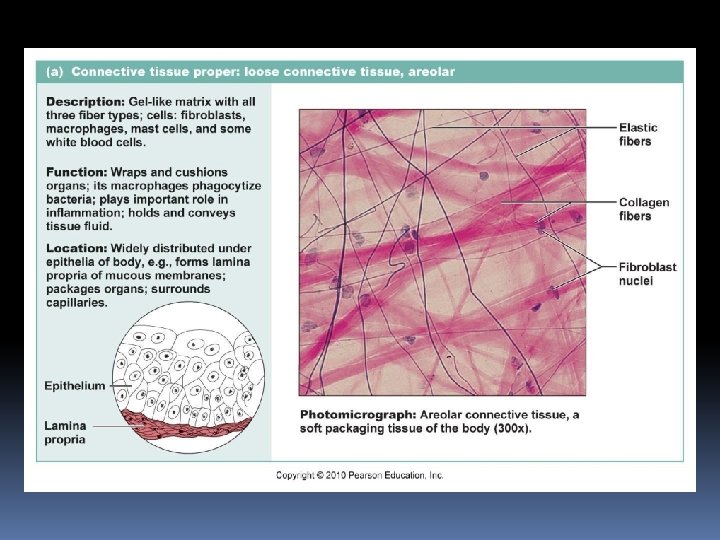
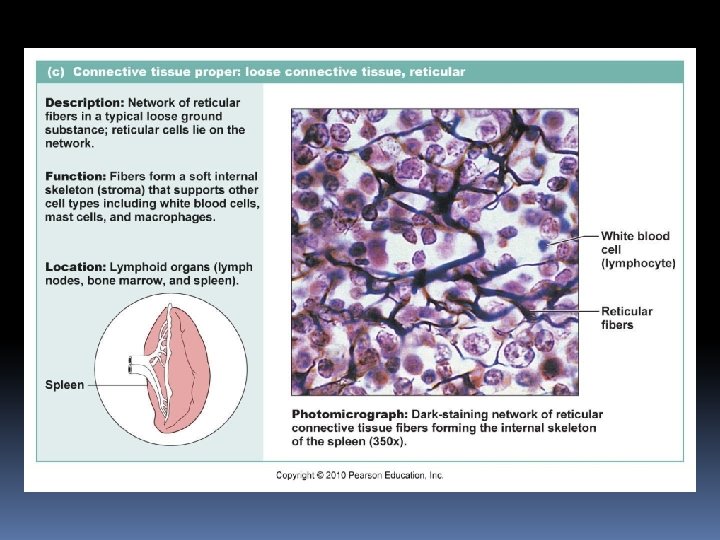
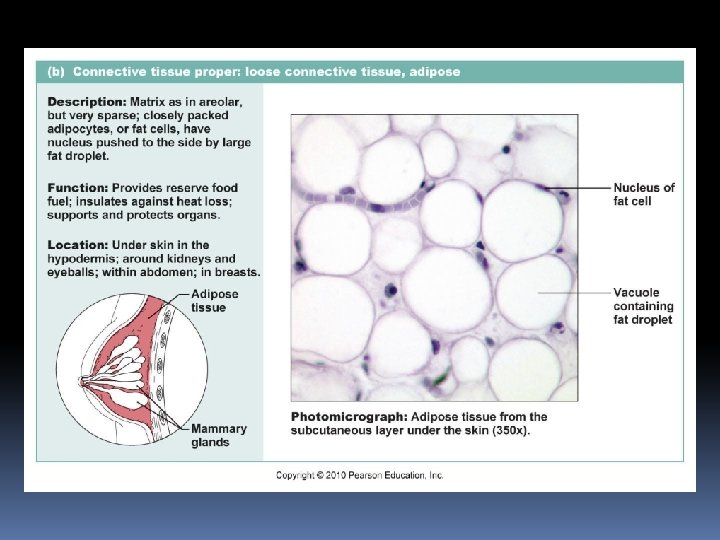
Loose Connective Tissue Proper Universal packing material Subclasses: areolar, adipose, reticular Structure: softer, fewer fibers, gel-like matrix Functions: Cushion & protect organs (areolar, adipose (fat)) Store nutrients (adipose (fat)) Internal framework (reticular) Fight infection (areolar) Cells: fibroblasts, adipocytes (fat cells) Locations: under skin, lymph nodes, hips, behind eyeballs
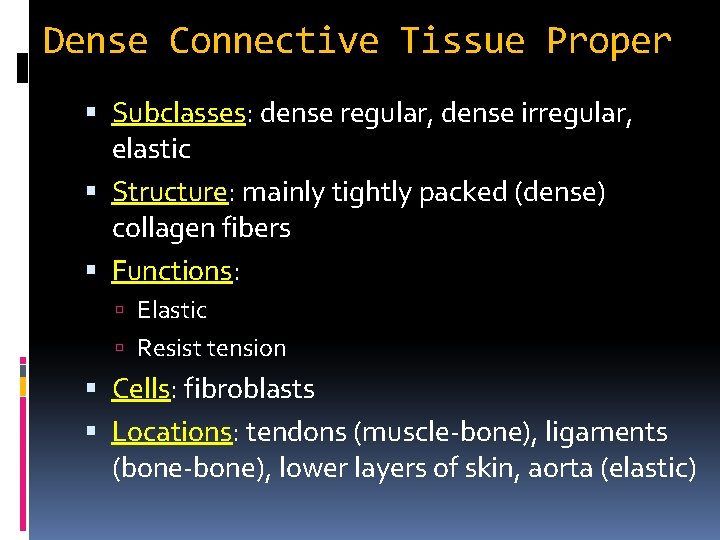
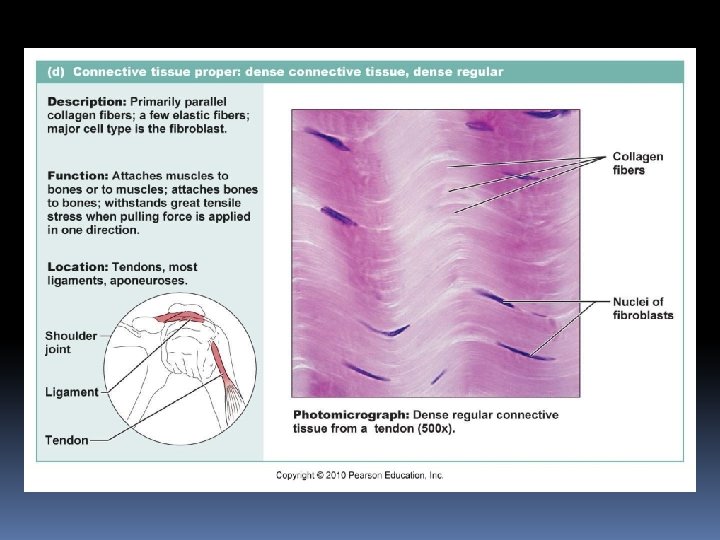
Dense Connective Tissue Proper Subclasses: dense regular, dense irregular, elastic Structure: mainly tightly packed (dense) collagen fibers Functions: Elastic Resist tension Cells: fibroblasts Locations: tendons (muscle-bone), ligaments (bone-bone), lower layers of skin, aorta (elastic)
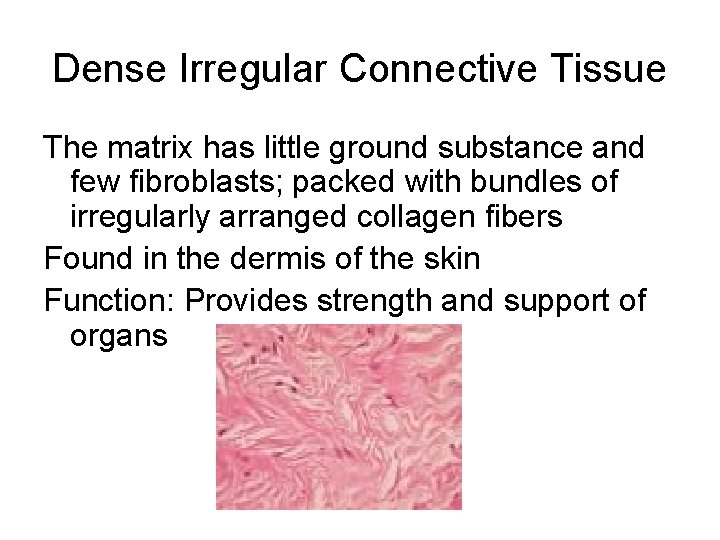
Dense Irregular Connective Tissue The matrix has little ground substance and few fibroblasts; packed with bundles of irregularly arranged collagen fibers Found in the dermis of the skin Function: Provides strength and support of organs
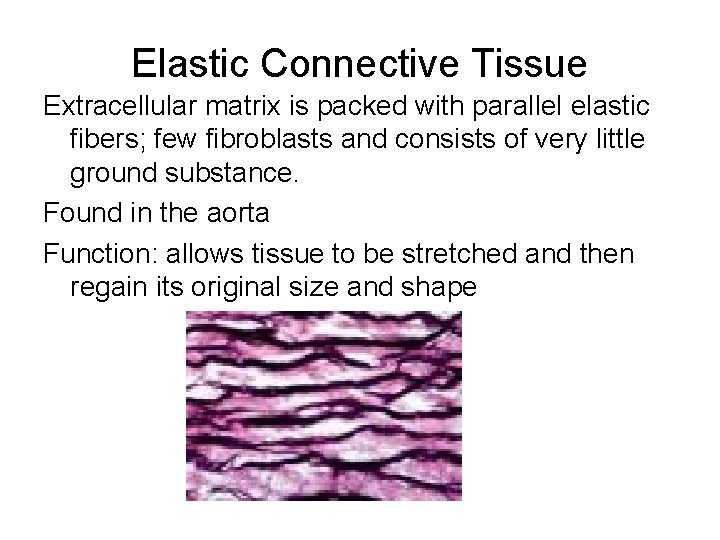
Elastic Connective Tissue Extracellular matrix is packed with parallel elastic fibers; few fibroblasts and consists of very little ground substance. Found in the aorta Function: allows tissue to be stretched and then regain its original size and shape
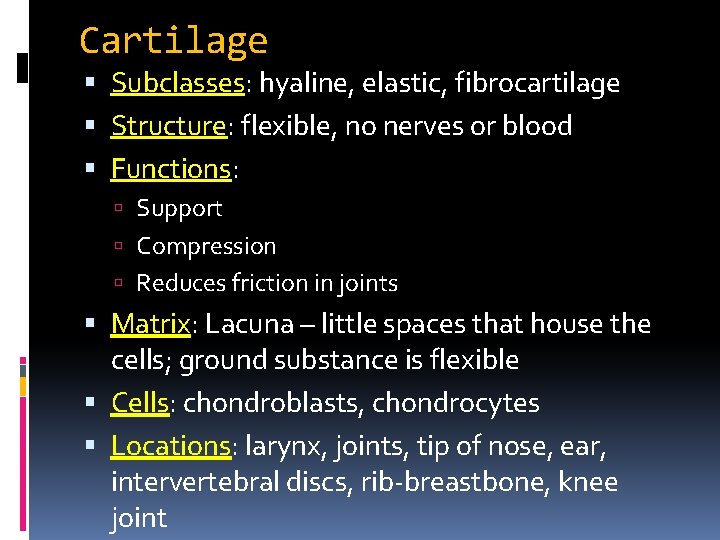
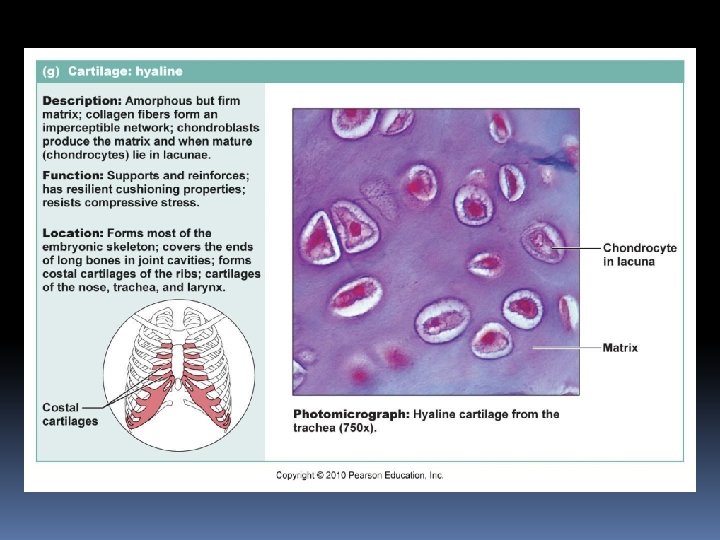
Cartilage Subclasses: hyaline, elastic, fibrocartilage Structure: flexible, no nerves or blood Functions: Support Compression Reduces friction in joints Matrix: Lacuna – little spaces that house the cells; ground substance is flexible Cells: chondroblasts, chondrocytes Locations: larynx, joints, tip of nose, ear, intervertebral discs, rib-breastbone, knee joint
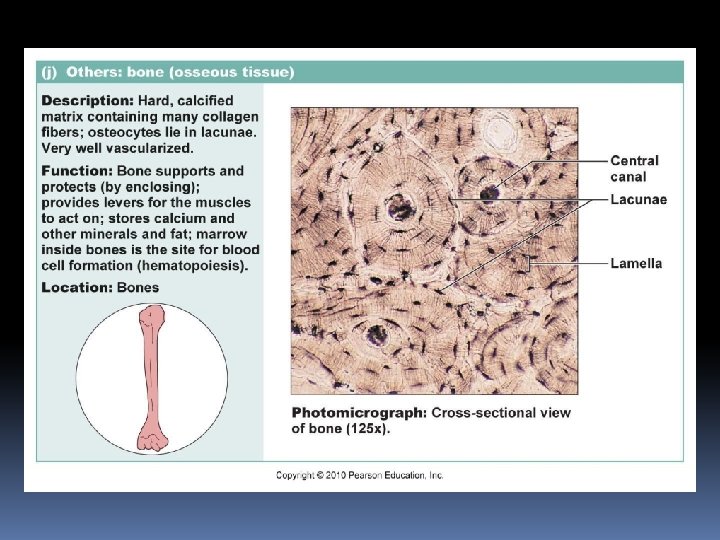
Bone Osseous tissue Subclasses: compact, spongy Structure: hard, calcified matrix; blood vessels Functions: support & protect Store calcium Blood cell formation (red marrow) Lipid (fat) storage (yellow marrow)
Bone Matrix: Lacuna and Canaliculi – little canals that connect the Central Canal to lacuna to transport nutrients, oxygen etc. to cells. Cells: osteoblasts, osteocytes Locations: bones (skeleton)
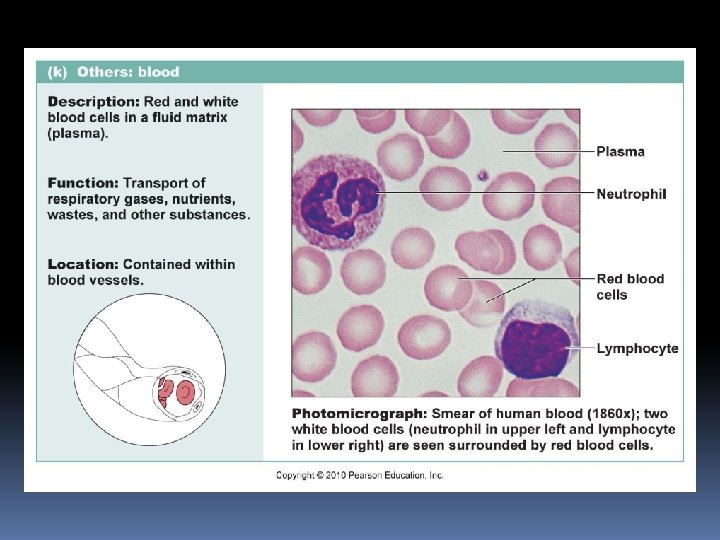
Blood Structure: fluid within blood vessels, fibers only present during clotting Functions: Transport vehicle (nutrients, wastes, gases, hormones) Cells: white blood cells (leukocytes), red blood cells (erythrocytes), platelets Locations: blood vessels