Unless otherwise noted the content of this course

- Slides: 29
Unless otherwise noted, the content of this course material is licensed under a Creative Commons Attribution 3. 0 License. http: //creativecommons. org/licenses/by/3. 0/. Copyright 2008, Kathleen Ludewig. You assume all responsibility for use and potential liability associated with any use of the material. Material contains copyrighted content, used in accordance with U. S. law. Copyright holders of content included in this material should contact open. michigan@umich. edu with any questions, corrections, or clarifications regarding the use of content. The Regents of the University of Michigan do not license the use of third party content posted to this site unless such a license is specifically granted in connection with particular content objects. Users of content are responsible for their compliance with applicable law. Mention of specific products in this recording solely represents the opinion of the speaker and does not represent an endorsement by the University of Michigan.
Fair Use in Education Kathleen Ludewig SI 519/Pub. Pol 688 November 7, 2008
Outline • • • What is Fair Use? Coursepacks Course Management Systems Open Educational Resources A world without Fair Use? Recommendations
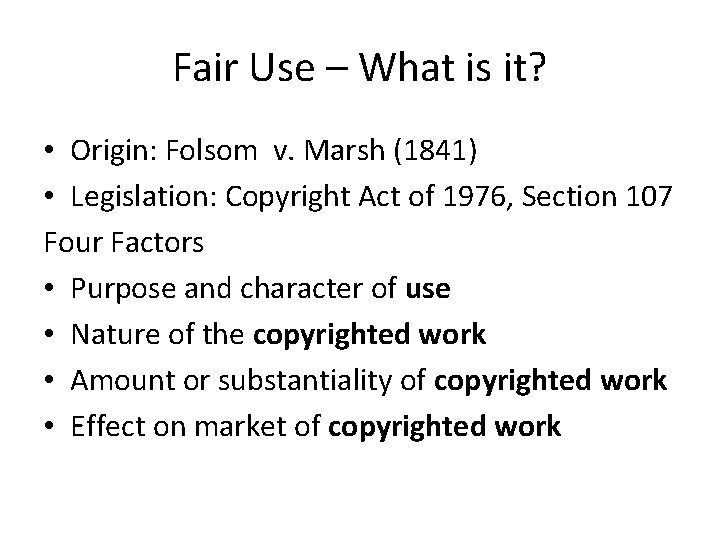
Fair Use – What is it? • Origin: Folsom v. Marsh (1841) • Legislation: Copyright Act of 1976, Section 107 Four Factors • Purpose and character of use • Nature of the copyrighted work • Amount or substantiality of copyrighted work • Effect on market of copyrighted work
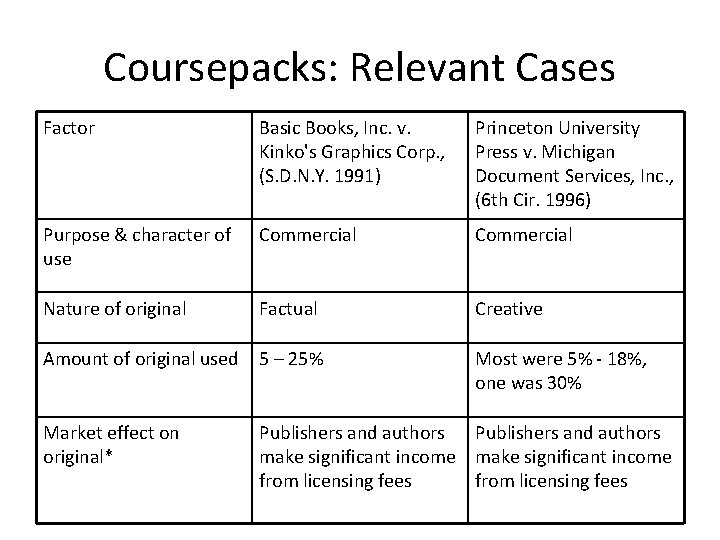
Coursepacks: Relevant Cases Factor Basic Books, Inc. v. Kinko's Graphics Corp. , (S. D. N. Y. 1991) Princeton University Press v. Michigan Document Services, Inc. , (6 th Cir. 1996) Purpose & character of use Commercial Nature of original Factual Creative Amount of original used 5 – 25% Most were 5% - 18%, one was 30% Market effect on original* Publishers and authors make significant income from licensing fees
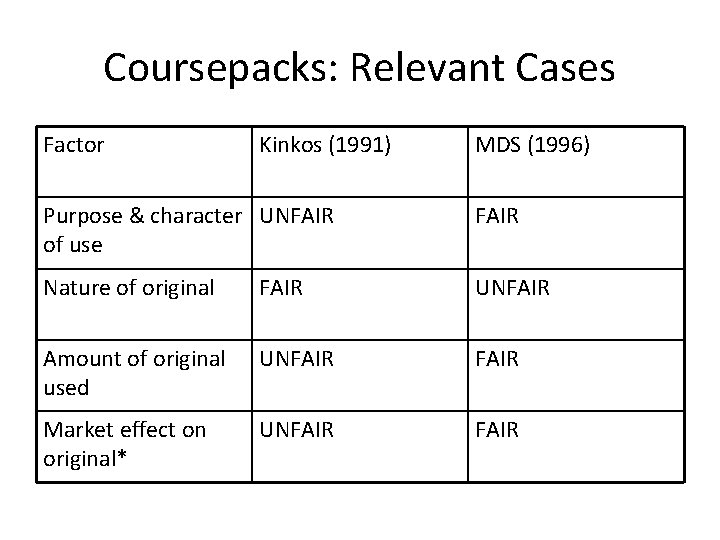
Coursepacks: Relevant Cases Factor Kinkos (1991) MDS (1996) Purpose & character UNFAIR of use FAIR Nature of original FAIR UNFAIR Amount of original used UNFAIR Market effect on original* UNFAIR
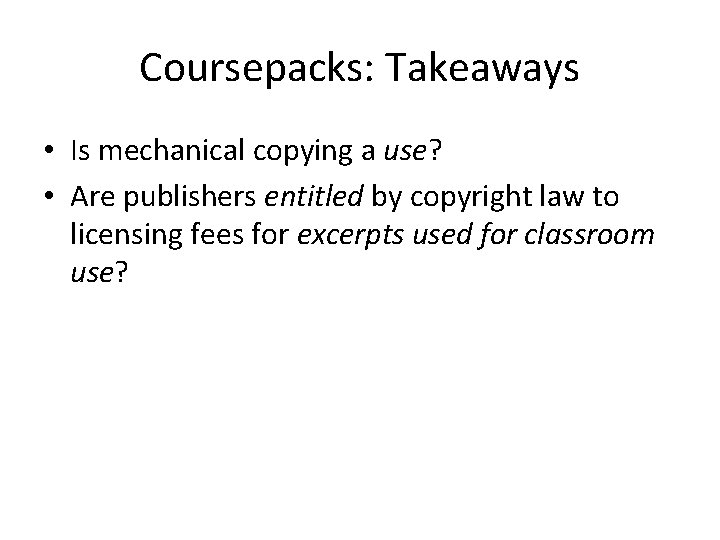
Coursepacks: Takeaways • Is mechanical copying a use? • Are publishers entitled by copyright law to licensing fees for excerpts used for classroom use?
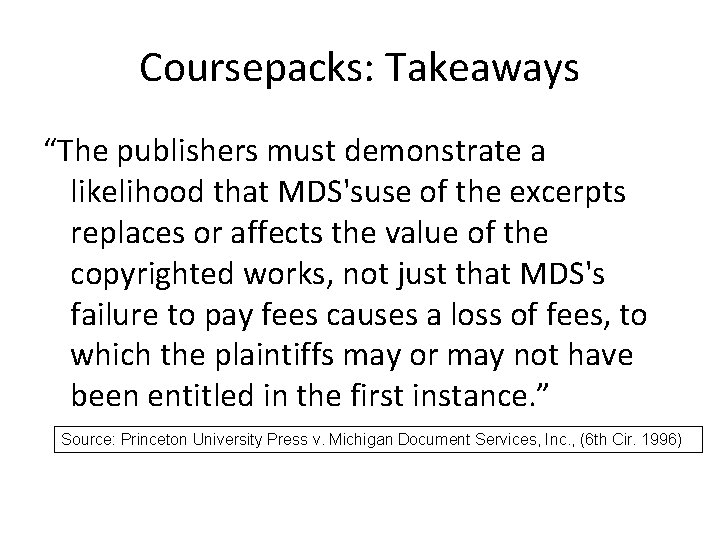
Coursepacks: Takeaways “The publishers must demonstrate a likelihood that MDS'suse of the excerpts replaces or affects the value of the copyrighted works, not just that MDS's failure to pay fees causes a loss of fees, to which the plaintiffs may or may not have been entitled in the first instance. ” Source: Princeton University Press v. Michigan Document Services, Inc. , (6 th Cir. 1996)
Fair Use – a little clarification, please? CONFU • Conservative interpretation • Influence of publishers TEACH Act (2002)
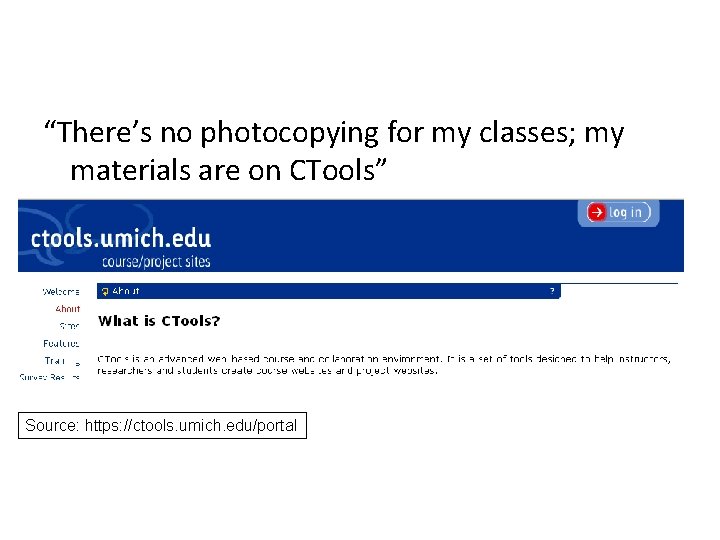
“There’s no photocopying for my classes; my materials are on CTools” Source: https: //ctools. umich. edu/portal
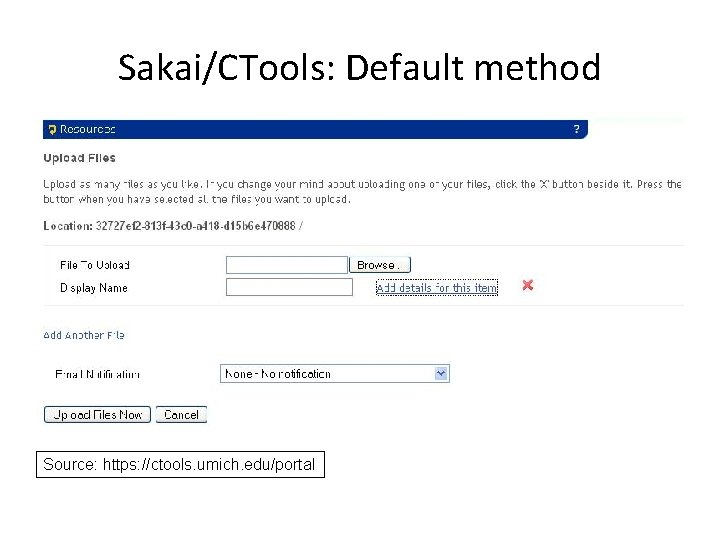
Sakai/CTools: Default method Source: https: //ctools. umich. edu/portal
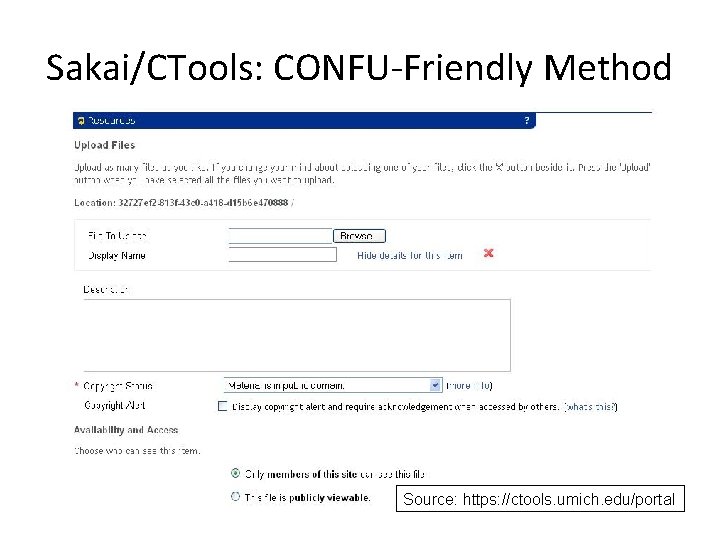
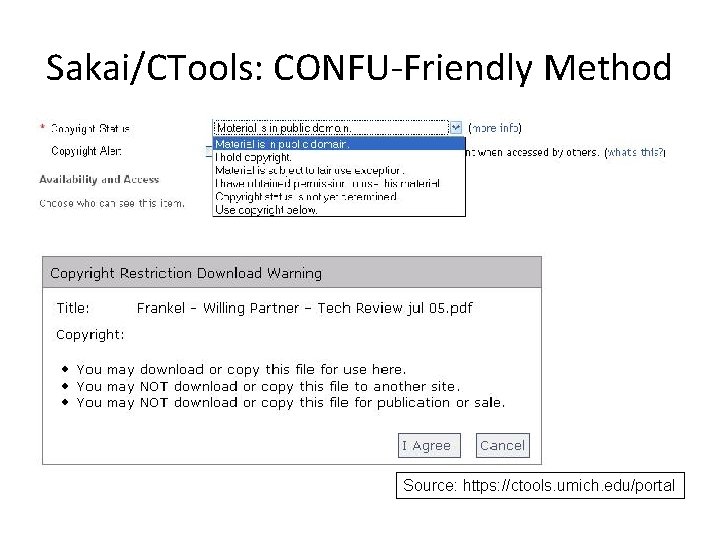
Sakai/CTools: CONFU-Friendly Method Source: https: //ctools. umich. edu/portal
Sakai/CTools: CONFU-Friendly Method Source: https: //ctools. umich. edu/portal
How does this affect Open Educational Resources (OER, including OCW)? • Clearing process -> copyright education and replacement • Is this process really necessary? • What if we can’t find a replacement image licensed through Creative Commons? • What is the risk of using copyrighted work?
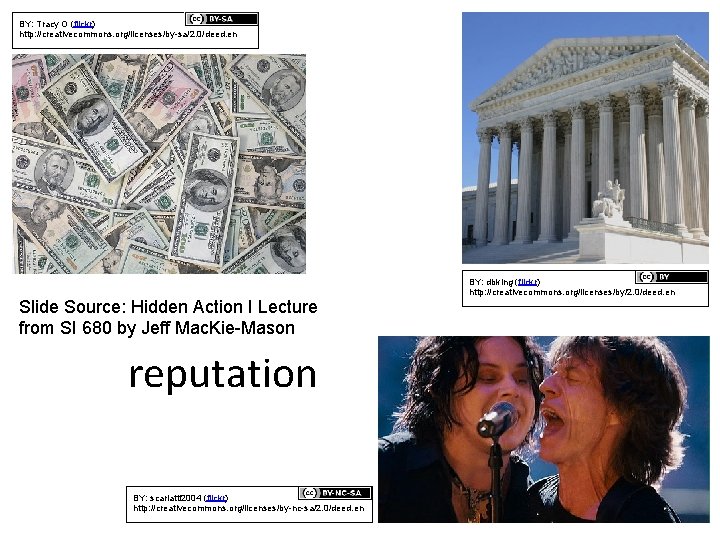
BY: Tracy O (flickr) http: //creativecommons. org/licenses/by-sa/2. 0/deed. en Slide Source: Hidden Action I Lecture from SI 680 by Jeff Mac. Kie-Mason reputation BY: scarlatti 2004 (flickr) http: //creativecommons. org/licenses/by-nc-sa/2. 0/deed. en BY: dbking (flickr) http: //creativecommons. org/licenses/by/2. 0/deed. en
A world without fair use?
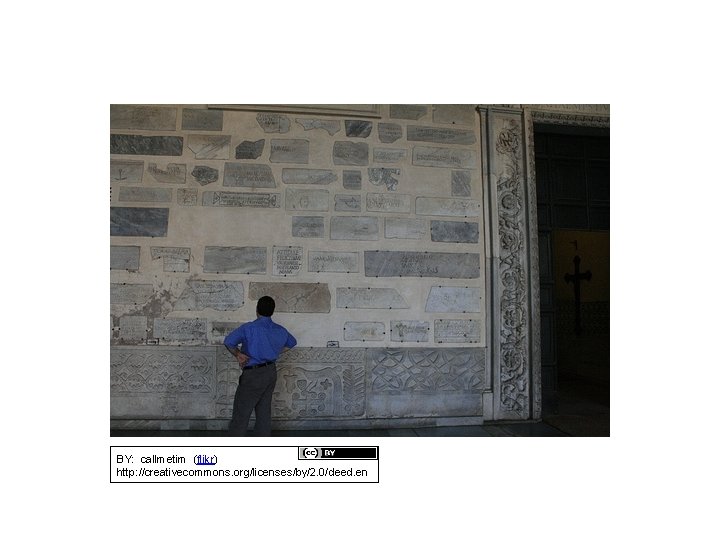
BY: callmetim (flikr) http: //creativecommons. org/licenses/by/2. 0/deed. en
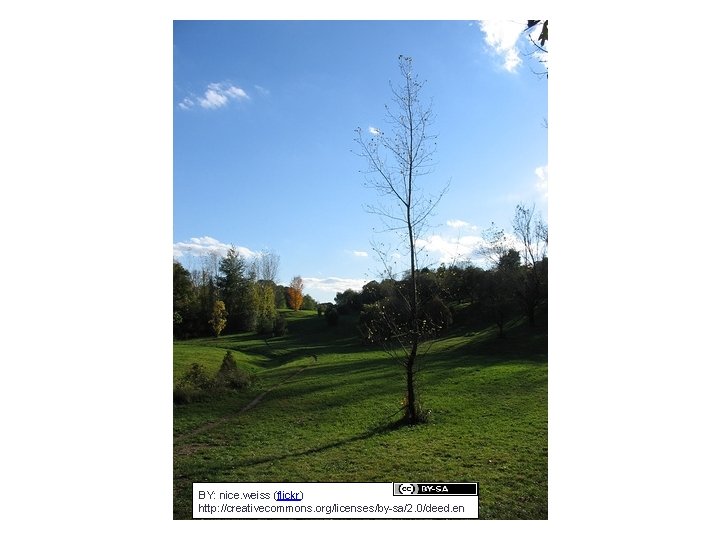
BY: nice. weiss (flickr)) http: //creativecommons. org/licenses/by-sa/2. 0/deed. en
Unconstitutional?
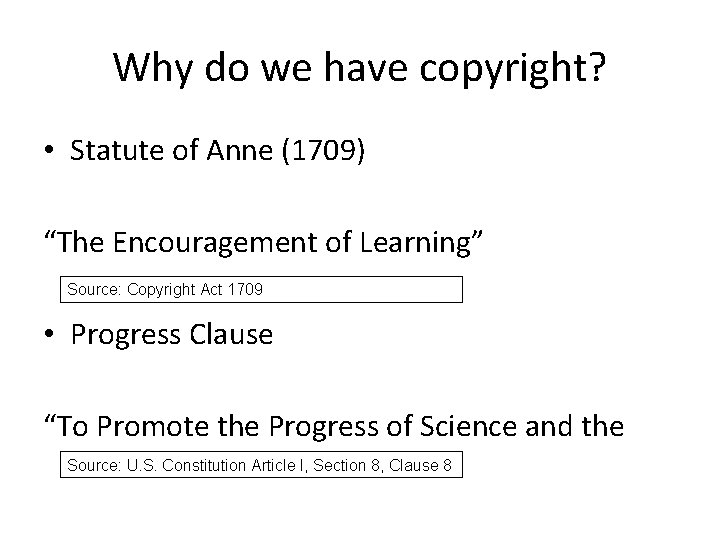
Why do we have copyright? • Statute of Anne (1709) “The Encouragement of Learning” Source: Copyright Act 1709 • Progress Clause “To Promote the Progress of Science and the Source: U. S. Arts” Constitution Article I, Section 8, Clause 8 useful
But we still want people to maintain the incentive to create and publish innovative scholarly works
BY: betsyjean 79 (flickr)) http: //creativecommons. org/licenses/by-nc-sa/2. 0/deed. en
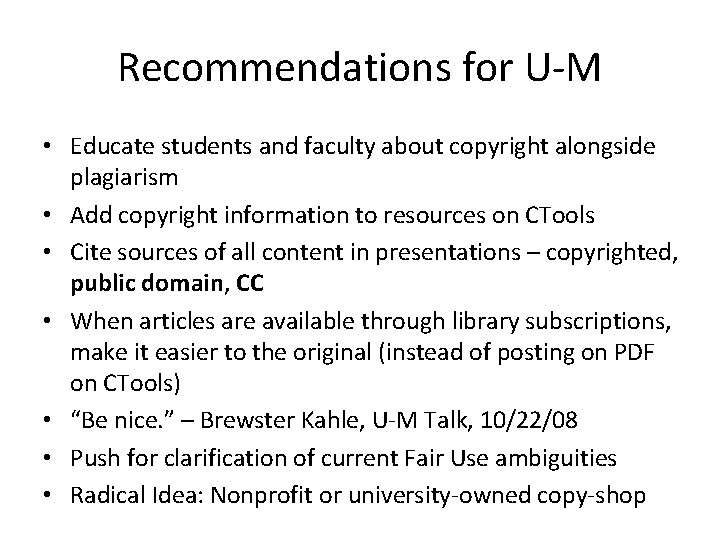
Recommendations for U-M • Educate students and faculty about copyright alongside plagiarism • Add copyright information to resources on CTools • Cite sources of all content in presentations – copyrighted, public domain, CC • When articles are available through library subscriptions, make it easier to the original (instead of posting on PDF on CTools) • “Be nice. ” – Brewster Kahle, U-M Talk, 10/22/08 • Push for clarification of current Fair Use ambiguities • Radical Idea: Nonprofit or university-owned copy-shop
These guidelines work for documentary filmmakers – why not educational institutions? • http: //centerforsocialmedia. org/resources/online_video • Less restrictive than CONFU • Trump card: Transformative use
Sources • http: //www. copyright. iupui. edu/FUsummaries. htm • http: //www. bc. edu/bc_org/avp/cas/comm/free_speech/basicbooks. html • http: //copyright. umich. edu/using_copyrighted_material. html http: //www. utsystem. edu/ogc/intellectualproperty/michigan. htm • http: //centerforsocialmedia. org/resources/online_video • http: //www. law. cornell. edu/copyright/cases/99_F 3 d_1381. htm • http: //fairuse. stanford. edu/Copyright_and_Fair_Use_Overview/chapter 9/ 9 -b. html • http: //www. centerforsocialmedia. org/resources/fair_use/ • https: //open. umich. edu/wiki/index. php 5/Fair_use • http: //cyber. law. harvard. edu/node/4376 • http: //www. copyright. com/media/pdfs/CR-Teach-Act. pdf
Disclaimer • No copyright was infringed in the production, distribution, or public performance of this presentation
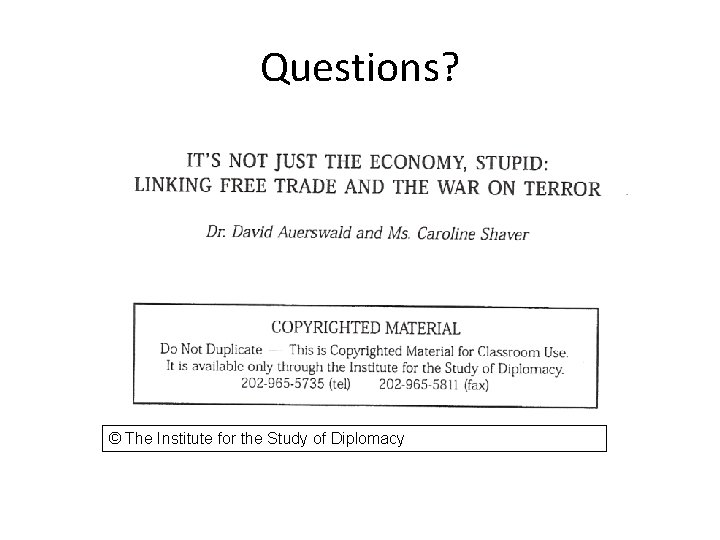
Questions? © The Institute for the Study of Diplomacy