Unit 1 Diversity 1 1 Identifying Naming and

- Slides: 24
Unit 1: Diversity 1. 1 -Identifying, Naming and Classifying Species SBU 3 U 1
Overview: SPECIES- a group of organisms that can interbreed in nature and produce fertile offspring. -Scientists have identified approx. 2 million different species on earth to date. -However they estimate that the total number on Earth actually ranges from 5 - 20 million.
Identifying and Naming Species • Scientists have used different methods to classify a species which are called species concepts: 1)Morphological species concept 2)Biological species concept 3)Phylogenetic species concept
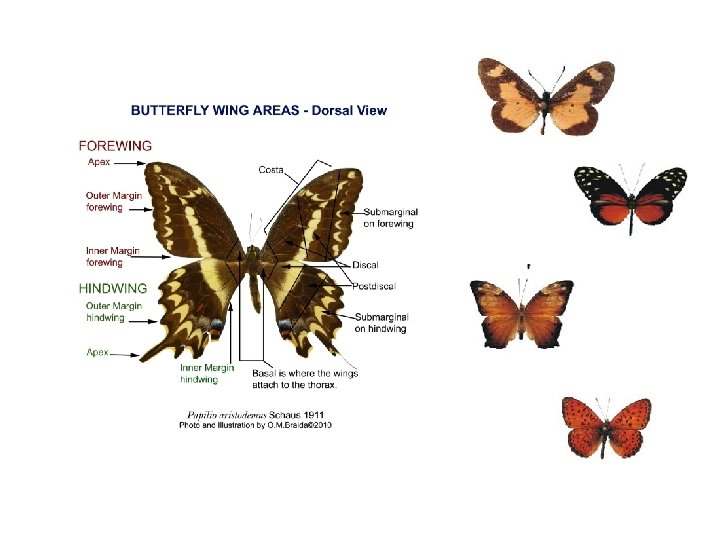
1)Morphological Species Concept • Morphology focuses on body shape, size, and colour • Scientists compare measurements and descriptions of similar organisms over time
1)Morphological Species Concept Advantage: it is simple and widely used, especially for plants Disadvantage: difficult to determine how much variation is too much because majority of populations have non-identical individuals
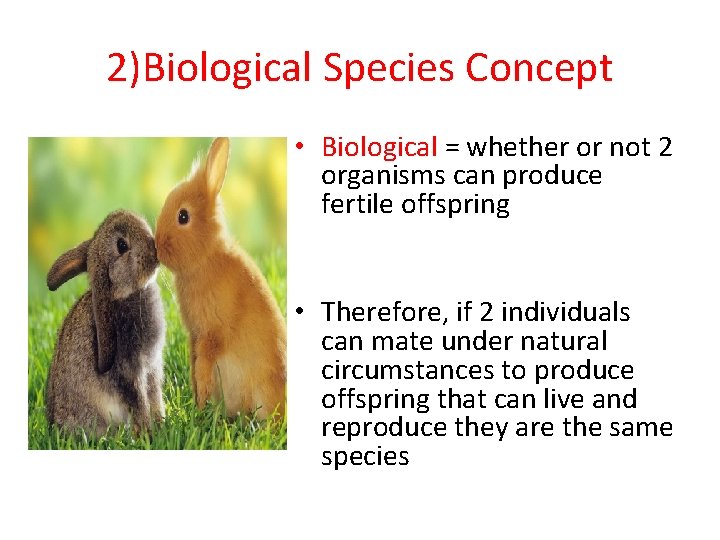
2)Biological Species Concept • Biological = whether or not 2 organisms can produce fertile offspring • Therefore, if 2 individuals can mate under natural circumstances to produce offspring that can live and reproduce they are the same species
2)Biological Species Concept Advantage: widely used by scientists Disadvantage: This cannot be applied to populations that are separated, that reproduce asexually or fossils.
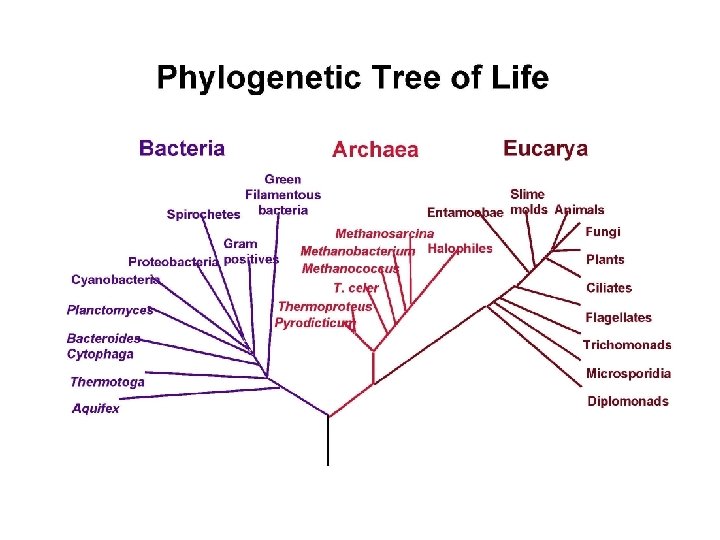
3)Phylogenetic Species Concept • Phylogenetic focuses on evolutionary history among organisms • Species are a cluster of organisms distinct from other clusters • Pattern of relationship among organisms • DNA analysis can be used
3)Phylogenetic Species Concept Advantages: applies to extinct species and uses DNA analysis Disadvantage: not all evolutionary histories are known
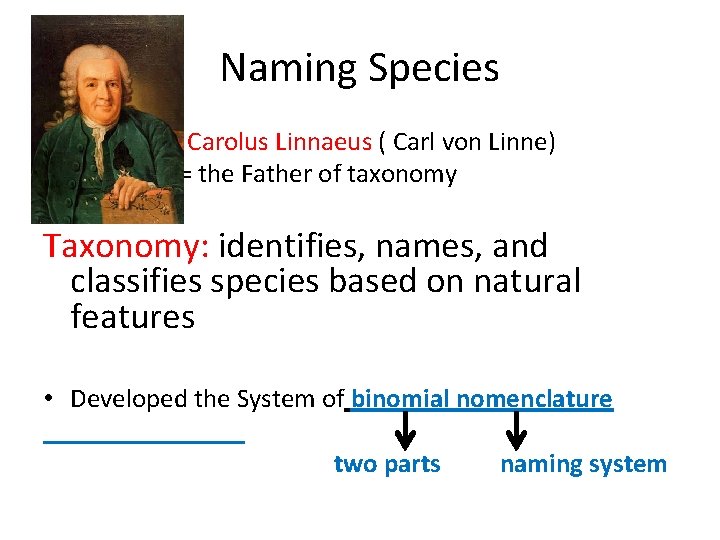
Naming Species = Carolus Linnaeus ( Carl von Linne) = the Father of taxonomy Taxonomy: identifies, names, and classifies species based on natural features • Developed the System of binomial nomenclature two parts naming system
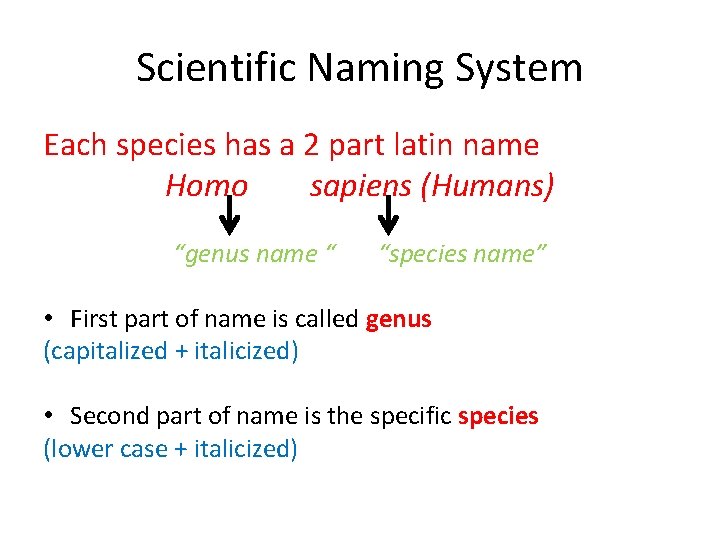
Scientific Naming System Each species has a 2 part latin name Homo sapiens (Humans) “genus name “ “species name” • First part of name is called genus (capitalized + italicized) • Second part of name is the specific species (lower case + italicized)
Check your understanding… 1. Which of the following is the scientific name for a cat ? a) Felis Catus b) Felis catus c) Felis catus d) felis catus
Check your understanding… 2. The offspring of a male lion + female tiger is a liger. Ligers are infertile. Does this mean that lion and tigers are the same species? Explain.
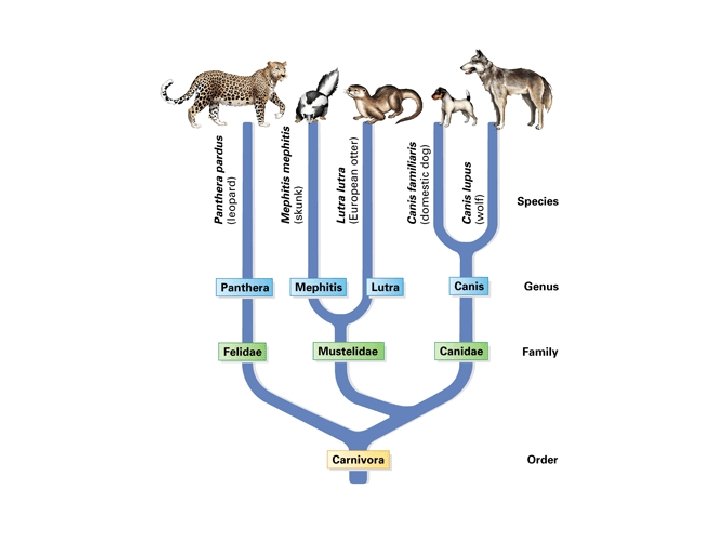
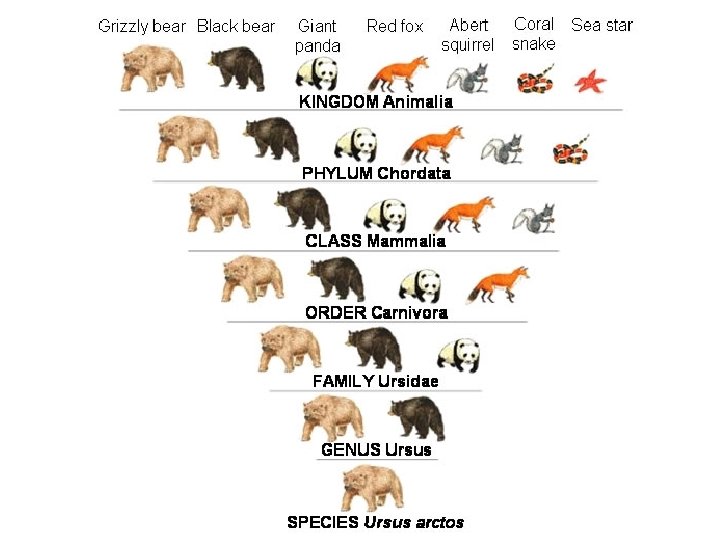
Hierarchical Classification • Classification is the grouping of organisms based on a set of criteria that helps to organize and indicate evolutionary relationships. ( developed by Linnaeus) • Hierarchal Classification= arrangement of species into categories from most general to most specific
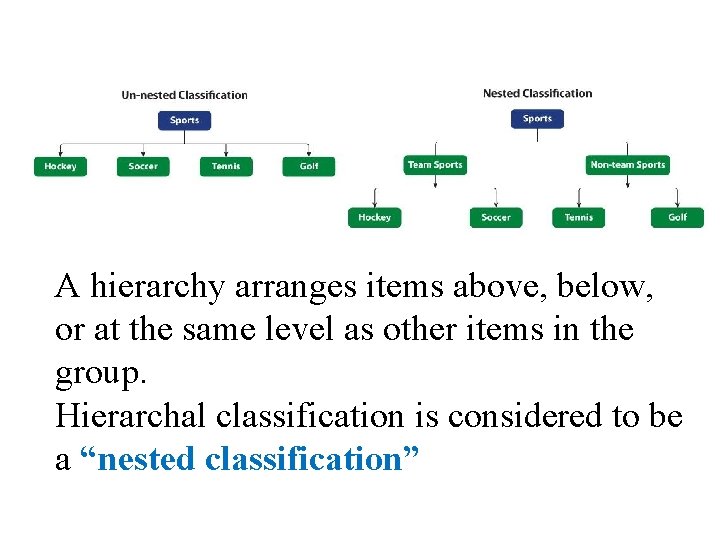
A hierarchy arranges items above, below, or at the same level as other items in the group. Hierarchal classification is considered to be a “nested classification”
UNIT 1 Chapter 1: Classifying Life’s Diversity Section 1. 1 Taxonomic Categories Used To Classify Organisms • Taxonomic categories are used to classify organisms that have been identified. • The categories or groupings are arranged in a hierarchy. • Each level or category is known as the rank. • The particular classification of an organism at each rank level is called the taxon (pl. taxa).
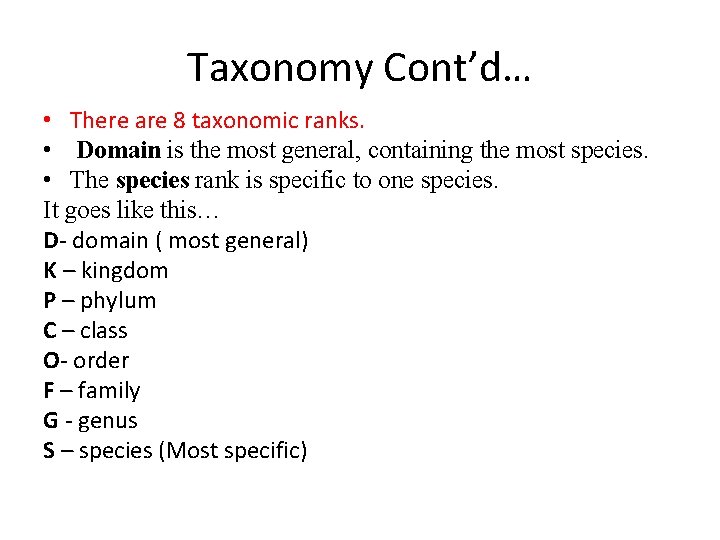
Taxonomy Cont’d… • There are 8 taxonomic ranks. • Domain is the most general, containing the most species. • The species rank is specific to one species. It goes like this… D- domain ( most general) K – kingdom P – phylum C – class O- order F – family G - genus S – species (Most specific)
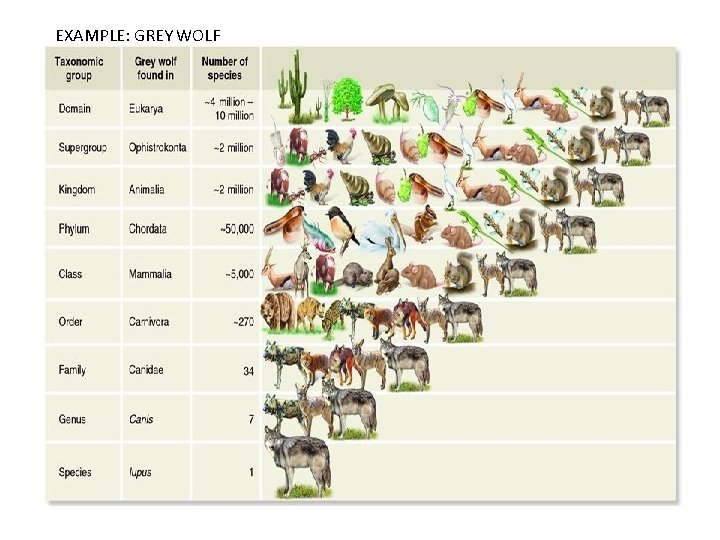
EXAMPLE: GREY WOLF
Classification of Living Things Video https: //www. youtube. com/watch? v=vqxom. JIBG c. Y
HOMEWORK -Read and make notes 1. 1 -pg. 10 -15 -Summarize & Copy Table 1. 1 ( pg. 11) in your notebook -Complete pg. 13 #1 -4, pg. 16 # 6 -11