U S Veteran Marketing And other fun stuff

- Slides: 17
U. S. Veteran Marketing And other fun stuff.
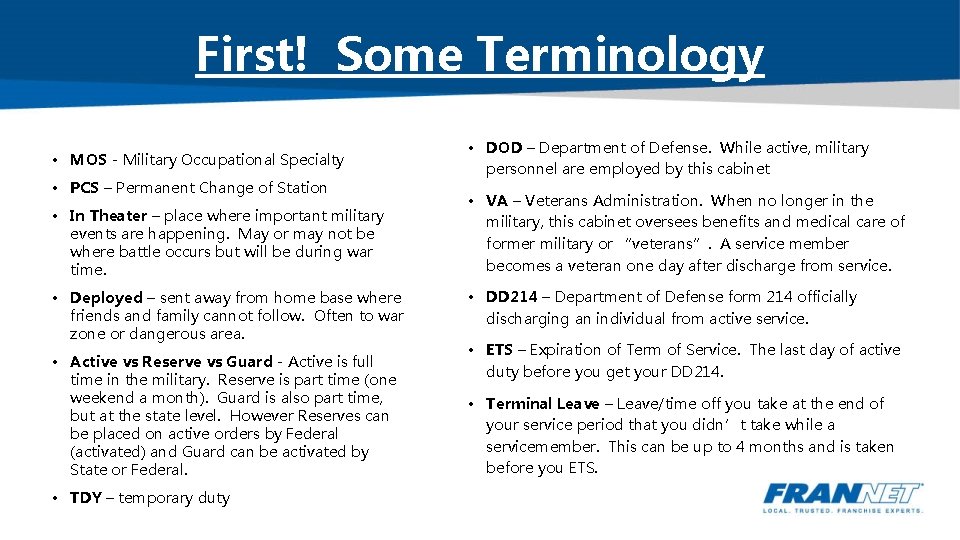
First! Some Terminology • MOS - Military Occupational Specialty • PCS – Permanent Change of Station • In Theater – place where important military events are happening. May or may not be where battle occurs but will be during war time. • Deployed – sent away from home base where friends and family cannot follow. Often to war zone or dangerous area. • Active vs Reserve vs Guard - Active is full time in the military. Reserve is part time (one weekend a month). Guard is also part time, but at the state level. However Reserves can be placed on active orders by Federal (activated) and Guard can be activated by State or Federal. • TDY – temporary duty • DOD – Department of Defense. While active, military personnel are employed by this cabinet • VA – Veterans Administration. When no longer in the military, this cabinet oversees benefits and medical care of former military or “veterans”. A service member becomes a veteran one day after discharge from service. • DD 214 – Department of Defense form 214 officially discharging an individual from active service. • ETS – Expiration of Term of Service. The last day of active duty before you get your DD 214. • Terminal Leave – Leave/time off you take at the end of your service period that you didn’t take while a servicemember. This can be up to 4 months and is taken before you ETS.
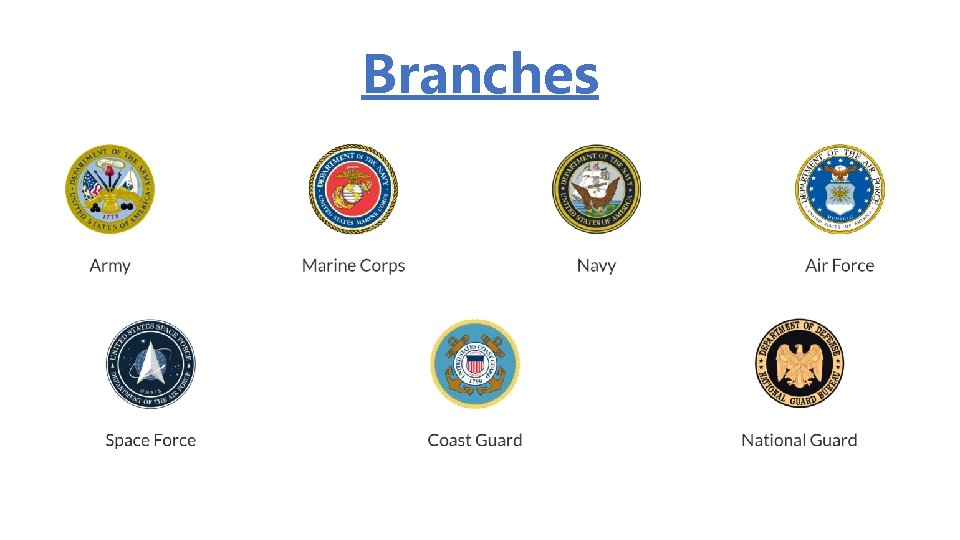
Branches
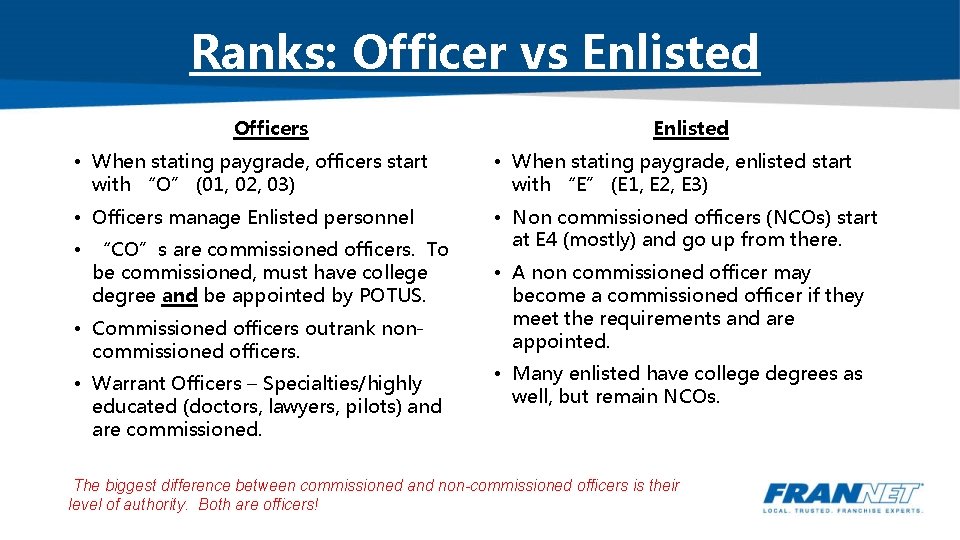
Ranks: Officer vs Enlisted Officers Enlisted • When stating paygrade, officers start with “O” (01, 02, 03) • When stating paygrade, enlisted start with “E” (E 1, E 2, E 3) • Officers manage Enlisted personnel • Non commissioned officers (NCOs) start at E 4 (mostly) and go up from there. • “CO”s are commissioned officers. To be commissioned, must have college degree and be appointed by POTUS. • Commissioned officers outrank noncommissioned officers. • Warrant Officers – Specialties/highly educated (doctors, lawyers, pilots) and are commissioned. • A non commissioned officer may become a commissioned officer if they meet the requirements and are appointed. • Many enlisted have college degrees as well, but remain NCOs. The biggest difference between commissioned and non-commissioned officers is their level of authority. Both are officers!
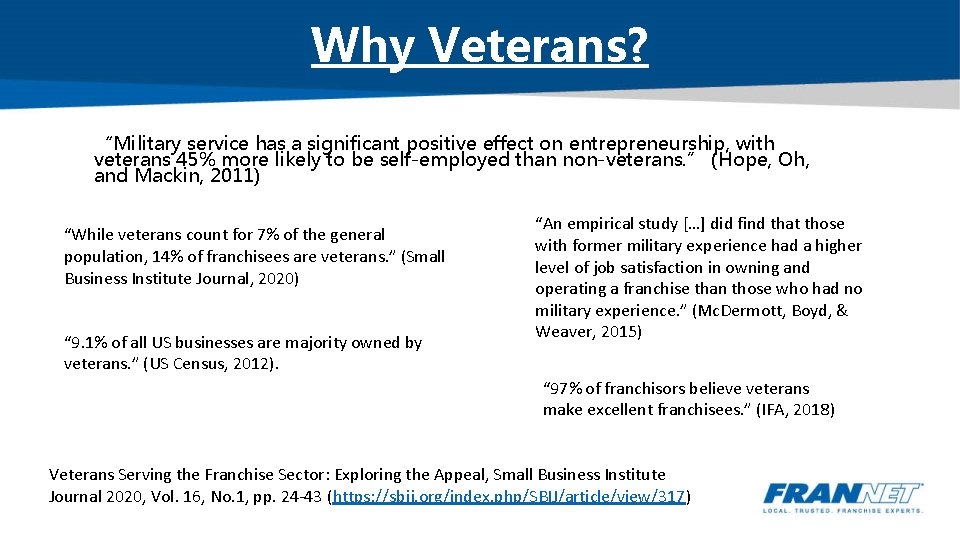
Why Veterans? “Military service has a significant positive effect on entrepreneurship, with veterans 45% more likely to be self-employed than non-veterans. ” (Hope, Oh, and Mackin, 2011) “While veterans count for 7% of the general population, 14% of franchisees are veterans. ” (Small Business Institute Journal, 2020) “ 9. 1% of all US businesses are majority owned by veterans. ” (US Census, 2012). “An empirical study […] did find that those with former military experience had a higher level of job satisfaction in owning and operating a franchise than those who had no military experience. ” (Mc. Dermott, Boyd, & Weaver, 2015) “ 97% of franchisors believe veterans make excellent franchisees. ” (IFA, 2018) Veterans Serving the Franchise Sector: Exploring the Appeal, Small Business Institute Journal 2020, Vol. 16, No. 1, pp. 24 -43 (https: //sbij. org/index. php/SBIJ/article/view/317)
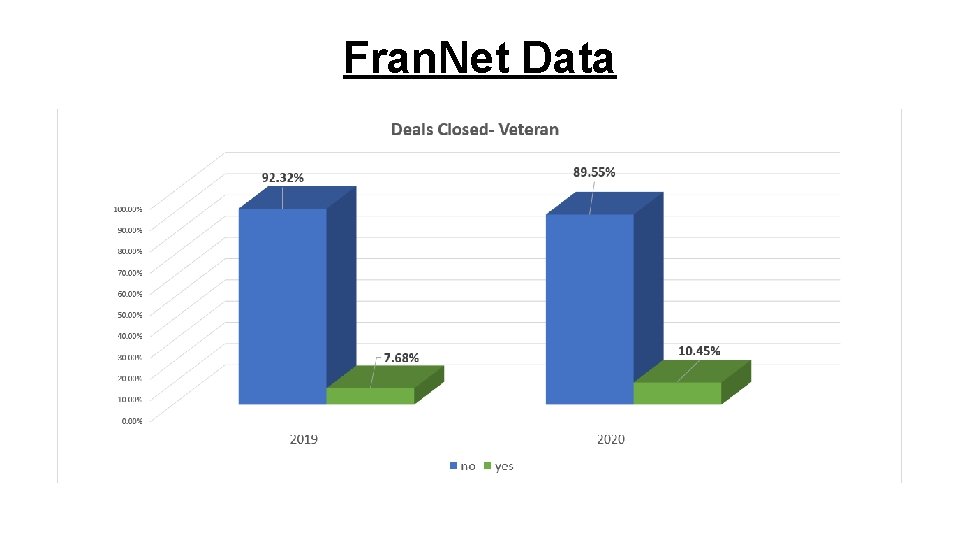
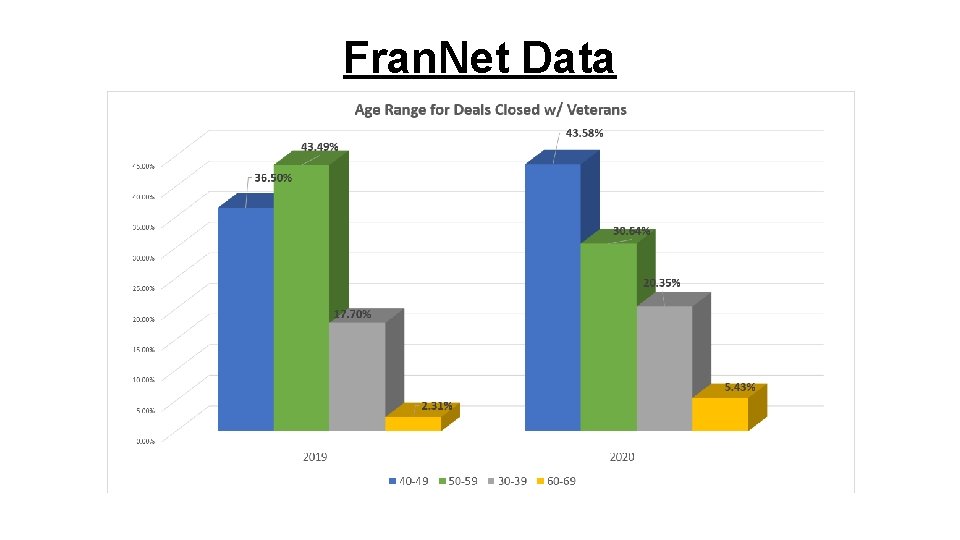
Fran. Net Data
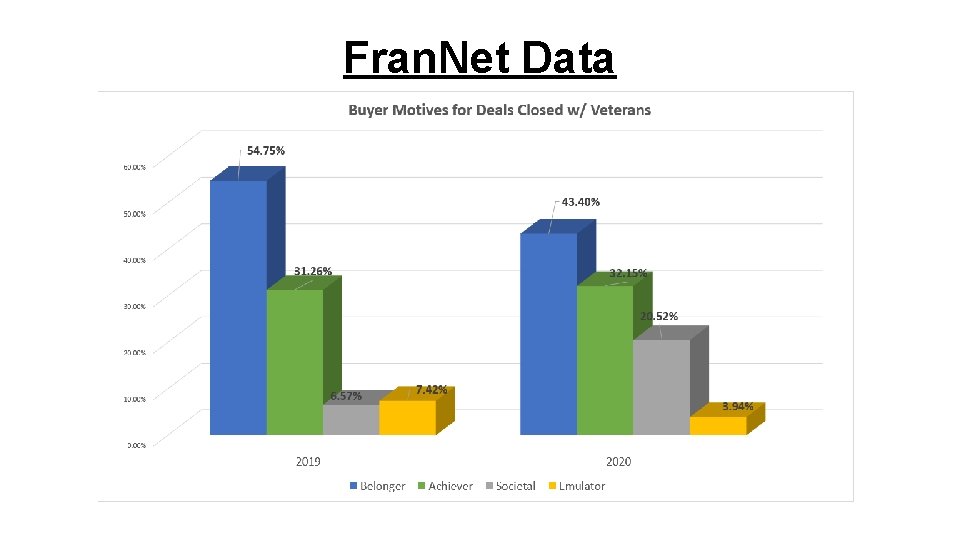
Fran. Net Data
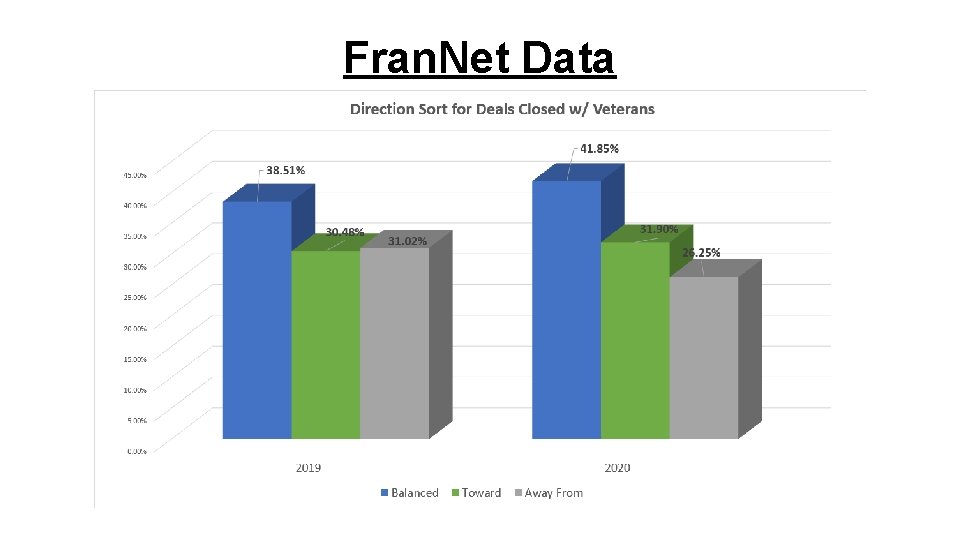
Fran. Net Data
Fran. Net Data
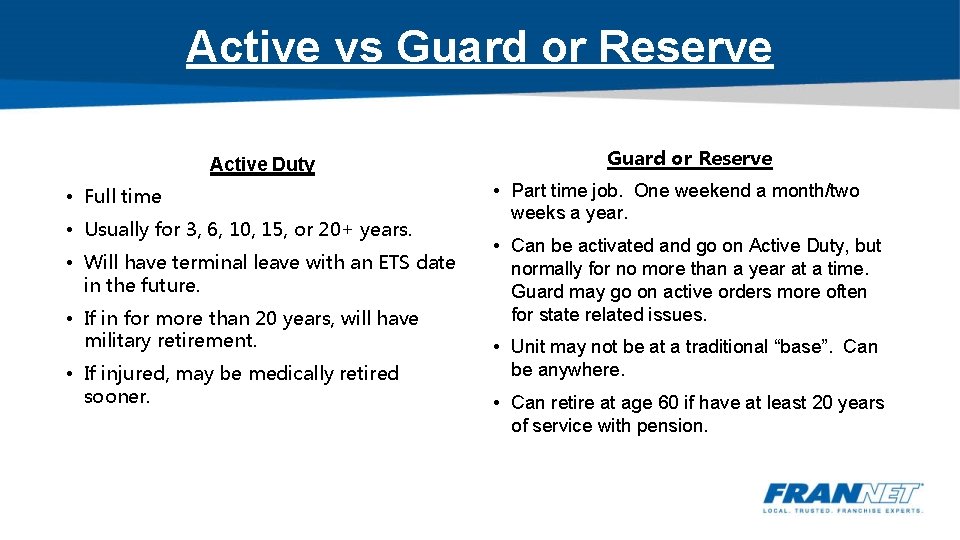
Active vs Guard or Reserve Active Duty • Full time • Usually for 3, 6, 10, 15, or 20+ years. • Will have terminal leave with an ETS date in the future. • If in for more than 20 years, will have military retirement. • If injured, may be medically retired sooner. Guard or Reserve • Part time job. One weekend a month/two weeks a year. • Can be activated and go on Active Duty, but normally for no more than a year at a time. Guard may go on active orders more often for state related issues. • Unit may not be at a traditional “base”. Can be anywhere. • Can retire at age 60 if have at least 20 years of service with pension.
Why do you need to know this? “Veteran” means a lot of things. If you want to market to Veterans, you must identify what type and what stage of the military life cycle you want to target. This may depend on what’s in your territory.
Veteran Lead Sources – Already out of Service • SBA • Veteran Business Development Officer • SBDC • Veterans Assistance Programs/Program Officer • Veteran Service Organizations (VFW, AMVETS, American Legion, State Department of Veterans Affairs, DAV, etc. ) • All have job boards or career help in some form. • Veteran focused small business think tanks • Bunker Labs • The Rosie Network • Veteran Specific Job Fairs • Hire Our Heroes • Veteran Service Organization specific (DAV Job Fair) • Recruit Military
Active Duty • TAP, or the Transition Assistance Program, is the best place to target transitioning service members. • Participate in Base-Specific “Employer Day” (usually associated with the last day of TAP class, must be approved by Transition Service Specialist to participate). • All TAP programs are overseen by a Transition Service Specialist/Transition Service Program Manager. • Retirees (regardless of rank) will be the most like traditional outplacement. They will have a pension and a 401 k (Thrift Savings Plan) as well as many VA benefits. • Some job fairs target transition service members • Hire Our Heroes
Transition Assistance Program (TAP) • TAP is a result of an interagency partnership that includes DOD; the departments of Labor, Education, Veterans Affairs and Homeland Security; the Small Business Administration; and the Office of Personnel Management. • TAP is mandatory for all service members who have at least 180 continuous days or more on active duty; including members of the National Guard and reserves. • TAP starts no later than 365 days (1 year) prior to transition for those who are separating. • TAP is recommended to start no later than 730 days (2 years) prior to retirement. https: //www. dodtap. mil/ https: //tapevents. org/
Targeted Marketing Materials • For transitioning service members, use the Managing Your Transition Timeline (MYTT) to target your audience. • Fran. Net library and/or FRED has updated specific military marketing materials. • The power of positive reviews – if you’ve helped a veteran, get a review and ask them to specify their veteran status. Facebook, Linked. In, and Google are the biggest ones.
Tidbits • Don’t overlook the military spouse – especially retirees. Just as many deals are done with the spouse and not the veteran. • Understand the military culture, especially when it deals with money and risk. • Time will be different when working with an active duty servicemember. Plan on at least a year, especially if the servicemember is moving. Understand the difference between the Discharge Date and the Terminal Leave Date (see MYTT).
Tidbits cont’d • Veterans talk to veterans. The community is very small but mighty. Your best veteran referrals will come from other veterans you’ve helped, even if you did not place them or even work with them in a consultant capacity. • Don’t forget the Zor relationship! This is a different client type for them too and they may need some coaching.