Tomorrows Teachers Student Planning Toolkit 1 Contents Introduction


- Slides: 17
Tomorrow’s Teachers! Student Planning Toolkit 1
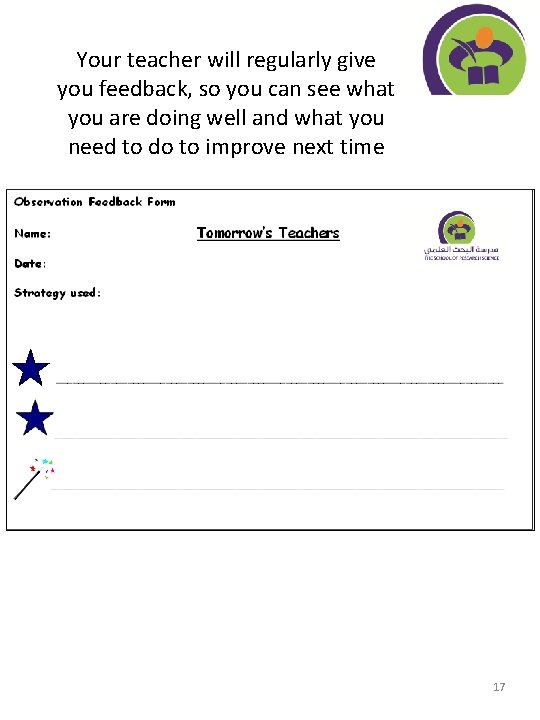
Contents • Introduction p-g 3 • How to question effectively p-g 4 -5 • Planning higher order thinking questions p-g 6 • Starter/ Plenary ideas p-g 7 -16 • Observation Feedback Form p-g 17 2
Introduction. Student Led learning Congratulations you have been chosen to take part in a project in which students lead their own learning and you get to teach your class mates! We also want to challenge you in your learning. You are going to be trained in using strategies that teachers use to assess what progress students are making in lessons. You will also be taught how to question other people effectively. This will also improve your own higher order thinking skills. Those who can……. TEACH! 3
Questioning strategies Strategy/approach Gains and benefits Thinking Time: Ensures all pupils have a view or Consciously waiting for a pupil opinion to share or class to think through an answer (before you break the silence) e. g 15 -30 secs No Hands Questioning: Using the ‘no hands up’ rule Improves engagement and challenges all pupils to think. Basketball questioning: Move questions and discussions between pupils Engages more pupils. Stops teacher being focus for all questioning. Conscripts and Volunteers: Using a planned mix of ‘conscripts’ and ‘volunteers’ Enhances engagement and challenge for all. Phone a friend: Removes stress to enable those who cannot answer to participate Encourages whole-class listening and participation 4
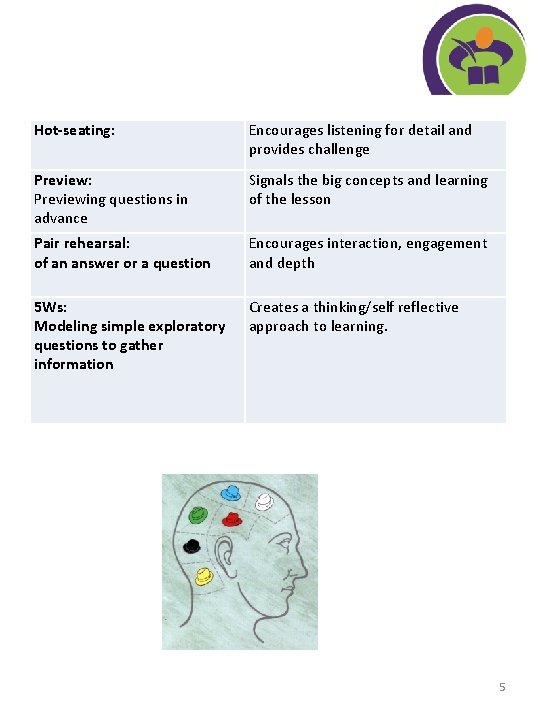
Hot-seating: Encourages listening for detail and provides challenge Preview: Previewing questions in advance Signals the big concepts and learning of the lesson Pair rehearsal: of an answer or a question Encourages interaction, engagement and depth 5 Ws: Modeling simple exploratory questions to gather information Creates a thinking/self reflective approach to learning. 5
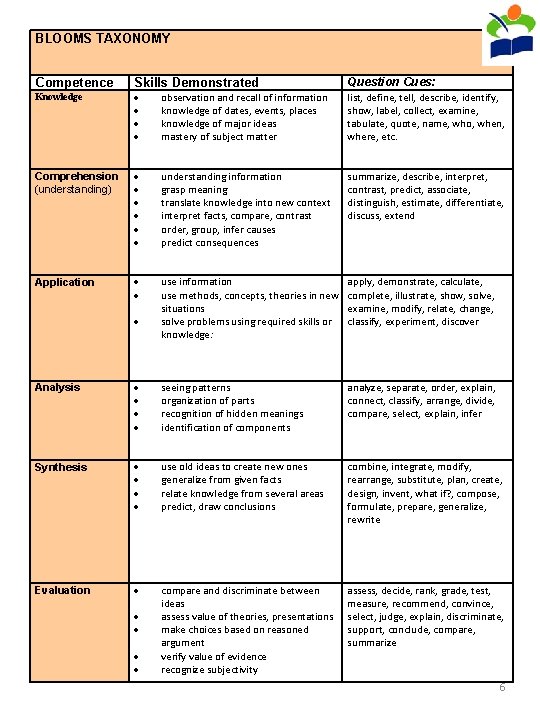
BLOOMS TAXONOMY Question Cues: Competence Skills Demonstrated Knowledge observation and recall of information knowledge of dates, events, places knowledge of major ideas mastery of subject matter list, define, tell, describe, identify, show, label, collect, examine, tabulate, quote, name, who, when, where, etc. Comprehension (understanding) understanding information grasp meaning translate knowledge into new context interpret facts, compare, contrast order, group, infer causes predict consequences summarize, describe, interpret, contrast, predict, associate, distinguish, estimate, differentiate, discuss, extend Application use information use methods, concepts, theories in new situations solve problems using required skills or knowledge: apply, demonstrate, calculate, complete, illustrate, show, solve, examine, modify, relate, change, classify, experiment, discover Analysis seeing patterns organization of parts recognition of hidden meanings identification of components analyze, separate, order, explain, connect, classify, arrange, divide, compare, select, explain, infer Synthesis use old ideas to create new ones generalize from given facts relate knowledge from several areas predict, draw conclusions combine, integrate, modify, rearrange, substitute, plan, create, design, invent, what if? , compose, formulate, prepare, generalize, rewrite Evaluation compare and discriminate between ideas assess value of theories, presentations make choices based on reasoned argument verify value of evidence recognize subjectivity assess, decide, rank, grade, test, measure, recommend, convince, select, judge, explain, discriminate, support, conclude, compare, summarize 6
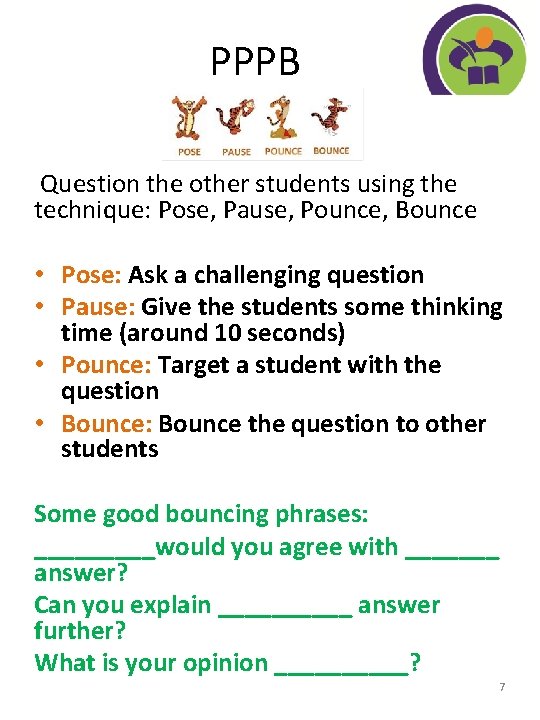
PPPB Question the other students using the technique: Pose, Pause, Pounce, Bounce • Pose: Ask a challenging question • Pause: Give the students some thinking time (around 10 seconds) • Pounce: Target a student with the question • Bounce: Bounce the question to other students Some good bouncing phrases: _____would you agree with _______ answer? Can you explain _____ answer further? What is your opinion _____? 7
Taboo Students have to describe a key word without using that word (it is taboo!). (could do it in teams, pairs, whole-class) 8
Tell me three things. . . you have learnt today you have done well the group has done well you would like to find out more about you know that you didn’t know 50 minutes ago 9
5 – 1 Summarise today’s topic in 5 sentences. Reduce to 5 words. Now to 1 word. (with as many variations as there are numbers!) 10
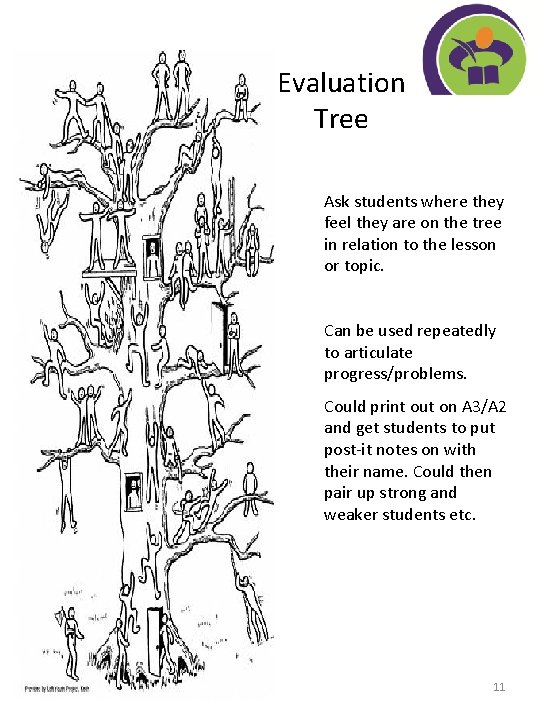
Evaluation Tree Ask students where they feel they are on the tree in relation to the lesson or topic. Can be used repeatedly to articulate progress/problems. Could print out on A 3/A 2 and get students to put post-it notes on with their name. Could then pair up strong and weaker students etc. 11
Beat the Teacher Your task is to try and beat the teacher! Come up with questions based around your learning today and see if the teacher can answer them. Develop by: - snowballing - writing questions on pieces of paper and placing in a box. One student (sensible) then sits opposite the teacher at the front of the class and pulls out questions to ask a la Mastermind. 12
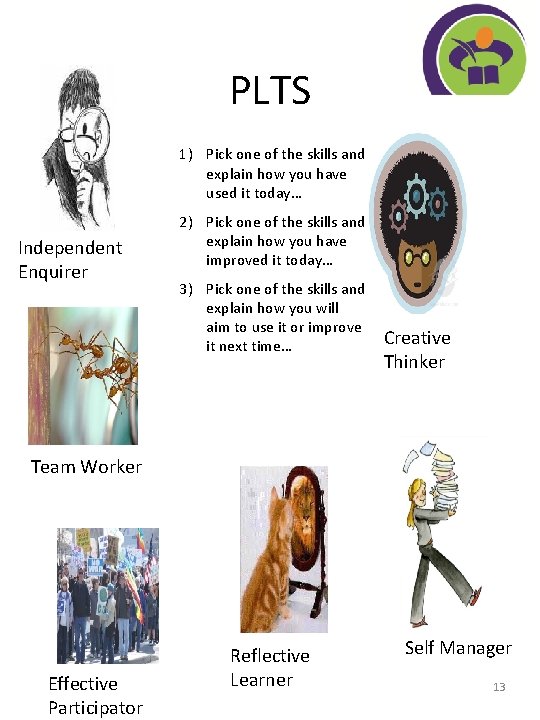
PLTS 1) Pick one of the skills and explain how you have used it today… Independent Enquirer 2) Pick one of the skills and explain how you have improved it today… 3) Pick one of the skills and explain how you will aim to use it or improve it next time… Creative Thinker Team Worker Effective Participator Reflective Learner Self Manager 13
Question Tennis Arrange the class in two rows facing each other. The first student asks the student opposite a question about the lesson. If they get it right the person sat next to them gets to ask a question of the student opposite. If they get it wrong, the first team continue asking the questions. A 1 asks B 1. If B 1 gets it right, then B 2 asks A 2. If B 1 gets it wrong, then A 2 asks B 2. Etc. 14
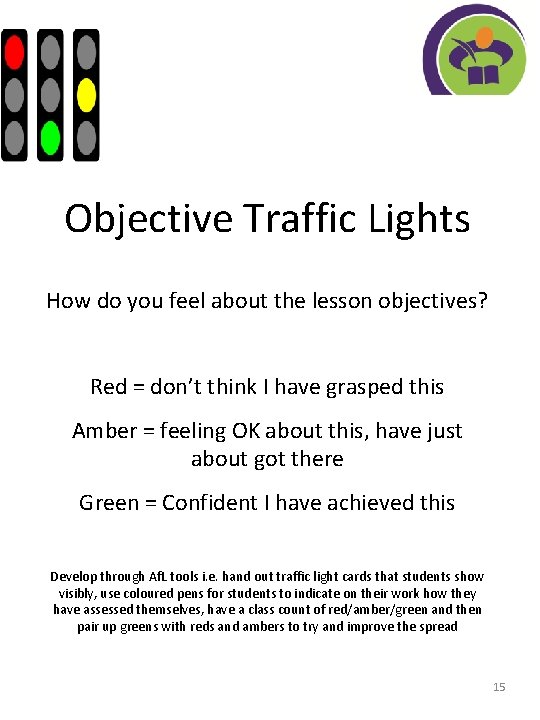
Objective Traffic Lights How do you feel about the lesson objectives? Red = don’t think I have grasped this Amber = feeling OK about this, have just about got there Green = Confident I have achieved this Develop through Af. L tools i. e. hand out traffic light cards that students show visibly, use coloured pens for students to indicate on their work how they have assessed themselves, have a class count of red/amber/green and then pair up greens with reds and ambers to try and improve the spread 15
60 Seconds Timer on board – http: //classtools. net/main_area/template_load er. php/? timer Set students the challenge of summing up the lesson in sixty seconds. Students then read out their summations until a really full picture is presented to the class. 16
Your teacher will regularly give you feedback, so you can see what you are doing well and what you need to do to improve next time Observation Feedback Form Name: Tomorrow’s Teachers Date: Strategy used: ___________________________________________________________________________________ __________________________________________ 17