The ups and downs of auxin A presentation
- Slides: 17
The ups and downs of auxin A presentation on the action of auxin prepared by GTAC staff
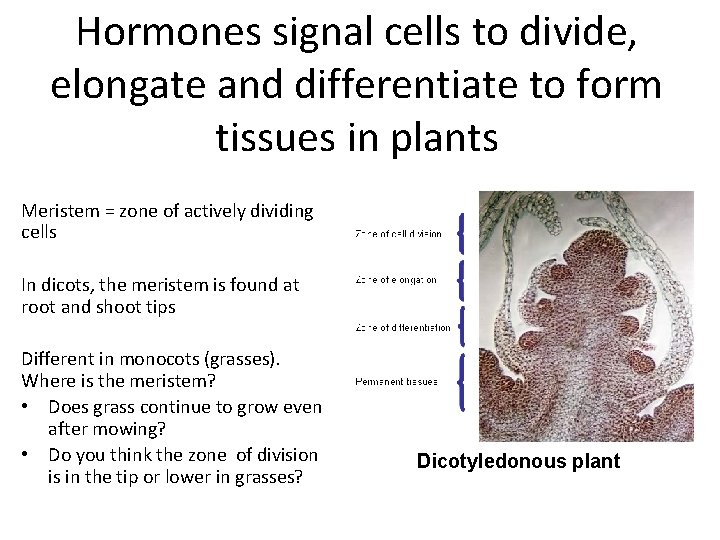
Hormones signal cells to divide, elongate and differentiate to form tissues in plants Meristem = zone of actively dividing cells In dicots, the meristem is found at root and shoot tips Different in monocots (grasses). Where is the meristem? • Does grass continue to grow even after mowing? • Do you think the zone of division is in the tip or lower in grasses? Dicotyledonous plant
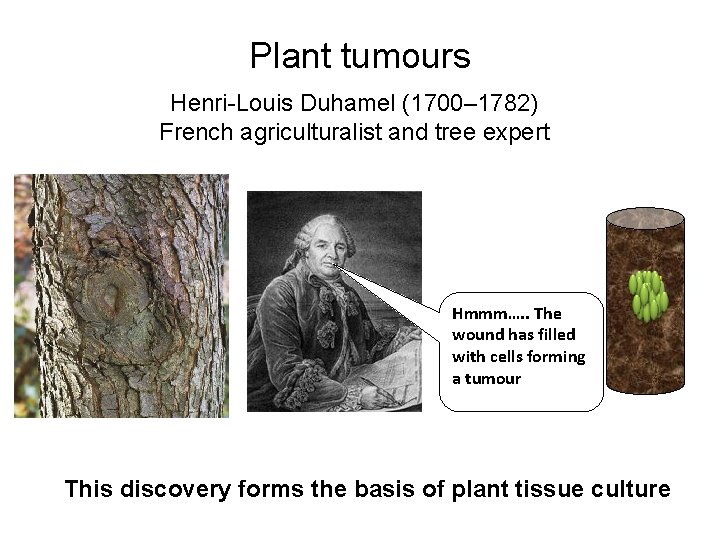
Plant tumours Henri-Louis Duhamel (1700– 1782) French agriculturalist and tree expert Hmmm…. . The wound has filled with cells forming a tumour This discovery forms the basis of plant tissue culture
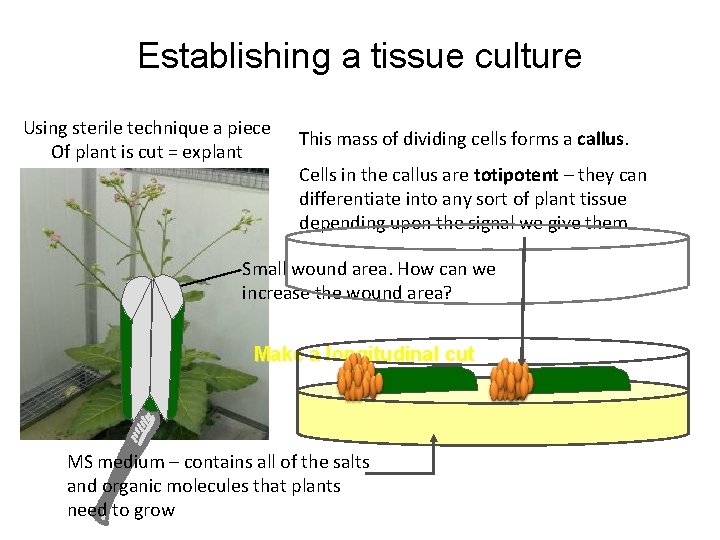
Establishing a tissue culture Using sterile technique a piece Of plant is cut = explant This mass of dividing cells forms a callus. Cells in the callus are totipotent – they can differentiate into any sort of plant tissue depending upon the signal we give them. Small wound area. How can we increase the wound area? Make a longitudinal cut MS medium – contains all of the salts and organic molecules that plants need to grow
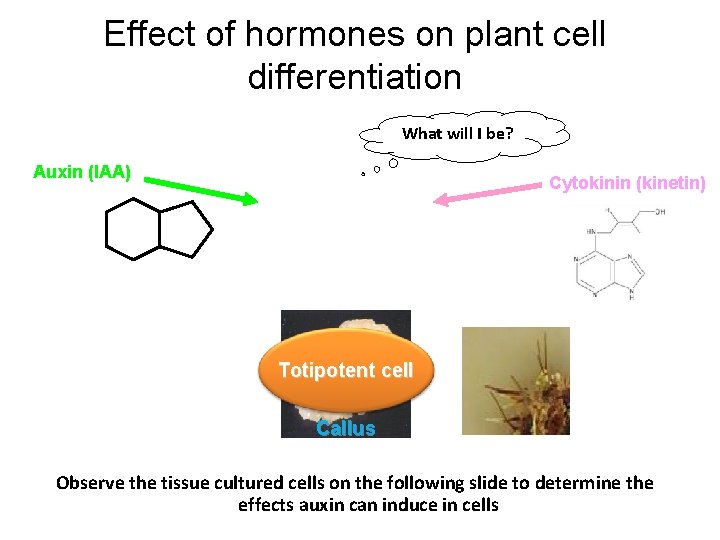
Effect of hormones on plant cell differentiation What will I be? Auxin (IAA) Cytokinin (kinetin) Totipotent cell Callus Observe the tissue cultured cells on the following slide to determine the effects auxin can induce in cells
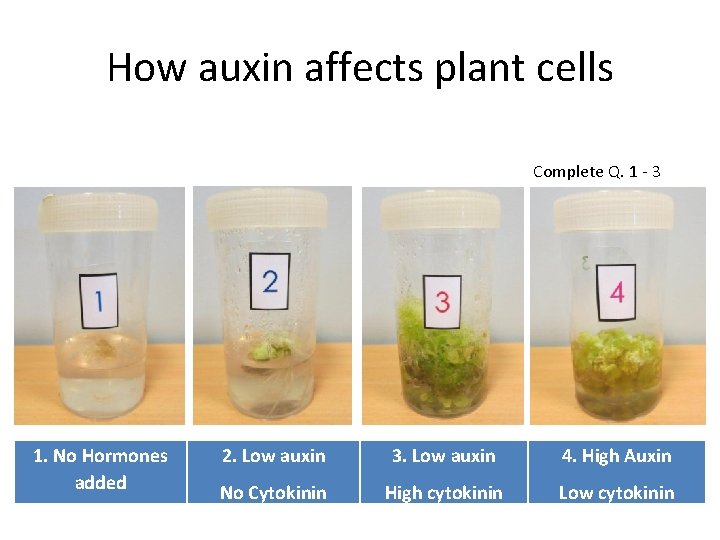
How auxin affects plant cells Complete Q. 1 - 3 1. No Hormones added 2. Low auxin 3. Low auxin 4. High Auxin No Cytokinin High cytokinin Low cytokinin
Gravitropism Plants responding to gravity View and complete Q 4
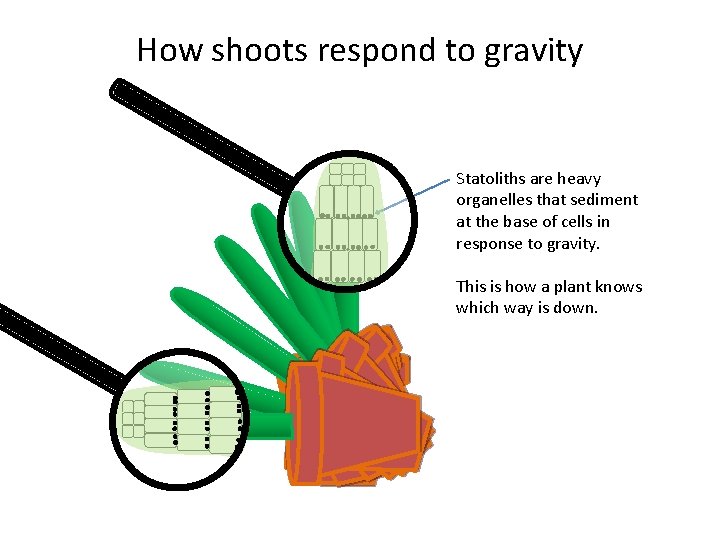
How shoots respond to gravity Statoliths are heavy organelles that sediment at the base of cells in response to gravity. This is how a plant knows which way is down.
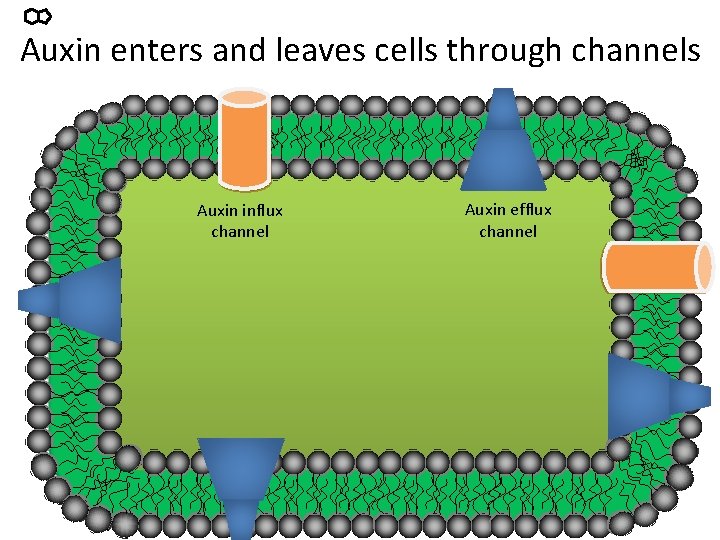
Auxin enters and leaves cells through channels Auxin influx channel Auxin efflux channel
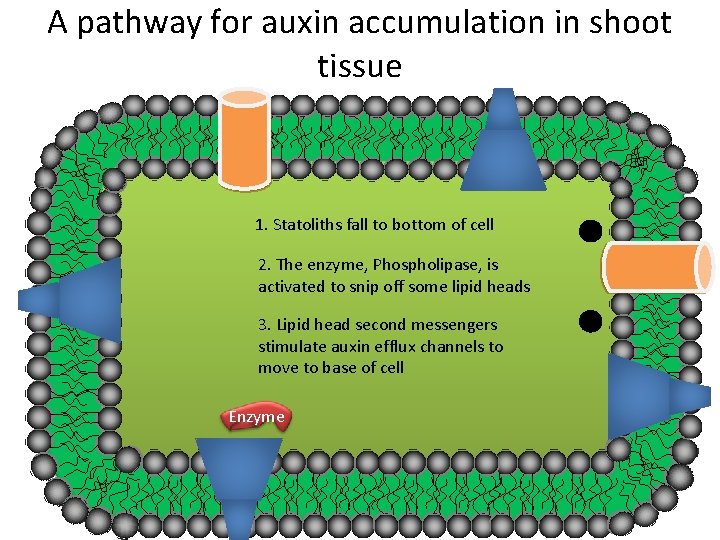
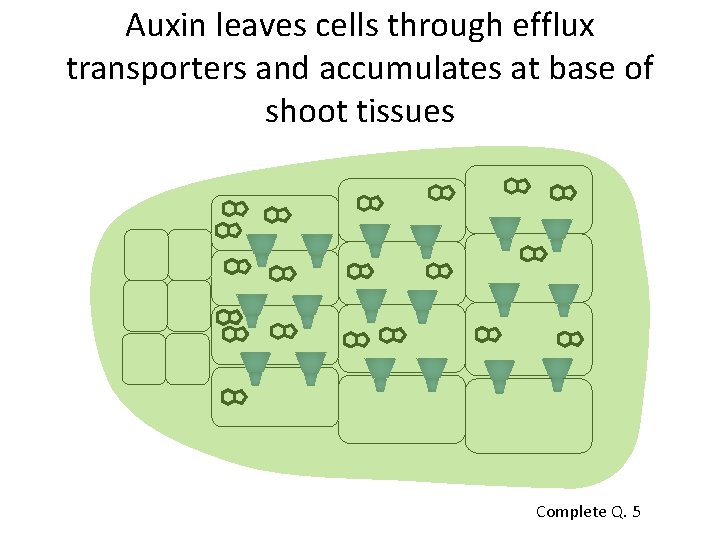
A pathway for auxin accumulation in shoot tissue 1. Statoliths fall to bottom of cell 2. The enzyme, Phospholipase, is activated to snip off some lipid heads 3. Lipid head second messengers stimulate auxin efflux channels to move to base of cell Enzyme
Auxin leaves cells through efflux transporters and accumulates at base of shoot tissues Complete Q. 5
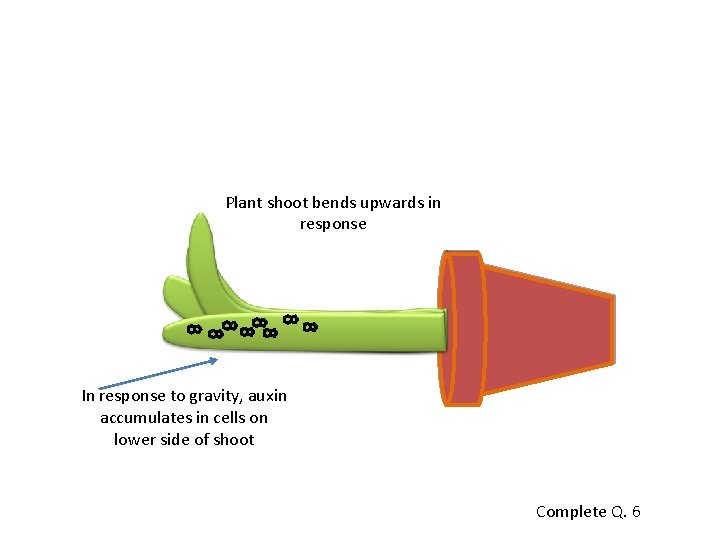
Plant shoot bends upwards in response In response to gravity, auxin accumulates in cells on lower side of shoot Complete Q. 6
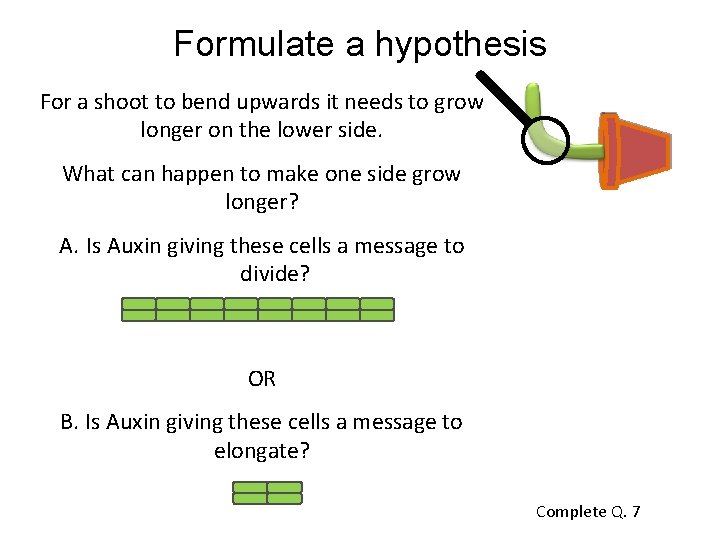
Formulate a hypothesis For a shoot to bend upwards it needs to grow longer on the lower side. What can happen to make one side grow longer? A. Is Auxin giving these cells a message to divide? A OR B. Is Auxin giving these cells a message to elongate? B Complete Q. 7
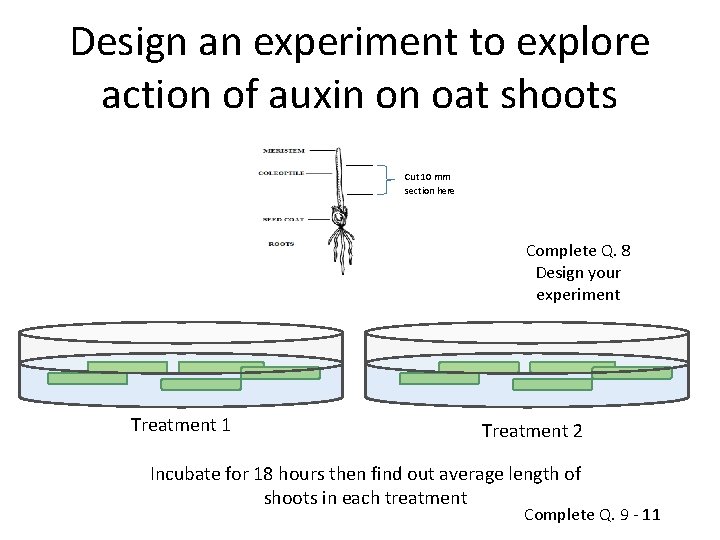
Design an experiment to explore action of auxin on oat shoots Cut 10 mm section here Complete Q. 8 Design your experiment Treatment 1 Treatment 2 Incubate for 18 hours then find out average length of shoots in each treatment Complete Q. 9 - 11
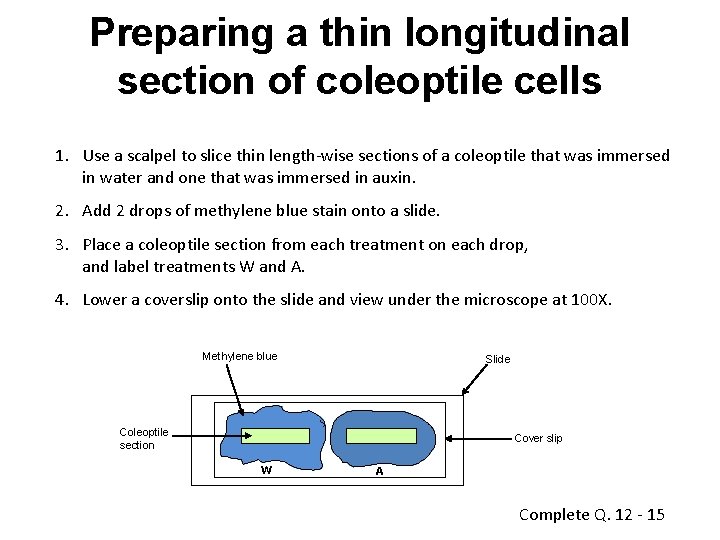
Preparing a thin longitudinal section of coleoptile cells 1. Use a scalpel to slice thin length-wise sections of a coleoptile that was immersed in water and one that was immersed in auxin. 2. Add 2 drops of methylene blue stain onto a slide. 3. Place a coleoptile section from each treatment on each drop, and label treatments W and A. 4. Lower a coverslip onto the slide and view under the microscope at 100 X. Methylene blue Slide Coleoptile section Cover slip W A Complete Q. 12 - 15
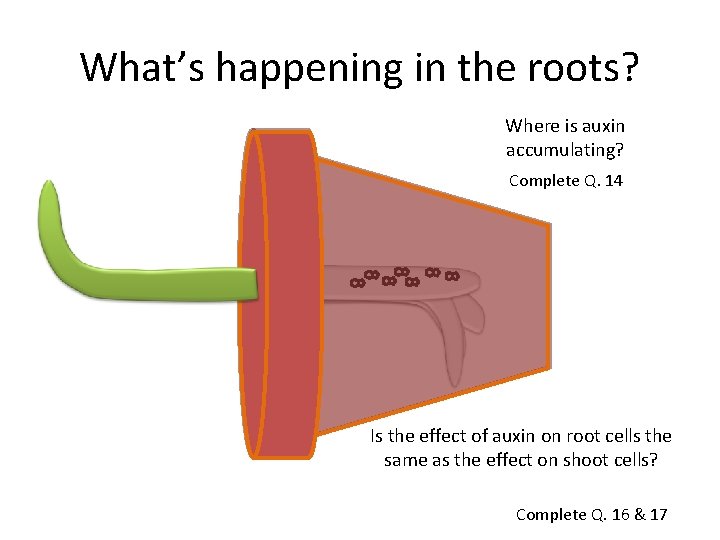
What’s happening in the roots? Where is auxin accumulating? Complete Q. 14 Is the effect of auxin on root cells the same as the effect on shoot cells? Complete Q. 16 & 17
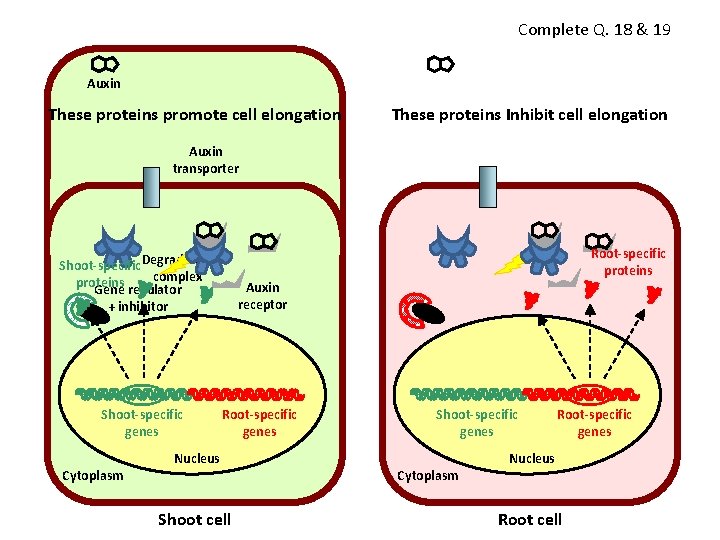
Complete Q. 18 & 19 Auxin These proteins promote cell elongation These proteins Inhibit cell elongation Auxin transporter Root-specific proteins Shoot-specific Degradation complex proteins Gene regulator + inhibitor Shoot-specific genes Cytoplasm Auxin receptor Root-specific genes Nucleus Shoot cell Shoot-specific genes Cytoplasm Root-specific genes Nucleus Root cell