
DO NOW Reading Check Questions 1 What is

- Slides: 45
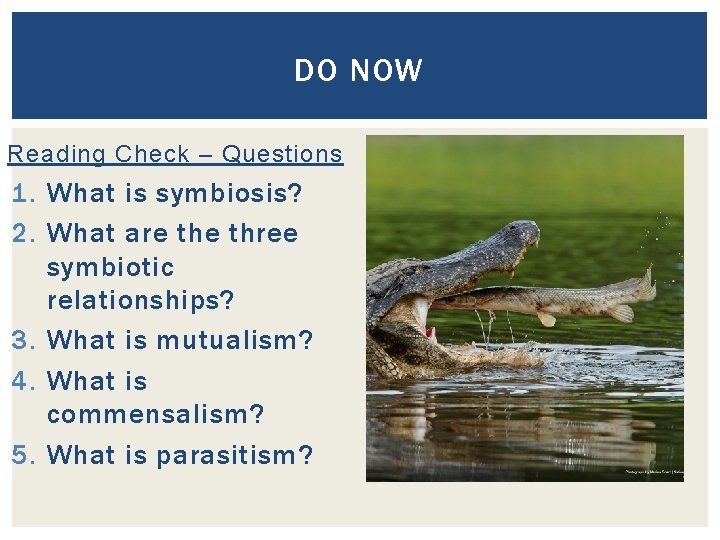
DO NOW Reading Check – Questions 1. What is symbiosis? 2. What are three symbiotic relationships? 3. What is mutualism? 4. What is commensalism? 5. What is parasitism?
WELCOME AIM: KWBAT describe and distinguish the main types of ecological interactions: competition, predation, and symbiosis. KWBAT describe and explain the type of plant tropisms. Agenda (55 min) Do Now (5 min) Do Now Review (5 min) Notes I (15 min) Notes II (16 min) Think-Pair-Share Practice (8 min) Notes III (16 min) Think Box #3 (5 min) Partner Practice (5 min) Fly-In-My-Head Video (10 min) Exit Ticket (15 min) Exit Ticket Review (2 min)
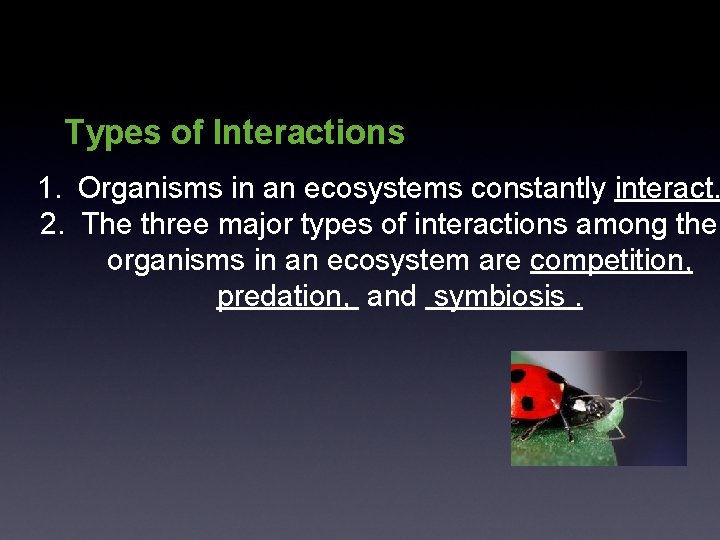
Types of Interactions 1. Organisms in an ecosystems constantly interact. 2. The three major types of interactions among the organisms in an ecosystem are competition, predation, and symbiosis.
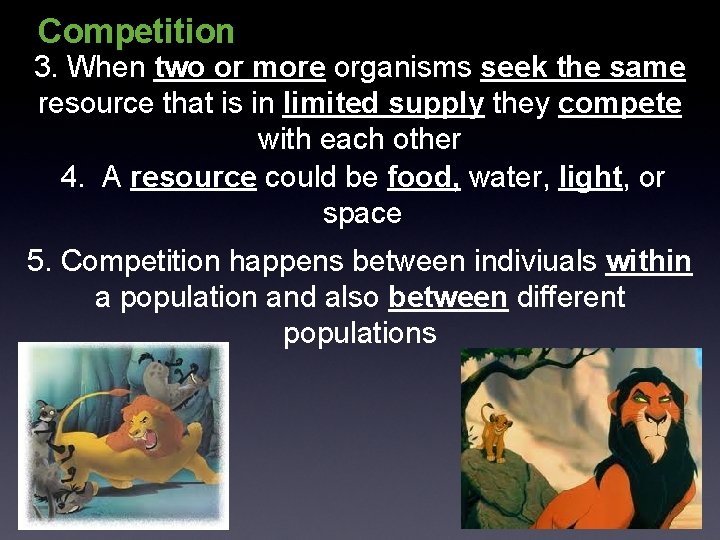
Competition 3. When two or more organisms seek the same resource that is in limited supply they compete with each other 4. A resource could be food, water, light, or space 5. Competition happens between indiviuals within a population and also between different populations
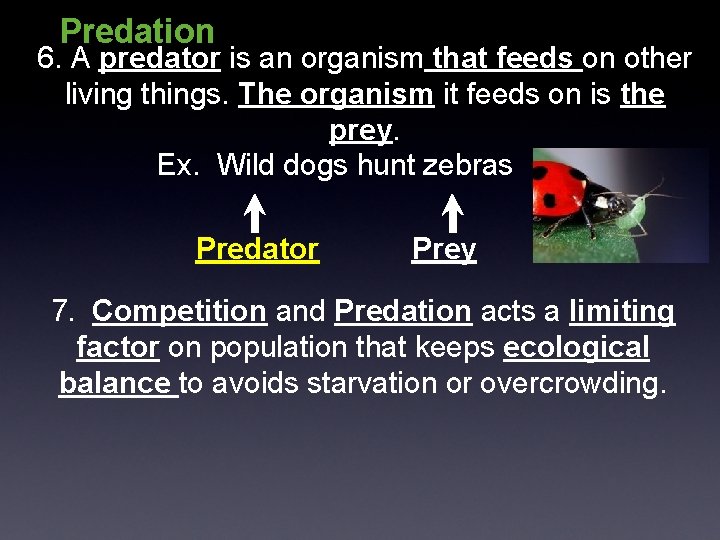
Predation 6. A predator is an organism that feeds on other living things. The organism it feeds on is the prey. Ex. Wild dogs hunt zebras Predator Prey 7. Competition and Predation acts a limiting factor on population that keeps ecological balance to avoids starvation or overcrowding.
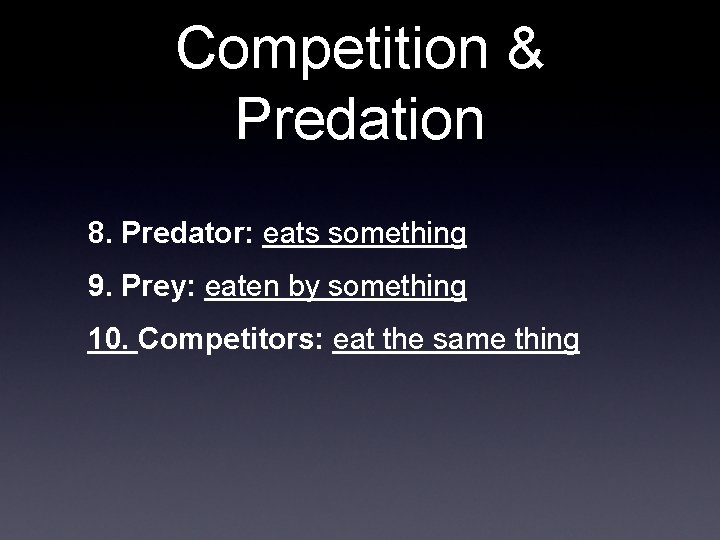
Competition & Predation 8. Predator: eats something 9. Prey: eaten by something 10. Competitors: eat the same thing
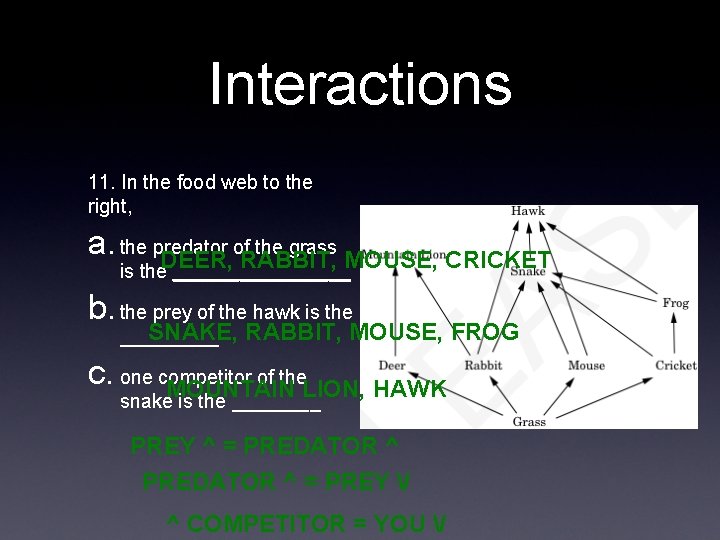
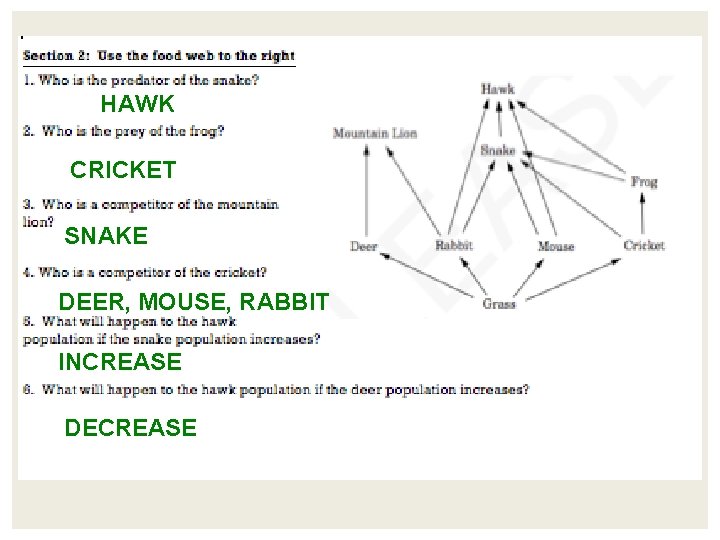
Interactions 11. In the food web to the right, a. the predator of the grass DEER, RABBIT, MOUSE, CRICKET is the ________ b. the prey of the hawk is the SNAKE, _____ RABBIT, MOUSE, FROG c. one competitor of the MOUNTAIN LION, HAWK snake is the ____ PREY ^ = PREDATOR ^ = PREY / ^ COMPETITOR = YOU /
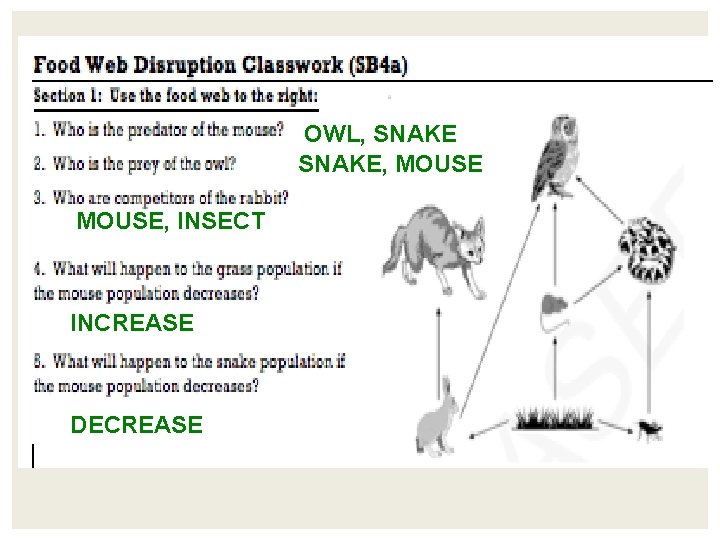
OWL, SNAKE, MOUSE, INSECT INCREASE DECREASE
HAWK CRICKET SNAKE DEER, MOUSE, RABBIT INCREASE DECREASE
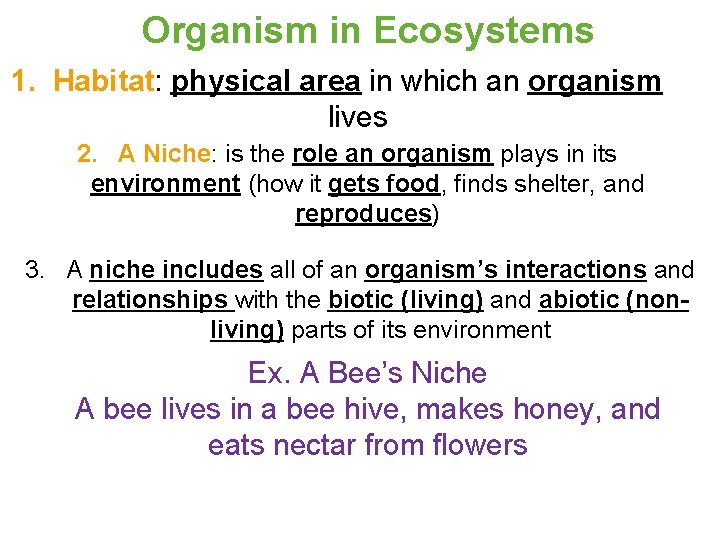
Organism in Ecosystems 1. Habitat: physical area in which an organism lives 2. A Niche: is the role an organism plays in its environment (how it gets food, finds shelter, and reproduces) 3. A niche includes all of an organism’s interactions and relationships with the biotic (living) and abiotic (nonliving) parts of its environment Ex. A Bee’s Niche A bee lives in a bee hive, makes honey, and eats nectar from flowers
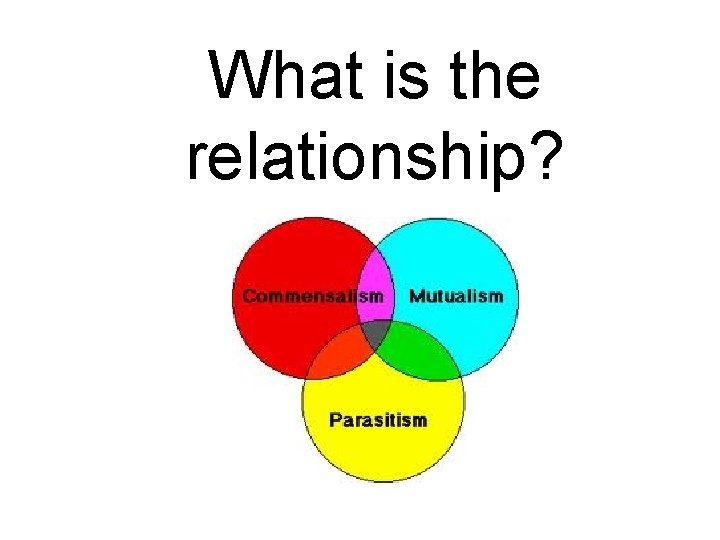
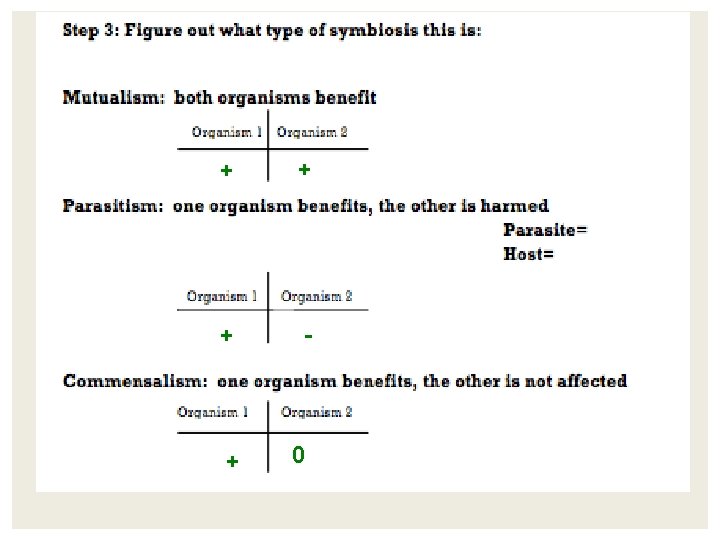
Symbiosis 4. Symbiosis: is a close relationship between two organisms that benefits at least one of the species There are three kinds of symbiotic relationships: Mutualism, Commensalism, Parasitism
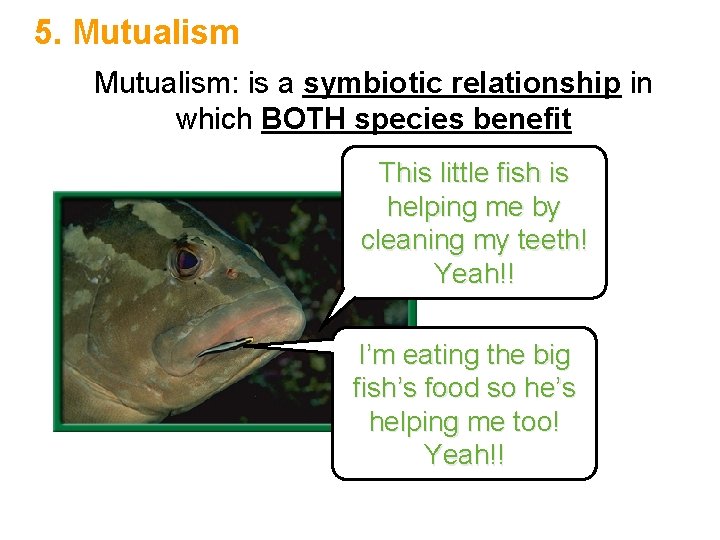
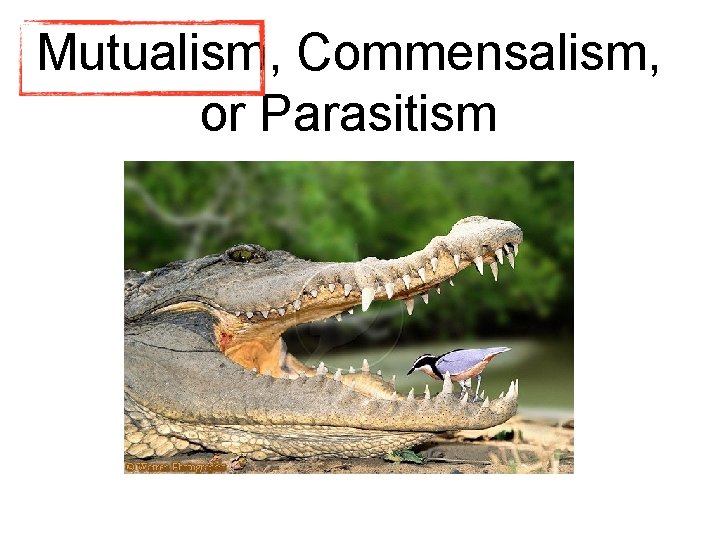
5. Mutualism: is a symbiotic relationship in which BOTH species benefit This little fish is helping me by cleaning my teeth! Yeah!! I’m eating the big fish’s food so he’s helping me too! Yeah!!
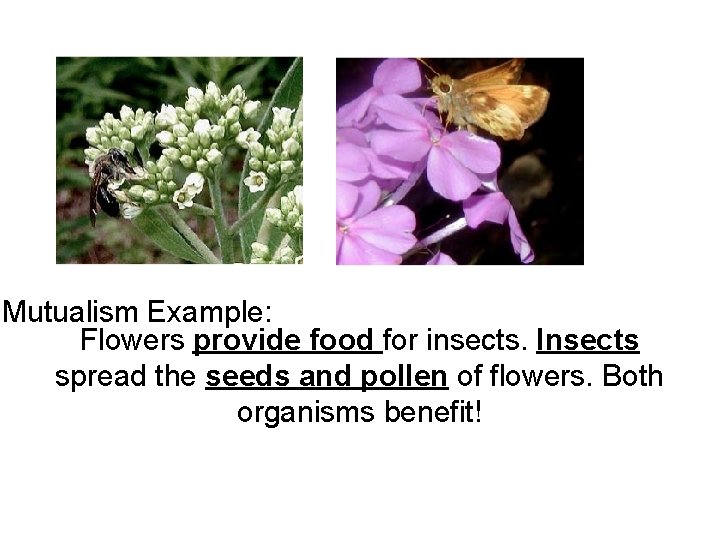
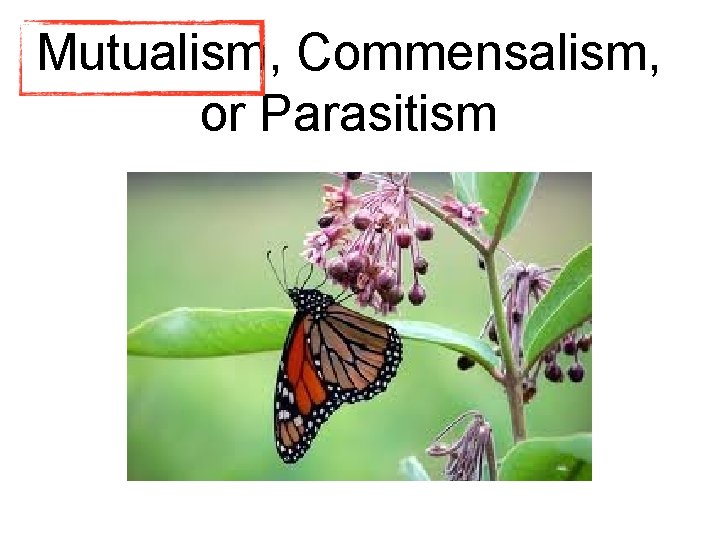
Mutualism Example: Flowers provide food for insects. Insects spread the seeds and pollen of flowers. Both organisms benefit!
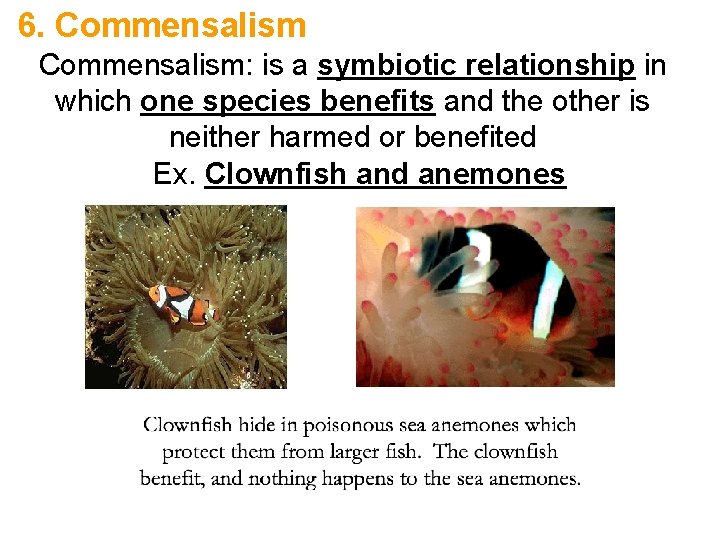
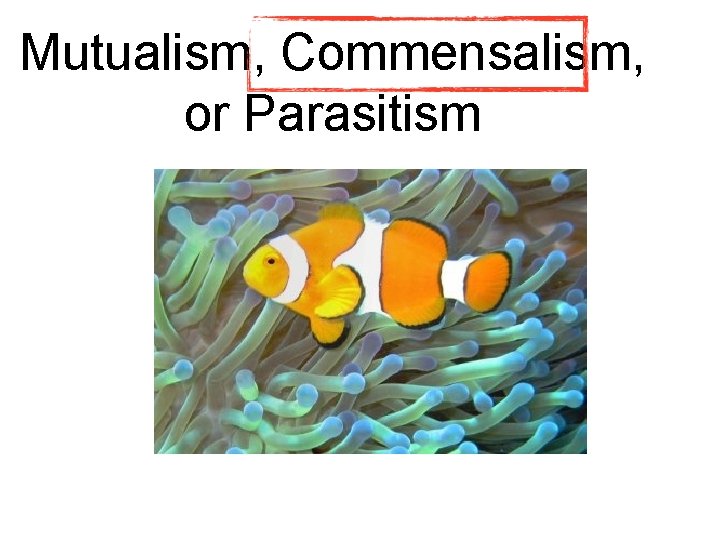
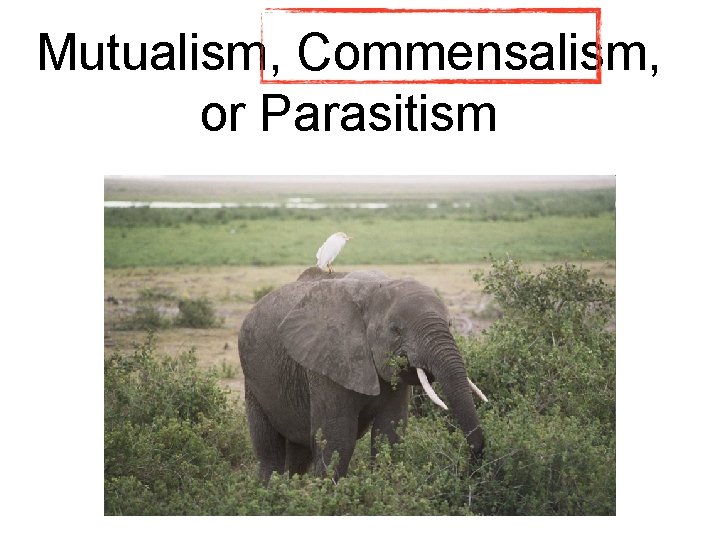
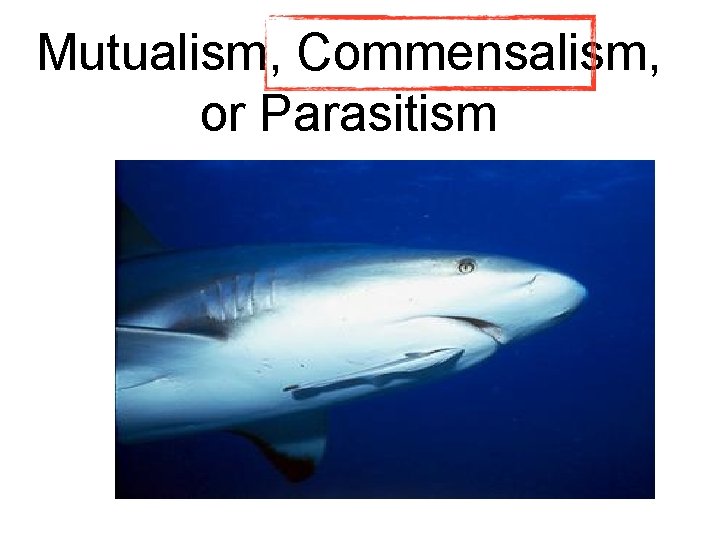
6. Commensalism: is a symbiotic relationship in which one species benefits and the other is neither harmed or benefited Ex. Clownfish and anemones
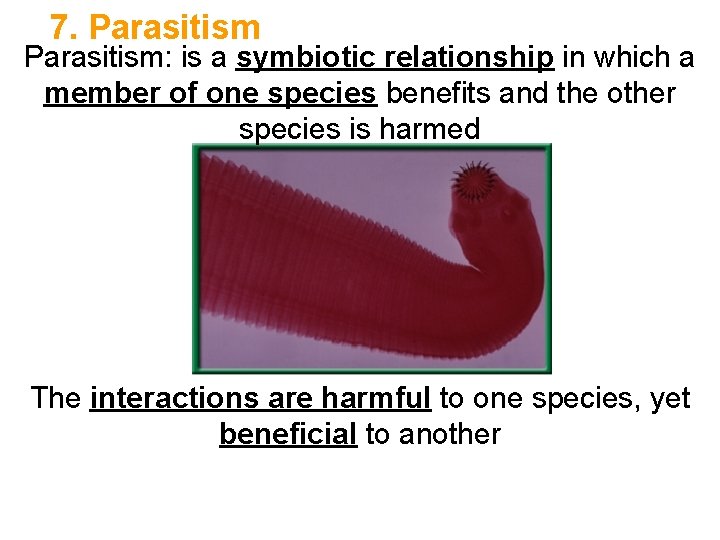
7. Parasitism: is a symbiotic relationship in which a member of one species benefits and the other species is harmed The interactions are harmful to one species, yet beneficial to another
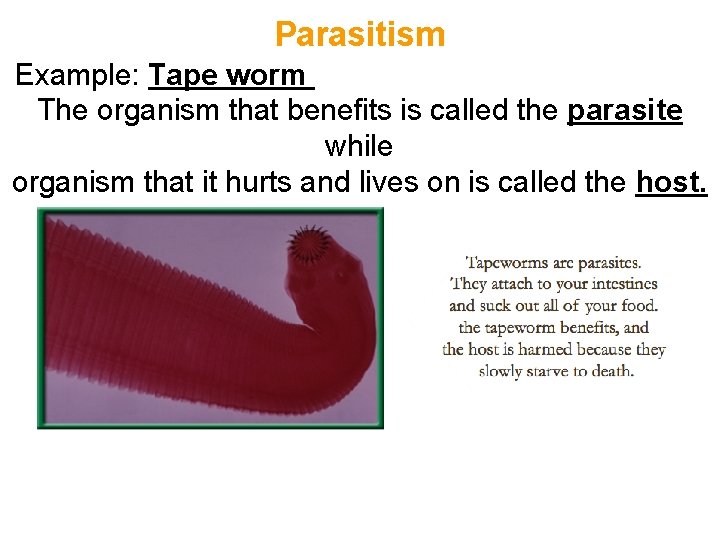
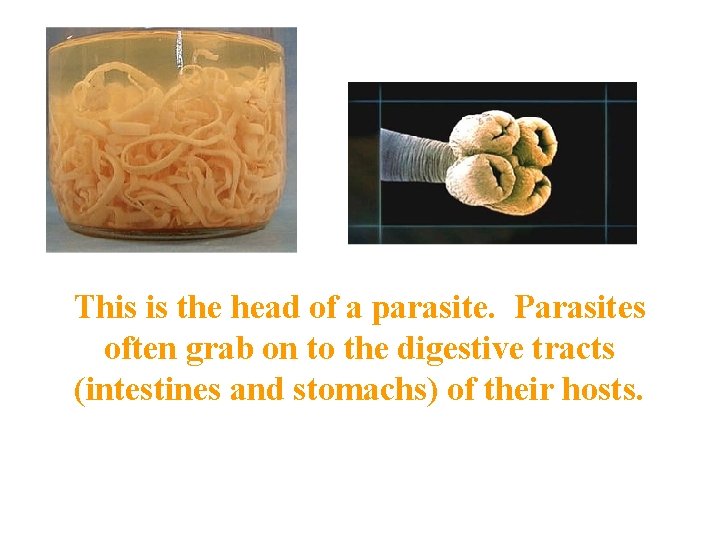
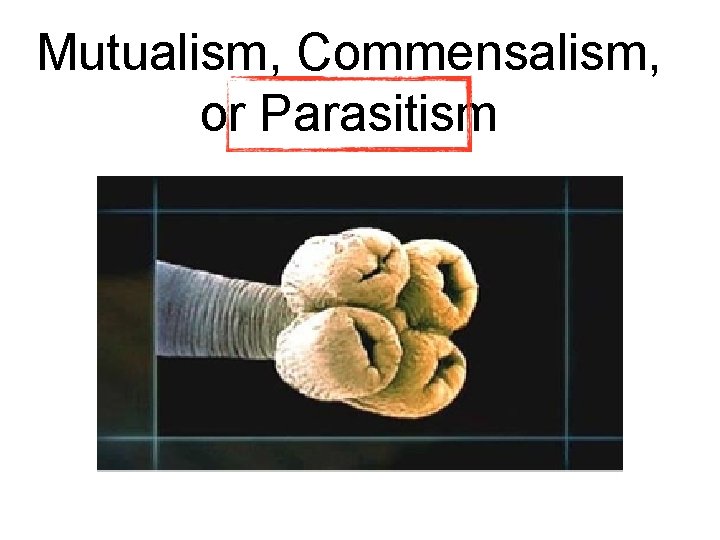
Parasitism Example: Tape worm The organism that benefits is called the parasite while organism that it hurts and lives on is called the host.
This is the head of a parasite. Parasites often grab on to the digestive tracts (intestines and stomachs) of their hosts.
What is the relationship?
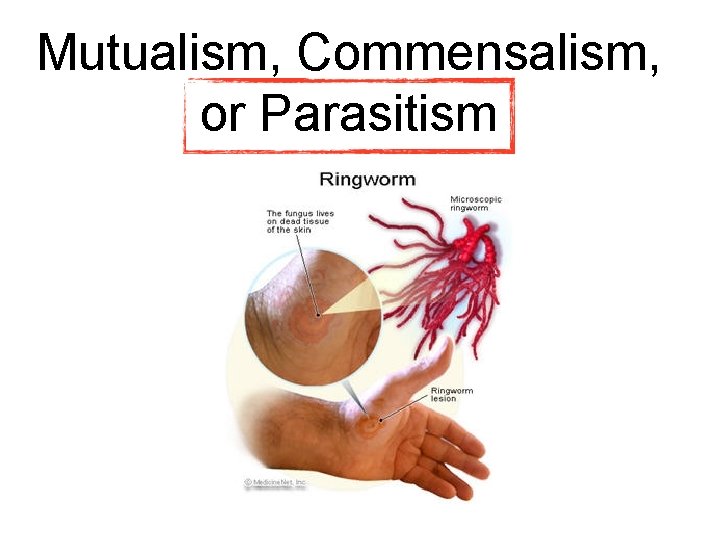
Mutualism, Commensalism, or Parasitism
Mutualism, Commensalism, or Parasitism
Mutualism, Commensalism, or Parasitism
Mutualism, Commensalism, or Parasitism
Mutualism, Commensalism, or Parasitism
Mutualism, Commensalism, or Parasitism
Mutualism, Commensalism, or Parasitism
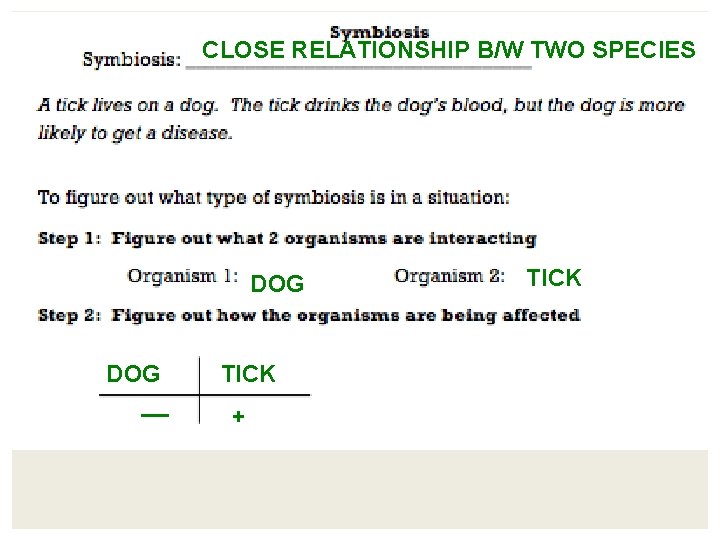
CLOSE RELATIONSHIP B/W TWO SPECIES DOG __ TICK + TICK
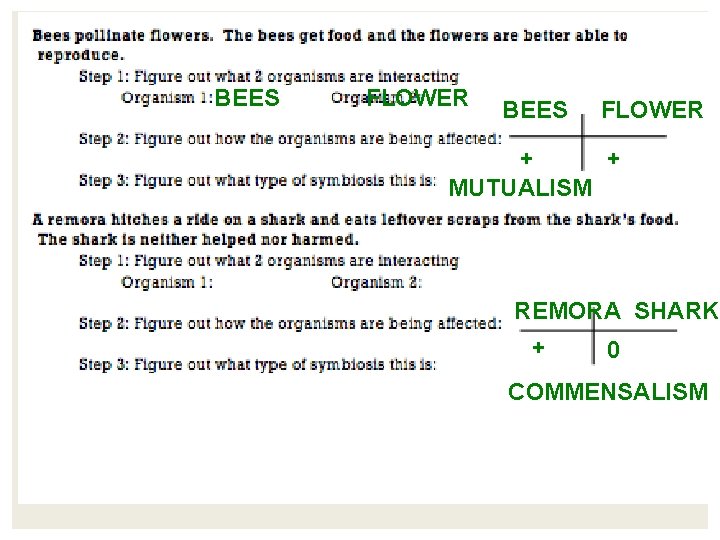
BEES FLOWER + + MUTUALISM REMORA SHARK + 0 COMMENSALISM
PAGE 8 THINK (5 MIN) PAIR (3 MIN) SHARE (2 MIN)
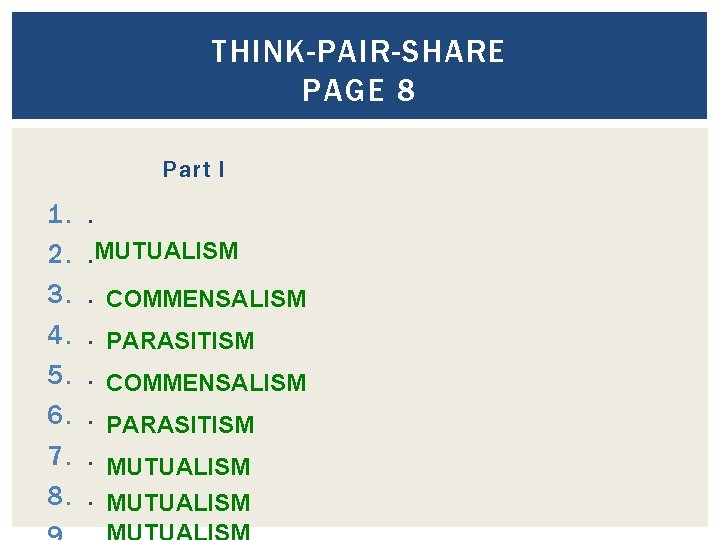
THINK-PAIR-SHARE PAGE 8 Part I 1. 2. 3. 4. 5. 6. 7. 8. . . MUTUALISM. COMMENSALISM. PARASITISM. MUTUALISM
FLY IN MY HEAD http: //youtu. be/KNDG 7 WPt. VO 4
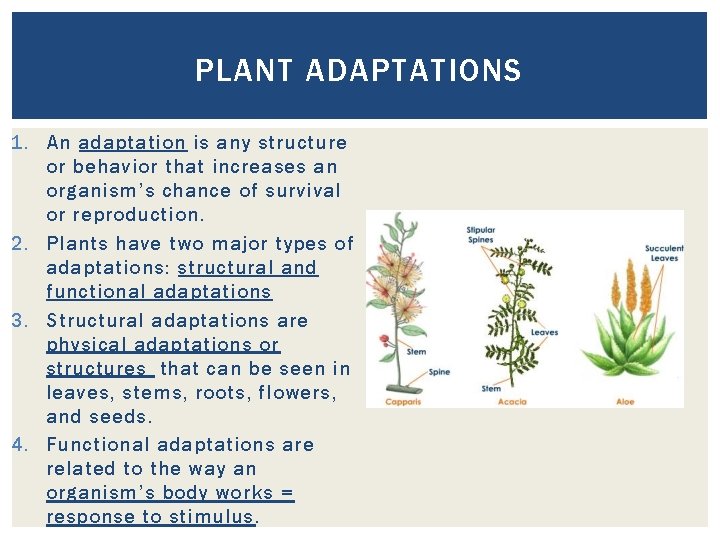
PLANT ADAPTATIONS 1. An adaptation is any structure or behavior that increases an organism’s chance of survival or reproduction. 2. Plants have two major types of adaptations: structural and functional adaptations 3. Structural adaptations are physical adaptations or structures that can be seen in leaves, stems, roots, flowers, and seeds. 4. Functional adaptations are related to the way an organism’s body works = response to stimulus.
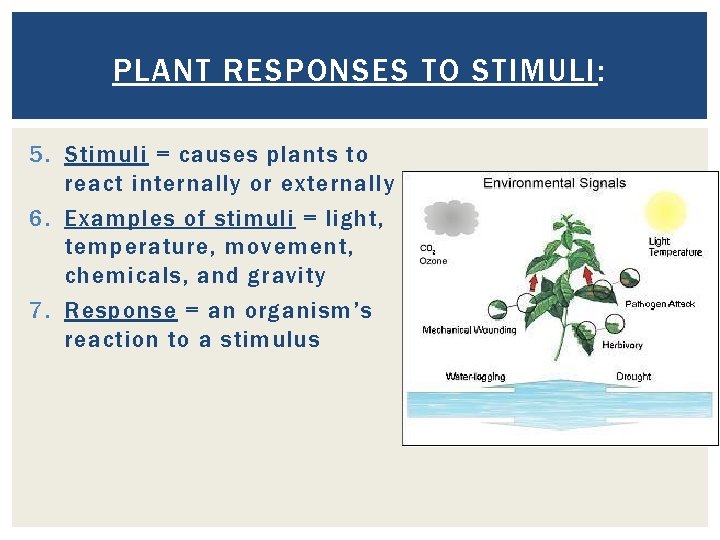
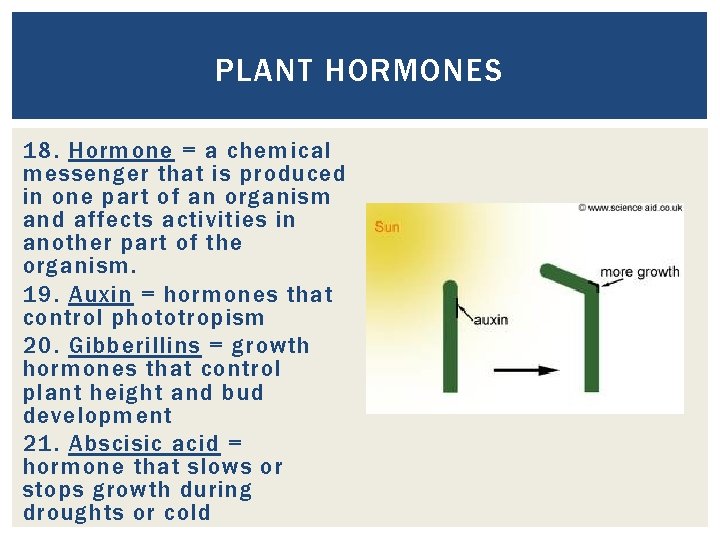
PLANT RESPONSES TO STIMULI: 5. Stimuli = causes plants to react internally or externally 6. Examples of stimuli = light, temperature, movement, chemicals, and gravity 7. Response = an organism’s reaction to a stimulus
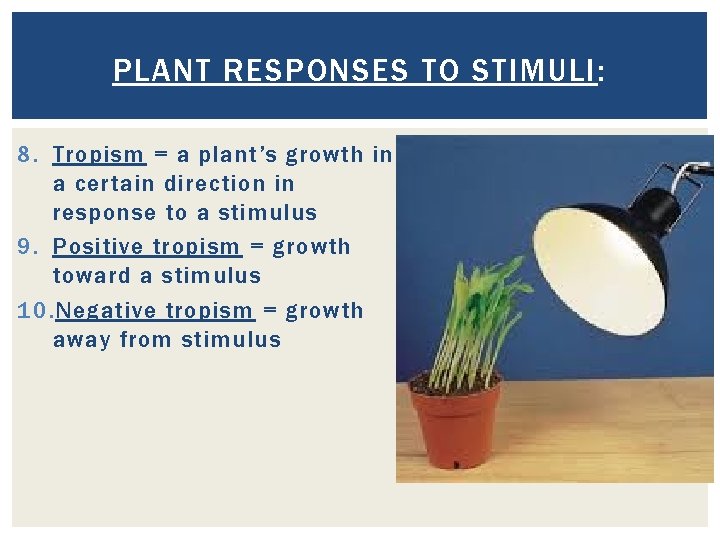
PLANT RESPONSES TO STIMULI: 8. Tropism = a plant’s growth in a certain direction in response to a stimulus 9. Positive tropism = growth toward a stimulus 10. Negative tropism = growth away from stimulus
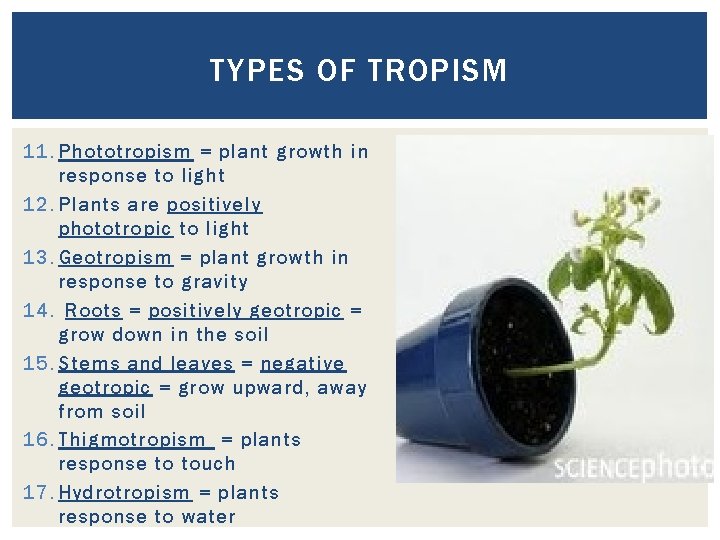
TYPES OF TROPISM 11. Phototropism = plant growth in response to light 12. Plants are positively phototropic to light 13. Geotropism = plant growth in response to gravity 14. Roots = positively geotropic = grow down in the soil 15. Stems and leaves = negative geotropic = grow upward, away from soil 16. Thigmotropism = plants response to touch 17. Hydrotropism = plants response to water
PLANT HORMONES 18. Hormone = a chemical messenger that is produced in one part of an organism and affects activities in another part of the organism. 19. Auxin = hormones that control phototropism 20. Gibberillins = growth hormones that control plant height and bud development 21. Abscisic acid = hormone that slows or stops growth during droughts or cold
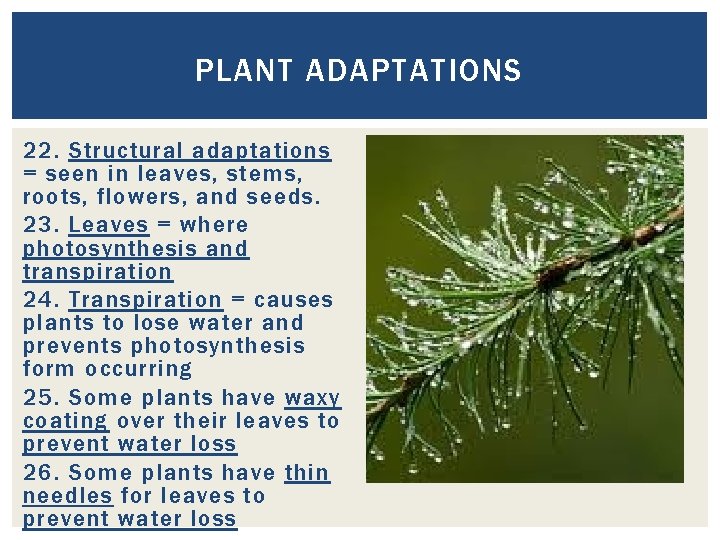
PLANT ADAPTATIONS 22. Structural adaptations = seen in leaves, stems, roots, flowers, and seeds. 23. Leaves = where photosynthesis and transpiration 24. Transpiration = causes plants to lose water and prevents photosynthesis form occurring 25. Some plants have waxy coating over their leaves to prevent water loss 26. Some plants have thin needles for leaves to prevent water loss
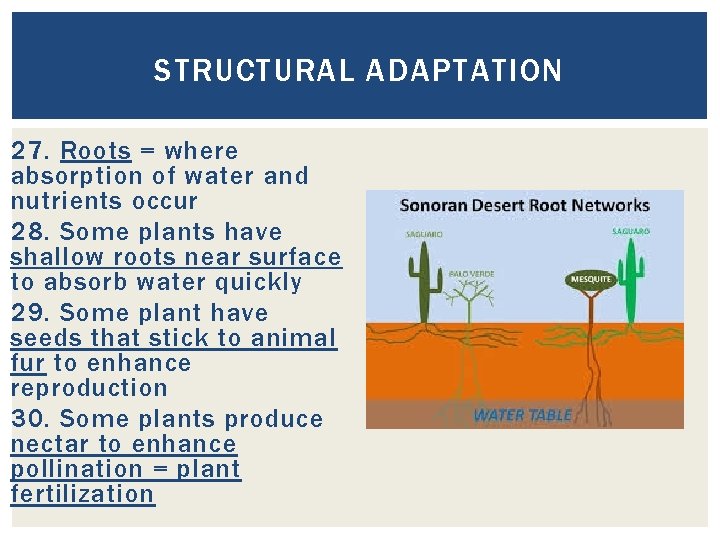
STRUCTURAL ADAPTATION 27. Roots = where absorption of water and nutrients occur 28. Some plants have shallow roots near surface to absorb water quickly 29. Some plant have seeds that stick to animal fur to enhance reproduction 30. Some plants produce nectar to enhance pollination = plant fertilization
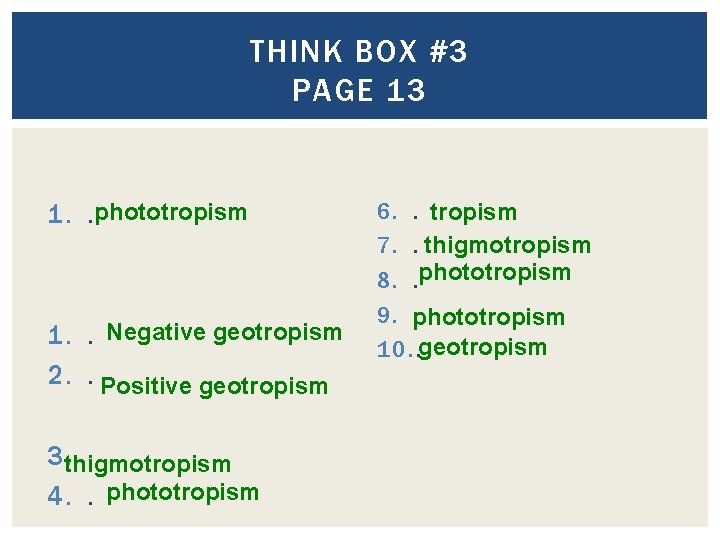
THINK BOX #3 PAGE 13 1. . phototropism 1. . Negative geotropism 2. . Positive geotropism 3. thigmotropism. 4. . phototropism 6. . tropism 7. . thigmotropism 8. . phototropism 9. phototropism. 10. . geotropism
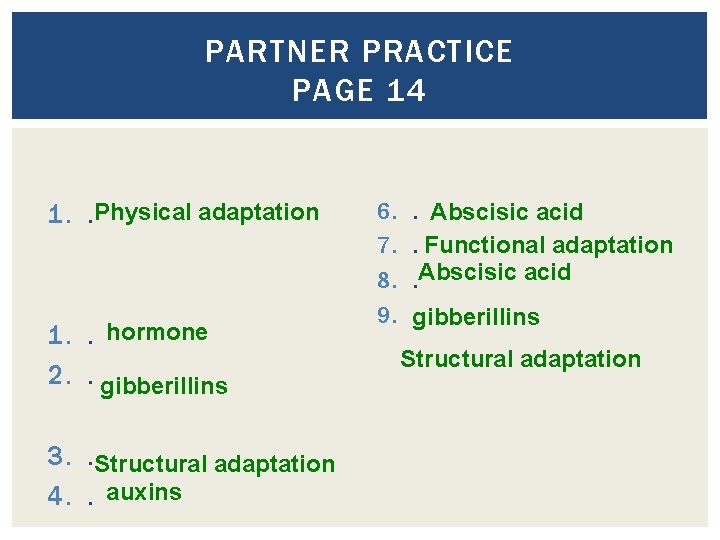
PARTNER PRACTICE PAGE 14 1. . Physical adaptation 1. . hormone 2. . gibberillins 3. . Structural adaptation 4. . auxins 6. 7. 8. 9. . Abscisic acid. Functional adaptation. Abscisic acid. gibberillins Structural adaptation
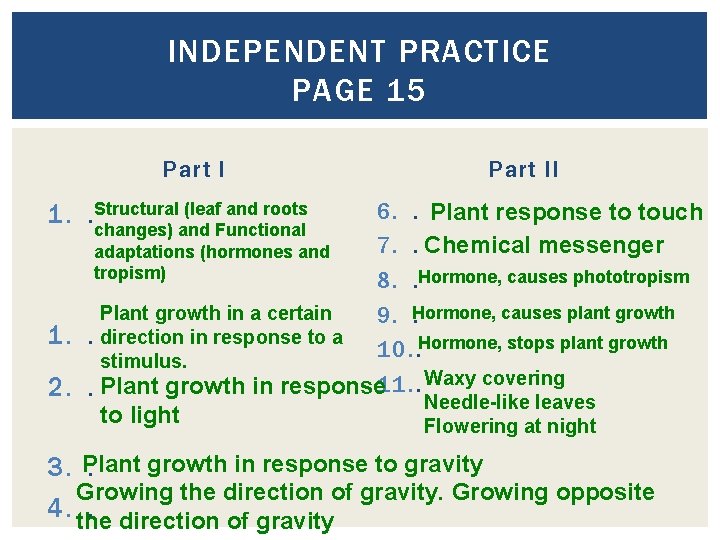
INDEPENDENT PRACTICE PAGE 15 Part II 6. . Plant response to touch 7. . Chemical messenger adaptations (hormones and tropism) 8. . Hormone, causes phototropism causes plant growth Plant growth in a certain 9. Hormone, . 1. . direction in response to a 10. . Hormone, stops plant growth stimulus. covering 2. . Plant growth in response 11. . Waxy Needle-like leaves to light Flowering at night (leaf and roots 1. . Structural changes) and Functional growth in response to gravity 3. Plant. Growing the direction of gravity. Growing opposite 4. the. direction of gravity
SILENTLY CLEAR DESK FOR EXIT TICKET
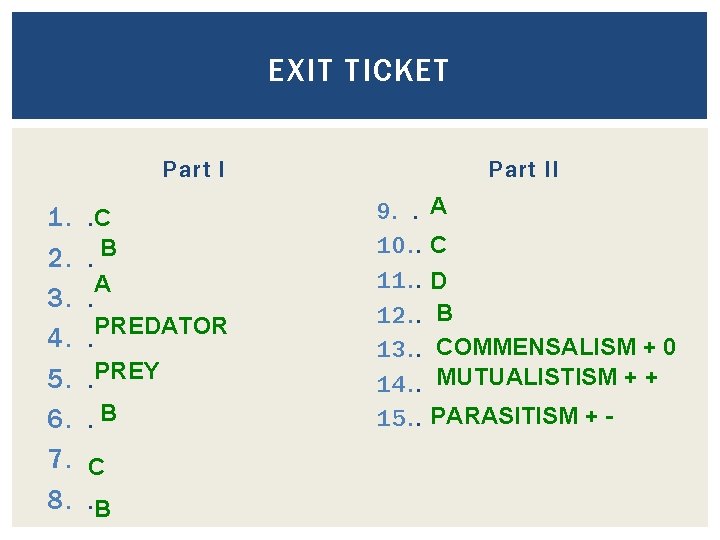
EXIT TICKET Part I 1. 2. 3. 4. 5. 6. 7. 8. . C. B A. . PREDATOR. PREY. B. C. B Part II 9. . 10. . 11. . 12. . 13. . 14. . 15. . A C D B COMMENSALISM + 0 MUTUALISTISM + + PARASITISM + -
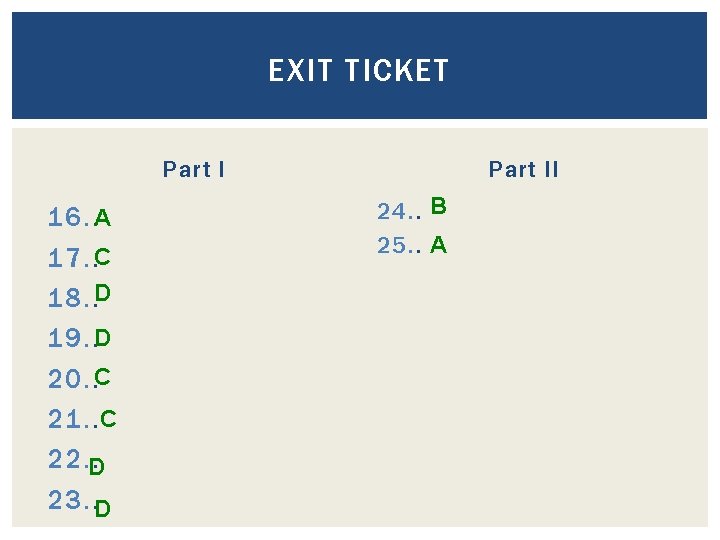
EXIT TICKET Part I 16. . A 17. . C 18. . D 19. . D 20. . C 21. . C 22. D. 23. . D Part II 24. . B 25. . A