
Plant Control Systems Topic 9 4 Tropisms Stimuli
- Slides: 30
Plant Control Systems Topic 9. 4
Tropisms Stimuli: environmental factors that induce a response from an organism. ex: animals Bee flies toward flowers Deer runs from predator Tropism: plant response to a stimulus. ex: plants Stomata opens and closes due to water Growth, reproduction
Plants can respond to light, gravity, and even touch A tropism is a growth movement whose direction is determined by the direction from which the stimulus strikes the plant.
Positive = the plant, or a part of it, grows in the direction from which the stimulus originates. Negative = growth away from the stimulus.
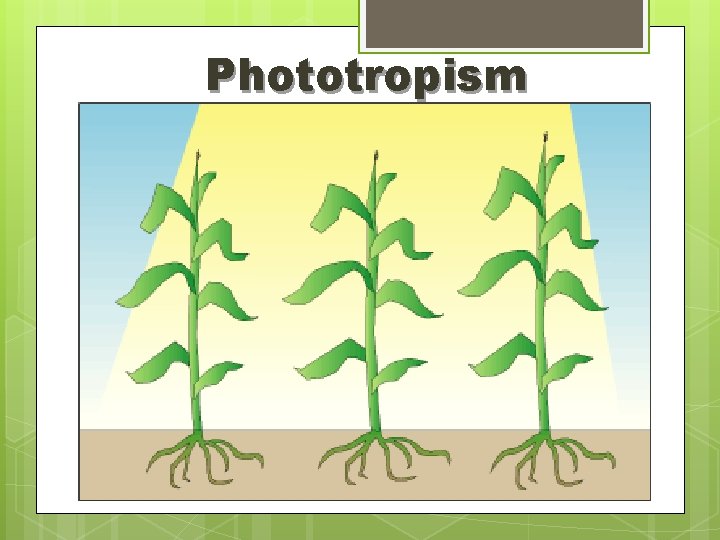
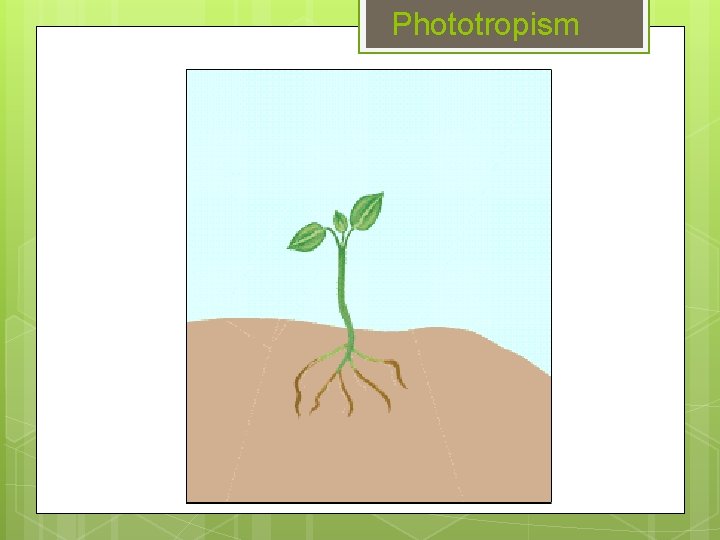
Plants respond to: Light = phototropism Stems are positively phototropic. Roots are negatively phototropic.
Phototropism
Phototropism
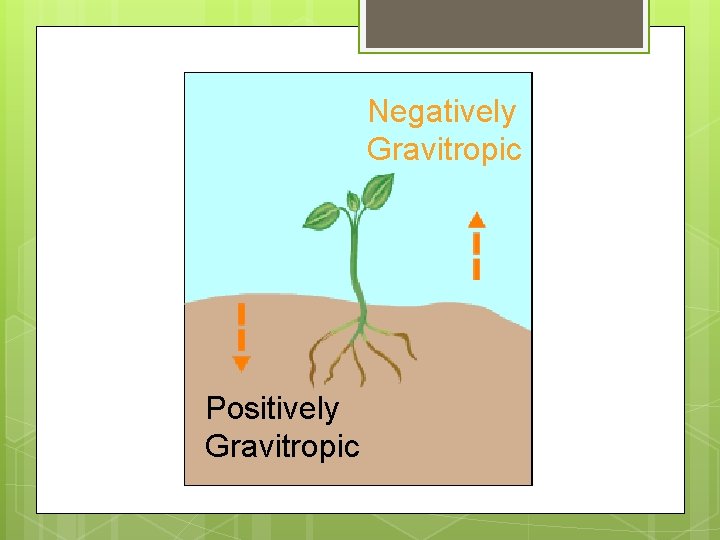
Plants respond to: Gravity = gravitropism Stems are negatively gravitropic while Roots are positively gravitropic.
Negatively Gravitropism Gravitropic Positively Gravitropic
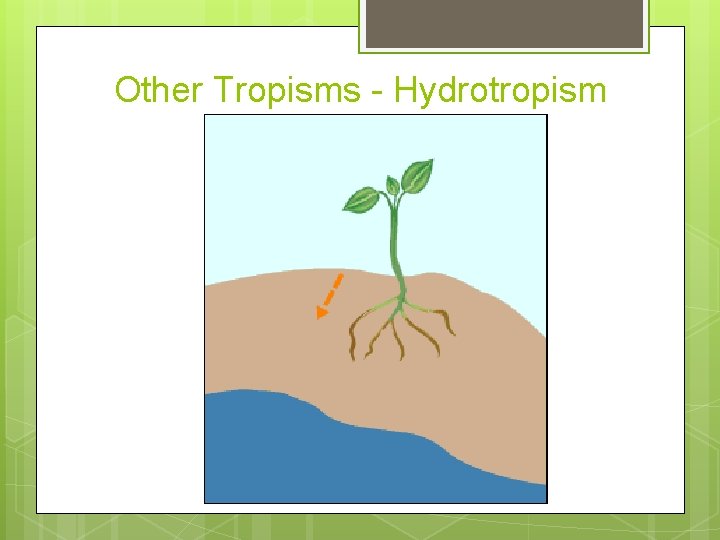
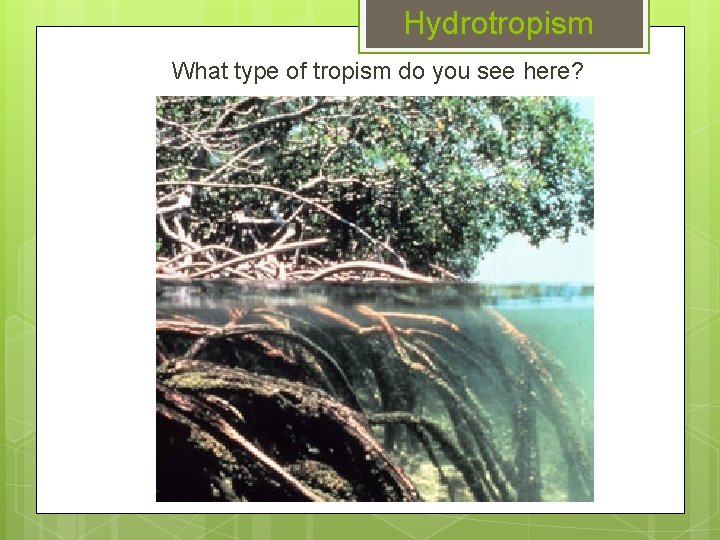
Other Tropisms - Hydrotropism
The adaptive value of these tropisms is clear… Roots growing down and/or away from light are more likely to find the soil, water, and minerals they need. Stems growing up and toward the light will be able to expose their leaves so that photosynthesis can occur.
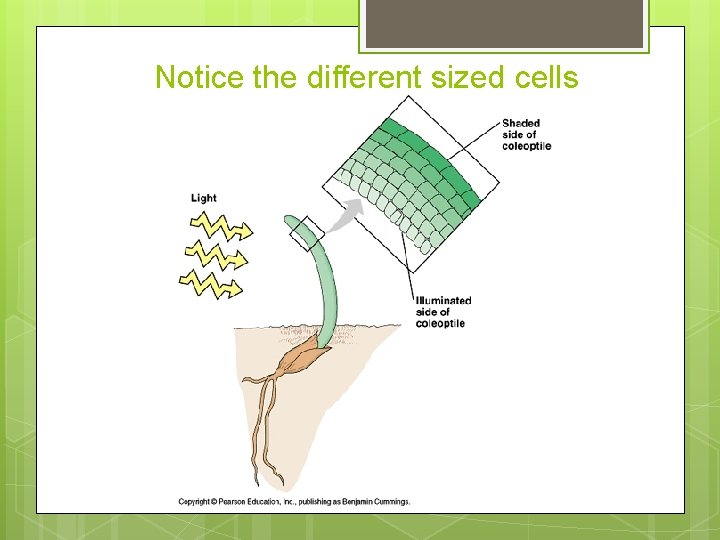
Phototropism The growth of plants towards a light source is called phototropism, which maximizes the amount of light absorbed by the plant’s leaves. The increased absorption of light yields more photosynthesis, and in turn, further plant growth. A plant bends towards a light source because its cells respond to the light by growing at different rates.
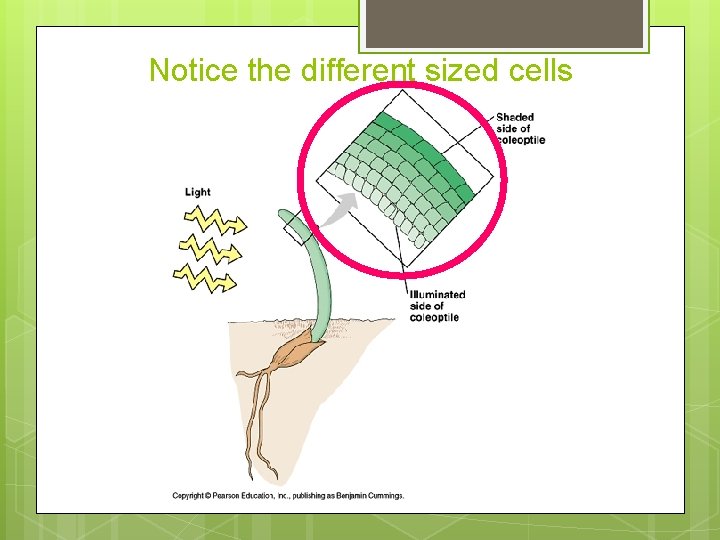
Notice the different sized cells
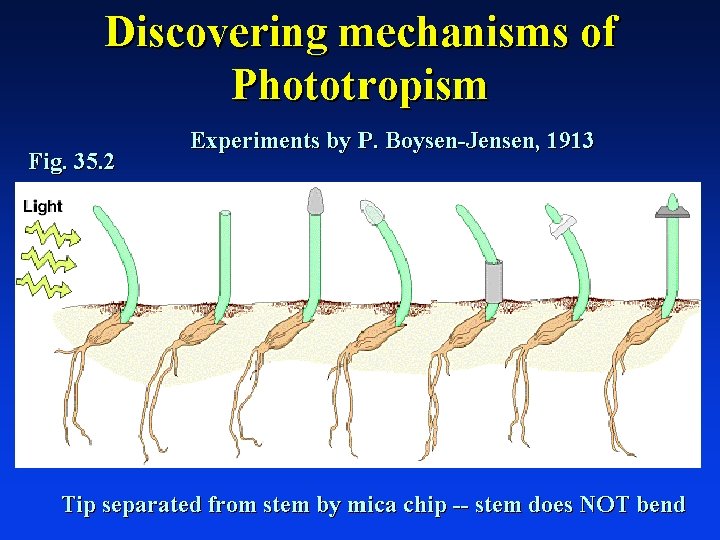
Through experimentation with oat seedlings, Charles and Francis Darwin concluded that the tip of the seedling detects light.
Boysen-Jensen that when a plant is surrounded by rock, it did not respond to the light source.
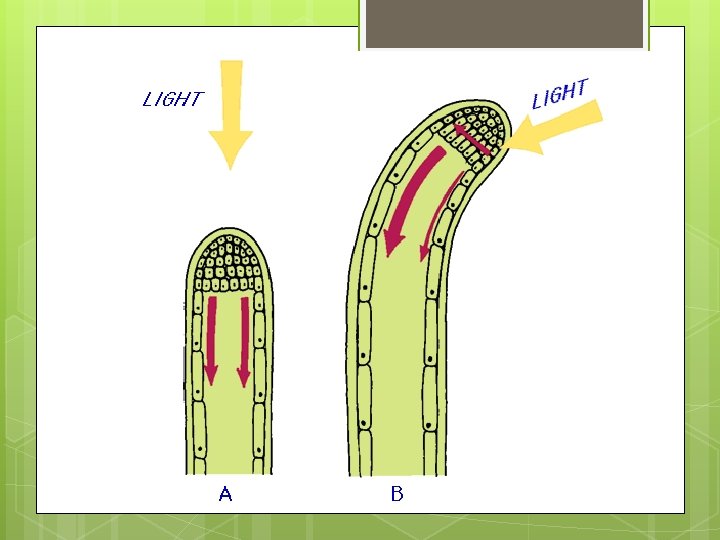
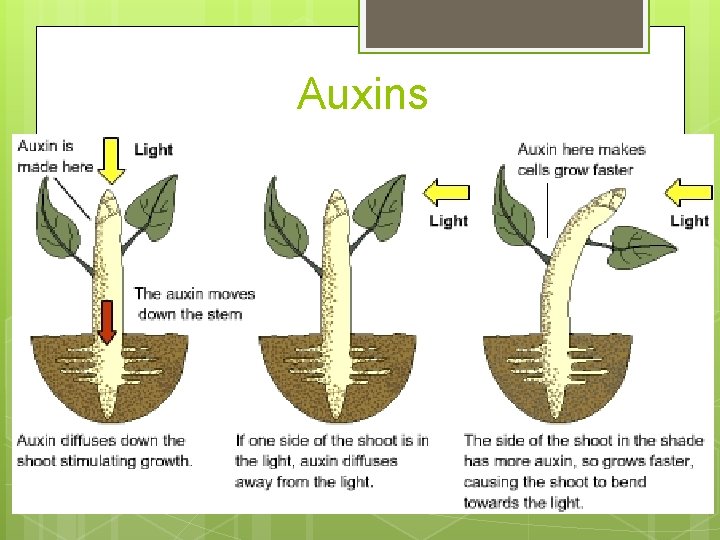
Auxins: Plant Growth Chemicals Frits Went hypothesized that there must be a growth chemical produced in the plant tips which stimulates growth. He called this auxin, meaning “to grow”.
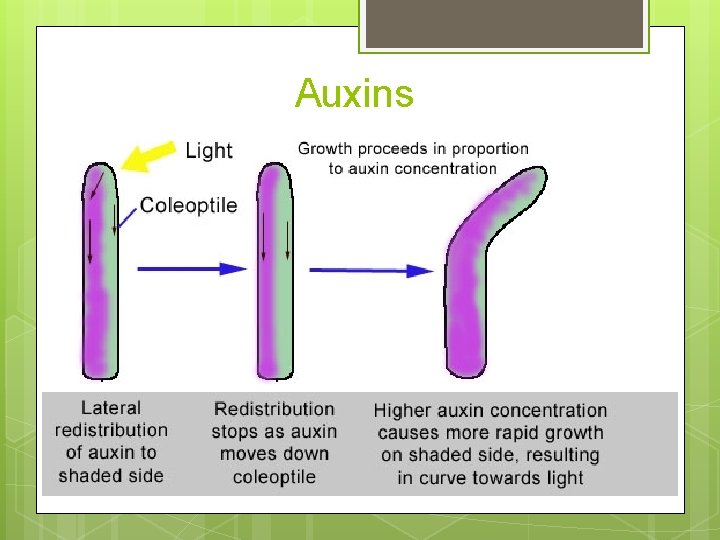
Auxins: Plant Growth Chemicals Auxin is a plant hormone that regulates the amount, type, and direction of plant growth. If light shines on a plant from one side, the auxin moves from the plant tip to the shaded side of the stem.
Active transport moves the auxin through the cells and downward. The auxin causes cells on the shaded side of the stem to grow longer than the cells on the lighted side. This light. causes the stem to curve toward the
Notice the different sized cells
Auxins
Auxins
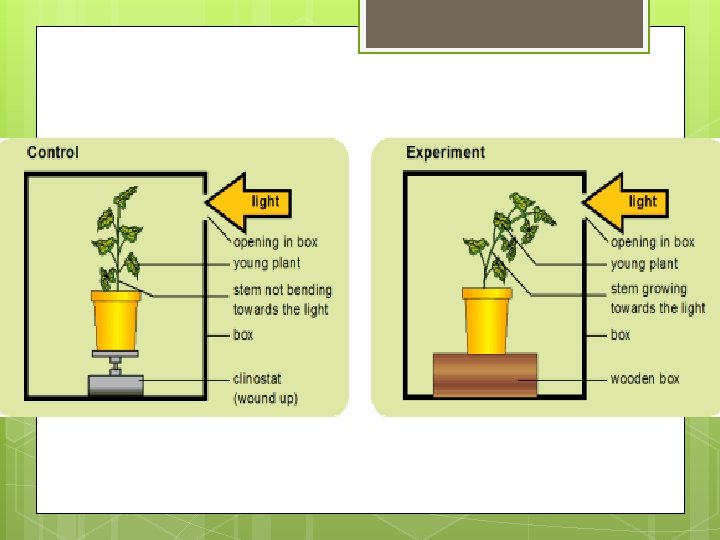
Gravitropism is a plant growth response to another environmental stimulus – the force of gravity. Gravitropism When also involves auxins. a plant is placed on its side, more auxin collects in the cells on the stem’s lower side.
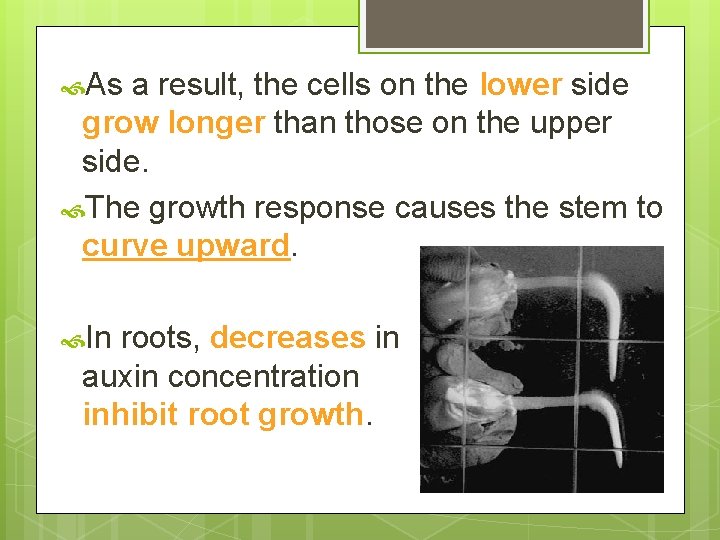
As a result, the cells on the lower side grow longer than those on the upper side. The growth response causes the stem to curve upward. In roots, decreases in auxin concentration inhibit root growth.
Hydrotropism What type of tropism do you see here?
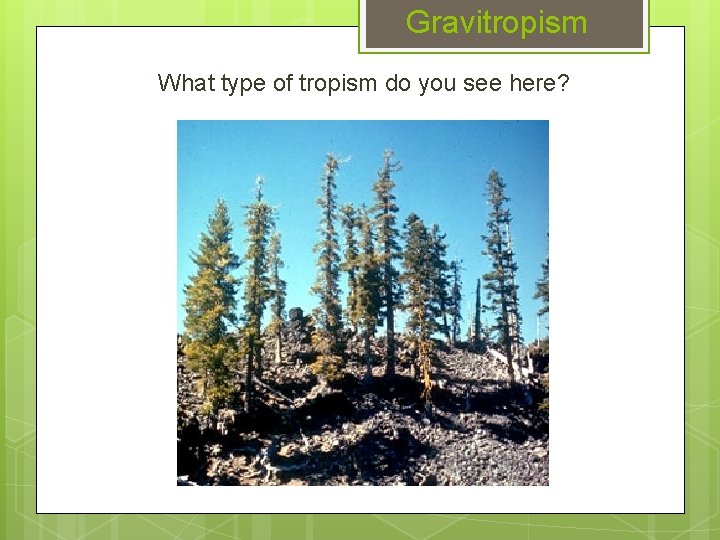
Gravitropism What type of tropism do you see here?
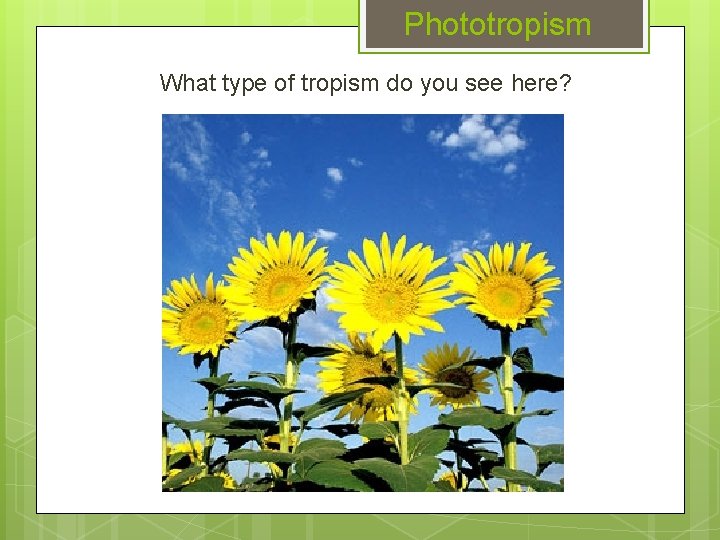
Phototropism What type of tropism do you see here?
https: //www. youtube. com/watch? v=p. CFst. SMv AMI Snow peas responding to light: https: //www. youtube. com/watch? v=t. LYOBi 5 g a. Vs Gravitropism: https: //www. youtube. com/watch? v=3 THHw 1 a k 684 Time laspe root growing: https: //www. youtube. com/watch? v=e. DA 8 rm. U P 5 ZM Photo vs. Gravi: https: //www. youtube. com/watch? v=Rz. D 4 sk. Fe J 7 Y