The Structure of a Compiler The process of
- Slides: 9
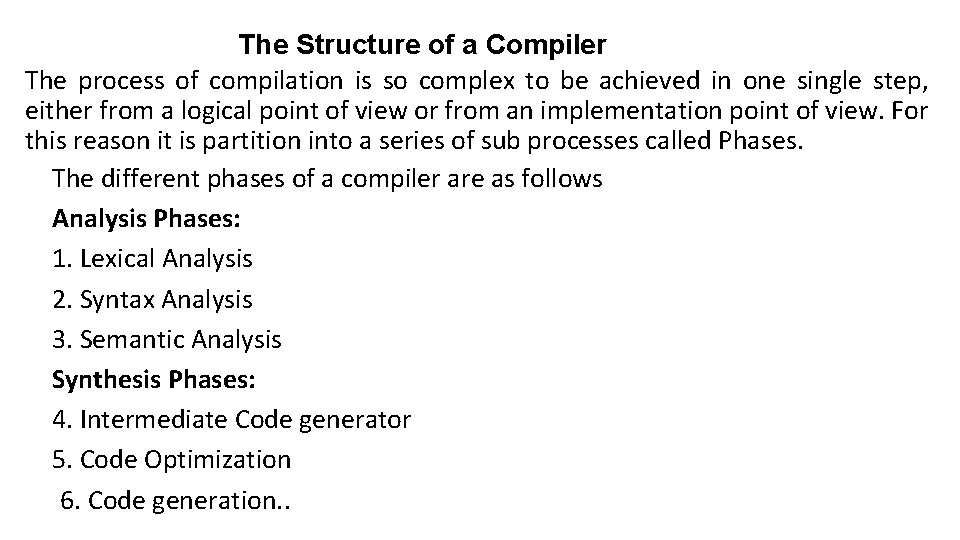
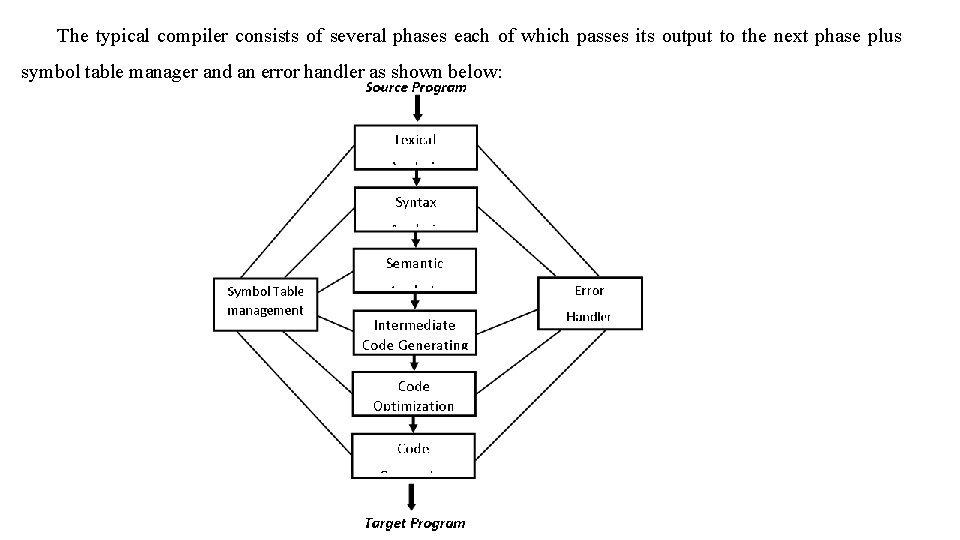
The Structure of a Compiler The process of compilation is so complex to be achieved in one single step, either from a logical point of view or from an implementation point of view. For this reason it is partition into a series of sub processes called Phases. The different phases of a compiler are as follows Analysis Phases: 1. Lexical Analysis 2. Syntax Analysis 3. Semantic Analysis Synthesis Phases: 4. Intermediate Code generator 5. Code Optimization 6. Code generation. .
The typical compiler consists of several phases each of which passes its output to the next phase plus symbol table manager and an error handler as shown below:
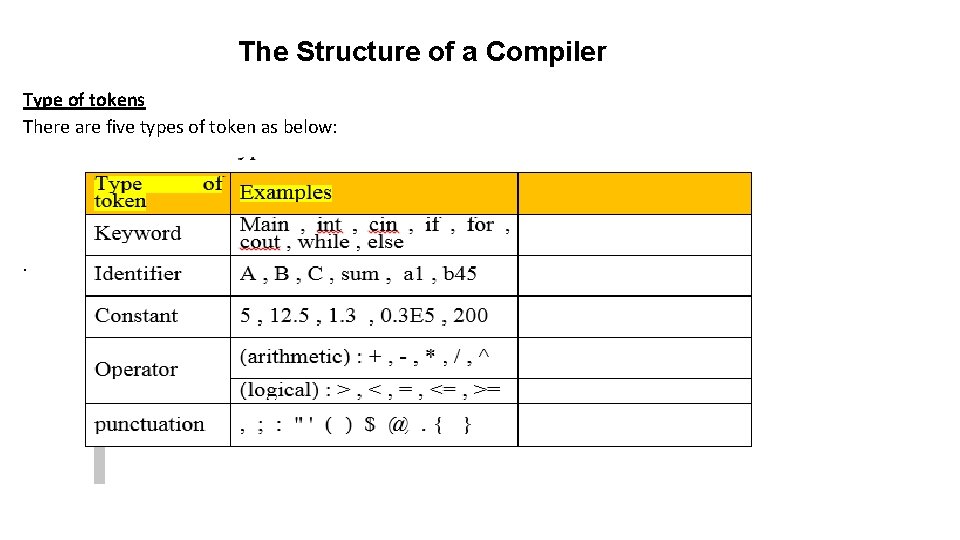
The Structure of a Compiler Lexical Analyzer (Scanner): It is the first phase of the complier and also called scanner, which represent the interface between source program and the compiler. where the Lexical will read the source program by one letter at a time and decomposed it into group of letters called TOKEN that is logically interrelated between them. This token represent string of characters that can be processed together as a logical input. In others words, lexical Separates characters of the source language program into groups (sets) that logically belong together. These groups are called Tokens are Keywords, Identifiers, Operator Symbols, and Punctuation Symbols. The output of the analyzer is stream of tokens, which is passed to the syntax analyzer. Tokens: groups of characters of source language program logically belong together.
The Structure of a Compiler Type of tokens There are five types of token as below: .
The Structure of a Compiler Syntax Analyzer (Parser): Groups tokens together into syntactic structures called Expressions might further be combined to form Statements. Often the syntactic structure can be regarded as a Tree (parse tree) whose leaves are the tokens. The interior nodes of the tree represent strings of tokens that logically belong together. Every programming language has rules that prescribe the syntactic structure of well –formed programs. Syntax analysis takes an out of lexical analyzer and produce a large tree call parse tree Semantics: . is a term used to describe "meaning", and so the constraint analyzer is often called the static semantic analyzer, or simply the semantic analyzer. Semantic analyzer takes the output of syntax analyzer and produces another tree. The output of the syntax analyzer and semantic analyzer phases is sometimes expressed in the form of a Abstract Syntax Tree (AST). This is a very useful representation, as it can be used in clever ways to optimize code generation at a later phase.
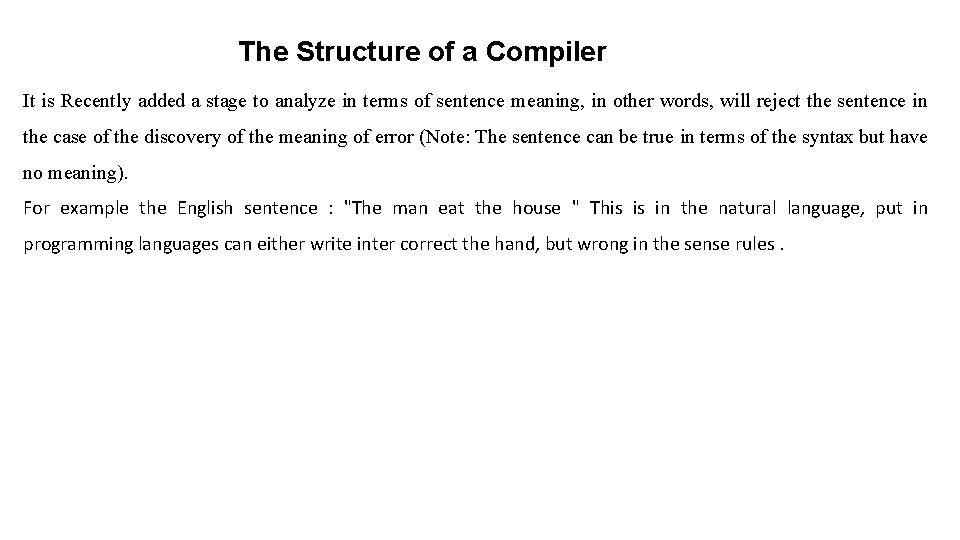
The Structure of a Compiler It is Recently added a stage to analyze in terms of sentence meaning, in other words, will reject the sentence in the case of the discovery of the meaning of error (Note: The sentence can be true in terms of the syntax but have no meaning). For example the English sentence : "The man eat the house " This is in the natural language, put in programming languages can either write inter correct the hand, but wrong in the sense rules.
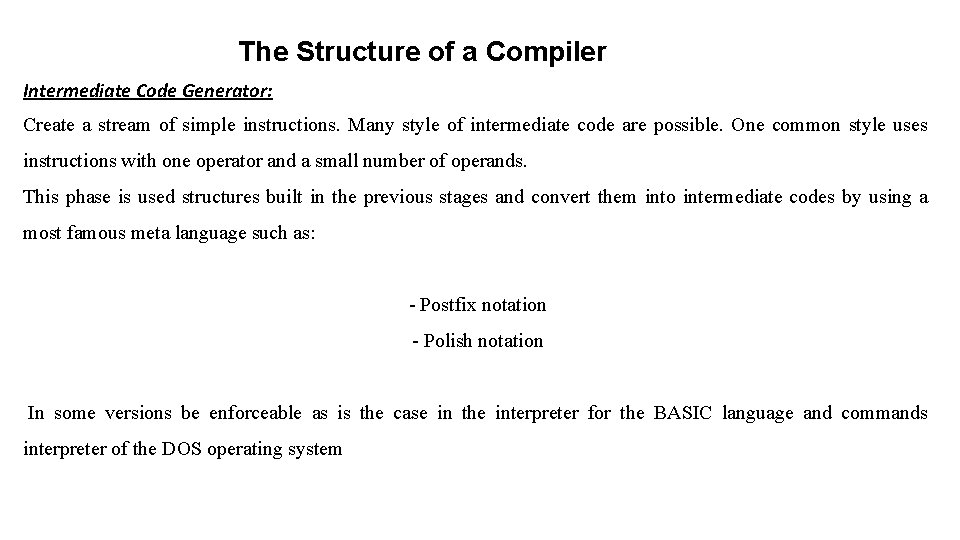
The Structure of a Compiler Intermediate Code Generator: Create a stream of simple instructions. Many style of intermediate code are possible. One common style uses instructions with one operator and a small number of operands. This phase is used structures built in the previous stages and convert them into intermediate codes by using a most famous meta language such as: - Postfix notation - Polish notation In some versions be enforceable as is the case in the interpreter for the BASIC language and commands interpreter of the DOS operating system
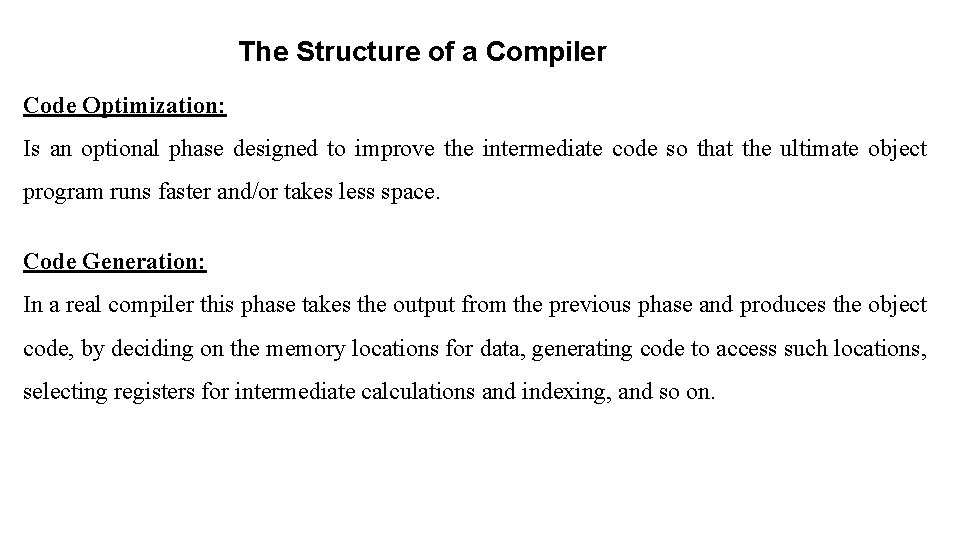
The Structure of a Compiler Code Optimization: Is an optional phase designed to improve the intermediate code so that the ultimate object program runs faster and/or takes less space. Code Generation: In a real compiler this phase takes the output from the previous phase and produces the object code, by deciding on the memory locations for data, generating code to access such locations, selecting registers for intermediate calculations and indexing, and so on.
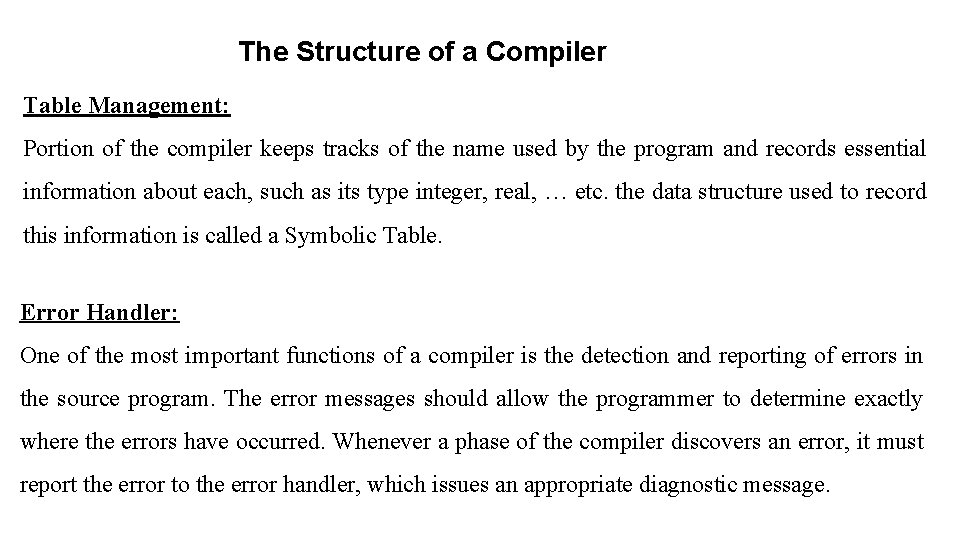
The Structure of a Compiler Table Management: Portion of the compiler keeps tracks of the name used by the program and records essential information about each, such as its type integer, real, … etc. the data structure used to record this information is called a Symbolic Table. Error Handler: One of the most important functions of a compiler is the detection and reporting of errors in the source program. The error messages should allow the programmer to determine exactly where the errors have occurred. Whenever a phase of the compiler discovers an error, it must report the error to the error handler, which issues an appropriate diagnostic message.