The Language of Film The Terms You Need

- Slides: 41
The Language of Film The Terms You Need to Talk About What You See
5 Elements of the SHOT 1. Framing 2. Focus 3. Angles 4. Lighting 5. Camera Movement
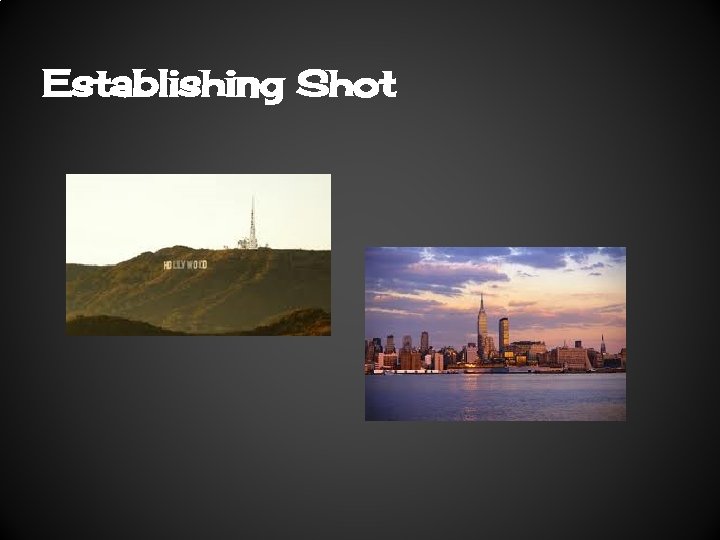
FRAMING Establishing Shot taken from extreme distance. Used to establish setting or scene or to establish size of something
Establishing Shot
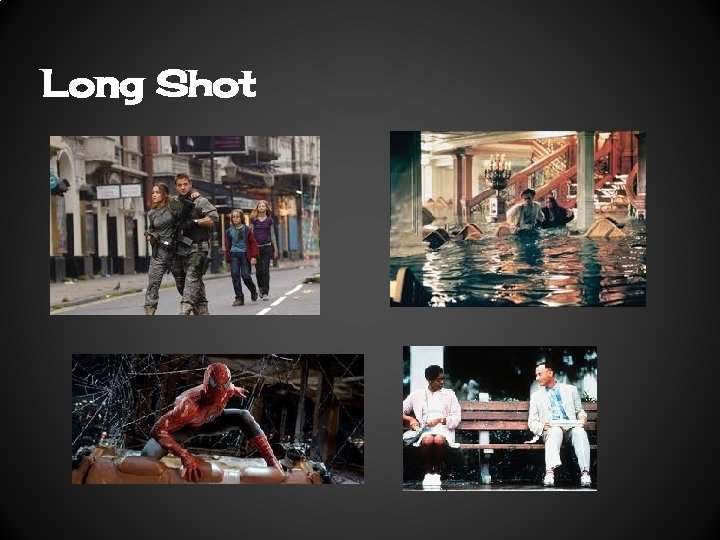
FRAMING Long Shot (LS) Shot taken from distance. Gives sense of time and place, establishes setting, shows distance or separation between characters, can show relationship of character to surroundings. Usually the full body of a character.
Long Shot
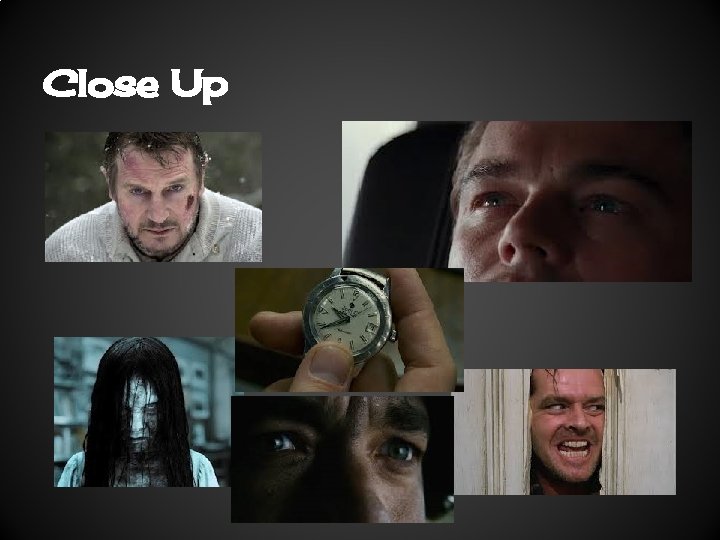
FRAMING Close Up (CS) Subject takes up at least 80% of the frame, leaving out much context. CS brings attention to a tiny detail or clue, and is often intimate and revealing.
Close Up
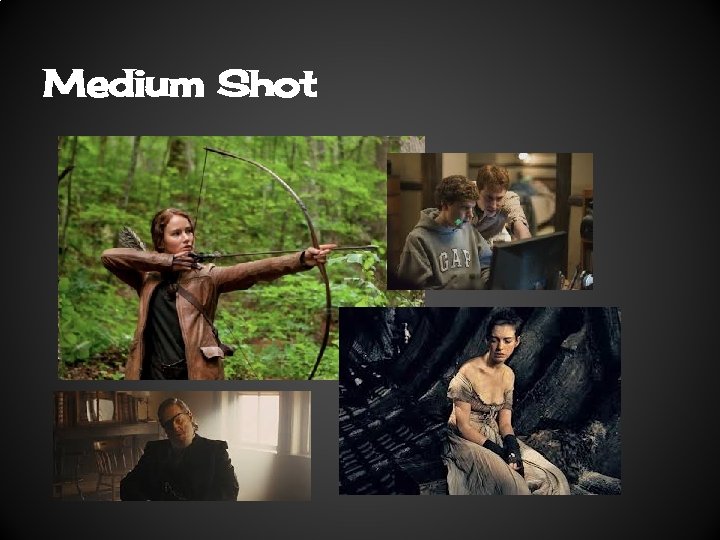
FRAMING Medium Shot (MS) A neutral, comfortable shot. Used most often, and normally features the characters from the waist up.
Medium Shot
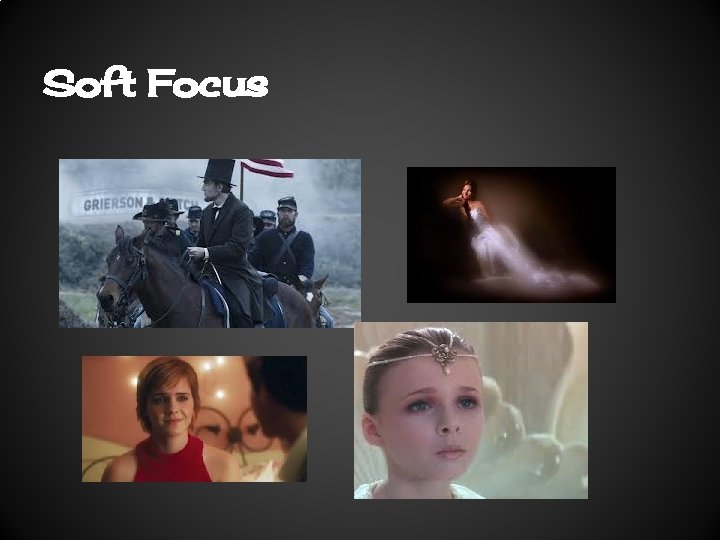
FOCUS Soft Focus Just ever-so-slightly out of focus Makes the image seem softer; unclear Dreamlike
Soft Focus
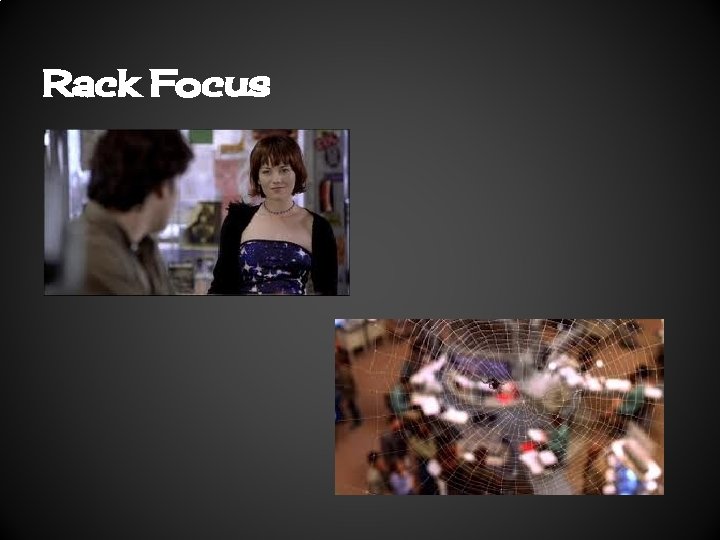
FOCUS Rack Focus When a director shifts the focus from one object to another in the same shot in order to direct the audience’s attention. Communicates power, the character noticing/seeing something
Rack Focus
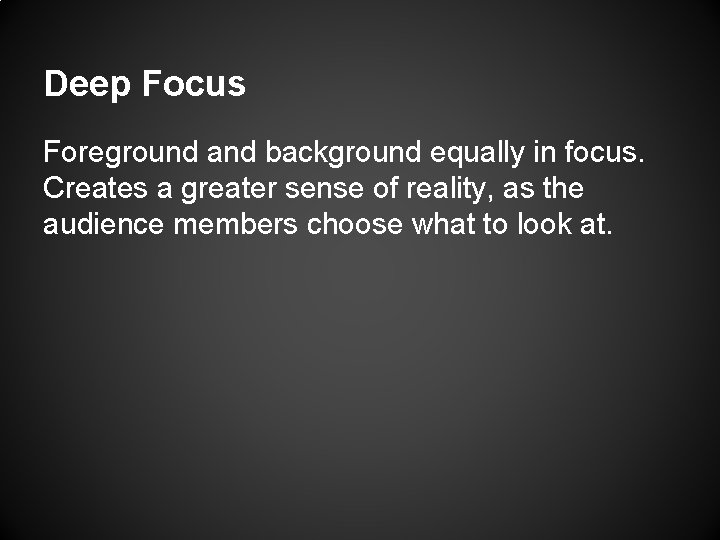
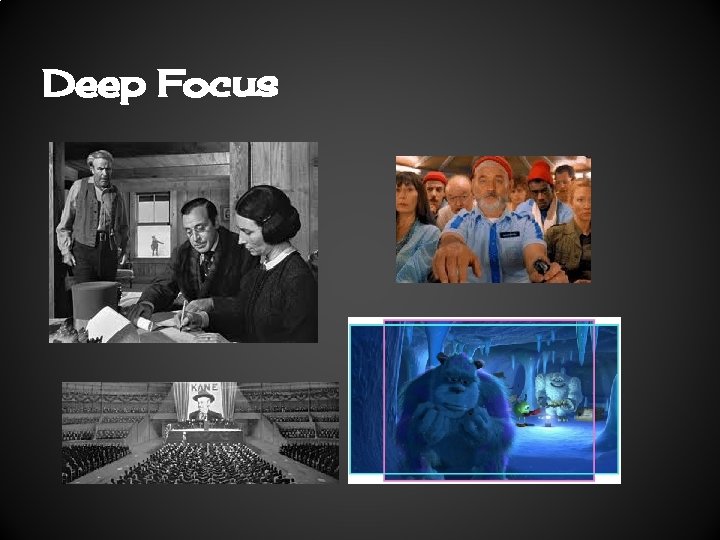
Deep Focus Foreground and background equally in focus. Creates a greater sense of reality, as the audience members choose what to look at.
Deep Focus
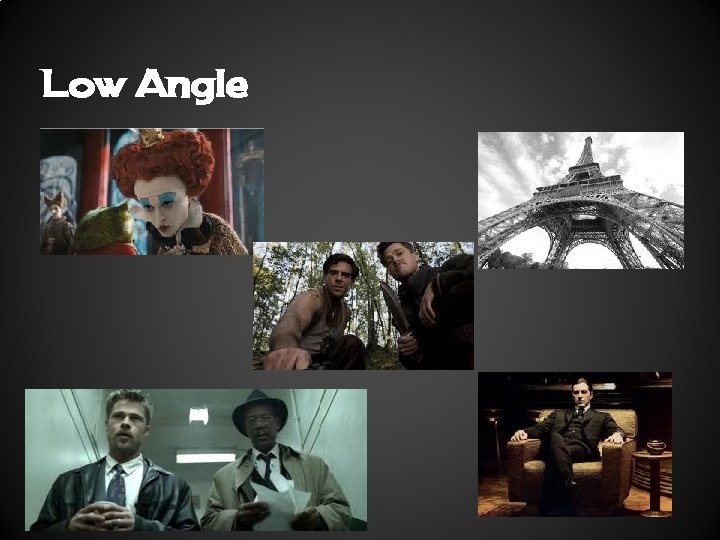
ANGLES Low Angle Camera shoots the subject from below; subject appears larger than life, powerful, sometimes threatening
Low Angle
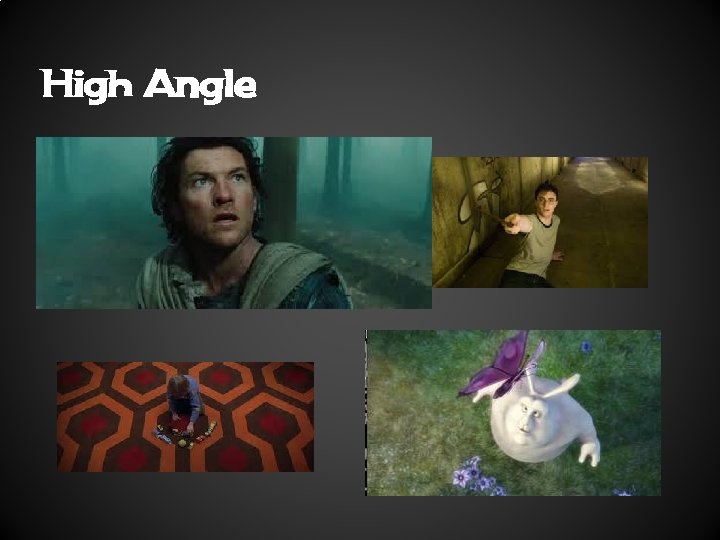
ANGLES High Angle Camera is above the subject looking down on it. Subject appears smaller than normal, sometimes weak, powerless.
High Angle
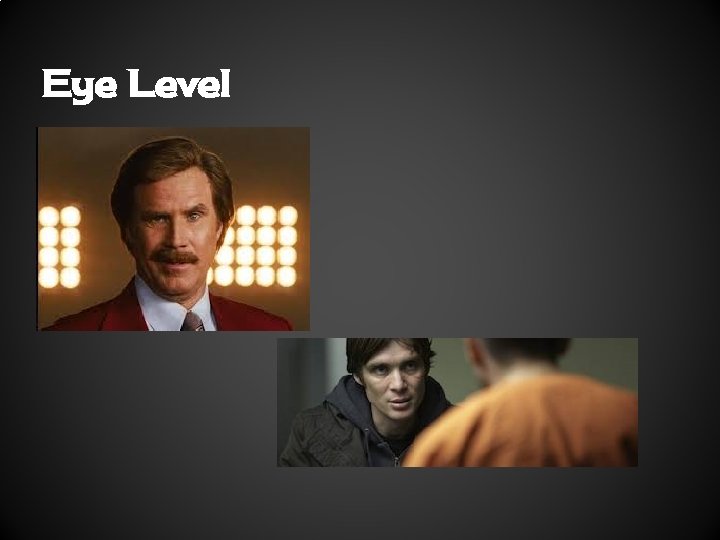
ANGLES Eye Level Like a medium shot, this is the most neutral, natural angle. Even with the character’s eyes, it accounts for 90 -95% of the shots.
Eye Level
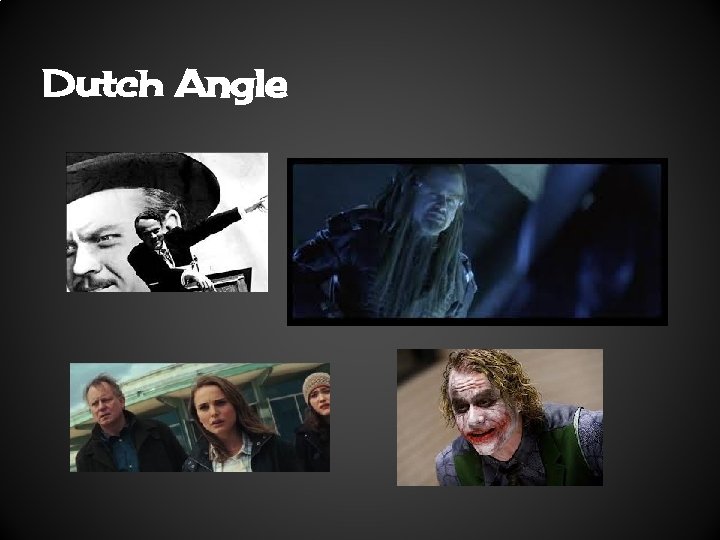
ANGLES Canted or Dutch Angle The camera is titled. Gives a tense, unbalanced effect. Creates a sinister, distorted view of the character.
Dutch Angle
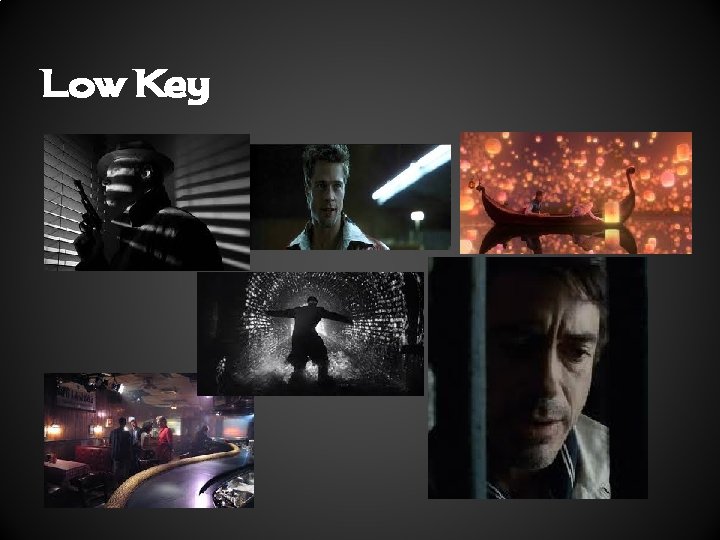
LIGHTING Low Key Scene is flooded with shadows and darkness. -Can convey suspicion, mystery, or danger OR -Can convey peace, romance, or introspection …depends on theme/tone of the film/scene
Low Key
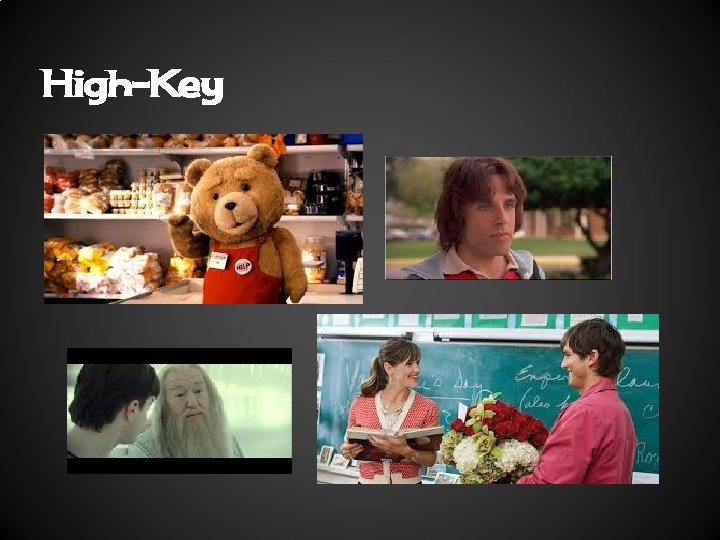
LIGHTING High Key Scene is flooded with bright, open light. Lack of shadows or contrast. Characters are seen clearly - not threatening -often used for comedies/romantic comedies
High-Key
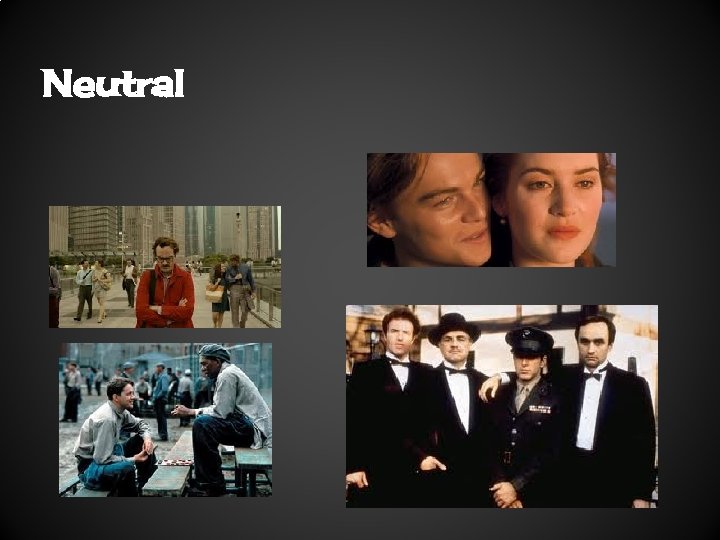
LIGHTING Neutral General, even, natural lighting. Daylight. - like the medium shot and the neutral angle, this is the most common lighting.
Neutral
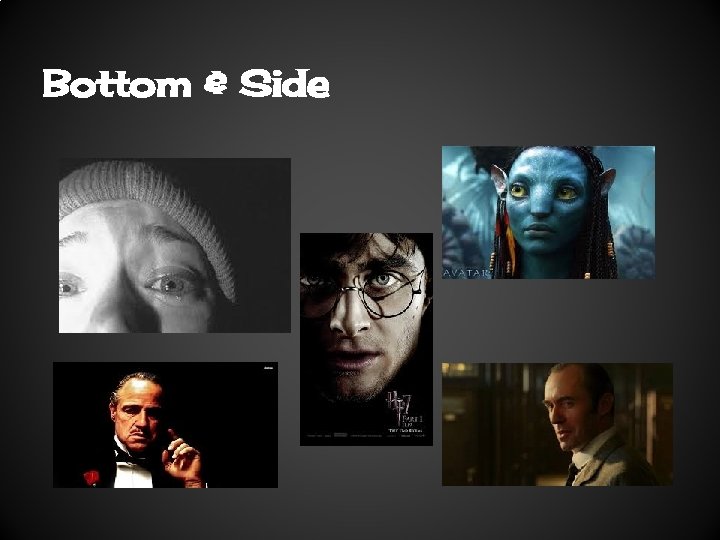
Lighting Bottom/Side Scary, intimidating effect. Indicates the characters may be evil, are hiding something, are morally ambiguous, or are conflicted in some way -often in horror/dark movies
Bottom & Side
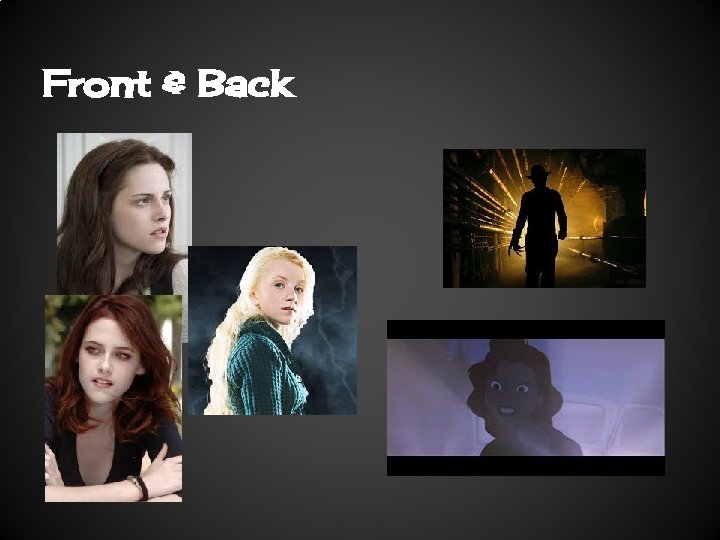
LIGHTING Front - Even lighting with no shadows. Used to show innocence or openness, most common with the hero/heroine Back - Creates a full or semi-silhouette of the object in the frame
Front & Back
Pan - Band of Outsiders CAMERA MOVEMENT Pan, Dolly, Zoom Classic dolly shot - Goodfellas http: //youtu. be/OJEEVtq. Xd. K 8 Slacker – Trailer https: //www. youtube. com/watch? v=Klmf. Ru. Xxu Xo Pan – Wes Anderson https: //www. youtube. com/watch? v=Rrg. IW 8 r. Os V 0
Shaky Cam Saving Private Ryan - Omaha Beach https: //www. youtube. com/watch? v=82 RTzi 5 Vt 7 w
SOUNDS Diagetic and Nondiagetic Mean Girls http: //youtu. be/fb. PJn 7 bi 9 gk Jaws/Psycho/Blazing Saddles https: //www. youtube. com/watch? v=H_4 h. OY 9 n. KA
EDITING Cut - Most common; a quick “cut” to the next image Fade - Fade to black/white before fading back in to a new scene; often indicates time has passed
Editing Cross Cut – Braveheart http: //youtu. be/PD 5 Imb 7 v. WSc
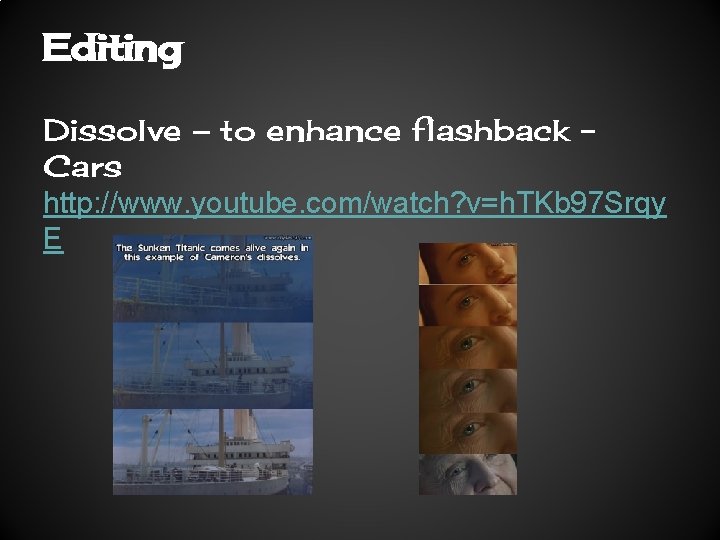
Editing Dissolve – to enhance flashback Cars http: //www. youtube. com/watch? v=h. TKb 97 Srqy E
Mise-en-Scene in WWZ