
Film Terms A Types of Shots Long shot


- Slides: 18
Film Terms
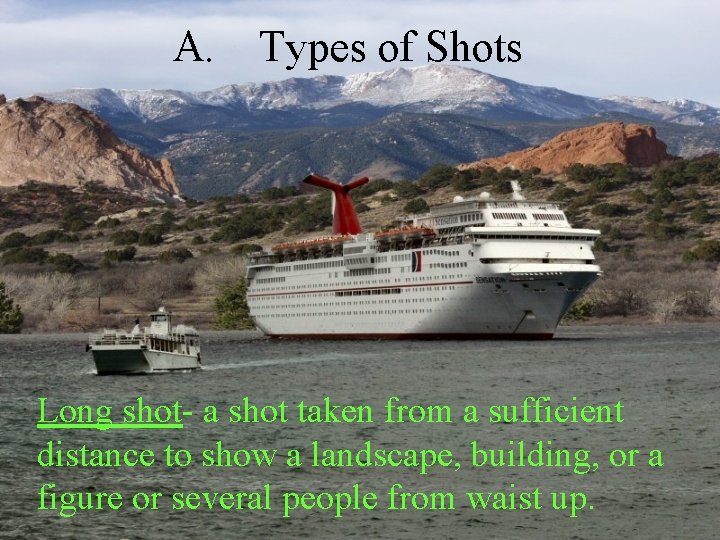
A. Types of Shots Long shot- a shot taken from a sufficient distance to show a landscape, building, or a figure or several people from waist up.
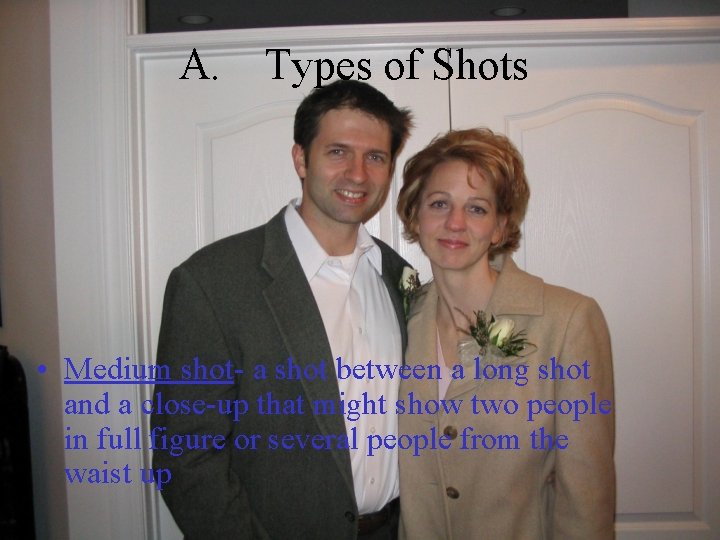
A. Types of Shots • Medium shot- a shot between a long shot and a close-up that might show two people in full figure or several people from the waist up
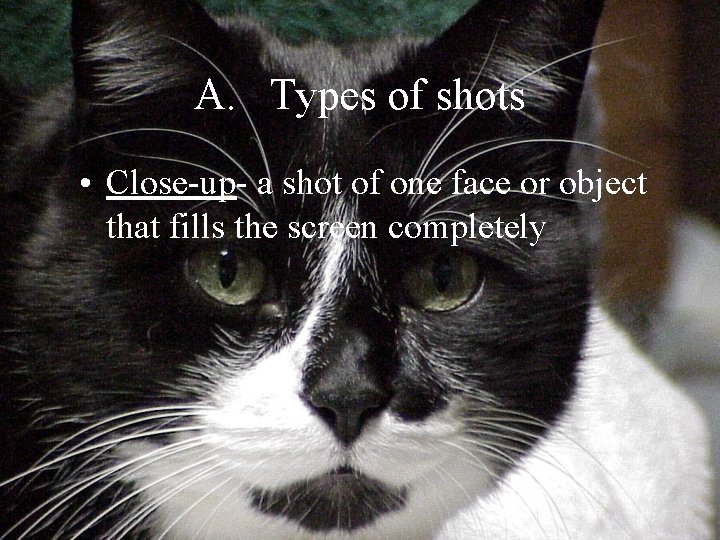
A. Types of shots • Close-up- a shot of one face or object that fills the screen completely
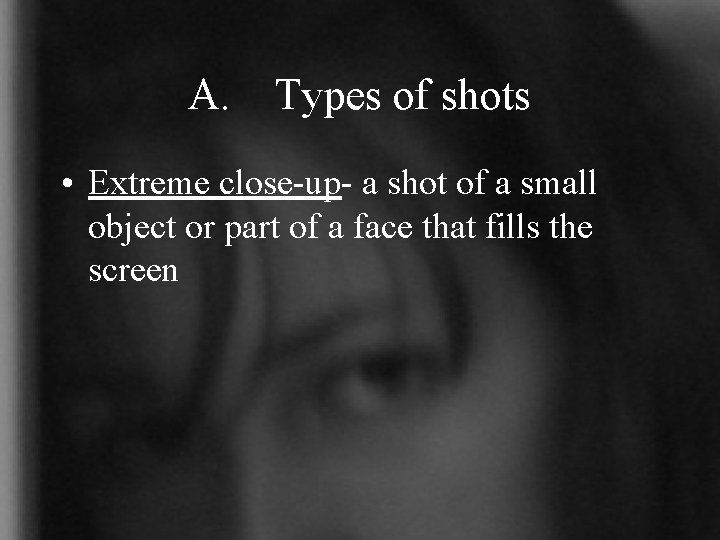
A. Types of shots • Extreme close-up- a shot of a small object or part of a face that fills the screen
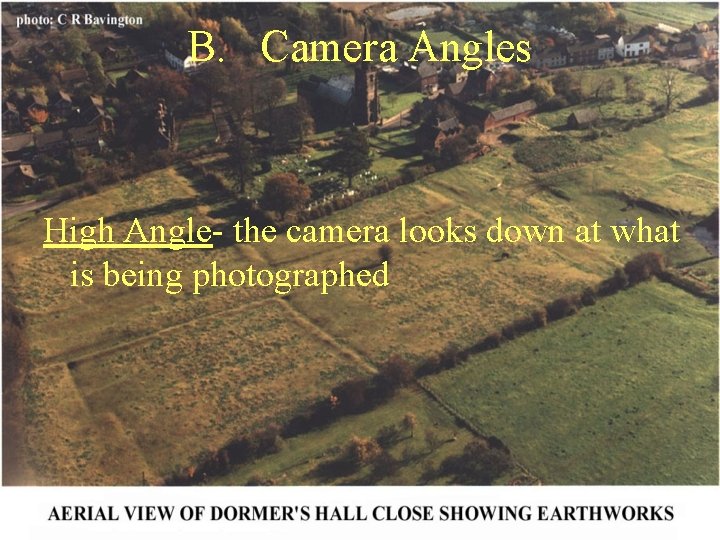
B. Camera Angles High Angle- the camera looks down at what is being photographed
B. Camera Angles “Eye Level”- a shot that approximates human visiona camera presents an object so that the line between camera and object is parallel to the ground
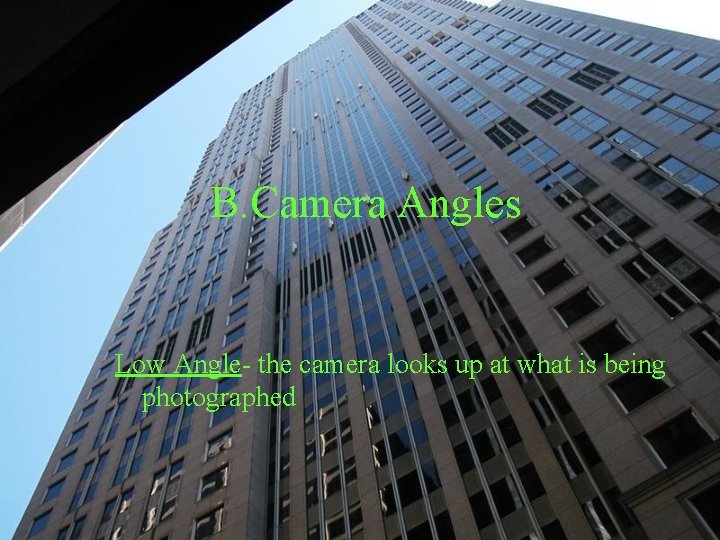
B. Camera Angles Low Angle- the camera looks up at what is being photographed
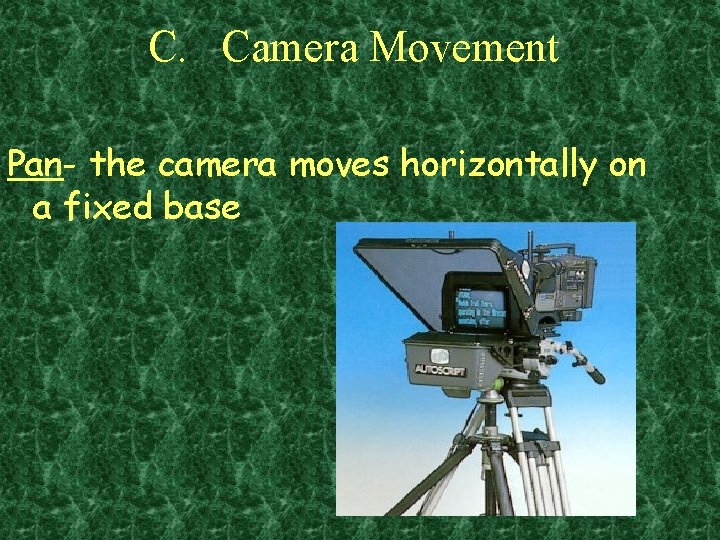
C. Camera Movement Pan- the camera moves horizontally on a fixed base
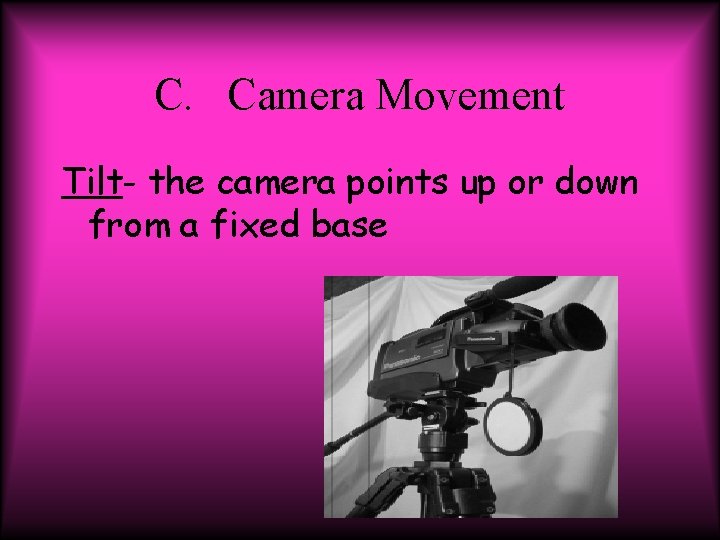
C. Camera Movement Tilt- the camera points up or down from a fixed base
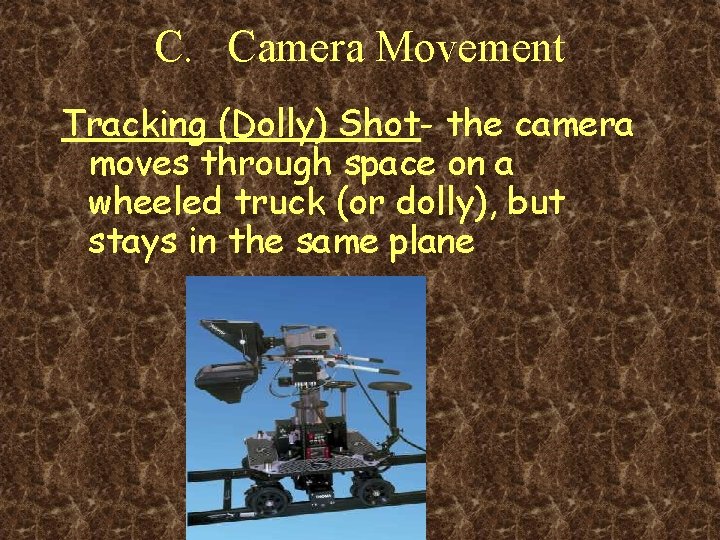
C. Camera Movement Tracking (Dolly) Shot- the camera moves through space on a wheeled truck (or dolly), but stays in the same plane
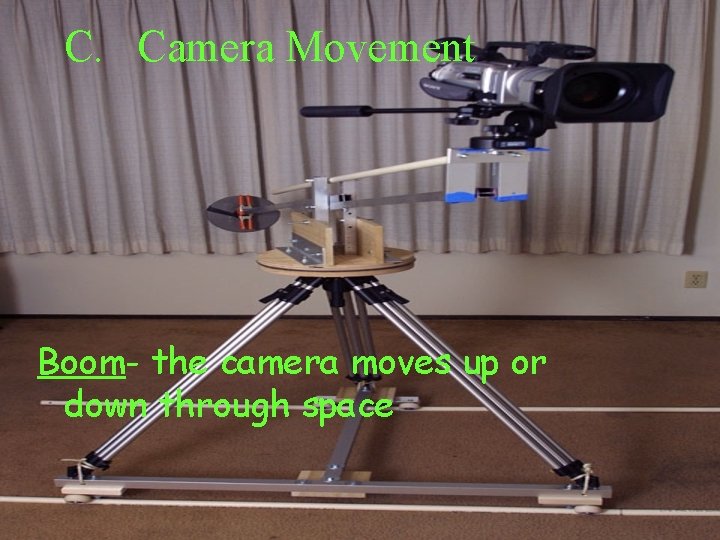
C. Camera Movement Boom- the camera moves up or down through space
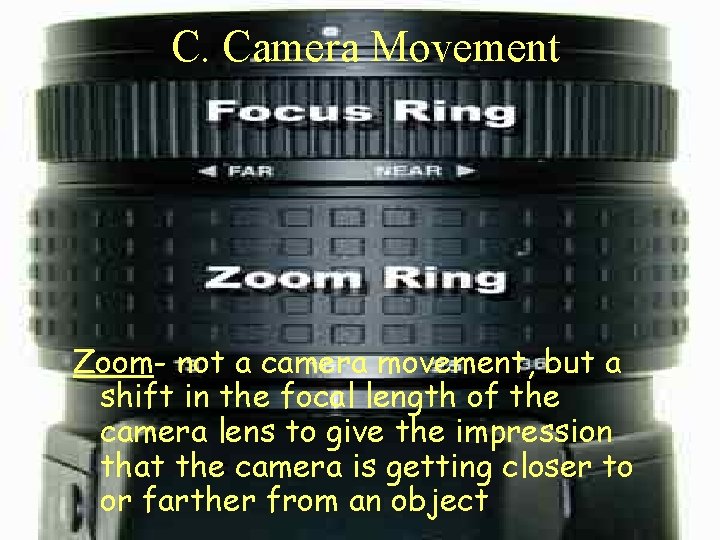
C. Camera Movement Zoom- not a camera movement, but a shift in the focal length of the camera lens to give the impression that the camera is getting closer to or farther from an object
D. Duration of Shots also vary in time from subliminal (a few frames) to quick (less than a second) to “average” (more than a second but less than a minute) to lengthy (more than a minute)
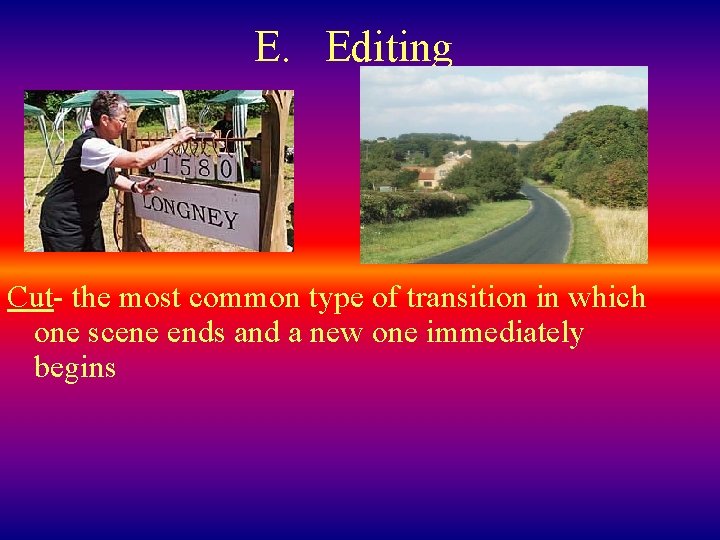
E. Editing Cut- the most common type of transition in which one scene ends and a new one immediately begins
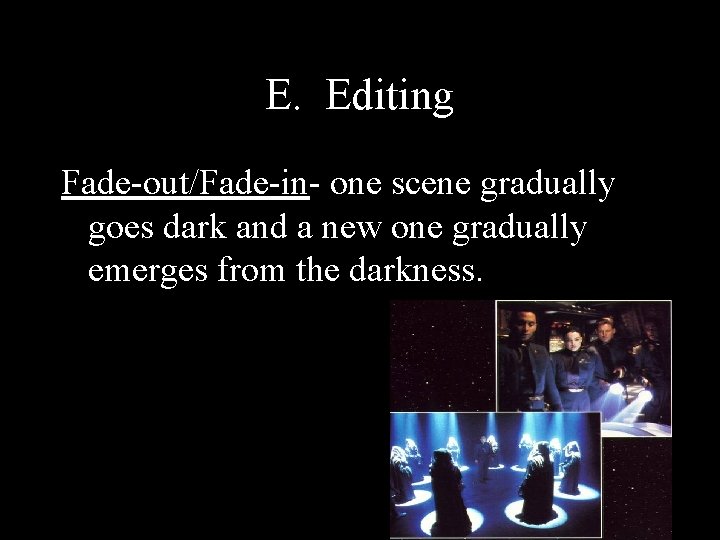
E. Editing Fade-out/Fade-in- one scene gradually goes dark and a new one gradually emerges from the darkness.
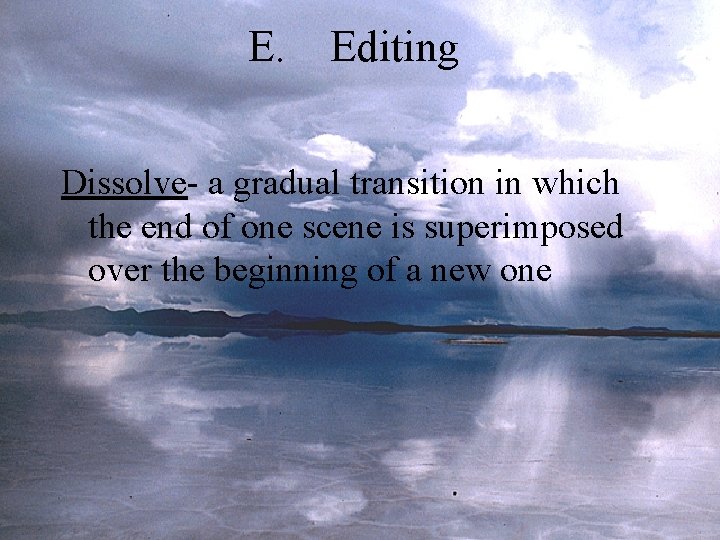
E. Editing Dissolve- a gradual transition in which the end of one scene is superimposed over the beginning of a new one
E. Editing Wipe- an optical effect in which one shot appears to “wipe” the preceding one from the screen. Special wipes include flip wipes, iris wipes, star wipes, etc.