The Age of Exploration 1450 1650 Essential Question

- Slides: 30
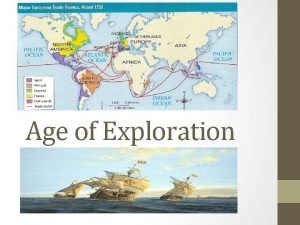
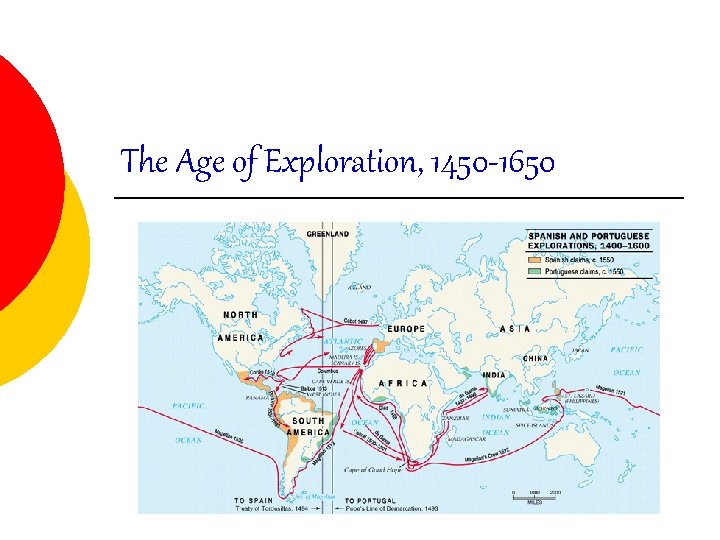
The Age of Exploration, 1450 -1650
Essential Question ¡ What motivated Europeans to explore? What did they encounter in these new discovered places? What facilitated exploration?
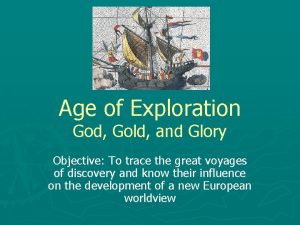
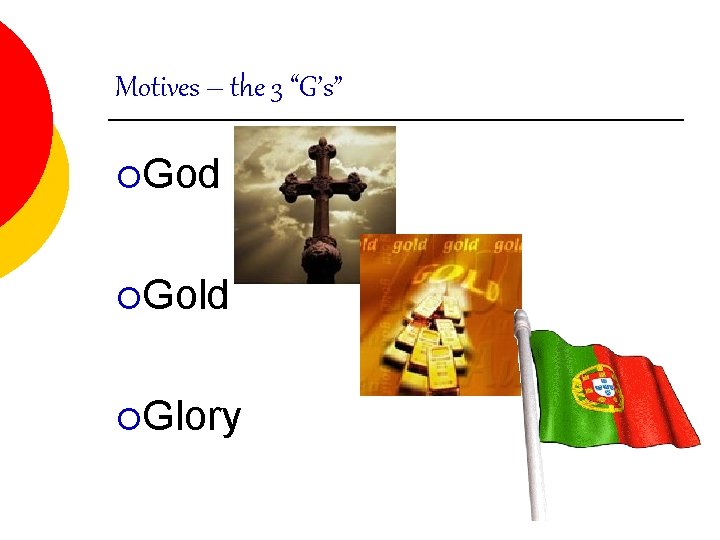
Motives – the 3 “G’s” ¡God ¡Gold ¡Glory
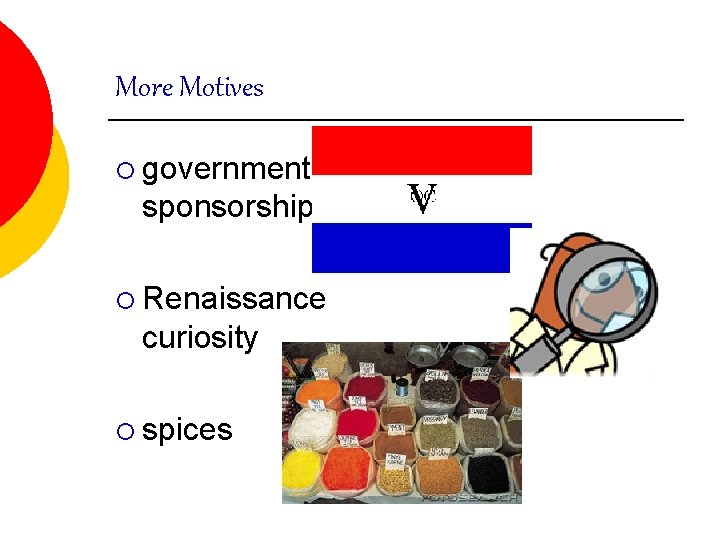
More Motives ¡ government sponsorship ¡ Renaissance curiosity ¡ spices
Which motive played the most important role? TPS
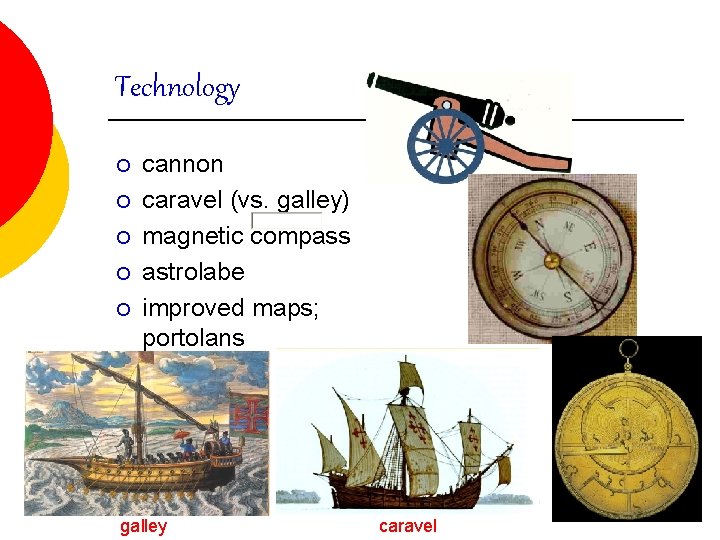
Technology ¡ ¡ ¡ cannon caravel (vs. galley) magnetic compass astrolabe improved maps; portolans galley caravel
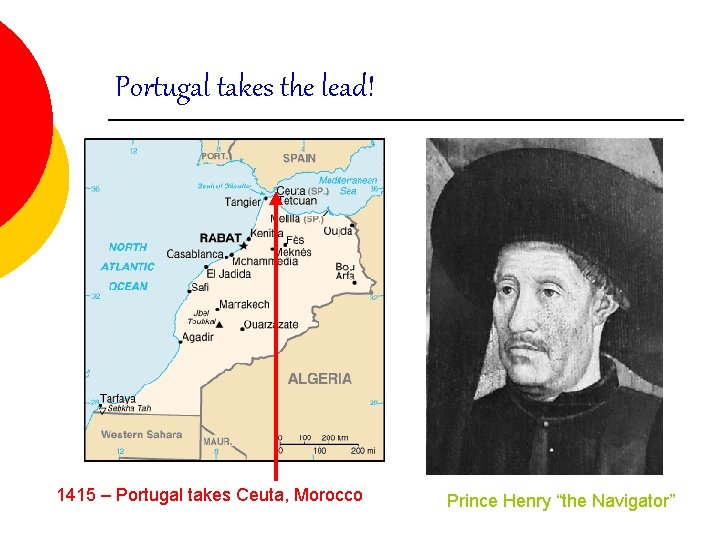
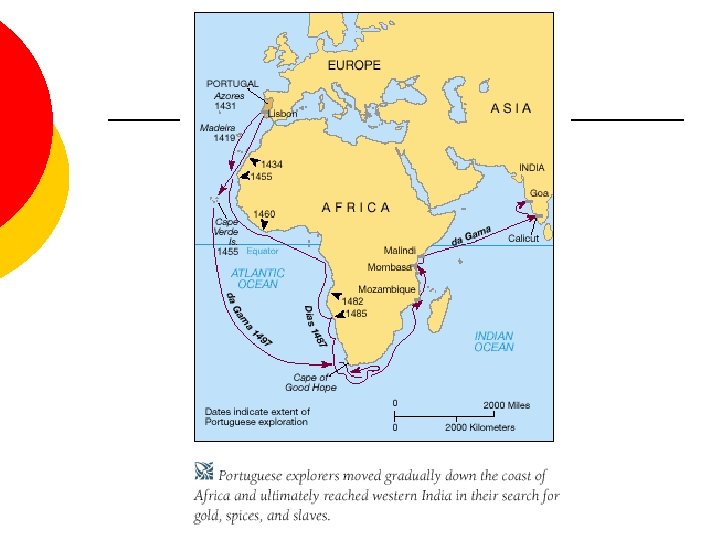
Portugal takes the lead! 1415 – Portugal takes Ceuta, Morocco Prince Henry “the Navigator”
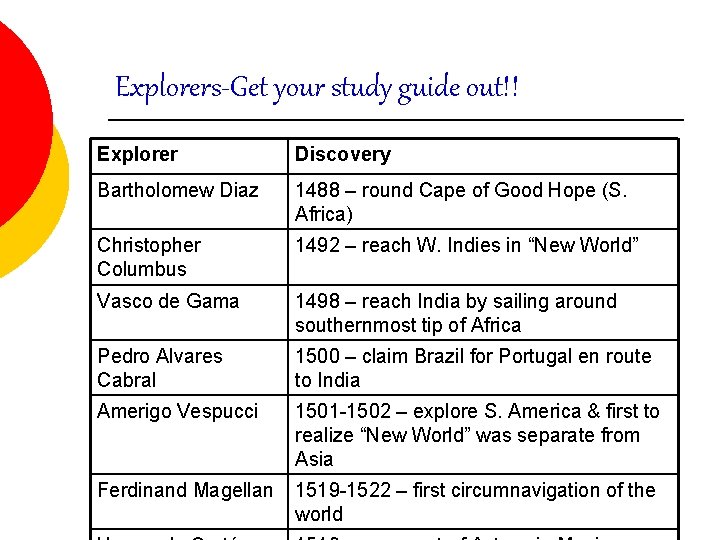
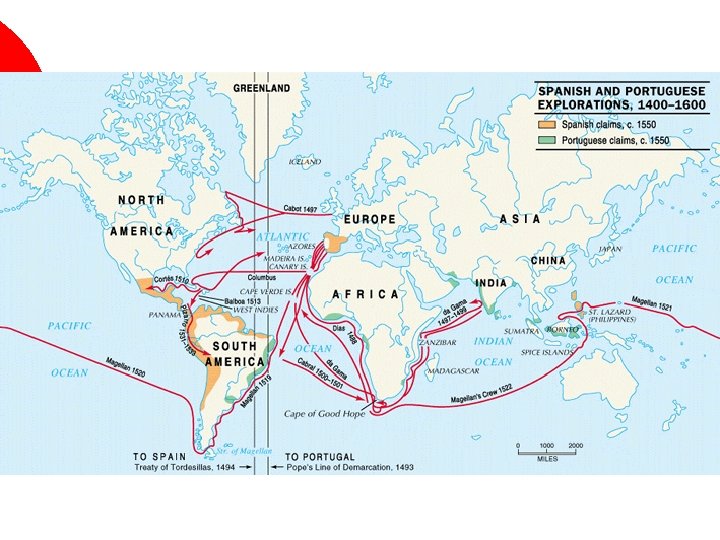
Explorers-Get your study guide out!! Explorer Discovery Bartholomew Diaz 1488 – round Cape of Good Hope (S. Africa) Christopher Columbus 1492 – reach W. Indies in “New World” Vasco de Gama 1498 – reach India by sailing around southernmost tip of Africa Pedro Alvares Cabral 1500 – claim Brazil for Portugal en route to India Amerigo Vespucci 1501 -1502 – explore S. America & first to realize “New World” was separate from Asia Ferdinand Magellan 1519 -1522 – first circumnavigation of the world
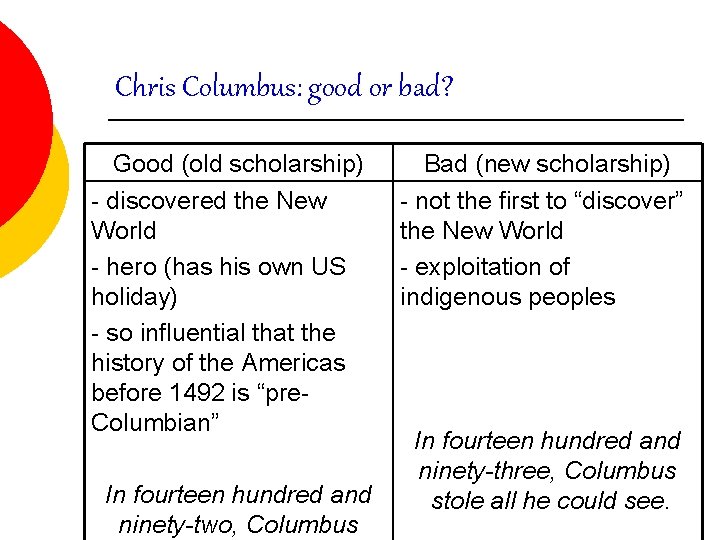
Chris Columbus: good or bad? Good (old scholarship) - discovered the New World - hero (has his own US holiday) - so influential that the history of the Americas before 1492 is “pre. Columbian” In fourteen hundred and ninety-two, Columbus Bad (new scholarship) - not the first to “discover” the New World - exploitation of indigenous peoples In fourteen hundred and ninety-three, Columbus stole all he could see.
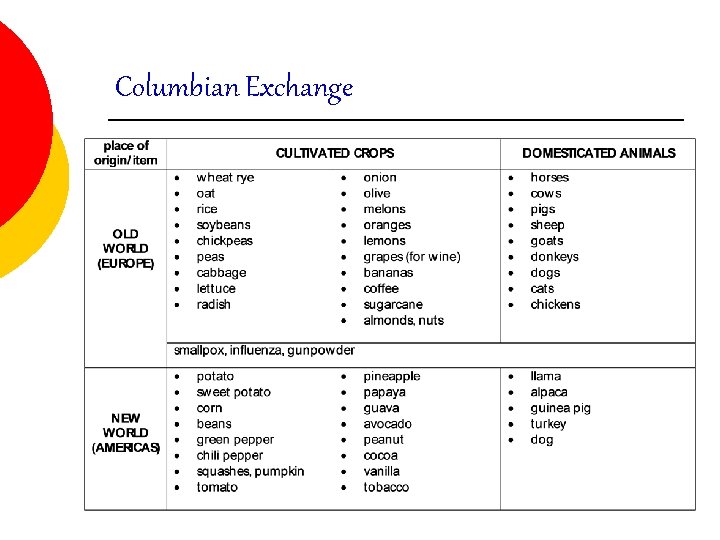
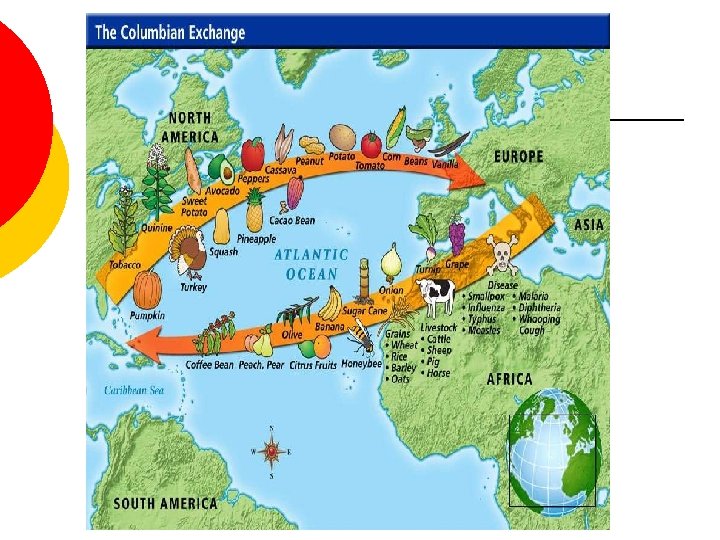
Columbian Exchange
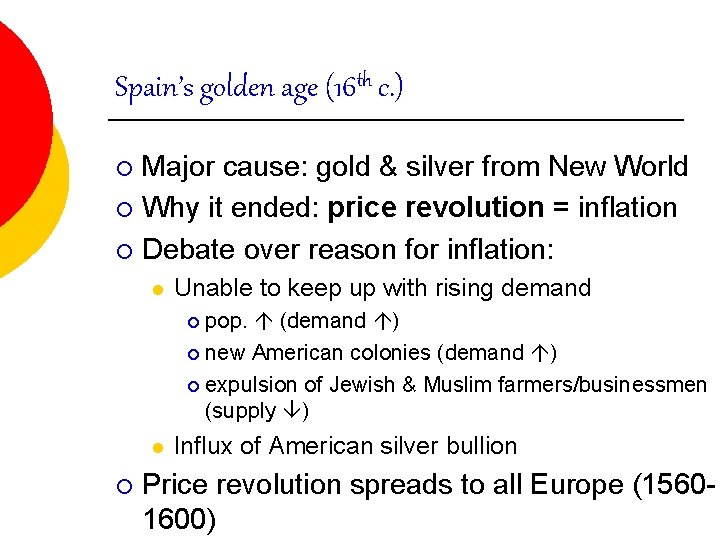
Spain’s golden age (16 th c. ) Major cause: gold & silver from New World ¡ Why it ended: price revolution = inflation ¡ Debate over reason for inflation: ¡ l Unable to keep up with rising demand pop. (demand ) ¡ new American colonies (demand ) ¡ expulsion of Jewish & Muslim farmers/businessmen (supply ) ¡ l ¡ Influx of American silver bullion Price revolution spreads to all Europe (15601600)
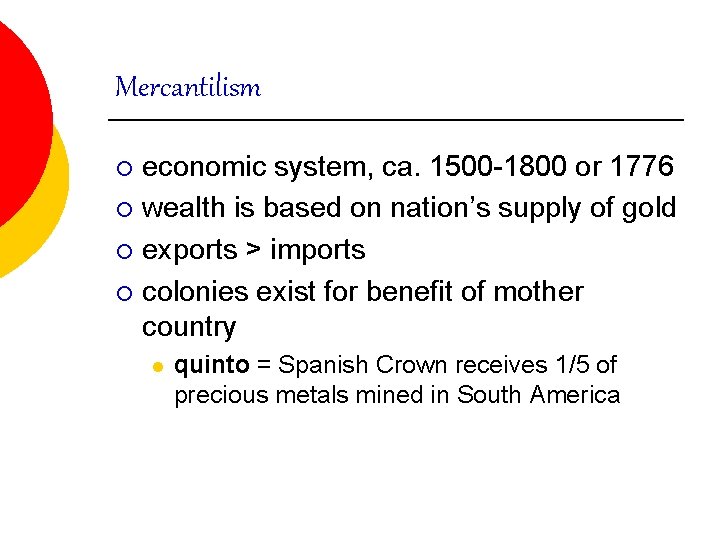
Mercantilism economic system, ca. 1500 -1800 or 1776 ¡ wealth is based on nation’s supply of gold ¡ exports > imports ¡ colonies exist for benefit of mother country ¡ l quinto = Spanish Crown receives 1/5 of precious metals mined in South America
EQ: What was the impact of European conquest on the peoples and ecologies of the New World? ¡ www. mprapeuro. weebly. com ¡ Units ¡ Period One ¡ Exploration
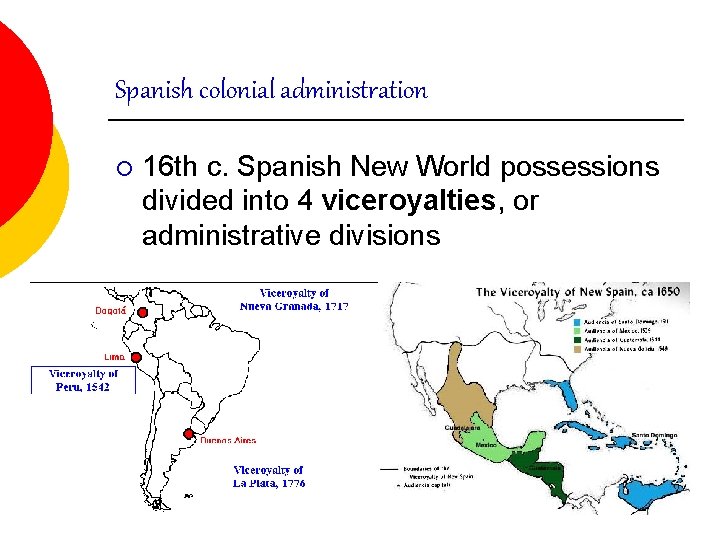
Spanish colonial administration ¡ 16 th c. Spanish New World possessions divided into 4 viceroyalties, or administrative divisions
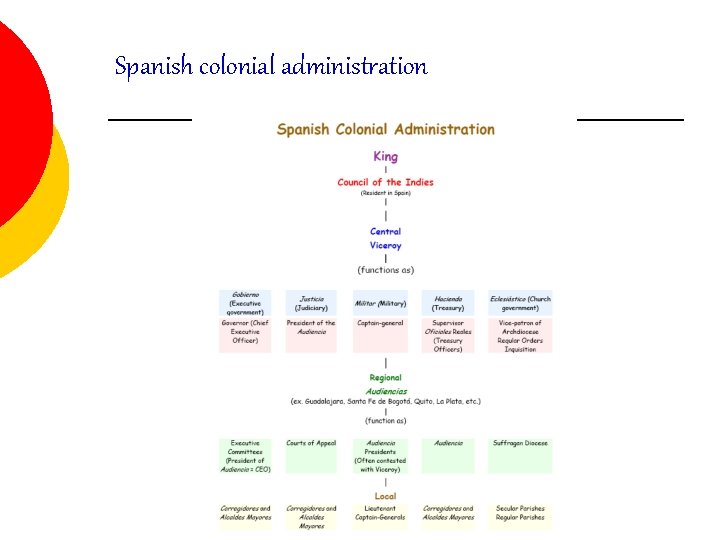
Spanish colonial administration
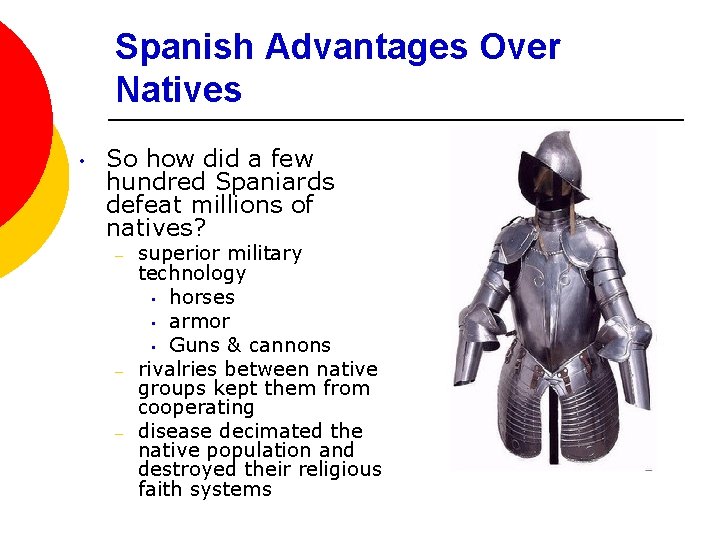
Spanish Advantages Over Natives • So how did a few hundred Spaniards defeat millions of natives? – – – superior military technology • horses • armor • Guns & cannons rivalries between native groups kept them from cooperating disease decimated the native population and destroyed their religious faith systems
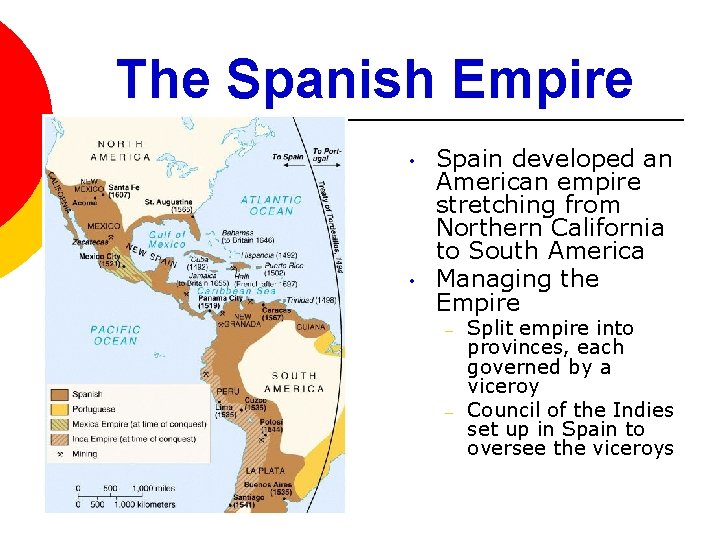
The Spanish Empire • • Spain developed an American empire stretching from Northern California to South America Managing the Empire – – Split empire into provinces, each governed by a viceroy Council of the Indies set up in Spain to oversee the viceroys
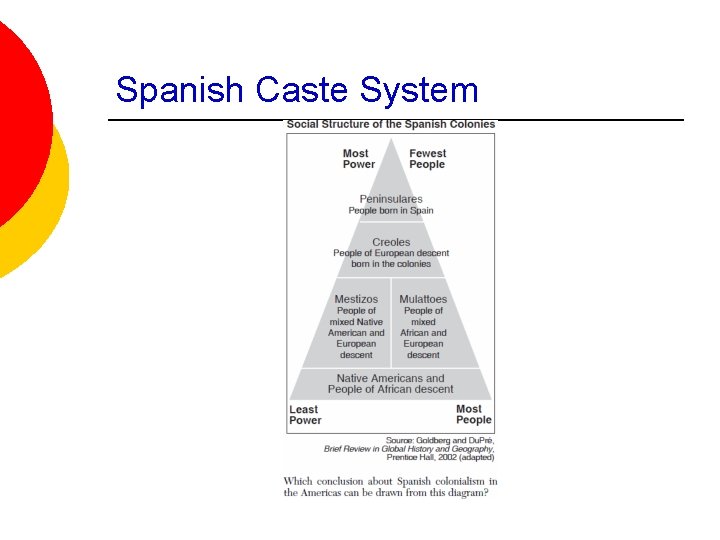
Spanish Caste System
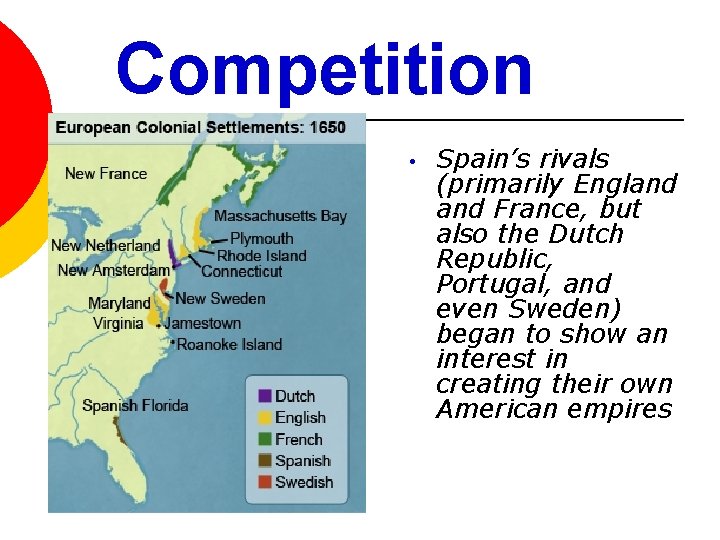
Competition • Spain’s rivals (primarily England France, but also the Dutch Republic, Portugal, and even Sweden) began to show an interest in creating their own American empires
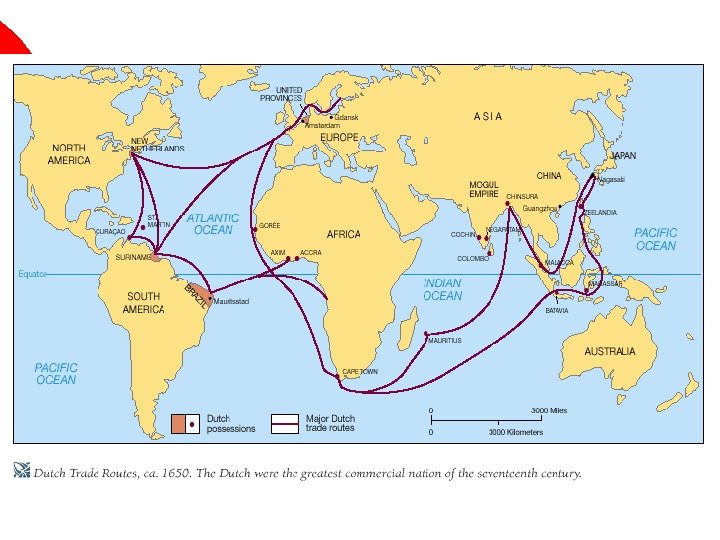
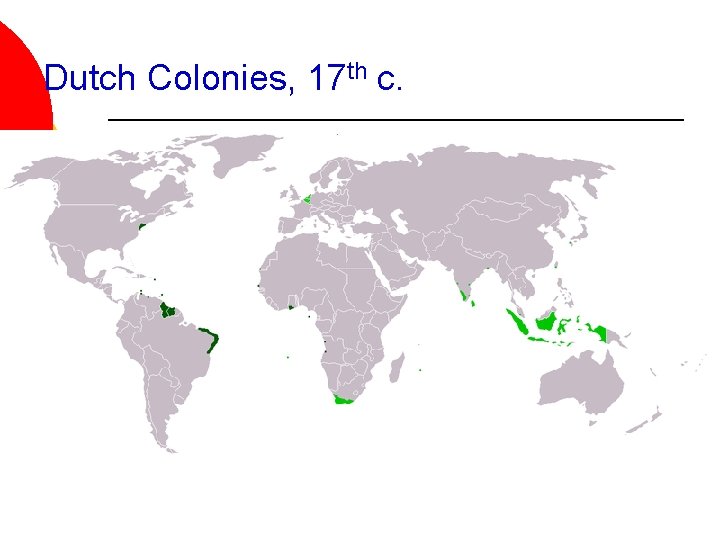
Dutch Colonies, 17 th c.
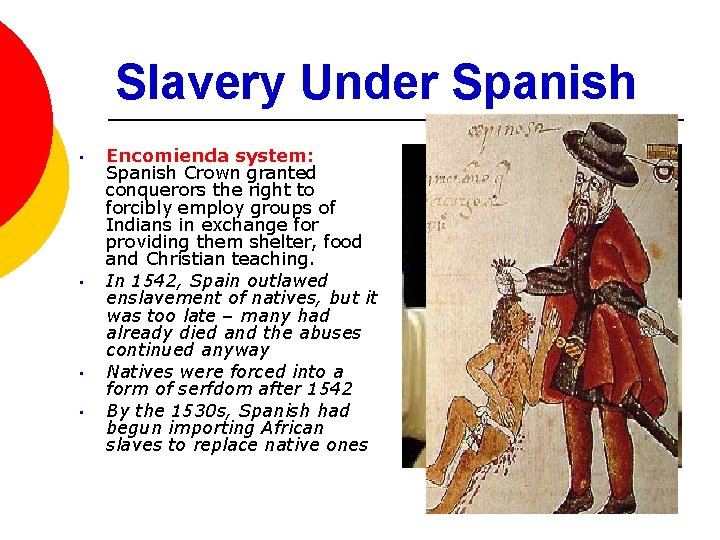
Slavery Under Spanish • • Encomienda system: Spanish Crown granted conquerors the right to forcibly employ groups of Indians in exchange for providing them shelter, food and Christian teaching. In 1542, Spain outlawed enslavement of natives, but it was too late – many had already died and the abuses continued anyway Natives were forced into a form of serfdom after 1542 By the 1530 s, Spanish had begun importing African slaves to replace native ones
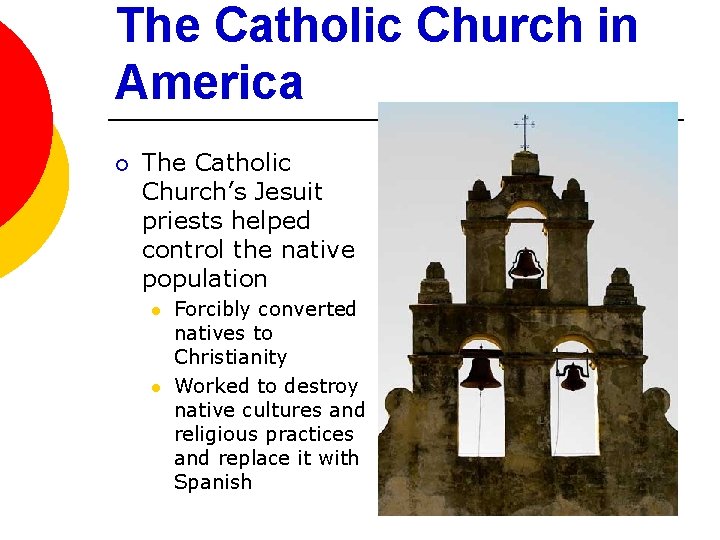
The Catholic Church in America ¡ The Catholic Church’s Jesuit priests helped control the native population l l Forcibly converted natives to Christianity Worked to destroy native cultures and religious practices and replace it with Spanish
Sugar & Slavery ¡ demand for sugar in 15 th c. ¡ sugar plantations est. 1 st in Atlantic islands close to Europe African slaves brought in ¡ later this pattern was transferred to the Caribbean
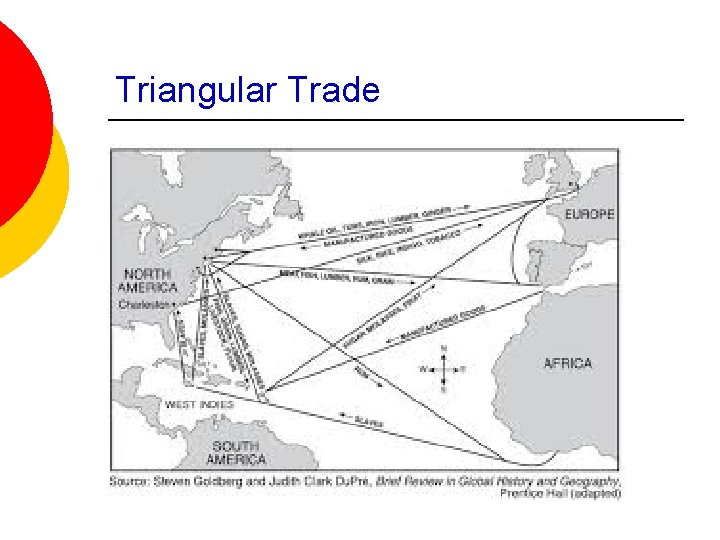
Triangular Trade
Assignment ¡ Columbian Exchange Reading and Questions