Survey implications Sylvia Lam Chairlady Hong Kong Dietitian


- Slides: 32
Survey implications Sylvia Lam Chairlady, Hong Kong Dietitian Association Accredited Practicing Dietitian of the Dietitians Association of Australia
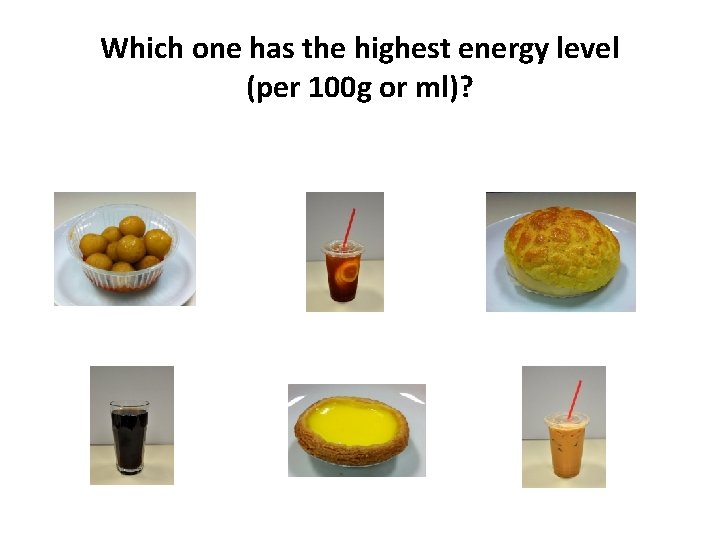
Which one has the highest energy level (per 100 g or ml)?
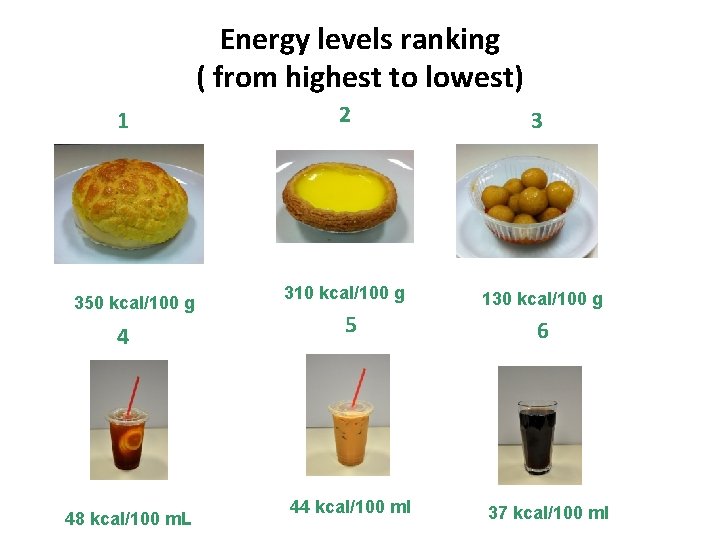
Energy levels ranking ( from highest to lowest) 1 350 kcal/100 g 4 48 kcal/100 m. L 2 310 kcal/100 g 5 44 kcal/100 ml 3 130 kcal/100 g 6 37 kcal/100 ml
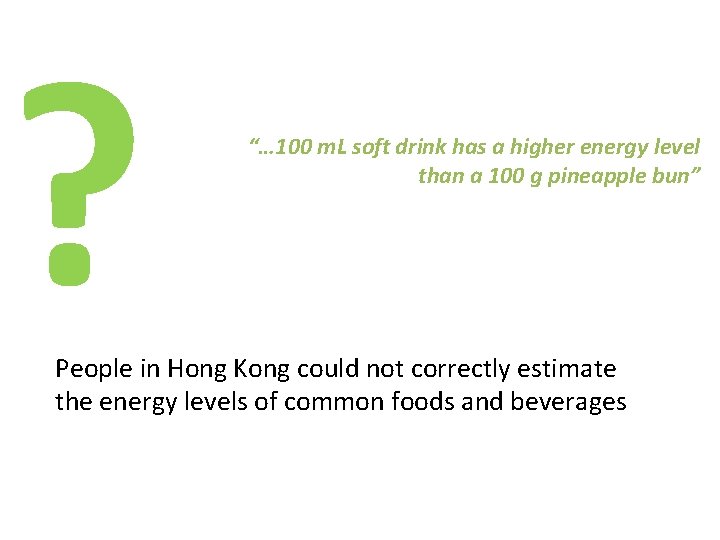
? “… 100 m. L soft drink has a higher energy level than a 100 g pineapple bun” People in Hong Kong could not correctly estimate the energy levels of common foods and beverages
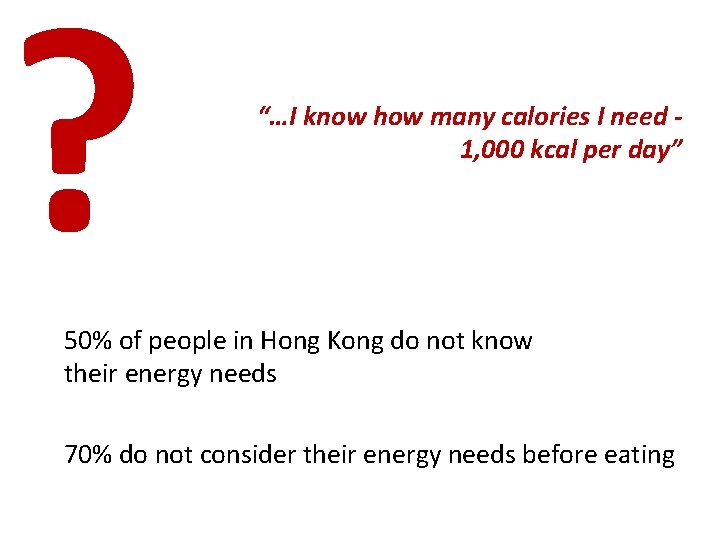
? “…I know how many calories I need 1, 000 kcal per day” 50% of people in Hong Kong do not know their energy needs 70% do not consider their energy needs before eating
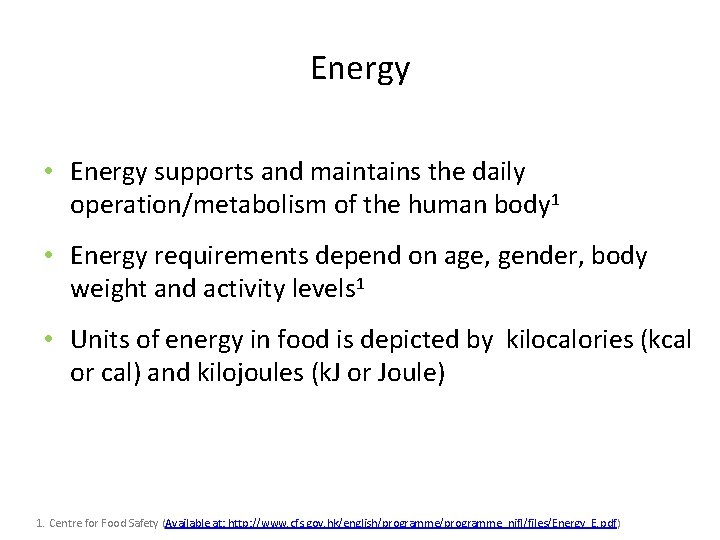
Energy • Energy supports and maintains the daily operation/metabolism of the human body 1 • Energy requirements depend on age, gender, body weight and activity levels 1 • Units of energy in food is depicted by kilocalories (kcal or cal) and kilojoules (k. J or Joule) 1. Centre for Food Safety (Available at: http: //www. cfs. gov. hk/english/programme_nifl/files/Energy_E. pdf)
Dietitian’s advice…. . Understanding the energy and nutrient information of the foods and beverages you eat can help you make informed dietary choices and benefits weight management
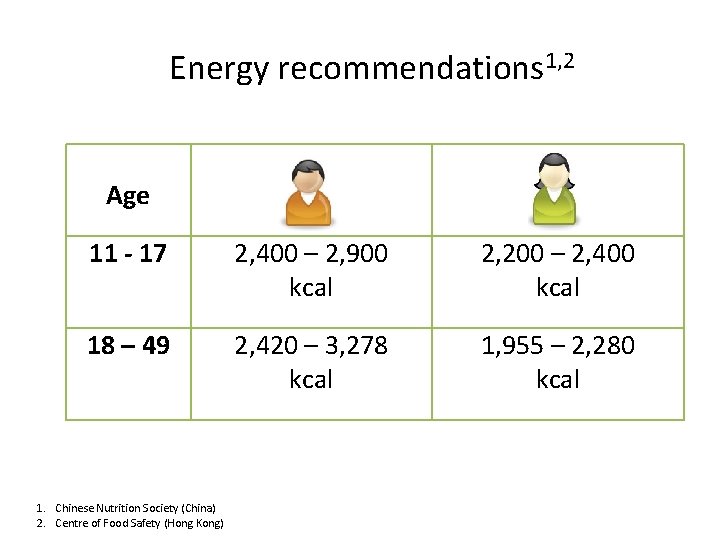
Energy recommendations 1, 2 Age 11 - 17 2, 400 – 2, 900 kcal 2, 200 – 2, 400 kcal 18 – 49 2, 420 – 3, 278 kcal 1, 955 – 2, 280 kcal 1. Chinese Nutrition Society (China) 2. Centre of Food Safety (Hong Kong)
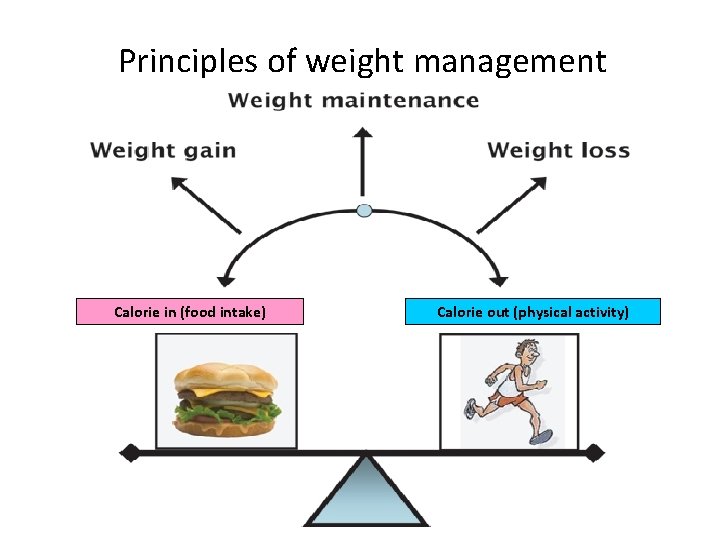
Principles of weight management Calorie in (food intake) Calorie out (physical activity)
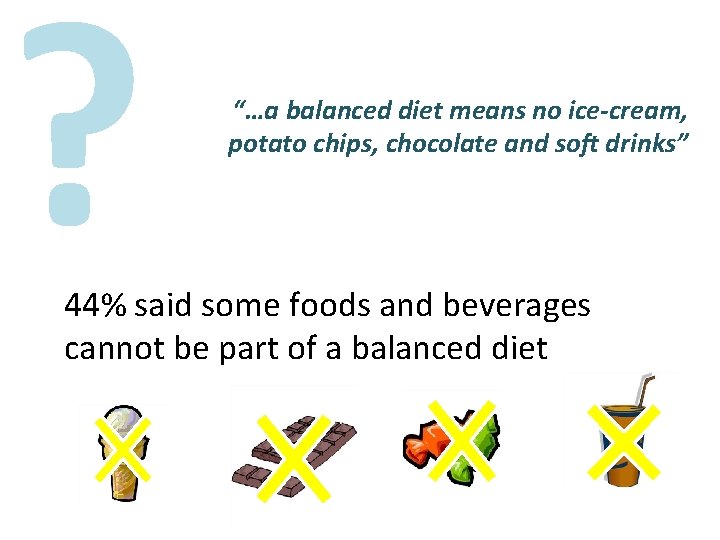
? “…a balanced diet means no ice-cream, potato chips, chocolate and soft drinks” 44% said some foods and beverages cannot be part of a balanced diet
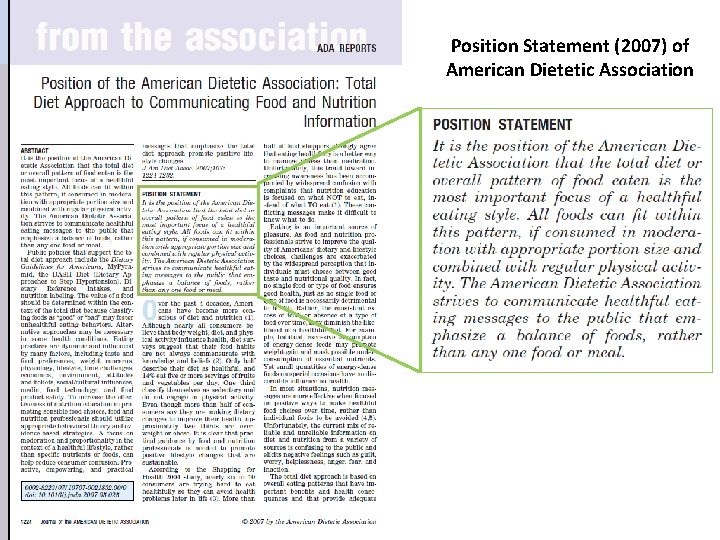
Position Statement (2007) of American Dietetic Association
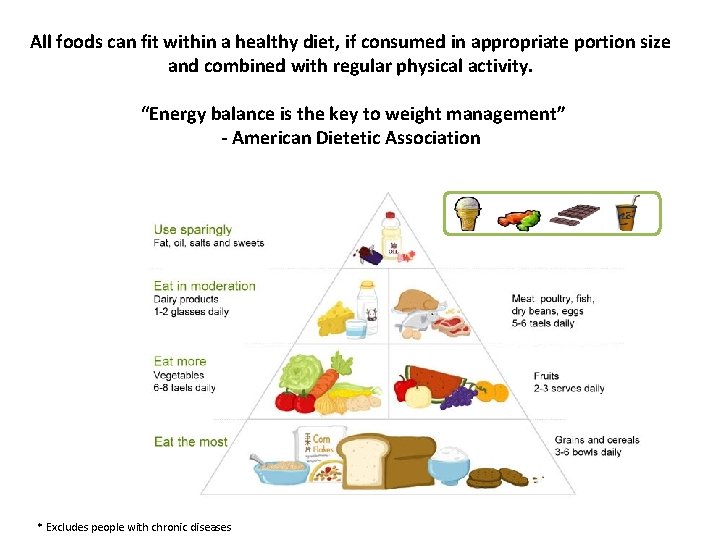
All foods can fit within a healthy diet, if consumed in appropriate portion size and combined with regular physical activity. “Energy balance is the key to weight management” - American Dietetic Association * Excludes people with chronic diseases
? “…Diet control is more important than exercise for weight management ” 70% misunderstand the principles of weight management
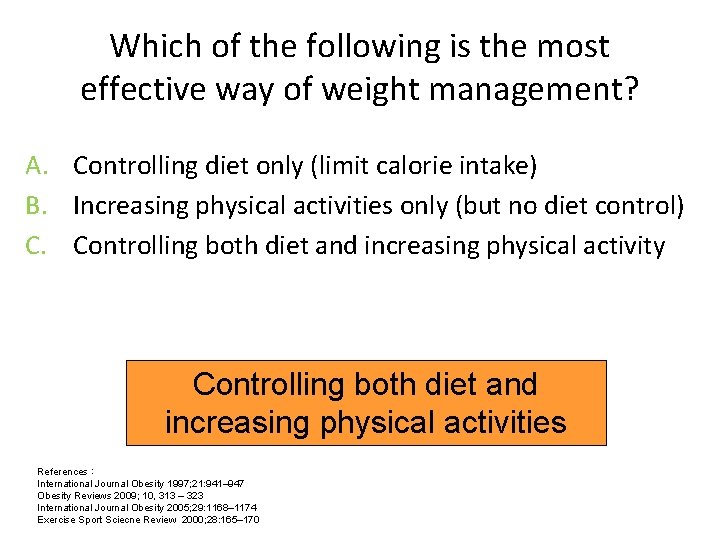
Which of the following is the most effective way of weight management? A. Controlling diet only (limit calorie intake) B. Increasing physical activities only (but no diet control) C. Controlling both diet and increasing physical activity Controlling both diet and increasing physical activities References: International Journal Obesity 1997; 21: 941– 947 Obesity Reviews 2009; 10, 313 – 323 International Journal Obesity 2005; 29: 1168– 1174 Exercise Sport Sciecne Review 2000; 28: 165– 170
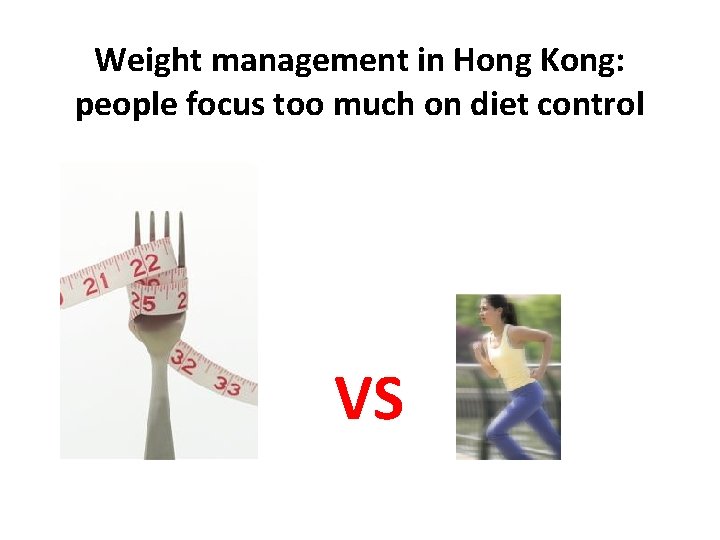
Weight management in Hong Kong: people focus too much on diet control VS
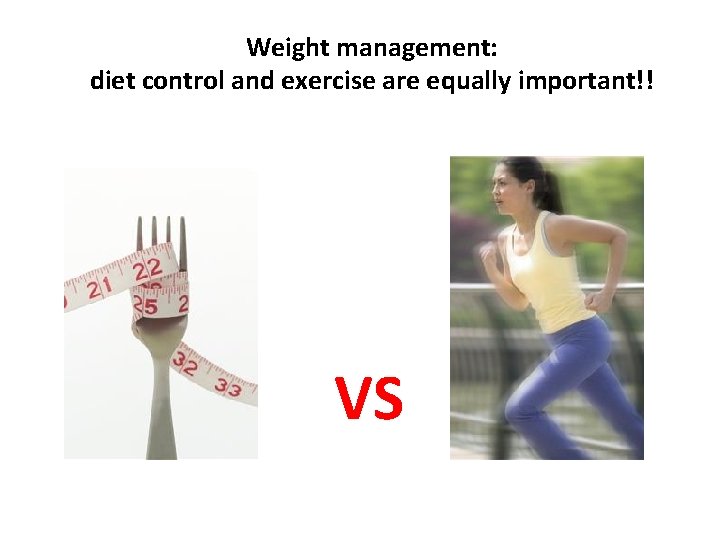
Weight management: diet control and exercise are equally important!! VS
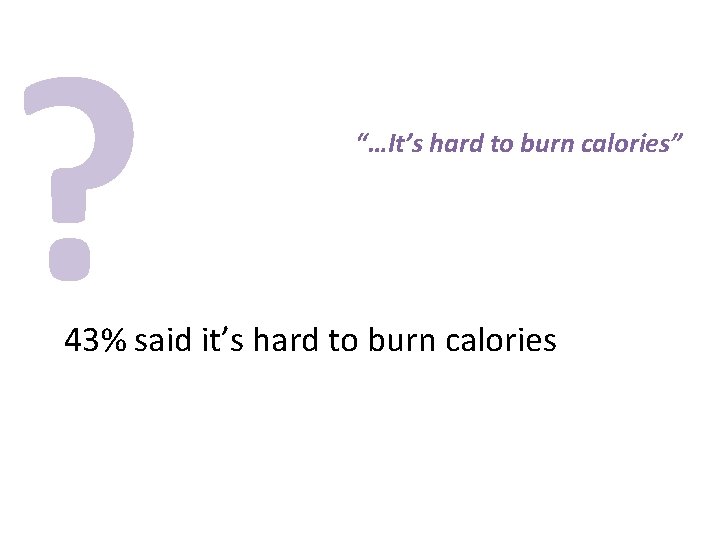
? “…It’s hard to burn calories” 43% said it’s hard to burn calories
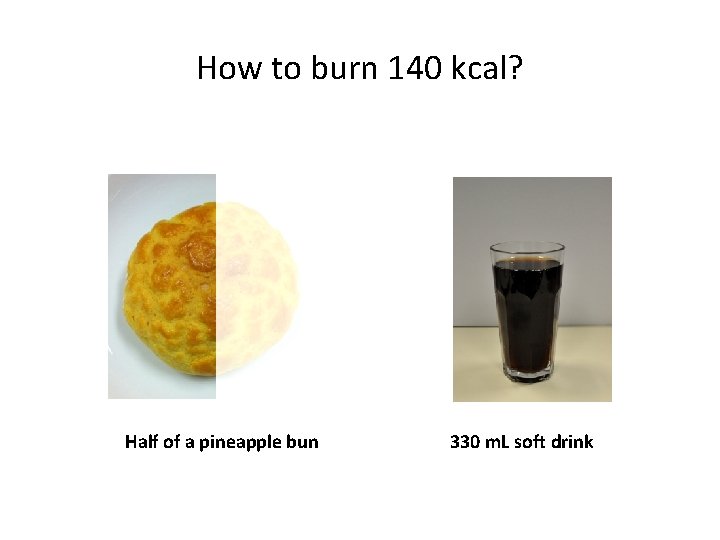
How to burn 140 kcal? Half of a pineapple bun 330 m. L soft drink
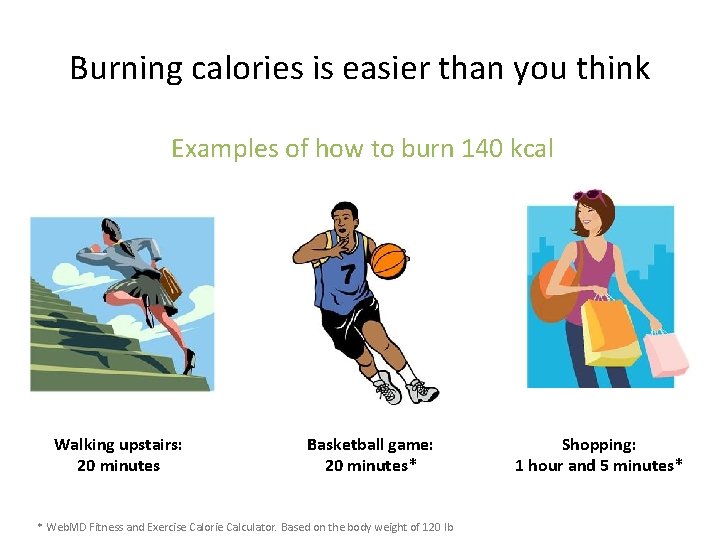
Burning calories is easier than you think Examples of how to burn 140 kcal Walking upstairs: 20 minutes Basketball game: 20 minutes* * Web. MD Fitness and Exercise Calorie Calculator. Based on the body weight of 120 lb Shopping: 1 hour and 5 minutes*
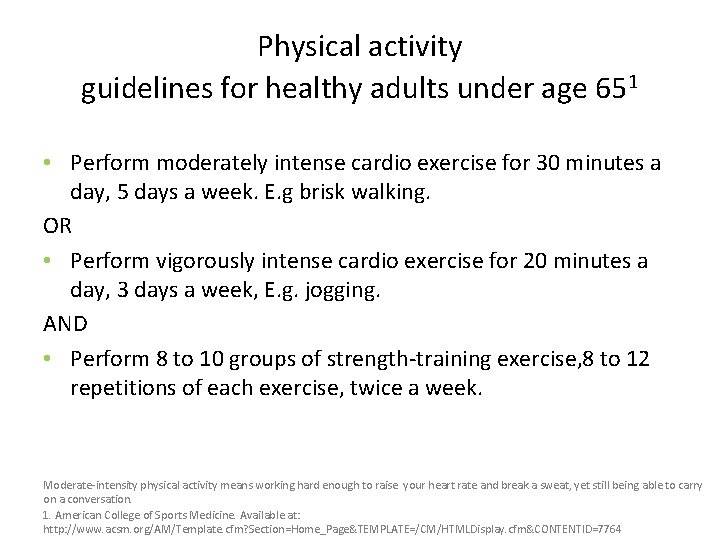
Physical activity guidelines for healthy adults under age 651 • Perform moderately intense cardio exercise for 30 minutes a day, 5 days a week. E. g brisk walking. OR • Perform vigorously intense cardio exercise for 20 minutes a day, 3 days a week, E. g. jogging. AND • Perform 8 to 10 groups of strength-training exercise, 8 to 12 repetitions of each exercise, twice a week. Moderate-intensity physical activity means working hard enough to raise your heart rate and break a sweat, yet still being able to carry on a conversation. 1. American College of Sports Medicine. Available at: http: //www. acsm. org/AM/Template. cfm? Section=Home_Page&TEMPLATE=/CM/HTMLDisplay. cfm&CONTENTID=7764
? “…I don’t feel it’s necessary to read the nutrition label” About 90% of people in Hong Kong do not read the nutrition label on the back of pack of foods and beverages
Everyone should read nutrition label before purchasing
3 simple steps to reading a nutrition label
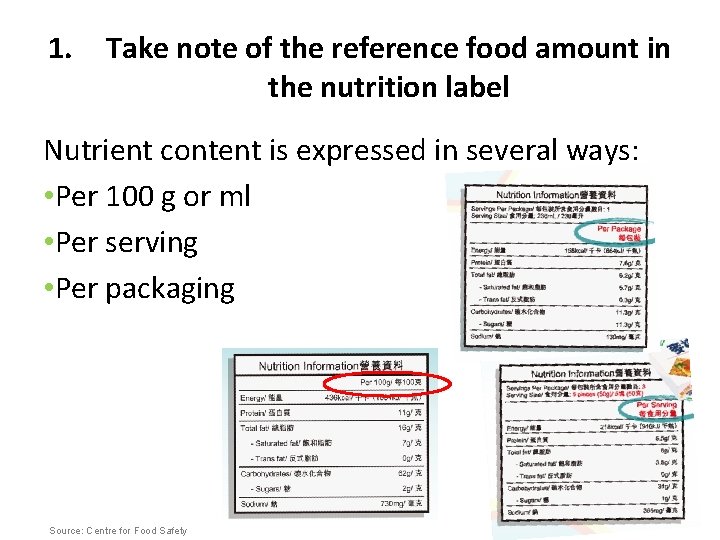
1. Take note of the reference food amount in the nutrition label Nutrient content is expressed in several ways: • Per 100 g or ml • Per serving • Per packaging Source: Centre for Food Safety
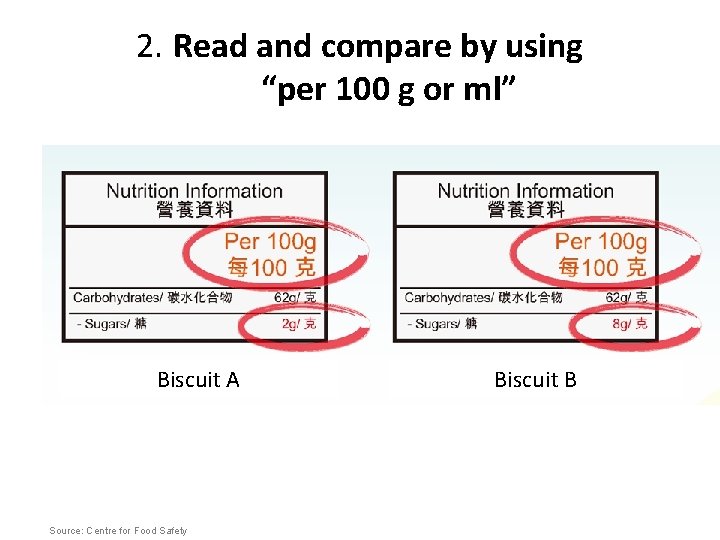
2. Read and compare by using “per 100 g or ml” Biscuit A Source: Centre for Food Safety Biscuit B
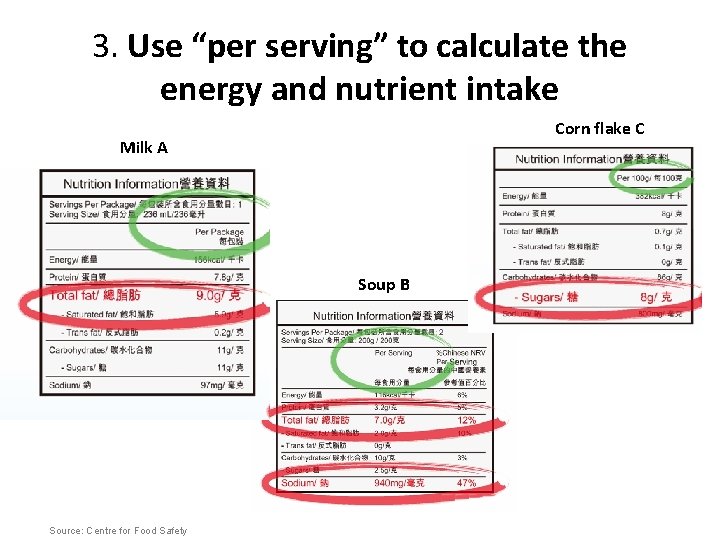
3. Use “per serving” to calculate the energy and nutrient intake Corn flake C Milk A Soup B Source: Centre for Food Safety
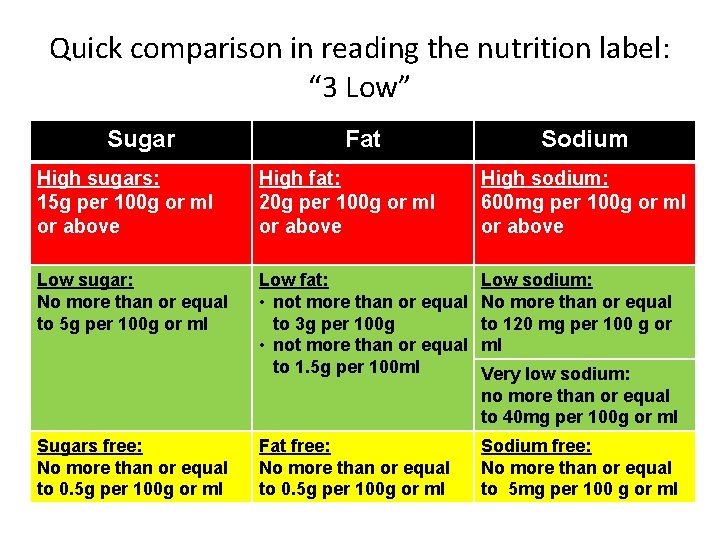
Quick comparison in reading the nutrition label: “ 3 Low” Sugar Fat Sodium High sugars: 15 g per 100 g or ml or above High fat: 20 g per 100 g or ml or above High sodium: 600 mg per 100 g or ml or above Low sugar: No more than or equal to 5 g per 100 g or ml Low fat: • not more than or equal to 3 g per 100 g • not more than or equal to 1. 5 g per 100 ml Low sodium: No more than or equal to 120 mg per 100 g or ml Fat free: No more than or equal to 0. 5 g per 100 g or ml Sodium free: No more than or equal to 5 mg per 100 g or ml Sugars free: No more than or equal to 0. 5 g per 100 g or ml Very low sodium: no more than or equal to 40 mg per 100 g or ml
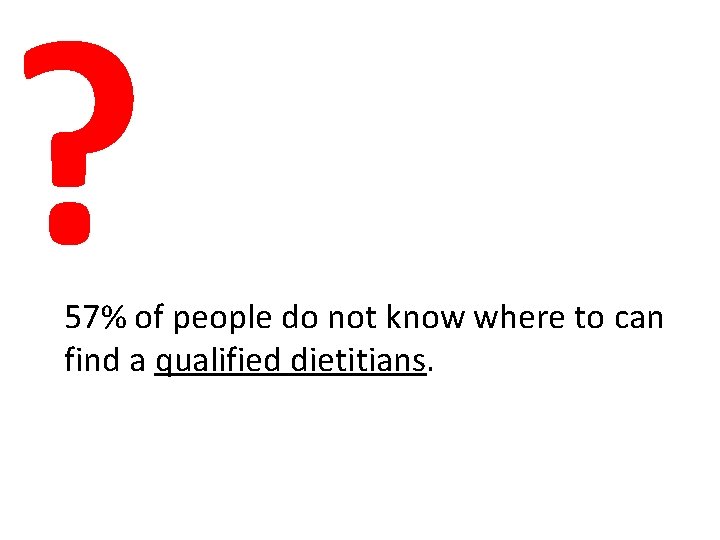
? 57% of people do not know where to can find a qualified dietitians.
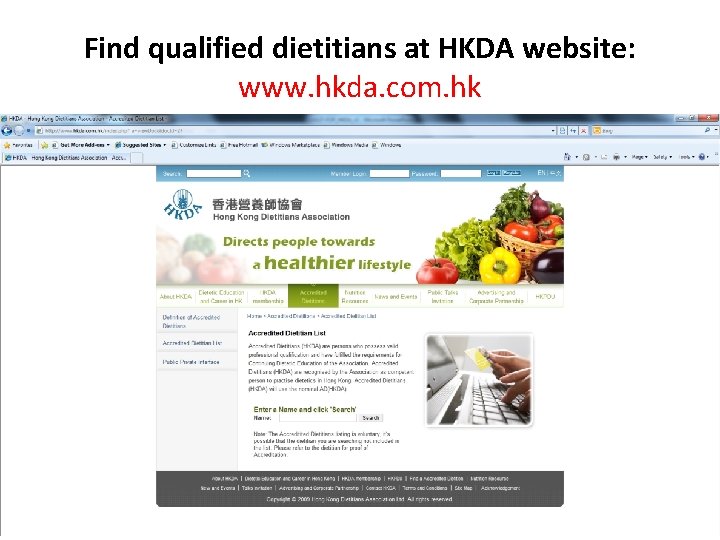
Find qualified dietitians at HKDA website: www. hkda. com. hk
Take Home Message… • More public education is needed to improve understanding of energy and nutrition information • Encourage people to read nutrition label before purchasing • Food and beverage companies should provide factual and easy to read nutrition label for consumers to make informed dietary choice
Thank you!