StudentsatRisk Darryl Veld Manager Student Affairs Agenda Studentatrisk

- Slides: 14
Students-at-Risk Darryl Veld, Manager Student Affairs
• Agenda: – Student-at-risk overview – Trends – Reporting Protocol • Emergency/crisis situations • Non-emergency/crisis situations • How to help • Case Studies
Definition Students-at-risk refers to any student whose physical or mental state is such that they may be, or have become a threat to themselves, others, or the Brock community in general.
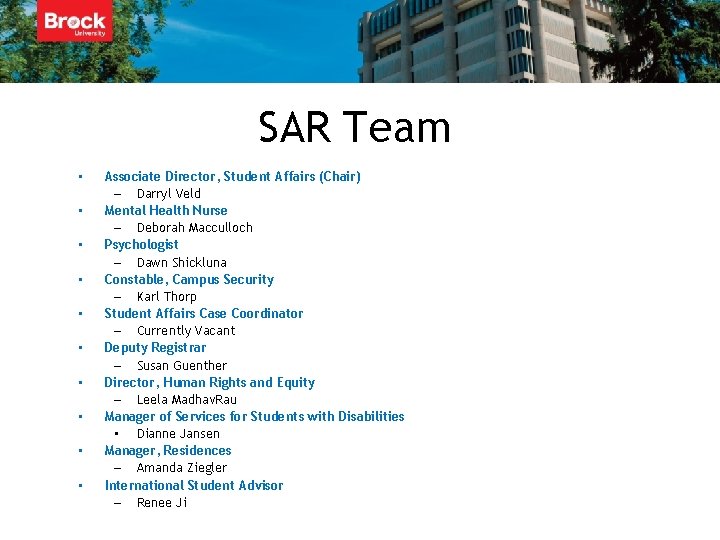
SAR Team • • • Associate Director, Student Affairs (Chair) – Darryl Veld Mental Health Nurse – Deborah Macculloch Psychologist – Dawn Shickluna Constable, Campus Security – Karl Thorp Student Affairs Case Coordinator – Currently Vacant Deputy Registrar – Susan Guenther Director, Human Rights and Equity – Leela Madhav. Rau Manager of Services for Students with Disabilities • Dianne Jansen Manager, Residences – Amanda Ziegler International Student Advisor – Renee Ji
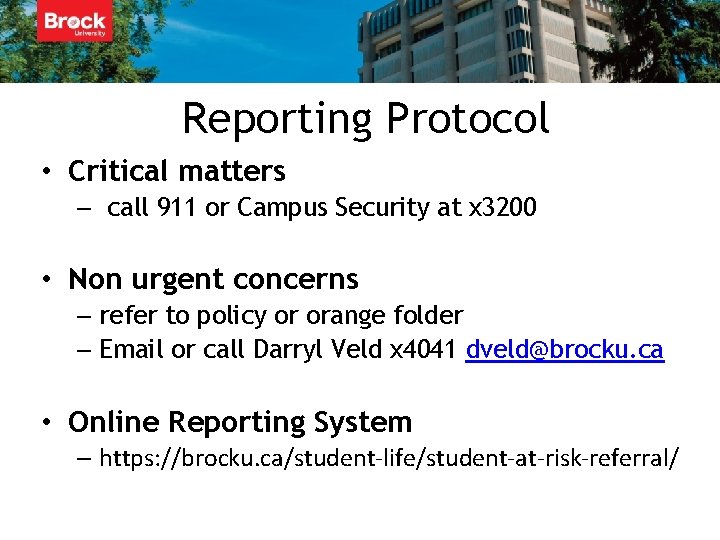
Reporting Protocol • Critical matters – call 911 or Campus Security at x 3200 • Non urgent concerns – refer to policy or orange folder – Email or call Darryl Veld x 4041 dveld@brocku. ca • Online Reporting System – https: //brocku. ca/student-life/student-at-risk-referral/
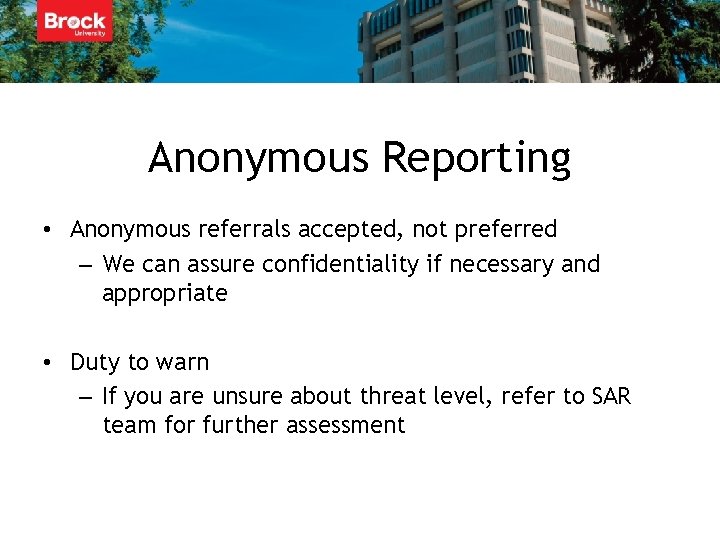
Anonymous Reporting • Anonymous referrals accepted, not preferred – We can assure confidentiality if necessary and appropriate • Duty to warn – If you are unsure about threat level, refer to SAR team for further assessment
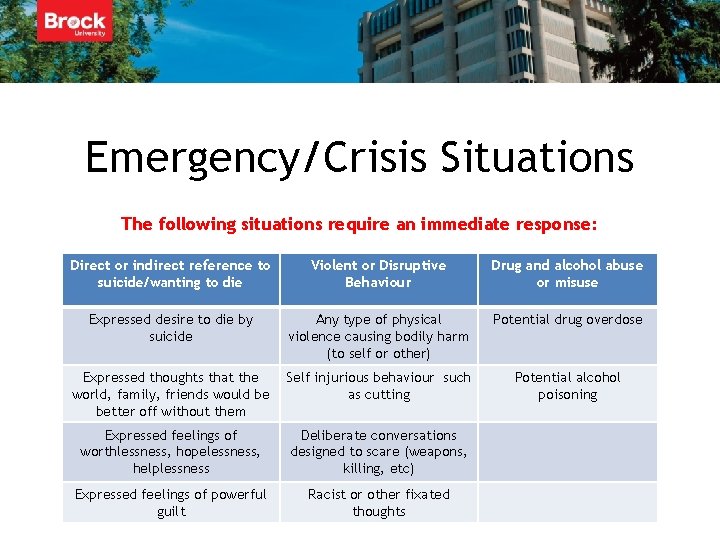
Emergency/Crisis Situations The following situations require an immediate response: Direct or indirect reference to suicide/wanting to die Violent or Disruptive Behaviour Drug and alcohol abuse or misuse Expressed desire to die by suicide Any type of physical violence causing bodily harm (to self or other) Potential drug overdose Expressed thoughts that the world, family, friends would be better off without them Self injurious behaviour such as cutting Potential alcohol poisoning Expressed feelings of worthlessness, hopelessness, helplessness Deliberate conversations designed to scare (weapons, killing, etc) Expressed feelings of powerful guilt Racist or other fixated thoughts
Non-Emergency/Crisis Situations The following situations do not require immediate response: • • • Marked changes in mood or behaviour Academic and learning challenges Difficulty in communicating and/or distortions of reality Sexual assault disclosure Discrimination, harassment and bullying Disordered eating If you have any questions about the situations mentioned above, do not hesitate to contact the Manager of Student Affairs.
Other Signs of Distress • • • Changes in academic performance Listlessness or falling asleep in class Unusual behaviour High levels of irritability Significant weight loss or gain Changes in hygiene or dress Changes in relationships or social behaviour Difficulty concentrating or communicating Loss or deterioration of housing Significant financial pressures
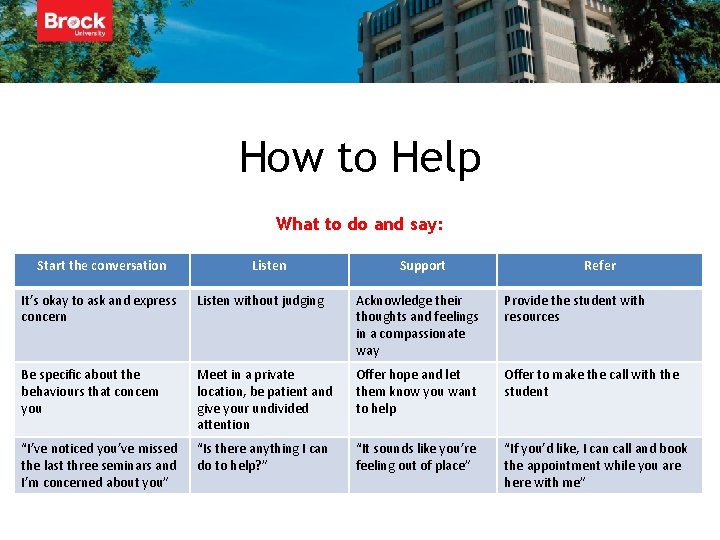
How to Help What to do and say: Start the conversation Listen Support Refer It’s okay to ask and express concern Listen without judging Acknowledge their thoughts and feelings in a compassionate way Provide the student with resources Be specific about the behaviours that concern you Meet in a private location, be patient and give your undivided attention Offer hope and let them know you want to help Offer to make the call with the student “I’ve noticed you’ve missed the last three seminars and I’m concerned about you” “Is there anything I can do to help? ” “It sounds like you’re feeling out of place” “If you’d like, I can call and book the appointment while you are here with me”
High Risk Times • September through mid October – 30% of all SAR referrals during this period • Mid-term and final exam • Late January
Thank you! Questions?
Case Study 18 -year-old student, disclosed that they ingested 12 aspirins a month ago with the intent to die by suicide. They deny feeling suicidal at this time (“I won’t do it again; I learned my lesson”). They report that they have always had difficulty expressing their feelings and that no one else is aware of this suicide attempt. • • • Is this student in a crisis situation? Does Campus Security and/or Emergency Services need to be notified? How would you respond to this student? Would you refer this student to SAR?
Case Study 19 -year-old student observed to be in a “sluggish” state. They are slurring their words and alcohol can be smelled on their breath. They report that they recently have given away their possessions, and that they are a burden to their family and friends. When asked directly, they deny feeling suicidal, however they state that they do not see the point in living. • • • Is this student in a crisis situation? Does Campus Security and/or Emergency Services need to be notified? How would you respond to this student? Would you refer this student to SAR?