STRATEGIC TECHNOLOGY MARKETING DR ISMI RAJIANI Selling and


- Slides: 36
STRATEGIC TECHNOLOGY MARKETING DR. ISMI RAJIANI
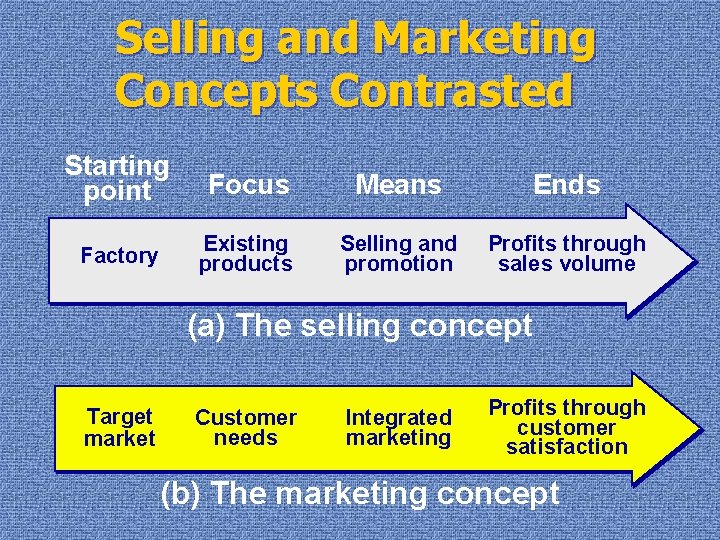
Selling and Marketing Concepts Contrasted Starting point Focus Means Ends Factory Existing products Selling and promotion Profits through sales volume (a) The selling concept Target market Customer needs Integrated marketing Profits through customer satisfaction (b) The marketing concept
Operational Model for Implementing the Philosophy of the Marketing Concept is the:
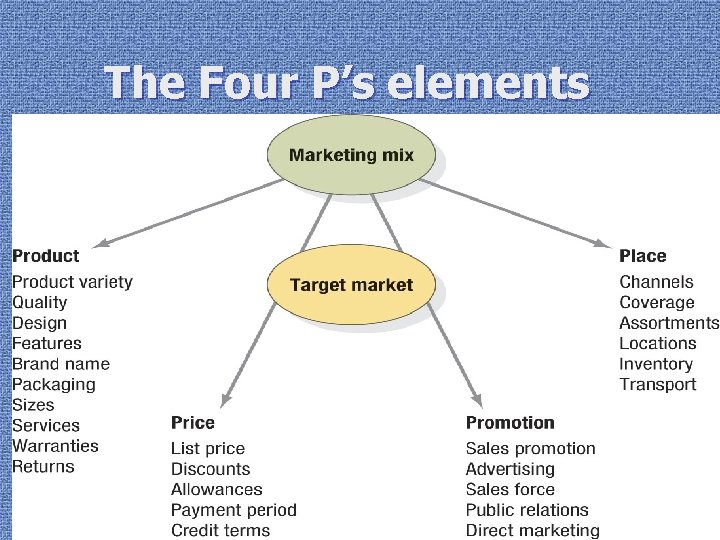
The Marketing Mix Consists of Four Basic Strategic Variables (the four “P’s”) Product Strategy n Price Strategy n Promotional Strategy n Place Strategy (Channels of Distribution) n
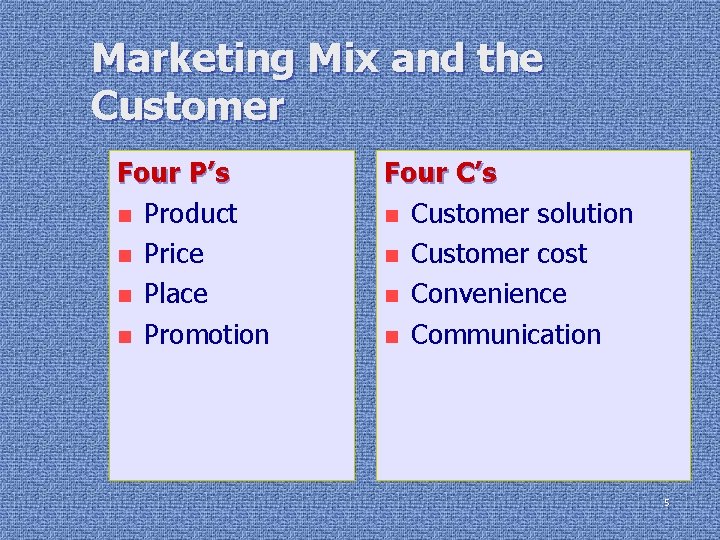
Marketing Mix and the Customer Four P’s n Product n Price n Place n Promotion Four C’s n Customer solution n Customer cost n Convenience n Communication 5
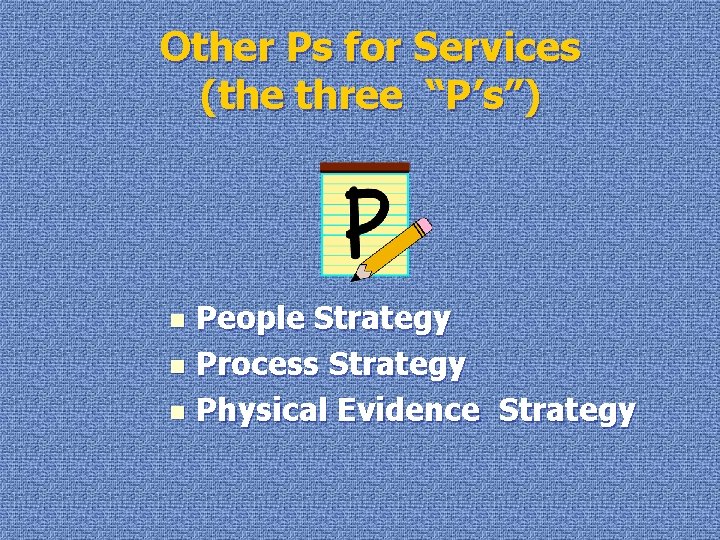
Other Ps for Services (the three “P’s”) People Strategy n Process Strategy n Physical Evidence Strategy n
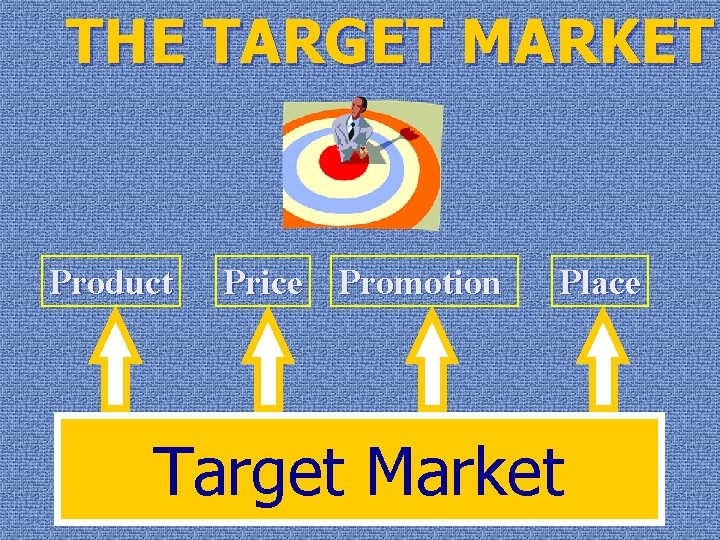
The role of STRATEGIC marketing is to mix or blend these four strategic variables in such a way as to meet the needs of. . .
THE TARGET MARKET Product Price Promotion Place Target Market
Marketing as a Strategic Component of the Organization Marketing is elevated to a level of strategic position in the organization
The Four P’s elements 1 -10
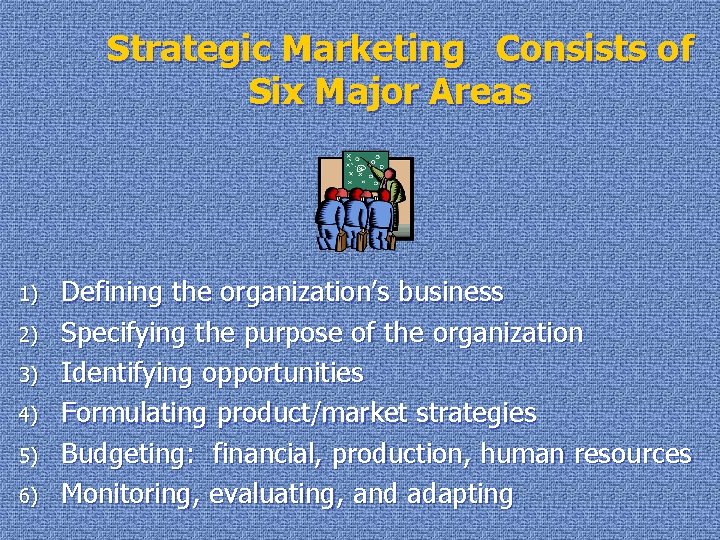
Strategic Marketing Consists of Six Major Areas 1) 2) 3) 4) 5) 6) Defining the organization’s business Specifying the purpose of the organization Identifying opportunities Formulating product/market strategies Budgeting: financial, production, human resources Monitoring, evaluating, and adapting
Defining the Organization’s Business n n Type of customers (markets) to be served Needs of those customers Means by which organization will meet the needs Competitive advantage (attainment and sustained)
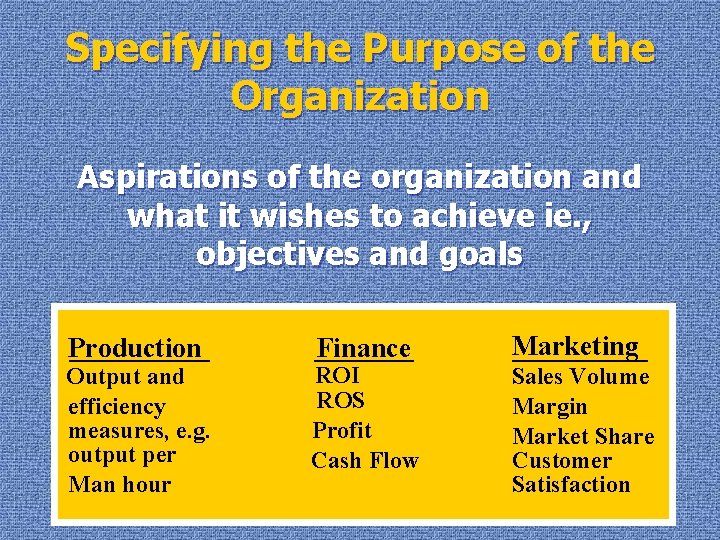
Specifying the Purpose of the Organization Aspirations of the organization and what it wishes to achieve ie. , objectives and goals Production Output and efficiency measures, e. g. output per Man hour Finance ROI ROS Profit Cash Flow Marketing Sales Volume Margin Market Share Customer Satisfaction
Identifying Organizational Opportunities External (environmental) opportunities matched with internal (organizational) capabilities n n n What do we do best? (distinctive competency) What must we do? (success requirements) What might we do? (environmental opportunity)
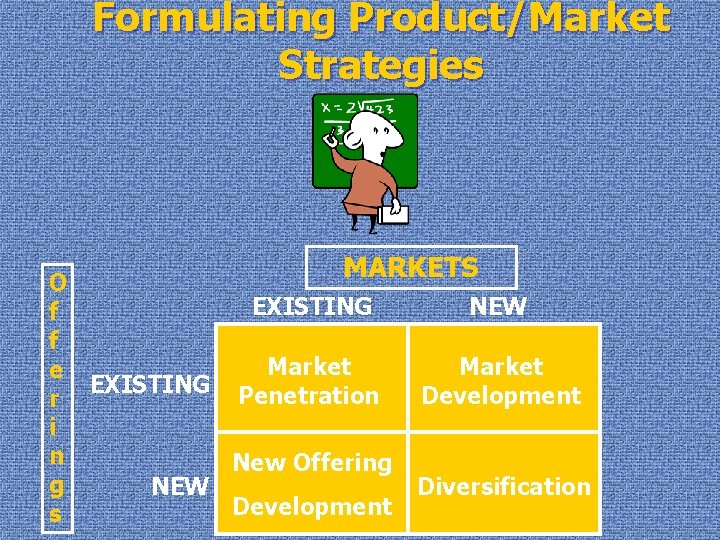
Formulating Product/Market Strategies MARKETS O EXISTING f f Market e EXISTING Penetration r i n New Offering g NEW Development s NEW Market Development Diversification
Budgeting, Financial, Production, and Human Resources Financial implications and allocations relevant to the marketing plan Revenue, expense, and profit projections Cost allocations made
Monitoring, Evaluating and Adapting Marketing Strategy Marketing audit --comprehensive, systematic, independent, and periodic examination of the organization’s marketing objectives and strategies to identify problems and opportunities as well as to recommend ways of improving marketing performance
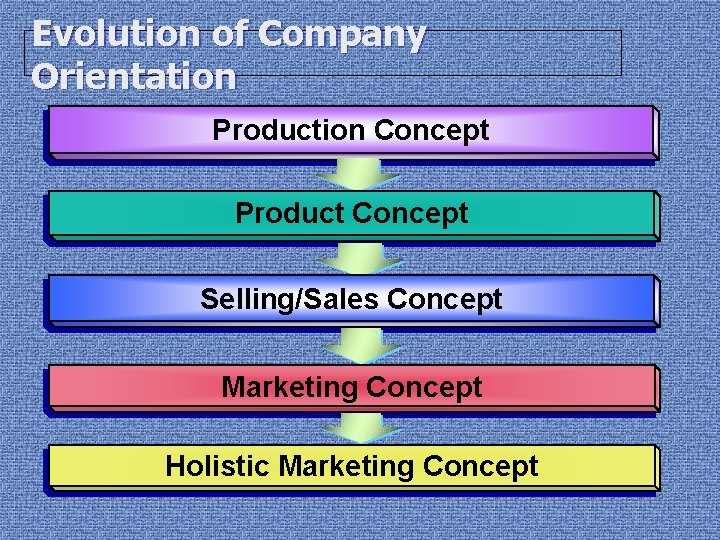
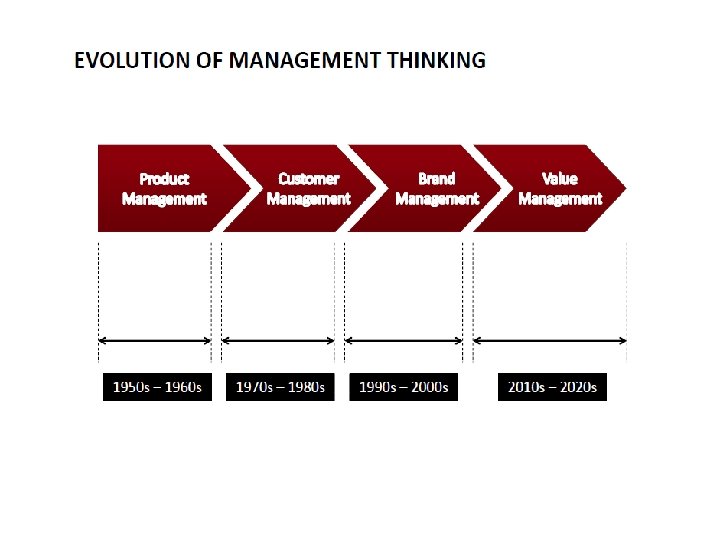
Evolution of Company Orientation Production Concept Product Concept Selling/Sales Concept Marketing Concept Holistic Marketing Concept
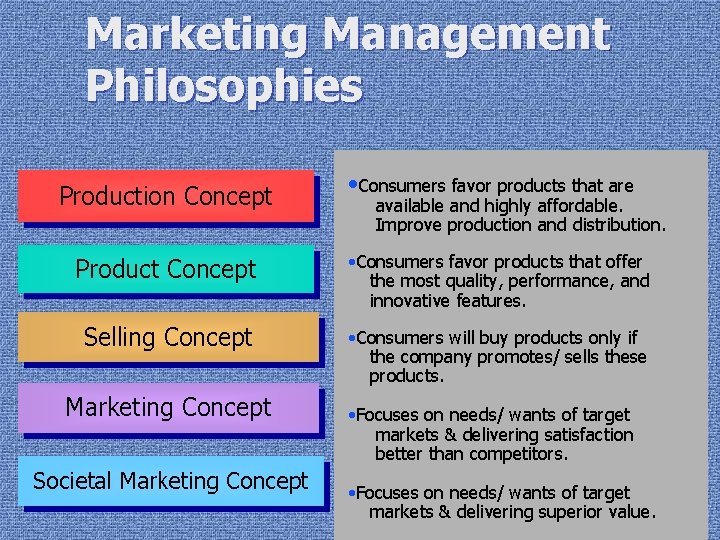
Marketing Management Philosophies Production Concept • Consumers favor products that are available and highly affordable. Improve production and distribution. Product Concept • Consumers favor products that offer the most quality, performance, and innovative features. Selling Concept • Consumers will buy products only if the company promotes/ sells these products. Marketing Concept Societal Marketing Concept • Focuses on needs/ wants of target markets & delivering satisfaction better than competitors. • Focuses on needs/ wants of target 19 markets & delivering superior value.
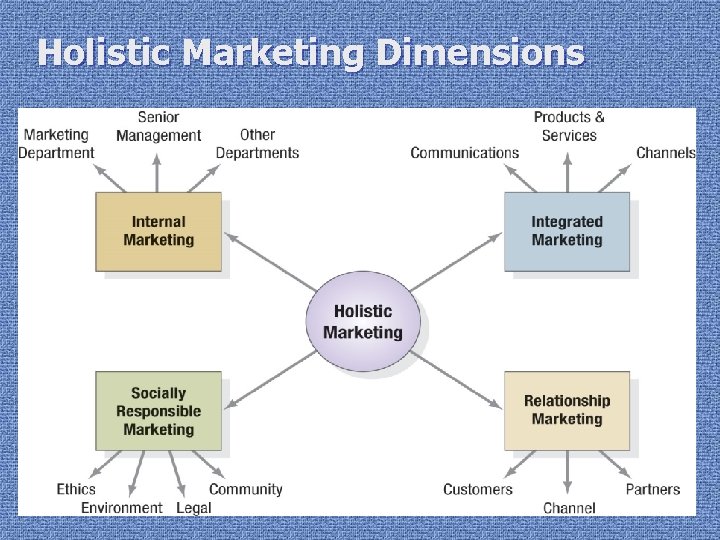
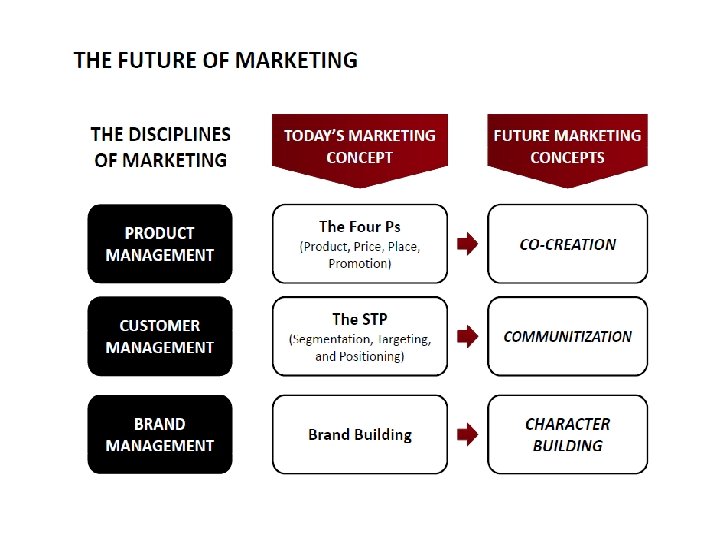
Holistic Marketing Dimensions 1 -20
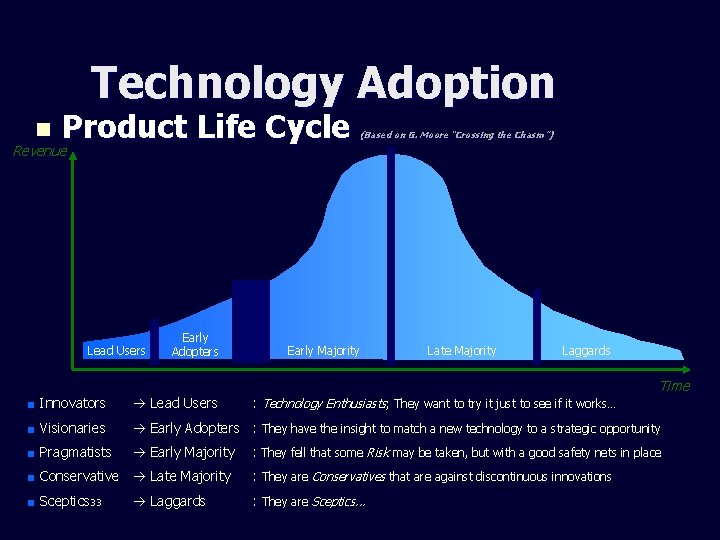
Technology Adoption Product Life Cycle Revenue n Lead Users Early Adopters (Based on G. Moore “Crossing the Chasm”) Early Majority Late Majority Laggards Time ■ Innovators Lead Users : Technology Enthusiasts; They want to try it just to see if it works… ■ Visionaries Early Adopters : They have the insight to match a new technology to a strategic opportunity ■ Pragmatists Early Majority : They fell that some Risk may be taken, but with a good safety nets in place ■ Conservative Late Majority : They are Conservatives that are against discontinuous innovations ■ Sceptics 33 : They are Sceptics. . . Laggards
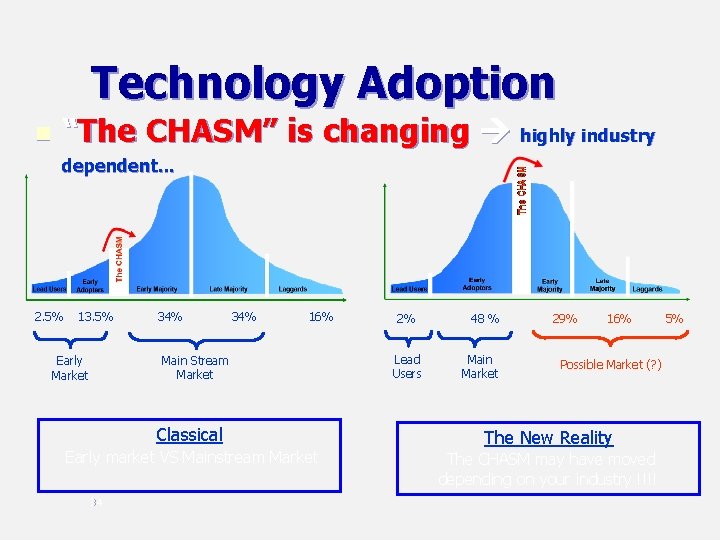
Technology Adoption n “The CHASM” is changing highly industry dependent. . . 2. 5% 13. 5% 34% 16% Main Stream Market Early Market Classical Early market VS Mainstream Market 34 2% Lead Users 48 % Main Market 29% 16% Possible Market (? ) The New Reality The CHASM may have moved depending on your industry !!!! 5%
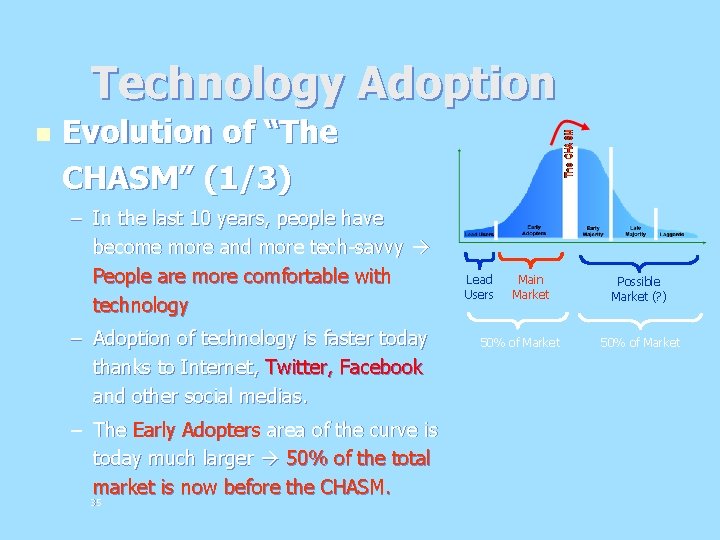
Technology Adoption n Evolution of “The CHASM” (1/3) – In the last 10 years, people have become more and more tech-savvy People are more comfortable with technology – Adoption of technology is faster today thanks to Internet, Twitter, Facebook and other social medias. – The Early Adopters area of the curve is today much larger 50% of the total market is now before the CHASM. 35 Lead Users Main Market 50% of Market Possible Market (? ) 50% of Market
Conclusions 1. Marketing Mix ■ Branding ■ A strong branding is required to ease market penetration and allow client retention. ■ Social Medias ■ Use all social medias on the web to help your market be aware of what you are doing. The difficulty is to do its soon enough but at the same time not too soon. ■ You must analyze periodically the social medias to know what is been said about your company, group and products. Use those medias to influence perceptions and be close to your clients (customer proximity). 2. Understanding Market Segment ■ You must understand your market and this takes time and efforts. If your “beachhead” is very niche or is only a specific program (governmental, defense), you must work on the customer intimacy to influence his decisions toward your solution. 36