Statistical approach to the migratory phenomena in Spain

- Slides: 16
Statistical approach to the migratory phenomena in Spain during the period 2001 -2011 from the recorded information in the Municipal Population Registers Sixto Muriel de la Riva Deputy Director of Population Statistics National Statistics Institute of Spain Joint Eurostat/UNECE Work Session on Migration Statistics. Geneve, 17 -19 October 2012
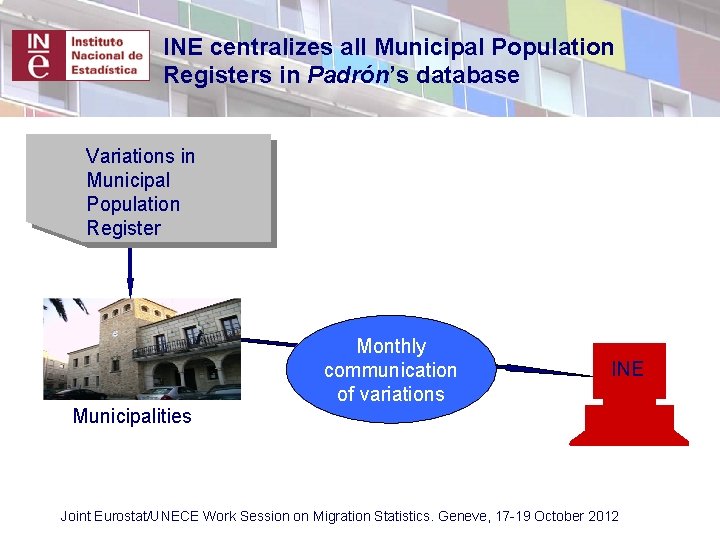
INE centralizes all Municipal Population Registers in Padrón’s database Variations in Municipal Population Register Monthly communication of variations INE Municipalities Joint Eurostat/UNECE Work Session on Migration Statistics. Geneve, 17 -19 October 2012
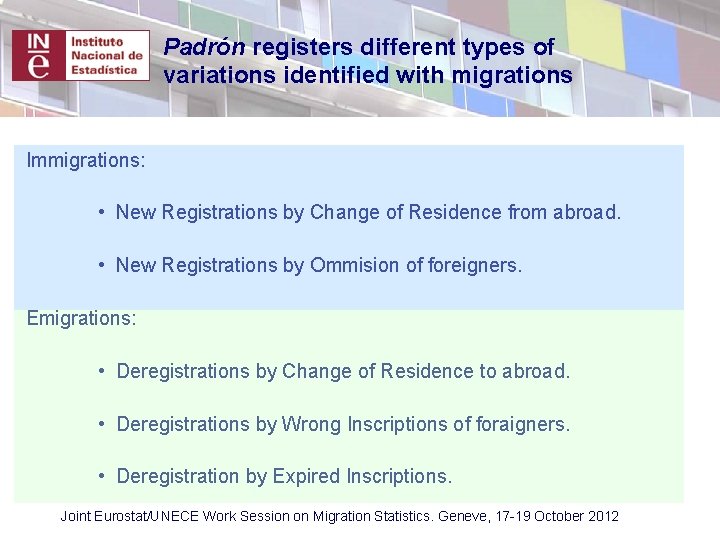
Padrón registers different types of variations identified with migrations Immigrations: • New Registrations by Change of Residence from abroad. • New Registrations by Ommision of foreigners. Emigrations: • Deregistrations by Change of Residence to abroad. • Deregistrations by Wrong Inscriptions of foraigners. • Deregistration by Expired Inscriptions. Joint Eurostat/UNECE Work Session on Migration Statistics. Geneve, 17 -19 October 2012
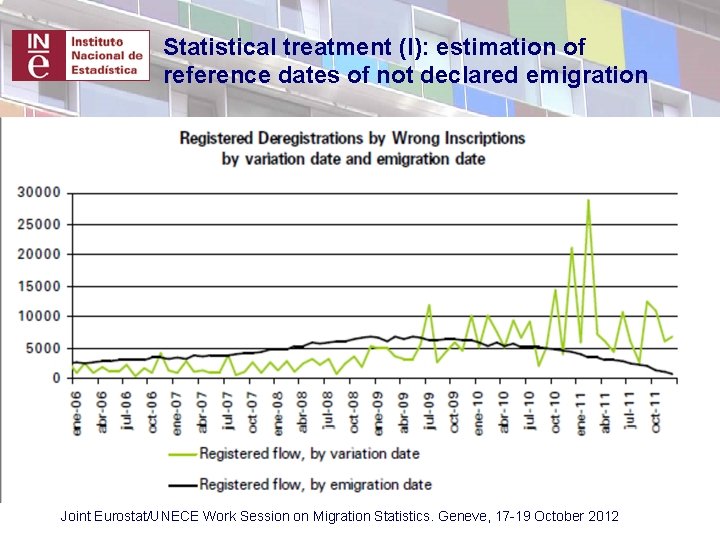
Statistical treatment (I): estimation of reference dates of not declared emigration Joint Eurostat/UNECE Work Session on Migration Statistics. Geneve, 17 -19 October 2012
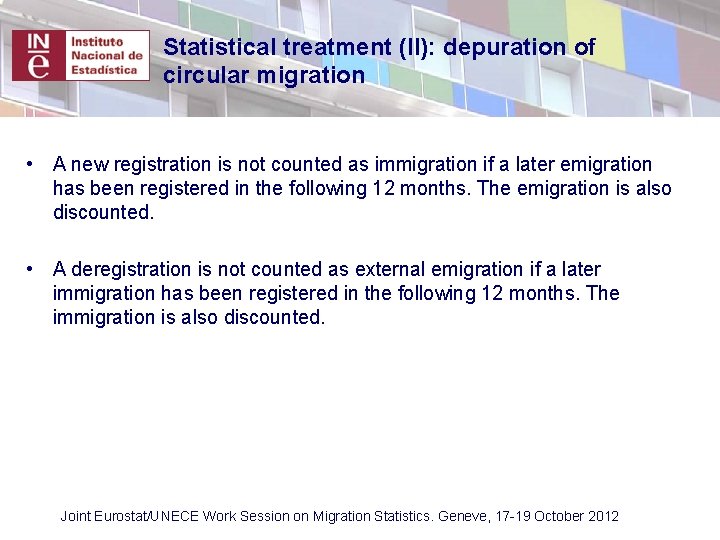
Statistical treatment (II): depuration of circular migration • A new registration is not counted as immigration if a later emigration has been registered in the following 12 months. The emigration is also discounted. • A deregistration is not counted as external emigration if a later immigration has been registered in the following 12 months. The immigration is also discounted. Joint Eurostat/UNECE Work Session on Migration Statistics. Geneve, 17 -19 October 2012
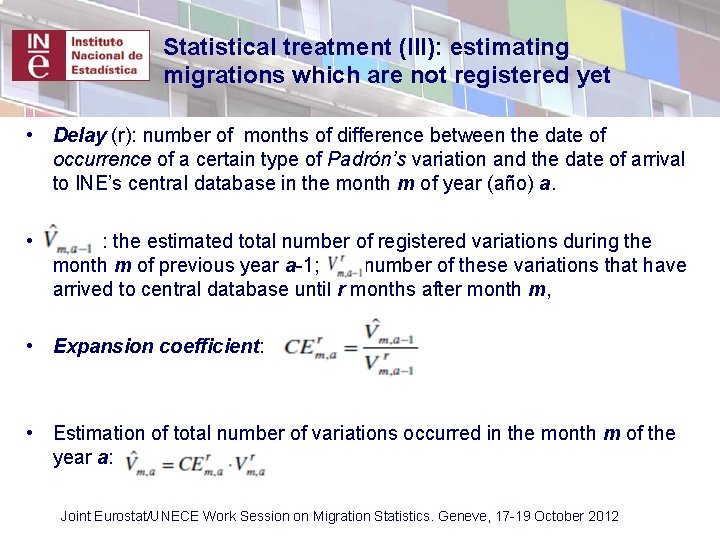
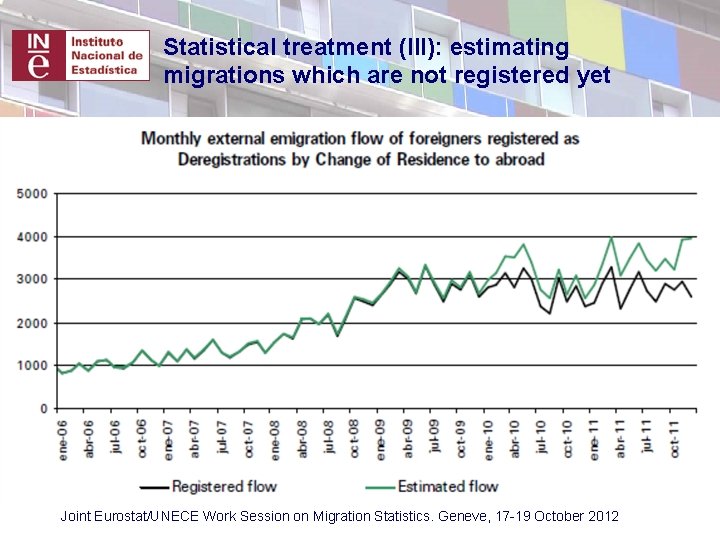
Statistical treatment (III): estimating migrations which are not registered yet • Delay (r): number of months of difference between the date of occurrence of a certain type of Padrón’s variation and the date of arrival to INE’s central database in the month m of year (año) a. • : the estimated total number of registered variations during the month m of previous year a-1; number of these variations that have arrived to central database until r months after month m, • Expansion coefficient: • Estimation of total number of variations occurred in the month m of the year a: Joint Eurostat/UNECE Work Session on Migration Statistics. Geneve, 17 -19 October 2012
Statistical treatment (III): estimating migrations which are not registered yet Joint Eurostat/UNECE Work Session on Migration Statistics. Geneve, 17 -19 October 2012
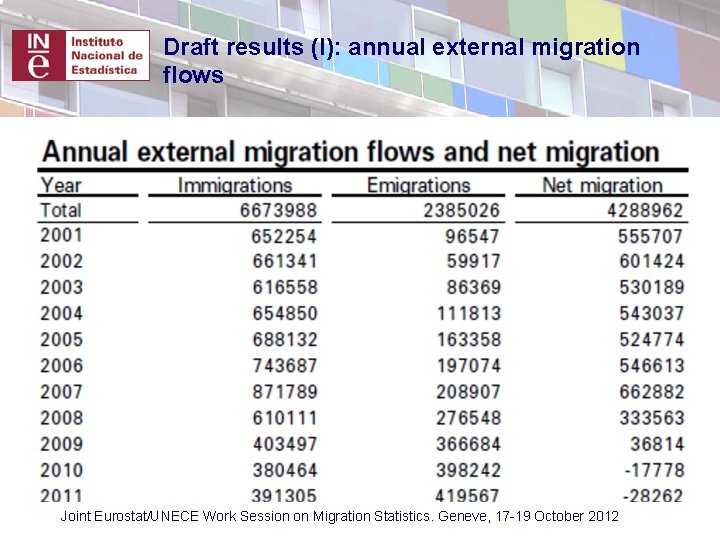
Draft results (I): annual external migration flows Joint Eurostat/UNECE Work Session on Migration Statistics. Geneve, 17 -19 October 2012
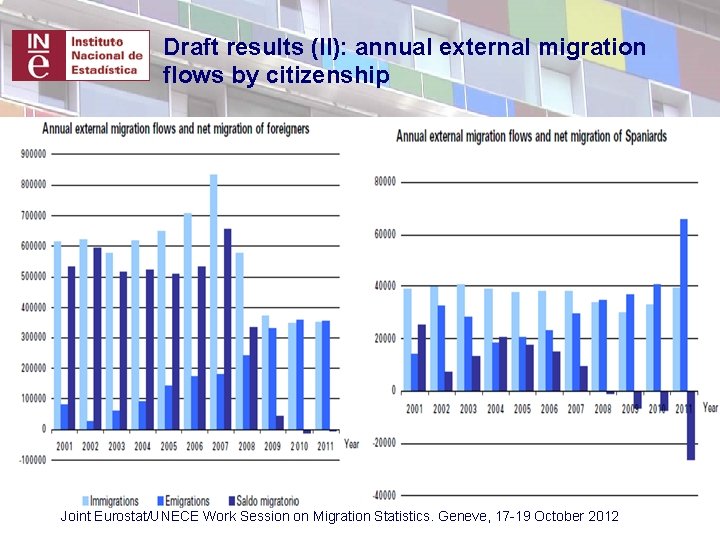
Draft results (II): annual external migration flows by citizenship Joint Eurostat/UNECE Work Session on Migration Statistics. Geneve, 17 -19 October 2012
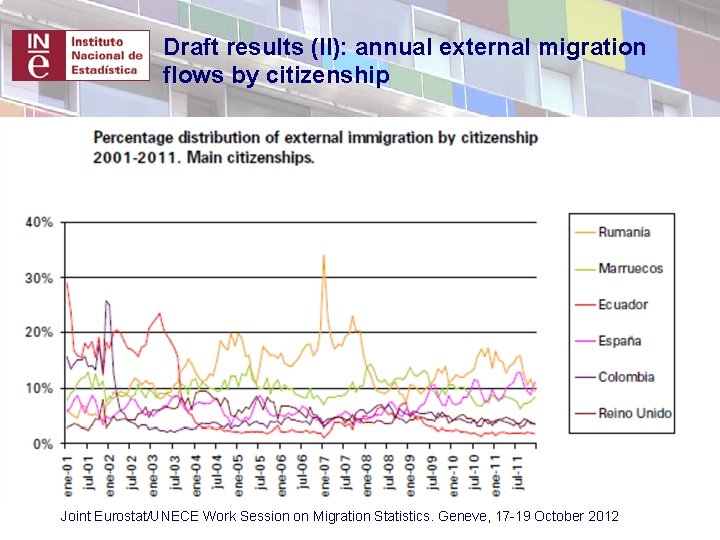
Draft results (II): annual external migration flows by citizenship Joint Eurostat/UNECE Work Session on Migration Statistics. Geneve, 17 -19 October 2012
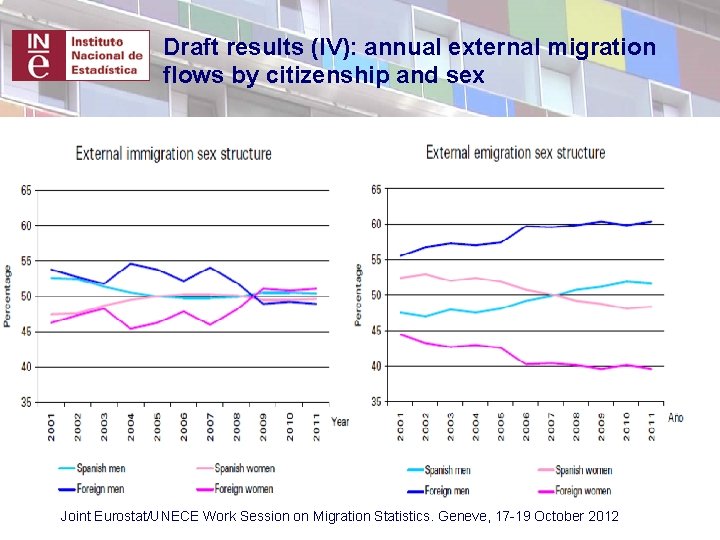
Draft results (IV): annual external migration flows by citizenship and sex Joint Eurostat/UNECE Work Session on Migration Statistics. Geneve, 17 -19 October 2012
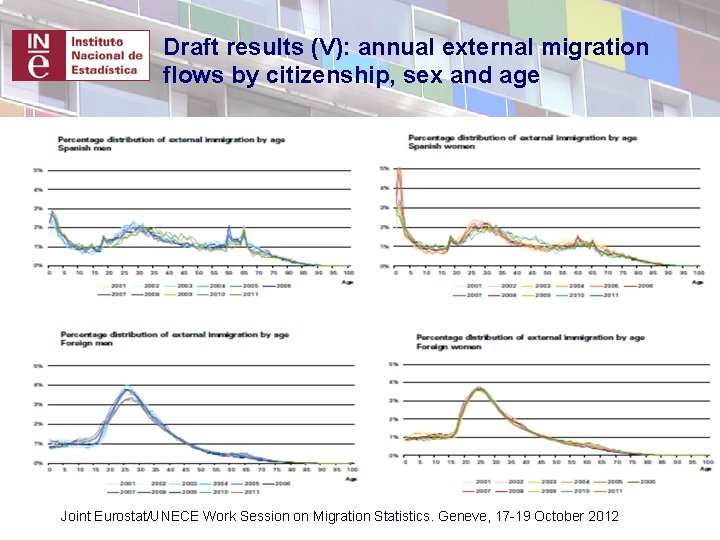
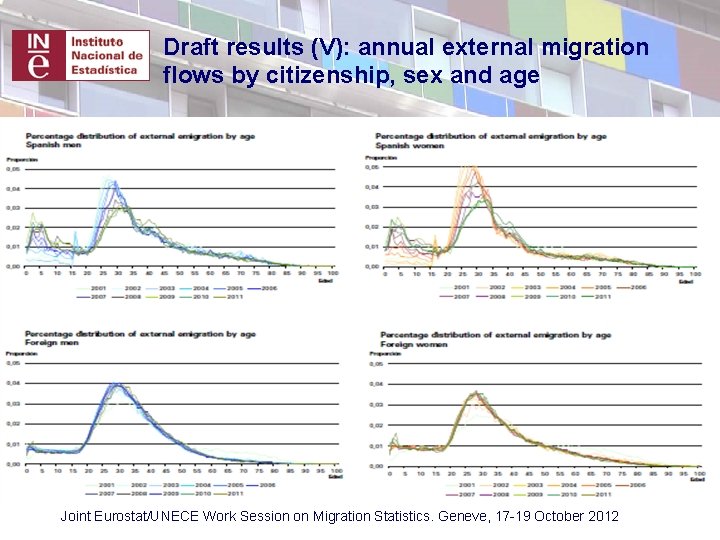
Draft results (V): annual external migration flows by citizenship, sex and age Joint Eurostat/UNECE Work Session on Migration Statistics. Geneve, 17 -19 October 2012
Draft results (V): annual external migration flows by citizenship, sex and age Joint Eurostat/UNECE Work Session on Migration Statistics. Geneve, 17 -19 October 2012
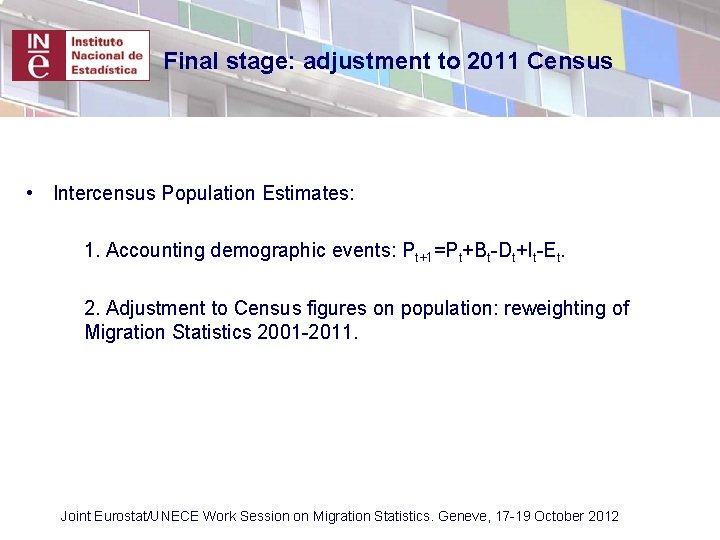
Final stage: adjustment to 2011 Census • Intercensus Population Estimates: 1. Accounting demographic events: Pt+1=Pt+Bt-Dt+It-Et. 2. Adjustment to Census figures on population: reweighting of Migration Statistics 2001 -2011. Joint Eurostat/UNECE Work Session on Migration Statistics. Geneve, 17 -19 October 2012
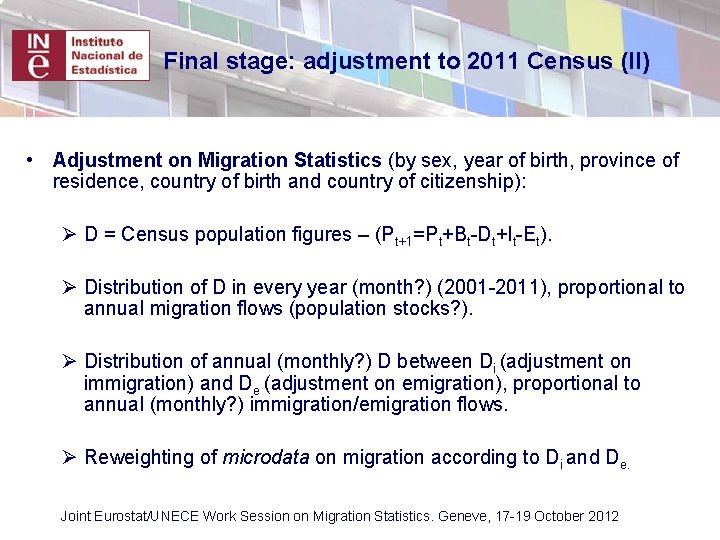
Final stage: adjustment to 2011 Census (II) • Adjustment on Migration Statistics (by sex, year of birth, province of residence, country of birth and country of citizenship): Ø D = Census population figures – (Pt+1=Pt+Bt-Dt+It-Et). Ø Distribution of D in every year (month? ) (2001 -2011), proportional to annual migration flows (population stocks? ). Ø Distribution of annual (monthly? ) D between Di (adjustment on immigration) and De (adjustment on emigration), proportional to annual (monthly? ) immigration/emigration flows. Ø Reweighting of microdata on migration according to Di and De. Joint Eurostat/UNECE Work Session on Migration Statistics. Geneve, 17 -19 October 2012
Thank you for your kind attention Sixto Muriel de la Riva Deputy Director of Population Statistics National Statistics Institute of Spain sixto. muriel. riva@ine. es Joint Eurostat/UNECE Work Session on Migration Statistics. Geneve, 17 -19 October 2012