Spinal Cord Injury Gail Lupica Ph D RN
- Slides: 21
Spinal Cord Injury Gail Lupica Ph. D, RN, CNE Nurs 211
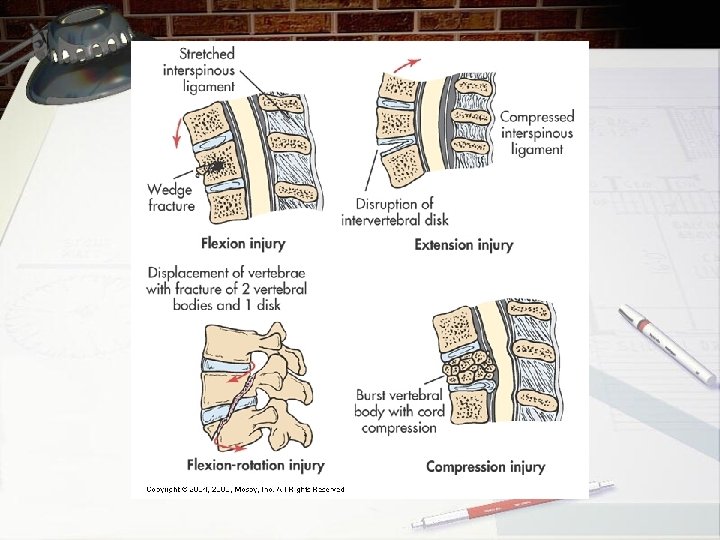
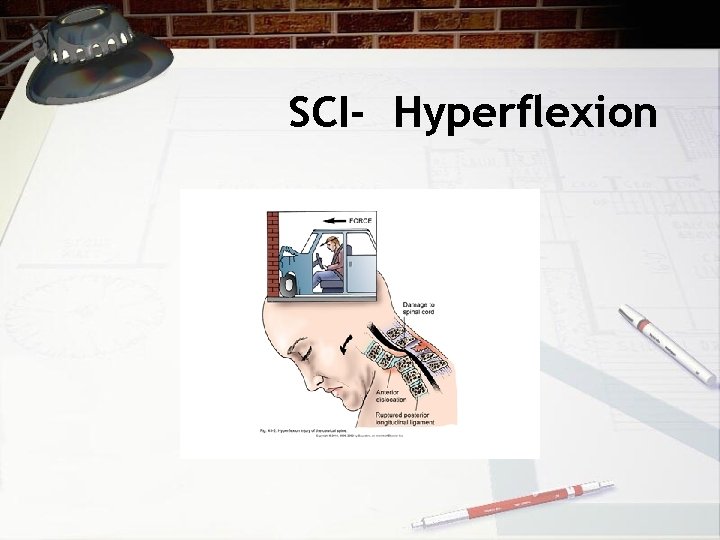
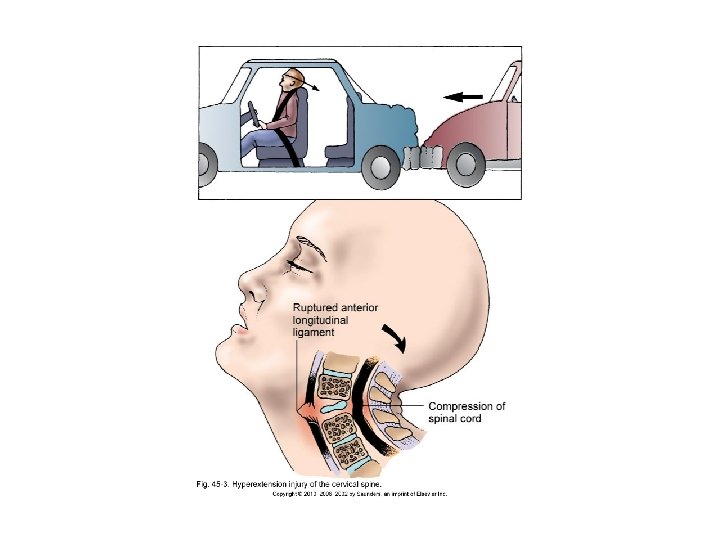
Spinal cord injury • Trauma= Most common causes Who? ? Males; Age 16 -30 years – Risk takers – Auto accidents (flexion injuries) – Motorcycle accidents – Falls (hyperextension injuries) – Sports mishaps; diving incidents (compression injury) – Gunshot/Knife wounds
SCI- Hyperflexion
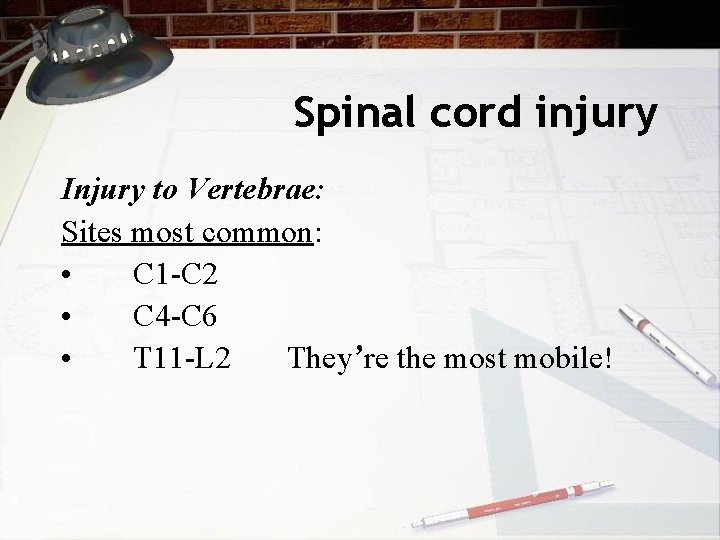
Spinal cord injury Injury to Vertebrae: Sites most common: • C 1 -C 2 • C 4 -C 6 • T 11 -L 2 They’re the most mobile!
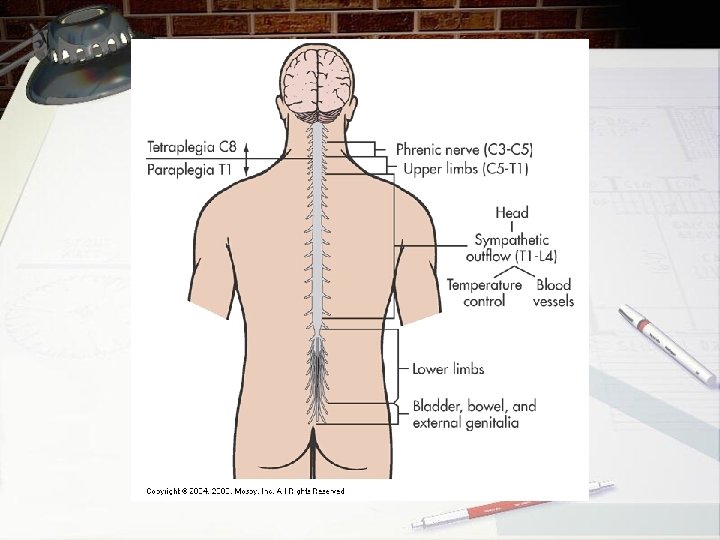
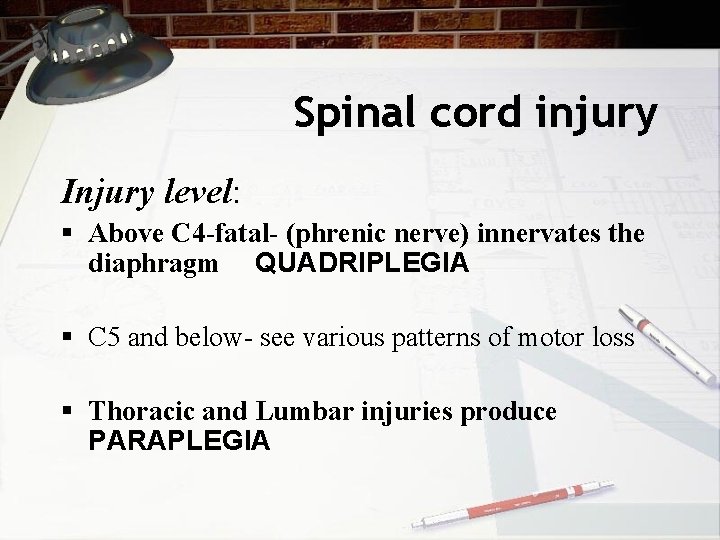
Spinal cord injury Injury level: § Above C 4 -fatal- (phrenic nerve) innervates the diaphragm QUADRIPLEGIA § C 5 and below- see various patterns of motor loss § Thoracic and Lumbar injuries produce PARAPLEGIA
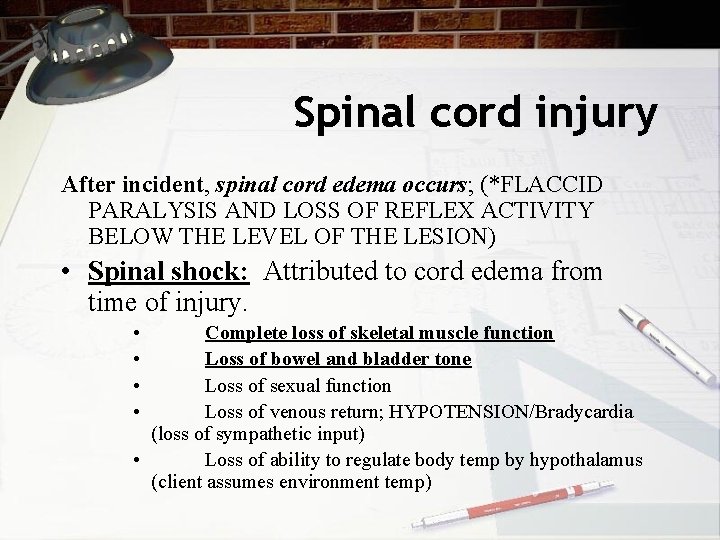
Spinal cord injury After incident, spinal cord edema occurs; (*FLACCID PARALYSIS AND LOSS OF REFLEX ACTIVITY BELOW THE LEVEL OF THE LESION) • Spinal shock: Attributed to cord edema from time of injury. • • Complete loss of skeletal muscle function Loss of bowel and bladder tone Loss of sexual function Loss of venous return; HYPOTENSION/Bradycardia (loss of sympathetic input) • Loss of ability to regulate body temp by hypothalamus (client assumes environment temp)
Spinal cord injury Spinal Shock resolves in 1 -6 weeks What will you see? • Return of reflexes • Reflex Emptying of bladder
Spinal Shock 1. If spinal shock persists and you don’t regain normotension, what is it called? 2. How would you treat?
Spinal cord injurychronic issues See patient & family guides: Bowel & skin care 1. Bowel- What are three teaching points that we can make to our SCI pt r/t bowel care? 2. Skin- Come up with 2 nsg diagnioses r/t the skin care of SCI pt….
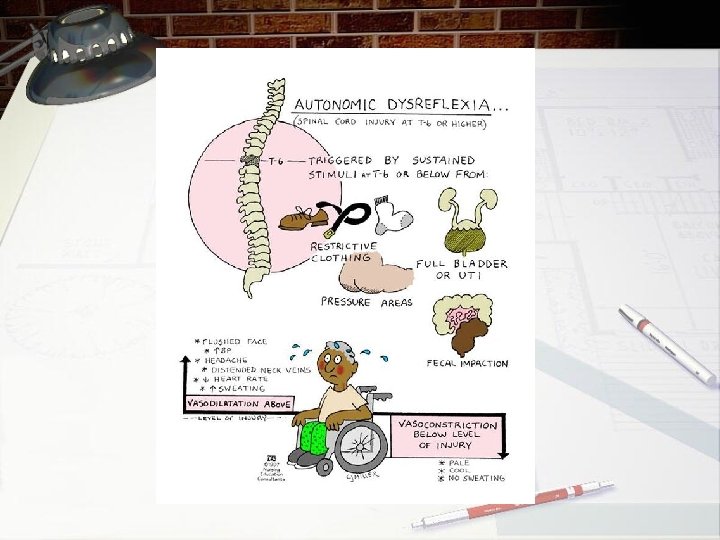
Spinal cord injurycomplication Autonomic Dysreflexia (Autonomic Hyperreflexia) Occurs in patients with spinal cord injuries above the level of T-6. • It is actually a cluster of manifestations that can occur with these clients anytime after spinal shock has resolved.
Autonomic Dysreflexia • The manifestations result from an exaggerated sympathetic response to a sustained stimuli below the level of the cord lesion.
Autonomic Dysreflexia Common stimuli include: üRestrictive clothing ü Bladder distention ü Bowel distention/impaction ü Pressure ulcers ü Wrinkled sheets ü Foley clips
Autonomic Dysreflexia What happens? • The sympathetic response below the level of the injury cause the blood vessels to constrict. The client develops: • Hypertension (systolic pressures as high as 300 mm. Hg)
Autonomic Dysreflexia • Baroreceptors (in the carotid and aortic arch) sense the hypertension and stimulate the parasympathetic nervous system. So, the heart rate is slowed. Bradycardia results.
Autonomic Dysreflexia Is the problem fixed? No!! The problem is that peripheral and visceral vessels do not dilate because the impulses can’t pass back through the damaged cord. Pt is severely hypertensive & bradycardic!
autonomic dysreflexia causes cartoon • Internet explorer 9 th • Dr. Spine you tube 7 th
Spinal cord injury case study, anyone?