Solar cycle modeling and predicting Petri Kpyl NORDITA
- Slides: 16
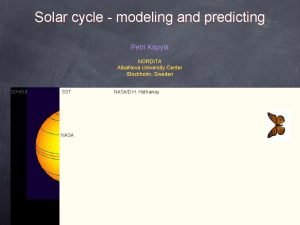
Solar cycle - modeling and predicting Petri Käpylä NORDITA Alba. Nova University Center Stockholm, Sweden SOHO/ESA/NASA SST NASA/D. H. Hathaway NASA Stockholm, 2 nd Feb 2007
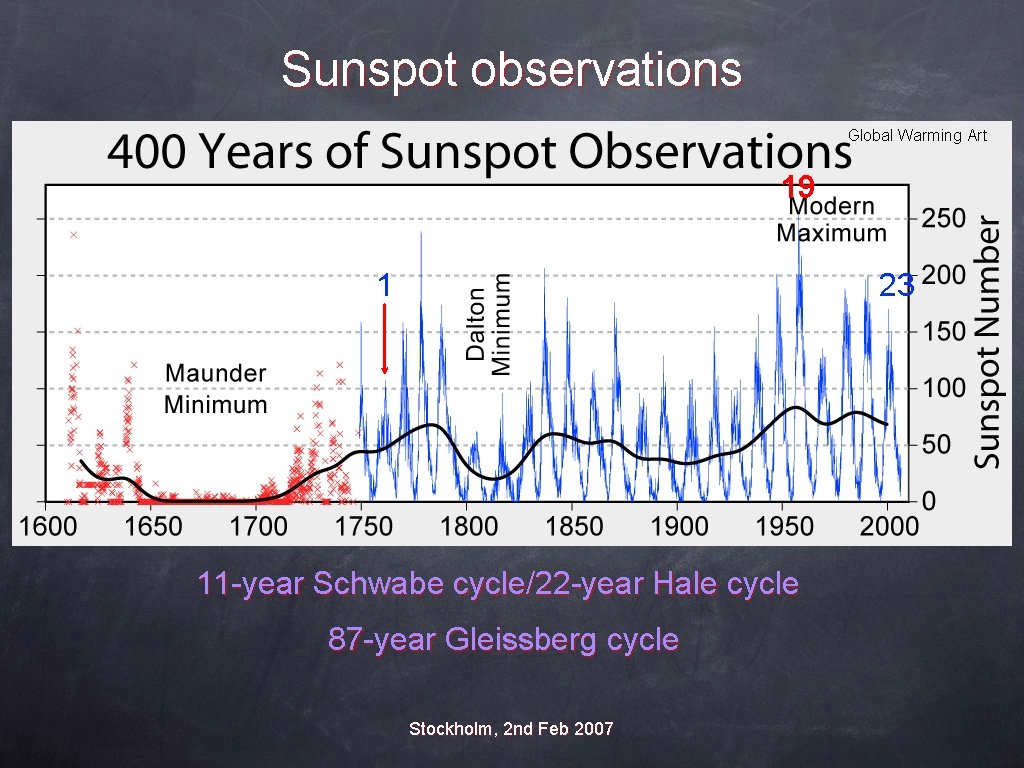
Sunspot observations Global Warming Art 19 1 23 11 -year Schwabe cycle/22 -year Hale cycle 87 -year Gleissberg cycle Stockholm, 2 nd Feb 2007
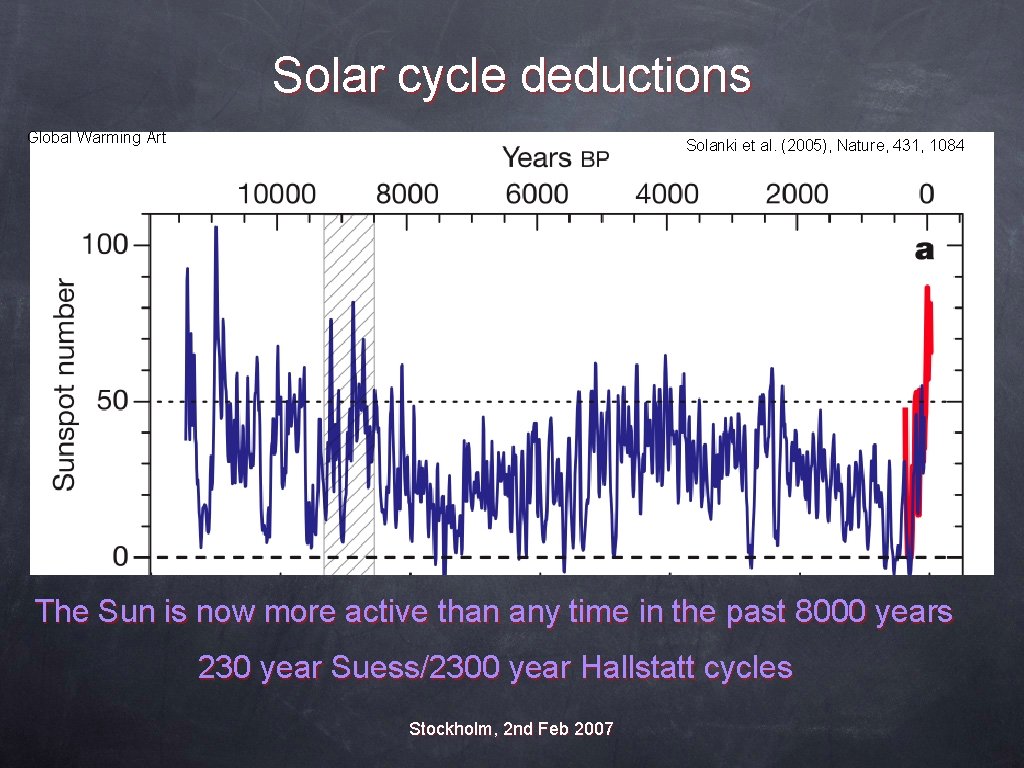
Solar cycle deductions Global Warming Art Solanki et al. (2005), Nature, 431, 1084 The Sun is now more active than any time in the past 8000 years 230 year Suess/2300 year Hallstatt cycles Stockholm, 2 nd Feb 2007
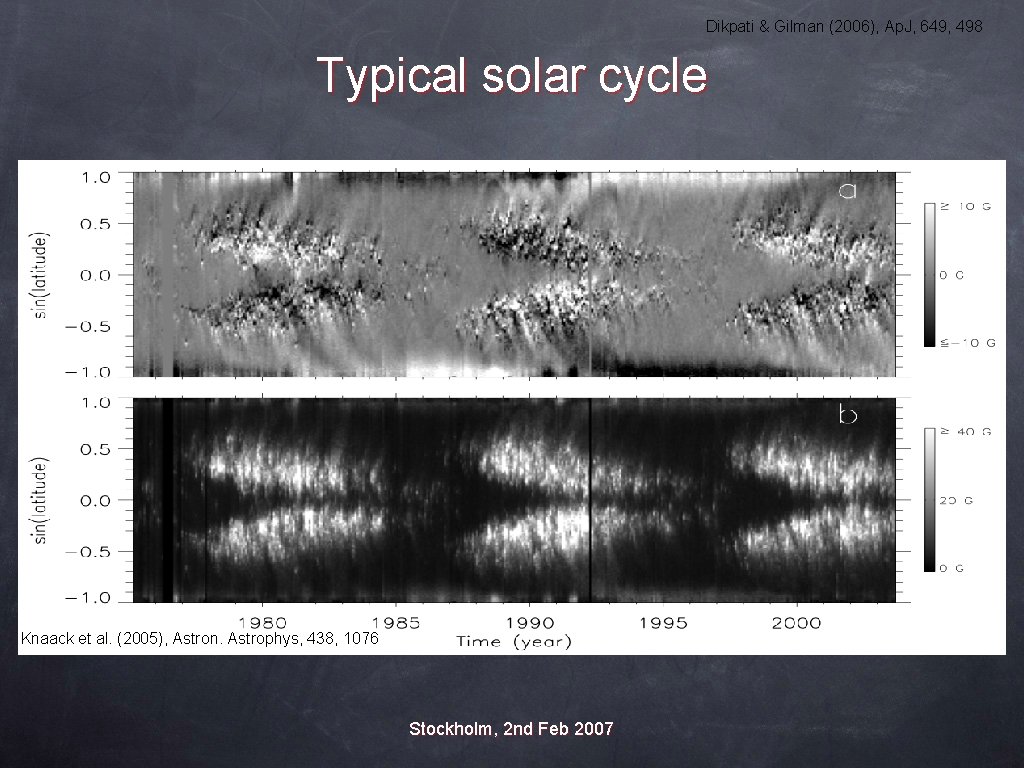
Dikpati & Gilman (2006), Ap. J, 649, 498 Typical solar cycle Knaack et al. (2005), Astron. Astrophys, 438, 1076 Stockholm, 2 nd Feb 2007
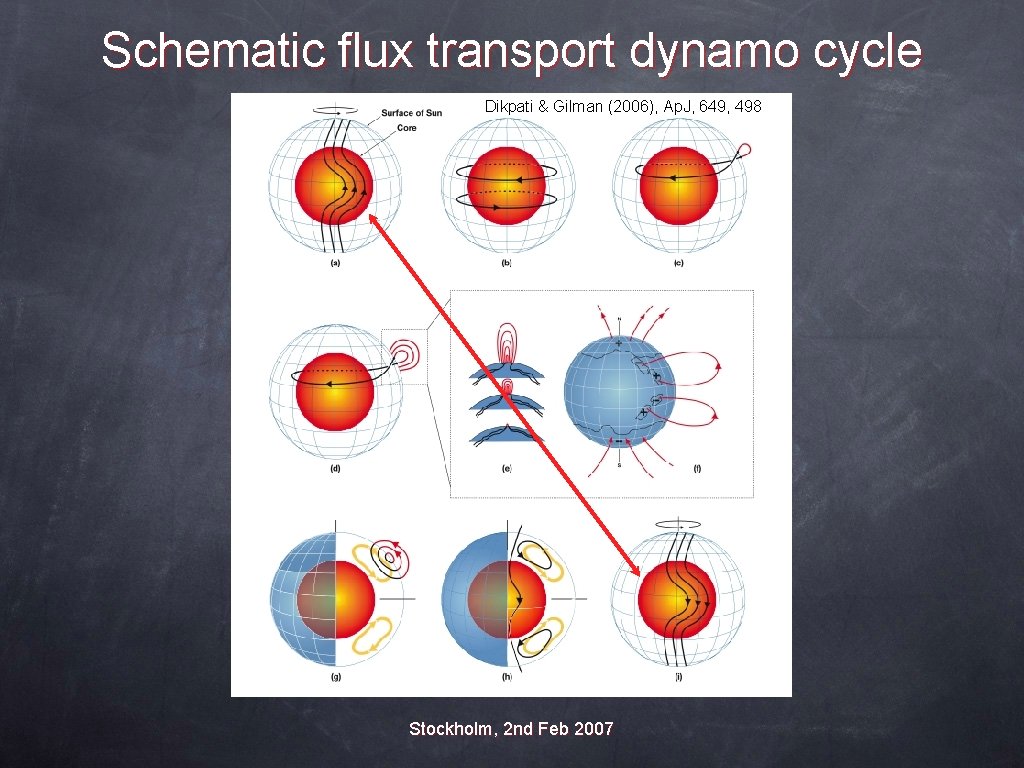
Schematic flux transport dynamo cycle Dikpati & Gilman (2006), Ap. J, 649, 498 Stockholm, 2 nd Feb 2007
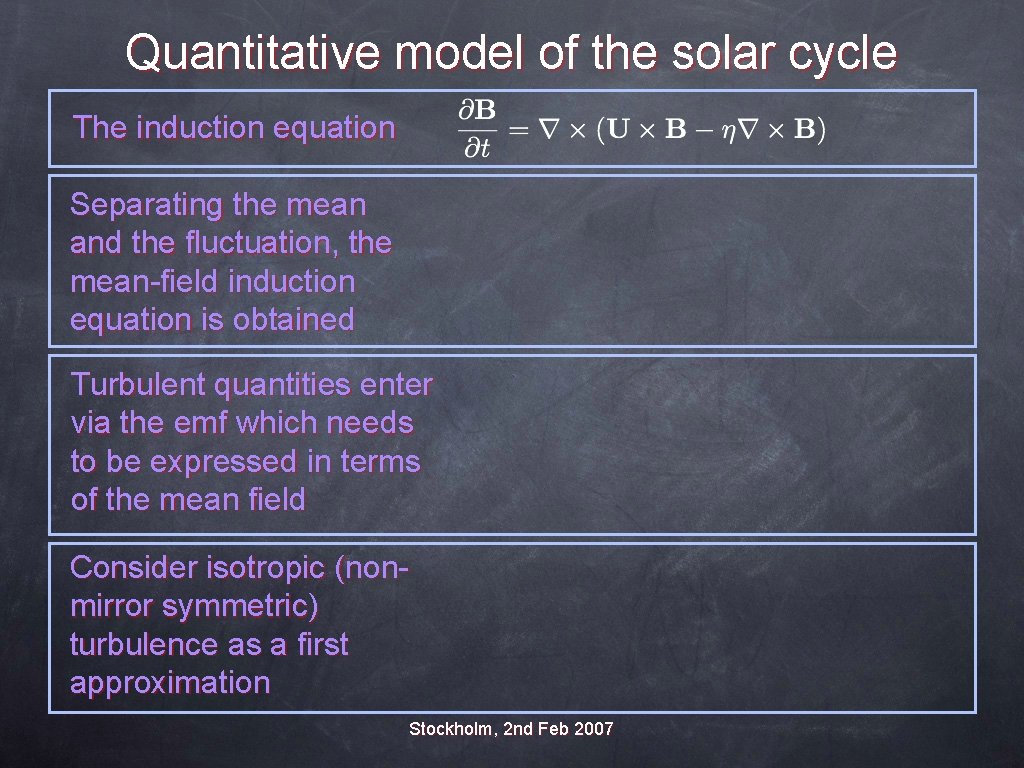
Quantitative model of the solar cycle The induction equation Separating the mean and the fluctuation, the mean-field induction equation is obtained Turbulent quantities enter via the emf which needs to be expressed in terms of the mean field Consider isotropic (nonmirror symmetric) turbulence as a first approximation Stockholm, 2 nd Feb 2007
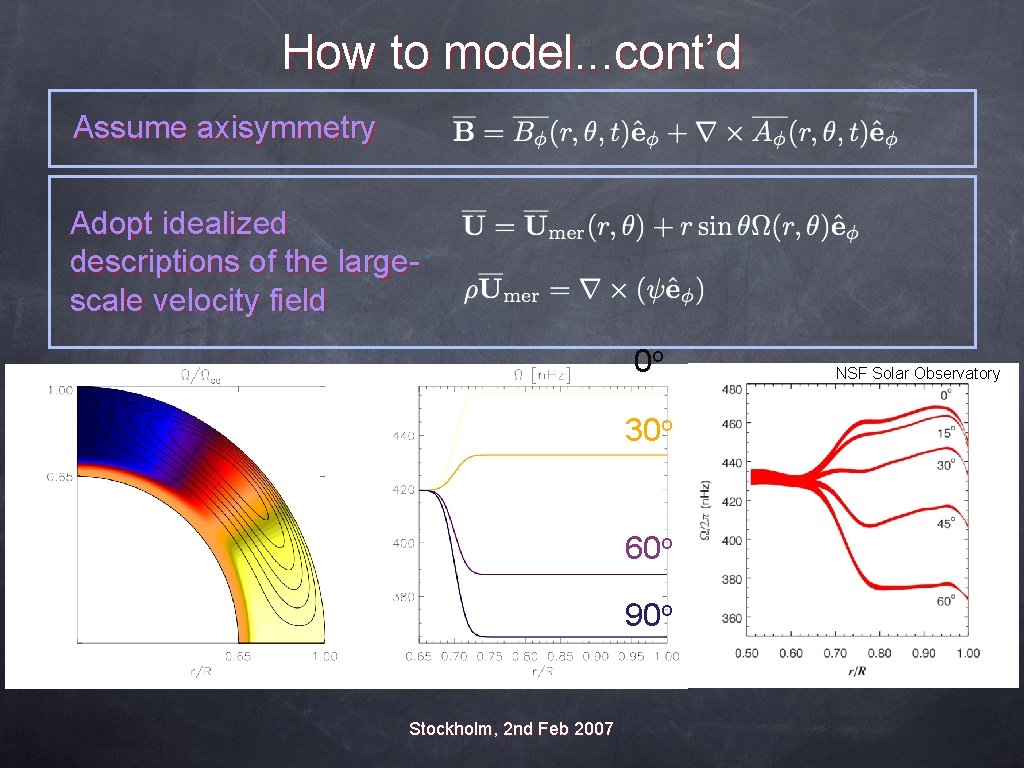
How to model. . . cont’d Assume axisymmetry Adopt idealized descriptions of the largescale velocity field 0 o 30 o 60 o 90 o Stockholm, 2 nd Feb 2007 NSF Solar Observatory
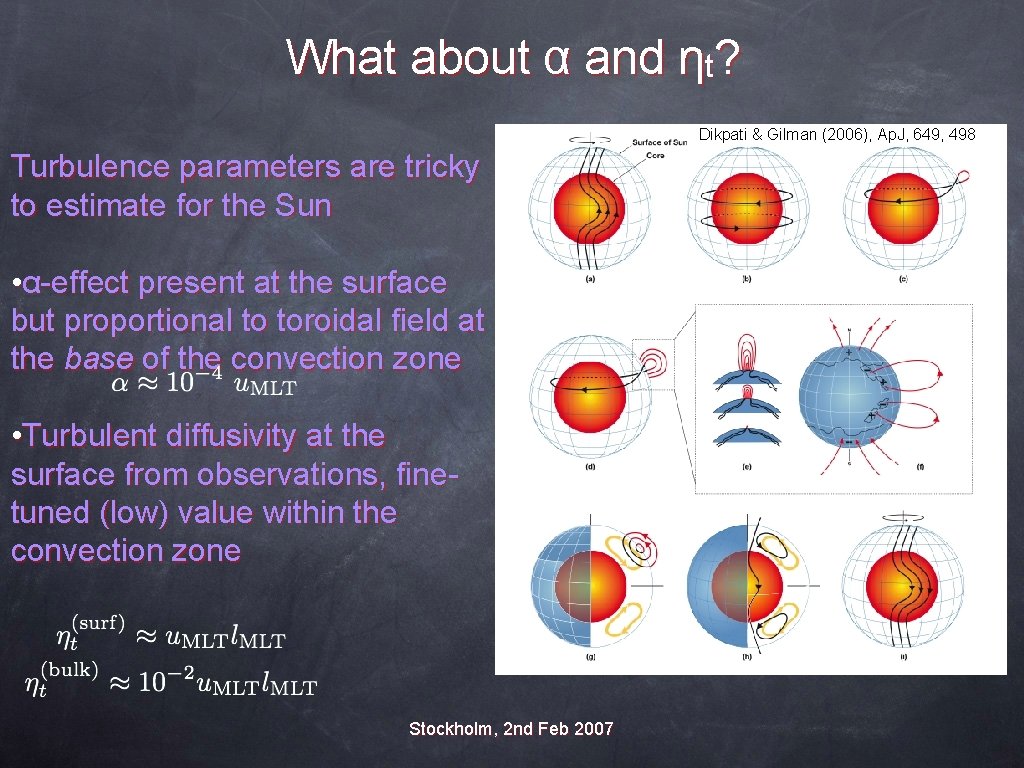
What about α and ηt? Dikpati & Gilman (2006), Ap. J, 649, 498 Turbulence parameters are tricky to estimate for the Sun • α-effect present at the surface but proportional to toroidal field at the base of the convection zone • Turbulent diffusivity at the surface from observations, finetuned (low) value within the convection zone Stockholm, 2 nd Feb 2007
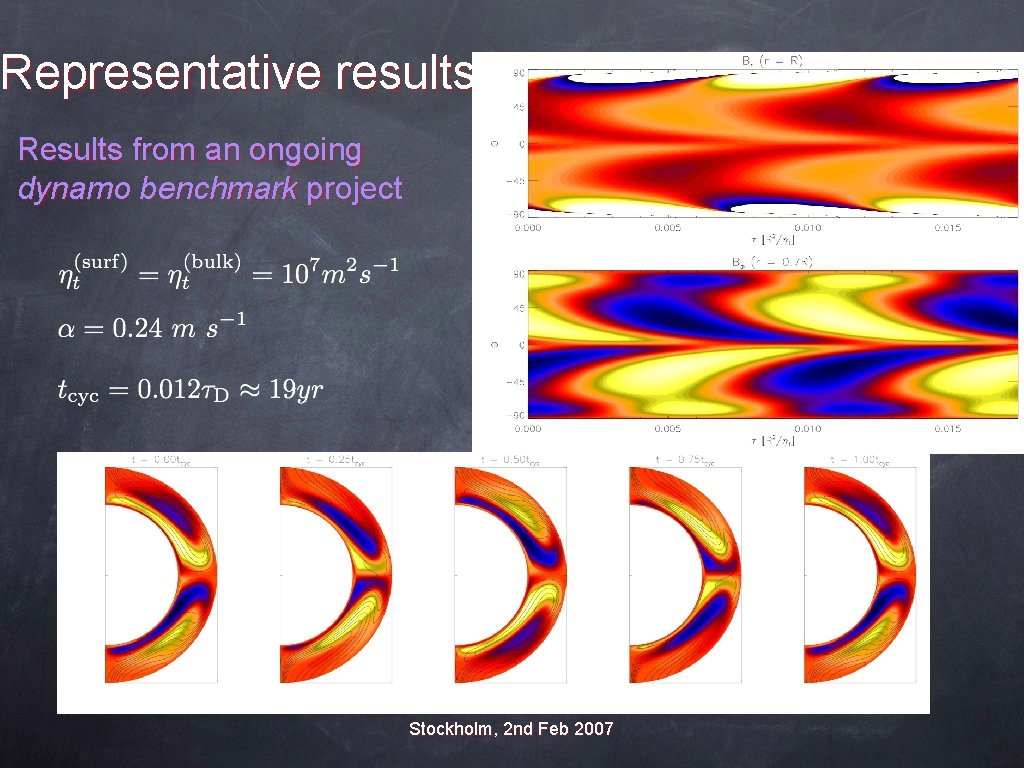
Representative results Results from an ongoing dynamo benchmark project Stockholm, 2 nd Feb 2007
How the Sun killed a cow NASA Stockholm, 2 nd Feb 2007
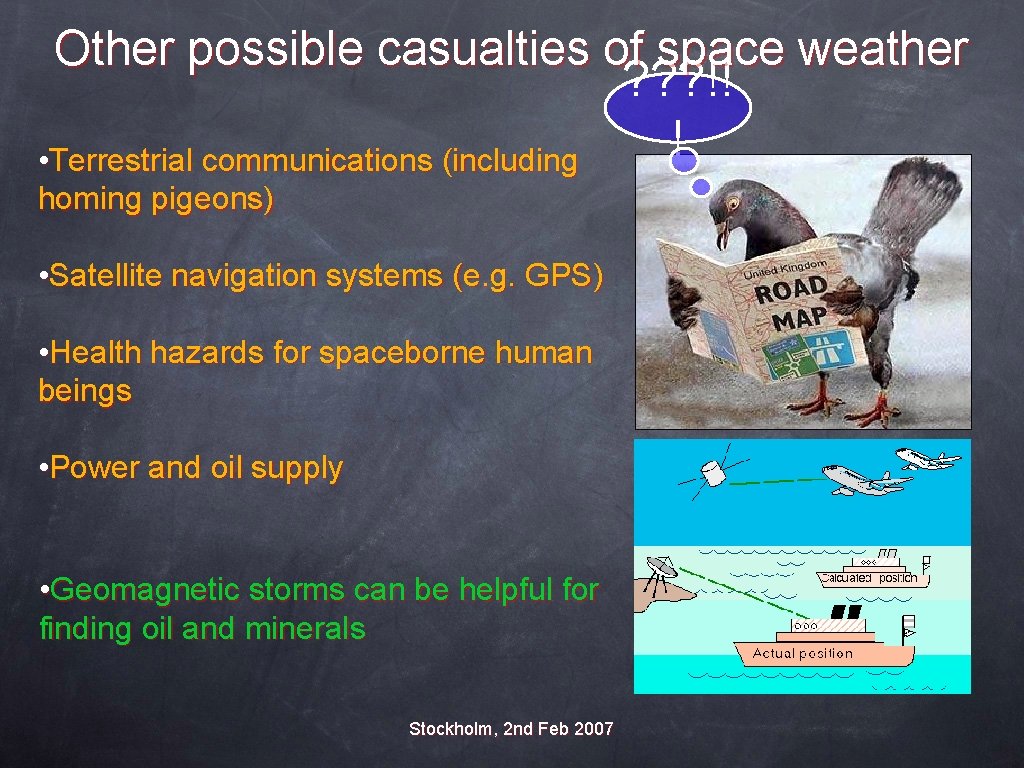
Other possible casualties of space weather ? ? ? !! ! • Terrestrial communications (including homing pigeons) • Satellite navigation systems (e. g. GPS) • Health hazards for spaceborne human beings • Power and oil supply • Geomagnetic storms can be helpful for finding oil and minerals Stockholm, 2 nd Feb 2007
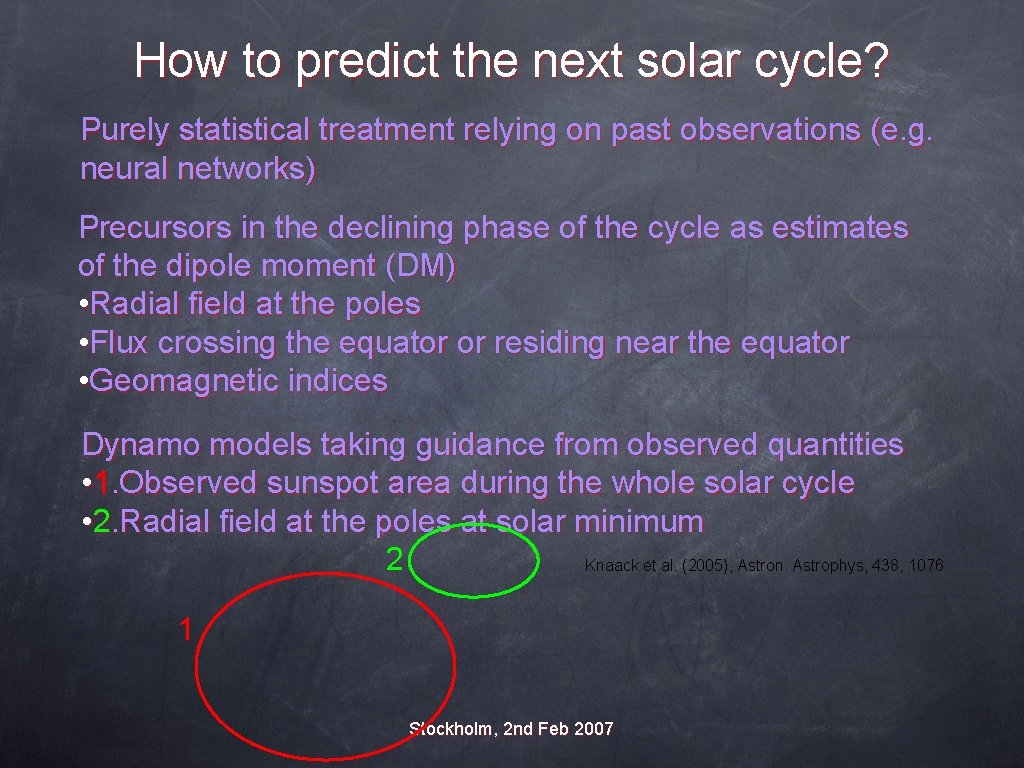
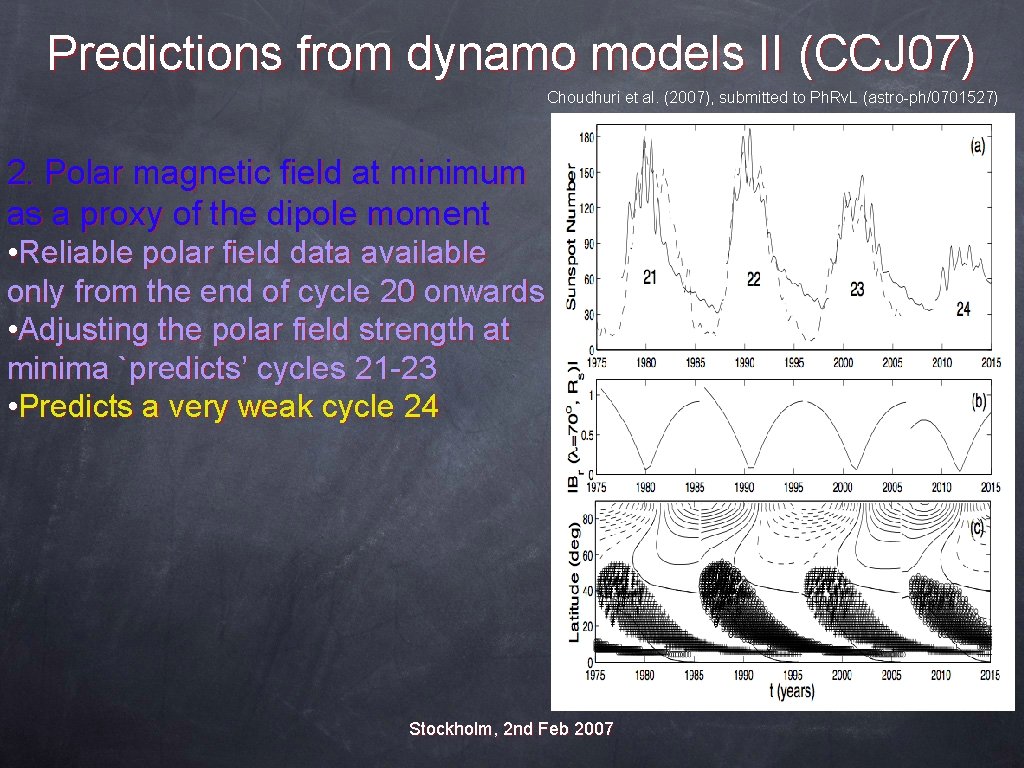
How to predict the next solar cycle? Purely statistical treatment relying on past observations (e. g. neural networks) Precursors in the declining phase of the cycle as estimates of the dipole moment (DM) • Radial field at the poles • Flux crossing the equator or residing near the equator • Geomagnetic indices Dynamo models taking guidance from observed quantities • 1. Observed sunspot area during the whole solar cycle • 2. Radial field at the poles at solar minimum 2 Knaack et al. (2005), Astron. Astrophys, 438, 1076 1 Stockholm, 2 nd Feb 2007
Predictions from dynamo models I (DG 06) 1. Sunspot area as a proxy of the α-effect • Shows very good skill in `predicting’ past cycles 16 to 23 • Cycle n depends mostly on cycle n-2 • Predicts a very strong cycle 24 Dikpati & Gilman (2006), Ap. J, 649, 498 Stockholm, 2 nd Feb 2007
Predictions from dynamo models II (CCJ 07) Choudhuri et al. (2007), submitted to Ph. Rv. L (astro-ph/0701527) 2. Polar magnetic field at minimum as a proxy of the dipole moment • Reliable polar field data available only from the end of cycle 20 onwards • Adjusting the polar field strength at minima `predicts’ cycles 21 -23 • Predicts a very weak cycle 24 Stockholm, 2 nd Feb 2007
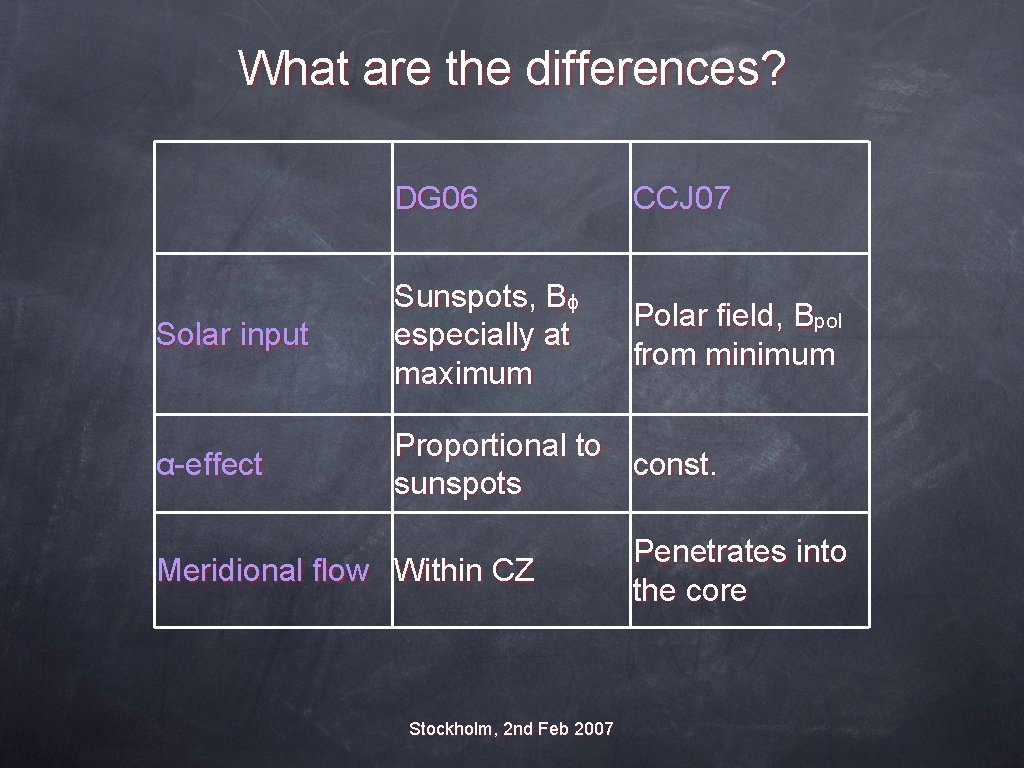
What are the differences? DG 06 CCJ 07 Solar input Sunspots, Bϕ especially at maximum Polar field, Bpol from minimum α-effect Proportional to const. sunspots Meridional flow Within CZ Stockholm, 2 nd Feb 2007 Penetrates into the core
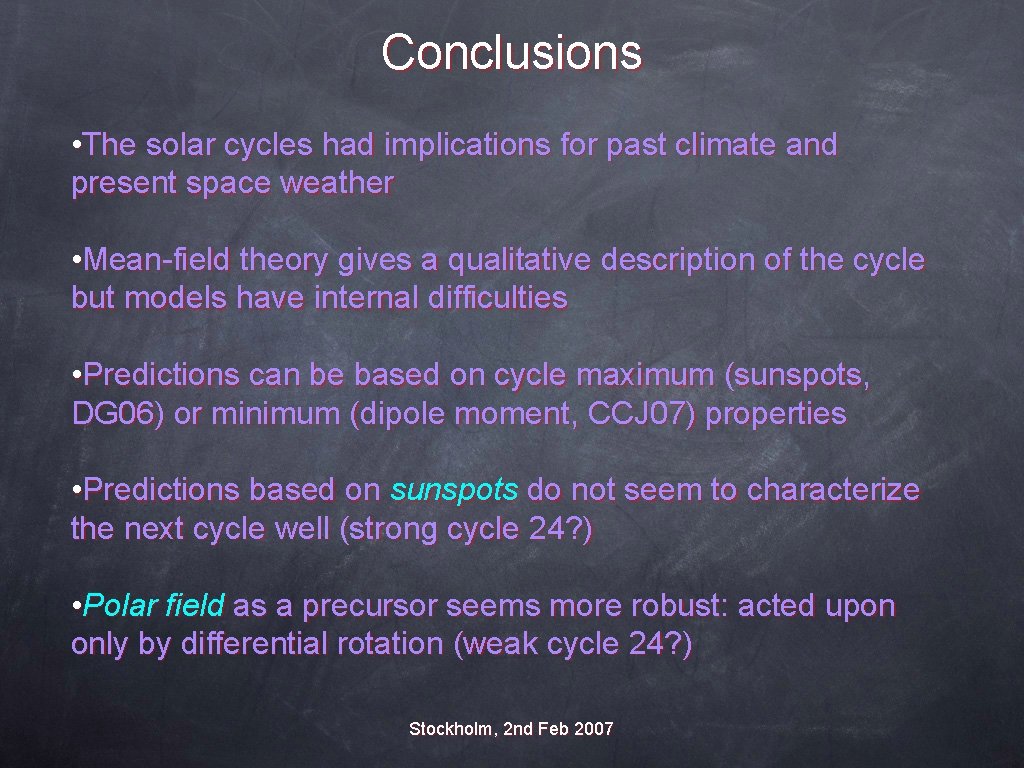
Conclusions • The solar cycles had implications for past climate and present space weather • Mean-field theory gives a qualitative description of the cycle but models have internal difficulties • Predictions can be based on cycle maximum (sunspots, DG 06) or minimum (dipole moment, CCJ 07) properties • Predictions based on sunspots do not seem to characterize the next cycle well (strong cycle 24? ) • Polar field as a precursor seems more robust: acted upon only by differential rotation (weak cycle 24? ) Stockholm, 2 nd Feb 2007