Sociological Perspectives on Race and Ethnicity Prejudice and

- Slides: 38
Sociological Perspectives on Race and Ethnicity • Prejudice and Discrimination • Racial and Ethnic Interactions • Sociological Analysis of Ethnic and Racial Inequality
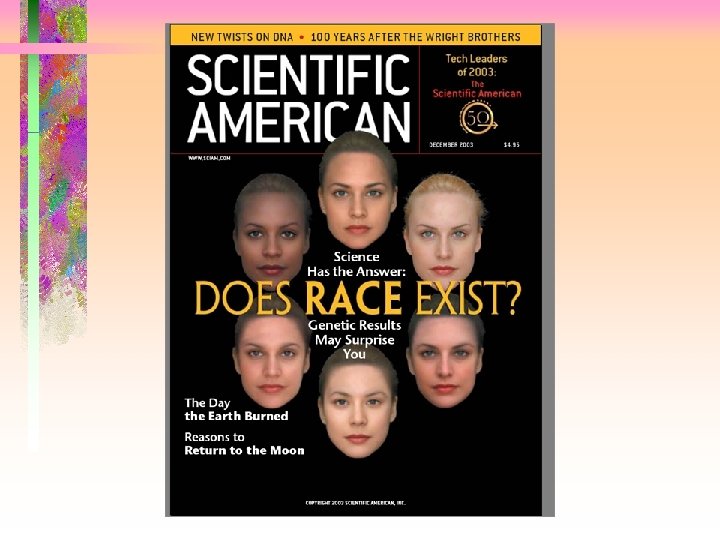
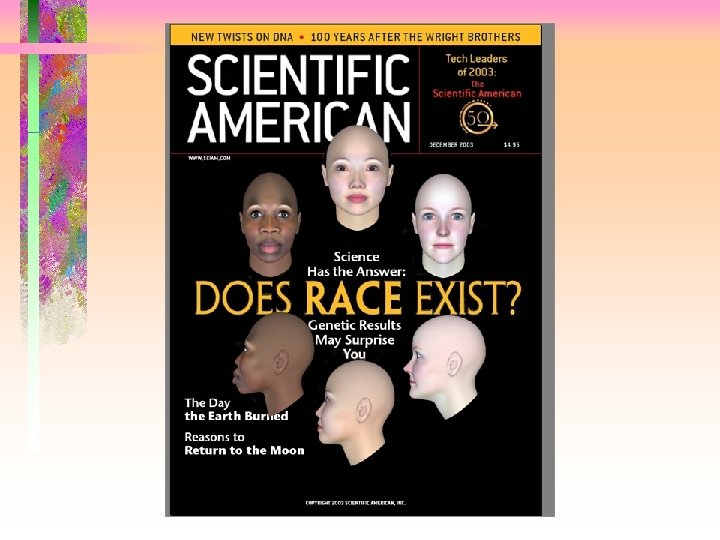
Sociological Perspectives on Race and Ethnicity • Race – A group of people who have been identified as having real or alleged physical characteristics. It is the fact that these biological traits are endowed with social meaning that brings them into the realm of the social sciences. • Ethnicity – refers to people who share common cultural characteristics and ethnic identity; they share a sense of “oneness”, and a shared fate. • Marriage across racial and ethnic lines, while not uncommon, is not typical for sociological and
Sociological Perspectives on Race and Ethnicity • Minority – a group that has less power than the dominant group, has less esteem and prestige, and is often the target of discrimination. The two major characteristics are distinctive identity and subordination. The sociological meaning of minority does not refer to the numerical size of a group, nor to any specific ethnicity, race, or other real or imaged factors as these factors are relative to a specific society. esteem – the honor that accrues to an
Sociological Perspectives on Race and Ethnicity • Prejudice – an attitude which predisposes an individual to prejudge entire categories of people unfairly. This attitude is rigid, often emotionally loaded, and resistant to change; “re-fencing” and closed mindedness. • Discrimination is a behavior resulting in unfair, unequal, or harmful treatment based upon a prejudice. • One may confront discrimination by focusing on attitudes, behaviors, or both. It is usually most
Sociological Perspectives on Race and Ethnicity • • a) b) Stereotype – a rigid and often inaccurate image that summarizes a belief. Because stereotypes reflect beliefs rather than facts, they are often illogical and self-serving. (Discussion) Stereotypes persist in culture because: (functions for those using them) stereotypes can work to elevate the status of the group which engages in it; stereotyping reduces the need to think by creating “universals”, and not having to acknowledge individualistic characteristics; and,
Sociological Perspectives on Race and Ethnicity • Stereotype –particular stereotypes are often used for different groups, such as the concept of “laziness”. Laziness has been applied to Blacks, Hispanics, Polish, Irish, and Native-Americans. It has also been used to explain why someone is the member of a lower class or poor.
Sociological Perspectives on Race and Ethnicity • Salience Principle – we categorize people on the basis of what appears initially prominent and obvious- that is, what is salient- about them. The choice of salient characteristics is culturally determined. Thus, race, ethnicity, gender, social class, and religion are among the most prominent features by which people are categorized.
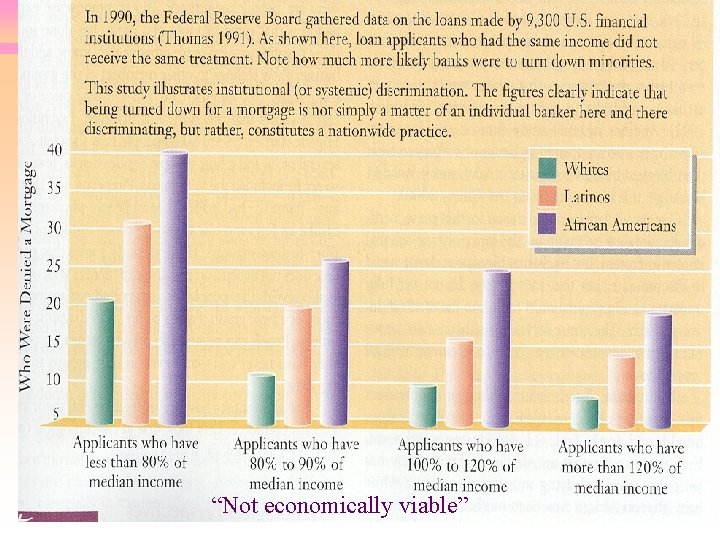
Sociological Perspectives on Race and Ethnicity Institutional Discrimination – discriminatory practices often become an integral part of the social practices and institutions of a society. The more complex and bureaucratic the organization, the less people pay attention to the discriminatory practices embedded in the rules and procedures, largely because it is not an individual’s responsibility, but a corporate or organizational responsibility; “I am just doing my job”, “I am just following orders” ; or, “I just enforce the laws, I do not create them”.
“Not economically viable”
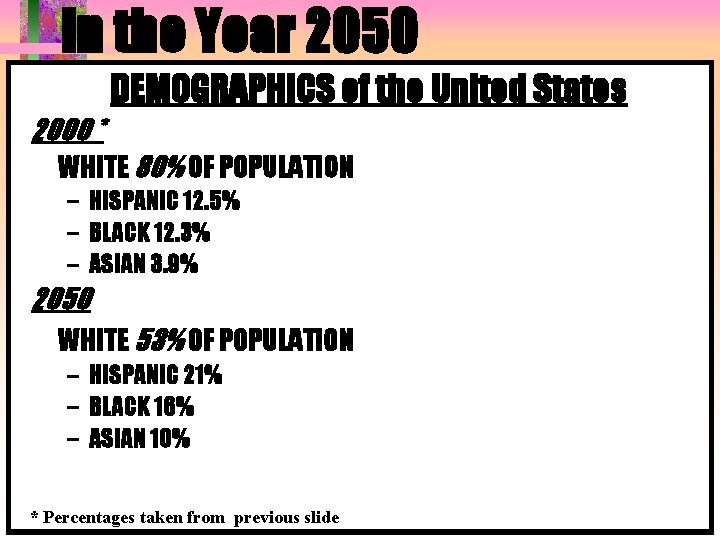
In the Year 2050 DEMOGRAPHICS of the United States 2000 * WHITE 80% OF POPULATION – HISPANIC 12. 5% – BLACK 12. 3% – ASIAN 3. 9% 2050 WHITE 53% OF POPULATION – HISPANIC 21% – BLACK 16% – ASIAN 10% * Percentages taken from previous slide
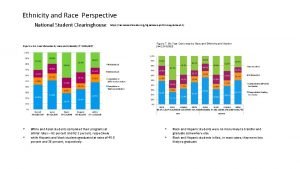
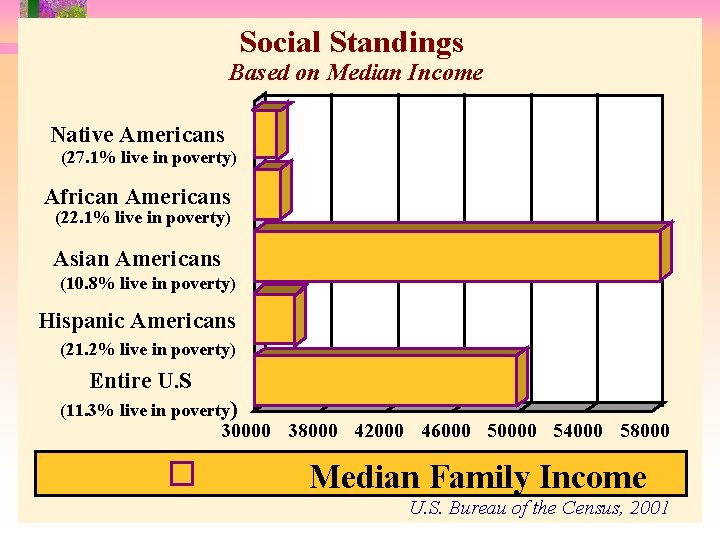
Social Standings Based on Median Income Native Americans (27. 1% live in poverty) African Americans (22. 1% live in poverty) Asian Americans (10. 8% live in poverty) Hispanic Americans (21. 2% live in poverty) Entire U. S (11. 3% live in poverty) 30000 38000 42000 46000 50000 54000 58000 Median Family Income U. S. Bureau of the Census, 2001
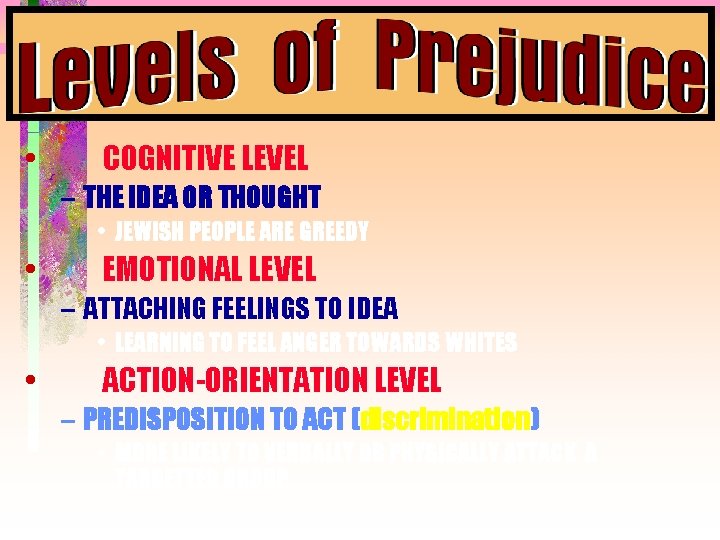
• COGNITIVE LEVEL – THE IDEA OR THOUGHT • JEWISH PEOPLE ARE GREEDY • EMOTIONAL LEVEL – ATTACHING FEELINGS TO IDEA • LEARNING TO FEEL ANGER TOWARDS WHITES • ACTION-ORIENTATION LEVEL – PREDISPOSITION TO ACT (discrimination) • MORE LIKELY TO VERBALLY OR PHYSICALLY ATTACK A TARGETTED GROUP
A VERY POWERFUL AND DESTRUCTIVE FORM OF PREJUDICE THAT REMAINS VERY MUCH ALIVE TODAY • THE BELIEF THAT ONE RACIAL CATEGORY IS INNATELY SUPERIOR OR INFERIOR TO ANOTHER – INDIVIDUAL RACISM – INSTITUTIONALIZED RACISM • RECALL WHAT RACE IS AND SEE THE IRRATIONAL THOUGHT PROCESS – THERE IS NO SUCH THING AS A “PURE RACE” THESE DAYS; A CONTINUUM – RACE IS BIOLOGICAL, BUT WHAT PEOPLE MAKE OF IT IS SOCIAL
• SCAPEGOAT THEORY – BLAMING OTHERS FOR PERSONAL TROUBLES – TARGET SELECTION AND THEN AGGRESSION • AUTHORITARIAN PERSONALITY – THE “ARCHIE BUNKER” THEORY • CULTURE OF PREJUDICE – THE SOCIALIZATION EXPERIENCE – IT’S “NORMAL” FOR PEOPLE TO PREJUDGE OTHERS • CONFLICT THEORY – SELF-JUSTIFICATION FOR THE RICH AND POWERFUL IN AMERICA – USE OF “RACE CARD” BY MINORITY GROUPS CAN LEAD TO “WHITE BACKLASH” MOVEMENTS
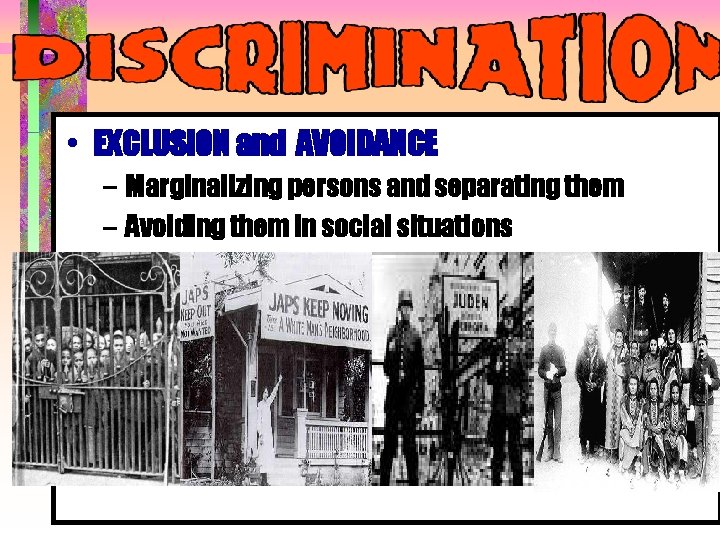
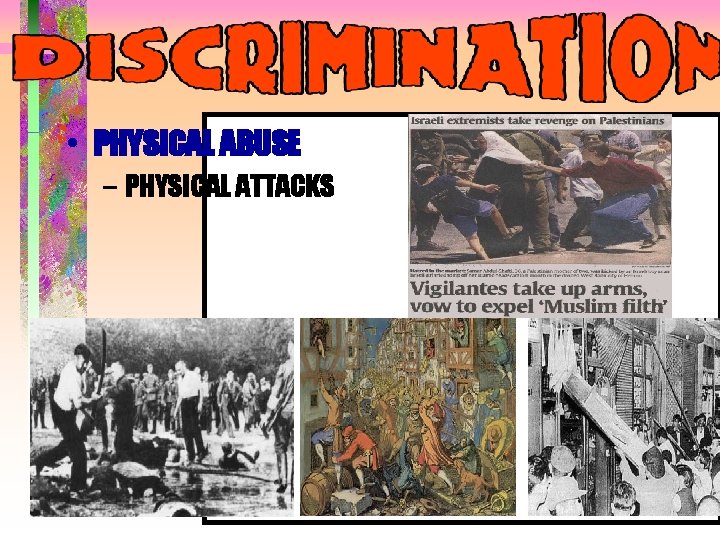
• VERBALIZATION – JOKES, COMMENTS, RACIAL SLURS • EXCLUSION – KEEPING PEOPLE MARGINAL • AVOIDANCE – NOT TRAVELING IN CERTAIN AREAS • PHYSICAL ABUSE – PHYSICAL ATTACKS • GENOCIDE – SYSTEMATIC KILLING OFF OF A GROUP
• VERBALIZATION – JOKES, COMMENTS, RACIAL SLURS Marginalizing others by the use of language and symbols. De-humanizing others by identifying them as “things” “Do the Right Thing” film excerpt
• EXCLUSION and AVOIDANCE – Marginalizing persons and separating them – Avoiding them in social situations
• PHYSICAL ABUSE – PHYSICAL ATTACKS
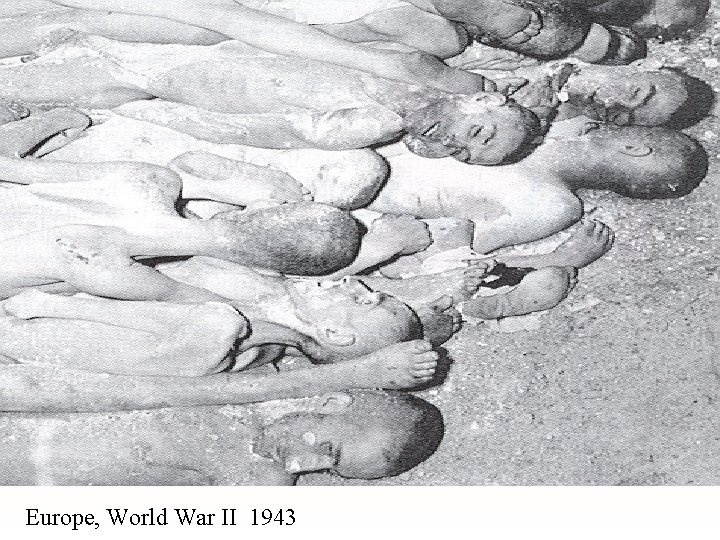
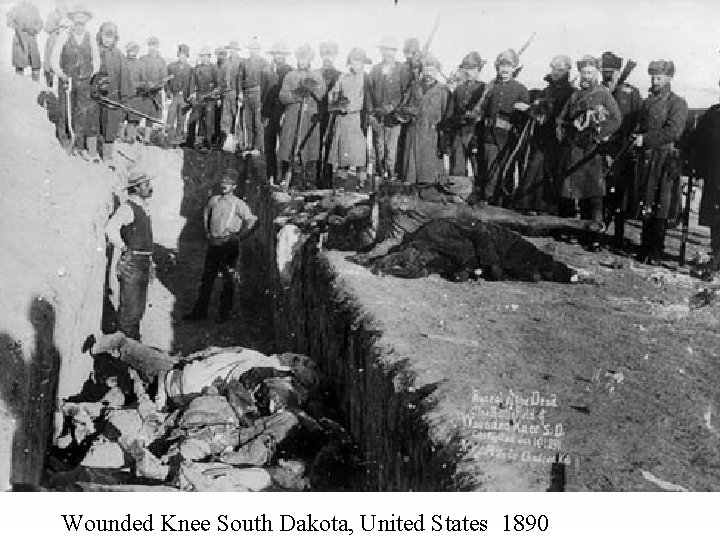
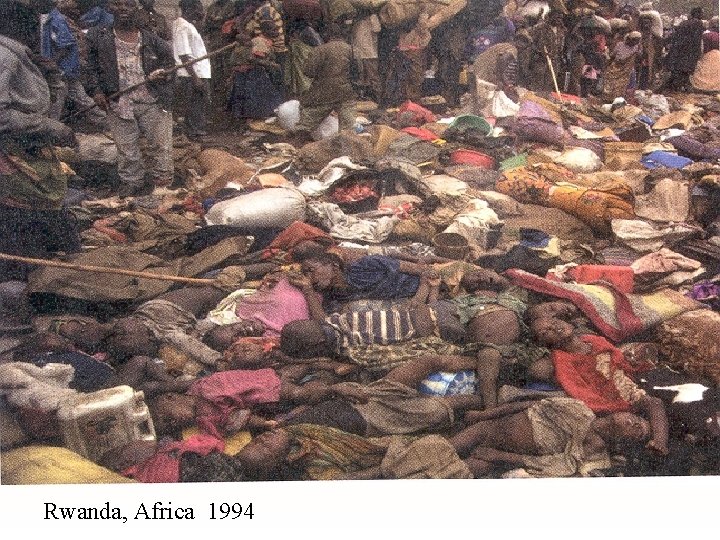
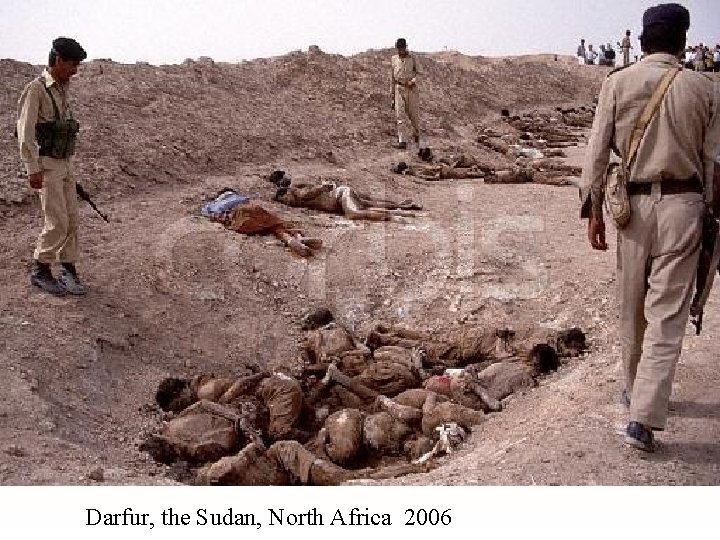
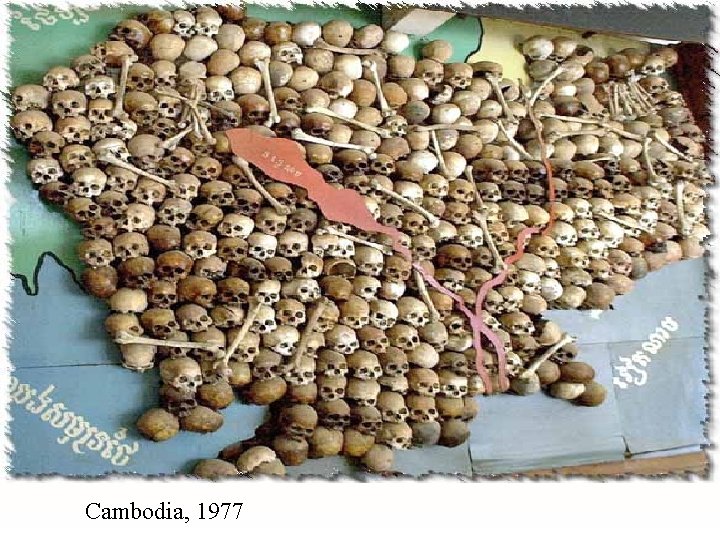
• GENOCIDE – SYSTEMATIC KILLING OFF OF A GROUP FOR RACIAL, ETHNIC, RELIGIOUS, POLITICAL, AND ECONOMIC OBJECTIVES
Europe, World War II 1943
Wounded Knee South Dakota, United States 1890
Rwanda, Africa 1994
Darfur, the Sudan, North Africa 2006
Cambodia, 1977
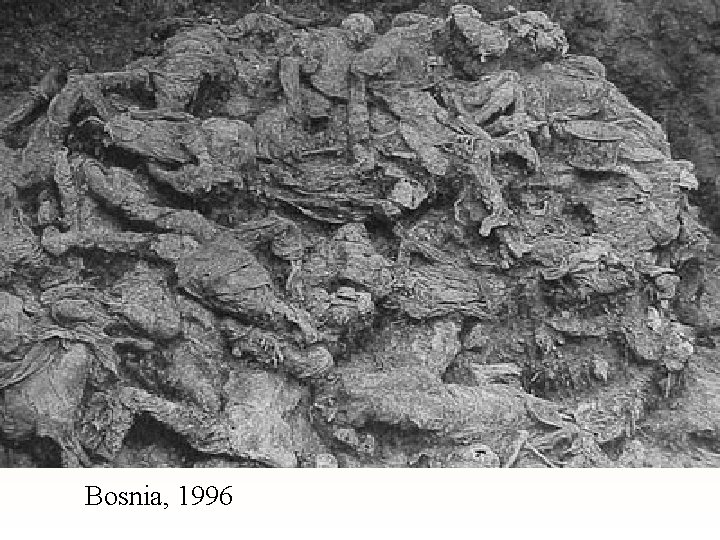
Bosnia, 1996
Genocide • There are 8 stages of genocide, as identified by Genocide Watch. They are: Classification, Symbolization, Dehumanization, Organization, Polarization, Identification, Extermination, and Denial. (Armenia)
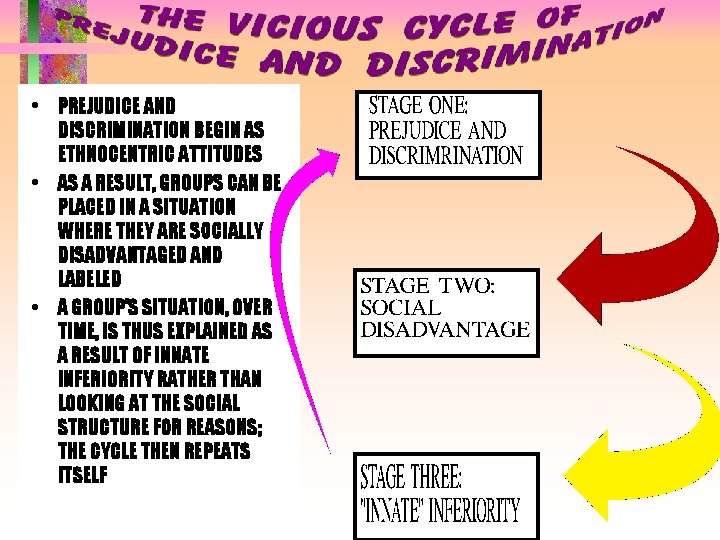
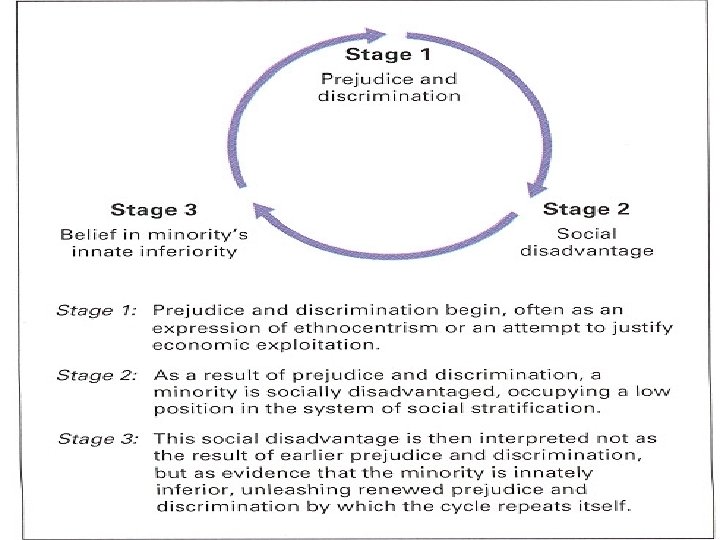
• PREJUDICE AND DISCRIMINATION BEGIN AS ETHNOCENTRIC ATTITUDES • AS A RESULT, GROUPS CAN BE PLACED IN A SITUATION WHERE THEY ARE SOCIALLY DISADVANTAGED AND LABELED • A GROUP’S SITUATION, OVER TIME, IS THUS EXPLAINED AS A RESULT OF INNATE INFERIORITY RATHER THAN LOOKING AT THE SOCIAL STRUCTURE FOR REASONS; THE CYCLE THEN REPEATS ITSELF
RACIAL AND ETHNIC GROUPS • NATIVE AMERICANS – AN AMERICAN STORY OF GROUP GENOCIDE • EURO AMERICANS – QUICKLY FORGOT WHY THEY HAD LEFT THEIR OWN COUNTRIES AND DENIED FREEDOM TO MANY GROUPS • AFRICAN AMERICANS – FORCED IMMIGRATION FOR LABOR • ASIAN AMERICANS – AMERICA’S “MODEL MINORITY GROUP” • HISPANIC AMERICANS – FACING MANY SOCIAL ILLS IN AMERICA
TWO KEY AREAS: 1) ENHANCE THE EDUCATIONAL PROCESS 2) INCREASE MEANINGFUL SOCIAL CONTACT • EDUCATION – MULTICULTURAL EDUCATION – LEARN TO APPRECIATE DIVERSITY • MEANINGFUL CONTACT – DESIRE TO CHANGE – HONEST, SELF-CRITIQUE OF LIFESTYLE – PLAN FOR INCREASING SOCIAL CONTACT
Contact Theory Argues that interaction between dominant and minority groups will reduce prejudice on the part of both groups if three conditions are met. • Contact is of equal status • Contact between equals must be sustained • Norms favoring equality must be agreed upon by the participants
• GENERAL CHARACTERISTICS – SHARE A “DISTINCT IDENTITY” • RACE, SEXUAL ORIENTATION, THE POOR – SUBORDINATION • OFTEN SADDLED WITH LOWER STATUS • STEREOTYPES, STIGMA, AND LABELING – GROUP SIZE (NUMBERS) • WOMEN IN AMERICA OUTNUMBER MEN • BLACKS IN SOUTH AFRICA OUTNUMBER WHITES
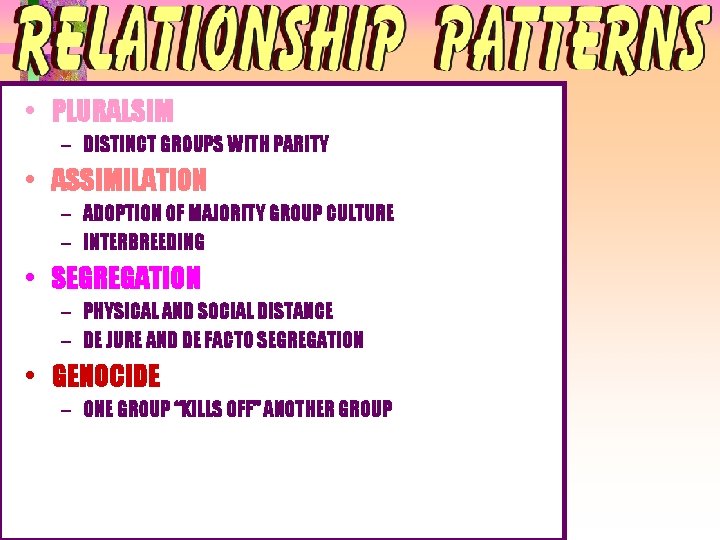
• PLURALSIM – DISTINCT GROUPS WITH PARITY • ASSIMILATION – ADOPTION OF MAJORITY GROUP CULTURE – INTERBREEDING • SEGREGATION – PHYSICAL AND SOCIAL DISTANCE – DE JURE AND DE FACTO SEGREGATION • GENOCIDE – ONE GROUP “KILLS OFF” ANOTHER GROUP
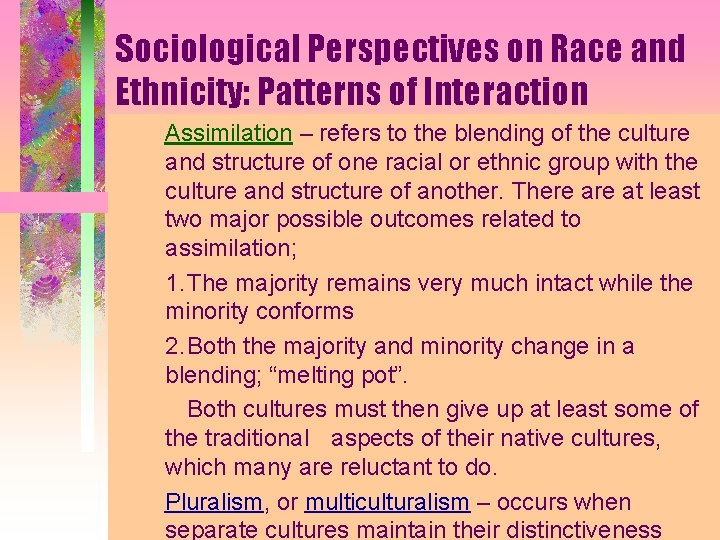
Sociological Perspectives on Race and Ethnicity: Patterns of Interaction Assimilation – refers to the blending of the culture and structure of one racial or ethnic group with the culture and structure of another. There at least two major possible outcomes related to assimilation; 1. The majority remains very much intact while the minority conforms 2. Both the majority and minority change in a blending; “melting pot”. Both cultures must then give up at least some of the traditional aspects of their native cultures, which many are reluctant to do. Pluralism, or multiculturalism – occurs when separate cultures maintain their distinctiveness
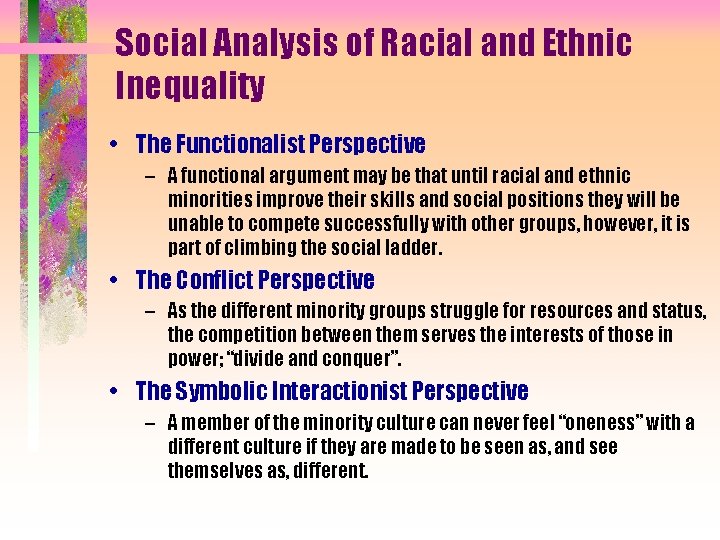
Social Analysis of Racial and Ethnic Inequality • The Functionalist Perspective – A functional argument may be that until racial and ethnic minorities improve their skills and social positions they will be unable to compete successfully with other groups, however, it is part of climbing the social ladder. • The Conflict Perspective – As the different minority groups struggle for resources and status, the competition between them serves the interests of those in power; “divide and conquer”. • The Symbolic Interactionist Perspective – A member of the minority culture can never feel “oneness” with a different culture if they are made to be seen as, and see themselves as, different.