SNAPSHOT OF PROGRESS OF ANALOGUE TO DIGITAL MIGRATION
- Slides: 14
SNAPSHOT OF PROGRESS OF ANALOGUE TO DIGITAL MIGRATION IN AFRICA: OUTCOME OF ATU SURVEY African Telecommunications Union (ATU) Digital Migration and Spectrum Policy Summit Russell Southwood Balancing Act www. balancingact-africa. com
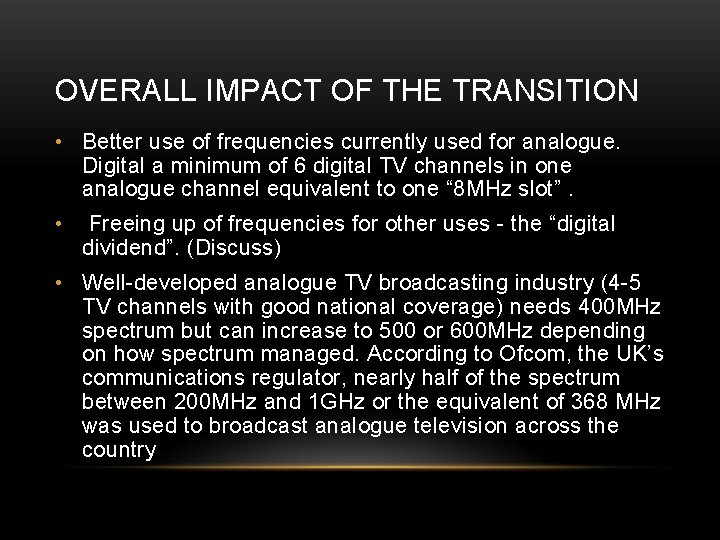
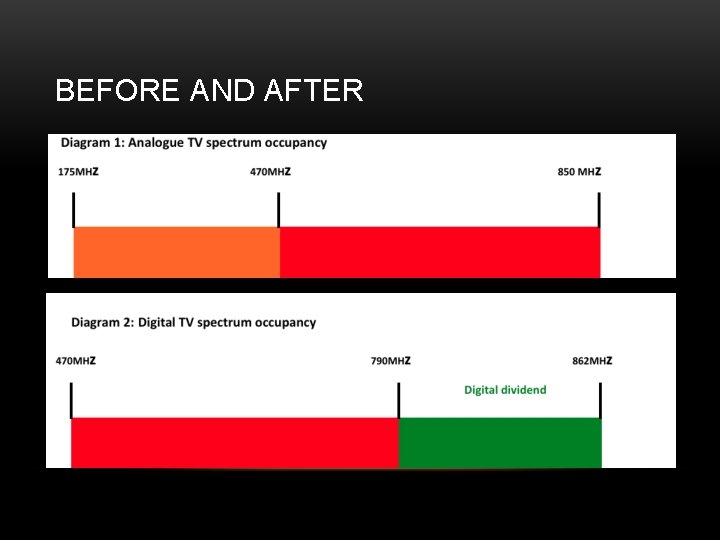
OVERALL IMPACT OF THE TRANSITION • Better use of frequencies currently used for analogue. Digital a minimum of 6 digital TV channels in one analogue channel equivalent to one “ 8 MHz slot”. • Freeing up of frequencies for other uses - the “digital dividend”. (Discuss) • Well-developed analogue TV broadcasting industry (4 -5 TV channels with good national coverage) needs 400 MHz spectrum but can increase to 500 or 600 MHz depending on how spectrum managed. According to Ofcom, the UK’s communications regulator, nearly half of the spectrum between 200 MHz and 1 GHz or the equivalent of 368 MHz was used to broadcast analogue television across the country
BEFORE AND AFTER
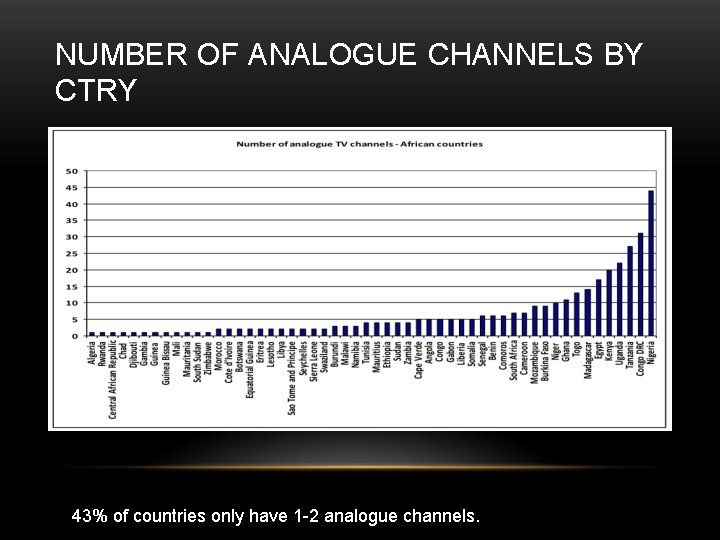
NUMBER OF ANALOGUE CHANNELS BY CTRY 43% of countries only have 1 -2 analogue channels.
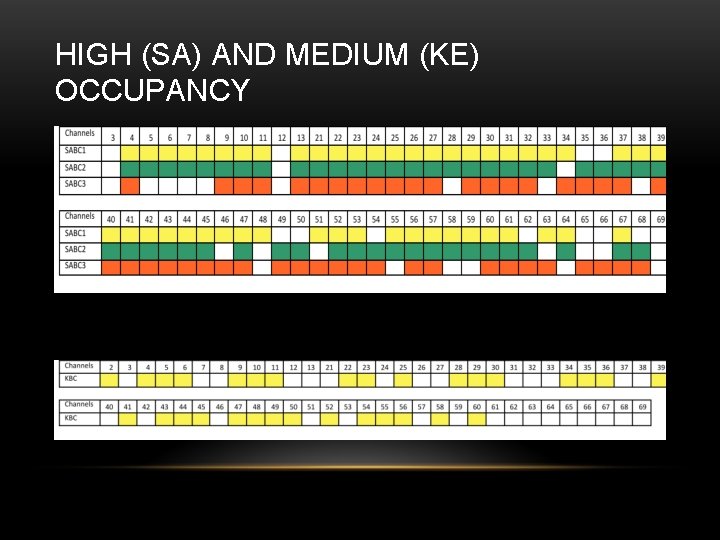
HIGH (SA) AND MEDIUM (KE) OCCUPANCY • K
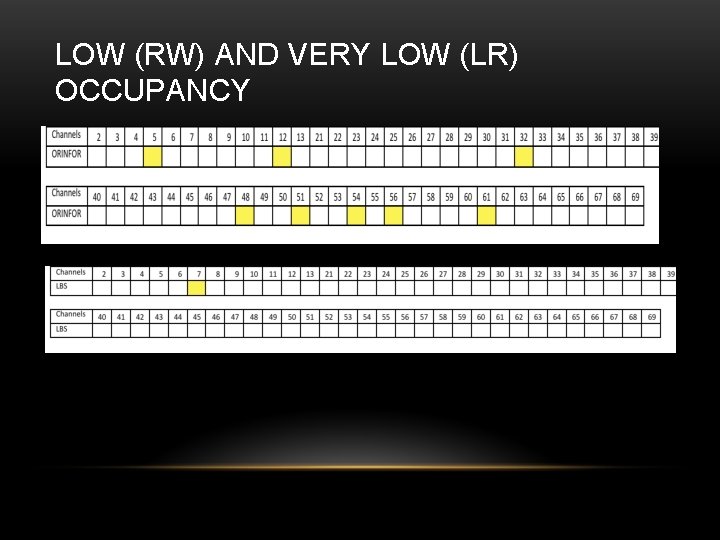
LOW (RW) AND VERY LOW (LR) OCCUPANCY
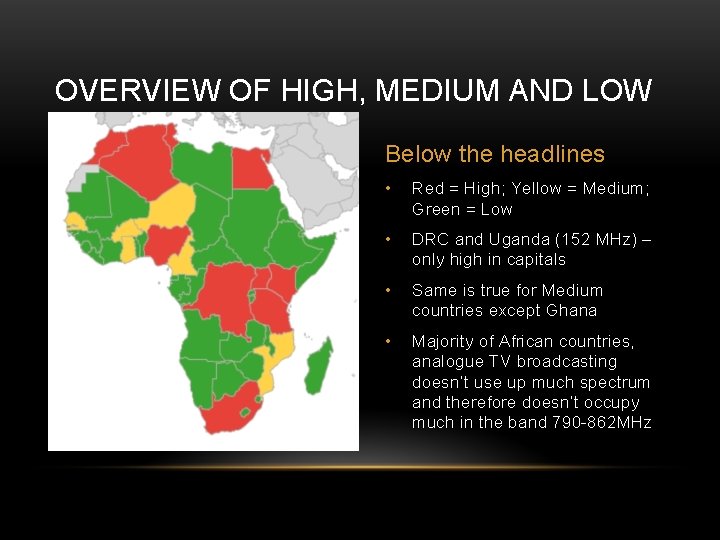
OVERVIEW OF HIGH, MEDIUM AND LOW Below the headlines • Red = High; Yellow = Medium; Green = Low • DRC and Uganda (152 MHz) – only high in capitals • Same is true for Medium countries except Ghana • Majority of African countries, analogue TV broadcasting doesn’t use up much spectrum and therefore doesn’t occupy much in the band 790 -862 MHz
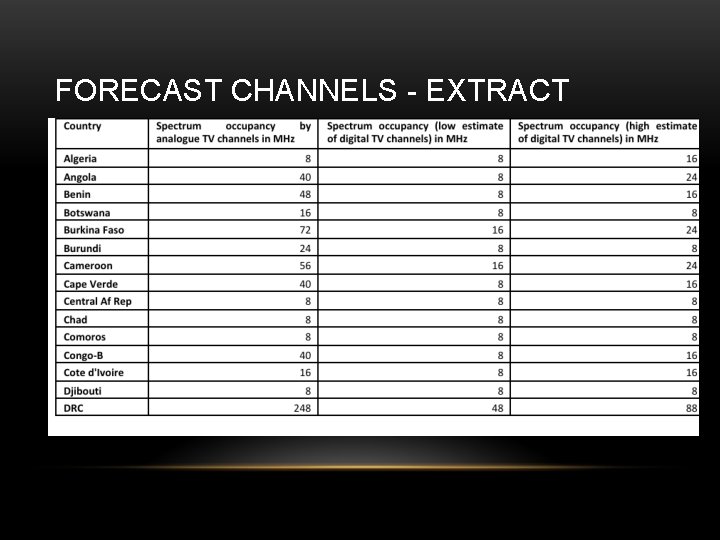
FORECAST CHANNELS - EXTRACT
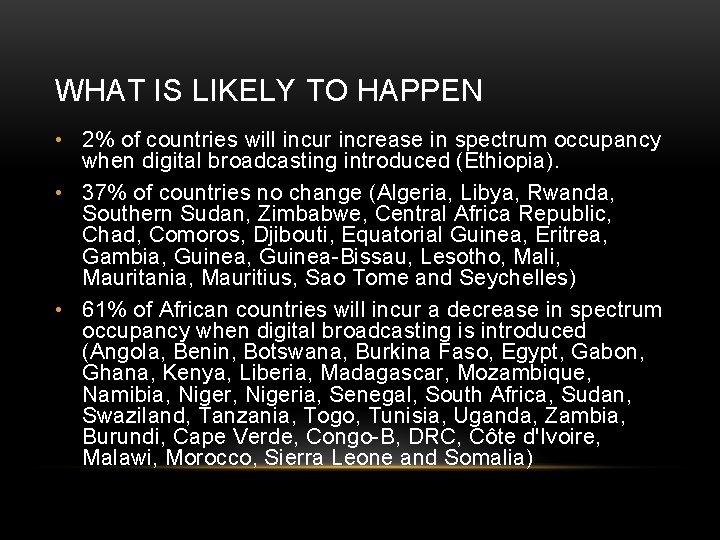
WHAT IS LIKELY TO HAPPEN • 2% of countries will incur increase in spectrum occupancy when digital broadcasting introduced (Ethiopia). • 37% of countries no change (Algeria, Libya, Rwanda, Southern Sudan, Zimbabwe, Central Africa Republic, Chad, Comoros, Djibouti, Equatorial Guinea, Eritrea, Gambia, Guinea-Bissau, Lesotho, Mali, Mauritania, Mauritius, Sao Tome and Seychelles) • 61% of African countries will incur a decrease in spectrum occupancy when digital broadcasting is introduced (Angola, Benin, Botswana, Burkina Faso, Egypt, Gabon, Ghana, Kenya, Liberia, Madagascar, Mozambique, Namibia, Nigeria, Senegal, South Africa, Sudan, Swaziland, Tanzania, Togo, Tunisia, Uganda, Zambia, Burundi, Cape Verde, Congo-B, DRC, Côte d'Ivoire, Malawi, Morocco, Sierra Leone and Somalia)
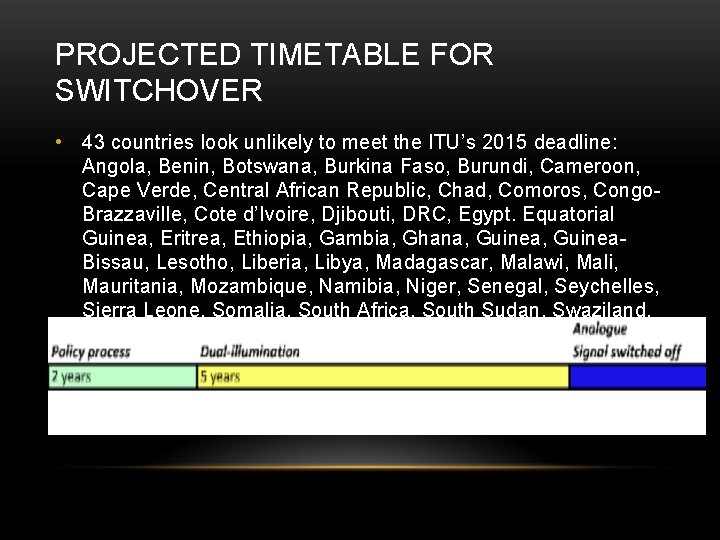
PROJECTED TIMETABLE FOR SWITCHOVER • 43 countries look unlikely to meet the ITU’s 2015 deadline: Angola, Benin, Botswana, Burkina Faso, Burundi, Cameroon, Cape Verde, Central African Republic, Chad, Comoros, Congo. Brazzaville, Cote d’Ivoire, Djibouti, DRC, Egypt. Equatorial Guinea, Eritrea, Ethiopia, Gambia, Ghana, Guinea. Bissau, Lesotho, Liberia, Libya, Madagascar, Malawi, Mali, Mauritania, Mozambique, Namibia, Niger, Senegal, Seychelles, Sierra Leone, Somalia, South Africa, South Sudan, Swaziland, Uganda, Zambia and Zimbabwe.
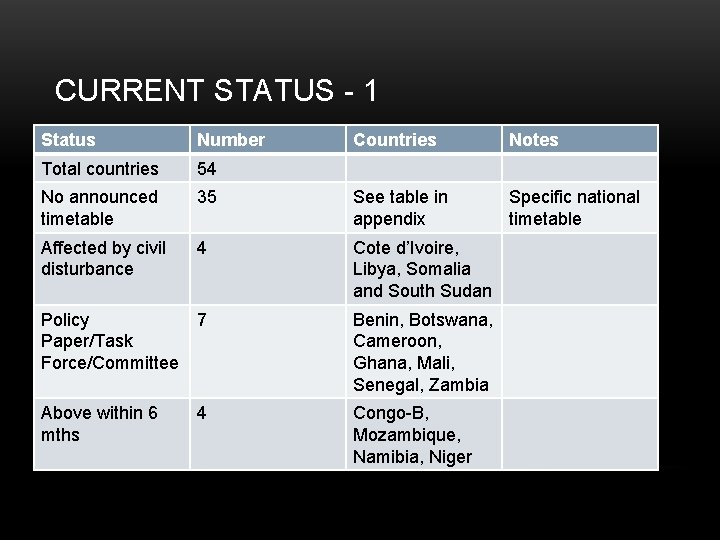
CURRENT STATUS - 1 Status Number Countries Notes Total countries 54 No announced timetable 35 See table in appendix Specific national timetable Affected by civil disturbance 4 Cote d’Ivoire, Libya, Somalia and South Sudan Policy Paper/Task Force/Committee 7 Benin, Botswana, Cameroon, Ghana, Mali, Senegal, Zambia Above within 6 mths 4 Congo-B, Mozambique, Namibia, Niger
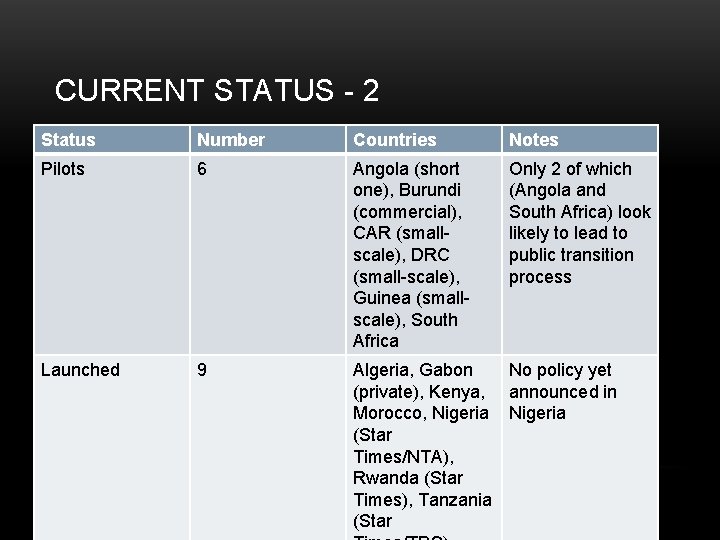
CURRENT STATUS - 2 Status Number Countries Notes Pilots 6 Angola (short one), Burundi (commercial), CAR (smallscale), DRC (small-scale), Guinea (smallscale), South Africa Only 2 of which (Angola and South Africa) look likely to lead to public transition process Launched 9 Algeria, Gabon No policy yet (private), Kenya, announced in Morocco, Nigeria (Star Times/NTA), Rwanda (Star Times), Tanzania (Star
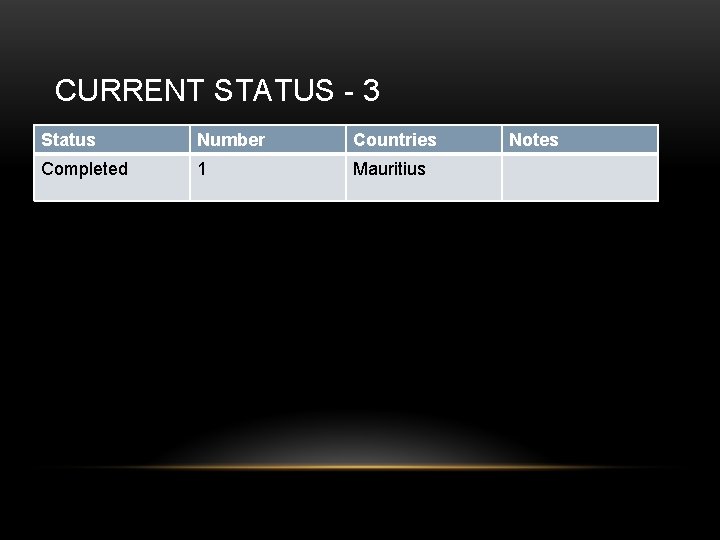
CURRENT STATUS - 3 Status Number Countries Completed 1 Mauritius Notes
RECOMMENDATIONS • Case for extending current digital dividend between 790 -862 MHz to a larger band between 700 -862 MHz. This recommendation would apply to all countries with a very low and low spectrum • More independent signal carriers, & extended national coverage. Greater pressures in high occupancy countries • For smaller, poorer African countries (like Liberia and Sierra Leone), the cost of building a terrestrial digital transmission network with any significant reach is going to be substantial. Satellite coverage may provide a cheaper short to medium term alternative • Decoder cost a significant barrier. Few subsidy schemes in place. • Many countries have opportunity to open up their TV industry as others have done with telecoms • Making spectrum available for voice and data cheaply to reach 20 -40% uncovered populations