SIGHTREADING DO YOU SEE THE IMPORTANCE Matthew Rowan


- Slides: 24
SIGHTREADING: DO YOU SEE THE IMPORTANCE? Matthew Rowan NFHS Performing Arts Conference September 2019
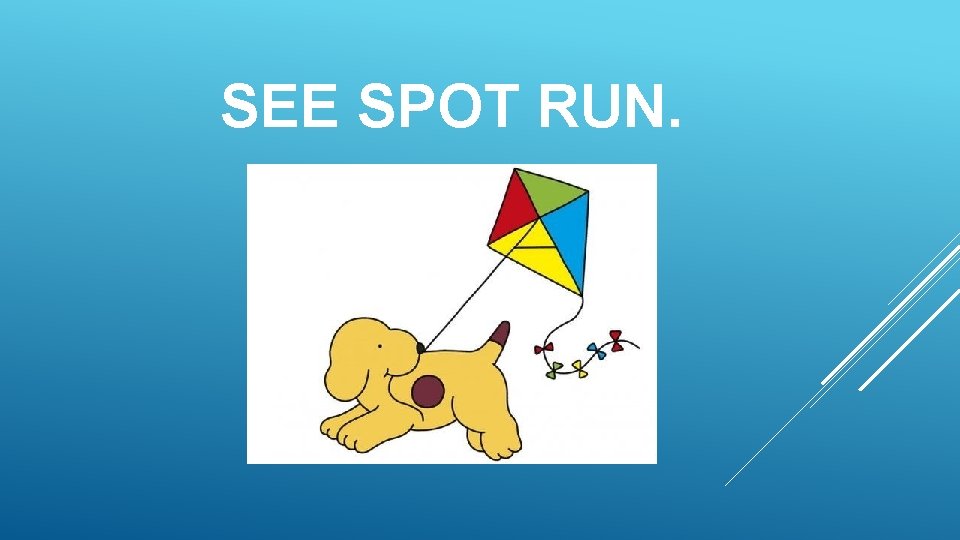
SEE SPOT RUN.
RUN, SPOT, RUN!
“LOOK AT SPOT GO! HE REALLY CAN RUN. I WOULDN'T WANT TO BE THAT CAT!” Link
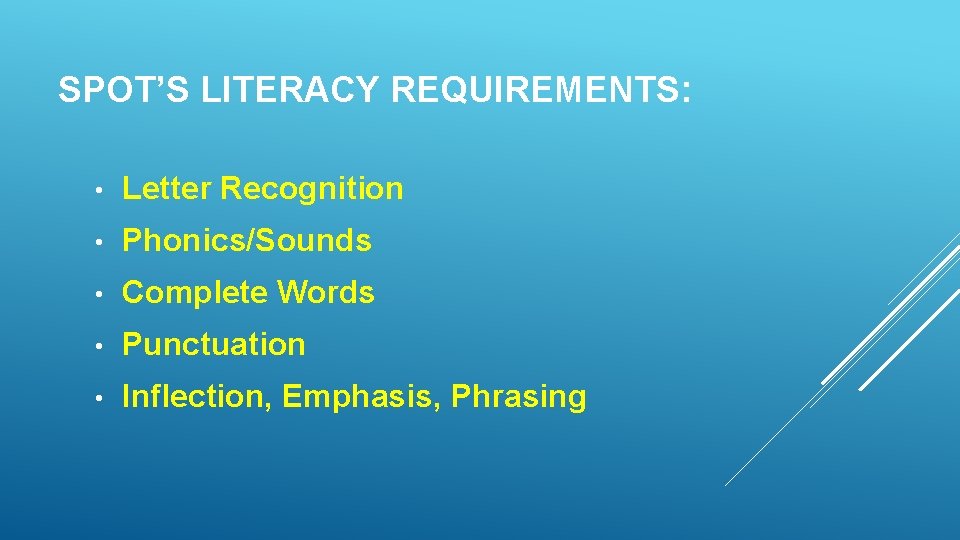
SPOT’S LITERACY REQUIREMENTS: • Letter Recognition • Phonics/Sounds • Complete Words • Punctuation • Inflection, Emphasis, Phrasing
LINK
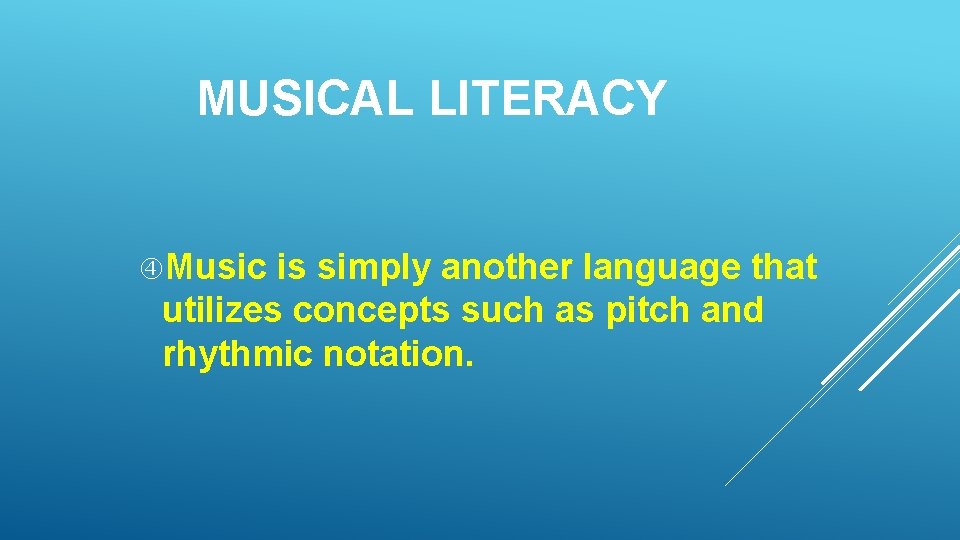
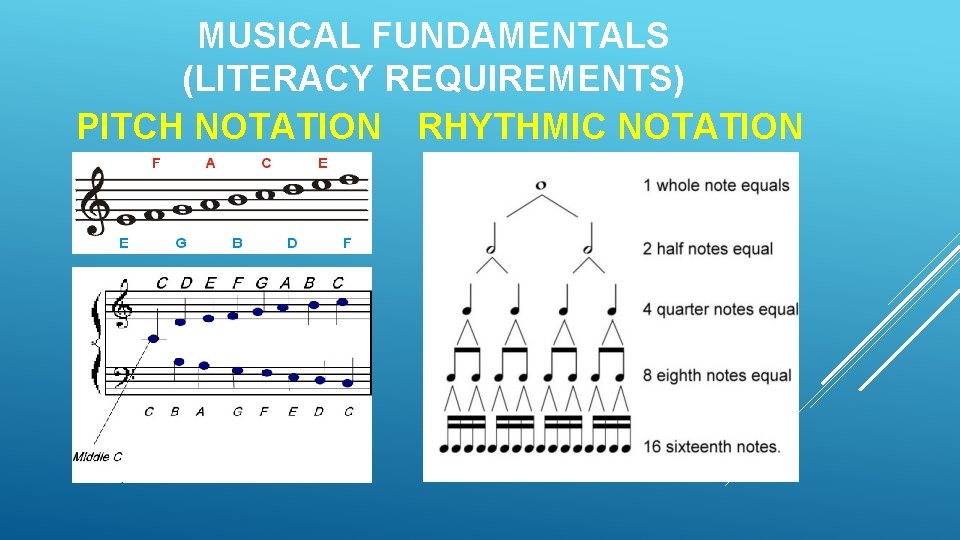
MUSICAL LITERACY Music is simply another language that utilizes concepts such as pitch and rhythmic notation.
MUSICAL FUNDAMENTALS (LITERACY REQUIREMENTS) PITCH NOTATION RHYTHMIC NOTATION
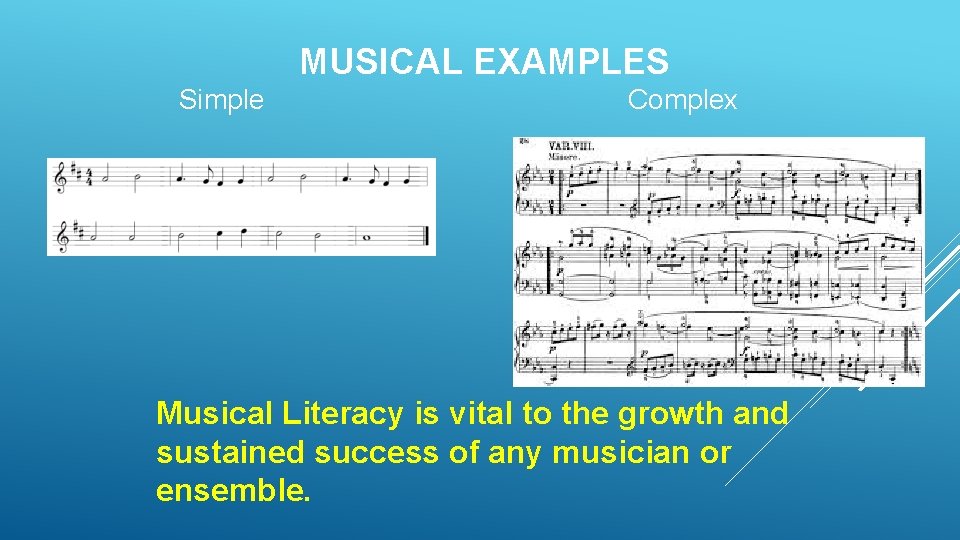
MUSICAL EXAMPLES Simple Complex Musical Literacy is vital to the growth and sustained success of any musician or ensemble.
SIGHTREADING: WHAT IS IT? • • The ability to read music at sight. • Understanding of Rhythmic Notation, Note and Rest Values, Time Signatures, and Pulse. • Understanding of Pitch, Note Names, and Musical Notation. • The combination of these allow for basic sightreading skills. Ultimately, sightreading should be a TOOL used to assess FUNDAMENTAL MUSICAL SKILLS.
SIGHTREADING: THE IMPORTANCE Informal Text to Colleagues: “Why is Sightreading Important? ”
COLLEAGUE RESPONSES: WHY IS SIGHTREADING IMPORTANT? “The same reason I am able to read this text and laugh at it…. . Literacy. ”
COLLEAGUE RESPONSES: WHY IS SIGHTREADING IMPORTANT? “To show that we are teaching our kids the fundamentals of music so they can be independent players. Also, to show that we aren’t rote teaching and only working on the music for a festival or contest. ”
COLLEAGUE RESPONSES: WHY IS SIGHTREADING IMPORTANT? “I think sightreading is an important benchmark on teaching effectiveness and aligned curriculum throughout a program. You can tell a lot about what students can and cannot do based on their sight reading recognition. ”
COLLEAGUE RESPONSES: WHY IS SIGHTREADING IMPORTANT? “It has its place in the classroom. If fundamentals are being taught as they should, then the sightreading process can be beneficial to the learning environment. It becomes a TOOL to evaluate if fundamentals and musicianship are being taught. If rote teaching is occurring, then sightreading is useless. ”
COLLEAGUE RESPONSES: WHY IS SIGHTREADING IMPORTANT? “Without the ability to recognize, play and understand music at sight, everything we do is simply a mechanical action of repeating sounds over and over until it sounds good. ” “Music is a language and, as purveyors of this language we must insist that our students can read it, write it, and speak it. Just as we expect that from our ELA teachers. ”
COLLEAGUE RESPONSES: WHY IS SIGHTREADING IMPORTANT? “Because anyone can fluently speak a language and still be illiterate. ” “It accurately measures the music literacy levels of performers. Humans can fluently speak numerous languages without knowing how to read and or write those languages. One of the primary purposes of music education should be to teach people how to read, comprehend, and speak (perform) the language of music. ”
LITERACY AND MUSICAL LITERACY “There is a direct correlation between poverty and illiteracy. Per the Literacy Project Foundation, three out of four people on welfare cannot read. Fifty percent of unemployed individuals between 16 and 21 years of age are not considered literate. On the flip side, as the literacy rate doubles, so doubles the per capita income. ” -Success for Every Student by Shelly Pollnow and Oran Tkatchov
BENEFITS OF MUSICAL LITERACY: Ø Independent Musicians Ø Increased Achievement and Ability Levels of Individuals and Ensembles Ø Increased Teaching Efficiency and Enjoyment Ø Increased Enjoyment for all: Performers, Teachers, Audience Members Ø Provides the ability to create MOMENTS and MEMORIES that can last a lifetime.
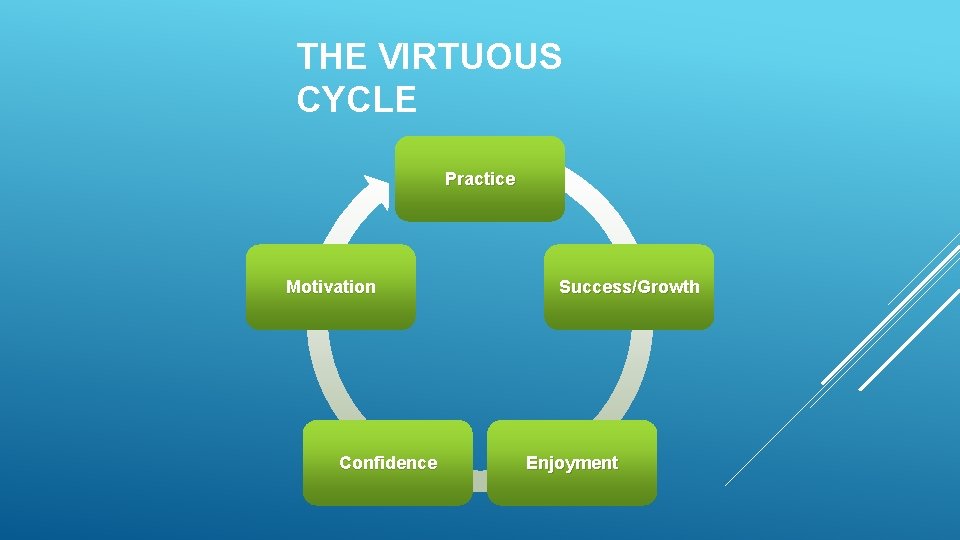
THE VIRTUOUS CYCLE Practice Motivation Confidence Success/Growth Enjoyment
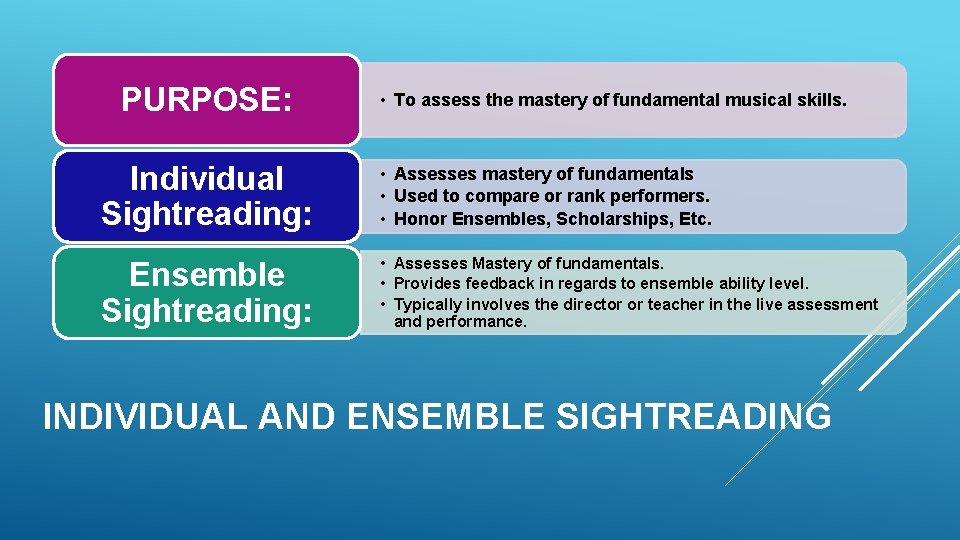
PURPOSE: • To assess the mastery of fundamental musical skills. Individual Sightreading: • Assesses mastery of fundamentals • Used to compare or rank performers. • Honor Ensembles, Scholarships, Etc. Ensemble Sightreading: • Assesses Mastery of fundamentals. • Provides feedback in regards to ensemble ability level. • Typically involves the director or teacher in the live assessment and performance. INDIVIDUAL AND ENSEMBLE SIGHTREADING
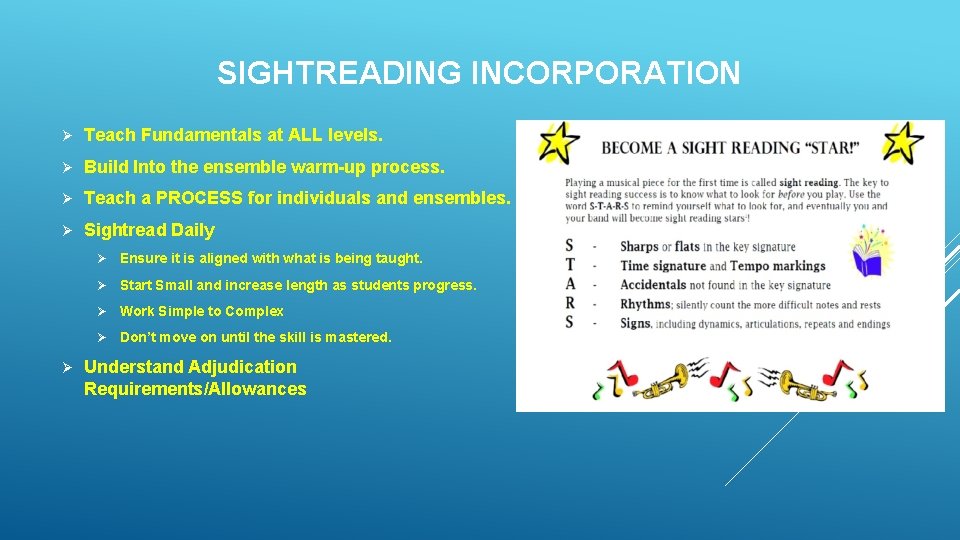
SIGHTREADING INCORPORATION Ø Teach Fundamentals at ALL levels. Ø Build Into the ensemble warm-up process. Ø Teach a PROCESS for individuals and ensembles. Ø Sightread Daily Ø Ø Ensure it is aligned with what is being taught. Ø Start Small and increase length as students progress. Ø Work Simple to Complex Ø Don’t move on until the skill is mastered. Understand Adjudication Requirements/Allowances
SIGHTREADING RESOURCES Habits of a Successful Musician Method Book Series Ensemble Sightreading Methods Individual Sightreading Methods UIL Sightreading Series for Band/Orchestras www. sightreadingfactory. com Smart. Music – www. smartmusic. com
SIGHTREADING: CONCLUDING THOUGHTS Should be a necessary part of the music curriculum at all levels. Should be used as a tool, both formal and informal, to evaluate the mastery of fundamental musical skills on both the individual and ensemble level. Can be used as a tool to track consistent growth and progress. Helps educators understand the ability levels of individuals and ensembles. Should be routinely incorporated to help produce literate musicians that can participate in musical ensembles throughout their lives.