SHRIMP FARMING IN SALINE GROUNDWATER IN ARIZONA USA
- Slides: 20
SHRIMP FARMING IN SALINE GROUNDWATER IN ARIZONA, USA Kevin Fitzsimmons University of Arizona Tucson, Arizona
ABSTRACT Environmental restrictions on shrimp aquaculture. n Inland culture avoids problems. n Low salinities will support growout. n Problem areas with aquaculture. n Reuse of effluent for field crops. n Sustainable and profitable? n
INTRODUCTION Environmental Constraints Loss of mangroves and other coastal vegetation. n Effluents and nutrient enrichment n Impacts (real and imagined) on wild shrimp and other species (diseases, exotic species, genetic contamination). n Changes in estuarine flow patterns. n
INTRODUCTION Low salinity inland culture Florida, Harbor Branch Oceanographic n Mexico, Colima; Aquagranjas n Thailand, multiple n India, Andhra Pradesh n Texas, Texas A&M n Arizona, Gila Bend and Aztec n
INTRODUCTION Source water Low (1 -2 ppt or 1000 -2000 ppm TDS). n Med (3 -5 ppt or 3000 - 5000 ppm TDS) n Low can be used on conventional crops. n Medium salinity effluent constitutes a disposal problem. n Medium salinity effluent can be used for algae culture or halophyte crops. n
INTRODUCTION Reuse of low salinity (1 -2 ppt) effluent water n Has been used for olive trees, sorgum, and cotton. n Could be used for sugar beets, asparagus and dates.
INTRODUCTION Reuse of medium salinity (3 -5 ppt) effluent water Halophyte agriculture. n Seaweed culture. n Bivalve culture. n
INTRODUCTION Halophytes Many families of plants have halophytic representatives. n Grasses, bushes, trees n Many are from arid regions n Native species are usually available n Can be used forage, biomass, landscaping, and dust control n
RESULTS Gila Bend, Low salinity n Stocking Litopenaeus vannamei – 35 shrimp/m 2 @ 0. 4 g Feed - Rangen n Water exchange: 10 -15% n Aeration n – Paddlewheels – Diffusers
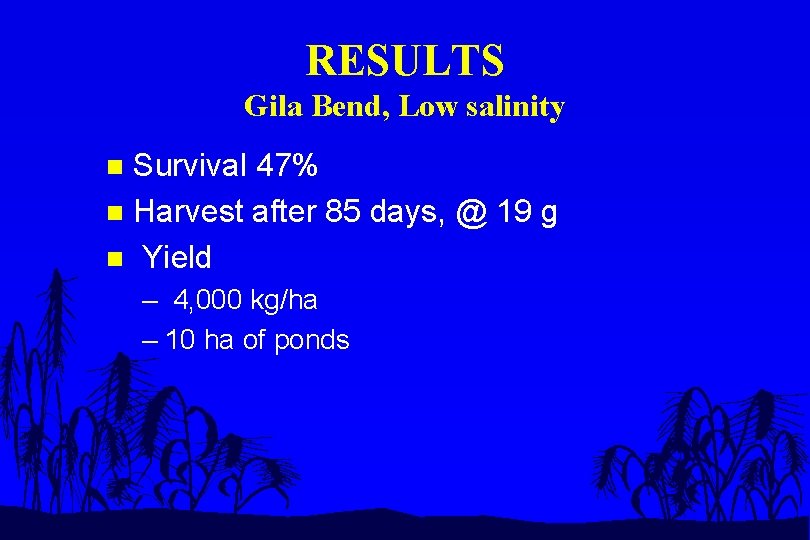
RESULTS Gila Bend, Low salinity Survival 47% n Harvest after 85 days, @ 19 g n Yield n – 4, 000 kg/ha – 10 ha of ponds
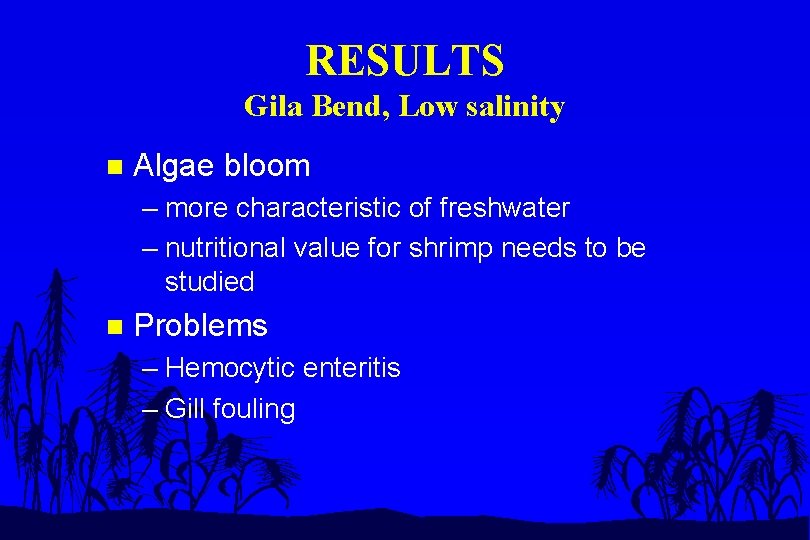
RESULTS Gila Bend, Low salinity n Algae bloom – more characteristic of freshwater – nutritional value for shrimp needs to be studied n Problems – Hemocytic enteritis – Gill fouling
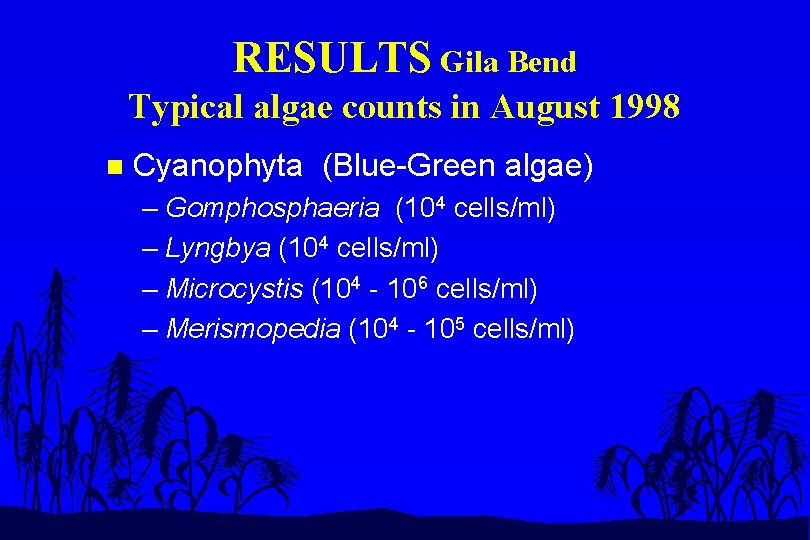
RESULTS Gila Bend Typical algae counts in August 1998 n Cyanophyta (Blue-Green algae) – Gomphosphaeria (104 cells/ml) – Lyngbya (104 cells/ml) – Microcystis (104 - 106 cells/ml) – Merismopedia (104 - 105 cells/ml)
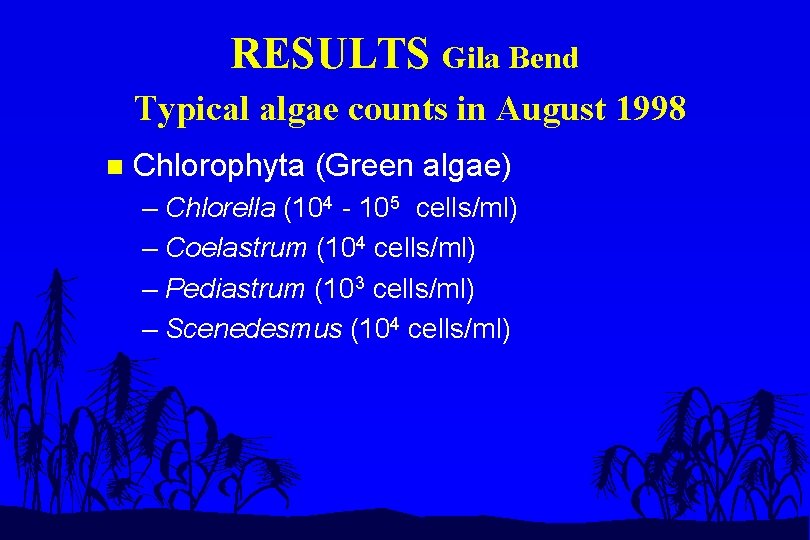
RESULTS Gila Bend Typical algae counts in August 1998 n Chlorophyta (Green algae) – Chlorella (104 - 105 cells/ml) – Coelastrum (104 cells/ml) – Pediastrum (103 cells/ml) – Scenedesmus (104 cells/ml)
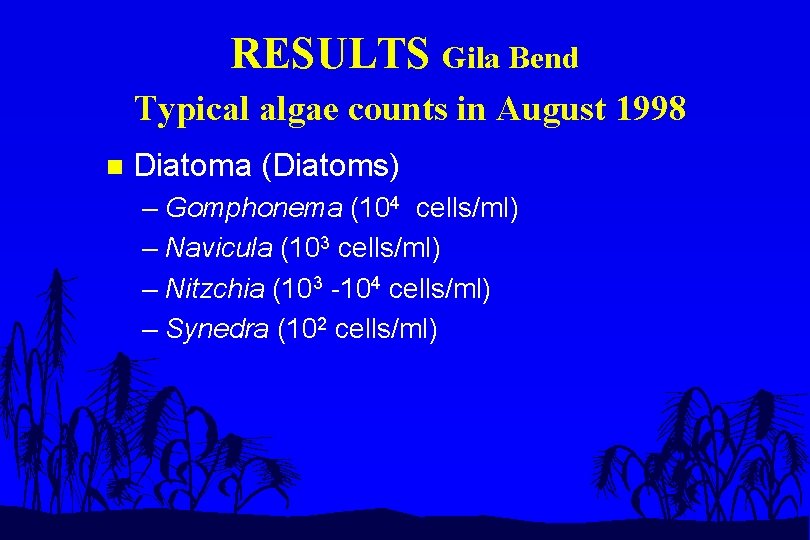
RESULTS Gila Bend Typical algae counts in August 1998 n Diatoma (Diatoms) – Gomphonema (104 cells/ml) – Navicula (103 cells/ml) – Nitzchia (103 -104 cells/ml) – Synedra (102 cells/ml)
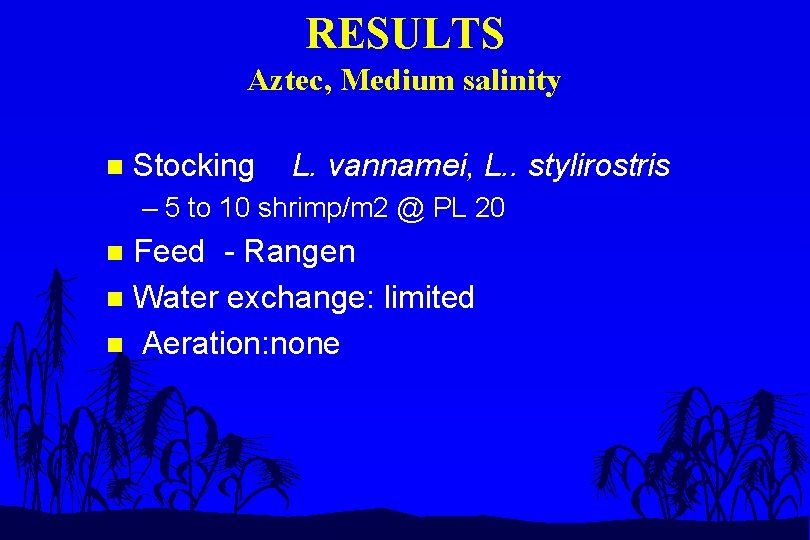
RESULTS Aztec, Medium salinity n Stocking L. vannamei, L. . stylirostris – 5 to 10 shrimp/m 2 @ PL 20 Feed - Rangen n Water exchange: limited n Aeration: none n
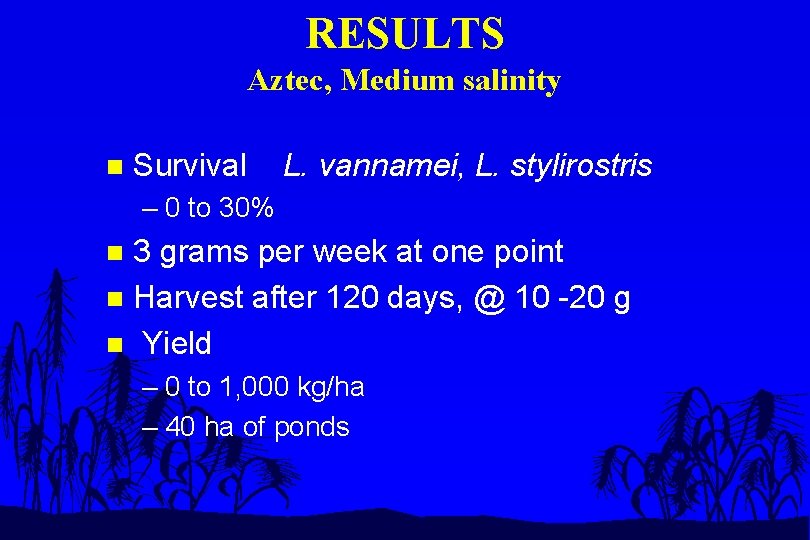
RESULTS Aztec, Medium salinity n Survival L. vannamei, L. stylirostris – 0 to 30% 3 grams per week at one point n Harvest after 120 days, @ 10 -20 g n Yield n – 0 to 1, 000 kg/ha – 40 ha of ponds
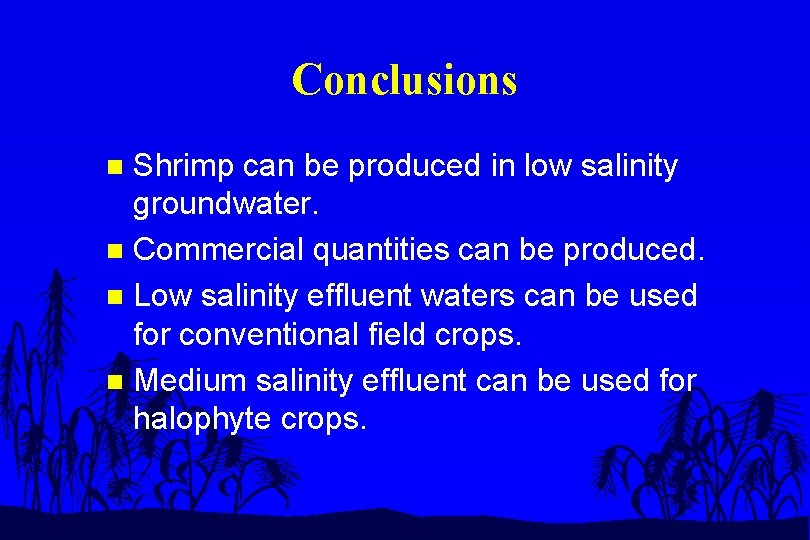
Conclusions Shrimp can be produced in low salinity groundwater. n Commercial quantities can be produced. n Low salinity effluent waters can be used for conventional field crops. n Medium salinity effluent can be used for halophyte crops. n
Conclusions Sustainability will not be demonstrated until salt levels in soils are tested after several years of irrigation. n Need to determine manipulation of algae species. n
Conclusions Markets are prepared to pay a premium for fresh, locally grown shrimp. n Profitability will be determined if more crop cycles can be completed without significant losses due to disease or other environmental conditions. n
Additional information n Websites – http: //ag. arizona. edu/azaqua – http: //www. desertsweetshrimp. com – http: //www. shrimp. ga. com – http: //www. sciam. com/1998/0898 issue