
Crabs Shrimps and Lobsters By Latryce Gaddy Table

Crabs , Shrimps and Lobsters By Latryce Gaddy
Table Of Contents • • • • What is a Crab ? Habitat of a Crab Physical Characteristics of a Crab A Crabs Behavior More Info. About Crab What is a Shrimp ? Habitat of a Shrimp Physical Characteristics of a Shrimp A Shrimps behavior More info. About A Crab What is a Lobster ? Habitat of a Lobster Physical Characteristics of a Lobster A lobsters Behavior More info. About Lobster
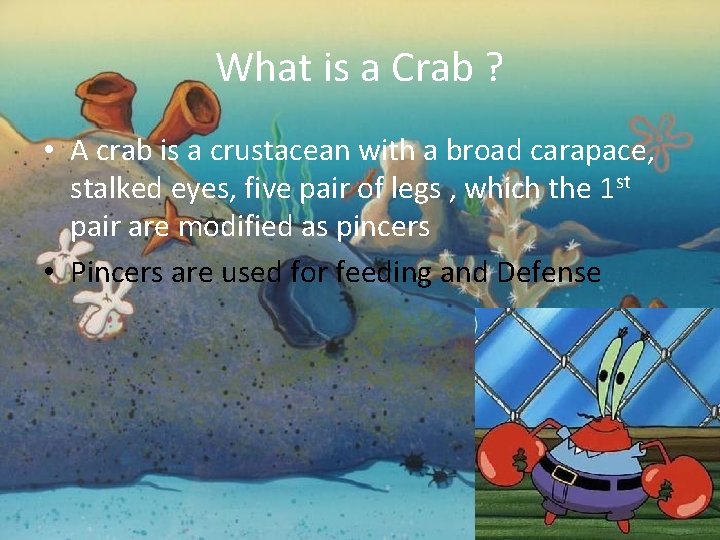
What is a Crab ? • A crab is a crustacean with a broad carapace, stalked eyes, five pair of legs , which the 1 st pair are modified as pincers • Pincers are used for feeding and Defense
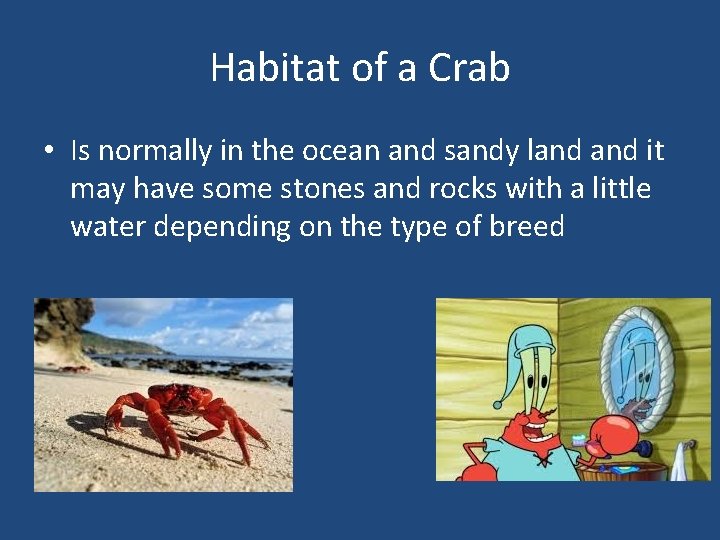
Habitat of a Crab • Is normally in the ocean and sandy land it may have some stones and rocks with a little water depending on the type of breed
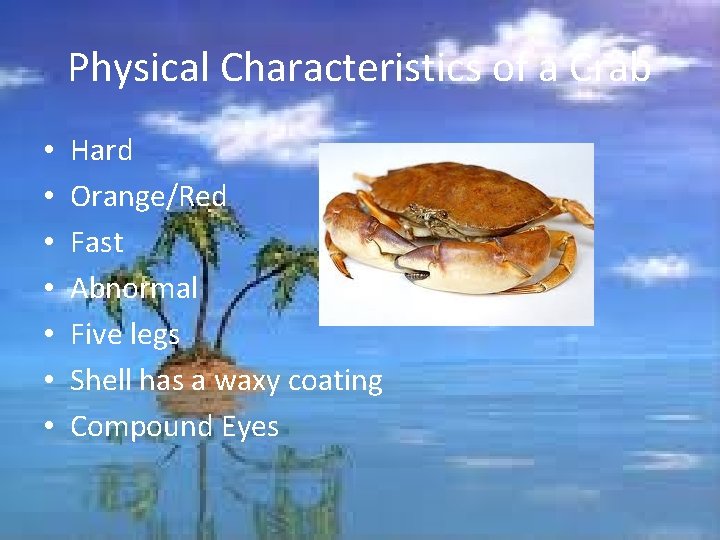
Physical Characteristics of a Crab • • Hard Orange/Red Fast Abnormal Five legs Shell has a waxy coating Compound Eyes
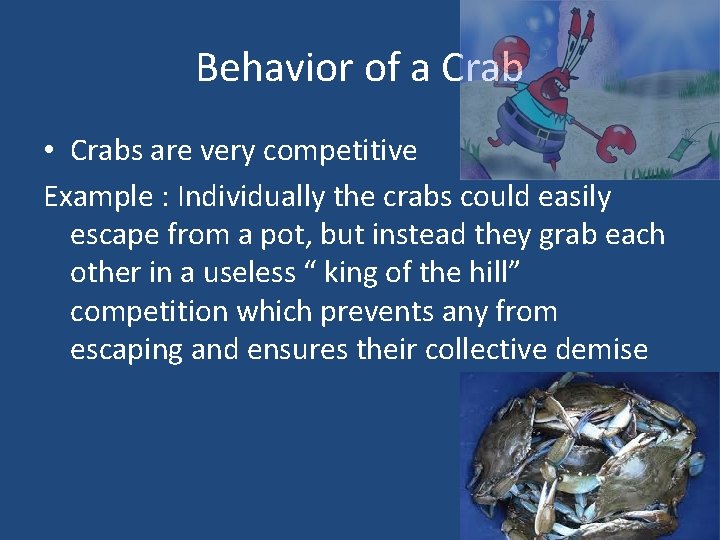
Behavior of a Crab • Crabs are very competitive Example : Individually the crabs could easily escape from a pot, but instead they grab each other in a useless “ king of the hill” competition which prevents any from escaping and ensures their collective demise
More info. About a Crabs live on land in all the waters of the world and especially in the tropical regions. They spend most of their time in freshwater. • They have eyes on short stalks and a hard protective carapace or covering of bone or chitin which covers the inner organs. • • • The lifespan of crabs is in the range of 8 to 13 years. Males have larger claws than female crabs. The females’ abdomen is wide and round compared to the slender abdomen of males. They walk in to one side and some even walk backwards. The claw of crabs easily grows back if they lose one. The swim paddles help them swim.
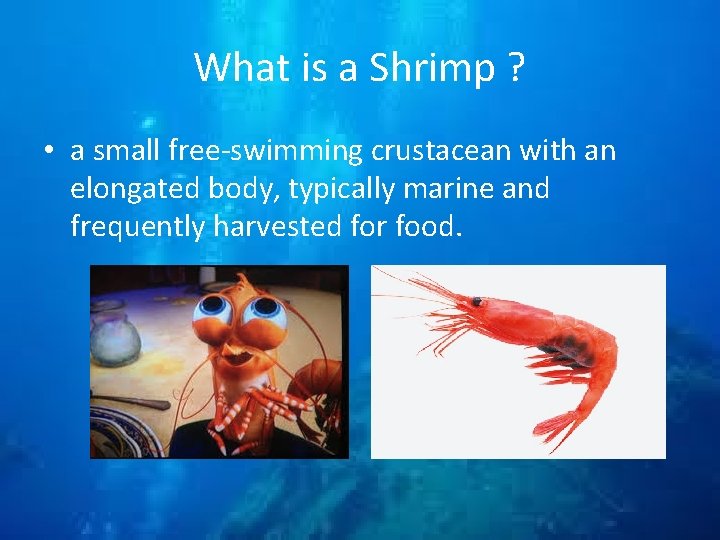
What is a Shrimp ? • a small free-swimming crustacean with an elongated body, typically marine and frequently harvested for food.
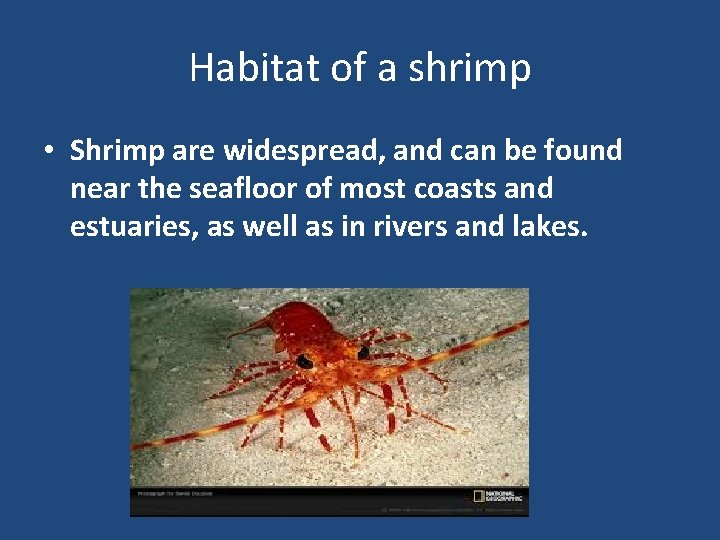
Habitat of a shrimp • Shrimp are widespread, and can be found near the seafloor of most coasts and estuaries, as well as in rivers and lakes.
Physical Characteristics of a Shrimp • Adult brine shrimp range from about 0. 3 inches to 0. 6 inches in length. The body has 19 to 20 trunk segments. • The color of adult brine shrimp is pink, whitish, green or transparent. Compound eyes at the end of stalks are found on the head, along with two pairs of antennae and a set of mandibles.
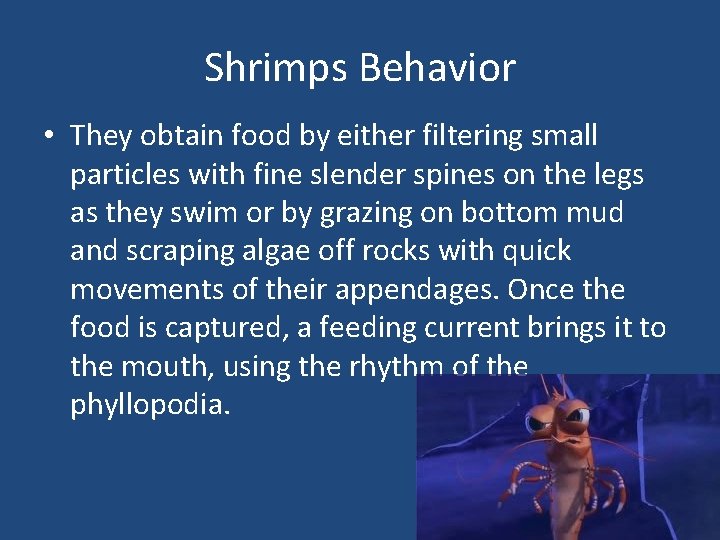
Shrimps Behavior • They obtain food by either filtering small particles with fine slender spines on the legs as they swim or by grazing on bottom mud and scraping algae off rocks with quick movements of their appendages. Once the food is captured, a feeding current brings it to the mouth, using the rhythm of the phyllopodia.
More info. About Shrimp • Shrimp’s ranking among the most eaten seafood in America • The females of some skeleton shrimp species kill the male after mating. • A shrimp's heart is in their head. • They can mate only when the female is between new, hardened exoskeletons.
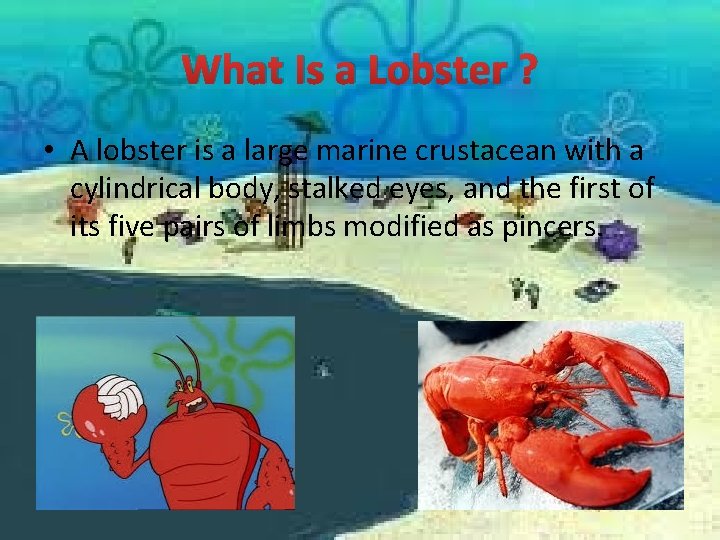
What Is a Lobster ? • A lobster is a large marine crustacean with a cylindrical body, stalked eyes, and the first of its five pairs of limbs modified as pincers.
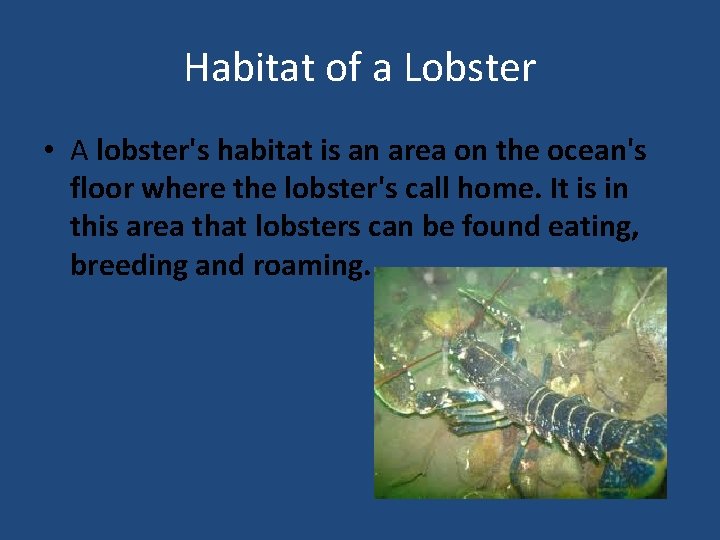
Habitat of a Lobster • A lobster's habitat is an area on the ocean's floor where the lobster's call home. It is in this area that lobsters can be found eating, breeding and roaming.
Physical Characteristics of a Lobster • A lobster has bilateral symmetry. It has two claws which are used for collecting and eating prey • three pairs of antennas - a large pair and two small pairs. the large antennas are used for touching, and allow lobsters to find their way in their environment. The small antennas allow them to recognize various chemical signals in water. They are very sensitive to odors and help them locate food, among other things. • Lobsters have two eyes located at the base of the antennas. • They do not distinguish colors and do not see clear images.
Behavior Of A Lobster • American lobsters are scavengers as well as predators, eating just about anything they can find along the bottom of the ocean, including fish, small crustaceans, and mollusks. • They are aggressive when fighting over territories and can inflict a painful pinch if aggravated.
More info. About Lobsters • Lobsters can live to be 100 years old or older, if fishermen leave them alone. • There are records of full-grown lobsters measuring three feet and weighing over 40 pounds. • Lobsters come with different colors; all turn red when cooked because all color dyes get destroyed while cooking except the red dye. • A lobster’s brain is in its throat • A lobster breathes and listens with its legs • A lobster tastes with its feet.
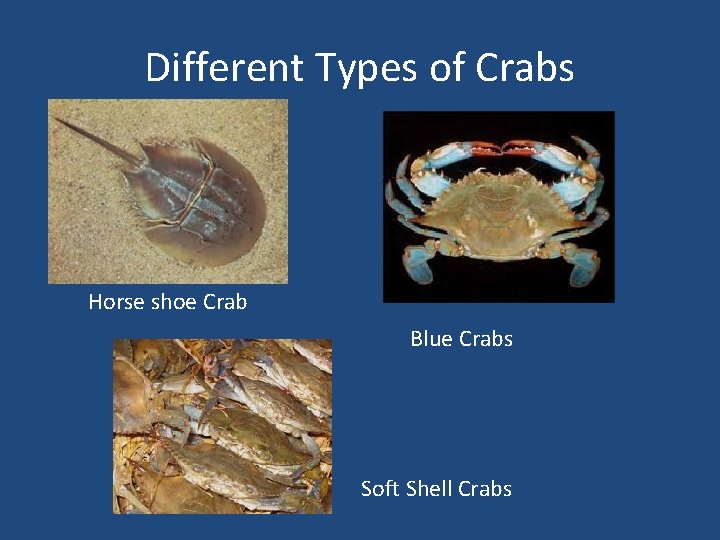
Different Types of Crabs Horse shoe Crab Blue Crabs Soft Shell Crabs
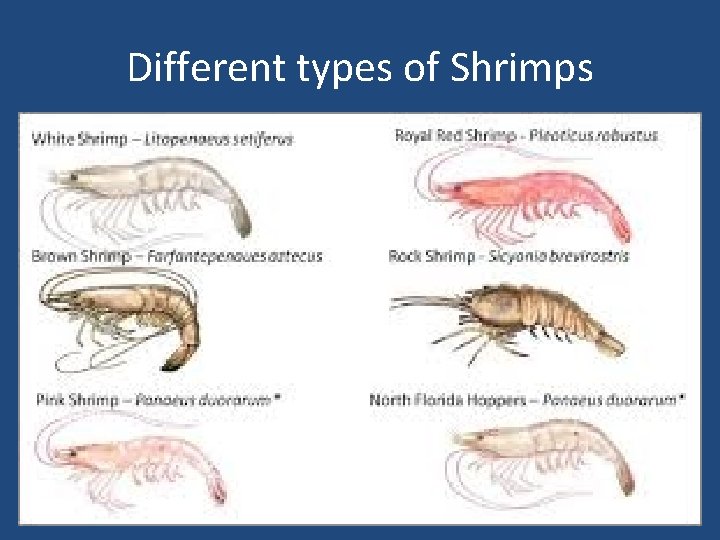
Different types of Shrimps

THANK YOU FOR WATCHING
- Slides: 20