Sensor Networks and Environmental Monitoring Jacques Panchard 1

- Slides: 28
Sensor Networks and Environmental Monitoring Jacques Panchard 1
What is a Sensor Network? • Ad hoc network (self-organized) • Environment-to-person communication • Nodes: – large number (100 -1000 s) – sensing capability – communication, processing, memory capabilities – energy constrained – mobile/immobile • Base station - BS – energy unconstrained (if connected to the power grid) – mobile/immobile 2
“The network is the sensor” * Requires robust distributed systems of » thousands of » physically-embedded, » unattended, » and often untethered, devices. *(Manges & Smith, Oakridge Natl Labs, 10/98) 3
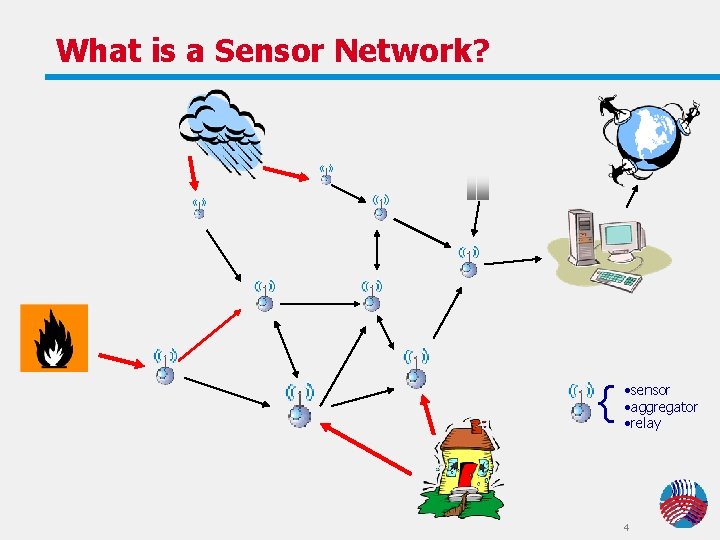
What is a Sensor Network? { • sensor • aggregator • relay 4
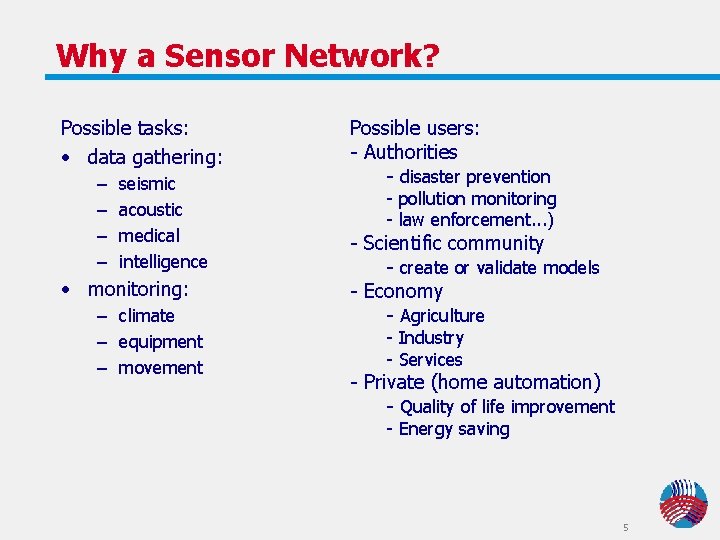
Why a Sensor Network? Possible tasks: • data gathering: – – seismic acoustic medical intelligence • monitoring: – climate – equipment – movement Possible users: - Authorities - disaster prevention - pollution monitoring - law enforcement. . . ) - Scientific community - create or validate models - Economy - Agriculture - Industry - Services - Private (home automation) - Quality of life improvement - Energy saving 5
Sensor Networks : design issues • Power efficiency – Node life-time – Network life-time Ø Especially important for self-powered nodes • Localization – Range based (Time Of Flight, RSSI etc. ) – Range free (based on anchors with known positions and hop count) Ø GPS is often impractical because it is energy hungry • Security – Secure Positioning – Data Validation • Packaging – Strong environmental constraints depending on the application • Data Processing 6
Alternatives to sensor networks • Remote sensing (satellite) • Cellular networks (GSM, GPRS. . . ) • Individual sensing and manual data gathering 7
The case for environmental monitoring – • "The UK Government's chief scientist now says climate change is a far worse danger than international terrorism" (BBC News, 10 Jan 04) – • Environmental phenomena are a major scientific and societal concern: • –Pollution • –Water • –Climate – • Information technology, communications and sensing are enabling technologies – • Due to current technological changes, there will be a watershed phenomenon in • • –Ability to monitor –Price point –Infrastructure –Data processing Courtesy of Prof. Martin Vetterli 8
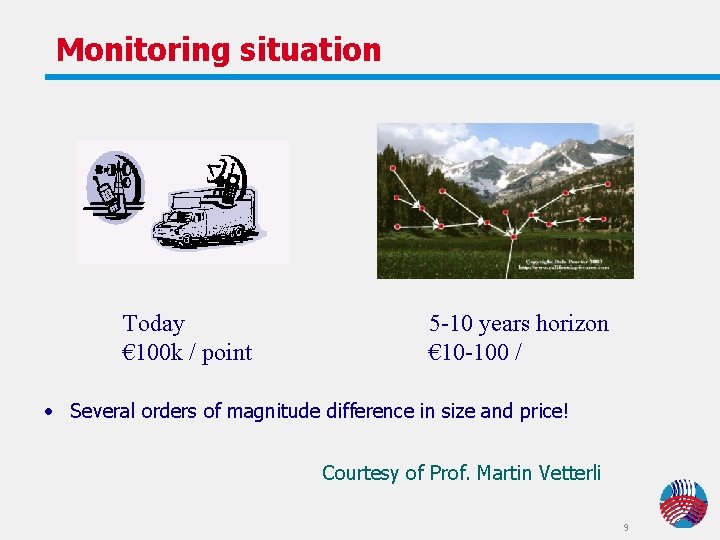
Monitoring situation Today € 100 k / point 5 -10 years horizon € 10 -100 / • Several orders of magnitude difference in size and price! Courtesy of Prof. Martin Vetterli 9
Implications for science and society • On the science side • –Completely new datasets are obtainable • (sensor networks as new telescopes) • –New scientific questions can be addressed • –Scientific theories can be verified/validated • –Measurement and simulation can be tuned • On the societal side • –Regulators have access to more data • –Closing the loop: sensing and actuating • –Communities can become involved Courtesy of Prof. Martin Vetterli 10
Case studies • Air pollution monitoring (static and dynamic scenarios) • Water/climate monitoring • Ground dynamics (glaciers, moving grounds, avalanches etc. ) Courtesy of Prof. Martin Vetterli 11
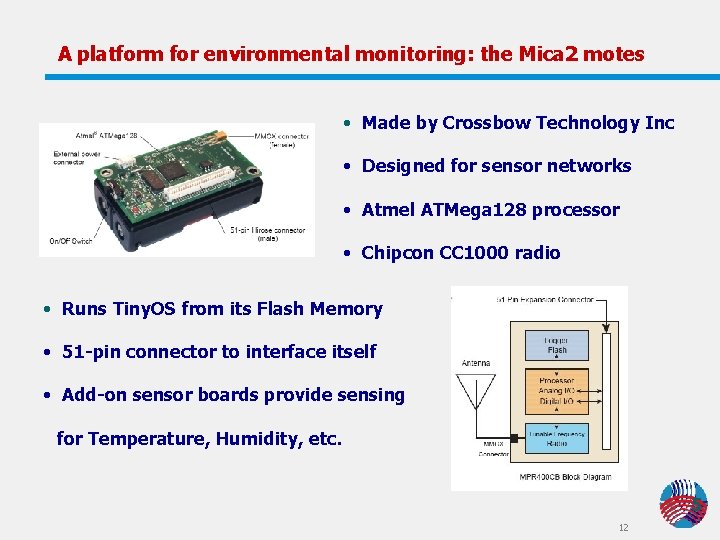
A platform for environmental monitoring: the Mica 2 motes • Made by Crossbow Technology Inc • Designed for sensor networks • Atmel ATMega 128 processor • Chipcon CC 1000 radio • Runs Tiny. OS from its Flash Memory • 51 -pin connector to interface itself • Add-on sensor boards provide sensing for Temperature, Humidity, etc. 5 12
The Operating System: tiny. OS • Tiny. OS created at UC Berkeley, now at Sourceforge • Library includes network protocols & distributed services • Also includes sensor drivers and DAQ tools • Powerful OS, Large community support 6 13
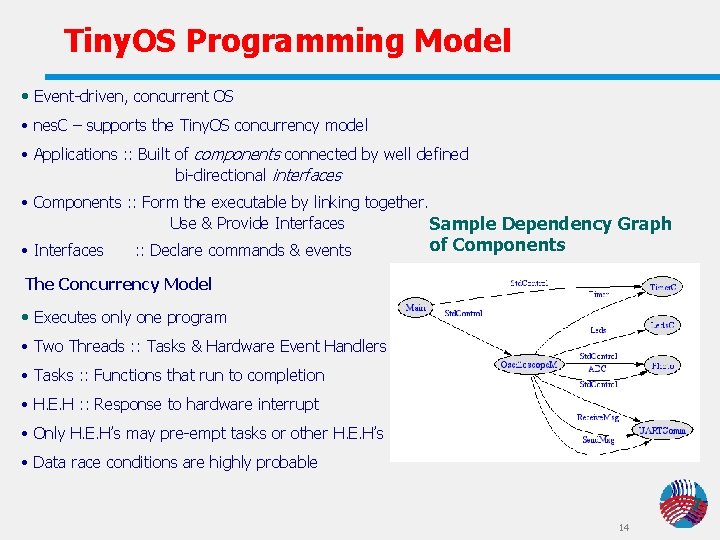
Tiny. OS Programming Model • Event-driven, concurrent OS • nes. C – supports the Tiny. OS concurrency model • Applications : : Built of components connected by well defined bi-directional interfaces • Components : : Form the executable by linking together. Use & Provide Interfaces Sample Dependency Graph • Interfaces : : Declare commands & events of Components The Concurrency Model • Executes only one program • Two Threads : : Tasks & Hardware Event Handlers • Tasks : : Functions that run to completion • H. E. H : : Response to hardware interrupt • Only H. E. H’s may pre-empt tasks or other H. E. H’s • Data race conditions are highly probable 7 14
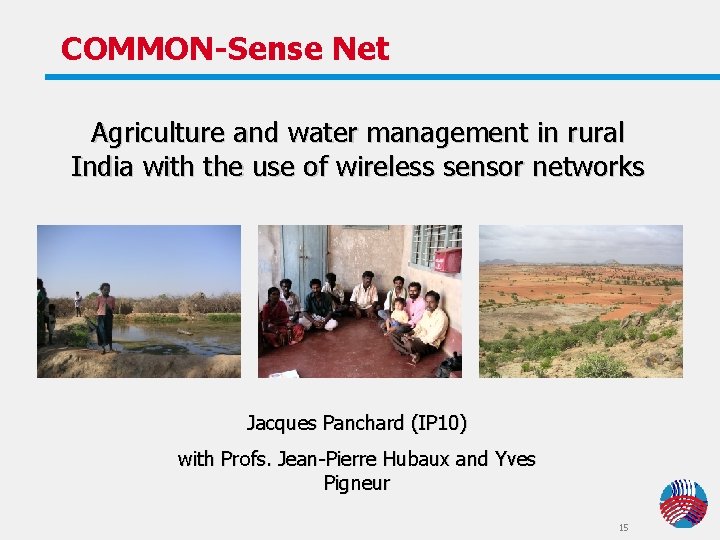
COMMON-Sense Net Agriculture and water management in rural India with the use of wireless sensor networks Jacques Panchard (IP 10) with Profs. Jean-Pierre Hubaux and Yves Pigneur 15
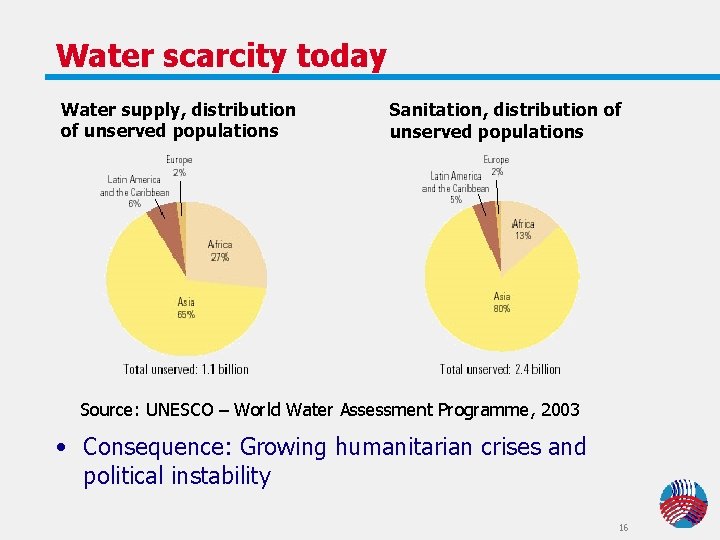
Water scarcity today Water supply, distribution of unserved populations Sanitation, distribution of unserved populations Source: UNESCO – World Water Assessment Programme, 2003 • Consequence: Growing humanitarian crises and political instability 16
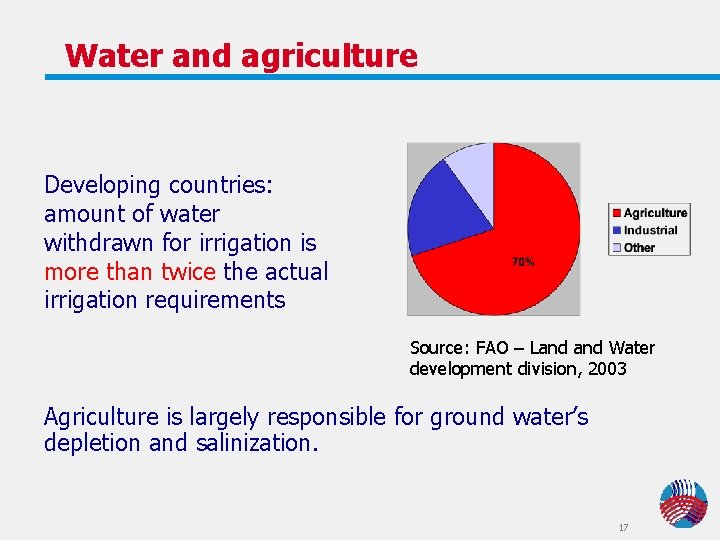
Water and agriculture Developing countries: amount of water withdrawn for irrigation is more than twice the actual irrigation requirements Source: FAO – Land Water development division, 2003 Agriculture is largely responsible for ground water’s depletion and salinization. 17
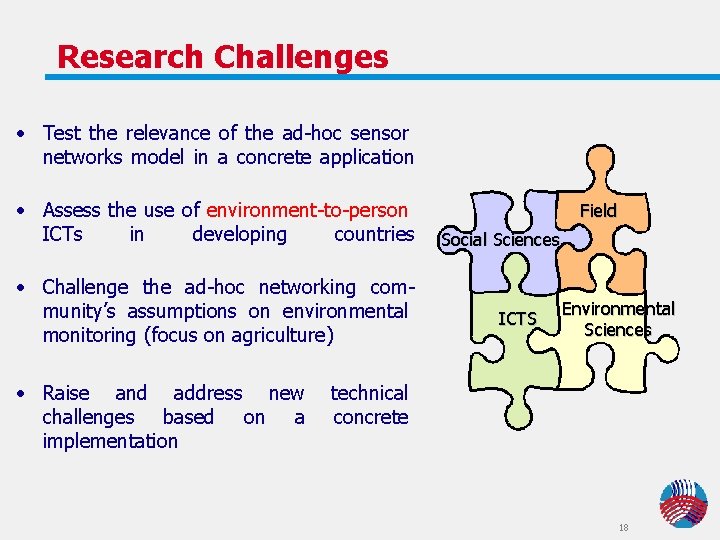
Research Challenges • Test the relevance of the ad-hoc sensor networks model in a concrete application • Assess the use of environment-to-person ICTs in developing countries • Challenge the ad-hoc networking community’s assumptions on environmental monitoring (focus on agriculture) Field Social Sciences ICTS Environmental Sciences • Raise and address new technical challenges based on a concrete implementation 18
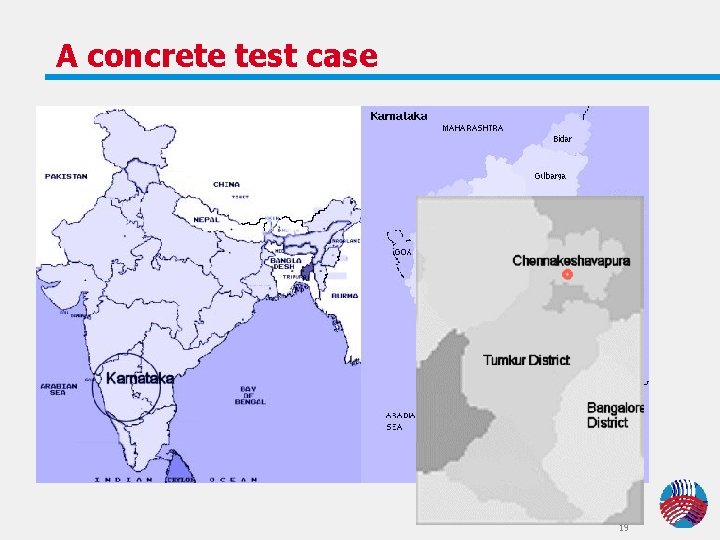
A concrete test case 19
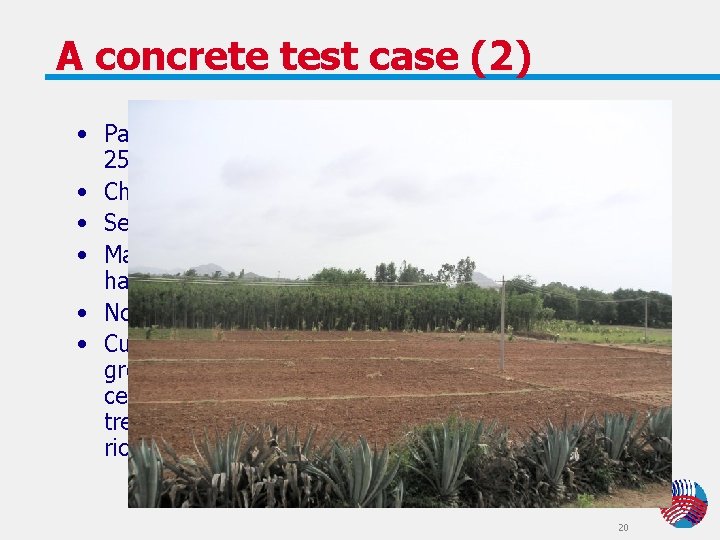
A concrete test case (2) • Pavagada “taluk”: 50 villages over a radius of 25 km. Around 100’ 000 inhabitants • Chennakeshava Pura : around 2000 inhabitants • Semi-arid climate • Marginal farmers (< 1 ha) and small farmers (< 2 ha) • No powered irrigation • Cultures: groundnut (for oil), cereals trees: areca nut, coconut. . . rice in some irrigated patches 20
Chennakeshava User survey • We conducted a survey in three villages of Karnataka in April-August 2004. • The population was segmented in several user groups: farmers (irrigated, non-irrigated), traders, shepherds, labourers. • It was conducted by local people, asking open questions about « What are your information needs? » Key findings [Rao 2004]: • Information needs are of two kinds: person-to-person and environment-to-person. • They differ but overlap between the different segments of the population [Rao 2004] PR Seshagiri Rao, Information needs for farming and livestock management in semiarid tracts of southern India, Technical report, 2004 21
Survey results Non irrigated Farmers Irrigated Farmers 22
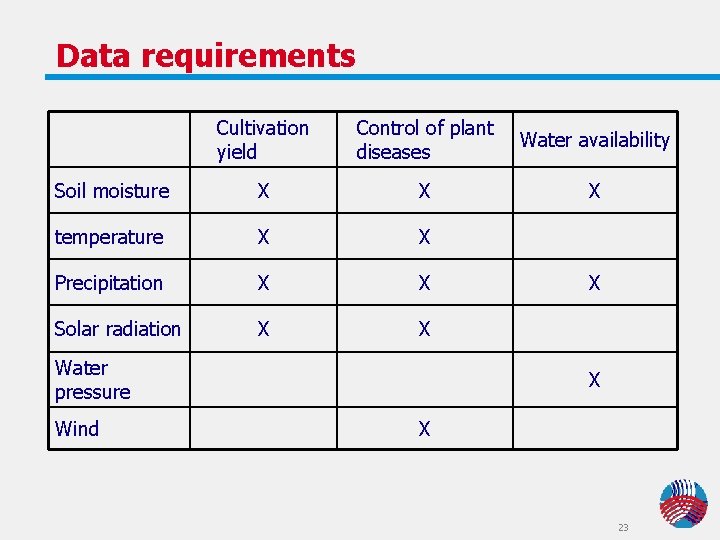
Data requirements Cultivation yield Control of plant Water availability diseases Soil moisture X X temperature X X Precipitation X X Solar radiation X X Water pressure Wind X X 23
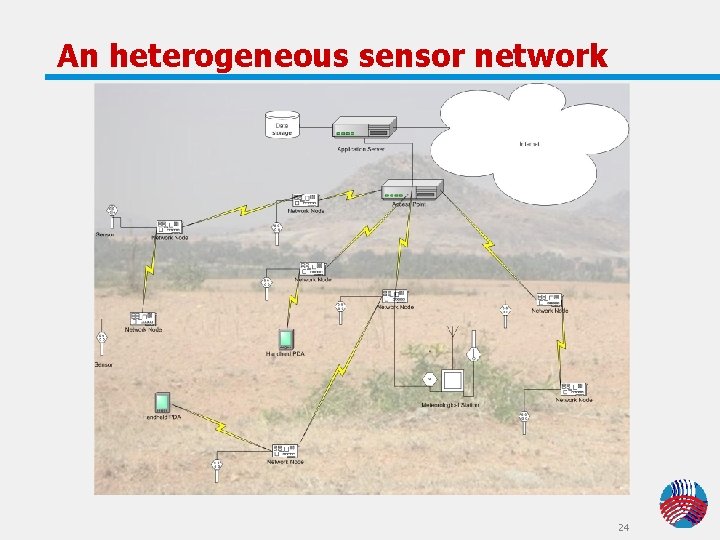
An heterogeneous sensor network 24
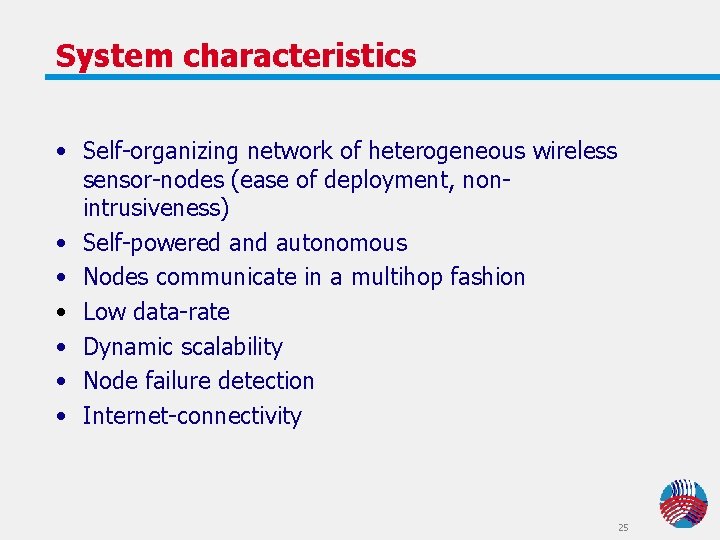
System characteristics • Self-organizing network of heterogeneous wireless sensor-nodes (ease of deployment, nonintrusiveness) • Self-powered and autonomous • Nodes communicate in a multihop fashion • Low data-rate • Dynamic scalability • Node failure detection • Internet-connectivity 25
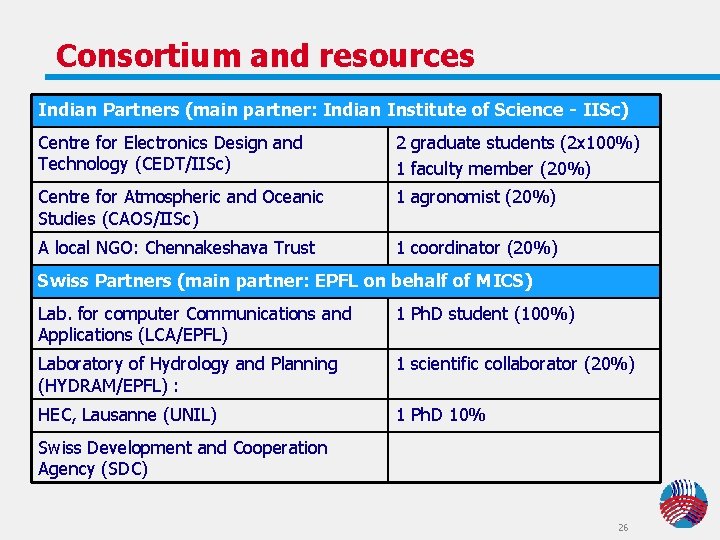
Consortium and resources Indian Partners (main partner: Indian Institute of Science - IISc) Centre for Electronics Design and Technology (CEDT/IISc) 2 graduate students (2 x 100%) 1 faculty member (20%) Centre for Atmospheric and Oceanic Studies (CAOS/IISc) 1 agronomist (20%) A local NGO: Chennakeshava Trust 1 coordinator (20%) Swiss Partners (main partner: EPFL on behalf of MICS) Lab. for computer Communications and Applications (LCA/EPFL) 1 Ph. D student (100%) Laboratory of Hydrology and Planning (HYDRAM/EPFL) : 1 scientific collaborator (20%) HEC, Lausanne (UNIL) 1 Ph. D 10% Swiss Development and Cooperation Agency (SDC) 26
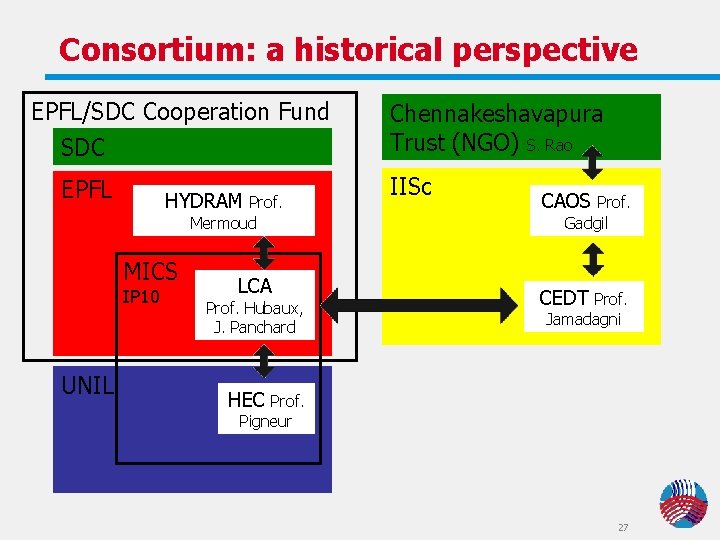
Consortium: a historical perspective EPFL/SDC Cooperation Fund SDC Chennakeshavapura Trust (NGO) S. Rao EPFL IISc HYDRAM Prof. Mermoud MICS IP 10 UNIL LCA Prof. Hubaux, J. Panchard CAOS Prof. Gadgil CEDT Prof. Jamadagni HEC Prof. Pigneur 27
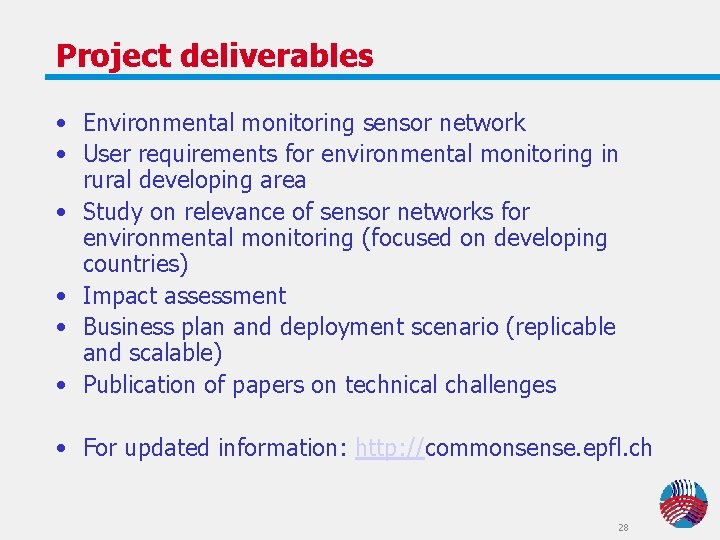
Project deliverables • Environmental monitoring sensor network • User requirements for environmental monitoring in rural developing area • Study on relevance of sensor networks for environmental monitoring (focused on developing countries) • Impact assessment • Business plan and deployment scenario (replicable and scalable) • Publication of papers on technical challenges • For updated information: http: //commonsense. epfl. ch 28