SCOTT AP 50 AIRPACK NFPA 1981 2002 Edition









- Slides: 46
SCOTT AP 50 AIRPACK NFPA 1981 (2002 Edition) COMPLIANT LT MICHAEL BOEHLKE
NIOSH REPORT § July 4, 1997 @ 2240 – Residential Fire § On arrival – Heavy smoke and fire along front § § § edge of roof 1 ¾ “ to attic Communications between firefighters Firefighter #2 experienced air supply problem MAYDAY called Firefighter #2 rescued Firefighter #1 found later
DISCUSSION § Do you think this could happen here? § Do you think this can happen to you?
TERMINAL LEARNING OBJECTIVES § After lecture, discussion, demonstration and practice, given a specific situation, the student shall mitigate a SCBA/air supply emergency with 100% accuracy § After lecture discussion, demonstration and practice, acting as part of a RIT/RIC and given a specific situation, the student shall mitigate a downed firefighter SCBA/air supply emergency with 100% accuracy
ENABLING LEARNING OBJECTIVES § After lecture, discussion, demonstration and practice the student shall identify the components of the Scott AP 50 with 100% accuracy. § After lecture, discussion, demonstration and practice the student shall identify the components of the Scott RIT PAK 1 with 100% accuracy.
ENABLING LEARNING OBJECTIVES § After lecture, discussion, demonstration and practice the student shall identify 5 possible solutions for a low air emergency with a crewmember with 100% accuracy. § After lecture, discussion, demonstration and practice the student shall identify 3 possible uses of the EBSS Dual-Manifold with 100% accuracy.
SCOTT AP 50 4. 5 § Carbon fiber 4500 PSI § § cylinder Kevlar and Nomex straps and waistband Tri-slide buckle w/cylinder latch Pressure reducer block RIC/UAC connection
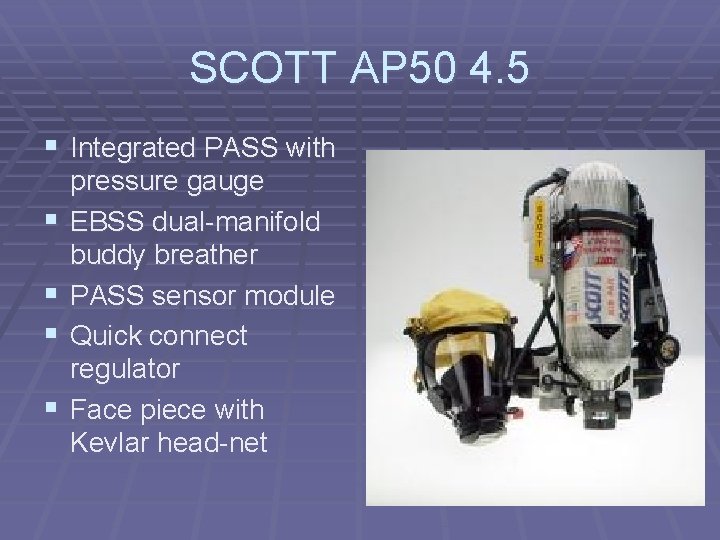
SCOTT AP 50 4. 5 § Integrated PASS with § § pressure gauge EBSS dual-manifold buddy breather PASS sensor module Quick connect regulator Face piece with Kevlar head-net
SCOTT AP 50 4. 5 § Regulator with purge § § § valve HUD Quick connect coupling Air saver / Donning switch Voice amplifier Intrinsically safe
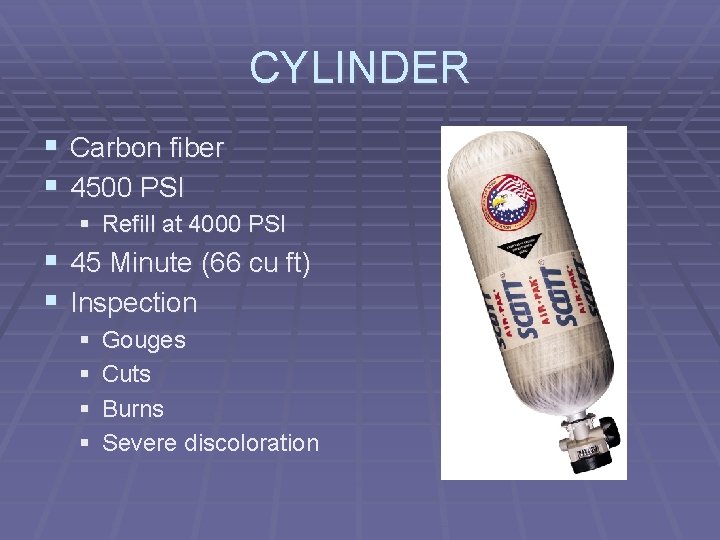
CYLINDER § Carbon fiber § 4500 PSI § Refill at 4000 PSI § 45 Minute (66 cu ft) § Inspection § § Gouges Cuts Burns Severe discoloration
BACKPACK AND STRAPS § § § Tri-slide cylinder buckle Cylinder latch Kevlar straps Quick-release parachute buckles Regulator holder Inspection § Tears and burns § Chemical exposure
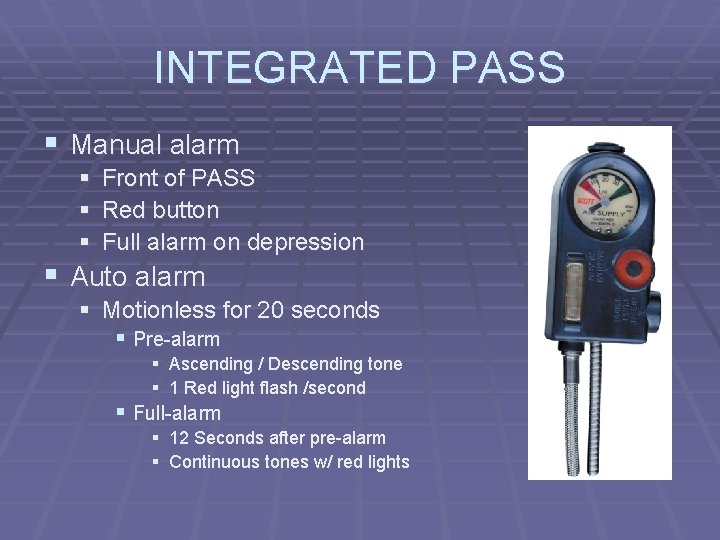
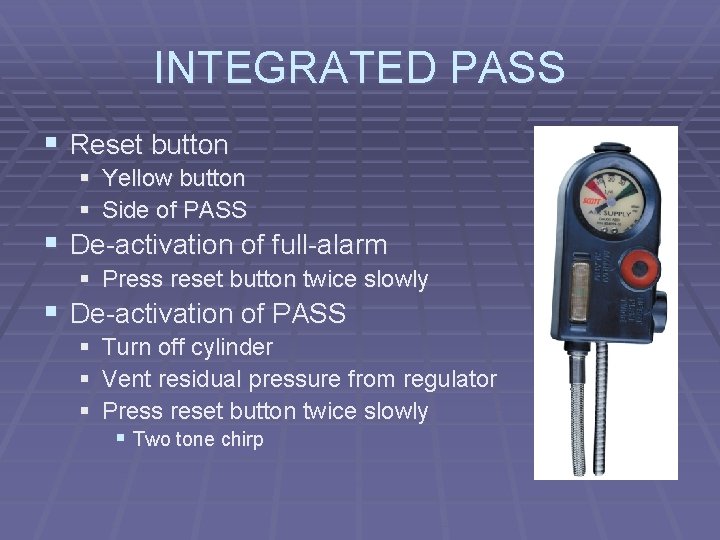
INTEGRATED PASS § § “PAK-ALERT SE” Air activated § § § Opening cylinder 3 audible chirps Green light § Requires 2 9 V batteries § Low battery – single audible chirp every 2 seconds / no green light
INTEGRATED PASS § Manual alarm § Front of PASS § Red button § Full alarm on depression § Auto alarm § Motionless for 20 seconds § Pre-alarm § Ascending / Descending tone § 1 Red light flash /second § Full-alarm § § 12 Seconds after pre-alarm Continuous tones w/ red lights
INTEGRATED PASS § Reset button § Yellow button § Side of PASS § De-activation of full-alarm § Press reset button twice slowly § De-activation of PASS § § § Turn off cylinder Vent residual pressure from regulator Press reset button twice slowly § Two tone chirp
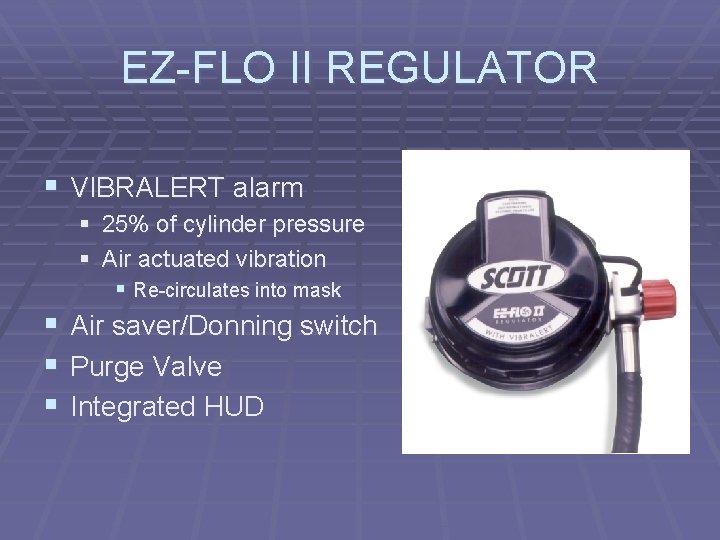
EZ-FLO II REGULATOR § VIBRALERT alarm § 25% of cylinder pressure § Air actuated vibration § Re-circulates into mask § § § Air saver/Donning switch Purge Valve Integrated HUD
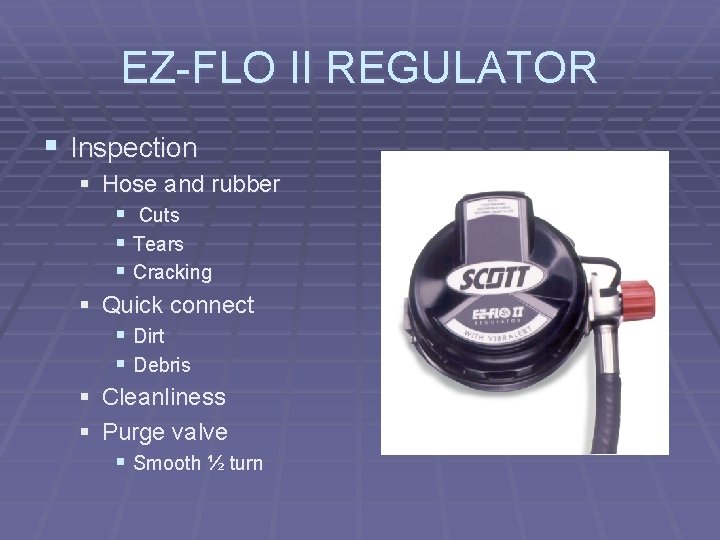
EZ-FLO II REGULATOR § Inspection § Hose and rubber § Cuts § Tears § Cracking § Quick connect § Dirt § Debris § Cleanliness § Purge valve § Smooth ½ turn
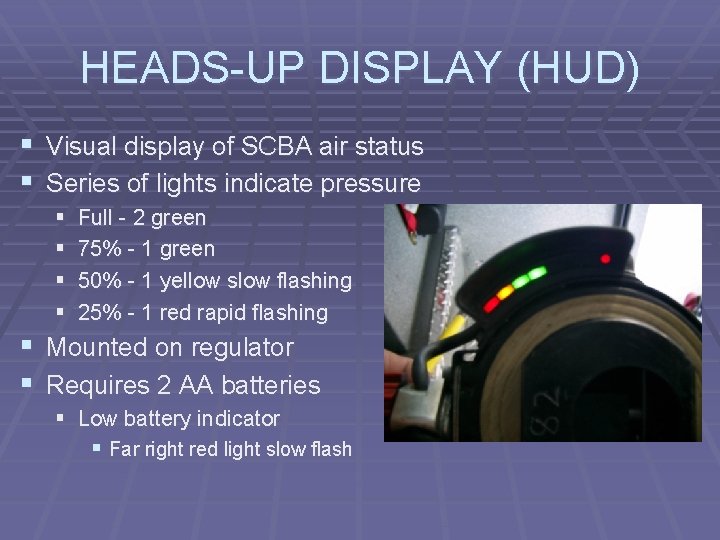
HEADS-UP DISPLAY (HUD) § Visual display of SCBA air status § Series of lights indicate pressure § § Full - 2 green 75% - 1 green 50% - 1 yellow slow flashing 25% - 1 red rapid flashing § Mounted on regulator § Requires 2 AA batteries § Low battery indicator § Far right red light slow flash
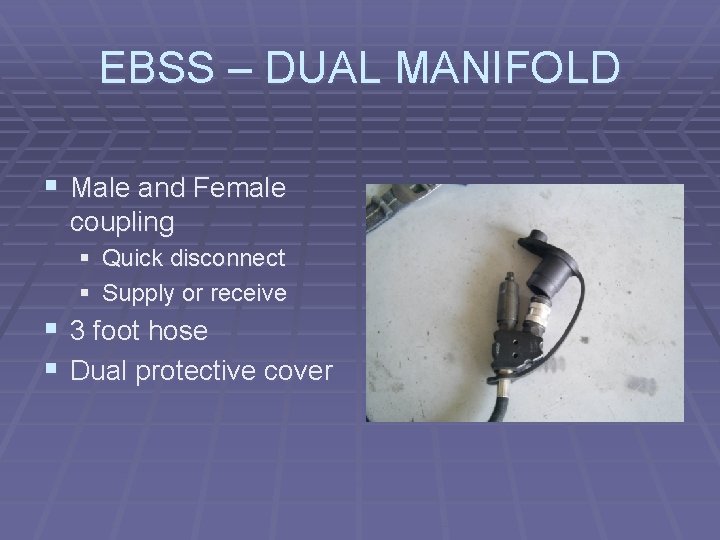
EBSS – DUAL MANIFOLD § EBSS – Emergency Breathing Support System § Introduction of air from outside source § Ladder air system § RIT Bag § Another SCBA (buddy breathing) § On left side waist belt § In snap pouch
EBSS – DUAL MANIFOLD § Male and Female coupling § Quick disconnect § Supply or receive § 3 foot hose § Dual protective cover
EBSS – DUAL MANIFOLD § Extended Duration air supply (aerial ops) § Use male coupling § Operates as open-circuit, pressure demand § Emergency Breathing (Buddy breathing) § Used for escape only § Utilizes highest pressure bottle § One bottle can be turned off to conserve air § Can “Daisy-Chain” up to 3 users § Will not provide enough air for >3
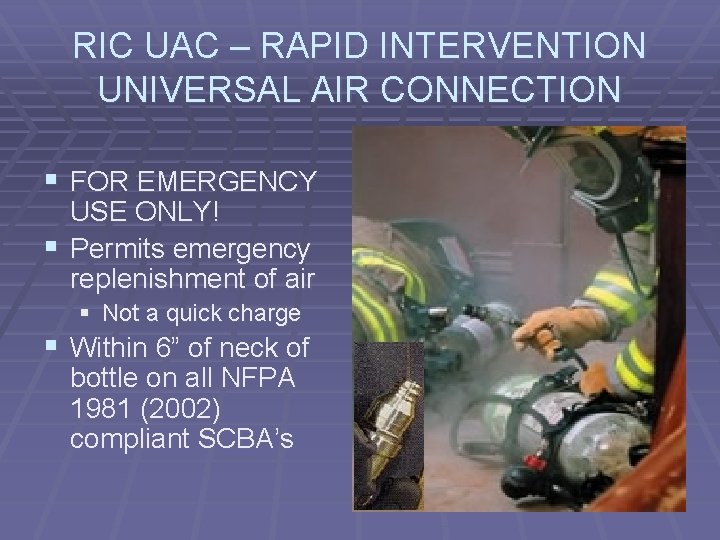
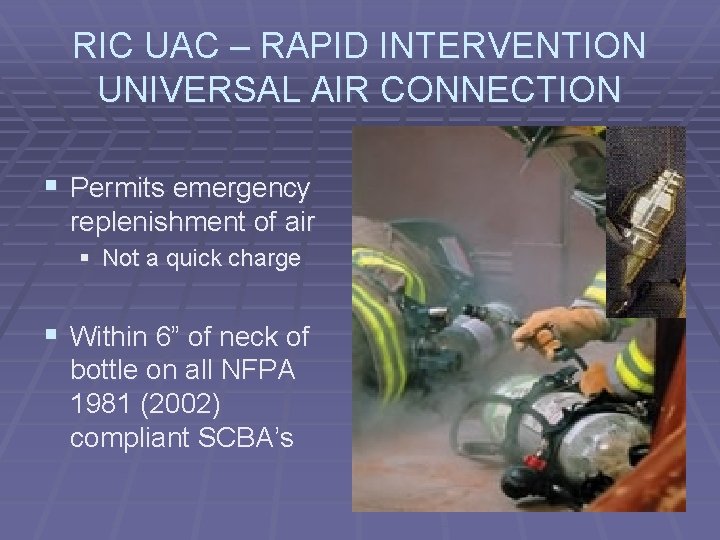
RIC UAC – RAPID INTERVENTION UNIVERSAL AIR CONNECTION § FOR EMERGENCY USE ONLY! § Permits emergency replenishment of air § Not a quick charge § Within 6” of neck of bottle on all NFPA 1981 (2002) compliant SCBA’s
RIC UAC – RAPID INTERVENTION UNIVERSAL AIR CONNECTION § Before use ensure § No compromise of cylinder or air system § Dents § Gouges § Other significant damage § Any other air system/UAC damage § Respirator/Regulator compatibility § 2216 PSI RIT Pack w/ 2216 PSI SCBA § 4500 PSI RIT Pack w/ 4500 PSI SCBA § Receiving cylinder is fully open
WARNING!!! Utilizing RIC UAC for emergency air replenishment of a structurally compromised cylinder will result in an over pressurization explosion.
SCOTT RIT PAK 1
SCOTT RIT PAK 1 § Carbon Fiber 4500 PSI / 60 Min. Cylinder § Cylinder caddy w/ carrying handle § Av-3000 Face piece § Regulator w/ quick disconnect
SCOTT RIT PAK 1 § High Pressure hose w/ UAC connection § Pressure reducer block § 5’ low pressure hose and fittings
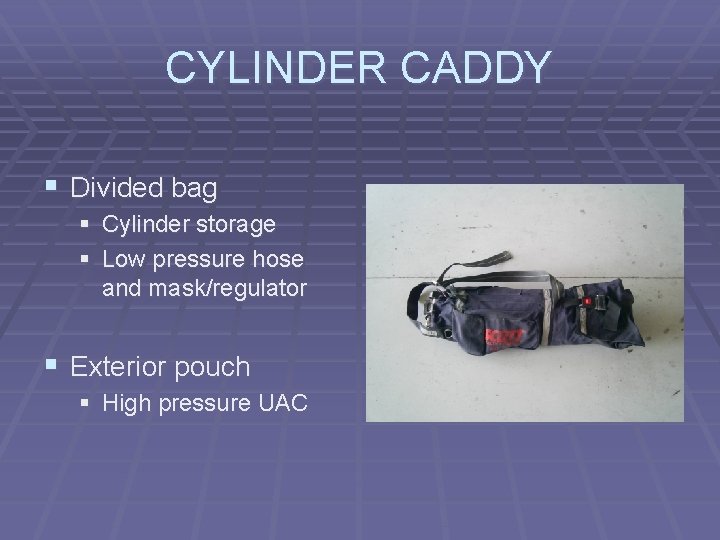
CYLINDER CADDY § Divided bag § Cylinder storage § Low pressure hose and mask/regulator § Exterior pouch § High pressure UAC
HIGH PRESSURE UAC FOR EMERGENCY USE ONLY!!!
HIGH PRESSURE UAC § 5’ high pressure hose § Side Pocket of Pack § Air directly from bottle § UAC – Universal Air Connection w/ cap
RIC UAC – RAPID INTERVENTION UNIVERSAL AIR CONNECTION § Permits emergency replenishment of air § Not a quick charge § Within 6” of neck of bottle on all NFPA 1981 (2002) compliant SCBA’s
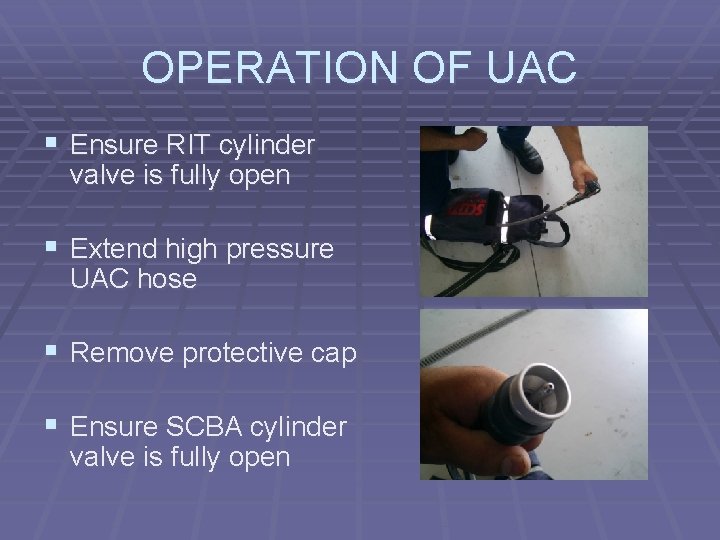
OPERATION OF UAC § Ensure RIT cylinder valve is fully open § Extend high pressure UAC hose § Remove protective cap § Ensure SCBA cylinder valve is fully open
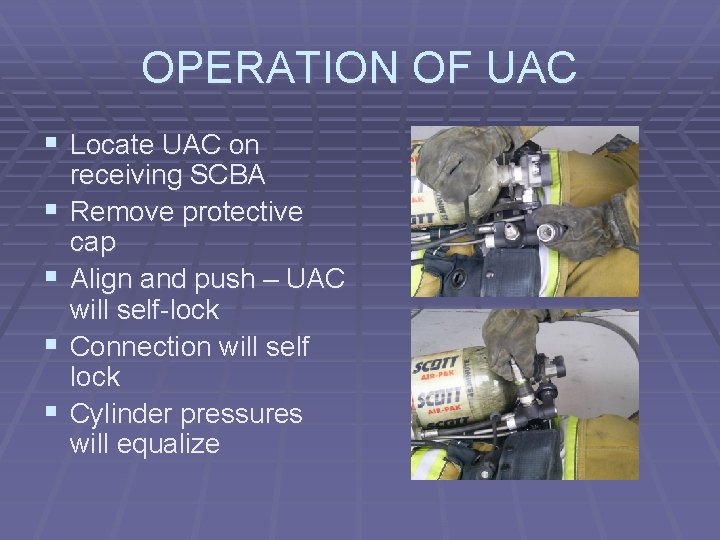
OPERATION OF UAC § Locate UAC on § § receiving SCBA Remove protective cap Align and push – UAC will self-lock Connection will self lock Cylinder pressures will equalize
OPERATION OF UAC § BEFORE USE ENSURE § No compromise of cylinder or air system § Dents § Gouges § Other significant damage § Any other air system/UAC damage § Respirator compatibility § 2216 PSI RIT Pack w/ 2216 PSI SCBA § 4500 PSI RIT Pack w/ 4500 PSI SCBA
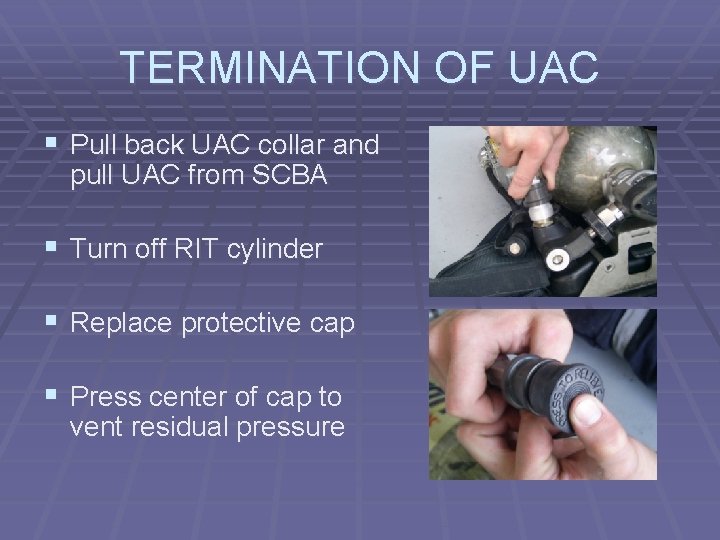
TERMINATION OF UAC § Pull back UAC collar and pull UAC from SCBA § Turn off RIT cylinder § Replace protective cap § Press center of cap to vent residual pressure
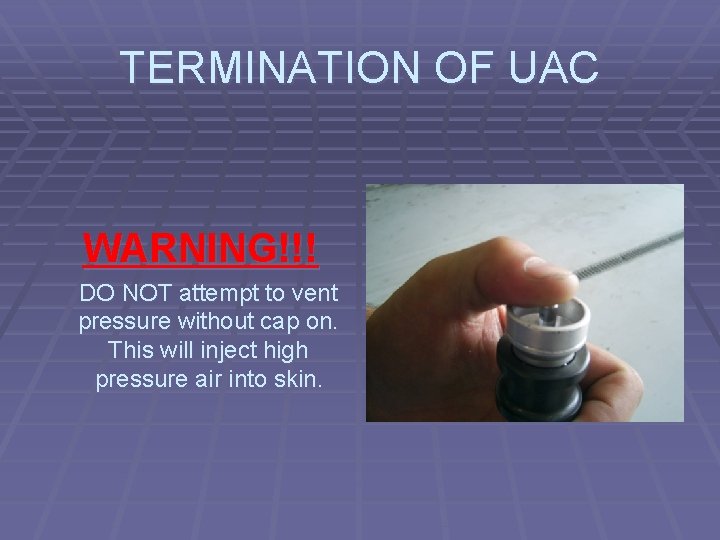
TERMINATION OF UAC WARNING!!! DO NOT attempt to vent pressure without cap on. This will inject high pressure air into skin.
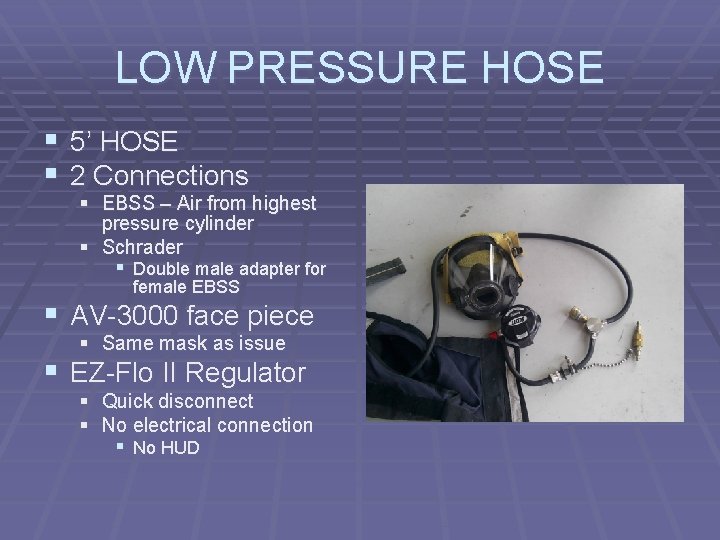
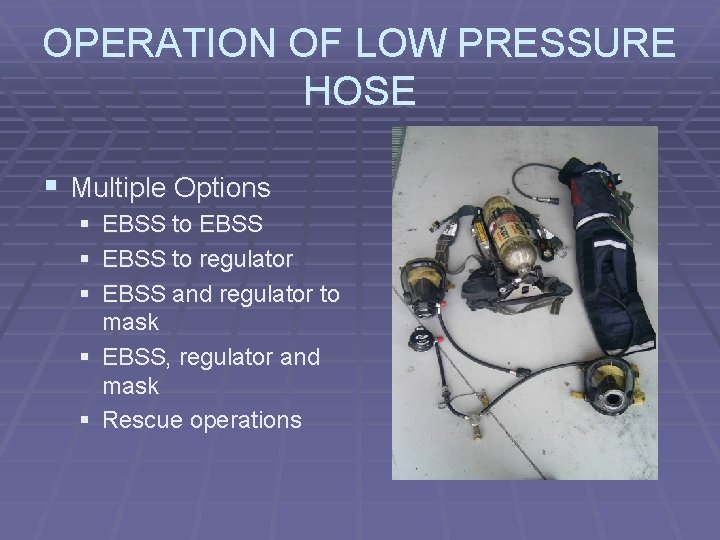
LOW PRESSURE HOSE § 5’ HOSE § 2 Connections § EBSS – Air from highest pressure cylinder § Schrader § Double male adapter for female EBSS § AV-3000 face piece § Same mask as issue § EZ-Flo II Regulator § § Quick disconnect No electrical connection § No HUD
OPERATION OF LOW PRESSURE HOSE § Examples of when RIT low pressure hose should be used § FF low on air § Failure of mask § Failure of regulator § Failure of SCBA § Structural compromise of cylinder
OPERATION OF LOW PRESSURE HOSE § Multiple Options § § § EBSS to regulator EBSS and regulator to mask § EBSS, regulator and mask § Rescue operations
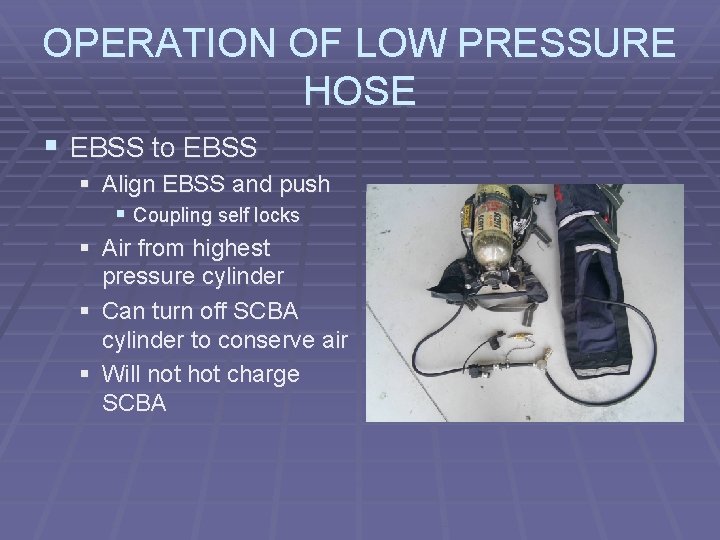
OPERATION OF LOW PRESSURE HOSE § EBSS to EBSS § Align EBSS and push § Coupling self locks § Air from highest pressure cylinder § Can turn off SCBA cylinder to conserve air § Will not hot charge SCBA
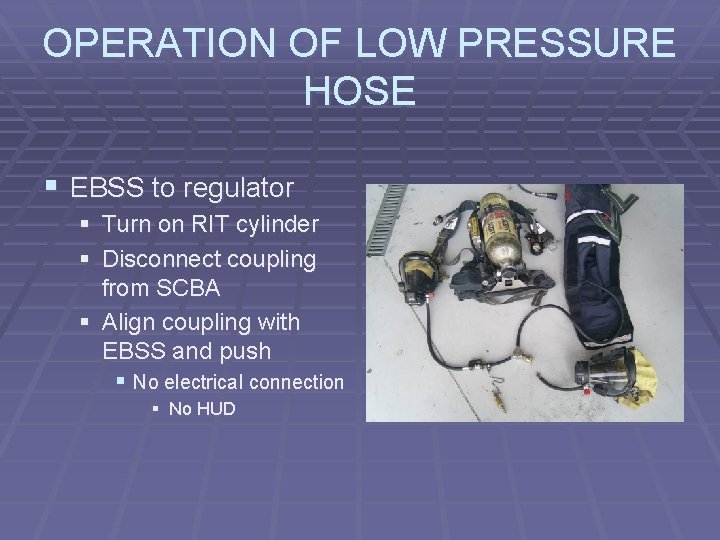
OPERATION OF LOW PRESSURE HOSE § EBSS to regulator § Turn on RIT cylinder § Disconnect coupling from SCBA § Align coupling with EBSS and push § No electrical connection § No HUD
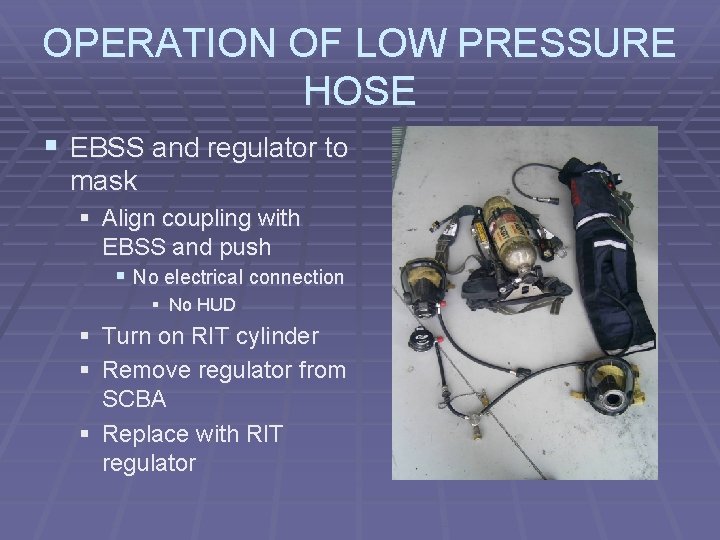
OPERATION OF LOW PRESSURE HOSE § EBSS and regulator to mask § Align coupling with EBSS and push § No electrical connection § No HUD § Turn on RIT cylinder § Remove regulator from SCBA § Replace with RIT regulator
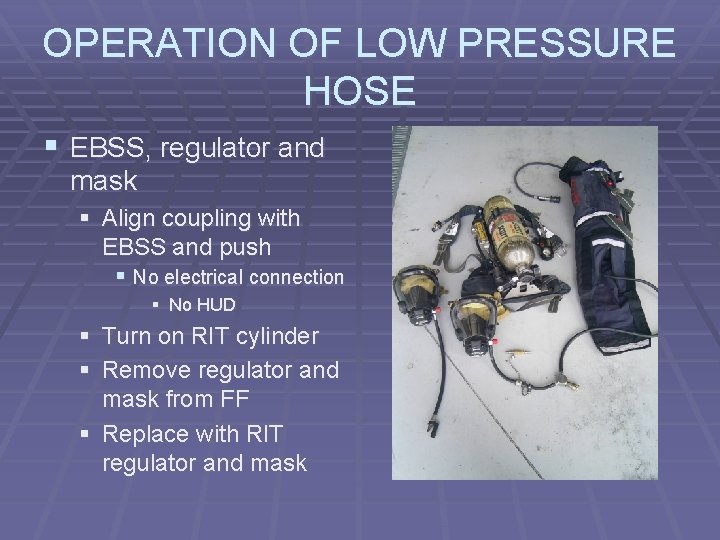
OPERATION OF LOW PRESSURE HOSE § EBSS, regulator and mask § Align coupling with EBSS and push § No electrical connection § No HUD § Turn on RIT cylinder § Remove regulator and mask from FF § Replace with RIT regulator and mask
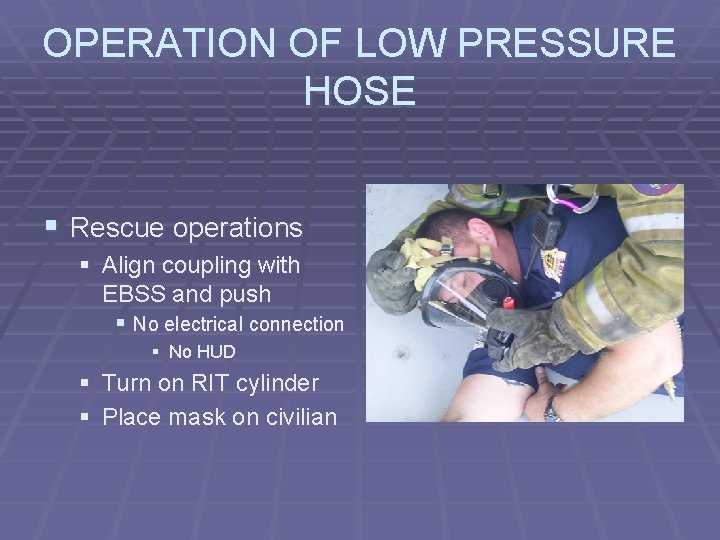
OPERATION OF LOW PRESSURE HOSE § Rescue operations § Align coupling with EBSS and push § No electrical connection § No HUD § Turn on RIT cylinder § Place mask on civilian
OPERATION OF LOW PRESSURE HOSE NOTICE: RIT PAK(s) are for OUR Safety RIT PAKs should only be used for civilian rescue if a RIT teams have been established with dedicated RIT PAK(s).
SUMMARY § Components of Scott AP 50 Air pack § Operation of EBSS – Dual Manifold § Components of Scott RIT-PAK 1 § Operation of Scott RIT-PAK 1 § Low pressure (supply) § High pressure (fill)
REFERENCE § National Institute for Occupational Safety and Health, NIOSH, Fatality Assessment and Control Evaluation (FACE) 97 -16, Atlanta, GA § National Fire Protection Association, NFPA 1981 (2002 edition) Standard on Self-Open Circuit Self-Contained Breathing Apparatus, NFPA , Quincy, MA § SCOTT Health and Safety, Operation and Maintenance Instructions, SCOTT AP 50 SCBA