Review of mathematical principles Jennifer Kean MSN RN

- Slides: 30
Review of mathematical principles Jennifer Kean MSN, RN, CCRN
Arabic numerals • Number system we are most familiar with • Includes fractions, decimals, and whole numbers • Examples include numbers 1, 2, 3 etc.
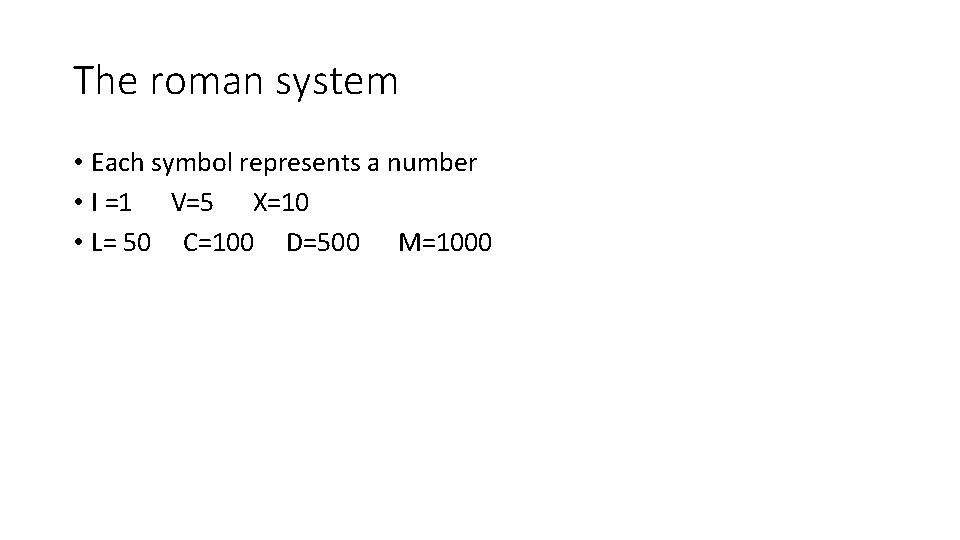
The roman system • Each symbol represents a number • I =1 V=5 X=10 • L= 50 C=100 D=500 M=1000
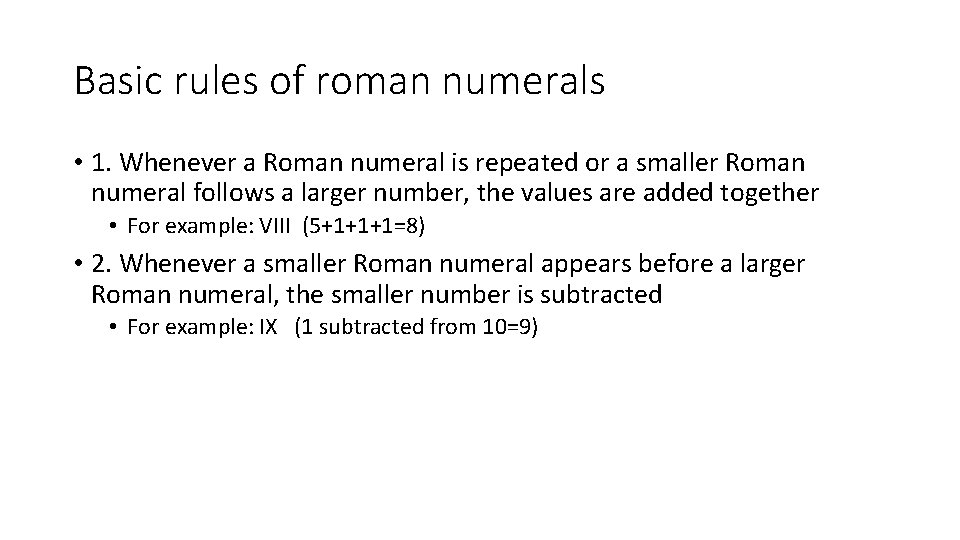
Basic rules of roman numerals • 1. Whenever a Roman numeral is repeated or a smaller Roman numeral follows a larger number, the values are added together • For example: VIII (5+1+1+1=8) • 2. Whenever a smaller Roman numeral appears before a larger Roman numeral, the smaller number is subtracted • For example: IX (1 subtracted from 10=9)
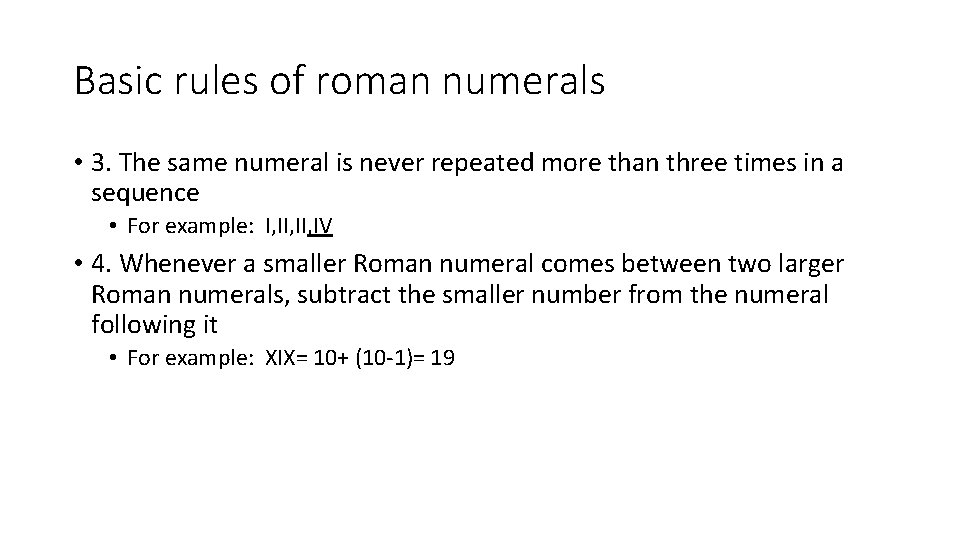
Basic rules of roman numerals • 3. The same numeral is never repeated more than three times in a sequence • For example: I, II, IV • 4. Whenever a smaller Roman numeral comes between two larger Roman numerals, subtract the smaller number from the numeral following it • For example: XIX= 10+ (10 -1)= 19
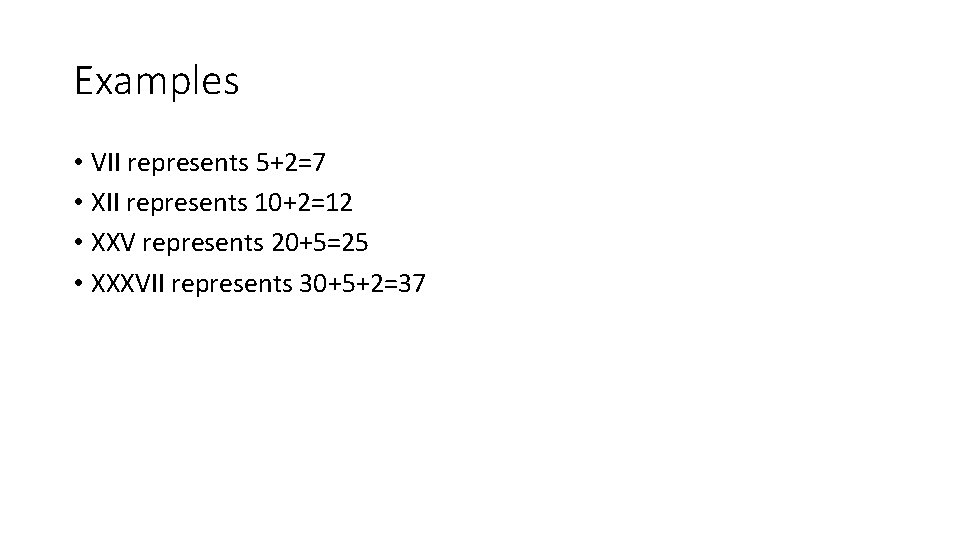
Examples • VII represents 5+2=7 • XII represents 10+2=12 • XXV represents 20+5=25 • XXXVII represents 30+5+2=37
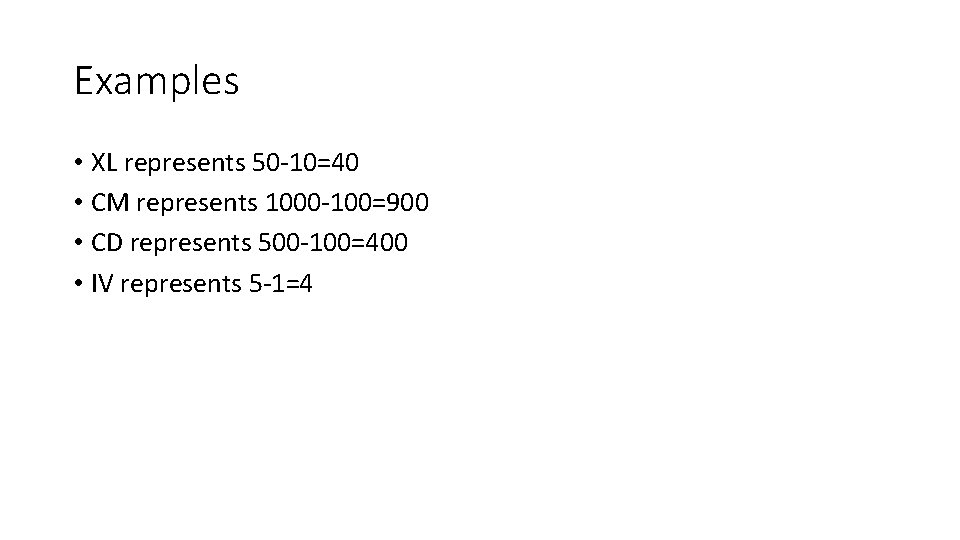
Examples • XL represents 50 -10=40 • CM represents 1000 -100=900 • CD represents 500 -100=400 • IV represents 5 -1=4
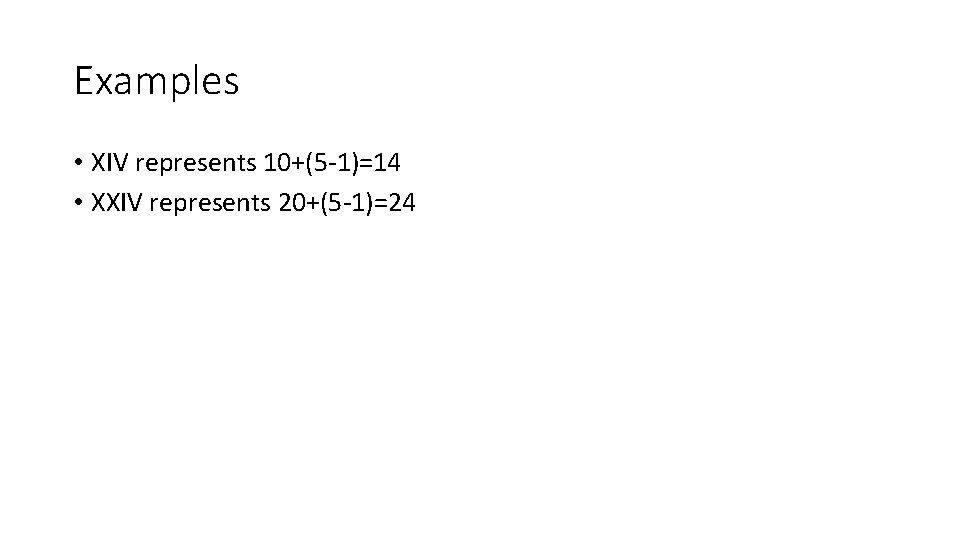
Examples • XIV represents 10+(5 -1)=14 • XXIV represents 20+(5 -1)=24
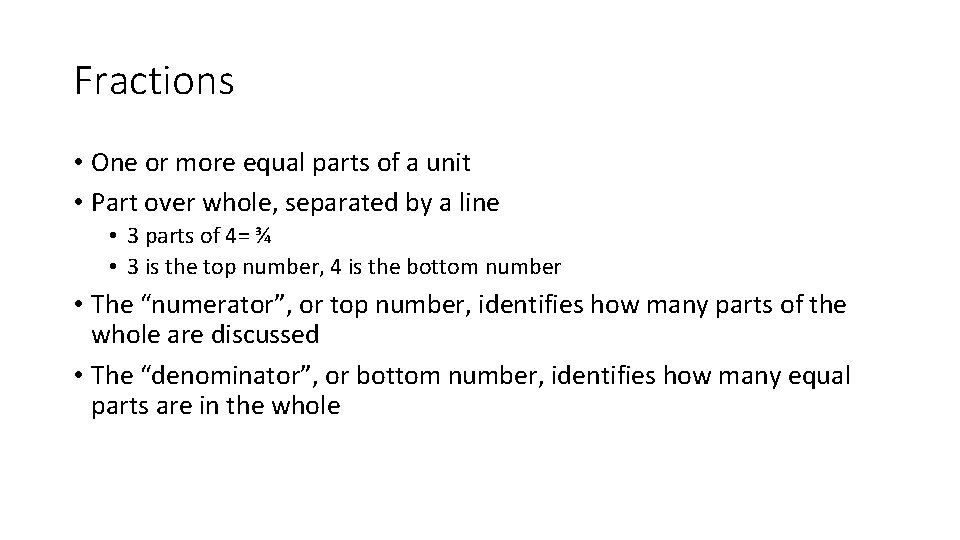
Fractions • One or more equal parts of a unit • Part over whole, separated by a line • 3 parts of 4= ¾ • 3 is the top number, 4 is the bottom number • The “numerator”, or top number, identifies how many parts of the whole are discussed • The “denominator”, or bottom number, identifies how many equal parts are in the whole
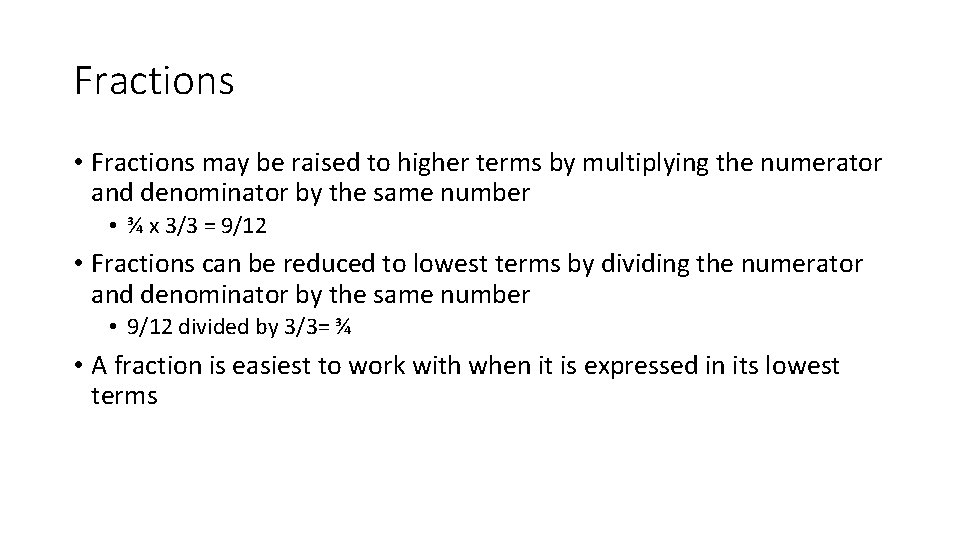
Fractions • Fractions may be raised to higher terms by multiplying the numerator and denominator by the same number • ¾ x 3/3 = 9/12 • Fractions can be reduced to lowest terms by dividing the numerator and denominator by the same number • 9/12 divided by 3/3= ¾ • A fraction is easiest to work with when it is expressed in its lowest terms
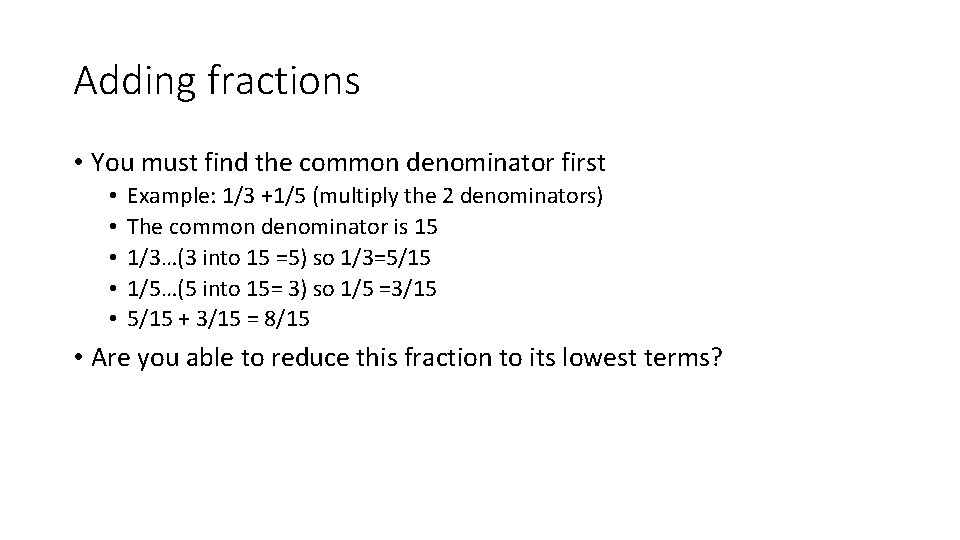
Adding fractions • You must find the common denominator first • • • Example: 1/3 +1/5 (multiply the 2 denominators) The common denominator is 15 1/3…(3 into 15 =5) so 1/3=5/15 1/5…(5 into 15= 3) so 1/5 =3/15 5/15 + 3/15 = 8/15 • Are you able to reduce this fraction to its lowest terms?
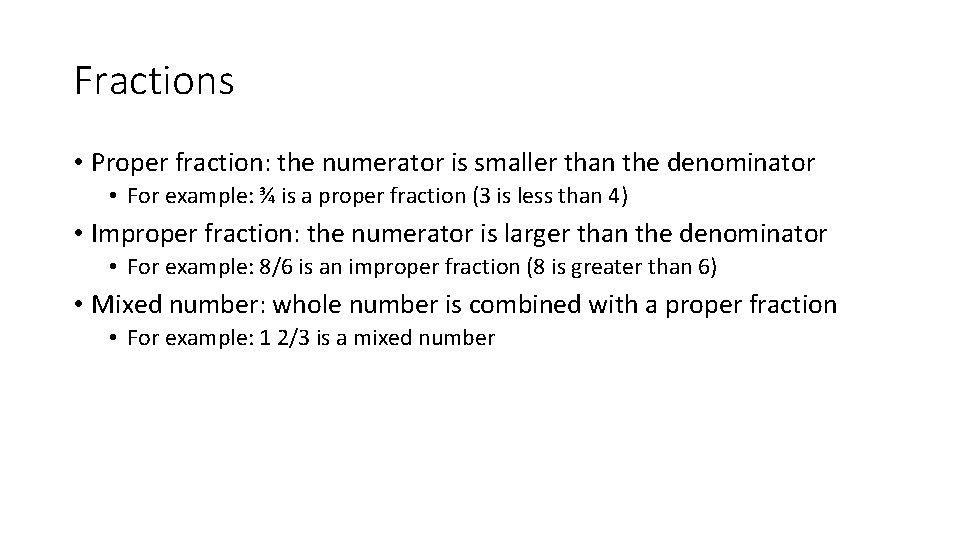
Fractions • Proper fraction: the numerator is smaller than the denominator • For example: ¾ is a proper fraction (3 is less than 4) • Improper fraction: the numerator is larger than the denominator • For example: 8/6 is an improper fraction (8 is greater than 6) • Mixed number: whole number is combined with a proper fraction • For example: 1 2/3 is a mixed number
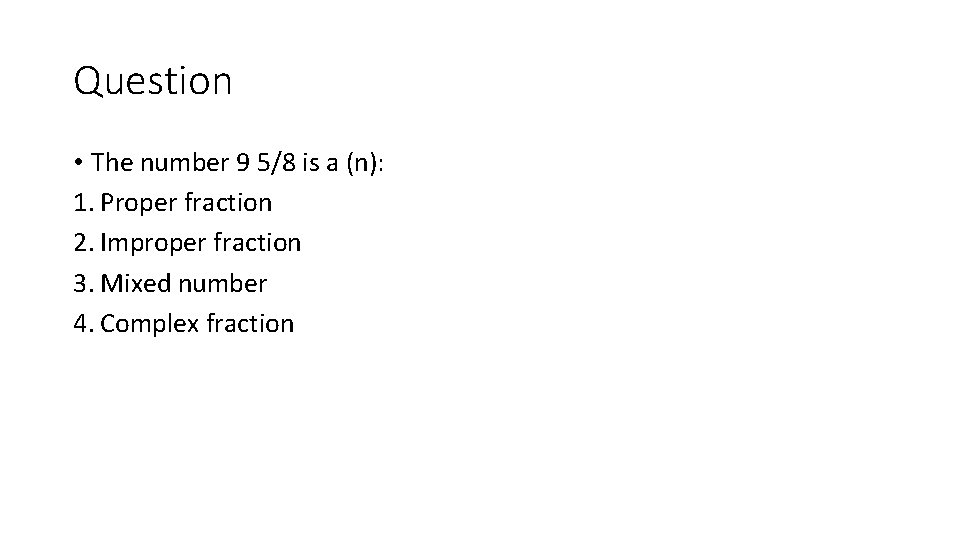
Question • The number 9 5/8 is a (n): 1. Proper fraction 2. Improper fraction 3. Mixed number 4. Complex fraction
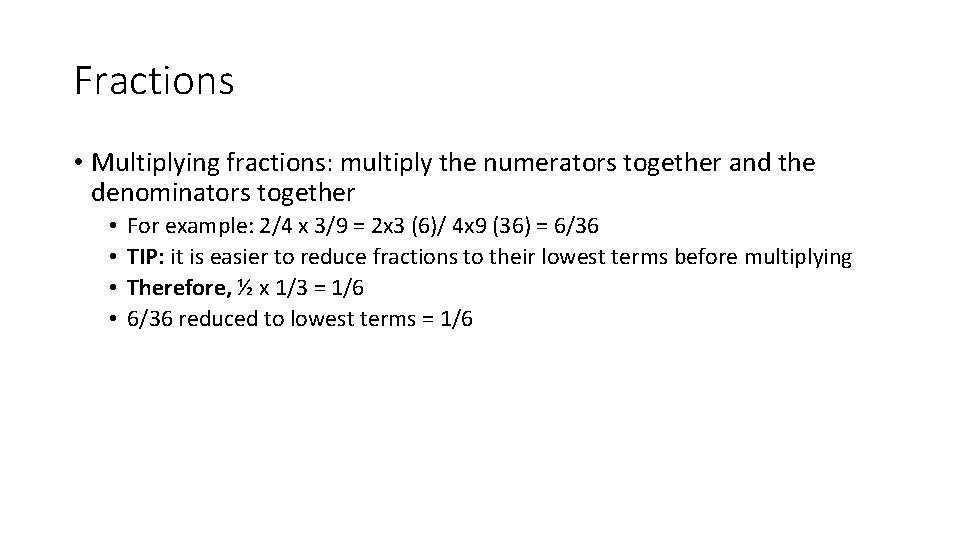
Fractions • Multiplying fractions: multiply the numerators together and the denominators together • • For example: 2/4 x 3/9 = 2 x 3 (6)/ 4 x 9 (36) = 6/36 TIP: it is easier to reduce fractions to their lowest terms before multiplying Therefore, ½ x 1/3 = 1/6 6/36 reduced to lowest terms = 1/6
Fractions • To divide two fractions, invert ( turn upside down) the fraction that is the divisor and then multiply • For example: ¾ divided by ½= ¾ x 2/1 =3 x 2/4 or 6/4 • 6/4 can be reduced to 3/2 or 1 ½
Decimal fractions (less than 1) • To the left of the decimal, numbers are whole numbers • To the right of a decimal, numbers are fractions of a whole in denominations of 10 • Tenths, hundredths, thousandths… the th is cueing you that the value is less than 10 • Think money when you use decimals! • To add or subtract decimals, line up the decimal points and do the math • This is just like managing your checkbook (assuming you do so!)
Decimals • All fractions can be converted to decimal fractions by dividing the numerator into the denominator • For example: ¾ = 3 divided by 4 = 0. 75 • To add two decimal fractions, first line up the decimal points • For example: 0. 345 + 2. 456 = 2. 801 • To subtract two decimal fractions, first line up the decimal points • 1. 6 – 0. 567 = 1. 033
Decimals • Multiplying decimals • 1. 467 (3 decimal places) x 0. 234 = 0. 343278 (6 decimal places in answer) • Make sure the number of decimal places equals the number of decimal places in the two numbers added together
Decimals • To divide two decimals, first move the decimal point in the divisor enough places to the right to make it a whole number • 6 divided by 0. 23 (the decimal point must be moved two places to the right to change 0. 23 into “ 23”) • 600 divided by 23 = 26. 09 (rounded)
Ratios and percents • A ratio is a way of expressing the relationship of one number to another or expressing a part of a whole number • The relationship is reflected by separating the numbers with a colon (e. g. , 2: 1) • Percent means parts per hundred; can be written as a fraction or a decimal
Proportions • A way of expressing the relationship over two ratios • The two ratios are separated by a double colon (: : ) which means “as” • If three variables are known, the fourth can be determined • When solving for “x”, the numerators must be the same measurement and the denominators the same measurement • The numerators and denominators in the proportion must be written in the same units of measurement
Examples • ½: : 3/6 or 1: 2 : : 3: 6 – these two expressions mean the same thing • Some people work better with fractions • Others work better with linear aspects • Let’s see which you prefer
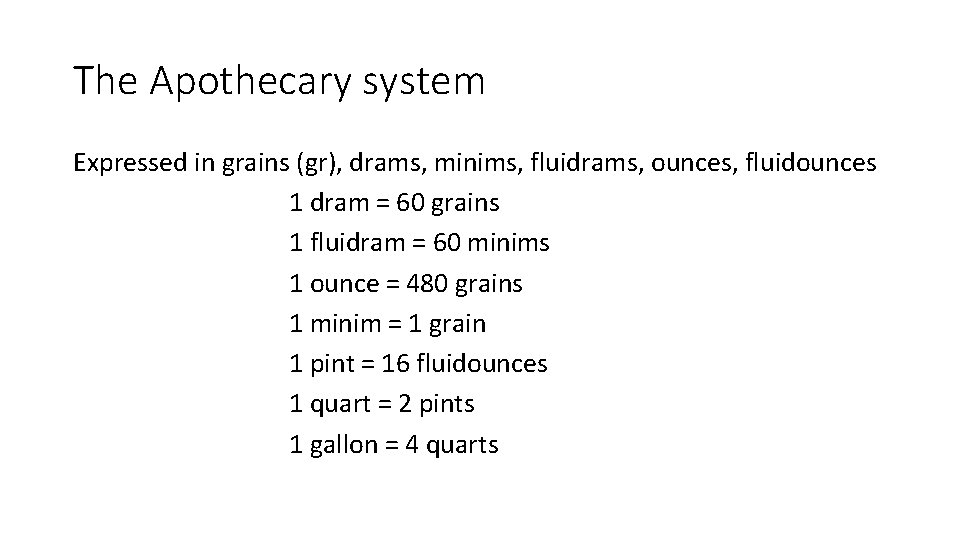
The Apothecary system Expressed in grains (gr), drams, minims, fluidrams, ounces, fluidounces 1 dram = 60 grains 1 fluidram = 60 minims 1 ounce = 480 grains 1 minim = 1 grain 1 pint = 16 fluidounces 1 quart = 2 pints 1 gallon = 4 quarts
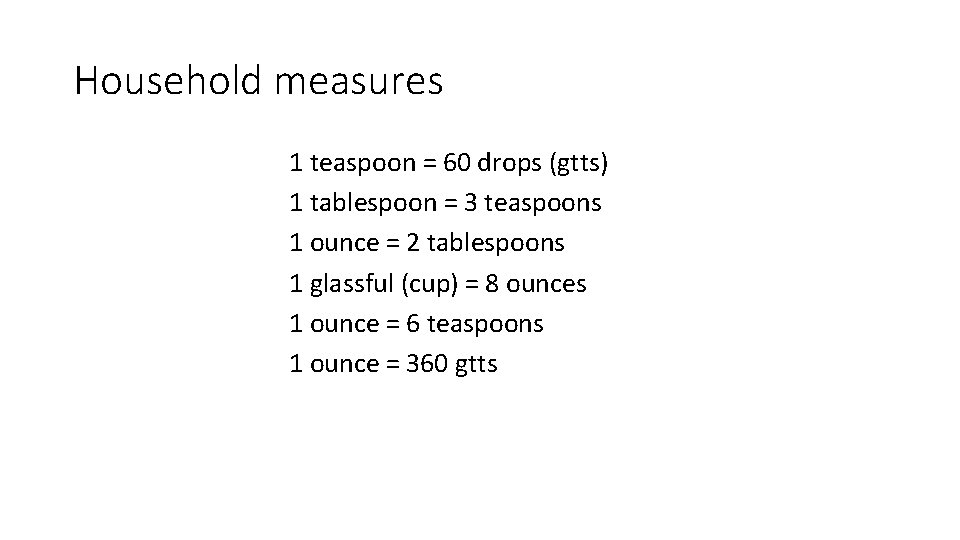
Household measures 1 teaspoon = 60 drops (gtts) 1 tablespoon = 3 teaspoons 1 ounce = 2 tablespoons 1 glassful (cup) = 8 ounces 1 ounce = 6 teaspoons 1 ounce = 360 gtts
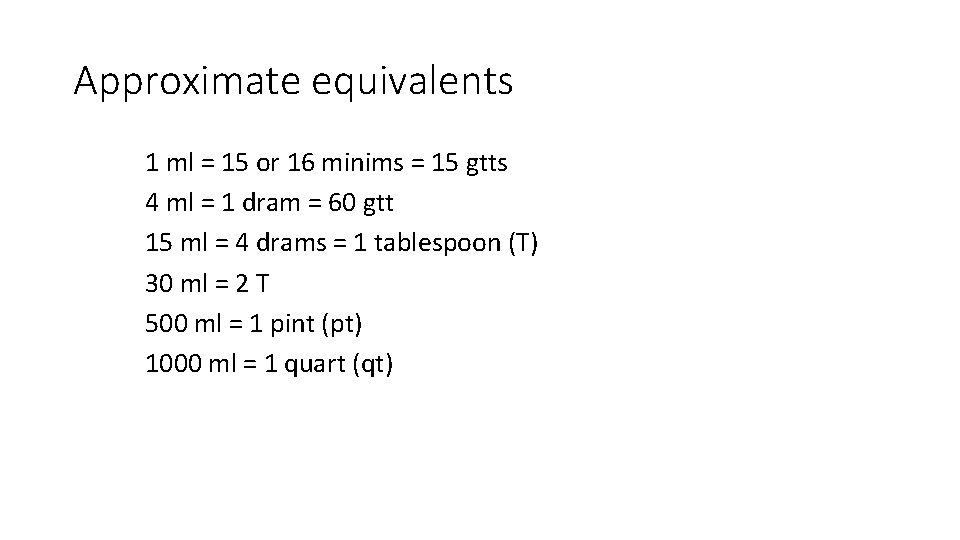
Approximate equivalents 1 ml = 15 or 16 minims = 15 gtts 4 ml = 1 dram = 60 gtt 15 ml = 4 drams = 1 tablespoon (T) 30 ml = 2 T 500 ml = 1 pint (pt) 1000 ml = 1 quart (qt)
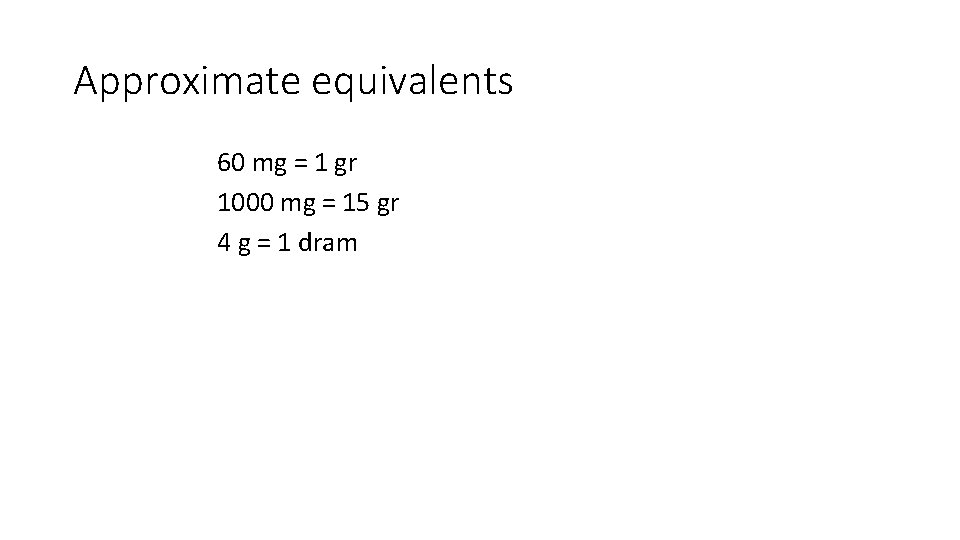
Approximate equivalents 60 mg = 1 gr 1000 mg = 15 gr 4 g = 1 dram
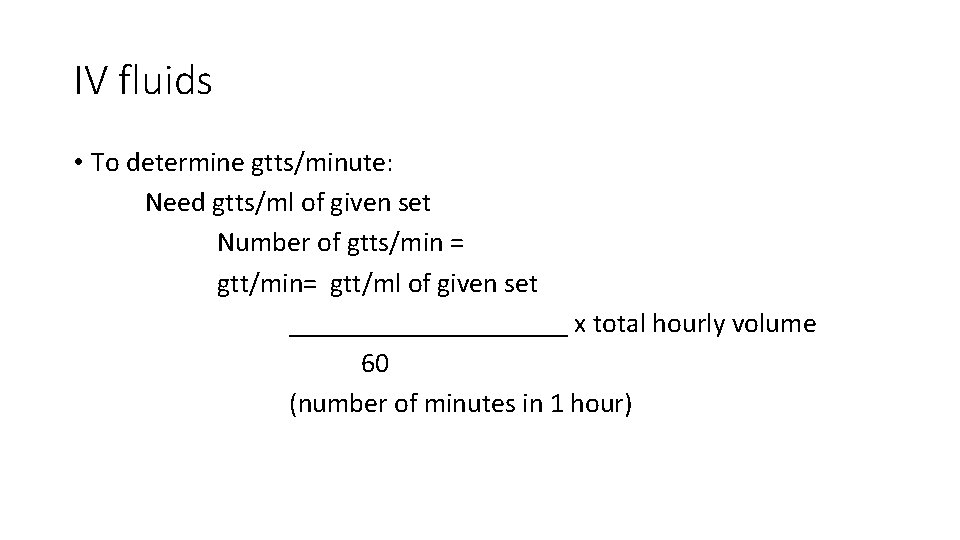
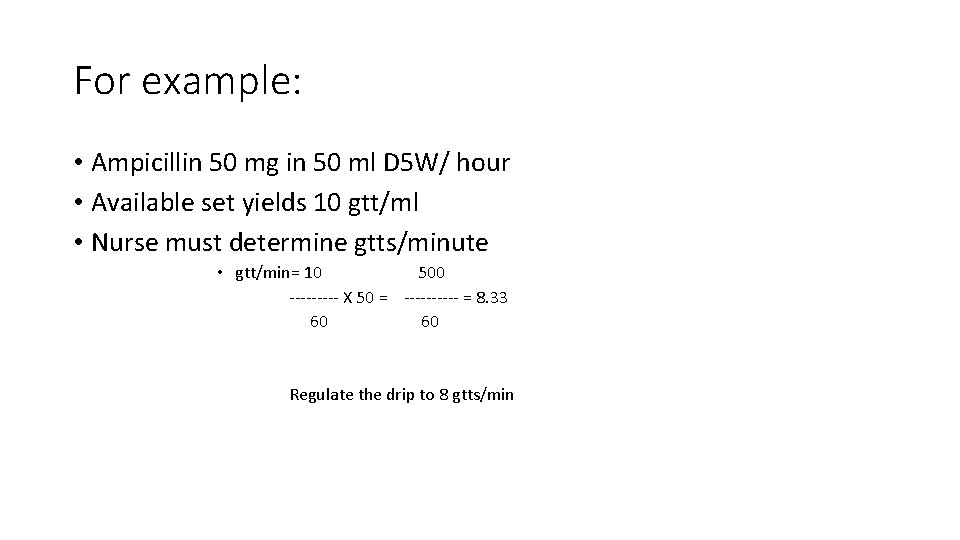
IV fluids • To determine gtts/minute: Need gtts/ml of given set Number of gtts/min = gtt/min= gtt/ml of given set __________ x total hourly volume 60 (number of minutes in 1 hour)
For example: • Ampicillin 50 mg in 50 ml D 5 W/ hour • Available set yields 10 gtt/ml • Nurse must determine gtts/minute • gtt/min= 10 500 ----- X 50 = ----- = 8. 33 60 60 Regulate the drip to 8 gtts/min
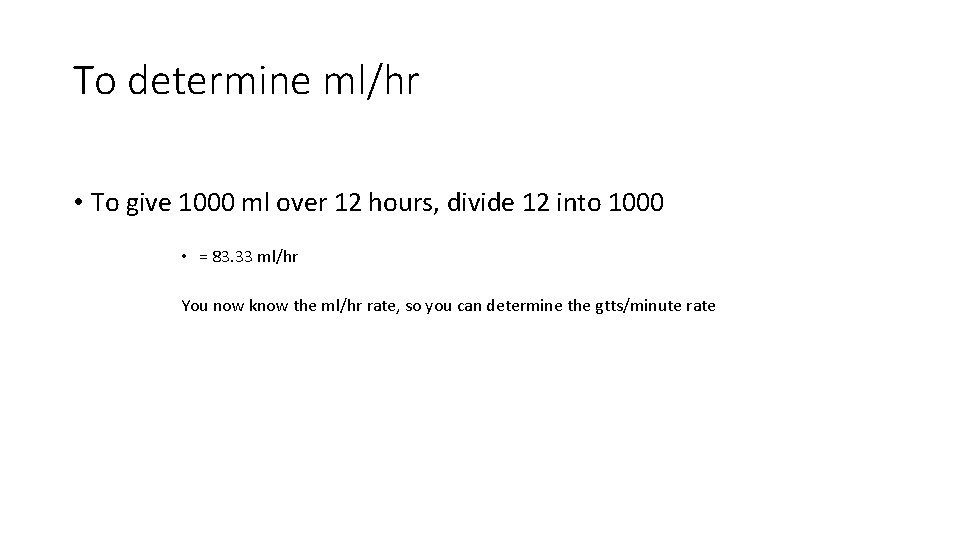
To determine ml/hr • To give 1000 ml over 12 hours, divide 12 into 1000 • = 83. 33 ml/hr You now know the ml/hr rate, so you can determine the gtts/minute rate
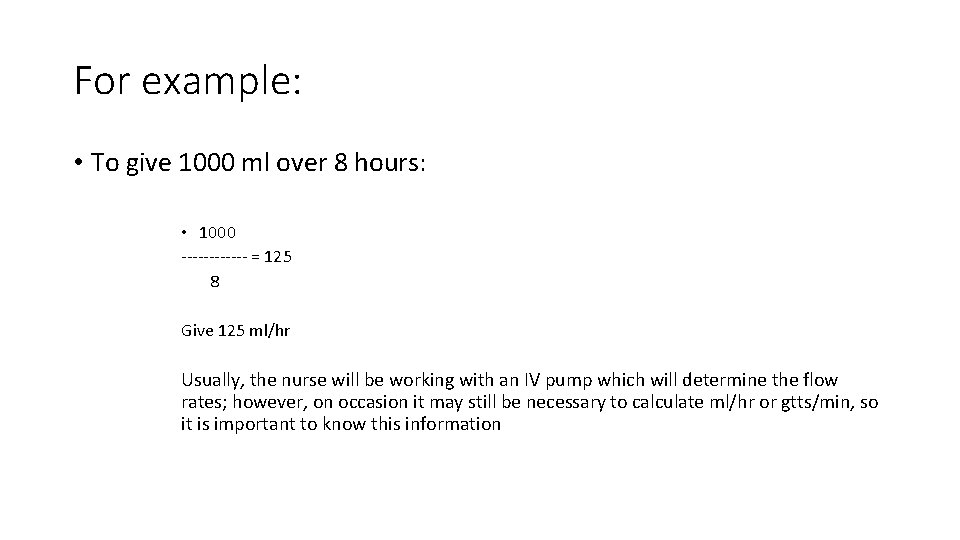
For example: • To give 1000 ml over 8 hours: • 1000 ------ = 125 8 Give 125 ml/hr Usually, the nurse will be working with an IV pump which will determine the flow rates; however, on occasion it may still be necessary to calculate ml/hr or gtts/min, so it is important to know this information