Religious Education The 3 Is of the Ofsted
- Slides: 40
Religious Education: The 3 I’s of the Ofsted Framework Corrine Guntrip NATRE Executive, RE SLE, LTLRE @Corrine. Guntrip
Understanding Curriculum ● Currently much ongoing discussions surrounding curriculum in schools ● Changes to Ofsted Inspections: Vision for a New Education ● Focus on curriculum design and provision within schools ● 3 I’s: Intent, Implementation and Impact
Vision for a New Education Framework https: //www. gov. uk/government/publications/education-inspection-framework-draft-for-consultation Summary: ● Amanda Spielman: 4 new inspection judgements ● schools will no longer receive a separate grade for outcomes for pupils ● focus will be on the substance of education and a broad curriculum: Quality of Education ● more involvement for classroom teachers https: //www. gov. uk/government/news/chief-inspector-sets-out-vision-for-neweducation-inspection-framework
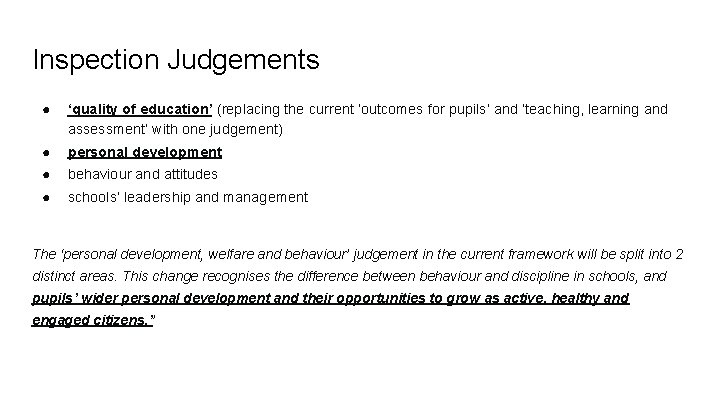
Inspection Judgements ● ‘quality of education’ (replacing the current ‘outcomes for pupils’ and ‘teaching, learning and assessment’ with one judgement) ● personal development ● behaviour and attitudes ● schools’ leadership and management The ‘personal development, welfare and behaviour’ judgement in the current framework will be split into 2 distinct areas. This change recognises the difference between behaviour and discipline in schools, and pupils’ wider personal development and their opportunities to grow as active, healthy and engaged citizens. ’’
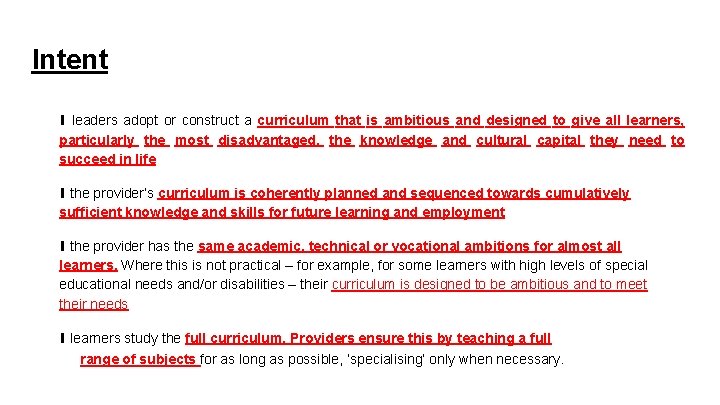
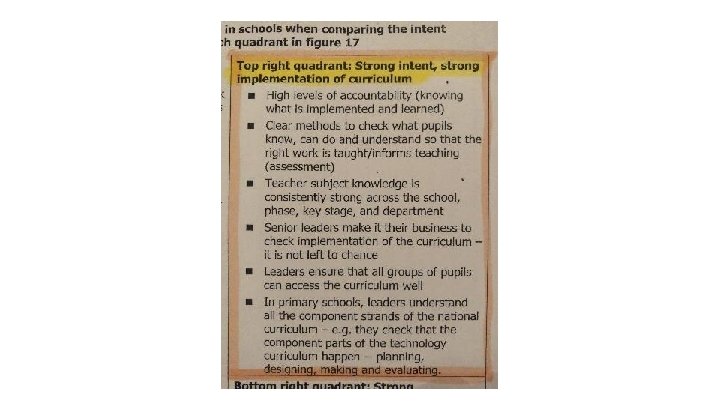
Intent ∎ leaders adopt or construct a curriculum that is ambitious and designed to give all learners, particularly the most disadvantaged, the knowledge and cultural capital they need to succeed in life ∎ the provider’s curriculum is coherently planned and sequenced towards cumulatively sufficient knowledge and skills for future learning and employment ∎ the provider has the same academic, technical or vocational ambitions for almost all learners. Where this is not practical – for example, for some learners with high levels of special educational needs and/or disabilities – their curriculum is designed to be ambitious and to meet their needs ∎ learners study the full curriculum. Providers ensure this by teaching a full range of subjects for as long as possible, ‘specialising’ only when necessary.
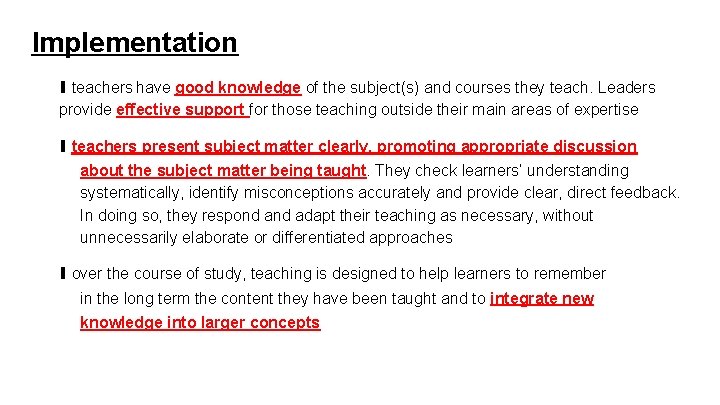
Implementation ∎ teachers have good knowledge of the subject(s) and courses they teach. Leaders provide effective support for those teaching outside their main areas of expertise ∎ teachers present subject matter clearly, promoting appropriate discussion about the subject matter being taught. They check learners’ understanding systematically, identify misconceptions accurately and provide clear, direct feedback. In doing so, they respond adapt their teaching as necessary, without unnecessarily elaborate or differentiated approaches ∎ over the course of study, teaching is designed to help learners to remember in the long term the content they have been taught and to integrate new knowledge into larger concepts
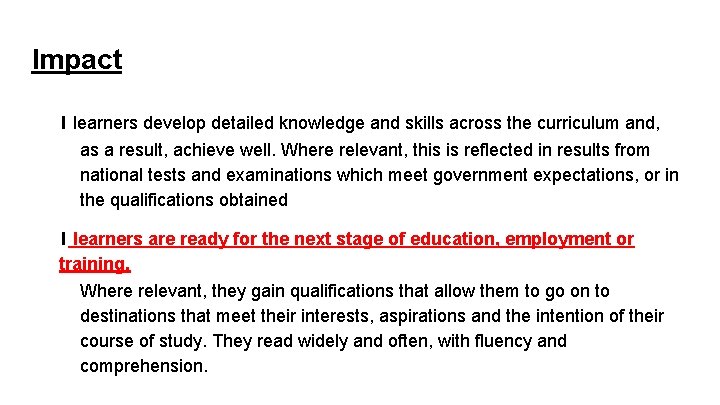
Impact ∎ learners develop detailed knowledge and skills across the curriculum and, as a result, achieve well. Where relevant, this is reflected in results from national tests and examinations which meet government expectations, or in the qualifications obtained ∎ learners are ready for the next stage of education, employment or training. Where relevant, they gain qualifications that allow them to go on to destinations that meet their interests, aspirations and the intention of their course of study. They read widely and often, with fluency and comprehension.
How will the new Ofsted Framework boost accountability for the provision of RE within schools?
“In order for all pupils to have equal access to high quality education in Religion and Worldviews, the subject must be given adequate time and resources commensurate with the place of Religion and Worldviews as a core component of the curriculum. ” -Commission on Religious Education
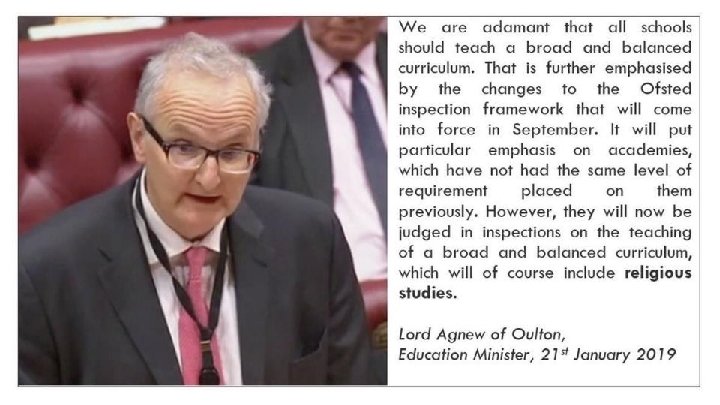
Religious Education Council for England Wales: ● ● ● All pupils in maintained schools are required to study the basic curriculum, which includes the national curriculum, religious education and age-appropriate relationship and sex education. Academies must include English, mathematics, science and religious education in their curriculum. This curriculum must be of similar breadth and ambition to that provided in a maintained school. Spiritual development for pupils must include their ability to be reflective about their own beliefs (religious of otherwise) and perspective on life, as well as knowledge of, and respect for, different people’s faiths, feelings and values. Provision is needed for the cultural development of pupils, including their ability to recognise, and value, the things we share in common across cultural, religious, ethnic, and socio-economic communities. Inspectors will consider how the curriculum is taught; the extent to which teachers have expert knowledge of the subjects that they teach and are supported to address gaps in their knowledge Further requirements relating to pupils’ spiritual, moral, social, cultural – and personal – development.
REC Chief Executive, Rudolf Eliott Lockhart: “Maintained schools and academies are already legally required to provide religious education for all pupils in every year. This new inspection framework should make it easier for inspections to be used to hold schools to account for failing to give pupils the RE to which they are entitled. Greater accountability through inspection was one of the key recommendations of the Commission on RE report last year, so we are encouraged to see that Ofsted is taking measures to address this gap. ”
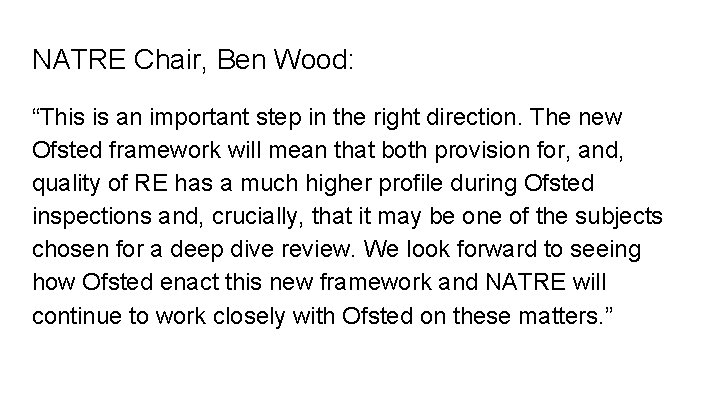
NATRE Chair, Ben Wood: “This is an important step in the right direction. The new Ofsted framework will mean that both provision for, and, quality of RE has a much higher profile during Ofsted inspections and, crucially, that it may be one of the subjects chosen for a deep dive review. We look forward to seeing how Ofsted enact this new framework and NATRE will continue to work closely with Ofsted on these matters. ”
Has it made a difference to RE so far? . . .
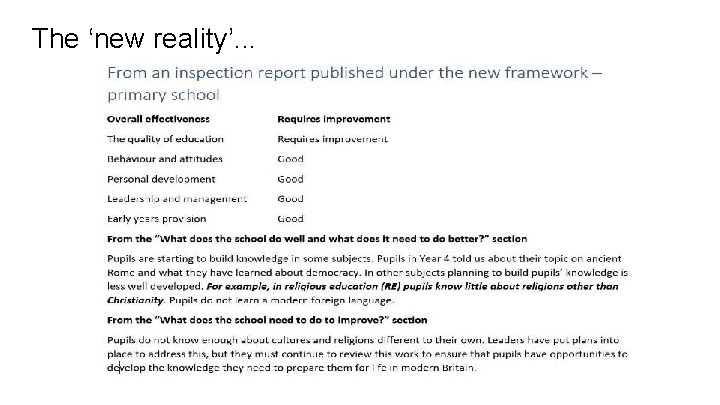
The ‘new reality’. . .
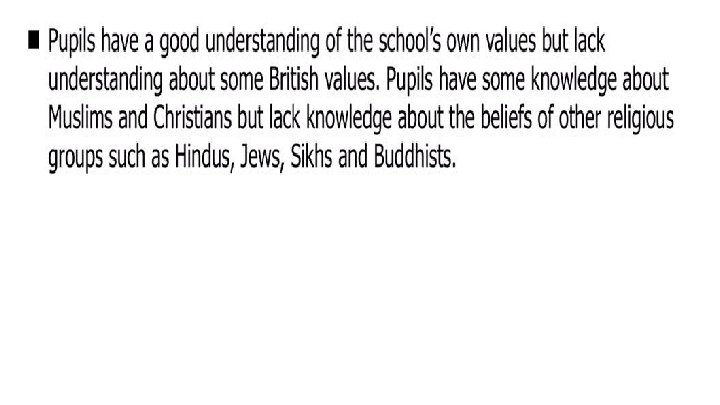
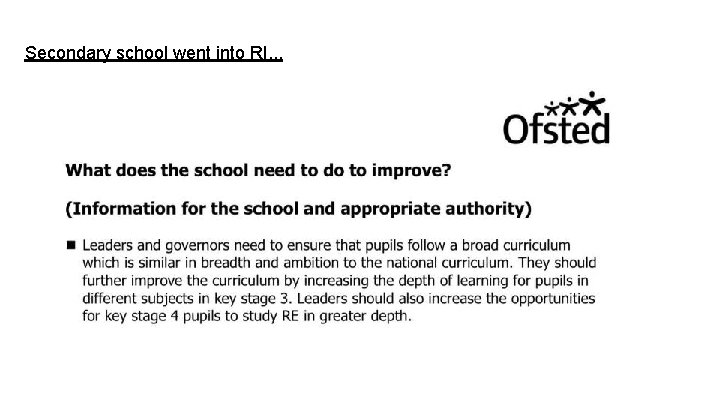
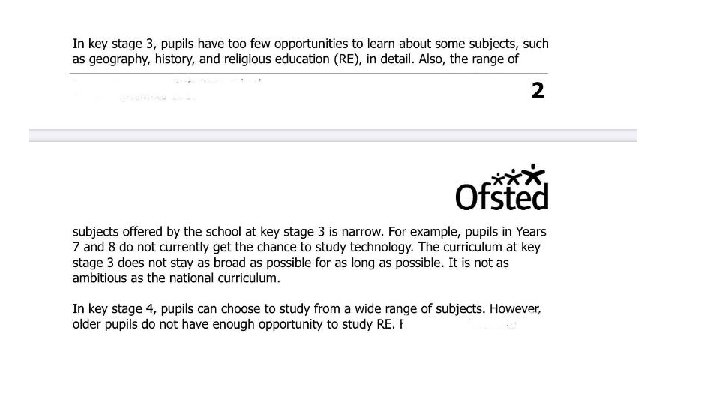
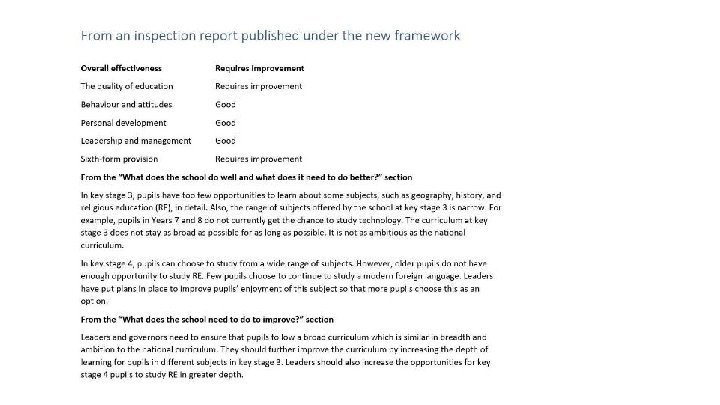
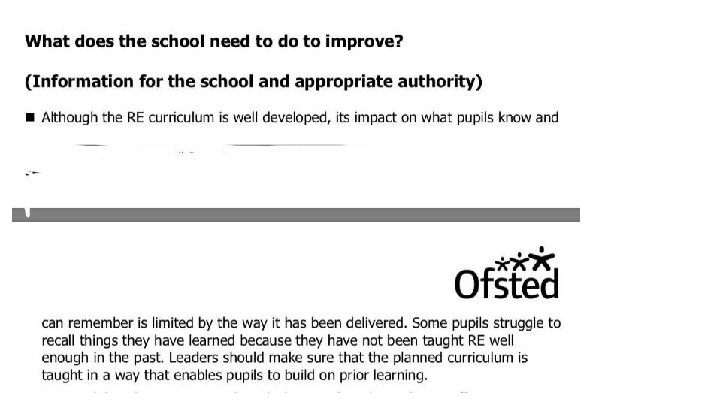
Secondary school went into RI. . .
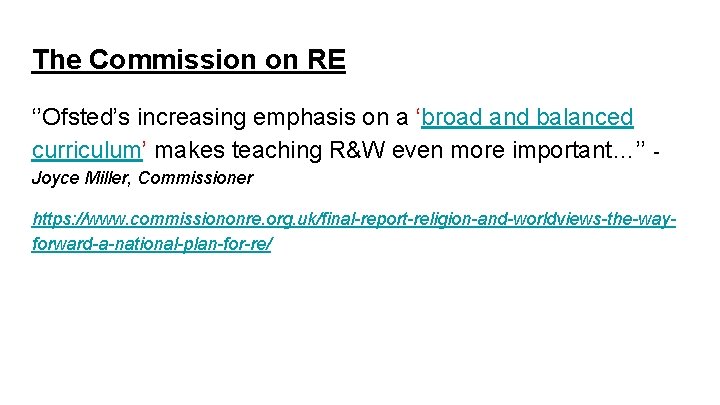
The Commission on RE ‘’Ofsted’s increasing emphasis on a ‘broad and balanced curriculum’ makes teaching R&W even more important…’’ Joyce Miller, Commissioner https: //www. commissiononre. org. uk/final-report-religion-and-worldviews-the-wayforward-a-national-plan-for-re/
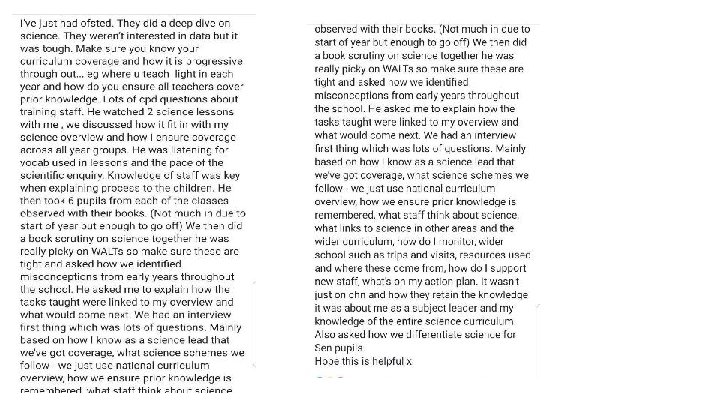
If this is Science, what does this mean for RE in your school?
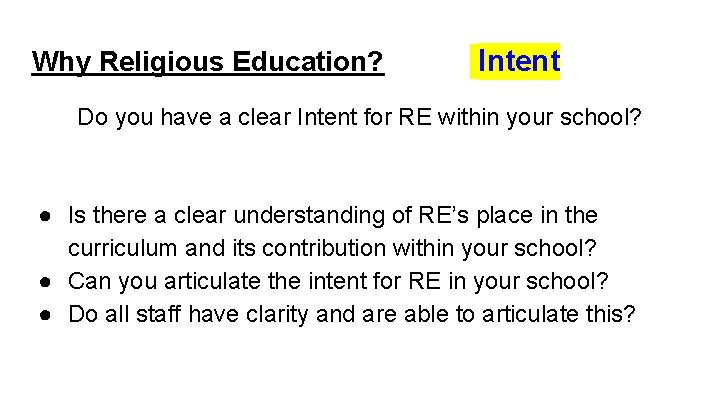
Why Religious Education? Intent Do you have a clear Intent for RE within your school? ● Is there a clear understanding of RE’s place in the curriculum and its contribution within your school? ● Can you articulate the intent for RE in your school? ● Do all staff have clarity and are able to articulate this?
▪ Leaders adopt or construct a curriculum that is ambitious and designed to give all pupils, particularly disadvantaged pupils and including pupils with SEND, the knowledge and cultural capital they need to succeed in life. ▪ This is either the national curriculum or a curriculum of comparable breadth and ambition. [If this is not yet fully the case, it is clear from leaders’ actions that they are in the process of bringing this about. ] ▪ The school’s curriculum is coherently planned and sequenced towards cumulatively sufficient knowledge and skills for future learning and employment. [If this is not yet fully the case, it is clear from leaders’ actions that they are in the process of bringing this about. ] ▪ The curriculum is successfully adapted, designed or developed to be ambitious and meet the needs of pupils with SEND, developing their knowledge, skills and abilities to apply what they know and can do with increasing fluency and independence. [If this is not yet fully the case, it is clear from leaders’ actions that they are in the process of bringing this about. ] ▪ Pupils study the full curriculum; it is not narrowed. In primary schools, a broad range of subjects (exemplified by the national curriculum) is taught in key stage 2 throughout each and all of Years 3 to 6.
‘As global citizens, our children will develop a positive sense of self and others through a coherent, knowledge-rich understanding of religion and belief. They will gain an understanding of what people believe and the difference that this makes to the way in which they live. They will express their own ideas in response to material they engage with and be curious to ask increasingly challenging questions. Through these meaningful discussions and reflections, children will develop respect for those of different faiths and beliefs and develop a moral and cultural awareness of what it means to be human in today's diverse world. ’
How? Implementation How is the intent for RE shown in the implementation of RE in your school? ● Does your current provision match the intention for RE? ● How do you know this? ● How would you evidence this?
▪ Teachers have good knowledge of the subject(s) and courses they teach. ▪ Leaders provide effective support for those teaching outside their main areas of expertise. ▪ Teachers present subject matter clearly, promoting appropriate discussion about the subject matter being taught. ▪ They check pupils’ understanding systematically, identify misconceptions accurately and provide clear, direct feedback. In so doing, they respond adapt their teaching as necessary without unnecessarily elaborate or individualised approaches. ▪ Over the course of study, teaching is designed to help pupils to remember long term the content they have been taught and to integrate new knowledge into larger ideas. ▪ Teachers and leaders use assessment well, for example to help pupils embed and use knowledge fluently, or to check understanding and inform teaching. Leaders understand the limitations of assessment and do not use it in a way that creates unnecessary burdens on staff or pupils. ▪ Teachers create an environment that focuses on pupils. ▪ The textbooks and other teaching materials that teachers select – in a way that does not create unnecessary workload for staff – reflect the school’s ambitious intentions for the course of study. ▪ These materials clearly support the intent of a coherently planned curriculum, sequenced towards cumulatively sufficient knowledge and skills for future learning and employment. ▪ The work given to pupils is demanding and matches the aims of the curriculum in being coherently planned and sequenced towards cumulatively sufficient knowledge.
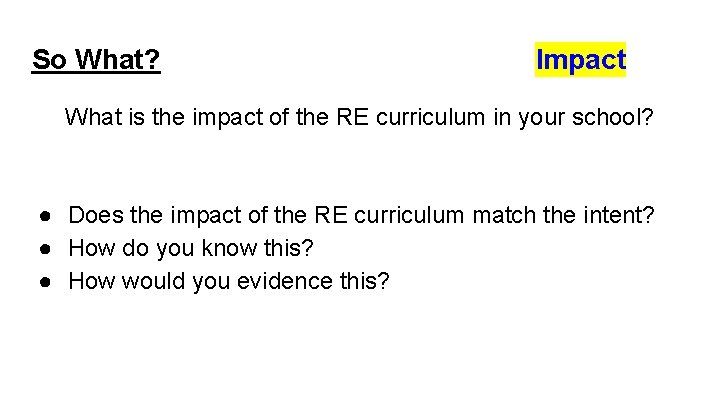
So What? Impact What is the impact of the RE curriculum in your school? ● Does the impact of the RE curriculum match the intent? ● How do you know this? ● How would you evidence this?
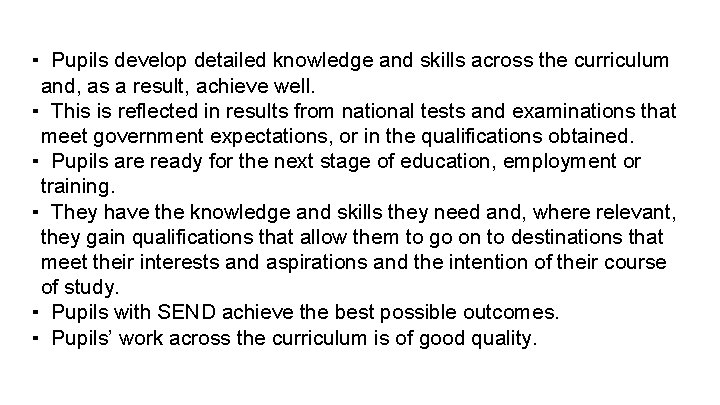
▪ Pupils develop detailed knowledge and skills across the curriculum and, as a result, achieve well. ▪ This is reflected in results from national tests and examinations that meet government expectations, or in the qualifications obtained. ▪ Pupils are ready for the next stage of education, employment or training. ▪ They have the knowledge and skills they need and, where relevant, they gain qualifications that allow them to go on to destinations that meet their interests and aspirations and the intention of their course of study. ▪ Pupils with SEND achieve the best possible outcomes. ▪ Pupils’ work across the curriculum is of good quality.
If RE wasn't part of a pupil's education what would be missing? Would it matter?
Religious Education - a broad and balanced jigsaw piece ● What does RE have to contribute to a broad and balanced curriculum? “Religious Education is important because, like every other subject, it provides a particular set of materials through which pupils come to understand important things about the world and themselves. It is the idea and practices which have shaped and continue to shape our world. The business of religious education is an exploration of the influence of religions and beliefs on individuals, culture, behaviour and national life. ” -Mary Myatt, The Curriculum: Gallimaufry to Coherence
Personal Development ‘…the provider prepares learners for life in modern Britain by: equipping them to be responsible, respectful, active citizens who contribute positively to society; developing their understanding of fundamental British values; developing their understanding and appreciation of diversity; celebrating what we have in common and promoting respect for the different protected characteristics as defined in law. ’
What do children say? ‘I like RE because we get to read different pieces of scripture as this gives us lots of information about how some people believe the earth has changed over time. ’ ‘If we didn’t do RE, we would miss the opportunity to know how people live and behave in different religions. ’ ‘The difference RE makes is that it helps us to respect other people’s religions and beliefs. ’ ‘RE makes me think about other people in the world and to think about what I believe. ’
Purpose and Clarity Mary Myatt asks some simple questions of us as educators that are important within all areas of the curriculum. We can apply these to RE: ● ● ● Why am I teaching this? Where does it fit into the ‘big picture’ of the curriculum? Why is it important to know this? What difference would it make to learning if we didn’t do this lesson? What difference would it make to the curriculum and our children if we didn’t do RE? Is RE an important part of our curriculum offer and why?
Corner. Stone Education: The ‘deep dive’ approach: Inspectors will take an in-depth, intense look at four to six different subject areas within the school – something Ofsted calls a ‘deep dive’. Deep dives will help inspectors better understand the quality of education being offered throughout the school and whether curriculum intent is being achieved within the lessons and in children's work.
DAN MORROW- CEO, Woodland Academies Trust: ● ‘. . . the deep dives commenced with immediate observations of staff through learning walks (all accompanied by phase/subject leads). ’ ● ‘. . . children were asked to recall and describe their learning in the previous year, providing evidence about progression and sequencing. ’ ● ‘Next, subject leaders (not SLT) were interviewed about the philosophy and decision-making around sequencing of the curriculum. ’
Where next? ● What questions, if any, does this pose for your school? ● What do you need to consider and discuss? ● Where do you need to begin or go next? If Ofsted came to your school and completed a ‘deep dive’ on RE, would you be ready?
Letter from a Holocaust Survivor- anon Dear Teacher I am a survivor of a concentration camp. My eyes saw what no men should witness: gas chambers built by engineers; children poisoned by physicians; infants killed by trained nurses; women and babies shot and burned by high school graduates. So, I am suspicious of your education. My request is: help your students become human. Your efforts must never produce learned monsters, skilled psychopaths, educated Eichmanns. Reading, writing, arithmetic are important only if they serve to make our children more human. How does your curriculum serve the child as a whole and what is the place of RE within this?