Redox Reactions Reduction Oxidation GCSE Oxidation Reduction Gain


- Slides: 15
Redox Reactions. Reduction Oxidation
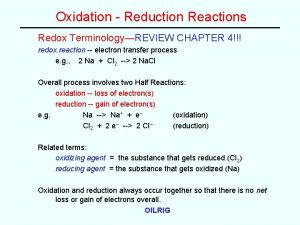
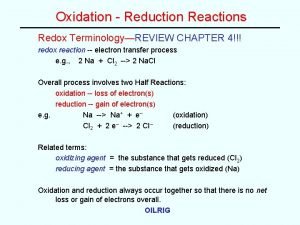
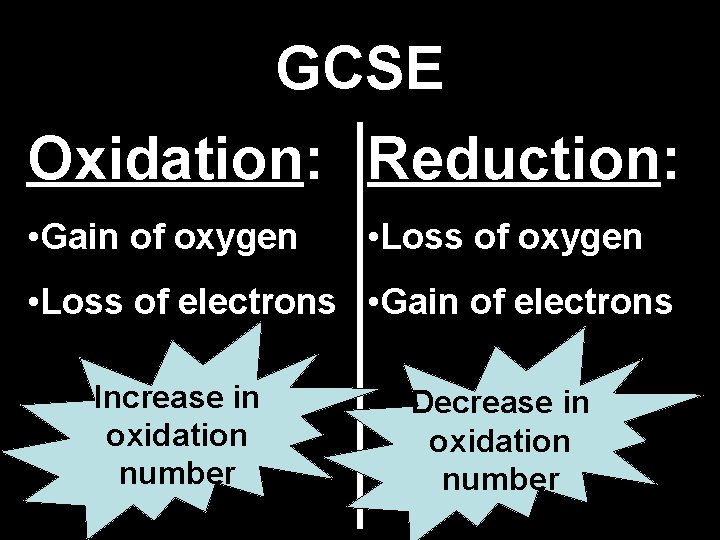
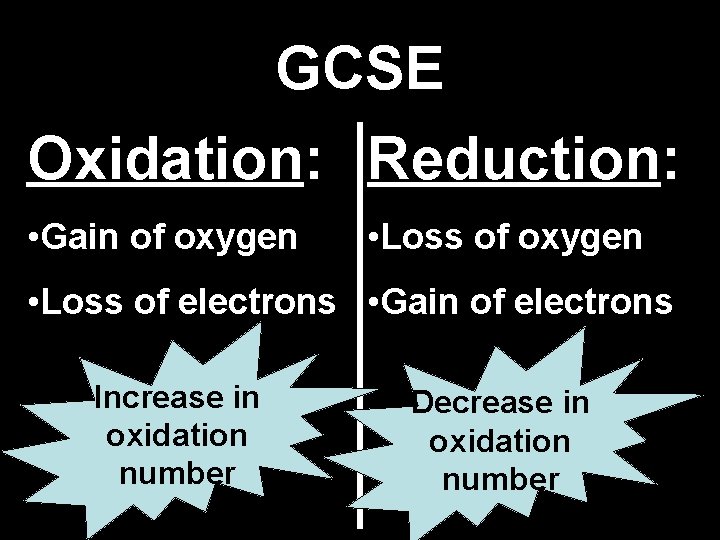
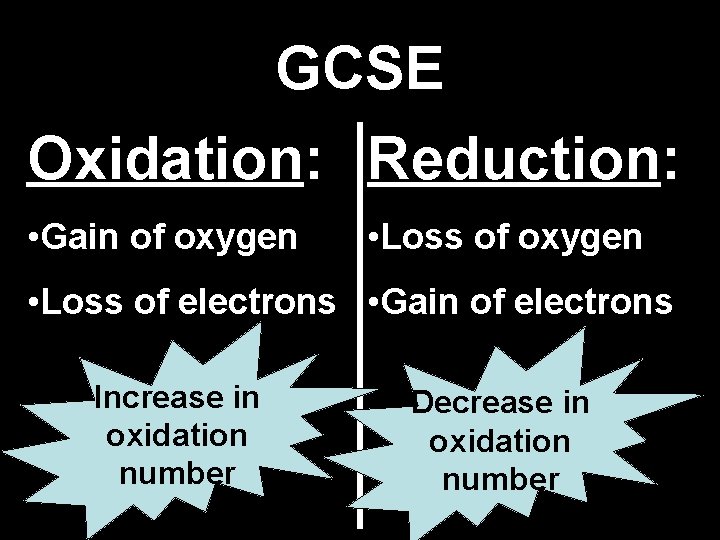
GCSE Oxidation: Reduction: • Gain of oxygen • Loss of electrons • Gain of electrons Increase in oxidation number Decrease in oxidation number
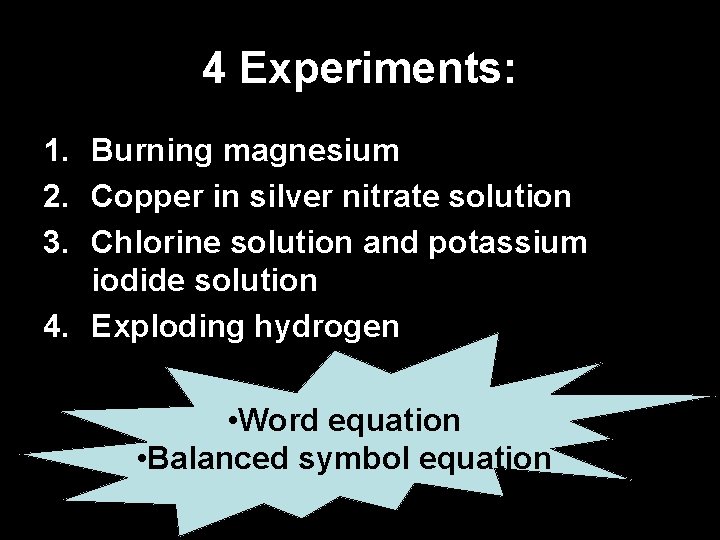
4 Experiments: 1. Burning magnesium 2. Copper in silver nitrate solution 3. Chlorine solution and potassium iodide solution 4. Exploding hydrogen • Word equation • Balanced symbol equation
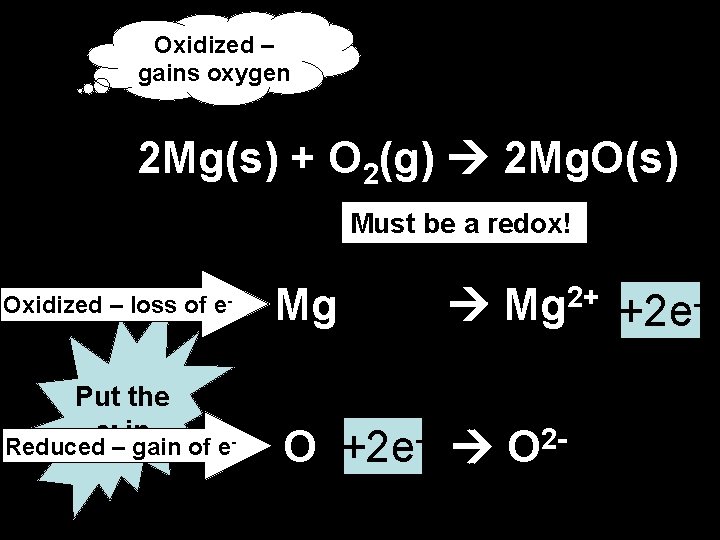
Oxidized – gains oxygen 2 Mg(s) + O 2(g) 2 Mg. O(s) Must be a redox! Oxidized – loss of e- Put the e- in. Reduced – gain of e- Mg 2+ +2 e- O +2 e- O 2 -
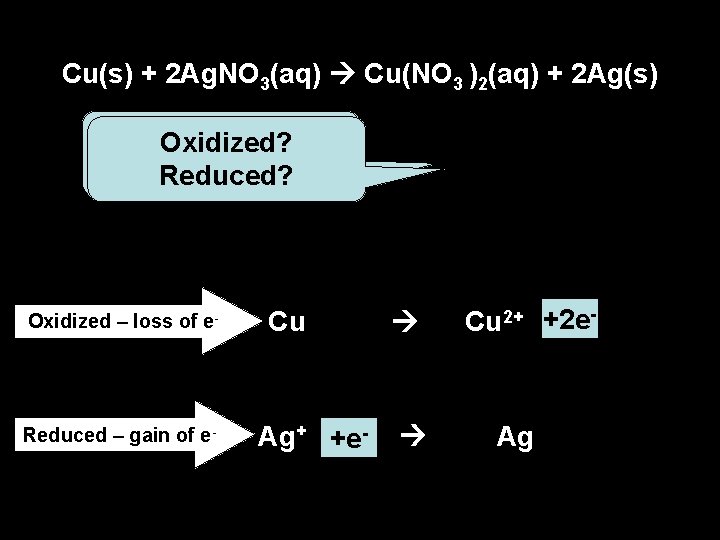
Cu(s) + 2 Ag. NO 3(aq) Cu(NO 3 )2(aq) + 2 Ag(s) Complete the half. Oxidized? equations Reduced? Oxidized – loss of e- Reduced – gain of e- Cu Ag+ +e- Cu 2+ +2 e- Ag
GCSE Oxidation: Reduction: • Gain of oxygen • Loss of electrons • Gain of electrons Increase in oxidation number Decrease in oxidation number
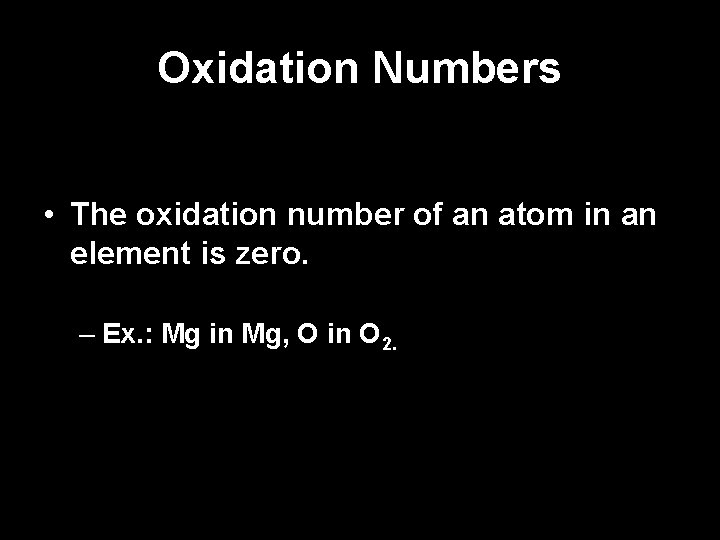
Oxidation Numbers • The oxidation number of an atom in an element is zero. – Ex. : Mg in Mg, O in O 2.
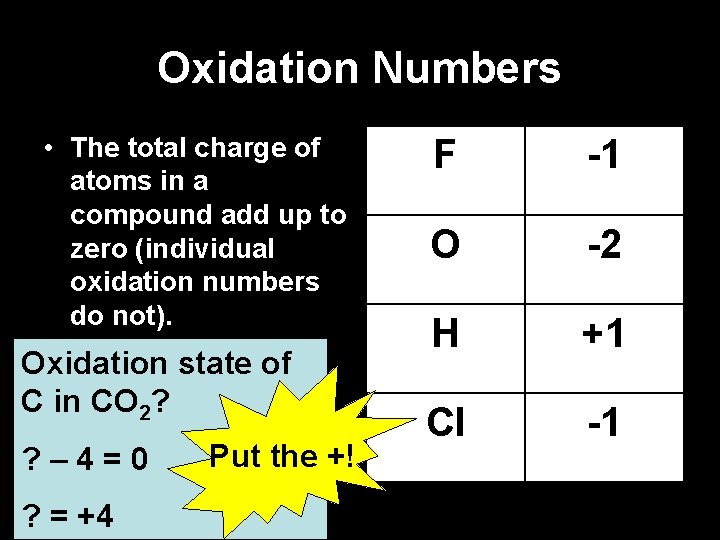
Oxidation Numbers • The total charge of atoms in a compound add up to zero (individual oxidation numbers do not). Oxidation state of C in CO 2? ? – 4=0 ? = +4 Put the +! F -1 O -2 H +1 Cl -1
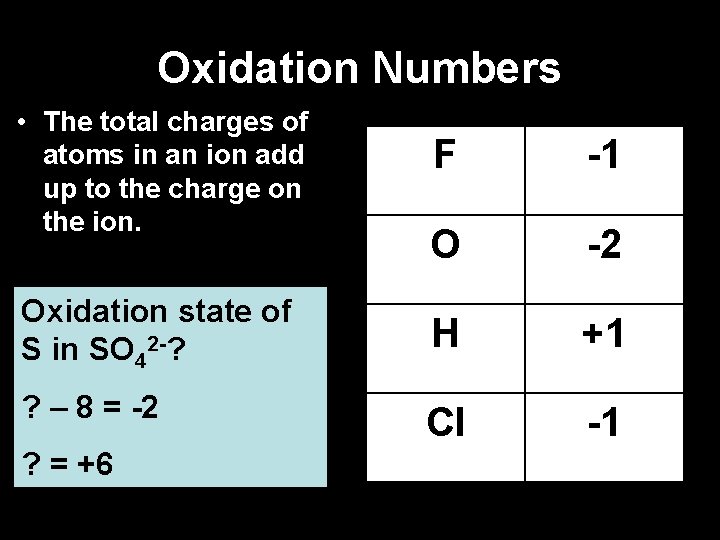
Oxidation Numbers • The total charges of atoms in an ion add up to the charge on the ion. F -1 O -2 Oxidation state of S in SO 42 -? H +1 ? – 8 = -2 Cl -1 ? = +6
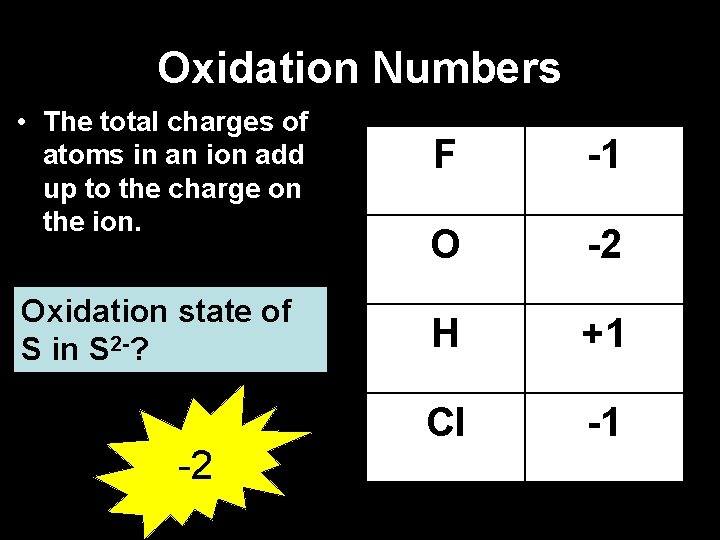
Oxidation Numbers • The total charges of atoms in an ion add up to the charge on the ion. Oxidation state of S in S 2 -? -2 F -1 O -2 H +1 Cl -1
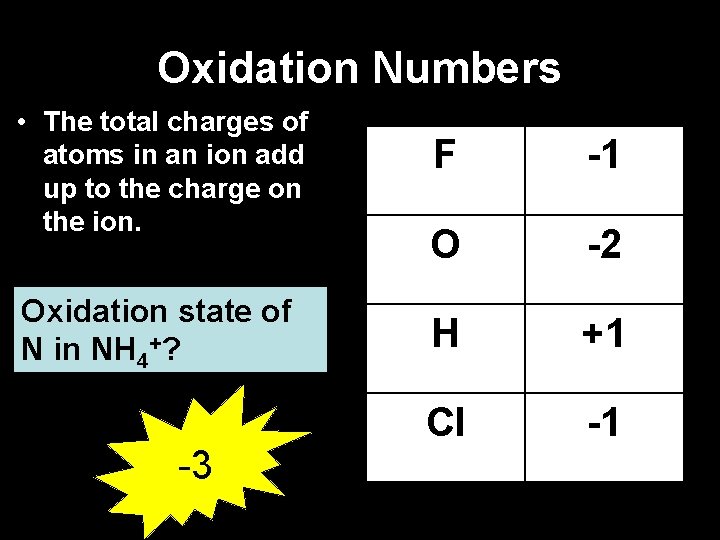
Oxidation Numbers • The total charges of atoms in an ion add up to the charge on the ion. Oxidation state of N in NH 4+? -3 F -1 O -2 H +1 Cl -1
GCSE Oxidation: Reduction: • Gain of oxygen • Loss of electrons • Gain of electrons Increase in oxidation number Decrease in oxidation number
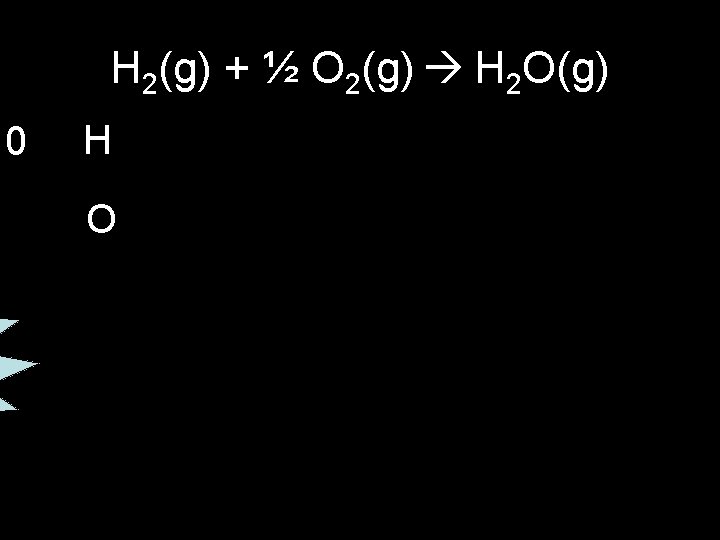
H 2(g) + ½ O 2(g) H 2 O(g) 0 H O
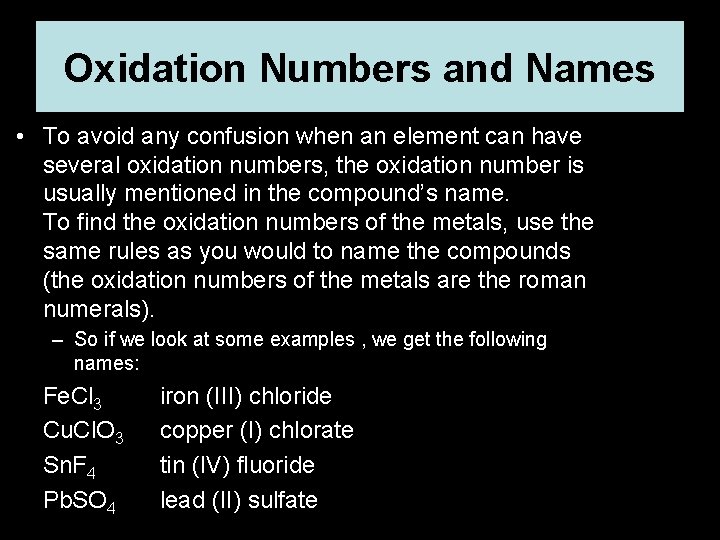
Oxidation Numbers and Names • To avoid any confusion when an element can have several oxidation numbers, the oxidation number is usually mentioned in the compound’s name. To find the oxidation numbers of the metals, use the same rules as you would to name the compounds (the oxidation numbers of the metals are the roman numerals). – So if we look at some examples , we get the following names: Fe. Cl 3 Cu. Cl. O 3 Sn. F 4 Pb. SO 4 iron (III) chloride copper (I) chlorate tin (IV) fluoride lead (II) sulfate
Well done!