
Chapter Learning Objectives a Recognize an oxidationreduction reaction
Chapter Learning Objectives a. Recognize an oxidation-reduction reaction, in which electrons are transferred from one material (the substance that is oxidized) to another material (the substance that is reduced). b. Understand oxidation-reduction chemistry in photography. c. Know the difference between the chemical reactions in batteries and those used in electrolysis. d. Learn the role of oxidation/reduction in metabolism. e. Understand how strong, weak, and nonelectrolyte solutions conduct electricity. 1
Chapter Outline l Oxidation-Reduction Reactions a. Defined 1. Oxidation-reduction (“redox”) reactions involve the transfer of electrons from one substance to another. 2. Oxidized substances lose electrons and reduced substances gain electrons. 2
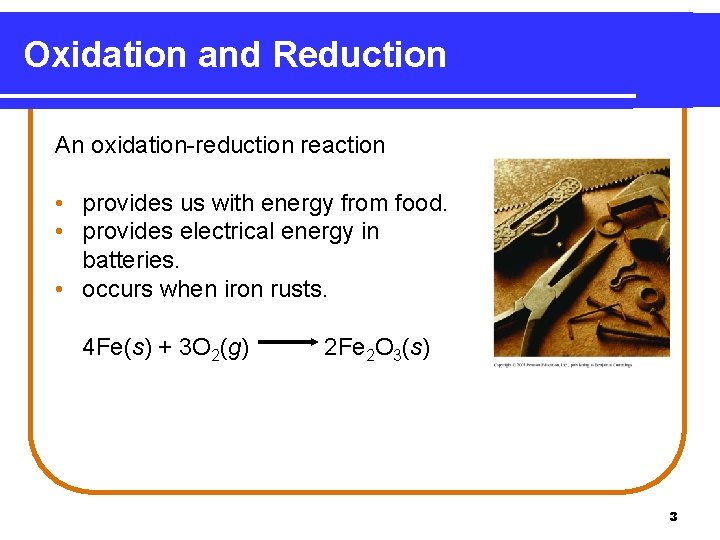
Oxidation and Reduction An oxidation-reduction reaction • provides us with energy from food. • provides electrical energy in batteries. • occurs when iron rusts. 4 Fe(s) + 3 O 2(g) 2 Fe 2 O 3(s) 3
Electron Loss and Gain An oxidation-reduction reaction • transfers electrons from one reactant to another. • loses electrons in oxidation. (LEO) or (OIL) Zn(s) Zn 2+(aq) + 2 e- (loss of electrons) • gains electrons in reduction. (GER) or (RIG) Cu 2+(aq) + 2 e. Cu(s) (gain of electrons) 4

Oxidation and Reduction 5
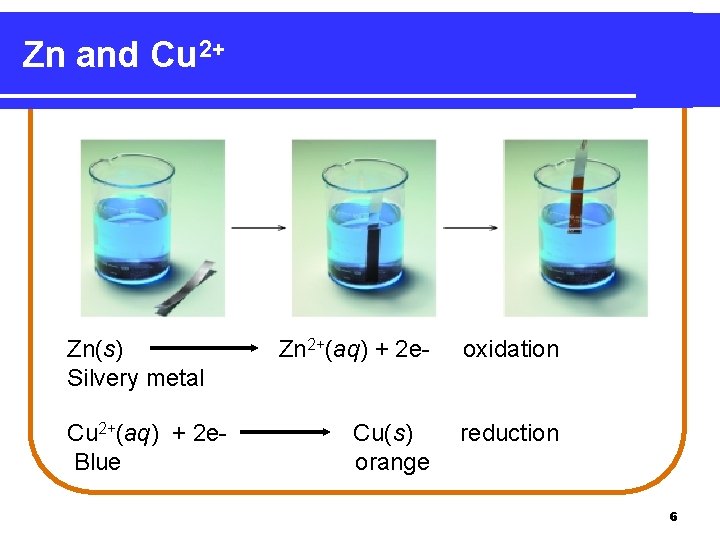
Zn and Cu 2+ Zn(s) Silvery metal Cu 2+(aq) + 2 e. Blue Zn 2+(aq) + 2 e- oxidation Cu(s) orange reduction 6
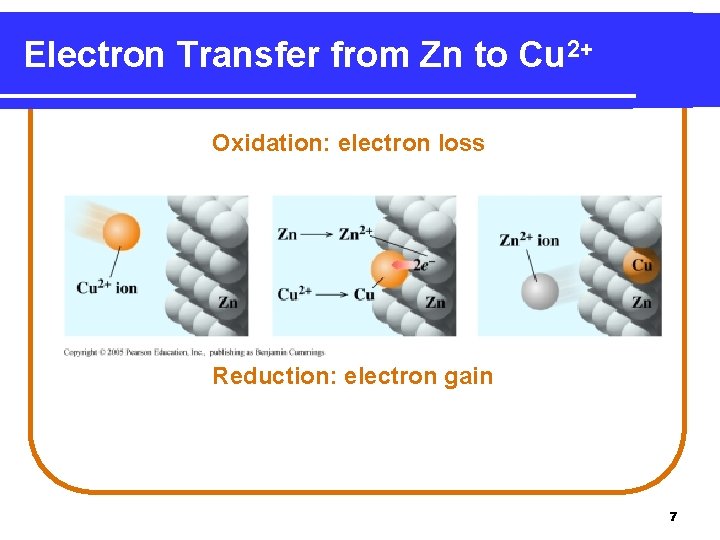
Electron Transfer from Zn to Cu 2+ Oxidation: electron loss Reduction: electron gain 7
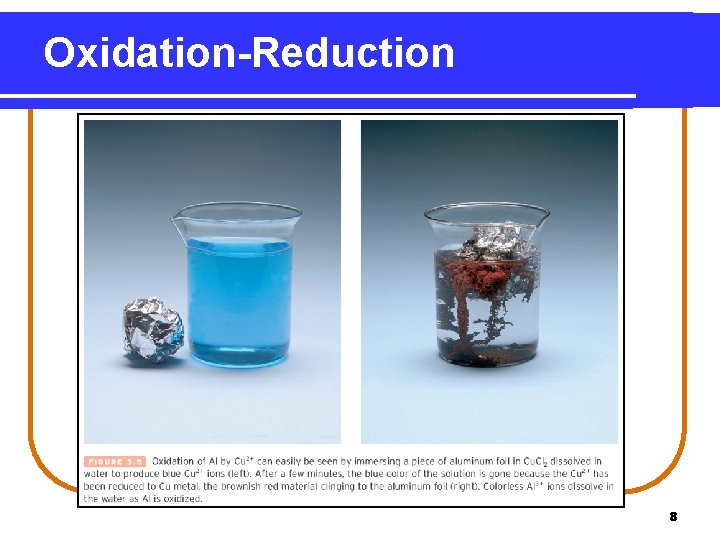
Oxidation-Reduction 8
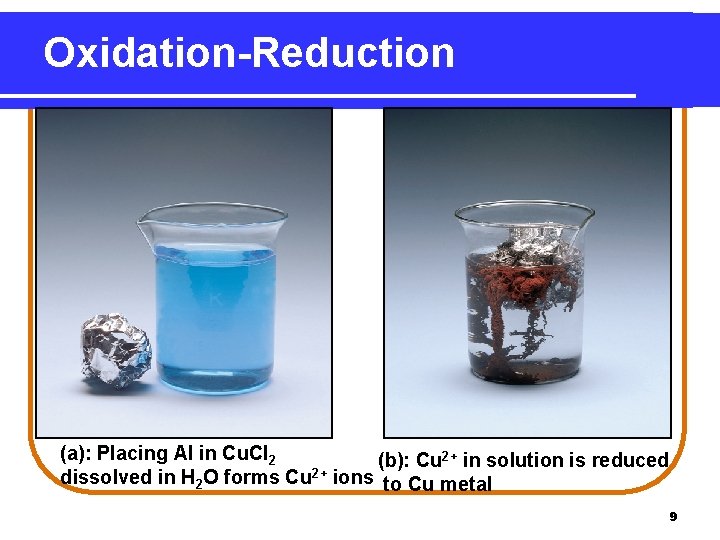
Oxidation-Reduction (a): Placing Al in Cu. Cl 2 (b): Cu 2+ in solution is reduced dissolved in H 2 O forms Cu 2+ ions to Cu metal 9
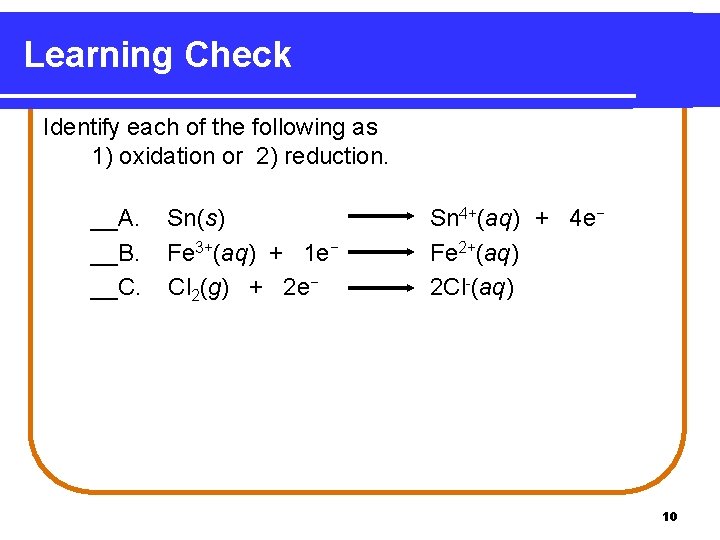
Learning Check Identify each of the following as 1) oxidation or 2) reduction. __A. __B. __C. Sn(s) Fe 3+(aq) + 1 e− Cl 2(g) + 2 e− Sn 4+(aq) + 4 e− Fe 2+(aq) 2 Cl-(aq) 10
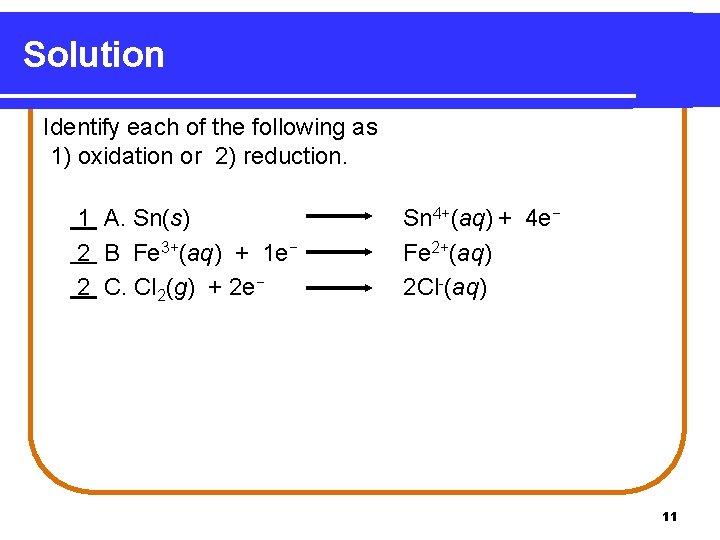
Solution Identify each of the following as 1) oxidation or 2) reduction. 1 A. Sn(s) 2 B Fe 3+(aq) + 1 e− 2 C. Cl 2(g) + 2 e− Sn 4+(aq) + 4 e− Fe 2+(aq) 2 Cl-(aq) 11
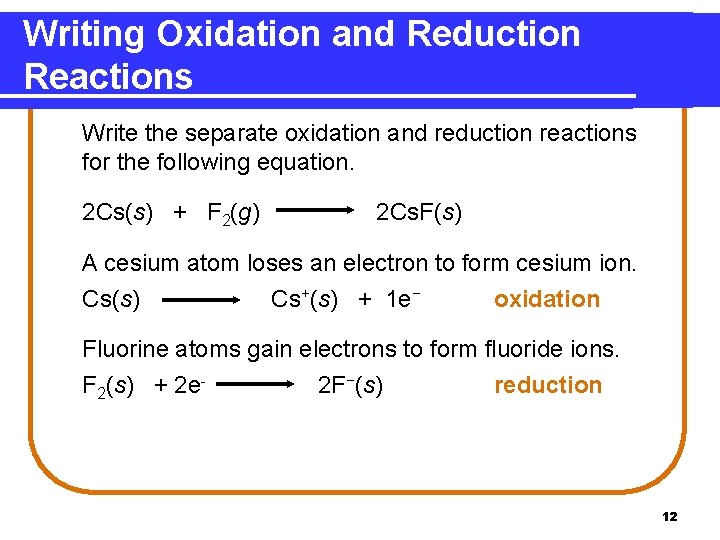
Writing Oxidation and Reduction Reactions Write the separate oxidation and reduction reactions for the following equation. 2 Cs(s) + F 2(g) 2 Cs. F(s) A cesium atom loses an electron to form cesium ion. Cs(s) Cs+(s) + 1 e− oxidation Fluorine atoms gain electrons to form fluoride ions. F 2(s) + 2 e- 2 F−(s) reduction 12
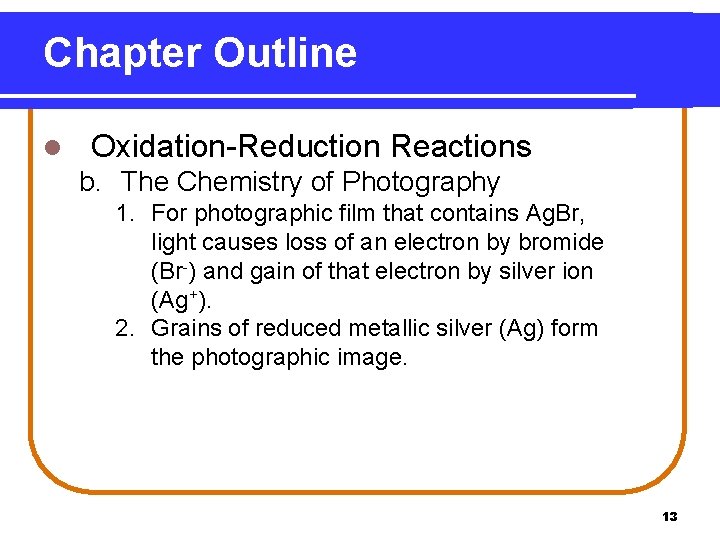
Chapter Outline l Oxidation-Reduction Reactions b. The Chemistry of Photography 1. For photographic film that contains Ag. Br, light causes loss of an electron by bromide (Br-) and gain of that electron by silver ion (Ag+). 2. Grains of reduced metallic silver (Ag) form the photographic image. 13
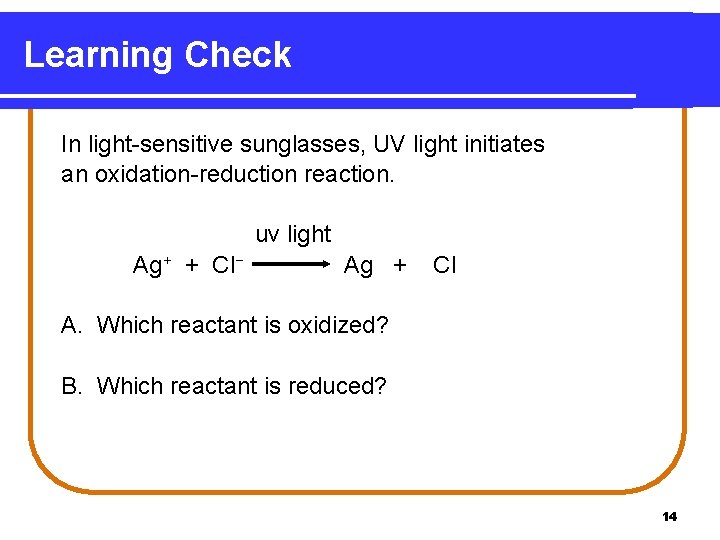
Learning Check In light-sensitive sunglasses, UV light initiates an oxidation-reduction reaction. uv light Ag+ + Cl− Ag + Cl A. Which reactant is oxidized? B. Which reactant is reduced? 14
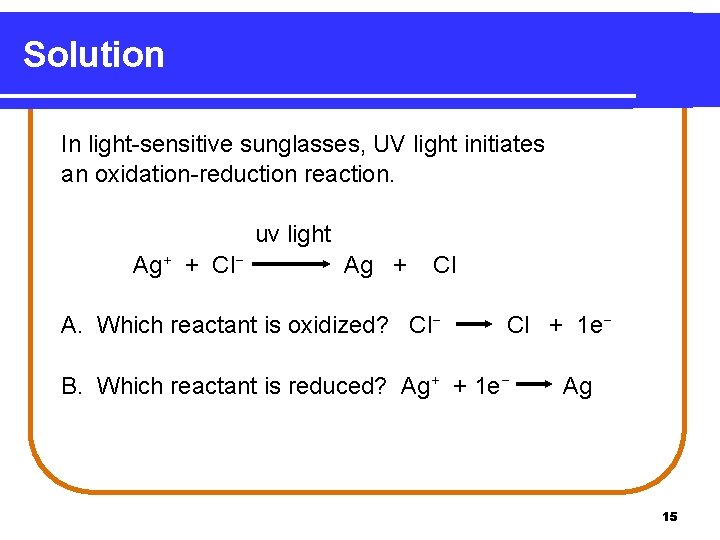
Solution In light-sensitive sunglasses, UV light initiates an oxidation-reduction reaction. uv light Ag+ + Cl− Ag + Cl A. Which reactant is oxidized? Cl− Cl + 1 e− B. Which reactant is reduced? Ag+ + 1 e− Ag 15
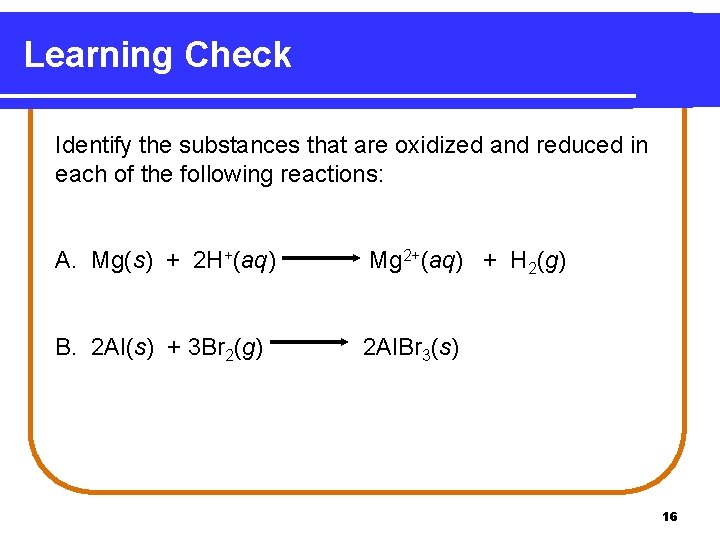
Learning Check Identify the substances that are oxidized and reduced in each of the following reactions: A. Mg(s) + 2 H+(aq) Mg 2+(aq) + H 2(g) B. 2 Al(s) + 3 Br 2(g) 2 Al. Br 3(s) 16
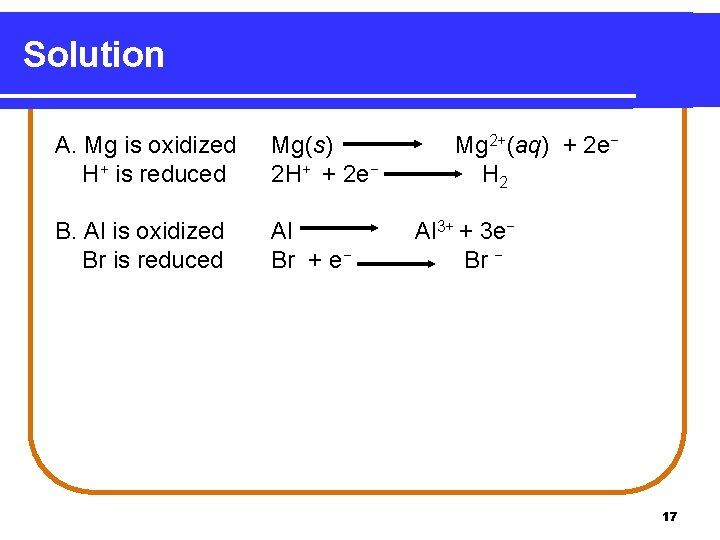
Solution A. Mg is oxidized H+ is reduced Mg(s) 2 H+ + 2 e− B. Al is oxidized Br is reduced Al Br + e− Mg 2+(aq) + 2 e− H 2 Al 3+ + 3 e− Br − 17
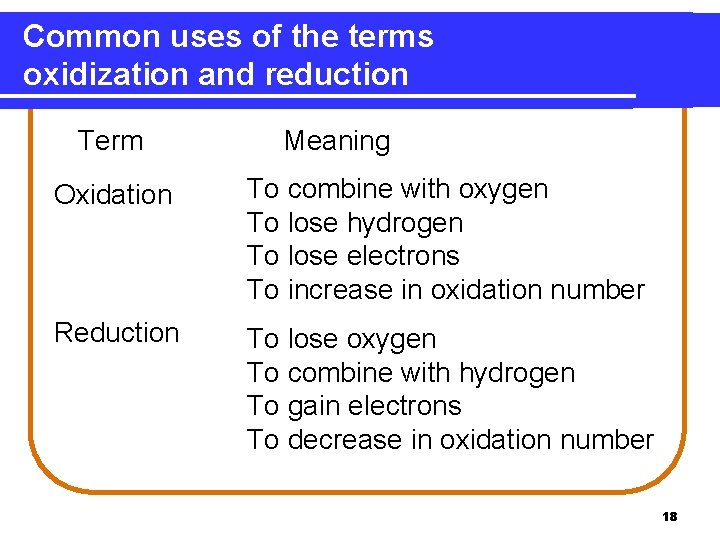
Common uses of the terms oxidization and reduction Term Meaning Oxidation To combine with oxygen To lose hydrogen To lose electrons To increase in oxidation number Reduction To lose oxygen To combine with hydrogen To gain electrons To decrease in oxidation number 18
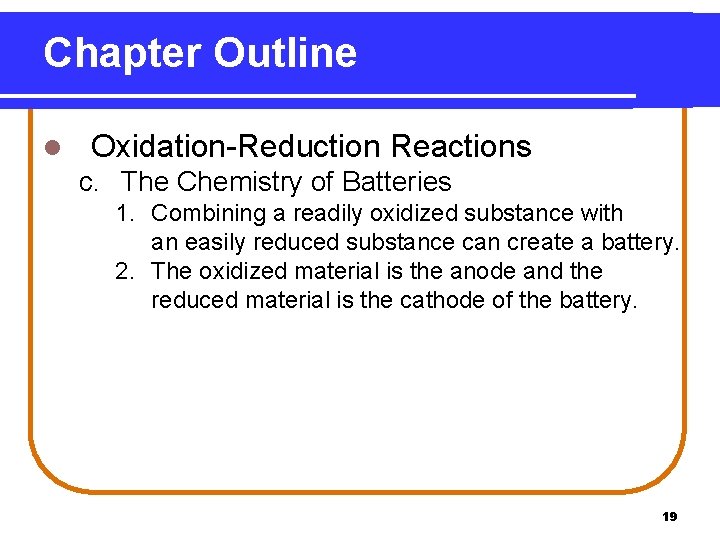
Chapter Outline l Oxidation-Reduction Reactions c. The Chemistry of Batteries 1. Combining a readily oxidized substance with an easily reduced substance can create a battery. 2. The oxidized material is the anode and the reduced material is the cathode of the battery. 19
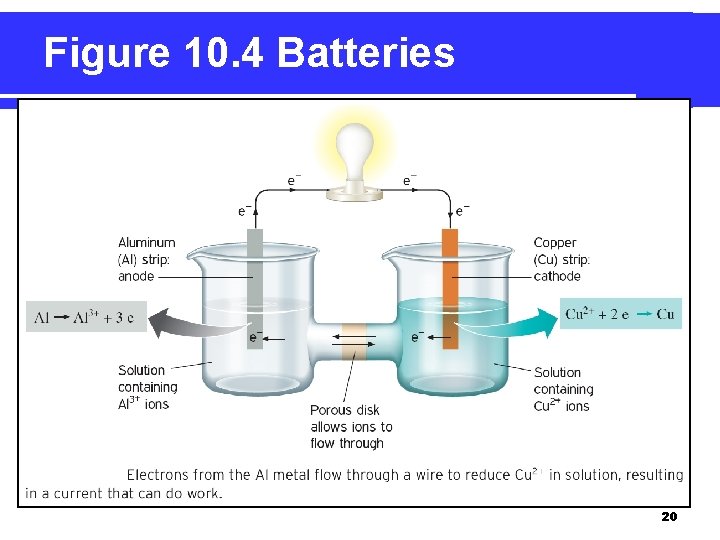
Figure 10. 4 Batteries 20
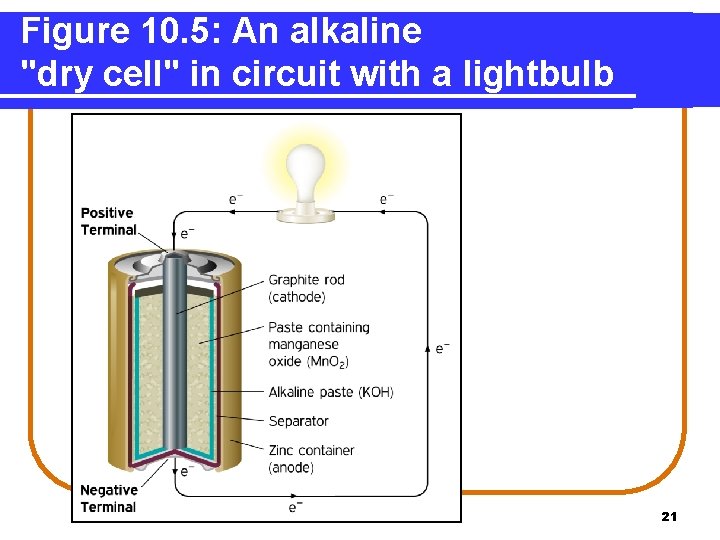
Figure 10. 5: An alkaline "dry cell" in circuit with a lightbulb 21
Chapter Outline l Oxidation-Reduction Reactions d. Role in Metabolism 1. Oxidation can also be considered to be gain of oxygen or loss of hydrogen in a molecule. 2. Reduction can also be considered to be loss of oxygen or gain of hydrogen in a molecule. 3. Respiration is a redox process whereby living organisms oxidize food to release energy. 22
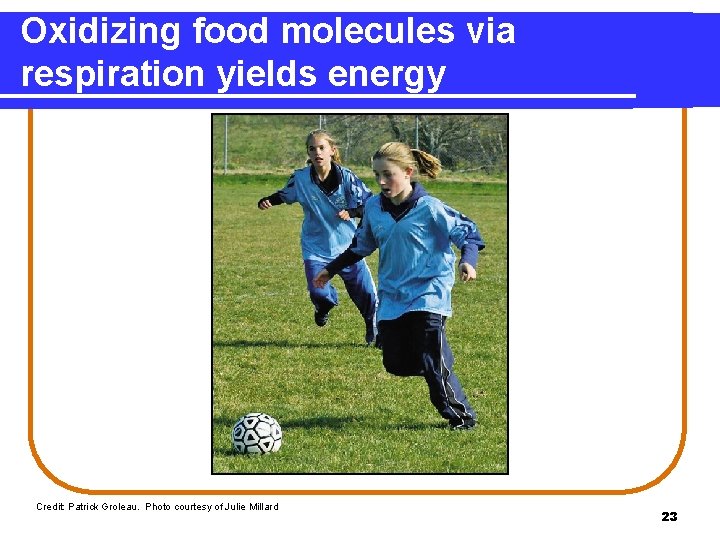
Oxidizing food molecules via respiration yields energy Credit: Patrick Groleau. Photo courtesy of Julie Millard 23
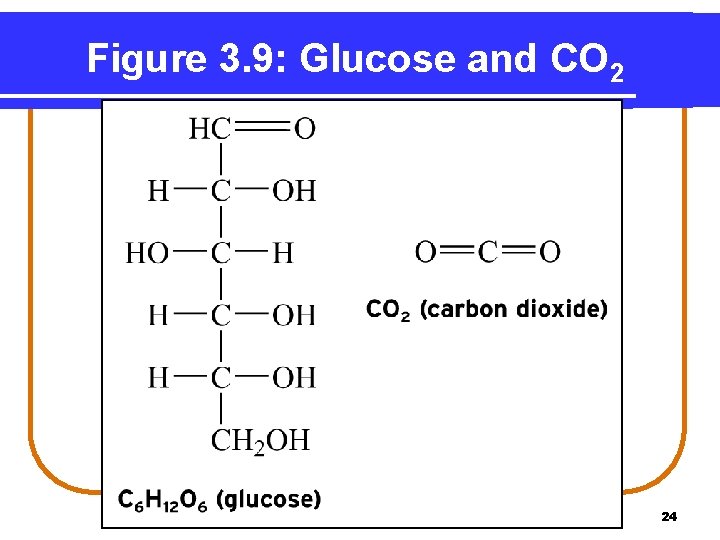
Figure 3. 9: Glucose and CO 2 24
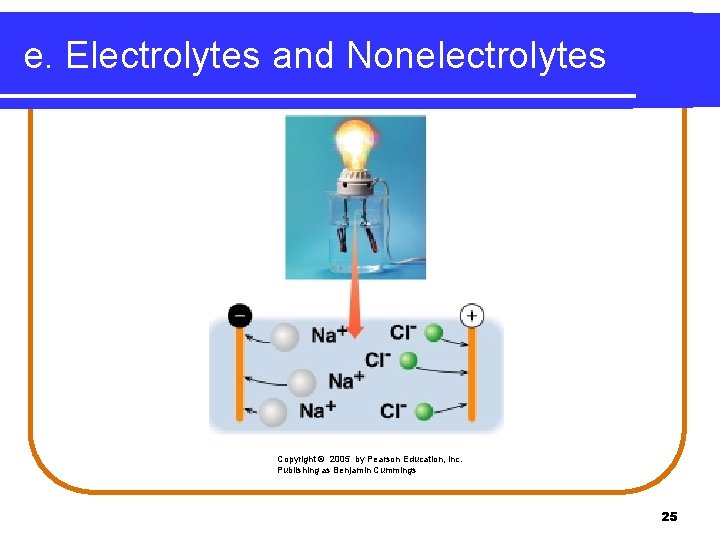
e. Electrolytes and Nonelectrolytes Copyright © 2005 by Pearson Education, Inc. Publishing as Benjamin Cummings 25
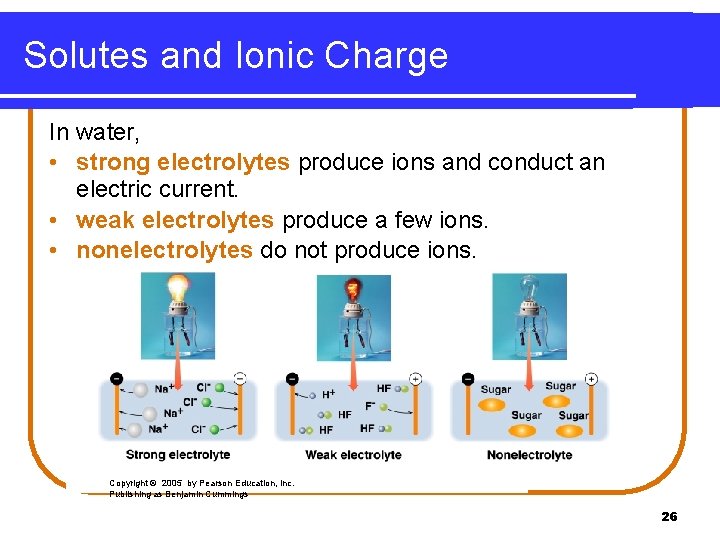
Solutes and Ionic Charge In water, • strong electrolytes produce ions and conduct an electric current. • weak electrolytes produce a few ions. • nonelectrolytes do not produce ions. Copyright © 2005 by Pearson Education, Inc. Publishing as Benjamin Cummings 26
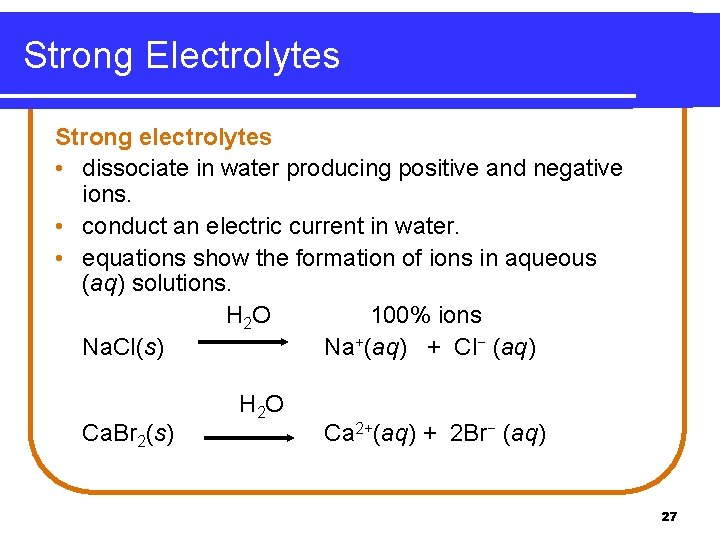
Strong Electrolytes Strong electrolytes • dissociate in water producing positive and negative ions. • conduct an electric current in water. • equations show the formation of ions in aqueous (aq) solutions. H 2 O 100% ions Na. Cl(s) Na+(aq) + Cl− (aq) Ca. Br 2(s) H 2 O Ca 2+(aq) + 2 Br− (aq) 27
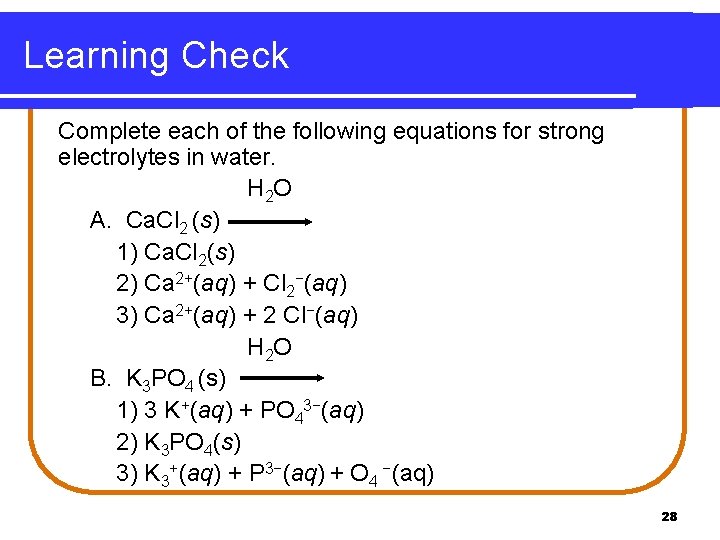
Learning Check Complete each of the following equations for strong electrolytes in water. H 2 O A. Ca. Cl 2 (s) 1) Ca. Cl 2(s) 2) Ca 2+(aq) + Cl 2−(aq) 3) Ca 2+(aq) + 2 Cl−(aq) H 2 O B. K 3 PO 4 (s) 1) 3 K+(aq) + PO 43−(aq) 2) K 3 PO 4(s) 3) K 3+(aq) + P 3−(aq) + O 4 −(aq) 28
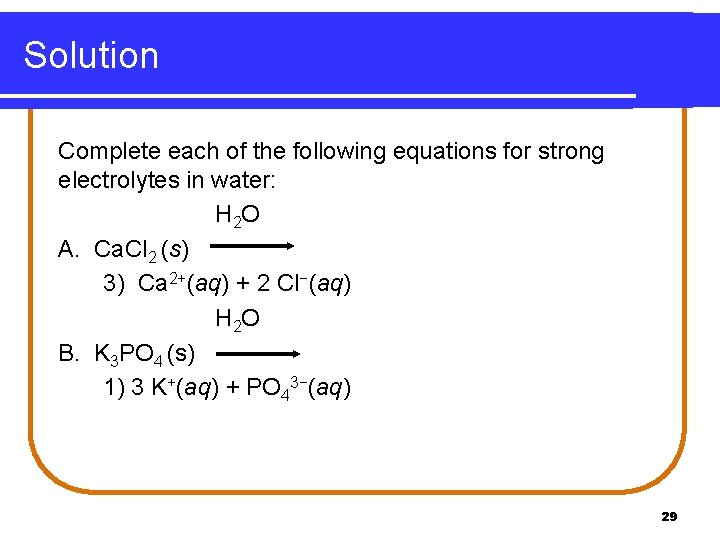
Solution Complete each of the following equations for strong electrolytes in water: H 2 O A. Ca. Cl 2 (s) 3) Ca 2+(aq) + 2 Cl−(aq) H 2 O B. K 3 PO 4 (s) 1) 3 K+(aq) + PO 43−(aq) 29
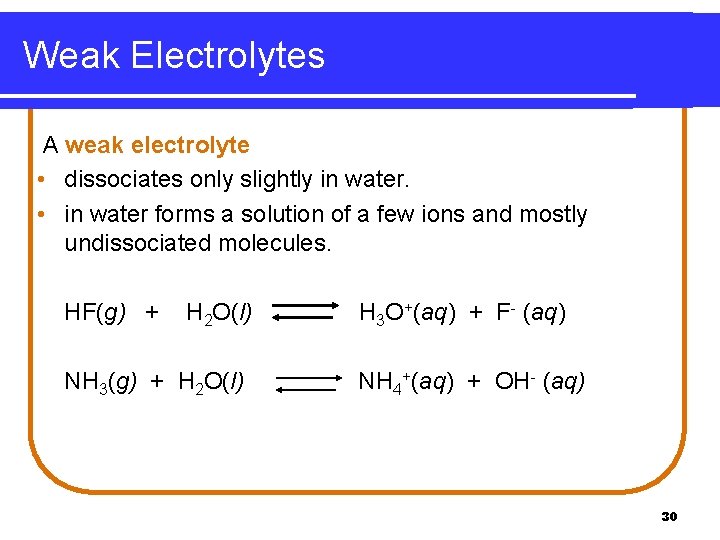
Weak Electrolytes A weak electrolyte • dissociates only slightly in water. • in water forms a solution of a few ions and mostly undissociated molecules. HF(g) + H 2 O(l) NH 3(g) + H 2 O(l) H 3 O+(aq) + F- (aq) NH 4+(aq) + OH- (aq) 30
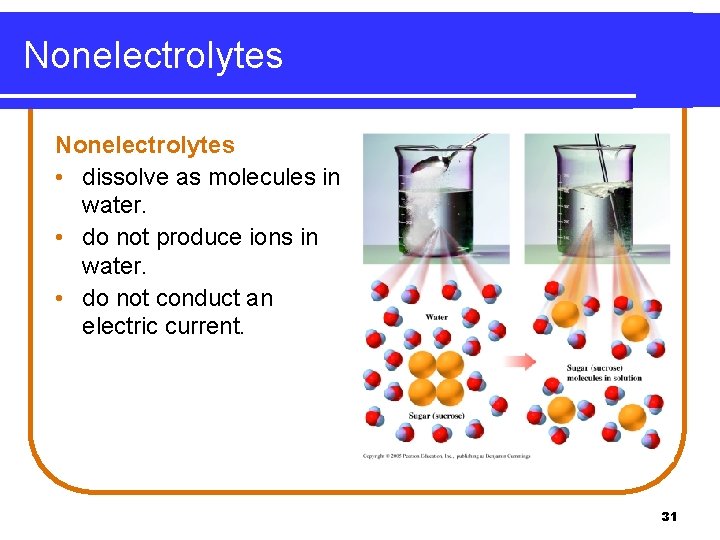
Nonelectrolytes • dissolve as molecules in water. • do not produce ions in water. • do not conduct an electric current. 31
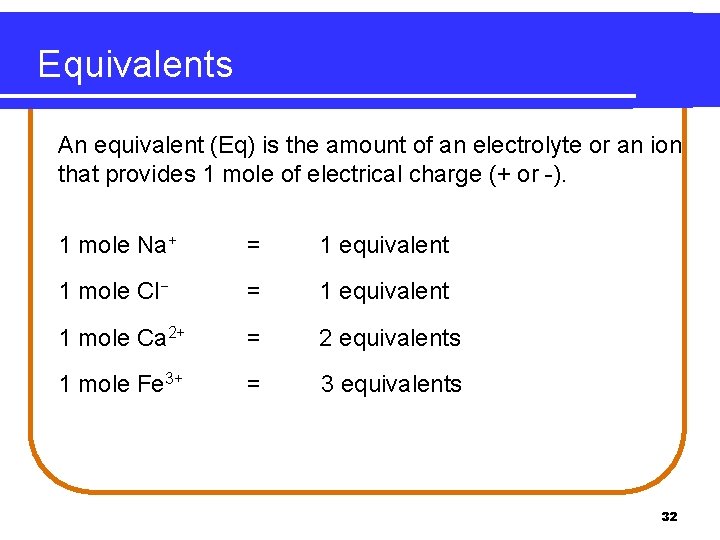
Equivalents An equivalent (Eq) is the amount of an electrolyte or an ion that provides 1 mole of electrical charge (+ or -). 1 mole Na+ = 1 equivalent 1 mole Cl− = 1 equivalent 1 mole Ca 2+ = 2 equivalents 1 mole Fe 3+ = 3 equivalents 32
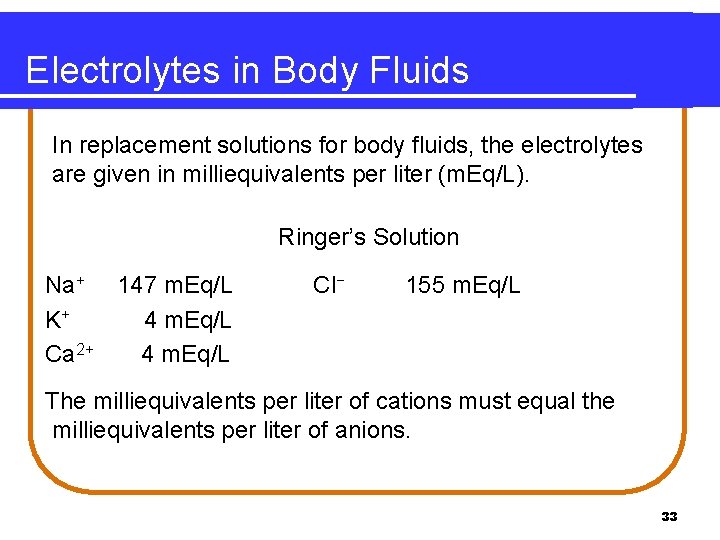
Electrolytes in Body Fluids In replacement solutions for body fluids, the electrolytes are given in milliequivalents per liter (m. Eq/L). Ringer’s Solution Na+ 147 m. Eq/L K+ 4 m. Eq/L Ca 2+ 4 m. Eq/L Cl− 155 m. Eq/L The milliequivalents per liter of cations must equal the milliequivalents per liter of anions. 33
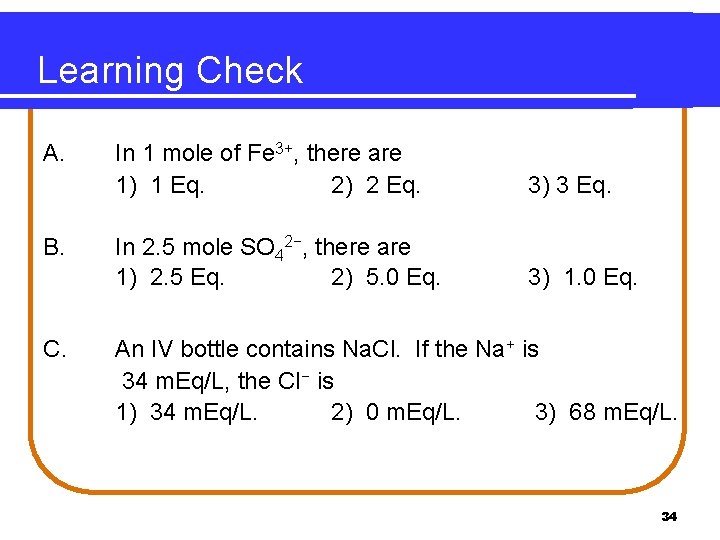
Learning Check A. B. C. In 1 mole of Fe 3+, there are 1) 1 Eq. 2) 2 Eq. 3) 3 Eq. In 2. 5 mole SO 42−, there are 1) 2. 5 Eq. 2) 5. 0 Eq. 3) 1. 0 Eq. An IV bottle contains Na. Cl. If the Na+ is 34 m. Eq/L, the Cl− is 1) 34 m. Eq/L. 2) 0 m. Eq/L. 3) 68 m. Eq/L. 34
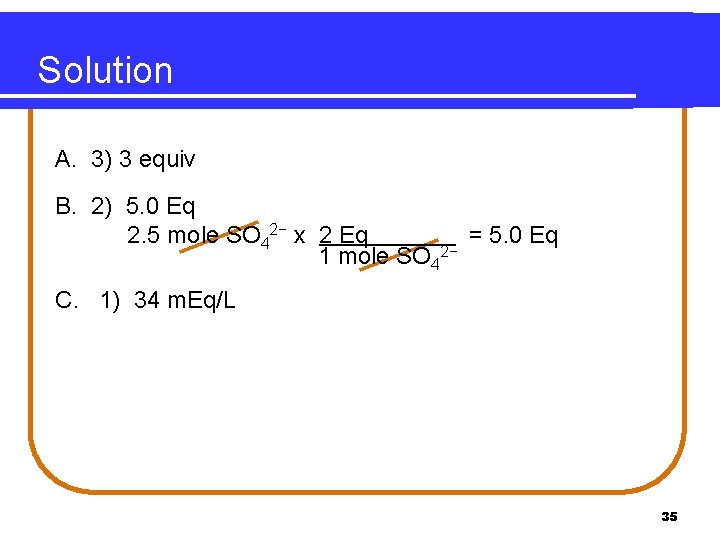
Solution A. 3) 3 equiv B. 2) 5. 0 Eq 2. 5 mole SO 42− x 2 Eq = 5. 0 Eq 1 mole SO 42− C. 1) 34 m. Eq/L 35
Key Words l l l l l Oxidation-reduction (redox) reactions Oxidation Reducing agent Oxidizing agent Battery Anode Cathode Respiration l l l Electrolytes Strong Weak Nonelectrolytes Equivalents Glucose 36
- Slides: 36