Realism 1820 1920 Realism A 19 th century




- Slides: 19
Realism 1820 -1920
�Realism: A 19 th century art movement originating in France, shared the same time frame for a short period with Romanticism. �The term “realism” can be a challenge to define because there were many thoughts about it’s meaning at the time. �Realism embrace the concept of what was real to the artist- that which could be seen and touched, the reality within their lives.
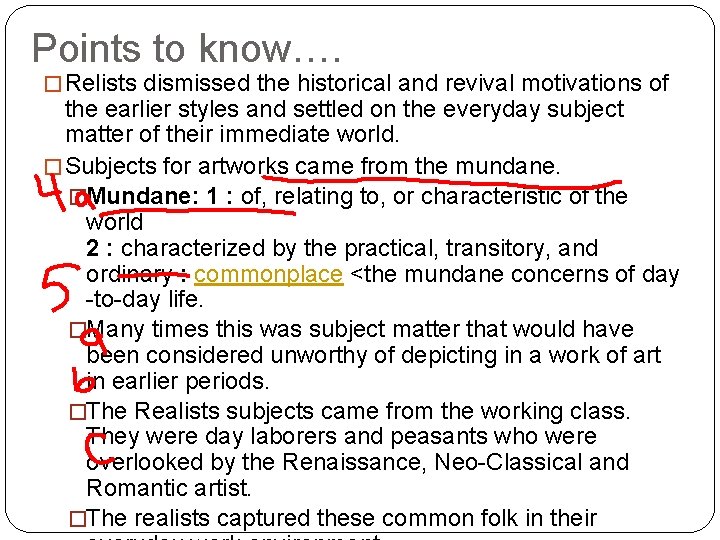
Points to know…. � Relists dismissed the historical and revival motivations of the earlier styles and settled on the everyday subject matter of their immediate world. � Subjects for artworks came from the mundane. �Mundane: 1 : of, relating to, or characteristic of the world 2 : characterized by the practical, transitory, and ordinary : commonplace <the mundane concerns of day -to-day life. �Many times this was subject matter that would have been considered unworthy of depicting in a work of art in earlier periods. �The Realists subjects came from the working class. They were day laborers and peasants who were overlooked by the Renaissance, Neo-Classical and Romantic artist. �The realists captured these common folk in their
Influences �Industrial Revolution 1848: A rapid major change in the economy marked by the general introduction of power-driven machinery or by an important change in the prevailing types and methods of use of such machines. �Great time of “progress”. Changing times with industrialization, urbanization, new inventions, and theories. �These times influenced writers, scientist, artists, politicians, philosophers, and educators. �Charles Darwin wrote on “On The Origin of the Species by Means of Natural Selection”. �Presented a new concept of life on Earth.
Influences Continued…. . �Karl Marx and Fredrick Engels wrote on the Communist Manifesto �Urged the working class to overthrow capitalism. �The theories of Marx gave rise to socialism and the beginning of trade unions. �Socialism: any various economic and political theories advocating collective or government ownership and administration of the means of production and distribution of goods.
Influences cont…. �All of these factors influenced artists of the 19 th and 20 th centuries and challenged them in the creation of art. �Artist who moved forward adopted some of the current theory and philosophy and incorporated those beliefs into their own art work. �The result was an intense focus on the commonplace, capturing the every day existence of ordinary people.
Artist �There were many well known artist during this time. �Gustave Corbet was one of the most popular �Other popular artist were: �Francois Millet �Honore Daumier �John Singer Sargent �Edouard Manet �Thomas Ekins �Winslow Homer
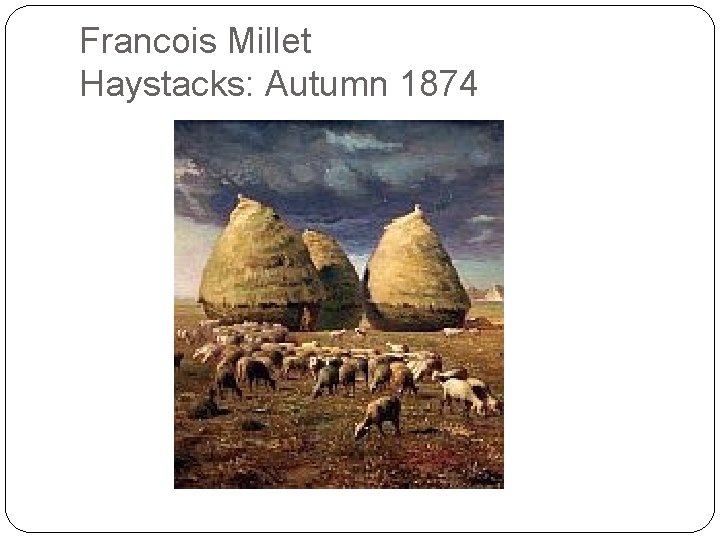
Francois Millet Haystacks: Autumn 1874
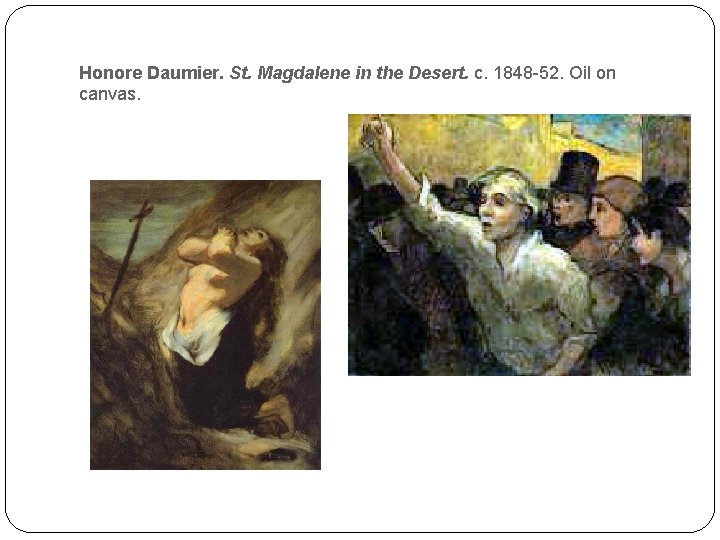
Honore Daumier. St. Magdalene in the Desert. c. 1848 -52. Oil on canvas.
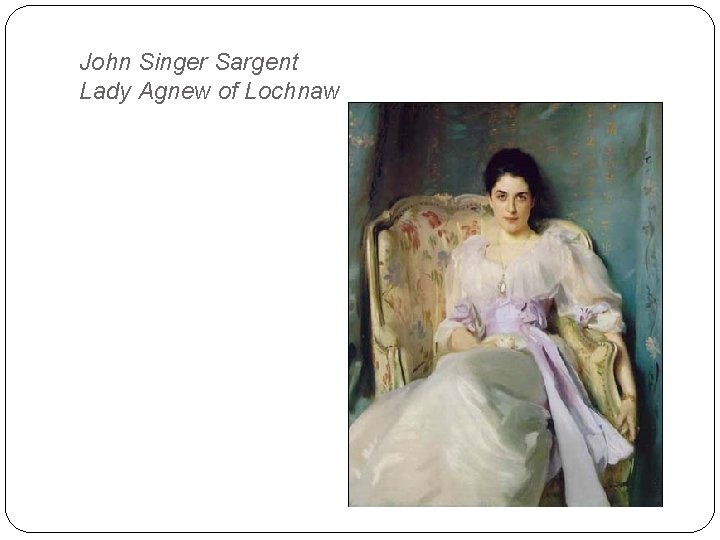
John Singer Sargent Lady Agnew of Lochnaw
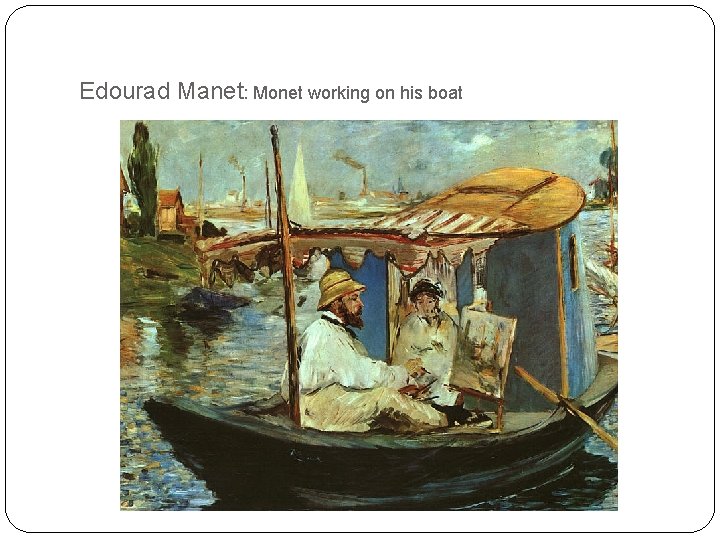
Edourad Manet: Monet working on his boat
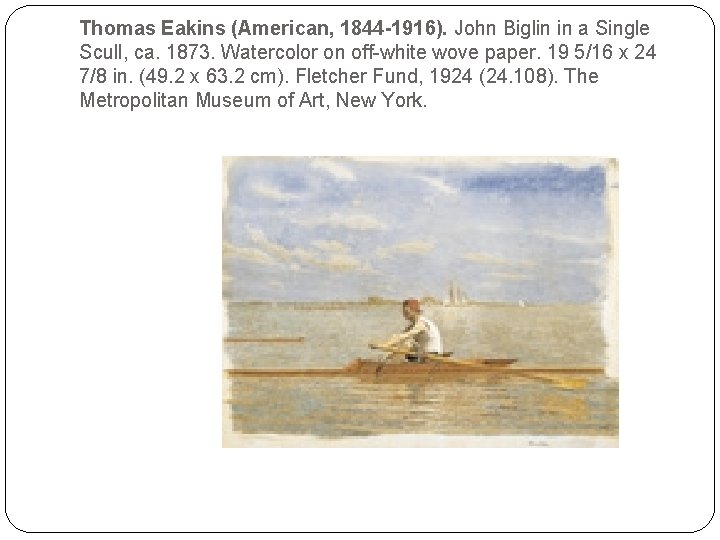
Thomas Eakins (American, 1844 -1916). John Biglin in a Single Scull, ca. 1873. Watercolor on off-white wove paper. 19 5/16 x 24 7/8 in. (49. 2 x 63. 2 cm). Fletcher Fund, 1924 (24. 108). The Metropolitan Museum of Art, New York.
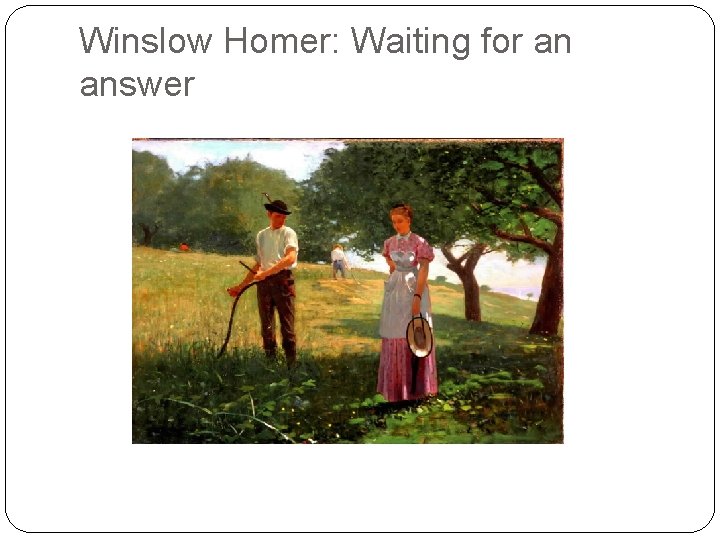
Winslow Homer: Waiting for an answer
Gustave Courbet 1819 -1877 �Made a huge impact in the art world with his desire to record what real life looked like. �Courbet was born to prosperous farming family in France �His father tried to send him to law school but he wanted to paint �He studied art by copying pictures of artwork at the Louvre.
Gustave Courbet cont…. �His choice of ordinary subject matter and realistic portrayals were at odds with many of the time. �Courbet believed that painter should paint during their own time period. �“painting is an essentially concrete art, and can consists only of representation of real and existing things”. �Many of his paintings were very large. �Is known to be the first to use a palette knife instead of a brush. �He applied paint thick.
�“The Artist Studio” was refused for an important exhibition, so he displayed it near the exhibition hall alone.
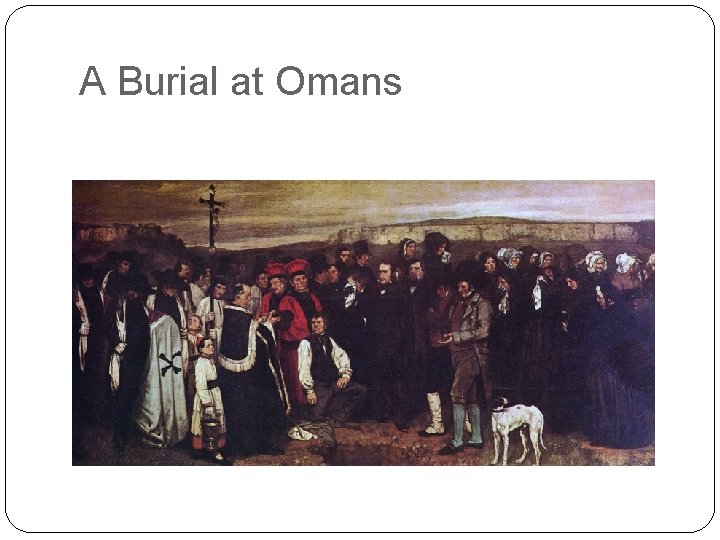
A Burial at Omans
Edouard Manet 1832 -1883 �Paris native �His images of modern urban life and sometimes scandalous subject matter broke new ground. �He painted subjects previously deemed unsuitable for high art and painted them in a new style that foreshadowed ideas of the modern painters. �Concerned with the properties of painting instead of the subject matter.
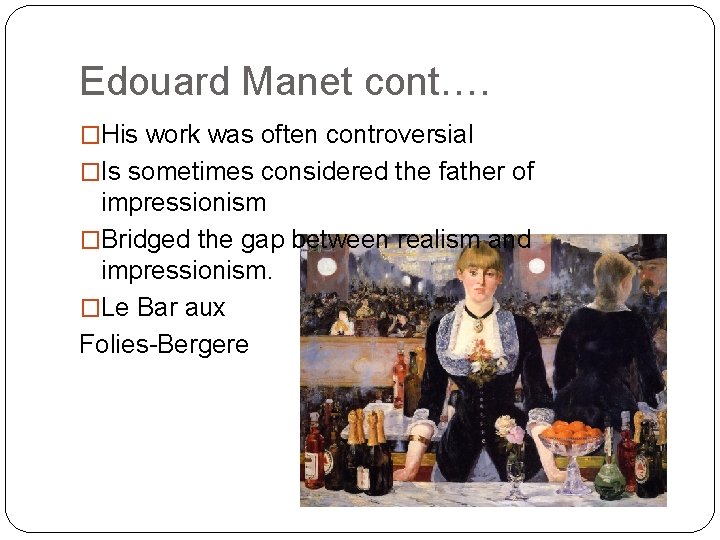
Edouard Manet cont…. �His work was often controversial �Is sometimes considered the father of impressionism �Bridged the gap between realism and impressionism. �Le Bar aux Folies-Bergere