Reading with eyes ears or fingers The necessity
- Slides: 16
Reading with eyes, ears or fingers The necessity of accessible books for print impaired persons Luc Maumet - ABC - Library Sciences Expert
Print impaired persons • people who are blind, visually impaired • reading disabled (example: dyslexia) • physical disability (example: impossibility of holding a book)
Many different ways of reading. . . • A common need : access to the same books as the general population • education • professional life • leisure
Access to reading is a condition for • Taking an active part in the society • Empowerment : being able to change one’s environment • Many career opportunities in the information age
Different ways of reading • Reading with fingers • Reading with eyes • Reading with ears
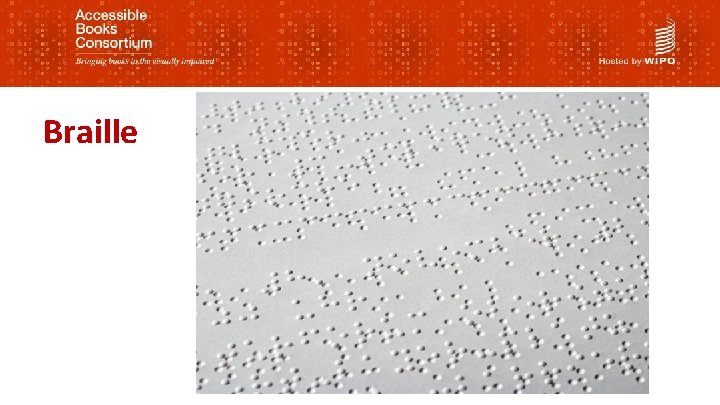
Braille
Braille • Still relevant after nearly 200 years • Only solution for direct access to text for blind persons • Plays a strong role in education of visually impaired kids
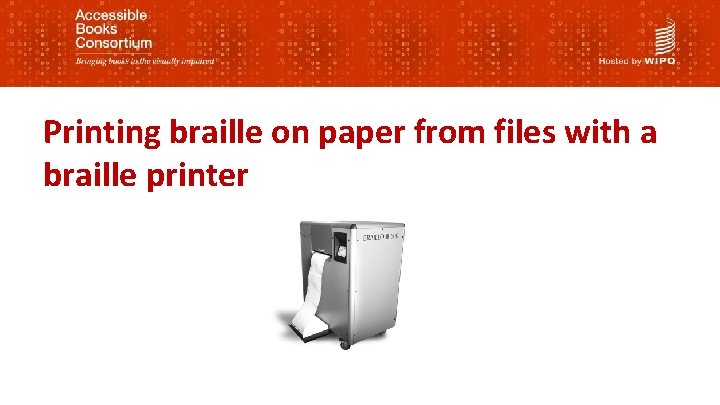
Printing braille on paper from files with a braille printer
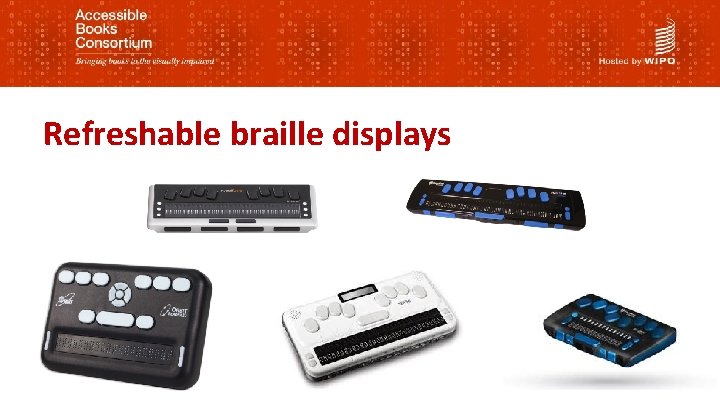
Refreshable braille displays
Reading with ears • The audiobooks • Human narration • Text to speech
Advantages of audiobooks • No need to learn a specific way of reading • Capacity to stock large number of books • Can address the needs of different categories of print impaired persons
Reading with eyes • large print • specific presentations for dyslexic users • specific interfaces for persons with physical disabilities
Specific presentations for dyslexic users • • choice of typeface (Arial, Opendyslexic…) Space between letters / words / lines different colors for lines Simplified text (short phrases…)
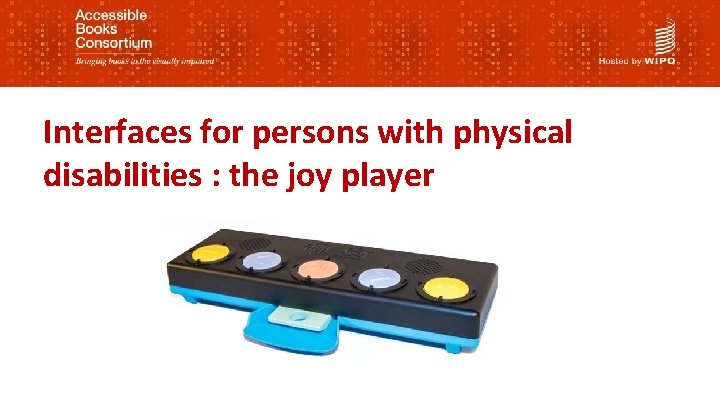
Interfaces for persons with physical disabilities : the joy player
Many ways of reading. . . files • Braille / audio / large print (. . . ) are all produced from a digital file • Strong need for structured files • Strong need for a pivot format : EPUB 3
Thank you for your attention luc. maumet@wipo. int